
REVIEW · WALKING TOURS
Krakow: Highlights of Old & New Town Private Walking Tour
Krakow rewards a closer look. This four-hour private walk links the city’s medieval center with its difficult modern past, taking you from Little Market Square along the Royal Route to Wawel Hill. I like the private guide, which gives you room to ask questions, and I like the way the tour covers both famous sights and everyday Krakow. The main caution is simple: four hours on foot can feel long in rain, snow, or cold weather.
The route includes the Main Market Square, St. Mary’s Basilica, the Cloth Hall, Jagiellonian University, Wawel Castle courtyards, and Wawel Cathedral. It also moves beyond the usual postcard view, discussing World War II, the Polish People’s Republic, and Krakow’s growth into a modern business and tourist center. The optional six-hour version adds Kazimierz and entry to Tempel Synagogue.
One more practical point matters: the quality of a private tour depends heavily on the individual guide. The strongest experiences featured guides such as Anna, who explained both old and new Krakow with clear detail, local stories, and humor. One less successful experience had a guide who rushed photo stops and handled questions poorly, so flexibility and communication matter.
In This Review
- Key points to know before booking
- Starting at Barbakan Krakowski and Little Market Square
- Main Market Square and St. Mary’s Basilica
- The Cloth Hall and Krakow’s trading past
- Jagiellonian University and the Royal Route
- Wawel Hill, courtyards, and royal power
- Inside Wawel Cathedral
- Krakow after 1939, communism, and the present day
- The six-hour extension into Kazimierz
- What the $137 price means
- Who should book this Krakow walk?
- FAQ
- Where does the Krakow walking tour meet?
- Is hotel pickup available?
- What happens if my accommodation is outside the Old Town?
- Which languages are available?
- Is Wawel Cathedral included?
- Does the six-hour tour include Kazimierz?
- What happens if Tempel Synagogue is closed?
- Should you book it?
Key points to know before booking
- The Royal Route gives you Krakow’s best first orientation: You follow the path once used by Polish kings from the medieval center toward Wawel Hill.
- The tour goes beyond medieval Krakow: World War II, the Polish People’s Republic, and the city’s current development are part of the story.
- Wawel Cathedral is included: You can look inside the church where Polish kings were crowned and buried.
- The six-hour option adds Kazimierz: The former Jewish district includes Tempel Synagogue, unless it is closed on Saturdays or Jewish holidays.
- Pickup is limited: Accommodation pickup is available in the Old Town. Otherwise, meet at Barbakan Krakowski.
- The price buys private attention, not just admission: At $137 per person, the value is strongest for couples, families, or small groups who want a tailored explanation.
Starting at Barbakan Krakowski and Little Market Square
The meeting point is in front of Barbakan Krakowski, on Basztowa, from the Brama Floriańska side of the Old Town. This is a sensible place to begin. You are right beside the old defensive walls and close to the historic center, so the tour can move into Krakow’s story without wasting time on transport.
If you stay in the Old Town, pickup may be available from your accommodation. You need to provide the full address when booking. If your lodging is more than 1.5 kilometers from the meeting point, or if no address is supplied, you should plan to meet at the Barbakan instead.
The walk starts around Little Market Square before moving toward the main square. This smaller space is useful for getting your bearings. It also gives the guide a chance to explain how Krakow’s medieval center was organized before you reach the much larger Rynek Główny.
I recommend arriving ready for a real walking tour. The route is wheelchair accessible, but historic streets, crowds, weather, and the length of the walk can still affect comfort. Wear shoes that can handle several hours on city paving, and check the weather before you leave.
More Walking Tours in Kraków
- Old Town Krakow & Wawel Castle Walking Tour
★ 5.0 · 1,508 reviews - Creepy Krakow: 2-Hour City Walking Tour
★ 4.7 · 1,131 reviews - Krakow: The Old Town Walking Tour
★ 4.8 · 794 reviews
Main Market Square and St. Mary’s Basilica
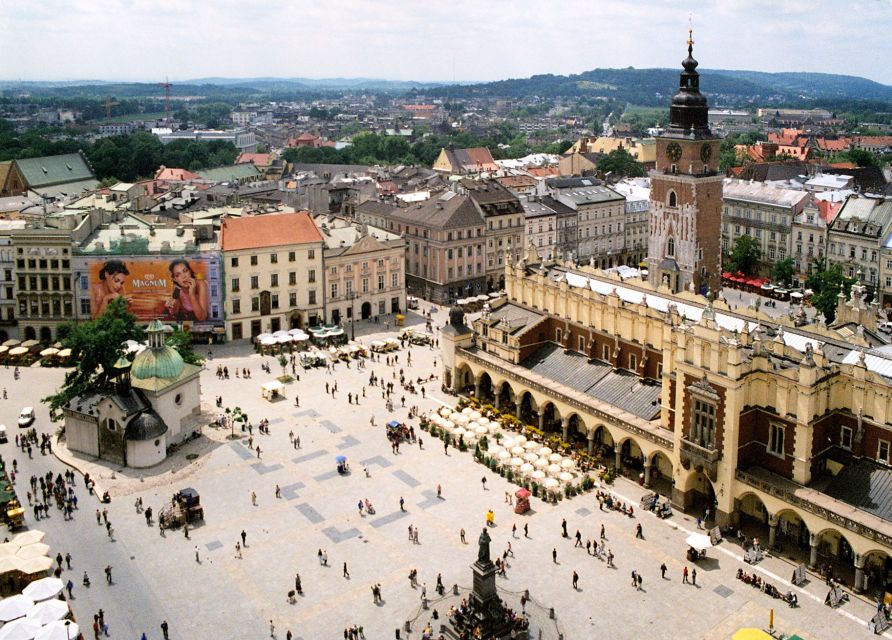
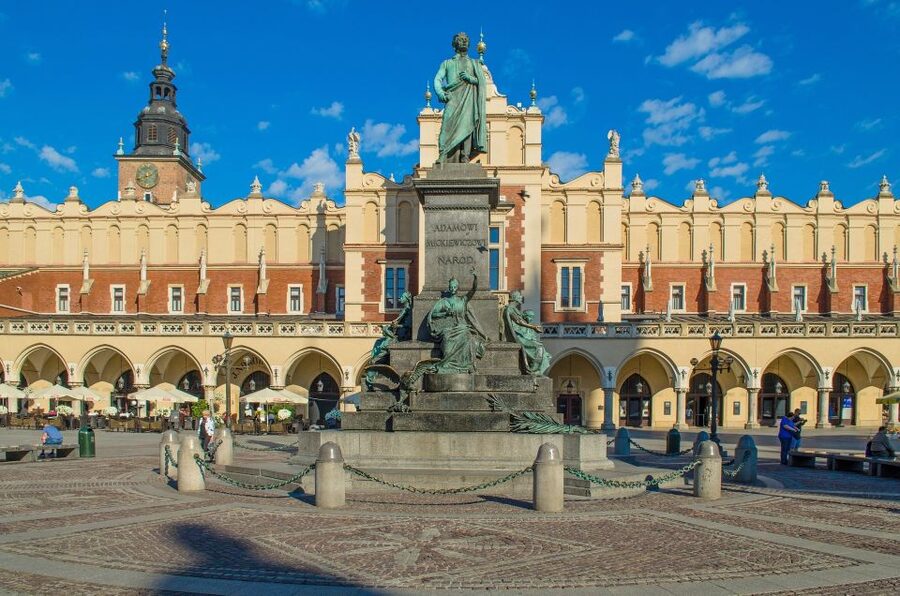
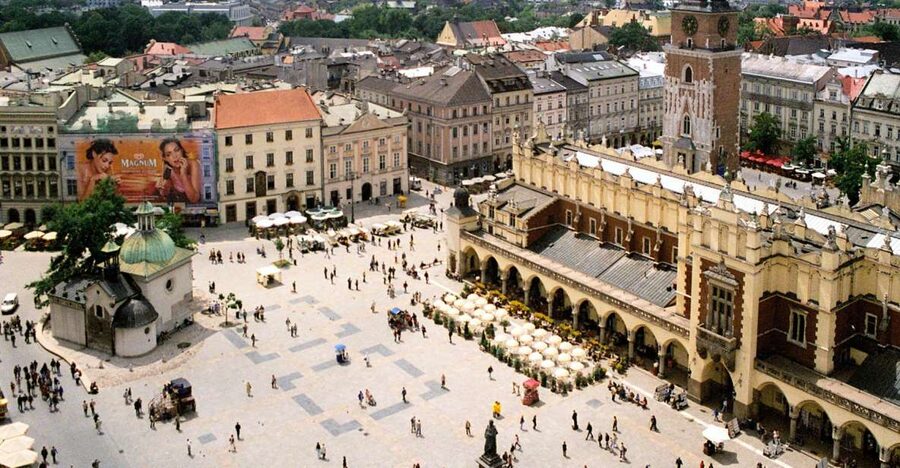
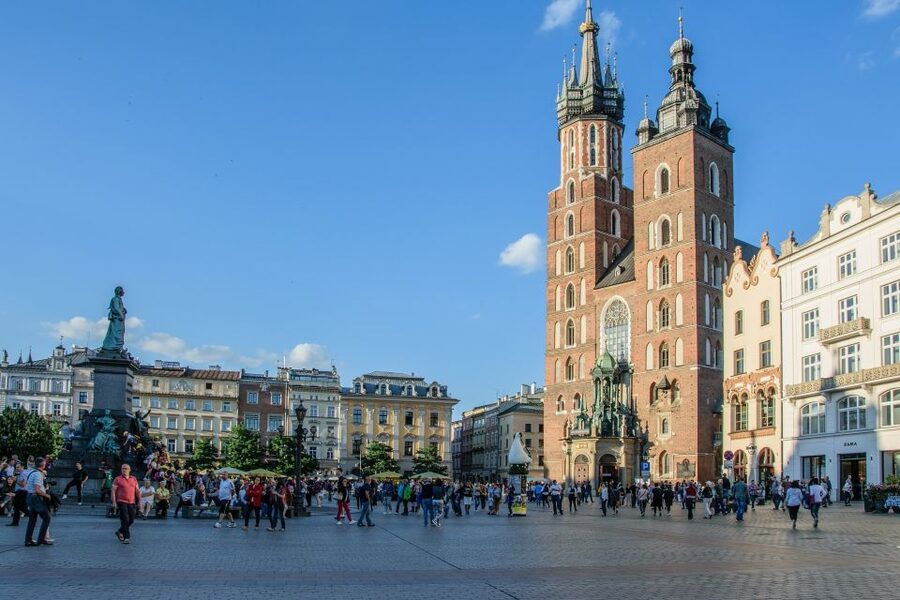
Krakow’s Main Market Square is the natural centerpiece of the Old Town. It is large, open, and lined with major buildings, making it an easy place to understand the importance of the medieval city. Your guide can connect the square to trade, royal power, religious life, and the daily business of Krakow.
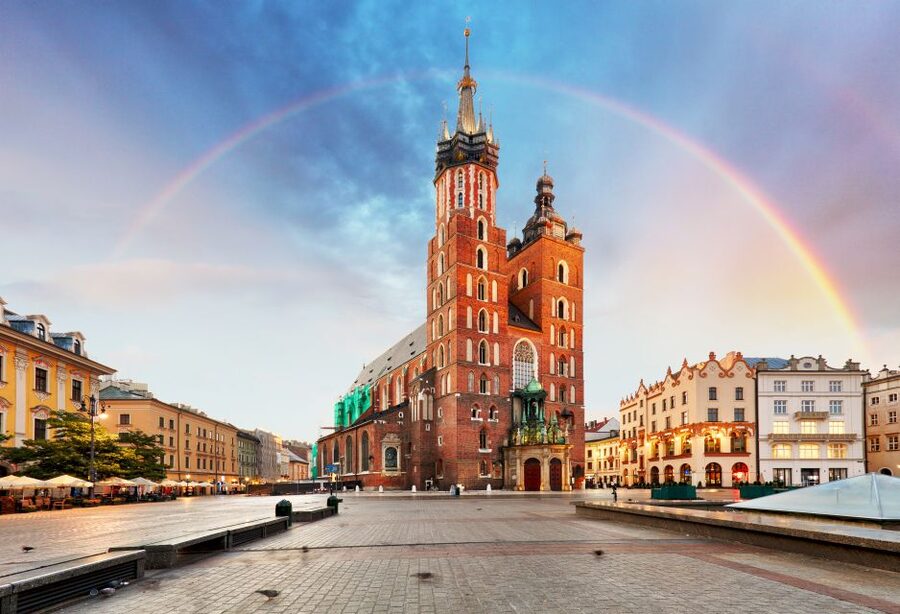
St. Mary’s Basilica is one of the main visual rewards. Its Gothic exterior gives the square a strong medieval profile, and the guide explains why the church matters rather than simply pointing it out for a photograph. You will hear about its role in Krakow’s religious and civic life, along with the details that are easy to miss when you explore alone.
The basilica is also a good example of why a private guide can be useful. You can pause for photographs, ask about the architecture, or request more context about Poland’s Catholic traditions. One guide may focus more on art, another on city history, and another on local stories. That personal exchange is one of the tour’s main advantages.
The drawback is that the experience is not a dedicated church visit with a long interior study. The focus is on the wider city story, and the exact time spent at each attraction depends on your guide and the selected option. If you want a detailed art tour of St. Mary’s Basilica, you may need a separate visit.
The Cloth Hall and Krakow’s trading past
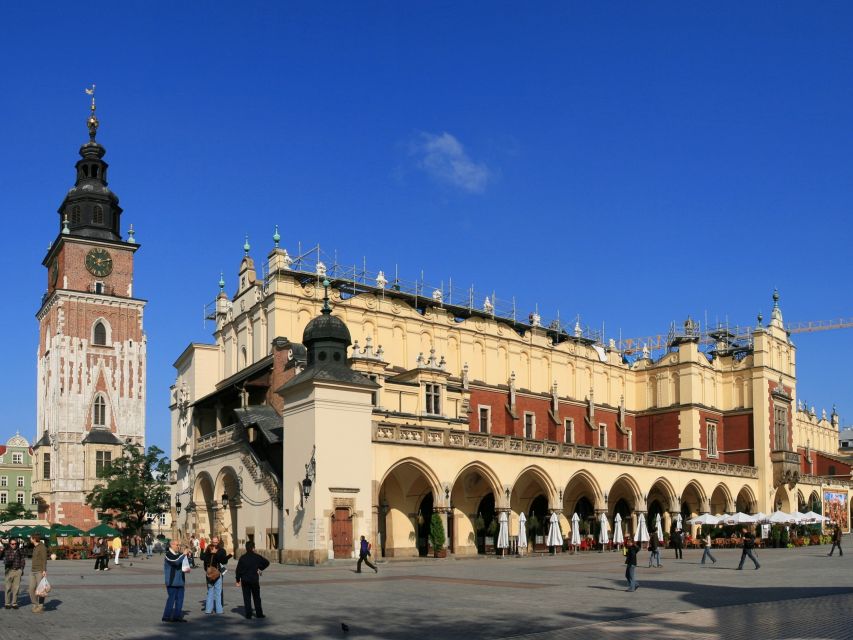
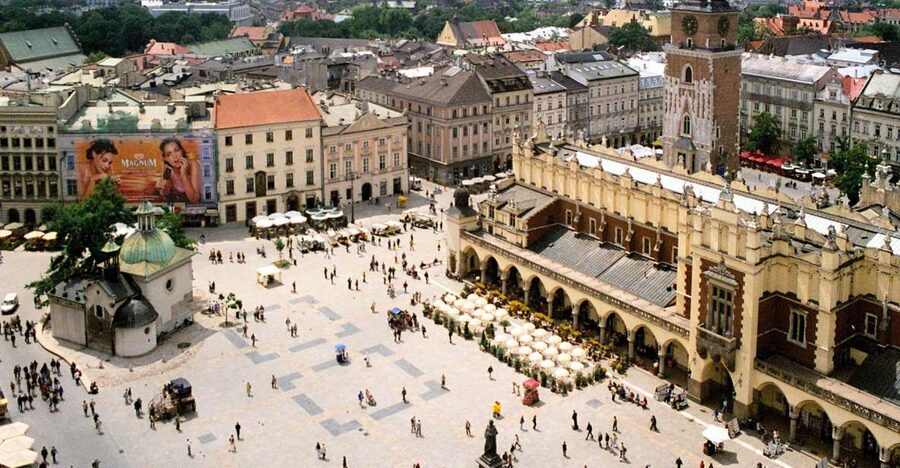
In the center of the Main Market Square, the Cloth Hall recalls the era when traveling merchants came to Krakow to trade and negotiate. Its decorative details make it one of the square’s most photogenic buildings, but the important point is its role in the city’s commercial life.
Your guide will help you read the building as more than a pretty Renaissance facade. Krakow grew through trade, and the market was a place where money, goods, languages, and political interests met. That gives the square a practical human story. Medieval Krakow was not only a royal and religious center. It was also a working marketplace.
This is the kind of stop that benefits from a private format. You can ask what the building was used for, how merchants operated, and how the square functions today. The tour also connects the historic center to modern everyday life, so you are not left with a frozen picture of Krakow as a museum city.
You should also expect the square to be busy, especially during popular sightseeing hours. Your guide can help you focus on the architecture and history, but this is not a quiet stop. Keep personal belongings secure and allow extra patience around other pedestrians.
Jagiellonian University and the Royal Route
The walk continues past Jagiellonian University, one of the world’s oldest universities. Its presence adds another layer to Krakow’s identity. The city was shaped not only by kings and merchants, but also by education, scholarship, and generations of students.
From here, the route follows the Royal Route toward Wawel Hill. This is the most coherent way to see the Old Town because the street sequence has a clear historical purpose. You are not simply ticking off isolated monuments. You are following the route connected with Polish rulers as they moved between the city and the royal complex.
I like this part of the tour because it gives structure to the walk. A guide can point out how Krakow’s buildings, streets, churches, and public spaces fit together. You also get a sense of how the Old Town works as a living part of the city rather than a collection of attractions.
The pace may vary. One guide may stop often for stories and photographs, while another may cover more ground. A past experience described a relaxed route with fewer sights and some awkward humor, while other tours were praised for clear, full explanations. If you want to see a great deal, tell your guide early. If you prefer time for pictures and questions, say that too.
A completely different kind of day out in Kraków:
- From Krakow: Auschwitz-Birkenau Guided Tour & Hotel Pickup
★ 4.5 · 33,358 reviews - From Krakow: Auschwitz-Birkenau Guided Tour & Hotel Pickup
★ 4.5 · 29,340 reviews - Krakow: Auschwitz Guided Tour with Optional Hotel Pickup
★ 4.5 · 15,280 reviews - Krakow–Zakopane: Cable Car, Chocholow Baths, Cheese & Vodka
★ 5.0 · 10,720 reviews
Wawel Hill, courtyards, and royal power
Wawel Hill is the high point of the four-hour tour, both physically and historically. The complex brings together churches, Renaissance buildings, royal spaces, and centuries of Polish political life. You will visit the courtyards and learn about Wawel Castle as the former royal residence.
The courtyards are especially useful for understanding the scale and design of the complex. Renaissance architecture here feels different from the Gothic churches in the Old Town, and the guide can explain how the site changed over time. Wawel is not one single monument. It is an architectural group built and altered across many periods.
The tour does not automatically include every museum room or castle exhibition. Museum entrance fees are optional and not included, so you should not expect a full interior castle tour unless you arrange that separately. This keeps the walking tour focused, but it also means you may want extra time at Wawel after the guide finishes.
For many people, Wawel is the strongest reason to book this route. You get the setting, the royal story, and the main courtyards without having to organize the complex yourself. If you want an in-depth visit to the castle interiors, treat the walking tour as an introduction and return later.
Inside Wawel Cathedral
Wawel Cathedral adds emotional weight to the visit. This is where Polish kings were crowned and laid to rest, so the building represents both ceremony and national memory. It helps explain why Wawel remains so important to Poland.
The cathedral also gives the tour a useful change of pace. After the open spaces of the Main Market Square and the courtyards, you move into a place tied to worship, royal ritual, and burial. Your guide can connect the cathedral to the broader story of Polish rulers and the country’s changing fortunes.
The information provided for this experience says you will look inside Wawel Cathedral. It does not promise entry to every paid section or museum area at Wawel, so check with your guide if you want more than the main visit. Optional museum admission is not included in the tour price.
Krakow after 1939, communism, and the present day
The most unusual part of this experience is its effort to cover Krakow beyond the medieval center. Many first visits focus on kings, churches, and handsome squares. This tour also discusses World War II, the Polish People’s Republic, and the city’s transformation in recent decades.
That broader timeline matters. Krakow is not only a preserved historic center. It is also a city shaped by occupation, political change, postwar life, new business centers, and a large international tourism industry. The guide’s job is to help you connect those periods rather than treating modern Krakow as an afterthought.
This portion is especially useful if you want to understand local life. The description promises discussion of everyday Krakow and the things the city is famous for, along with places known mainly to locals. The exact modern stops are not fixed in the information provided, so the guide’s choices will shape this part of the experience.
I would ask direct questions here. What changed after World War II? How did the Polish People’s Republic affect ordinary life? What makes Krakow a modern business center today? A private tour gives you a better chance to shape the conversation than a large group walk.
The six-hour extension into Kazimierz
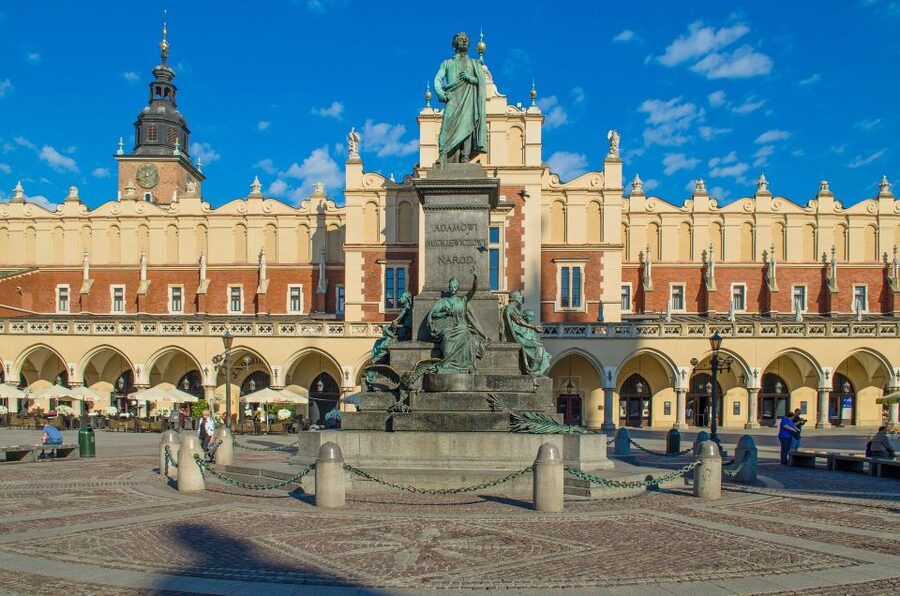
If you have six hours, the extension into Kazimierz adds a major part of Krakow’s cultural story. Kazimierz is historically associated with Krakow’s Jewish community and is now one of the city’s main cultural areas. The district still carries its historical identity while also functioning as a lively part of present-day Krakow.
The extended route includes highlights of Kazimierz and tickets to Tempel Synagogue. That makes the longer option more than a simple extra stroll. You gain access to a place of worship and a chance to discuss Jewish life, the district’s past, and its place in modern Krakow.
Tempel Synagogue is closed to the public on Saturdays and Jewish holidays. When that happens, the visit can be replaced with tickets to the Tadeusz Pankiewicz Pharmacy in Kazimierz. This replacement keeps the focus on the district’s wartime history and local memory, though it is a different kind of experience.
My practical advice is not to combine too much into one day. A four-hour Old Town and Wawel walk already covers a lot of ground. The six-hour version is worthwhile if Kazimierz is a priority and you want one guide to connect the areas. If you also plan to visit the Schindler museum, consider spreading these visits across two days rather than rushing through all of them.
What the $137 price means
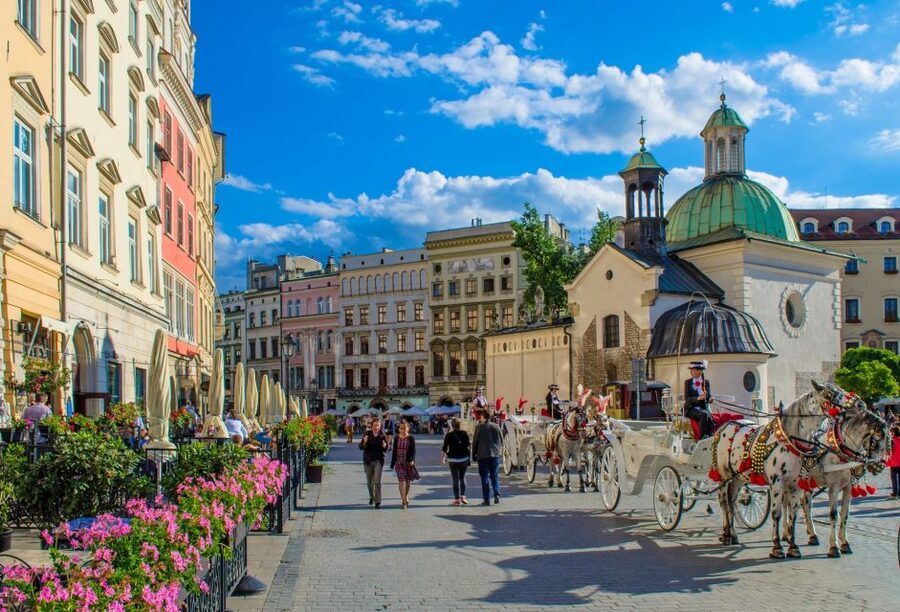
At $137 per person, this is not a budget walking tour. Its value depends on how many people are in your private party and how much you want personal attention. For a couple or small family, the cost may be reasonable if you want a guide who can adjust the pace, explain complicated history, and answer your specific questions.
The fee includes a private Krakow highlights walk, a five-star licensed guide in your chosen language, the Old Town, Wawel Hill, and courtyards. The six-hour option includes the Kazimierz route and Tempel Synagogue tickets. Museum entrance fees beyond the included attractions are not part of the price.
The language choice is a real benefit. Tours are offered in English, Spanish, French, German, Italian, Polish, and Russian. Strong experiences have included guides who spoke French very well, and one German-language experience was praised for its clear explanations.
The weak point is consistency. The guide makes a major difference, and the tour can feel less valuable if the person leading it is impatient with photographs or gives thin explanations. If your guide is not meeting your needs, explain what you want early. A private format gives you a better chance to improve the experience as you go.
Free cancellation up to 24 hours before the tour and reserve-now, pay-later booking also reduce the financial risk. Still, I would choose a start time that gives you enough daylight and allows for slower walking in poor weather.
Who should book this Krakow walk?
I would recommend the four-hour version if you are visiting Krakow for the first time and want a strong orientation without arranging several separate visits. It works particularly well for couples, families, and small groups who enjoy asking questions and setting their own pace.
It is also a good fit if you want more than medieval architecture. The discussion of World War II, communism, and current Krakow makes the route more useful for anyone interested in how the city changed over time.
Choose the six-hour version if Kazimierz is high on your list and you want Tempel Synagogue included. I would avoid adding it simply because more sights sound better. Six hours walking can be demanding, especially in rain or snow, and Kazimierz deserves attention rather than a hurried final hour.
You may prefer a different plan if your main goal is extensive time inside Wawel Castle’s museum rooms, St. Mary’s Basilica, or other paid attractions. This tour introduces the key places and provides context, but it is not designed as a full museum program.
FAQ
Where does the Krakow walking tour meet?
Meet your guide in front of Barbakan Krakowski on Basztowa, from the Brama Floriańska side of the Old Town.
Is hotel pickup available?
Pickup is available from accommodations located in Krakow’s Old Town. You must provide your full address when booking.
What happens if my accommodation is outside the Old Town?
If you do not provide an address, or your accommodation is more than 1.5 kilometers from the meeting point, you will meet the guide at Barbakan Krakowski.
Which languages are available?
The tour is offered in Spanish, English, French, German, Italian, Polish, and Russian.
Is Wawel Cathedral included?
Yes. The tour includes a visit inside Wawel Cathedral, where Polish kings were crowned and buried.
Does the six-hour tour include Kazimierz?
Yes. The extended six-hour option includes a tour of Kazimierz and tickets to Tempel Synagogue.
What happens if Tempel Synagogue is closed?
Tempel Synagogue is closed on Saturdays and Jewish holidays. It can be replaced with tickets to the Tadeusz Pankiewicz Pharmacy in Kazimierz District.
Should you book it?
Book this tour if you want private historical context, a flexible conversation, and a route that joins Krakow’s medieval center to its modern story. The four-hour version gives you the essential Old Town and Wawel sights, while the six-hour option makes sense when Kazimierz is a priority.
At $137 per person, I would book it for a small group that values personal attention. I would also confirm your preferred language, share your interests at the start, and plan for changing weather. You will get the most from this experience when you treat it as a guided introduction to Krakow, not as a substitute for every museum in the city.
Just added around Kraków
- Rynek Underground Museum & Wawel Castle, Cathedral – Cracow★ 5.0 · 3 reviews
- Schindler’s Factory, Ghetto and Plaszow Camp Guided Tour★ 4.7 · 3 reviews
- Nowa Huta – a guided tour of a utopian socialist city★ 5.0 · 3 reviews
- Krakow: Kazimierz by Golf Cart and Schindler’s Factory Tour★ 4.8 · 3 reviews
- Private Krakow City Tour by Car and Walk with private tour guide★ 5.0 · 3 reviews
- Krakow: Jewish Traces Private Electric Car Tour★ 4.1 · 3 reviews
- Discover the Jewish Quarter with a Bike Tour★ 5.0 · 3 reviews
- Krakow: Indoor Go-Karting (24-Minute Races)★ 4.8 · 3 reviews
Walking Tours, compared.




Gdańsk City Sights & History Guided Walking Tour in English
Read our review →


Browse the lists this tour appears in