
REVIEW · KRAKóW TOURS
Kraków Holocaust Tour
The past is still visible in Kraków. This two-hour walk covers the former Jewish ghetto in full, using surviving streets, buildings, and fragments of the ghetto wall to explain how Nazi ghettos worked. I like the focus on the whole ghetto, not just a few famous sights, and the chance to understand daily life rather than only hear a list of dates.
I also like that the guide has a graduate background in Geography and History. The Spanish-language tour has been praised for being both well informed and easy to follow, with one recent participant calling it very interesting and another saying the guide made it enjoyable. The main consideration is that this is a serious subject, and two hours of walking through it can feel emotionally heavy.
In This Review
- Key points about the Kraków Holocaust Tour
- Why Kraków’s former ghetto matters
- Beginning with the two surviving wall fragments
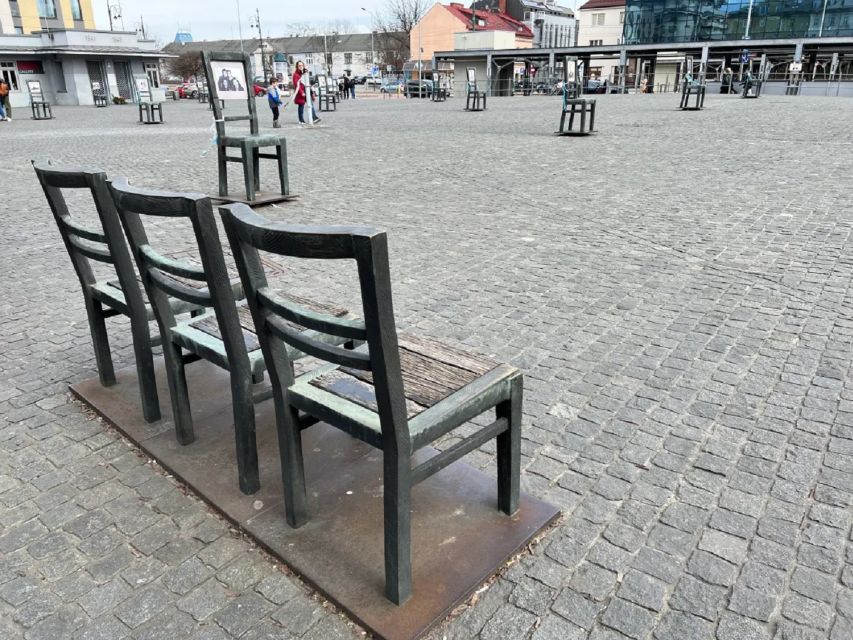
- Ghetto Heroes Square and the chairs
- The buildings that made the ghetto function
- Daily life under Nazi control
- The Pharmacy Under the Eagle
- What the $16 price gets you
- Language, meeting details, and practical planning
- Who should book this Kraków ghetto walk?
- Should you book the Kraków Holocaust Tour?
- FAQ
- Where does the Kraków Holocaust Tour take place?
- How long does the tour last?
- What language is the tour in?
- What is included in the price?
- Are food and drinks included?
- What should I bring?
- Is the tour wheelchair accessible?
- Does the tour visit the Pharmacy Under the Eagle?
Key points about the Kraków Holocaust Tour
- Two hours across the entire former ghetto: The route is designed to cover the old ghetto district extensively, rather than stopping at one memorial.
- A surviving urban setting: Many houses and institutional buildings still look much as they did between 1941 and 1943.
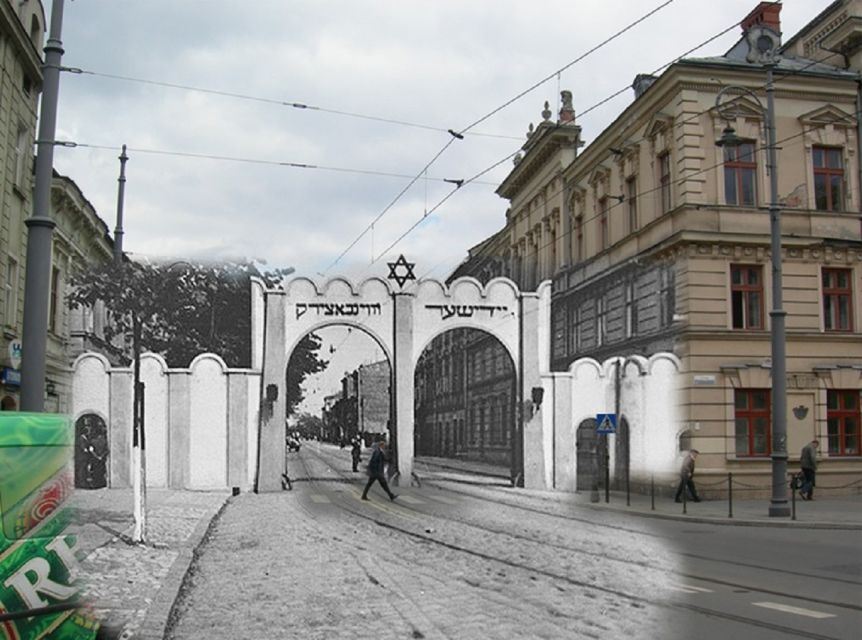
- History explained through places: You see wall fragments, former gates, hospitals, factories, a prison, synagogues, orphanages, and other sites linked to ghetto life.
- The Pharmacy Under the Eagle: The tour ends with a visit to this important museum, one of Kraków’s key places for understanding the Holocaust.
- Spanish-language guidance: The live guide speaks Spanish and has graduate training in Geography and History.
- Strong value at $16: For a two-hour guided history walk, the price is modest, especially if you want structure and context rather than a self-guided stroll.
Why Kraków’s former ghetto matters
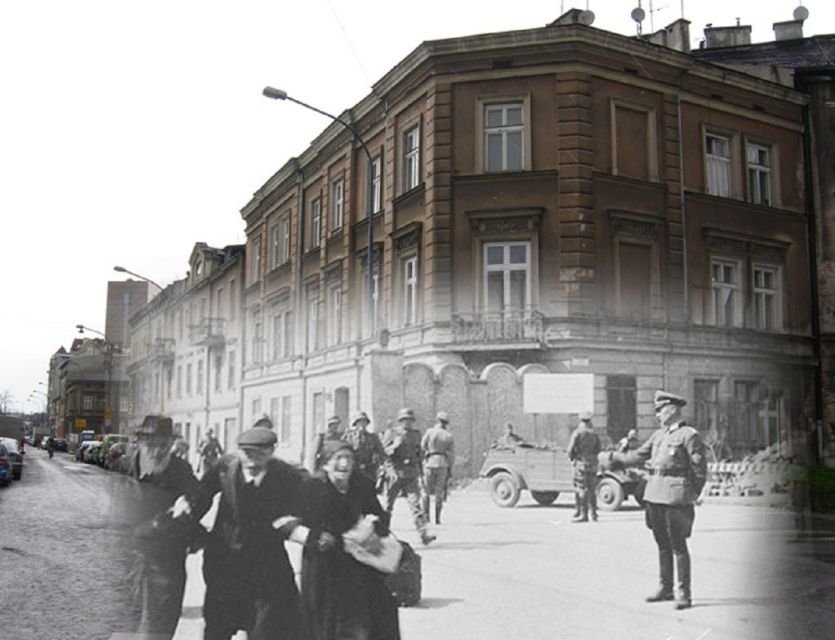
The former Kraków ghetto is not presented as a distant historical site separated from modern life. It remains part of the city, and much of its physical setting has survived. Old houses, offices, hospitals, factories, and other buildings help you understand how the ghetto functioned as an organized system.
That physical continuity matters. A photograph can show you a wall, but walking beside a surviving fragment gives scale. You can see how streets connect, how institutions were placed within the district, and how the ghetto was not simply a fenced neighborhood. It was a controlled system built to confine Jewish residents during the Nazi occupation.
The tour also puts Kraków within the wider history of Nazi ghettos in Poland. You learn why ghettos were created, how they were managed, and what features Kraków shared with other ghettos. The guide’s job here is not just to point at buildings. It is to explain the machinery behind them.
That makes this a useful choice if you already know something about the Holocaust but want a clearer sense of how the system operated on the ground. It also works for first-time visitors, provided you are ready for a sober and detailed subject.
A few more Kraków trips worth weighing up
- From Krakow: Auschwitz-Birkenau Guided Tour & Hotel Pickup
★ 4.5 · 33,358 reviews - From Krakow: Auschwitz-Birkenau Guided Tour & Hotel Pickup
★ 4.5 · 29,340 reviews - Krakow: Auschwitz Guided Tour with Optional Hotel Pickup
★ 4.5 · 15,280 reviews
Beginning with the two surviving wall fragments
The two remaining fragments of the ghetto wall are among the clearest starting points. They show how the authorities physically marked the boundary of the confined district. The wall was not only a barrier. It was a visible symbol of separation, control, and exclusion.
At these points, you can expect the guide to explain the purpose of the wall and how it fitted into the larger organization of the ghetto. The value is in linking the structure to policy. You are not simply looking at old masonry. You are considering how an entire population was restricted and watched.
The surviving pieces are especially useful because the wider district still retains much of its earlier appearance. You might find it easier to picture the ghetto as an operating area here than at a stand-alone monument. At the same time, do not expect a perfectly preserved open-air museum. This remains a city district, with modern life continuing around the historical remains.
Wear comfortable shoes. The tour lasts two hours and covers the district on foot, so footwear will affect how much attention you can give to the guide.
Ghetto Heroes Square and the chairs
Ghetto Heroes Square is one of the tour’s important stops. It is also known as the Square of Chairs, a name linked to its striking memorial arrangement. The chairs create a stark image of absence and forced removal.
This stop gives the tour a different pace. The wall fragments show physical confinement, while the chairs help you think about people being taken away from homes and ordinary routines. The guide can connect the square to the wider process of deportation and destruction without treating it as an isolated memorial.
I find this kind of stop most useful when you pause to look rather than rush through for a photograph. The square is a place for reflection, but the historical explanation also matters. The tour is at its best when it connects the memorial to the practical workings of the ghetto.
The buildings that made the ghetto function
A major strength of this route is its attention to institutions. The tour includes important buildings linked with intellectual meetings, resistance, police agencies, labor organizations, hospitals, and the Judenrat. You also see the locations of former gates, the prison, factories, synagogues, and orphanages.
This list tells you something important: daily life in the ghetto depended on a network of organizations, some imposed by the Nazi authorities and others created or maintained by the people trapped inside. The Judenrat, for example, belongs to the painful and complicated story of forced administration. Labor organizations and factories point to the role of work in ghetto life. Hospitals and orphanages show the basic needs that continued even under extreme conditions.
The route also recognizes less familiar places. Visitors often know the famous square and pharmacy, but they may not realize how many kinds of institutions operated inside the district. A hospital, prison, factory, synagogue, or orphanage each reveals a different part of life under confinement.
You should expect this section to be information-heavy. That is a benefit if you want detail, but it may feel demanding if you prefer a short memorial visit with limited explanation. The guide’s historical training is particularly useful here because the sites are not always visually dramatic. Some may be identified by their location and story rather than by a large sign or preserved interior.
A completely different kind of day out in Kraków:
- Krakow–Zakopane: Cable Car, Chocholow Baths, Cheese & Vodka
★ 5.0 · 10,720 reviews - Krakow: Auschwitz-Birkenau Guided Tour with Pickup & Lunch
★ 4.5 · 9,800 reviews - From Krakow: Wieliczka Salt Mine Tour
★ 4.6 · 9,393 reviews - Krakow: Auschwitz-Birkenau Guided Tour Pickup/Lunch Options
★ 4.5 · 9,057 reviews
Daily life under Nazi control
The central question of the tour is how people lived in the ghetto. The answer is not reduced to one theme. You learn about administration, labor, policing, health, children, worship, housing, and the limits placed on movement.
This approach helps you see the ghetto as a place where ordinary activities continued under extraordinary pressure. People still needed food, medical care, places for children, religious spaces, and ways to earn or organize work. Yet every part of life operated within a system created by Nazi persecution.
The guide also explains what ghettos were intended to do. Their purpose was not simply to house people temporarily. They were part of a wider process of segregation, exploitation, deportation, and the Final Solution. Understanding that process gives the individual locations a stronger meaning.
For me, this is where a guide adds real value. A self-guided walk can show you what remains, but it may not explain why a particular building mattered or how one institution related to another. The tour supplies that framework in Spanish, which is a major advantage for Spanish-speaking visitors who want more than translated labels.
The tone is serious, but the feedback about the guide being engaging is worth noting. A guide who can make difficult material clear and approachable helps you stay focused during a long sequence of heavy subjects. Engaging should not mean lighthearted. Here, it means the information is presented in a way you can follow.
The Pharmacy Under the Eagle
The tour finishes at the Pharmacy Under the Eagle, one of Kraków’s most important museums connected with the Holocaust. Its place at the end of the route makes sense. After seeing the district and learning how it operated, you reach a museum devoted to one of its most significant institutions.
The pharmacy is important because it connects the larger system to the experience of people inside the ghetto. A pharmacy was a place associated with medicine and help, but in this setting it also became part of the story of survival under persecution. The museum gives the walking tour a more focused final stop.
Check the exact visit arrangements when you book, since the supplied information identifies the pharmacy as part of the experience but does not give details about how long you remain inside or which exhibits are included. The tour description does clearly place it at the finish, so plan for the experience to end there rather than at the starting location.
What the $16 price gets you
At $16 per person, this is an inexpensive way to put the former ghetto into context. You are paying for two hours with a live Spanish-speaking guide, not for food, drinks, or a separate meal stop. Since the route covers many locations, the value comes from the explanation and organization.
I would especially consider this price good value if you have limited time in Kraków. You can spend hours trying to identify locations on your own and still miss the connection between them. This walk gives you a defined route and a historian’s framework for reading the district.
The low price does not mean the experience is casual. You should treat it as a focused historical visit. It is not designed around entertainment, shopping, or scenic sightseeing. Its purpose is to help you understand a difficult period through the places that remain.
The tour has a 4.9 rating from five submitted ratings, with praise directed at the guide’s information and ability to make the material engaging. That is a small sample, so I would not treat the number as final proof of quality. Still, the comments point to the aspect that matters most here: clear guiding.
Language, meeting details, and practical planning
The live tour is in Spanish. That makes it a natural fit for Spanish-speaking visitors, couples, families, or small groups who want to discuss the subject without relying on an English translation.
The meeting instruction is simple: look for a guide carrying a gray umbrella. That detail is useful, especially in a busy city or on a cloudy day. The provided information does not name the guide, so you should identify the person by the gray umbrella rather than expect a specific individual.
The tour is wheelchair accessible according to the activity information. Comfortable shoes are recommended, and that advice is practical because the visit covers the former ghetto district on foot. Food and drinks are not included, so take care of those before or after the walk.
You can cancel up to 24 hours in advance for a full refund, and you can reserve now while paying later. Those terms are helpful if your Kraków schedule may shift, though they should not distract from the main point: this is a short, planned history walk that works best when you arrive ready to concentrate.
Who should book this Kraków ghetto walk?
I would recommend it to anyone who wants a fuller understanding of Kraków’s Jewish ghetto and prefers a guide to a museum-only visit. It is especially suitable if you speak Spanish and want historical explanation in that language.
It is also a good fit for visitors who have already seen the main Holocaust-related sites but feel they know the names without understanding the system. The focus on organizations, buildings, and daily life fills that gap.
You may want a different experience if you are looking for a light city walk, a broad introduction to Kraków, or a visit centered mainly on beautiful architecture. The district’s preserved appearance is historically important, but the mood is gloomy and the subject is painful. Children and younger teenagers may need extra preparation, depending on their age and sensitivity.
Give yourself enough emotional space afterward. The tour lasts only two hours, but it covers confinement, forced administration, labor, illness, deportation, and the Final Solution. A quiet stop after the tour may be more appropriate than immediately rushing to the next attraction.
Should you book the Kraków Holocaust Tour?
Book it if you want a serious, place-based explanation of how the Kraków ghetto worked. The combination of surviving streets, two wall fragments, Ghetto Heroes Square, institutional buildings, and the Pharmacy Under the Eagle gives you far more context than a quick look at one memorial.
At $16, it offers strong value, particularly for Spanish-speaking visitors. I would choose it for the detailed route and the guide’s praised ability to explain difficult material clearly. Just arrive in comfortable shoes, expect a somber visit, and allow yourself time to process what you see.
FAQ
Where does the Kraków Holocaust Tour take place?
The tour takes place in the former Kraków Jewish ghetto in Lesser Poland, Poland. It covers the old ghetto district extensively.
How long does the tour last?
The tour lasts two hours.
What language is the tour in?
The live tour guide speaks Spanish.
What is included in the price?
The price includes a Spanish-speaking guide with a graduate background in Geography and History.
Are food and drinks included?
No. Food and drinks are not included.
What should I bring?
Bring comfortable shoes because the experience covers the former ghetto district on foot.
Is the tour wheelchair accessible?
Yes, the activity information states that the tour is wheelchair accessible.
Does the tour visit the Pharmacy Under the Eagle?
Yes. The route finishes with a visit to the Pharmacy Under the Eagle, an important Kraków museum connected with the Holocaust.
Just added around Kraków
- Rynek Underground Museum & Wawel Castle, Cathedral – Cracow★ 5.0 · 3 reviews
- Schindler’s Factory, Ghetto and Plaszow Camp Guided Tour★ 4.7 · 3 reviews
- Nowa Huta – a guided tour of a utopian socialist city★ 5.0 · 3 reviews
- Krakow: Kazimierz by Golf Cart and Schindler’s Factory Tour★ 4.8 · 3 reviews
- Krakow: Jewish Traces Private Electric Car Tour★ 4.1 · 3 reviews
- Private Krakow City Tour by Car and Walk with private tour guide★ 5.0 · 3 reviews
- Krakow: Indoor Go-Karting (24-Minute Races)★ 4.8 · 3 reviews
- Discover the Jewish Quarter with a Bike Tour★ 5.0 · 3 reviews
Kraków Tours, compared.

Auschwitz-Birkenau Guided Tour & Hotel Pickup
Read our review →Auschwitz-Birkenau Guided Tour & Hotel Pickup
Read our review →
Auschwitz Guided Tour with Optional Hotel Pickup
Read our review →
Zakopane: Cable Car, Chocholow Baths, Cheese & Vodka
Read our review →
Auschwitz-Birkenau Guided Tour with Pickup & Lunch
Read our review →

Auschwitz-Birkenau Guided Tour Pickup/Lunch Options
Read our review →