

REVIEW · MUSEUMS
Krakow: Museum of Living Butterflies 2+1
Butterflies turn a short museum visit into a close look at nature. Krakow’s Museum of Living Butterflies offers more than colorful wings behind glass. You can see butterflies from different parts of the world, learn how their wings get their patterns, and understand why protecting insect diversity matters. I love the mix of simple science and direct observation.
I also like the small group limit of three people, which suits a couple, a parent with children, or a small family. The $36 group price can be good value if you fill all three places. The main drawback is that this is a self-guided visit, so you will not have a guide leading you from display to display or answering questions on the spot.
In This Review
- Key things to know before you go
- What the Museum of Living Butterflies offers
- Seeing daytime and nighttime species
- A simple itinerary, from arrival to final photographs
- Start with the general collection
- Move into life cycle and anatomy
- Consider their role in ecosystems
- Take photographs without using flash
- How much time should you allow?
- The $36 price and who gets good value
- Who will enjoy this most?
- Access, comfort, and practical limits
- How to make the visit better
- Should you book the Krakow Butterfly Museum?
- FAQ
- How much does admission to the Krakow Museum of Living Butterflies cost?
- How long is the ticket valid?
- Are guided tours included?
- Can I take photographs inside the museum?
- Is the museum wheelchair accessible?
- Can I cancel the booking for a refund?
Key things to know before you go
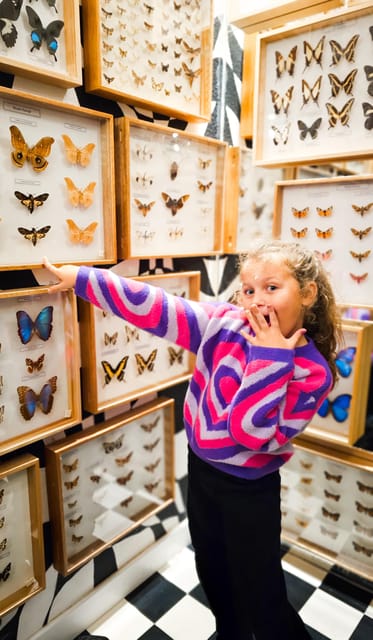
- Living butterflies from around the world: See local and exotic species in one compact museum visit.
- More than pretty wings: Learn about butterfly anatomy, life cycles, wing scales, colors, and their place in ecosystems.
- Good for careful photographers: You may take pictures, but flash photography is not allowed.
- One-day admission: Your booking is valid for one day, with starting times shown when you check availability.
- Small-group pricing: The $36 rate covers up to three participants, making it more useful for a small party than for a solo visitor.
- Mostly wheelchair accessible: Most areas can accommodate wheelchair users, though some sections may be difficult for people with mobility limitations.
What the Museum of Living Butterflies offers

This experience is built around observation. Instead of seeing only pinned specimens or printed illustrations, you get the chance to watch living butterflies and connect their appearance with the science behind it.
The museum covers the Lepidoptera order, the insect group that includes both butterflies and moths. That distinction matters because butterflies are often treated as decoration, while moths and butterflies together form a much broader part of the natural world.
You can learn that butterfly wings are covered with tiny scales. Those scales create the colors and patterns that make each species look different. Some colors help with camouflage, while others may warn predators or help one butterfly recognize another. The information provided does not promise a specialist lecture, but it gives you a useful framework for looking closely instead of simply walking past the insects.
I like this approach because the museum can work for different ages. Children may focus on movement and color. Adults may take more interest in anatomy, metamorphosis, and the role butterflies play in ecosystems. You do not need a background in biology to get something from the visit.
More Museum Visits in Kraków
- Auschwitz-Birkenau Museum and Memorial Guided Tour from Krakow
★ 4.5 · 1,510 reviews - Krakow: Rynek Underground Museum Guided Tour
★ 4.6 · 1,122 reviews - Krakow Schindler’s Factory Museum Guided Tour in English
★ 4.5 · 650 reviews
Seeing daytime and nighttime species
One useful part of the visit is the chance to learn about butterflies with different activity patterns. Some are active during daylight, while others are associated with nighttime activity. That gives the collection a little more range than a display focused only on the most familiar daytime species.
The difference is worth paying attention to. A butterfly museum can easily become a parade of bright wings, but the contrast between species helps you notice how varied these insects are. Look for differences in shape, color, and pattern rather than trying to identify every species.
The available information does not provide a species list, so you should not arrive expecting a guaranteed set of named butterflies. What you can count on is a broad display from local and exotic parts of the world, along with general information about how butterflies live and look.
A simple itinerary, from arrival to final photographs

This is not a guided walking tour with a series of timed stops. It is a museum admission that gives you access to all exhibition areas during the valid day. That makes the pace flexible, but it also means you are responsible for deciding how long to spend with each subject.
Start with the general collection
Begin by getting a sense of the range on display. The first pass lets you see the overall variety of colors, sizes, and patterns. Resist the urge to hurry straight toward the most striking butterfly. A slow first look will help you notice species that are less showy but just as interesting.
This is also a good point to read the basic information about the Lepidoptera order. Once you understand the difference between butterflies and moths, later displays become easier to interpret.
A completely different kind of day out in Kraków:
- From Krakow: Auschwitz-Birkenau Guided Tour & Hotel Pickup
★ 4.5 · 33,358 reviews - From Krakow: Auschwitz-Birkenau Guided Tour & Hotel Pickup
★ 4.5 · 29,340 reviews - Krakow: Auschwitz Guided Tour with Optional Hotel Pickup
★ 4.5 · 15,280 reviews - Krakow–Zakopane: Cable Car, Chocholow Baths, Cheese & Vodka
★ 5.0 · 10,720 reviews
Move into life cycle and anatomy
The educational material covers the butterfly life cycle and basic anatomy. This is where the visit gains real value for families. The insects are not just colorful objects. They pass through distinct stages, and their bodies are shaped for feeding, movement, reproduction, and survival.
The museum also explains wing coloring and the tiny scales that cover the wings. You will get more from the display if you pause to compare patterns. Notice how two butterflies can use completely different colors and markings, yet both belong to the same larger insect order.
Consider their role in ecosystems
The museum connects butterflies with biodiversity and ecosystems. That matters because butterfly populations can reflect wider changes in the natural world. The experience encourages you to think about habitat protection and the value of preserving many kinds of insects, not only the animals that attract the most attention.
This section may be especially useful if you want an outing with an environmental message. It is not presented as a full conservation course, so keep your expectations in proportion. You are getting an accessible introduction to the subject, not an extended academic program.
Take photographs without using flash
Photography is part of the appeal. You can take pictures of the butterflies and keep a visual record of the colors and patterns you notice. The no-flash rule is strict for a good reason: bright flashes can disturb or harm the butterflies.
Use the visit as a chance to slow down and observe. A phone camera may capture a useful memory, but the small details are often easier to appreciate with your eyes. Since the museum allows photographs but prohibits flash, check your camera settings before you begin.
How much time should you allow?
The ticket is valid for one day, and you can check availability for the available starting times. The supplied information does not give a fixed visit length, so you should plan around your own pace rather than a promised number of minutes.
If you read every educational panel, compare species, and take photographs, you will need more time than someone making a quick stop. Families may also move at an uneven pace, with children spending several minutes on one butterfly and almost none on the next.
The flexible one-day format is useful if you are fitting the museum into a larger Krakow schedule. You can plan it as a focused nature stop rather than committing to a long guided program. Still, check the available time when booking, since the activity has stated starting times even though the ticket remains valid for one day.
The $36 price and who gets good value
The price is $36 per group of up to three people. That works out to $12 per person if three people use the booking, before considering any exchange rate or booking conditions. For a couple, the effective cost is higher per person, but the group format can still be convenient if you want a private small-party booking.
The value depends on what you want from a museum visit. You are paying for admission to the Butterfly Museum, access to all exhibition areas, and permission to take photographs. Food, drinks, and a guided tour are not included.
I see this as a good choice if you want a compact attraction with an educational purpose. It is less compelling if you are looking for a long, fully narrated activity with a guide, transportation, or several separate attractions included in one ticket.
The reserve-now, pay-later option can help if your Krakow plans are still shifting. Free cancellation is available up to 24 hours before the activity for a full refund. That gives you some protection if the weather, your family schedule, or another booking changes.
Who will enjoy this most?
This museum suits several types of visitors.
Families with children get a clear subject, colorful subjects to look at, and basic science that does not require advanced reading. The life cycle and anatomy sections give parents a way to turn a visual visit into a short learning activity.
Couples and small groups may appreciate the limited booking size. With no larger tour group to follow, you can move at your own speed and spend longer taking photographs or reading the displays.
Nature-minded visitors will value the conservation message. The museum links butterflies with biodiversity and encourages you to think about how people can help protect the natural world.
Photographers get a chance to work with unusual colors and patterns, but the no-flash rule is important. If your camera performs poorly in low light or close indoor conditions, you may find the photography side less satisfying than expected.
The museum may be less suitable if you need a fully guided experience. No guided tour is included, and the information provided does not list a guide, an audio system, or scheduled talks.
Access, comfort, and practical limits
The museum is wheelchair accessible in most areas. Some sections may be difficult for people with mobility impairments, so anyone who needs full step-free access should check the details before booking.
Comfortable shoes are recommended because you should expect a fair amount of walking. Even a small museum can require more time on your feet than expected when you stop at each display, wait for a good photograph, or move between exhibition areas.
Flash photography is not permitted inside. This is the most important rule to remember. Keep your flash switched off, and avoid treating the museum like a rapid-fire photo stop. The butterflies are the reason for the visit, so protecting them should come before getting one perfectly lit image.
There is no food or beverage service included. Plan to eat and drink before or after the visit rather than expecting refreshments as part of the experience.
How to make the visit better
Read the introductory material before focusing on photographs. Once you know what the displays are showing, the colors and patterns become easier to understand.
Give yourself time to compare butterflies from different regions. The appeal is not only in finding the biggest or brightest insect. Look at how wing shapes, markings, and colors vary across species.
If you are visiting with children, ask them to follow the life cycle from one stage to the next. You can also ask them to find differences between daytime and nighttime species. Simple questions keep the visit active without turning it into a formal lesson.
Bring a camera, but set it up before entering the exhibition areas. Confirm that flash is off, and remember that a quiet, patient approach will usually produce better photographs than constant movement.
Finally, keep the environmental message in view. The museum wants you to see butterflies as part of a wider ecosystem. That makes the visit more meaningful than a quick collection of pretty pictures.
Should you book the Krakow Butterfly Museum?
I would book this experience if you want a small, flexible museum visit with a clear educational angle. The broad selection of butterflies, the chance to photograph them, and the information about life cycles and wing scales give the outing more substance than a basic display.
The strongest value comes when three people share the $36 group price. Families, couples, and small parties can also benefit from the relaxed format and one-day validity. The high rating and praise for the unusual nature of the visit fit what the experience offers: it is different from the usual Krakow sightseeing stop and can add variety to a city break.
I would skip it if you need a guide, a fixed tour narrative, or extensive accessibility throughout every section. For everyone else, especially families and anyone curious about insects, it is a pleasant and worthwhile change of pace.
FAQ
How much does admission to the Krakow Museum of Living Butterflies cost?
Admission costs $36 per group of up to three participants.
How long is the ticket valid?
The ticket is valid for one day. You should check availability to see the available starting times.
Are guided tours included?
No. Guided tours are not included in the admission.
Can I take photographs inside the museum?
Yes, photography is allowed. Flash photography is not permitted inside the museum.
Is the museum wheelchair accessible?
The museum is wheelchair accessible in most areas, but some sections may be difficult for people with mobility impairments.
Can I cancel the booking for a refund?
Yes. You can cancel up to 24 hours in advance for a full refund.
Just added around Kraków
- Rynek Underground Museum & Wawel Castle, Cathedral – Cracow★ 5.0 · 3 reviews
- Schindler’s Factory, Ghetto and Plaszow Camp Guided Tour★ 4.7 · 3 reviews
- Nowa Huta – a guided tour of a utopian socialist city★ 5.0 · 3 reviews
- Krakow: Kazimierz by Golf Cart and Schindler’s Factory Tour★ 4.8 · 3 reviews
- Private Krakow City Tour by Car and Walk with private tour guide★ 5.0 · 3 reviews
- Krakow: Jewish Traces Private Electric Car Tour★ 4.1 · 3 reviews
- Discover the Jewish Quarter with a Bike Tour★ 5.0 · 3 reviews
- Krakow: Indoor Go-Karting (24-Minute Races)★ 4.8 · 3 reviews
Museums, compared.

Auschwitz-Birkenau Museum and Memorial Guided Tour from Krakow
Read our review →
POLIN Museum of the History of Polish Jews Ticket
Read our review →


Krakow Schindler’s Factory Museum Guided Tour in English
Read our review →
Auschwitz Birkenau Museum Guided Tour with Pickup
Read our review →
Browse the lists this tour appears in