
REVIEW · CITY TOURS
Private Warsaw City Tour by Retro Minibus with Hotel Pickup
Warsaw tells its story in layers. This private tour uses a colorful old Żuk minibus, a local guide, and a flexible route to connect the rebuilt Old Town with Praga, wartime memorials, royal parks, and Communist-era Warsaw. I especially like the custom itinerary and the ease of hotel pickup and drop-off. The main caution is simple: the minibus links the sights, but you still do plenty of walking, and the vintage vehicles may lack air conditioning and seat belts.
The tour costs $167.76 per person and lasts about three hours. That can be good value for a group that wants a private guide and a quick orientation, but it is not the cheapest way to see Warsaw if you are traveling alone or with only one companion. Guides such as Artur and Marek Sidorenko have earned particular praise for clear English, strong local knowledge, and a friendly manner.
In This Review
- Key points to know before booking
- Why the retro Żuk changes the Warsaw sightseeing experience
- Old Town: the best place to begin Warsaw
- The Royal Route links grand buildings with daily Warsaw
- Praga shows the city that escaped wartime destruction
- Łazienki offers a calmer hour among palaces and peacocks
- Muranów and the Warsaw Jewish Ghetto
- Communist Warsaw, with the Palace of Culture as a landmark
- A serious World War II route
- The guides make the private format worthwhile
- Price, timing, and comfort
- Who should book this Warsaw tour?
- FAQ
- How long is the private Warsaw retro minibus tour?
- Is hotel pickup and drop-off included?
- How many people can ride in one minibus?
- Can children join the tour?
- Do the vintage minibuses have air conditioning and seat belts?
- Can I cancel for a full refund?
- Should you book it?
Key points to know before booking
- The route is flexible: You can shape the three-hour visit around Old Town, wartime history, Praga, Łazienki, Communist Warsaw, or the Royal Route.
- The Żuk is part of the experience: This Polish-built Communist-era minibus has a wooden floor and a distinctly old-fashioned feel.
- Walking matters: The vehicle mainly carries you between areas, while sightseeing at each stop is done on foot.
- The tour is genuinely private: Each minibus carries up to eight people, and only your group takes part.
- The history is not watered down: Warsaw’s destruction, the Jewish Ghetto uprising, the Warsaw Uprising, and postwar Communist life receive serious attention.
- Comfort has limits: Historic vehicles have heating for winter, but no air conditioning, and some do not have seat belts.
Why the retro Żuk changes the Warsaw sightseeing experience
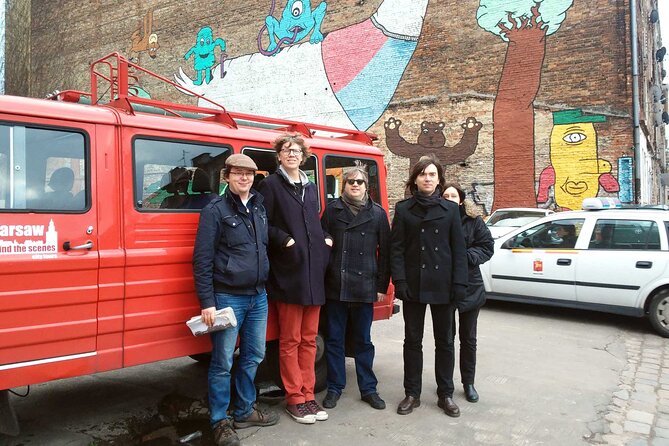
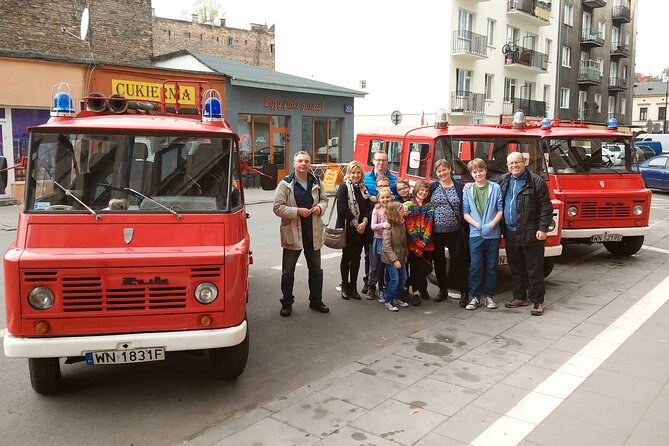
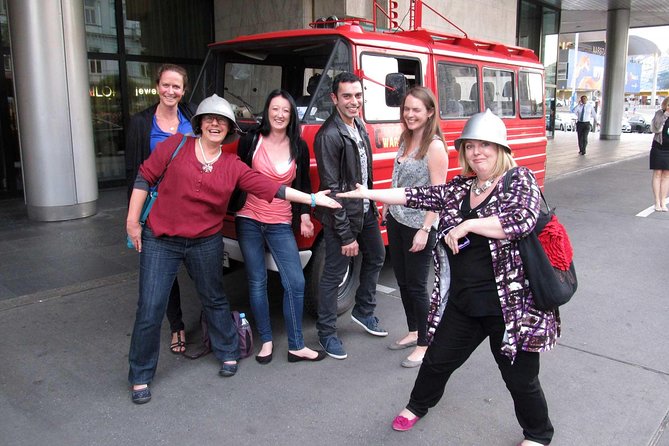
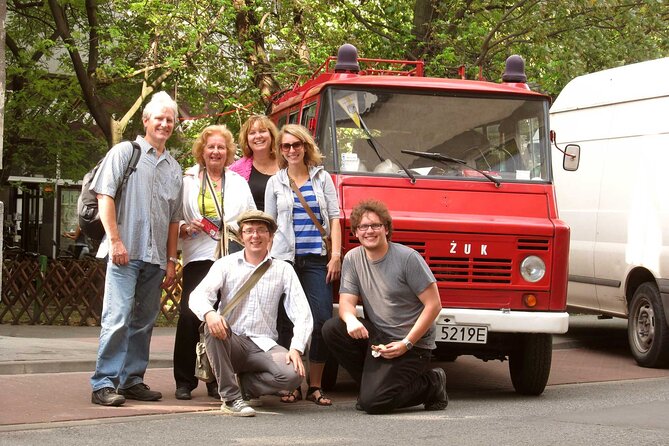
A standard city vehicle gets you from place to place. This tour adds a bit of theater before the guide even starts talking. The Żuk, often described as the beetle, was produced in Communist Poland and is now an unmistakable piece of transport history itself.
The details are wonderfully unpolished. The vehicle gets about ten miles per gallon and has a wooden floor. That is not luxury transport, and you should not expect the quiet, cool ride of a modern minibus. But the old vehicle fits the subject, especially on a route that looks at postwar reconstruction and life under Communist rule.
The fleet includes five minibuses, with room for up to eight people in each. That makes this a comfortable option for a family, a group of friends, or a small reunion. It also means you avoid the distance and formality of a large coach tour.
The tradeoff is worth understanding. A four-star rating specifically praised the guide and the city tour but wished for more time inside the retro minibus because much of the experience involved walking. I would treat that as useful advice. Book this for the private guiding and the unusual vehicle together, not for a long ride around town.
A few more Warsaw trips worth weighing up
- Warsaw: Chopin Concert in the Old Town
★ 4.8 · 2,287 reviews - Warsaw: Traditional Galar Cruise on The Vistula River
★ 4.6 · 1,640 reviews - Warsaw: Old Town Highlights Walking Tour in English
★ 4.7 · 1,516 reviews
Old Town: the best place to begin Warsaw
The Old Town is a strong opening because it gives you the city’s main visual symbols in a compact area. The walk begins around Castle Square, where the guide can explain Warsaw’s early development, old trade routes, Gothic influence, and the ambitions of a king who hoped to hold both Polish and Swedish crowns.
This part of the visit is on foot, not simply a drive-by. You may see the Gothic Cathedral, narrow lanes lined with tenement houses, and a viewpoint toward the old riverside before reaching the Market Square.
The Market Square is an easy place to pause. Painted townhouses and restaurants surround the space, and the Warsaw Mermaid gives the guide a chance to explain one of the city’s most familiar symbols. If timing is lucky, you might hear a barrel organ player performing old songs.
The key fact about Warsaw’s Old Town is that much of what you see was rebuilt after World War II. The square looks historic, but the story behind it is one of destruction, painstaking reconstruction, and national memory. A guide helps you notice that difference instead of treating the area as a pretty photo stop.
The listed Old Town portion can take about two hours, which is a large share of a three-hour private tour. If you want to include several other districts, tell the guide early that you prefer a brisk orientation rather than a long Old Town walk.
The Royal Route links grand buildings with daily Warsaw
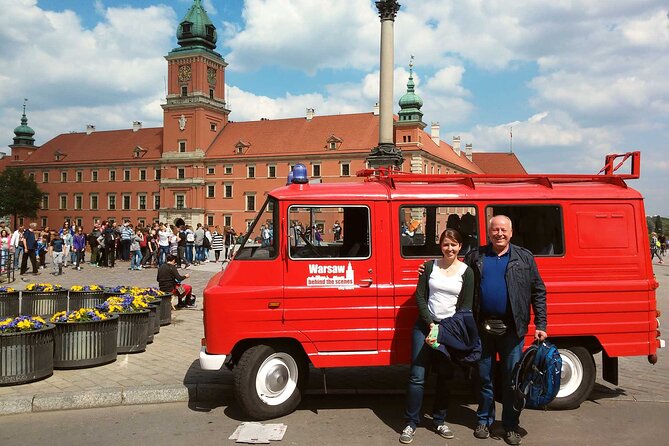
Krakowskie Przedmieście is one of Warsaw’s most distinguished streets. It links the Old Town and Royal Castle with churches, palaces, manor houses, and important institutions.
A guide can point out the Presidential Palace, Warsaw University, and the Staszic Palace, home to the Polish Academy of Sciences. The southward continuation is Nowy Świat, part of the Royal Route, with the famous palm tree at its far end.
This is a good choice if you want Warsaw’s formal side. The street helps explain how royal power, education, religion, and modern government occupy the same central corridor. It also gives you a useful orientation between the Old Town and newer parts of the city.
There is a practical issue here. The Royal Route is a street to walk, not a single attraction to enter. Admission is free, but the value comes from the guide’s explanation and from seeing the buildings in sequence. If your main interest is wartime history or local neighborhoods, you may prefer to use this time elsewhere.
Praga shows the city that escaped wartime destruction
Crossing the Vistula to Praga Polnoc changes the mood quickly. From the bridge, the guide can point out views toward the river’s less developed banks before taking you into a district known for surviving much of the destruction that hit the western side of Warsaw during World War II.
Praga’s older buildings and small courtyards offer a sense of prewar Warsaw that is hard to find in the reconstructed center. Belle Époque facades, worn tenement houses, and noisy inner courtyards are part of the appeal. The district was once neglected, but it has become an artistic area without the same level of commercial tourism found in the Old Town.
I like this stop for travelers who want more than postcard Warsaw. You get a look at how the city developed outside the royal center, and you can ask questions about the changes happening in the neighborhood.
The suggested visit lasts about an hour. That is enough for an introduction, but not enough for an exhaustive district tour. The minibus is useful here because it saves time crossing the river and moving between parts of the neighborhood.
A completely different kind of day out in Warsaw:
- Warsaw Concert: Chopin – Painted by Candlelights with Wine
★ 4.8 · 1,442 reviews - Warsaw: City Sightseeing Hop-On Hop-Off Bus Tour
★ 3.6 · 1,415 reviews - Warsaw: POLIN Museum of the History of Polish Jews Ticket
★ 4.7 · 1,142 reviews - #1 Pub Crawl Warsaw with Optional Premium 1 Hour Open Bar
★ 5.0 · 790 reviews
Łazienki offers a calmer hour among palaces and peacocks
Łazienki Royal Gardens gives the tour a welcome change of pace. The park began in the seventeenth century as a baths park for nobleman Stanisław Herakliusz Lubomirski. In the eighteenth century, Poland’s last monarch, Stanislaus II Augustus, reshaped it with palaces, villas, classical buildings, and monuments.
The site became a public park in 1918. Today it is used for music, art, and cultural events, as well as quiet walks. Peacocks and many squirrels add a lighter note after the more painful parts of Warsaw’s story.
The suggested visit lasts about ninety minutes. That is sensible because the park is spread out and rewards a slower pace. You should wear comfortable shoes, since this is another walking stop rather than a quick photo taken from the minibus.
Łazienki works best for a first visit when you want variety. It gives you royal architecture, open parkland, and a break from dense streets. If you have only three hours and your priority is World War II, ask the guide to shorten or skip the park.
Muranów and the Warsaw Jewish Ghetto
The Muranów district can look like an ordinary neighborhood at first. Its squared apartment blocks do not reveal the full story of the Jewish Ghetto, created by the German Nazis in 1940.
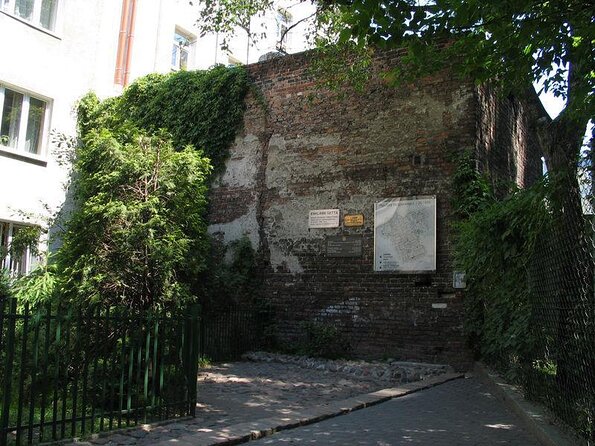
That is precisely why a guide matters here. The past is not always visible in a grand monument. Your guide can help you identify the remaining traces, explain how the district was destroyed, and describe the underground resistance formed during the 1943 uprising.
The uprising began as the last part of the Jewish community faced deportation to an extermination camp. The fighting lasted three weeks and ended with the destruction of the Jewish district. This is difficult material, and the tour treats it as a central part of Warsaw’s identity rather than a quick historical footnote.
A visit to this area is best for anyone who wants to understand the human cost of the occupation. It may not be the right choice if your group wants a light, purely scenic introduction. The suggested time is about two hours, so including it with Old Town and several other stops would require a highly condensed plan.
Communist Warsaw, with the Palace of Culture as a landmark
The Palace of Culture and Science is the natural anchor for a look at Communist Warsaw. The suggested program uses the retro vehicle itself as a bridge into the period, from the final years of World War II and postwar rebuilding through the difficult decades of the 1960s and 1970s.
You learn how people managed daily life in a centrally controlled economy and how the city changed before the first free elections on June 4, 1989. The point is not simply to label buildings as Communist. It is to connect architecture and streets with the experience of people who lived through that system.
Admission to the Palace of Culture and Science is not included. The tour information does not promise entry, so confirm with the operator if going inside is important to you. Much of the program can be understood from the streets and from the guide’s commentary.
This is one of the strongest choices for visitors who want recent Polish history. It also makes good use of the Żuk, whose age and design are part of the story rather than a random novelty.
A serious World War II route
The three-hour World War II program is aimed at people who want a focused account of occupation, resistance, the two Warsaw uprisings, and the Soviet takeover at the end of the war.
The route may include traces of street fighting, pieces of the Jewish Ghetto wall, the Warsaw Uprising Monument, Umschlagplatz, hills of rubble, bullet marks, and military reminders such as Soviet tanks and aircraft. Archival photographs are used alongside the guide’s explanations and the movement through the city.
The guide connects major battles with ordinary life under Nazi occupation. You also hear about the political changes around Poland during the war and the consequences that followed liberation in 1945.
This option is not a casual sightseeing loop. It asks you to give most of the three hours to difficult subjects. I would choose it for a second day in Warsaw, or for a first day if wartime history is the reason you came.
The guides make the private format worthwhile
The strongest praise centers on the guide’s ability to combine facts with a clear sense of place. Artur has been singled out for his knowledge of Warsaw and for explaining not only monuments, but also how things work in Poland.
One group of six especially enjoyed a small vodka tasting arranged during a chilly December outing. That was an extra touch, not a guaranteed part of the tour, so you should not book expecting it. Still, it shows the kind of personal exchange that a private guide can sometimes add.
Marek Sidorenko has also been praised for professional driving, excellent English, and a well-read approach to the city. One party described riding for four hours in a small vintage fire truck, which suggests that the exact vehicle can vary within the operator’s retro fleet. Confirm the vehicle type if that detail matters to you.
The advantage of a private guide is not just privacy. You can ask why a neighborhood looks the way it does, stop longer at a memorial, or change the balance between parks and political history. A large group rarely allows that kind of adjustment.
Price, timing, and comfort
At $167.76 per person, this tour makes the most sense when the cost is shared across a group. For eight people, you are paying for a private vehicle, hotel transfers, and a dedicated English-speaking guide rather than a seat on a standard sightseeing bus.
For one or two people, the price is harder to justify unless you value a custom route and personal attention. The tour is often booked about seventeen days ahead, so it is sensible to reserve early if you are visiting during a busy period or need a particular date.
Pickup and drop-off at your hotel are included. The operator contacts you to confirm the exact pickup details, which is useful because there is no single public meeting point for every booking.
Wear comfortable clothes and good walking shoes. The vehicles have heating in winter, but the classic minibuses are not air-conditioned. Some also lack seat belts, which is permitted for historic vehicles. Children must be over 150 centimeters for instant online booking. For a shorter child, contact the operator ahead of time to ask about a mandatory booster seat.
Confirmation is provided at booking, service animals are allowed, and most people can take part. Free cancellation is available up to 24 hours before the start time. Inside that window, cancellation or changes are not accepted for a refund.
Who should book this Warsaw tour?
I would choose it for a group that wants a personal introduction to Warsaw without spending a full day on one museum. It is also a good fit for first-time visitors who are unsure how the Old Town, Praga, the Royal Route, and the wartime districts connect.
History-minded visitors have the most to gain. You can build the route around the Jewish Ghetto, the Warsaw Uprising, or Communist Poland instead of accepting a fixed list of photo stops.
Families and older visitors should think carefully about the walking. Hotel pickup helps, and the minibus reduces time between districts, but the tour is not a ride-only experience. The lack of air conditioning and the possibility of missing seat belts may also matter to some passengers.
If your top goal is a long ride in a vintage vehicle, choose another experience. The Żuk is memorable, but it mainly serves as transport between walking sections. If your goal is a flexible, story-led introduction to Warsaw with a little mechanical character, it is a strong choice.
FAQ
How long is the private Warsaw retro minibus tour?
The tour lasts approximately three hours. Some suggested programs list longer times for individual areas, so your guide will need to shape the route around your chosen priorities.
Is hotel pickup and drop-off included?
Yes. Hotel pickup and drop-off are included, and the operator contacts you to confirm the pickup details.
How many people can ride in one minibus?
Each minibus accommodates up to eight passengers. The activity is private, so only your group participates.
Can children join the tour?
Adults and children over 150 centimeters can book instantly online. For a child under 150 centimeters, contact the operator in advance to check booster-seat availability, since booster seats are mandatory under Polish law.
Do the vintage minibuses have air conditioning and seat belts?
The classic minibuses do not have air conditioning, and some do not have seat belts. They are equipped with heating for winter, and the lack of seat belts is permitted for historic vehicles.
Can I cancel for a full refund?
Yes, if you cancel at least 24 hours before the experience start time. Cancellations or changes made less than 24 hours before the start time are not accepted for a refund.
Should you book it?
Book this tour if you want a private Warsaw overview shaped around your interests, especially if your group can share the cost. The combination of hotel pickup, an English-speaking local guide, a flexible route, and the old Żuk makes it more personal than a standard city circuit.
Skip it if you want guaranteed air conditioning, minimal walking, or a long vintage-vehicle ride. For most small groups, though, the tour offers a useful first look at a city that cannot be understood from the reconstructed Old Town alone. The 4.9 rating from 35 reviews and a 100 percent recommendation record fit the strongest parts of the experience: flexible guiding, clear explanations, and a memorable way to move through Warsaw.
Just added around Warsaw
- Jewish heritage in Warsaw★ 4.5 · 3 reviews
- Warsaw Outdoor Paintball with Transfers (all year round)★ 5.0 · 3 reviews
- World War II Warsaw Old Town, Military Cemetery Walking Tour★ 4.7 · 3 reviews
- Warsaw: Wolf’s Lair & Swieta Lipka Small-Group Tour + Lunch★ 5.0 · 3 reviews
- Sunset Boat Tour with Unlimited Drinks in Warsaw★ 3.5 · 3 reviews
- Majdanek – German camp from II World War – Private Tour – 1 DAY TRIP FROM WARSAW★ 5.0 · 3 reviews
- From Warsaw: Guided Tour to Wieliczka Salt Mine and Krakow★ 4.5 · 3 reviews
- Warsaw Sightseeing with NEW Mercedes Sclass !!!★ 5.0 · 3 reviews
City Tours, compared.
City Sightseeing Tour Eco Electric Buggy Golf Cart
Read our review →


Gdańsk City Sights & History Guided Walking Tour in English
Read our review →
Extended City Sightseeing Tour – Eco Buggy Golf Cart
Read our review →
Browse the lists this tour appears in