
REVIEW · CITY TOURS
Private Warsaw City Tour
Warsaw rewards a tight, well-planned introduction. This private city tour is interesting because it lets you see major sights from a private vehicle, then shape the route around your own interests. I like the hotel pickup and the choice of limousine, van, minibus, or coach, depending on your group size. I also like the chance to request a preferred starting time and ask the guide to adjust the plan.
The main caution is time. The booking is advertised as three hours, while the sample program describes a much longer five-hour route with many stops. You will need to confirm the exact duration and sightseeing plan before you set out, especially if you want to enter museums or the Royal Castle.
In This Review
- Key points to know before booking
- Why a private Warsaw tour can work so well
- Starting from your hotel in a private vehicle
- Palace of Culture and Science and Warsaw’s modern center
- Łazienki Park and the Palace on the Water
- The Royal Route from aristocratic palaces to Chopin
- Old Town, Royal Castle, and the Barbican
- Jewish Ghetto memorials and the Museum of Polish Jews
- Praga, prewar streets, and the National Stadium
- Other major monuments worth requesting
- Guide quality and language choices
- What $207 per person really buys you
- Practical details, cancellation, and access
- Who should book this Warsaw city tour?
- Should you book the Private Warsaw City Tour?
- FAQ
- How long does the Private Warsaw City Tour last?
- Is hotel pickup included?
- What type of vehicle is used?
- Which languages are available?
- Are entrance fees included?
- Can I customize the itinerary?
- Is the tour wheelchair accessible?
Key points to know before booking
- Hotel-to-hotel convenience: Pickup and drop-off are included, so you do not need to find a meeting point in central Warsaw.
- A genuinely private format: Your group has its own guide and vehicle, with room to suggest changes to the route.
- Strong history coverage: The planned sights range from the Palace of Culture and Science to the Jewish Ghetto memorials and Warsaw Uprising Monument.
- A guide praised by name: Leo received especially warm feedback for making a short visit informative and memorable.
- Several language choices: Tours are offered in English, Spanish, French, Italian, and Russian.
- Check the timing carefully: The listed three-hour tour and the sample five-hour itinerary do not match.
Why a private Warsaw tour can work so well
Warsaw is not a city you understand from one square or one famous building. Its story is spread across the rebuilt Old Town, grand royal avenues, postwar monuments, modern towers, former Jewish Ghetto sites, and the Praga district on the Vistula’s eastern side.
That makes a private vehicle useful. You can cover ground quickly, avoid spending part of a short visit figuring out tram routes, and ask questions as the city changes outside the window. I would especially consider this tour if you have only a few hours in Warsaw, are arriving by train or plane, or want a broad first look before returning to one area on foot.
The private format also changes the pace. A fixed group tour often has to keep every person on the same schedule. Here, you can request more time at the Old Town, focus on wartime history, or ask for a quicker drive past sites that do not interest you. The guide is expected to respect those requests, although the number of stops will still depend on traffic, opening hours, and the length of your booking.
The service includes bottled water, Coca-Cola, and Polish traditional chocolate candies. Those are small extras, but they are handy during a vehicle-based outing, particularly when you are moving from one part of Warsaw to another without a planned meal stop.
A few more Warsaw trips worth weighing up
- Warsaw: Chopin Concert in the Old Town
★ 4.8 · 2,287 reviews - Warsaw: Traditional Galar Cruise on The Vistula River
★ 4.6 · 1,640 reviews - Warsaw: Old Town Highlights Walking Tour in English
★ 4.7 · 1,516 reviews
Starting from your hotel in a private vehicle
Pickup is included from your hotel, and the vehicle is air-conditioned. The operator may provide a limousine, van, minibus, or coach based on the size of your party. That range matters: a couple may have a more compact ride, while a larger family or business group can remain together instead of splitting between taxis.
You can request the hour of departure. This is useful if you have a morning flight, a late arrival, a conference schedule, or a dinner reservation. It also lets you avoid treating the tour as an all-day commitment.
Still, Warsaw traffic can shape the experience. The sample route mentions the city center during rush hours, when large numbers of residents move between offices and neighborhoods. If your schedule is flexible, ask about a time that gives you more walking time and less time sitting in traffic. A private vehicle gets you between districts efficiently, but it cannot make crowded roads disappear.
The tour is described as lasting three hours. The sample program, however, is written as a five-hour city tour and includes numerous walks and possible interior visits. Treat the sample as a menu of ideas rather than a promise that every stop fits into three hours. Ask the provider to identify which sights are included in your actual time.
Palace of Culture and Science and Warsaw’s modern center
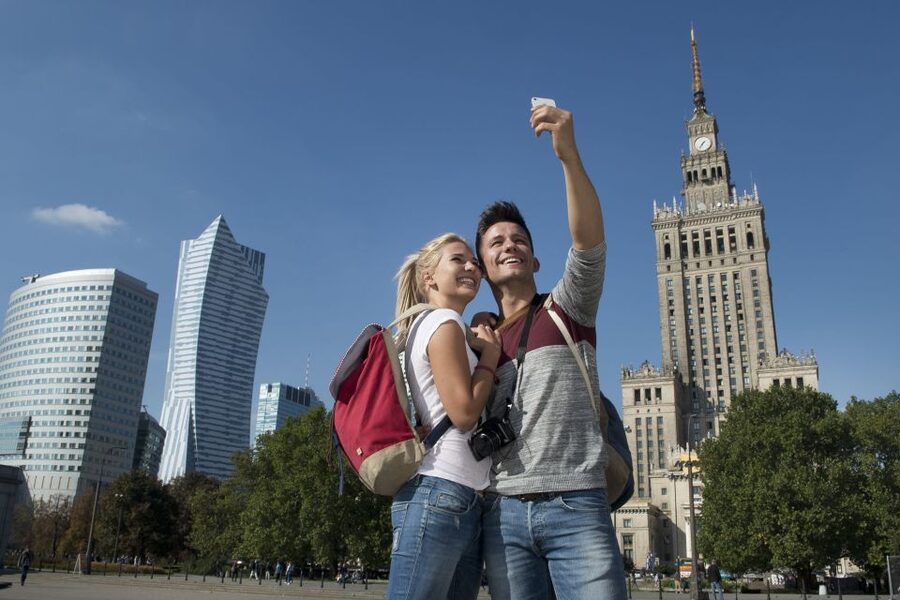
The Palace of Culture and Science is the first major landmark likely to catch your eye in central Warsaw. It is the tallest and one of the most recognizable buildings in Poland, with a monumental form that dominates the surrounding glass office towers.
The sample route includes the viewing terrace on the 30th floor. From there, you can see Warsaw from above and get a quick sense of its mixture of postwar rebuilding, modern construction, and older districts. This is a useful opening stop because the city can feel sprawling at street level.
Do not assume the viewing terrace is included in the tour price. Entrance fees are not included, so ask whether the guide plans to stop there and how tickets will be handled. The same point applies to the Royal Castle and any museum visit.
Because the tour is private, you can decide if the panorama is worth the time. I would choose it on a first visit, especially if you want a visual orientation. If your main interest is wartime history or the Old Town, you may prefer to use those minutes elsewhere.
Łazienki Park and the Palace on the Water
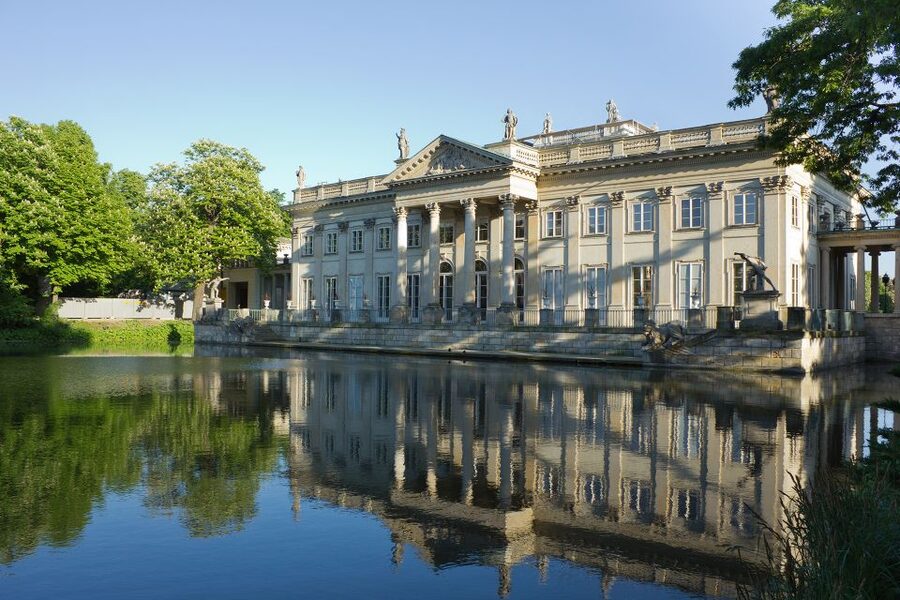
From central Warsaw, the route can continue to Łazienki, the city’s best-known royal park. Its name means Baths, and the park was developed as the summer retreat of King Stanisław August Poniatowski, who ruled from 1764 to 1795.
The centerpiece is the Palace on the Water, a graceful royal residence set within the park. You can expect a change of mood here: after the hard edges of the central business district, the route moves into broad green paths, water, and historic buildings.
The supplied program allows for a walk, not simply a drive past the entrance. That distinction matters. Comfortable shoes and weather-appropriate clothing will make this part much more pleasant. The park is also known for squirrels and peacocks, which add a light, slightly comic touch to a serious sightseeing day.
There is a tradeoff. Łazienki rewards time on foot, while the three-hour schedule may force a short visit. If this park is high on your list, tell the guide before departure so the stop does not become a quick photograph from the roadside.
A completely different kind of day out in Warsaw:
- Warsaw Concert: Chopin – Painted by Candlelights with Wine
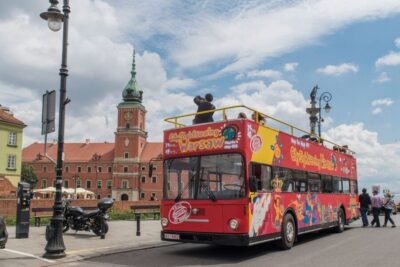
★ 4.8 · 1,442 reviews - Warsaw: City Sightseeing Hop-On Hop-Off Bus Tour
★ 3.6 · 1,415 reviews - Warsaw: POLIN Museum of the History of Polish Jews Ticket
★ 4.7 · 1,142 reviews - #1 Pub Crawl Warsaw with Optional Premium 1 Hour Open Bar
★ 5.0 · 790 reviews
The Royal Route from aristocratic palaces to Chopin
The Royal Route links several important sights and gives you a feel for Warsaw’s ceremonial side. Along the way, you may see aristocratic residences, the Presidential Palace, Warsaw University, and the Holy Cross Church.
The church has a special connection to Fryderyk Chopin. Urns containing his heart are kept there, making this a worthwhile stop for music lovers and anyone interested in the personal stories behind Poland’s monuments. It is also the kind of detail that can pass unnoticed if you explore only by yourself.
This section works best with a guide because the buildings are connected by political, cultural, and royal stories. You can ask for context instead of collecting names without knowing why they matter.
The route is also practical for visitors who want to cover several central sights without walking the entire distance. You will still need to walk at stops, and the weather note is worth taking seriously. Bring suitable clothing rather than assuming the vehicle will protect you from every outdoor section.
Old Town, Royal Castle, and the Barbican
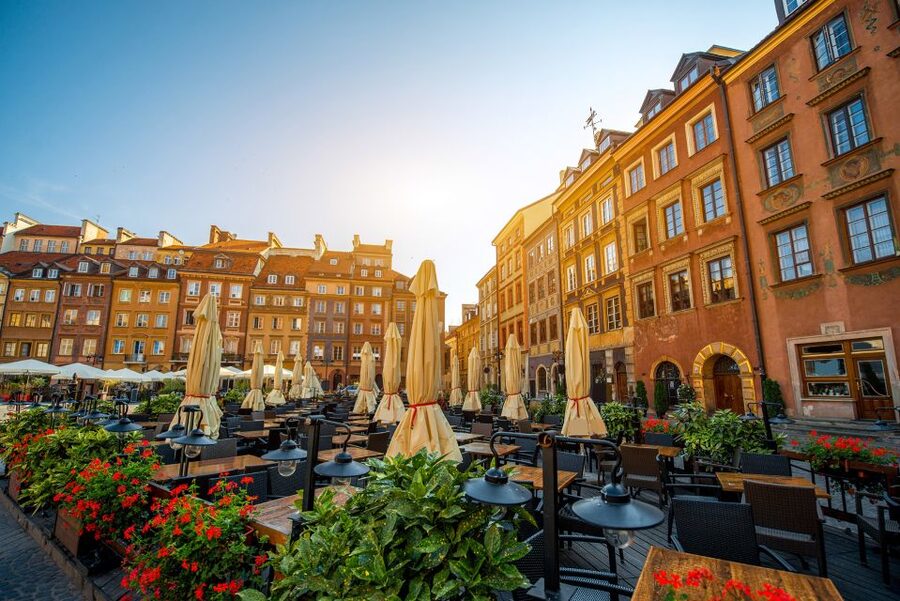
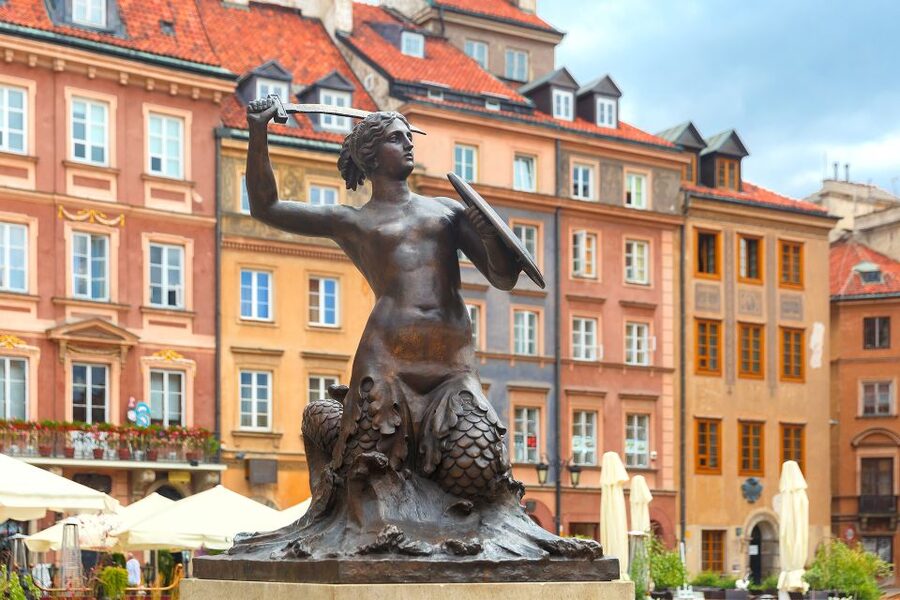
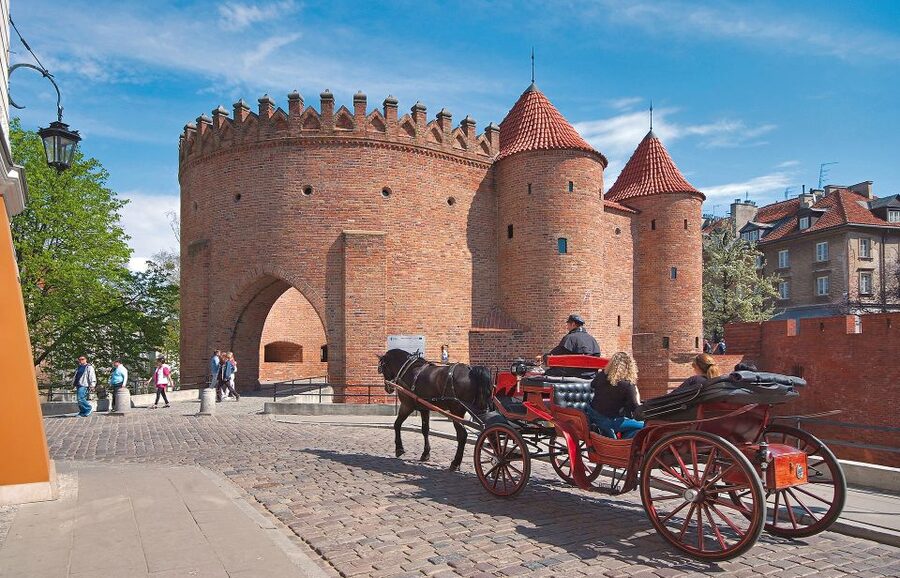
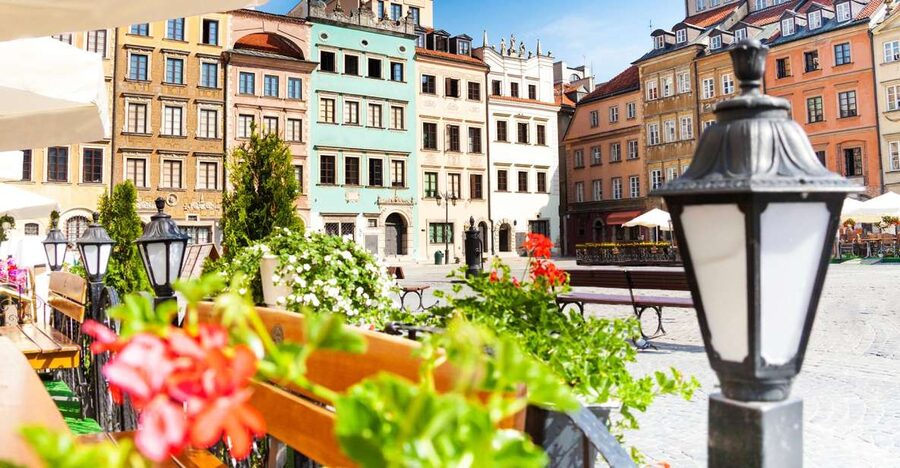
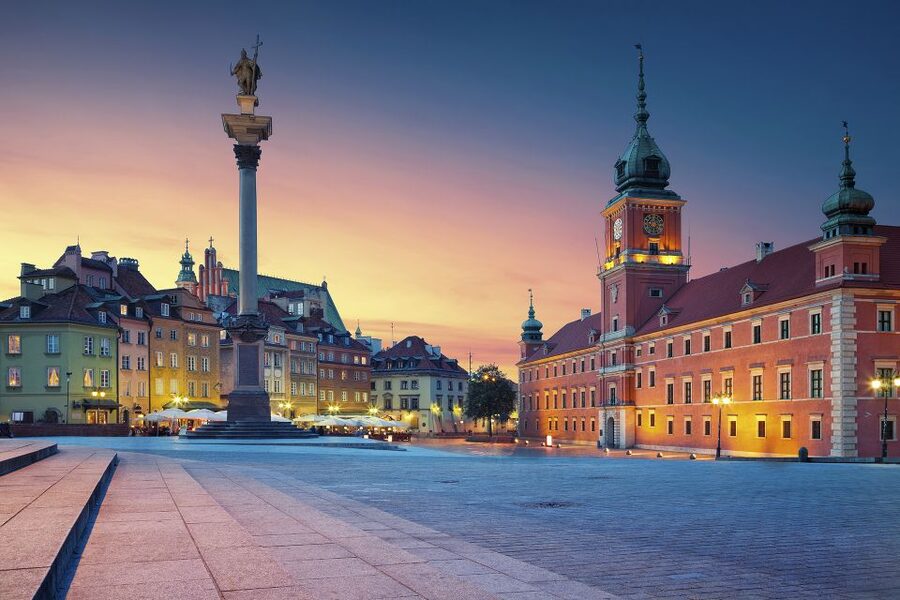
Warsaw’s Old Town is a required stop, but it deserves an explanation beyond its pretty facades. The district is included on the UNESCO World Heritage list, and the Royal Castle was the residence of Polish monarchs from 1596 to 1795. It later served as the residence of the Polish president in 1918.
The sample itinerary includes the castle interiors, though entrance fees are separate. Confirm how much time is available inside. A three-hour tour that includes the castle, several other districts, and long walks cannot offer the same visit as a dedicated castle tour.
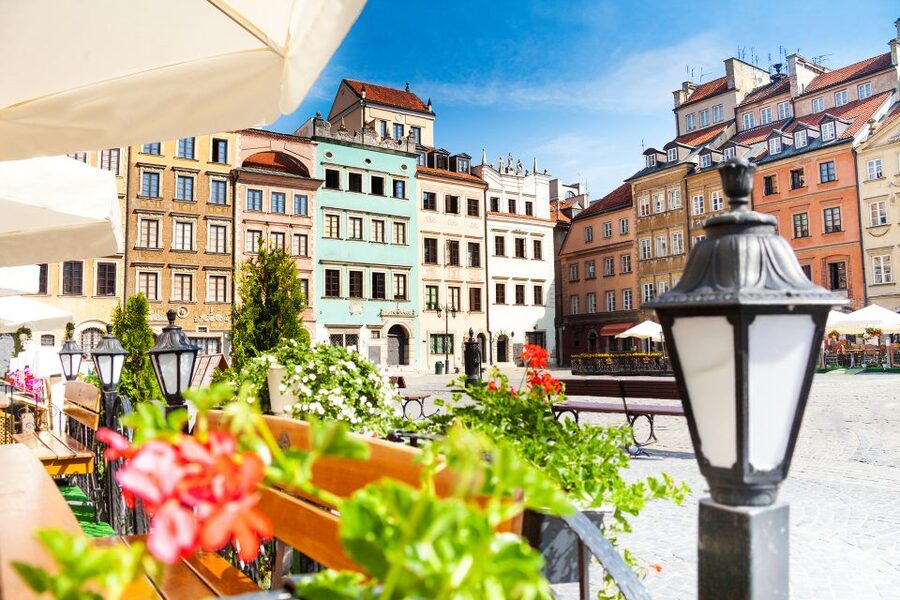
Outside, the route can include Sigismund’s Column, the first secular monument in Poland, St. John’s Cathedral, the Old Town Market Square, and the Barbican. St. John’s is a Gothic church tied to major events in Polish history and contains sarcophagi holding the remains of prominent Poles.
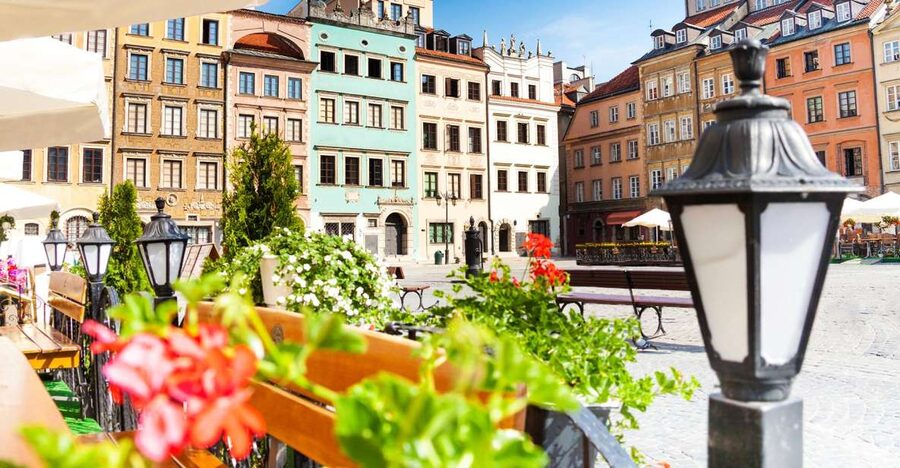
I like this portion because it gives you both the postcard view and the political story. The market square is visually easy to appreciate, while the cathedral and castle add substance. The drawback is that the Old Town is best explored at walking speed. If you are trying to see every district listed in the sample, your time here may be limited.
Jewish Ghetto memorials and the Museum of Polish Jews
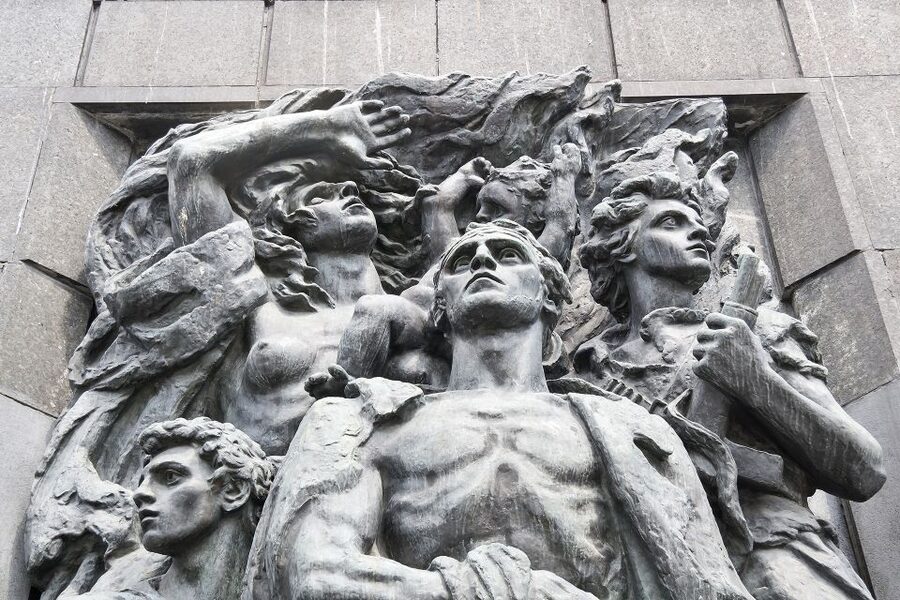
The former Jewish Ghetto is one of the most important parts of the route. The suggested stops include the Ghetto Heroes Memorial, Umschlagplatz, and the building of the Museum of the History of Polish Jews.
These places require quiet attention. They are not simply landmarks to tick off from a vehicle window. The memorials connect Warsaw’s present-day streets with the destruction of the city’s Jewish community during the Second World War. A guide can help you understand what each site marks and why its location matters.
The museum building itself is described as a modern work of art. If you want to go inside, remember that food and entrance fees are not included. Also ask whether the museum is part of your three-hour plan or only a possible addition to the longer sample program.
I would prioritize this section if you have a strong interest in Jewish history or wartime Warsaw. It may feel too rushed if the tour tries to combine it with every royal and modern sight in one short outing. Private touring gives you the power to choose, so use it.
Praga, prewar streets, and the National Stadium
The Old Praga district offers a different view of Warsaw. It is known for artistic studios, galleries, alternative theaters, and underground clubs. The area also contains streets that escaped destruction during the Second World War, including surviving prewar lamp-posts, sidewalks, and apartment blocks.
That makes Praga a valuable counterpoint to the reconstructed Old Town. Instead of polished royal facades, you get a district with a more irregular feel and visible traces of earlier Warsaw. The sample program does not promise entry to studios, theaters, or clubs, so consider this primarily a guided drive and sightseeing stop unless you arrange otherwise.
On the return route, the tour may pass the National Stadium. It is Poland’s largest modern stadium and hosted important sports and cultural events. The building received the 2012 CEEQA Industry Award for Building of the Year in Central and Eastern Europe.
For a short tour, these eastern districts can be hard to fit in. I would choose Praga and the stadium if you have already seen the central sights, or if modern architecture and local neighborhoods interest you more than castle interiors.
Other major monuments worth requesting
The Tomb of the Unknown Soldier and the Monument of the Warsaw Uprising are also listed as possible places of interest. Both suit a visitor who wants a clearer sense of Poland’s wartime experience and national memory.
You should tell the guide which monuments matter most to you. The tour is not a fixed checklist, and the operator says the plan can change according to your needs. That flexibility is the experience’s greatest strength, but only if you make your priorities clear at the start.
I would prepare a short list with three levels:
- Must see, such as the Old Town or Ghetto Heroes Memorial
- Nice to see, such as Łazienki or the Palace of Culture terrace
- Only if time allows, such as Praga or the National Stadium
That simple plan will help the guide build a realistic route instead of trying to squeeze everything into one rushed circuit.
Guide quality and language choices
The guide service is available in English, Spanish, French, Italian, and Russian. This is important for a history-heavy tour, where a clear explanation can matter more than the number of buildings you pass.
The strongest individual feedback names Leo as an excellent guide who made the experience informative, special, and memorable. Dorothy is also identified as a responsive and pleasant contact before the tour. Another booking received praise for an excellent French-speaking guide, and short comments in German and French were also positive.
The overall rating is 4.9 from four reviews. That is encouraging, especially for the repeated praise of the guide, but it is still a small sample. I would book with confidence in the service concept while keeping normal expectations about traffic, timing, and the exact guide assigned.
What $207 per person really buys you
At $207 per person, this is not the cheapest way to see Warsaw. The value depends heavily on the size of your group and how much you value time, privacy, and door-to-door transport.
For a couple, the cost may feel high compared with public transportation and self-guided sightseeing. You would also need to pay separately for food and entrance tickets. For a family, larger party, or group with limited time, the price can make more sense because one private vehicle and one guide keep everyone together.
The price also buys flexibility. You are not just paying to be driven past landmarks. You are paying for pickup, a private group, air-conditioning, a multilingual guide, and the ability to request changes. That is useful if one person in your group cares about Chopin, another about wartime history, and another about architecture.
To protect the value, confirm four points before booking: the exact three-hour or five-hour duration, the vehicle type, which interior visits are planned, and which entrance fees you will need to pay. Those answers will tell you if the price fits your plans.
Practical details, cancellation, and access
Free cancellation is available up to 24 hours before the tour for a full refund. You can also reserve now and pay later, which helps if your Warsaw schedule is still changing.
Hotel pickup and drop-off are included. Bottled water, Coca-Cola, and Polish chocolate candies are provided, but meals are not, so plan food before or after the tour.
The information says the activity is wheelchair accessible, but it also says it is not suitable for wheelchair users. That is a clear contradiction. If anyone in your party uses a wheelchair, contact the provider before booking and ask about the vehicle, walking portions, and access to each planned site. Do not rely on the general accessibility label alone.
The tour operates in changing weather, and appropriate clothing is required. Wear comfortable shoes if you plan to walk through Łazienki or the Old Town, and ask the guide how much walking the chosen route involves.
Who should book this Warsaw city tour?
I would recommend it most strongly to first-time visitors with only a few hours, families who want a simple pickup, small private groups, and people who prefer to ask questions in their own language. It is also a good fit if you want a quick survey of Warsaw before choosing which areas to revisit independently.
History-focused visitors should make their priorities clear. The route can cover royal Warsaw, wartime memorials, Jewish heritage, modern architecture, and Praga, but three hours is not enough for a deep visit to all of them.
Independent walkers may find better value by choosing one district and exploring it slowly. You will pay less, though you will give up the vehicle, the guide, and the ability to change plans on the spot.
Should you book the Private Warsaw City Tour?
Book it if convenience and a personal route matter more to you than the lowest price. The hotel pickup, private vehicle, language choices, and strong praise for guides such as Leo make it a sensible choice for a short Warsaw stay.
Do not book before confirming the duration. The advertised three hours and the sample five-hour program point to two different experiences. Ask for a timed plan, select your top three sights, and check all entrance costs.
With those details settled, this tour can give you a useful first picture of Warsaw without wasting your limited time on transport or guesswork.
FAQ
How long does the Private Warsaw City Tour last?
The activity is listed as three hours. A sample program also describes a five-hour city tour, so you should confirm the exact duration when booking.
Is hotel pickup included?
Yes. Pickup and drop-off from your hotel are included.
What type of vehicle is used?
The tour may use an air-conditioned limousine, van, minibus, or coach, depending on the number of people in your private group.
Which languages are available?
Guides are available in English, Spanish, French, Italian, and Russian.
Are entrance fees included?
No. Entrance fees are not included. Food is also not included.
Can I customize the itinerary?
Yes. You can provide sightseeing suggestions, and the guide can change the plan according to your needs.
Is the tour wheelchair accessible?
The information gives conflicting details. It describes the activity as wheelchair accessible but also says it is not suitable for wheelchair users. Contact the provider before booking to confirm the vehicle and walking arrangements.
Just added around Warsaw
- Jewish heritage in Warsaw★ 4.5 · 3 reviews
- Warsaw Outdoor Paintball with Transfers (all year round)★ 5.0 · 3 reviews
- World War II Warsaw Old Town, Military Cemetery Walking Tour★ 4.7 · 3 reviews
- Warsaw: Wolf’s Lair & Swieta Lipka Small-Group Tour + Lunch★ 5.0 · 3 reviews
- Sunset Boat Tour with Unlimited Drinks in Warsaw★ 3.5 · 3 reviews
- Majdanek – German camp from II World War – Private Tour – 1 DAY TRIP FROM WARSAW★ 5.0 · 3 reviews
- From Warsaw: Guided Tour to Wieliczka Salt Mine and Krakow★ 4.5 · 3 reviews
- Warsaw Sightseeing with NEW Mercedes Sclass !!!★ 5.0 · 3 reviews
City Tours, compared.
City Sightseeing Tour Eco Electric Buggy Golf Cart
Read our review →


Gdańsk City Sights & History Guided Walking Tour in English
Read our review →
Extended City Sightseeing Tour – Eco Buggy Golf Cart
Read our review →
Browse the lists this tour appears in