
REVIEW · SCHINDLER FACTORY TOURS
Schindler’s Factory in Krakow: Guided Tour & Skip the Line Ticket
History hits hard here. Oskar Schindler’s former enamelware factory now tells a much larger story about Krakow under Nazi occupation, with Schindler’s office, wartime artifacts, photographs, recordings, and personal accounts. The tour is especially useful if you want context rather than a quick walk through displays.
I like the guaranteed timed entry, which can save you from the difficulty of finding a regular museum ticket. I also like the guided option, since guides such as Marta, Natalia, Elizabeth, Barbara, and Wojtek have been praised for giving the exhibits a clear human context. The main drawback is important: the museum focuses more on wartime Krakow than on Schindler himself, and some groups report rushed guiding or trouble hearing the guide.
In This Review
- Key points to know before you book
- What the Schindler Factory actually tells you
- Meeting at Lipowa 4 in central Krakow
- The short introduction to Oskar Schindler
- Inside the museum: Krakow under occupation
- Schindler’s office and the factory story
- Why a guide can be worth the extra cost
- How long should you allow?
- Group size, sound, and comfort
- Who will get the most from this visit?
- My verdict on the $35.70 ticket
- Should you book Schindler’s Factory guided tour?
- FAQ
- Where does the tour begin?
- How much does the experience cost?
- How long does the visit last?
- Is the tour available in English?
- Is a guide included?
- Do I need identification?
Key points to know before you book
- The museum is about Krakow during World War II first, and Schindler second. His factory and Jewish workforce are part of the story, but they are not the whole exhibition.
- Timed entry is the main practical benefit. Regular admission can be difficult to arrange, so a prepaid time slot gives you a more certain visit.
- Guides can make a major difference. Marta, Natalia, Elizabeth, and Barbara received especially warm praise for clear, engaging explanations.
- The group may contain up to 25 people. That can feel crowded in narrow rooms, especially if the guide does not use headsets.
- Bring the exact ID used for booking. Museum tickets are issued in individual names, and staff may ask for a passport or identity card.
- Allow at least 90 minutes, and possibly closer to two hours. A guided visit can move quickly, leaving little time to read every display.
What the Schindler Factory actually tells you
The name suggests a museum devoted mainly to Oskar Schindler. That expectation needs adjusting before you arrive.
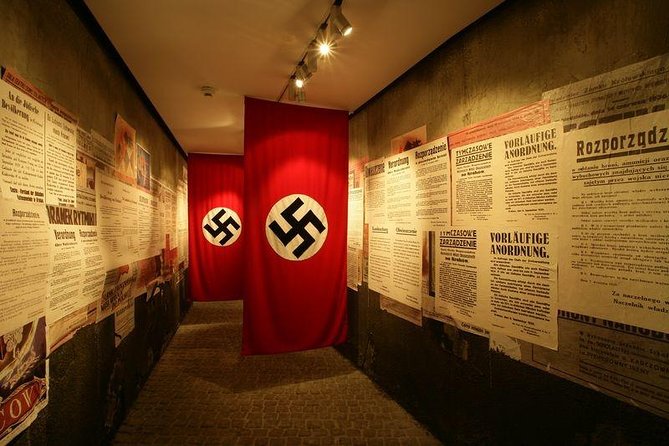
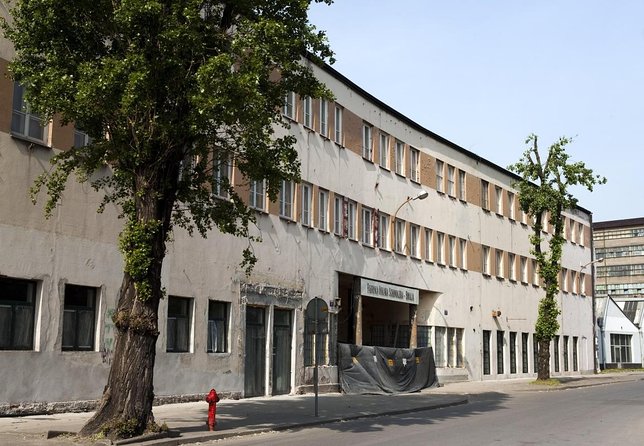
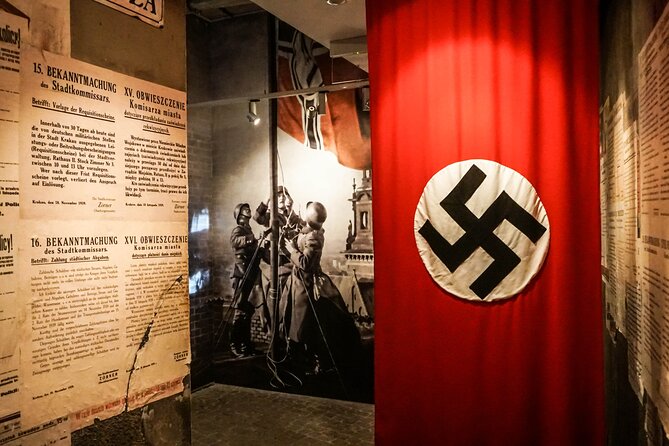
The Oskar Schindler Enamel Factory, at Lipowa 4 in Krakow, is the real former factory connected with Schindler’s wartime work. Yet the museum’s larger subject is the experience of Krakow before, during, and after World War II. You will see how the city changed under Nazi rule, how its Jewish population was persecuted, and how ordinary life was shaped by fear, propaganda, resistance, imprisonment, and forced labor.
Schindler remains a central figure. You will learn how his Jewish employees produced pots, pans, tins, and other enamel goods for the German army. Their work was tied to the German war effort, but employment in the factory also helped protect about 1,200 Jewish workers from deportation to concentration camps.
That moral tension is part of what makes the visit worthwhile. Schindler was a member of the Nazi Party and an industrialist working within the German system, yet he used his position to protect his Jewish employees. The museum does not reduce this complicated story to a simple movie plot.
You will also see Schindler’s office and examples of the goods made at the factory. These details are modest but powerful. A room, a desk, or a piece of enamelware can give the history a physical focus after you have passed through the broader story of the city.
More Schindler Factory tours:
- Krakow: Oskar Schindler’s Factory Entry Ticket & Guided Tour
★ 4.2 · 3,793 reviews - Krakow: Schindler’s Factory Tour with Entrance Ticket
★ 4.5 · 3,182 reviews - Krakow: Schindler’s Factory Skip-the-Line Ticket
★ 4.4 · 3,105 reviews
Meeting at Lipowa 4 in central Krakow
You make your own way to the museum. The meeting point is Oskar Schindler’s Enamel Factory at Lipowa 4, 30-702 Krakow, near public transportation.
The start can be a little confusing. Guides may be dealing with several groups at once, and the operator is not always easy to identify. One useful improvement would be a clear sign, flag, umbrella, or official shirt at the meeting point. Do not arrive at the last second. Get there early, locate the guide, and confirm that you are in the correct group.
This matters because a timed museum entry is not forgiving. There have been cases in which people waited outside while the guide was inside, and others were unsure whether they should enter or wait. The safest approach is to carry your booking details, ask directly where your group is going, and remain close to the meeting point until the guide gives clear instructions.
You need to provide the full names of everyone in your party when booking. Bring a valid passport or identity card, since the museum may check identification against the named ticket.
The tour is offered in English. It has a maximum group size of 25, though some departures are smaller. A group of around 14 to 15 is easier to manage in the museum’s tighter rooms, while the full group size can make it harder to stay close to the guide.
The short introduction to Oskar Schindler
If you choose the guided option, the visit begins with a brief introduction outside or near the entrance. This usually covers Schindler’s role during the war and the way his story reached a worldwide audience through Steven Spielberg’s 1993 film Schindler’s List.
This introduction is useful, but it is not a full biography. The film may lead you to expect a museum built around Schindler’s personal story. Instead, the guide sets the stage for a wider examination of Krakow under occupation.
That distinction is worth keeping in mind. If you want to see the exact places associated with every scene in the film, this is not that kind of tour. If you want to understand the conditions that shaped Schindler’s actions, the museum offers much more.
A good guide makes this opening matter. Marta has been singled out for combining a strong command of the subject with a calm pace. Natalia has been praised for giving concise explanations and answering questions with confidence. Elizabeth is known for an engaging manner, while Barbara has been appreciated for showing why the guide adds value beyond simply walking through the rooms.
Inside the museum: Krakow under occupation

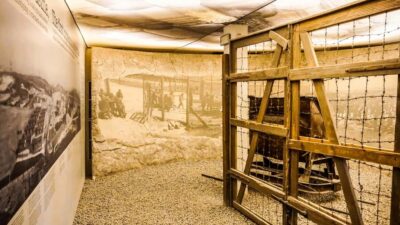
The first major part of the visit focuses on Krakow’s experience during the war. You move through rooms filled with photographs, documents, objects, film, and radio recordings.
The displays recreate the feel of a city under control. You see images of cobbled streets, resistance hideaways, prisons, and public spaces shaped by Nazi and Soviet occupation. Original recordings add another layer, giving you a sense of the fear and uncertainty that affected daily life.
This section can be emotionally heavy. The museum is not simply presenting dates and military movements. It is showing what occupation meant for people living in the city, including restrictions, surveillance, violence, displacement, and the destruction of normal routines.
A guide helps connect the individual rooms. The displays are designed to be interactive and visual, but it is possible to miss the point of a room if you move through quickly. A strong guide explains how one space leads to the next and how the exhibition traces the changing experience of Krakow.
The downside is pace. Some guides move quickly to keep the group on schedule, and narrow corridors can make it difficult to stop and read every panel. If you stand behind the guide, you may miss part of the explanation, especially when no headphones are provided.
A few more Kraków trips worth weighing up
- From Krakow: Wieliczka Salt Mine Tour & Skip the Line Ticket
★ 4.4 · 3,925 reviews - Auschwitz-Birkenau: Skip-the-Line Ticket and Guided Tour
★ 4.2 · 1,034 reviews - Auschwitz Birkenau Guided Tour/Skip The Line/PickUp/Guide ENG
★ 4.5 · 930 reviews - Wieliczka Salt Mine Tour from Kraków – Skip the Line Entry
★ 4.4 · 878 reviews
Schindler’s office and the factory story
The most direct connection to Schindler comes when you reach the areas tied to the factory itself. You see his office and examples of the enamelware produced by Jewish workers.
The objects are not presented as isolated industrial curiosities. They help explain why the factory mattered. Pots, pans, tins, and other goods were made for the German army, so the factory was part of the wartime economy. At the same time, factory employment gave Schindler a reason to keep his workers listed as essential.
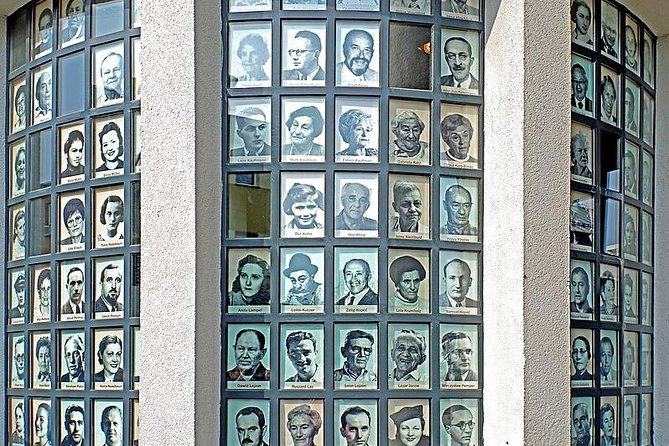
This is where the title of the museum becomes most meaningful. You can connect the physical factory with the people whose lives depended on their work there. The story of the 1,200 Schindlerjuden, or Schindler’s Jews, is told through accounts of survival, loss, and the uncertain protection that factory employment could provide.
Do not expect the whole visit to remain in Schindler’s office or production rooms. This part is important, but it is only one piece of the museum. The building gives the story a real setting, while the exhibition uses that setting to explain the city’s broader wartime experience.
The museum is also not a film set attraction. It is more serious and less cinematic than the movie. That is a strength if you want historical context, but a disappointment if you mainly want behind-the-scenes information about Schindler’s List.
Why a guide can be worth the extra cost
At $35.70 per person, this is not the cheapest museum visit in Krakow. The value comes from two things: the timed admission and the help of a guide.
Getting inside is a practical advantage. Standard museum tickets can be hard to secure, and a timed tour reduces the risk of making the trip only to find that the preferred entry time is unavailable. For a short Krakow visit, that certainty has real value.
The guide is more variable. At its best, the tour turns a series of photographs and objects into a clear account of what happened in Krakow. A guide can point out connections you might miss, explain why the factory’s production mattered, and answer questions about Schindler and his employees.
Several guides have been praised for excellent English, strong subject knowledge, and a friendly manner. The best departures appear to be those in which the guide waits for the group, gives people time to look, and explains why each room matters.
The weaknesses are practical rather than theoretical. A group of 25 can be too large for the space. Without audio equipment, you may miss explanations if the guide walks ahead. Some guides have been described as rushed, abrupt, or poorly organized, and a few people received admission without the guided service they had paid for.
That means I would choose the guided option mainly if you value interpretation and can accept some uncertainty in how well the departure is run. If you are comfortable reading museum displays on your own, the self-guided choice may suit you better, provided you still want the convenience of timed entry.
How long should you allow?
The stated duration is about 1 hour 30 minutes. The itinerary also describes the visit as lasting up to two hours, so I would not plan another fixed appointment immediately afterward.
A guided group may spend roughly 90 minutes moving through the museum. That is enough for a useful overview, but not enough to read everything carefully. One hour and a half can feel brisk, especially in the rooms covering the occupation of Krakow.
If you want to study the photographs, documents, and recordings at your own pace, you may need extra time beyond the guided route. The key limitation is that the guided portion ends outside the museum, so you should not assume you can simply continue inside afterward.
The visit is therefore best for building a strong framework. You learn the main events, see the key spaces, and leave with enough context to understand Krakow’s wartime story. It is less suited to someone who wants to examine every label in detail.
Group size, sound, and comfort
Most people can take part, and the museum is near public transportation. Lifts are available, though the route can still be challenging for those with mobility concerns because some areas are tight and the group moves through several rooms.
The biggest comfort issue is sound. Headsets are not guaranteed. If your guide speaks while walking, or if the group spreads out, you may lose parts of the commentary. Stay near the guide and ask for a pause if you cannot hear. A smaller departure is preferable when available.
The museum can also feel crowded. Narrow corridors leave little room for a large group to gather, and this affects how long you can stand in front of a display. The experience works best when the guide keeps the group compact without rushing everyone from room to room.
Bring no expectation of food or drinks being part of the experience. They are not included, and the tour ends back at the meeting point, where the guide can provide directions toward the city center or your hotel.
Who will get the most from this visit?
I would recommend the tour to you if you want a clear introduction to Krakow’s wartime experience and prefer having someone explain the displays. It is particularly useful for first-time visitors who know Schindler mainly from the film and want to understand the historical setting behind his actions.
It also suits people with limited time. The ticket removes much of the uncertainty around museum entry, and the guided route gives you the main story without requiring hours of preparation.
You may want to choose the self-guided option if you read slowly, prefer silence, or dislike moving at a group’s pace. You may also feel disappointed if your main interest is Schindler’s personal life, the film, or the factory’s industrial history. Those subjects appear, but Krakow under occupation gets most of the attention.
Families and younger visitors may find the visual material easier to follow than a wall of text, though the subject matter is grave. The museum is best approached as a serious historical visit, not a light sightseeing stop.
My verdict on the $35.70 ticket
I see the price as reasonable when the timed entry solves a real ticket problem and the guide is strong. The best guides, including Marta, Natalia, Elizabeth, and Barbara, can make the museum far easier to understand and remember.
The value drops sharply if the guide is late, difficult to find, rushed, or simply hands you a ticket. A few serious complaints describe exactly that kind of failure, including missed meeting instructions and groups receiving no meaningful tour. These problems are not minor when the guided option costs more than admission alone.
The museum itself is worth your time. The tour is a useful way to enter it, but the quality of the guiding and organization matters. Arrive early, confirm the guide, keep your ID with you, and stay close enough to hear.
Should you book Schindler’s Factory guided tour?
Book it if timed entry is important and you want a guide to explain Krakow’s wartime history. The strongest part of the experience is the connection between the citywide story and the factory where Schindler employed Jewish workers.
Do not book it expecting a museum devoted only to Schindler or a detailed tour of the movie. Choose the self-guided option if you value your own pace, and choose the guided option when context, questions, and a planned route matter more to you than complete freedom.
For many visitors, this is a worthwhile Krakow stop. Just treat it as a museum about occupied Krakow with an important Schindler chapter, not as a Schindler biography from start to finish.
FAQ
Where does the tour begin?
The tour begins at Oskar Schindler’s Enamel Factory, Lipowa 4, 30-702 Krakow, Poland. You make your own way to the meeting point.
How much does the experience cost?
The listed price is $35.70 per person.
How long does the visit last?
The advertised duration is approximately 1 hour 30 minutes. The itinerary also allows for up to two hours, so plan some flexibility.
Is the tour available in English?
Yes. The experience is offered in English.
Is a guide included?
A professional guide is included when you select the guided option. A self-guided choice is also available.
Do I need identification?
Yes. Museum tickets are issued in individual names, so you should provide the full names of all participants and bring a valid passport or identity card.
Just added around Kraków
- Rynek Underground Museum & Wawel Castle, Cathedral – Cracow★ 5.0 · 3 reviews
- Schindler’s Factory, Ghetto and Plaszow Camp Guided Tour★ 4.7 · 3 reviews
- Nowa Huta – a guided tour of a utopian socialist city★ 5.0 · 3 reviews
- Krakow: Kazimierz by Golf Cart and Schindler’s Factory Tour★ 4.8 · 3 reviews
- Private Krakow City Tour by Car and Walk with private tour guide★ 5.0 · 3 reviews
- Krakow: Jewish Traces Private Electric Car Tour★ 4.1 · 3 reviews
- Discover the Jewish Quarter with a Bike Tour★ 5.0 · 3 reviews
- Krakow: Indoor Go-Karting (24-Minute Races)★ 4.8 · 3 reviews
Schindler Factory Tours, compared.
Oskar Schindler’s Factory Entry Ticket & Guided Tour
Read our review →
Schindler’s Factory Tour with Entrance Ticket
Read our review →
Schindler’s Factory Tour with Entrance Ticket
Read our review →
Schindler’s Factory Ticket with Guided Tour Option
Read our review →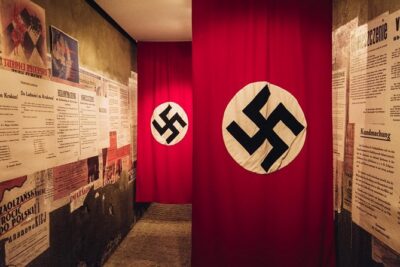
Krakow Schindler’s Factory Guided Tour with Admission Ticket
Read our review →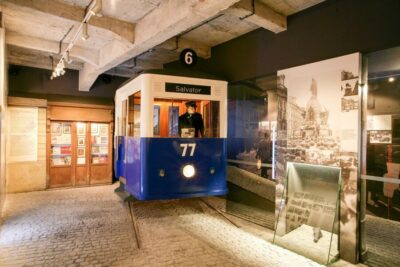
Schindler’s Factory Guided Tour with Entry Ticket
Read our review →Browse the lists this tour appears in