
REVIEW · SKIP THE LINE
Skip-the-Line Warsaw Royal Castle Private Guided Tour
Warsaw’s royal core rises from the ruins. This private walk joins the city’s grand squares, churches, monuments, and Royal Castle with a licensed English-speaking guide, giving you a clear way to understand a city rebuilt almost from nothing. I like the private format, since your guide can answer your questions and adjust the focus. I also like the castle access, where guides such as Natalia, Czeslaw, and Eva have been praised for making the rooms and reconstruction story easy to follow. The main drawback is the sheer number of stops: in two to three hours, many will be brief looks from outside.
I would choose this tour if you want Warsaw’s main sights tied together rather than viewed as separate photo stops. The route covers Old Town, Castle Square, the Barbican, the Royal Route, Chopin sites, churches, and wartime memorials. Just arrive on time at Sigismund’s Column, since the castle uses a fixed entry schedule.
In This Review
- Key points to know before booking
- Starting beneath Sigismund’s Column
- Old Town rebuilt from ruins
- Market Square, the Mermaid, and the Wishing Bell
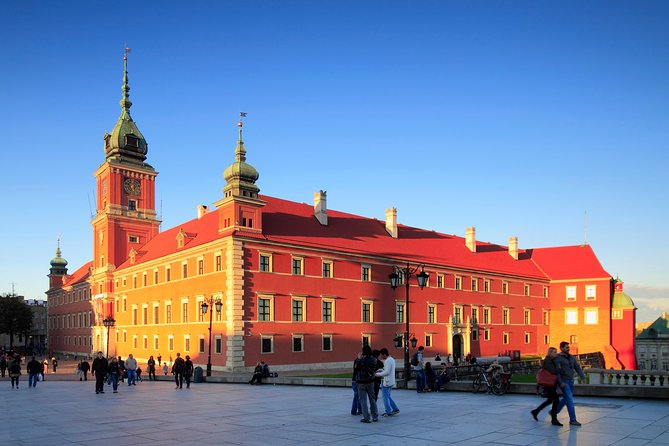
- The Royal Castle and its restored rooms
- Churches, towers, and views over Warsaw
- Krakowskie Przedmiescie, the Road of Kings
- Wartime memory beside medieval walls
- The Vistula and New Town finish
- What $150.59 per person really buys
- Who will enjoy this private Warsaw walk?
- Should you book it?
- FAQ
- How long does the Warsaw Royal Castle private tour last?
- What language is the tour offered in?
- Is this a private activity?
- Where does the tour start?
- Does the tour end where it starts?
- Can I enter the churches during the walk?
- What is the cancellation policy?
Key points to know before booking
- The Royal Castle is the heart of the tour: See the former seat of Poland’s rulers and learn how it was rebuilt after wartime destruction.
- A private guide keeps the pace personal: Only your group takes part, with English guiding and room for questions.
- Old Town comes with a complicated story: The cobbled streets and grand facades were rebuilt after the Nazis destroyed much of Warsaw.
- The route reaches far beyond the castle: You may see the Barbican, Warsaw Uprising Monument, Chopin’s Bench, Holy Cross Church, and the Vistula waterfront.
- Several interiors depend on your request: St. Anne’s Church, the cathedral, Holy Cross Church, and other churches may be entered if requested.
- The price favors small groups: At $150.59 per person, the value improves when shared by several people, especially with group discounts available.
Starting beneath Sigismund’s Column
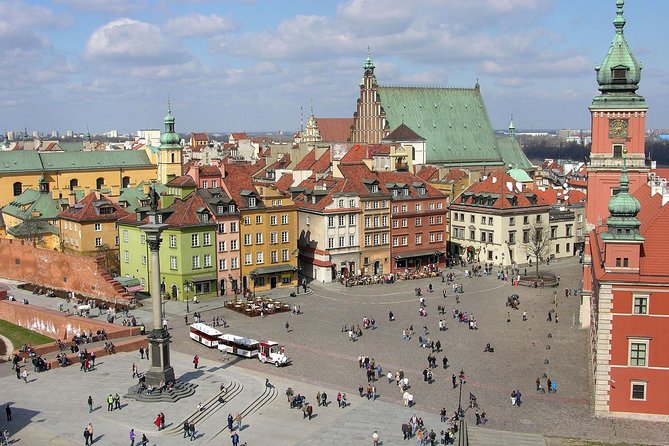
The meeting point is Sigismund’s Column on Castle Square, one of Warsaw’s easiest landmarks to recognize. The column honors King Sigismund III, who moved Poland’s capital from Krakow to Warsaw in the late sixteenth century, and its tall figure gives your guide a useful place to gather the group.
Castle Square is more than a meeting point. It is the threshold between the modern city and rebuilt Old Town, with the red Royal Castle on one side and the long, narrow streets of the historic center on the other. You will likely begin with the castle’s role in Polish government and monarchy before moving into the streets.
Arrive early. The tour includes timed castle entry, and security rules mean a late arrival can cause real trouble. If you are delayed, contact the guide as soon as possible. This is one of those small practical details that matters more than it sounds.
A few more Warsaw trips worth weighing up
- Warsaw: Skip-the-Line Royal Castle Guided Tour
★ 4.9 · 79 reviews - Warsaw: Lunch or dinner at Hard Rock Cafe with Skip-the-Line
★ 4.4 · 70 reviews - World of Illusion Museum Skip-the-Line Ticket
★ 4.0 · 55 reviews
Old Town rebuilt from ruins
Warsaw’s Old Town looks old in the best possible way: cobbled lanes, stepped roofs, colorful merchant houses, churches, and Baroque details. Yet much of what you see was rebuilt after the Second World War, when German forces destroyed large parts of the city after the Warsaw Uprising.
That reconstruction is central to understanding Warsaw. This is not a preserved medieval quarter untouched by modern events. It is a carefully recreated urban center, rebuilt from photographs, drawings, paintings, and surviving fragments. A good guide helps you notice the difference between age and authenticity without reducing the place to a museum set.
The first walk through Old Town is likely to be quick, but the setting rewards a slower look later in your visit. Watch how the narrow streets open suddenly into squares. Notice the tiered facades and small courtyards. The tour gives you the basic orientation, then you can return independently for coffee, photographs, or a longer wander.
Market Square, the Mermaid, and the Wishing Bell
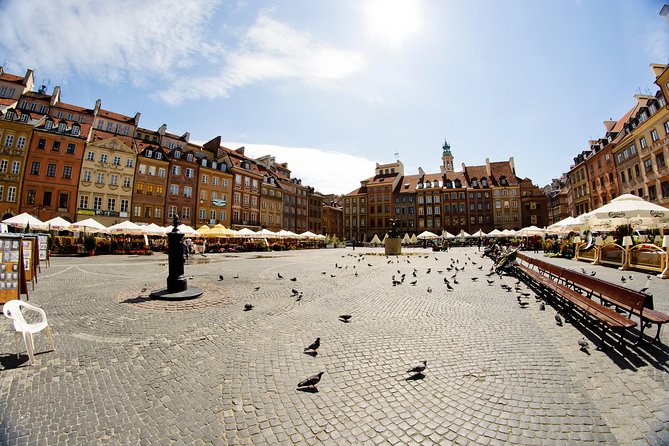
Rynek Starego Miasta, or Old Town Market Square, is one of Warsaw’s most appealing open spaces. Merchants’ houses frame the square, while cafes, shops, galleries, restaurants, and street sellers bring it to life.
The Warsaw Mermaid sits at the center, holding a sword and shield. She is one of the city’s symbols, and your guide can explain the legend connected with her. This is a short stop, but it helps you recognize the mermaid images that appear throughout Warsaw.
The nearby Wishing Bell offers a quieter pause. This seventeenth-century bronze bell sits in a small courtyard in the Old Town. It is easy to pass without a guide, which is exactly why a local walk can be useful. The stop does not take long, but it adds a small piece of neighborhood character between the better-known sights.
The Museum of Warsaw is seen from outside on this route. Its subject, ordinary objects connected with city life, is worth more time if you have another hour or two on your own. Do not expect a museum visit during this tour.
The Royal Castle and its restored rooms
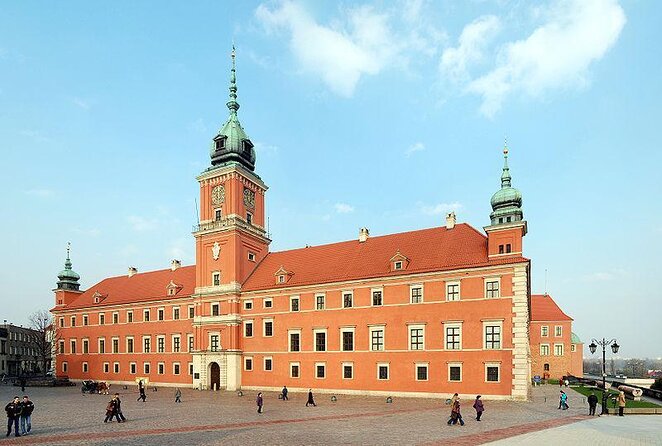
The castle is the main reason to book this experience. For centuries, it served as the central building of the Polish Commonwealth, hosting royal life, government business, coronations, and important national events.
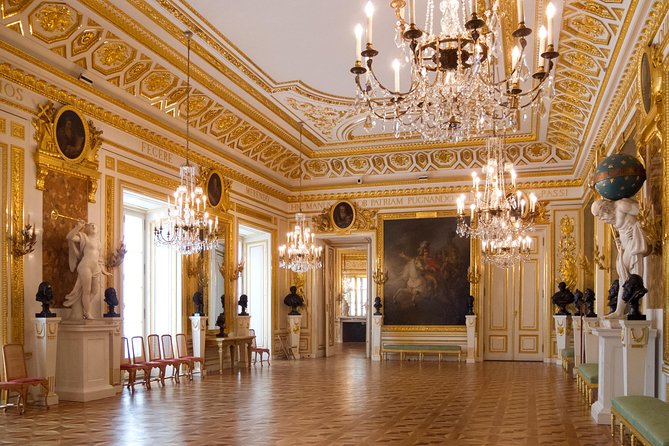
Its present appearance carries a painful twentieth-century story. German troops dynamited the castle after the Warsaw Uprising, leaving the building badly destroyed. Postwar Poland rebuilt it, recreating the seventeenth-century architecture and interiors from fragments and records.
This is where a private guide earns the fee. Instead of walking silently through royal rooms, you can ask what each room was used for, how the furnishings relate to monarchy, and which parts survived. Natalia is praised for explaining the purpose of individual rooms and adjusting the tour to particular interests. Another visitor found Czeslaw especially informative and pleasant, while Eva was praised for making the royal chambers interesting and relevant.
Expect the castle section to be the most structured part of the visit. Security and admission times shape the schedule, so there may be less freedom to linger than in the open-air parts of the walk. Still, the personal explanation makes the rooms easier to read, especially if you are not already familiar with Polish rulers.
In November, special events can mean the Lanckoroński Gallery is left out. If that gallery matters to you, check the plan before booking.
A completely different kind of day out in Warsaw:
- Warsaw: Chopin Concert in the Old Town
★ 4.8 · 2,287 reviews - Warsaw: Traditional Galar Cruise on The Vistula River
★ 4.6 · 1,640 reviews - Warsaw: Old Town Highlights Walking Tour in English
★ 4.7 · 1,516 reviews - Warsaw Concert: Chopin – Painted by Candlelights with Wine
★ 4.8 · 1,442 reviews
Churches, towers, and views over Warsaw
St. Anne’s Church is one of the route’s most useful optional additions. Its interior is richly decorated, yet the atmosphere can feel calm rather than overwhelming. The church’s bell tower has an observation terrace with a close view over Old Town and a wider look toward central Warsaw.
The tower climb is available for a relatively small extra price, according to the tour details, and may be arranged on request. Ask early if you want it. The view gives you a much better sense of Warsaw’s layout than street level does, but the climb adds time and effort to a short tour.
St. John the Baptist Cathedral is another important church stop. The building dates back to the thirteenth century and has hosted royal coronations and national ceremonies. Its interior may be entered on request.
The Church of the Jesuits has a striking red exterior and a surprisingly tall, ornate interior. The Field Cathedral of the Polish Army is simpler, with a restrained beauty that contrasts with the more decorated churches nearby. The Field Cathedral is viewed from outside on this route, while other church interiors depend on your request.
Holy Cross Church is especially meaningful for music lovers because Chopin’s heart is kept there. The church is heavily decorated, and the original Holy Cross at the entrance survived the wartime bombing. Entry may be possible if requested.
The Carmelite Church beside the Presidential Palace is another worthwhile interior. Its Baroque facade features paired pillars and stone details. Its appearance is tied to a famous story that Napoleon admired it enough to wish he could move it to Paris, though the tour provides the setting more than a long church lecture.
St. Mary’s Church is one of the oldest buildings in Warsaw and one of the few remaining examples of Gothic architecture in the city. Behind it, steps lead toward the Vistula River. This stop can help you see how quickly Old Town meets the river edge.
Krakowskie Przedmiescie, the Road of Kings
From Castle Square, the route may continue along Krakowskie Przedmiescie, the grand avenue often called the Road of Kings. It connects the Old Town with important government buildings, churches, monuments, and palaces.
The Presidential Palace is viewed from outside. Its Neoclassical facade remains an important symbol of present-day Poland, and guards are posted there. The exterior and surrounding street are worth seeing, but you should not expect an interior visit.
The Church of St. Joseph of the Visitationists began as a wooden chapel and was rebuilt after a fire. Its interior is plainer than some of the nearby churches, making it a useful contrast. The Adam Mickiewicz Monument honors one of Poland’s leading poets, with elaborate decoration, steps, and surrounding sculptures.
Chopin appears again at Chopin’s Bench. These multimedia benches play his music and offer a clever way to connect the composer with the city where he lived and worked. The stop takes about fifteen minutes, enough to hear the idea and enjoy a short musical pause.
Krasinski Palace is another exterior sight. Its reconstructed facade is impressive, but the tour does not include a museum visit there. The route is strongest when you want a broad introduction to Warsaw’s public buildings rather than long interior visits at each one.
Wartime memory beside medieval walls
The Warsaw Uprising Monument is one of the city’s most moving memorials. Its figures show Polish fighters rising from the ruins, expressing effort, courage, and sacrifice. The stop is brief, but the monument gains meaning after you have heard how the city was destroyed.
The Little Insurgent statue remembers children who died during the Warsaw Rising. It is small and easy to underestimate. Take a moment to look closely, since the sculpture carries a heavy subject in a compact form.
The Warsaw Barbican marks the northern entrance to the old city. This sixteenth-century fortress formed part of Warsaw’s medieval defenses and guarded the Novomeijska Gate. Its curved brick structure is photogenic, but its real value comes from seeing how the defensive wall shaped the old settlement.
The combination of the castle, churches, restored houses, and uprising monuments gives this tour a useful range. You are not getting a single royal narrative. You are seeing monarchy, religion, urban life, destruction, and reconstruction in one compact walk.
The Vistula and New Town finish
The route may extend toward the Vistula waterfront, where new boulevards and waterside pubs continue to change the area. The mood is more relaxed than in the castle district, and the river provides a welcome change after the churches and monuments.
New Town Square offers another view of Warsaw’s rebuilt historic center. King John III Sobieski founded it to celebrate his 1683 victory over the Turks at Vienna. The square is quieter than Old Town Market Square and is framed by Renaissance and Baroque architecture, including the church of the sisters of the Holy Sacrament.
The final location is different from the starting point, so do not plan a tight connection immediately afterward. The tour may finish near the river or in the broader Old Town and Royal Route area, depending on the final route and requested church visits.
What $150.59 per person really buys
At $150.59 per person, this is not the cheapest way to see Warsaw. The price makes more sense for a private group than for a solo visitor, especially since group discounts are available. Sharing the cost with family or friends can make the guide’s time and castle access feel worthwhile.
The strongest value comes from the combination of a licensed guide and a private format. You are paying for interpretation, not just transportation or a checklist of facades. The castle reconstruction story, the meaning of the uprising monuments, and the links between the royal route and modern Poland are easier to grasp with a guide.
The value drops if you want to spend a long time inside every church or museum. The tour covers many sights, and several are outside-only or available for entry only by request. If your priority is slow museum viewing, book the tour for orientation, then return to the Royal Castle or Museum of Warsaw on your own.
The mobile ticket is convenient, and the tour is offered in English. It is near public transportation, and most people can take part. It is also booked an average of 43 days ahead, so popular dates may require planning.
Free cancellation is available until 24 hours before the start time for a full refund. Changes or cancellations made inside that 24-hour window are not accepted for a refund.
Who will enjoy this private Warsaw walk?
I would recommend it to first-time visitors who want the main Old Town sights explained in one sitting. It also suits families and small groups, since a private guide can answer questions without the stop-start rhythm of a large tour.
History-minded visitors will appreciate the castle and uprising memorials. Music lovers have a clear reason to join too, thanks to Holy Cross Church and Chopin’s Bench. Architecture fans will enjoy the sharp contrast between Gothic churches, Baroque facades, Neoclassical public buildings, reconstructed merchant houses, and medieval defenses.
I would be more cautious if you dislike walking or want a slow visit at every stop. Twenty-seven listed places sound ambitious for two to three hours. In practice, the tour works best as a guided introduction, with several quick exterior stops and a fuller focus on the Royal Castle.
Should you book it?
Book this tour if you want a private English guide, timed Royal Castle entry, and a broad introduction to Warsaw’s Old Town in about two to three hours. The guide quality appears to be a major strength, with Natalia, Czeslaw, and Eva each praised for clear explanations, good timing, and a friendly manner.
Skip it if you mainly want to explore at your own pace or spend hours inside museums and churches. For most first visits, though, the tour offers a strong starting point: royal rooms, rebuilt streets, Chopin, medieval walls, and the difficult story of Warsaw’s destruction and recovery, all connected by a local guide.
FAQ
How long does the Warsaw Royal Castle private tour last?
The tour lasts approximately two to three hours.
What language is the tour offered in?
The tour is offered in English.
Is this a private activity?
Yes. Only your group participates in the tour.
Where does the tour start?
It starts at Sigismund’s Column on Castle Square, Plac Zamkowy, 00-001 Warszawa, Poland.
Does the tour end where it starts?
No. The activity ends at a different location, with the final details provided for the tour.
Can I enter the churches during the walk?
Some church interiors may be visited if requested. This includes St. Anne’s Church, St. John the Baptist Cathedral, Holy Cross Church, and St. Mary’s Church. Other stops are listed as exterior views.
What is the cancellation policy?
You can cancel up to 24 hours before the experience start time for a full refund. Cancellations or changes made less than 24 hours beforehand are not accepted for a refund.
Just added around Warsaw
- Jewish heritage in Warsaw★ 4.5 · 3 reviews
- Warsaw Outdoor Paintball with Transfers (all year round)★ 5.0 · 3 reviews
- World War II Warsaw Old Town, Military Cemetery Walking Tour★ 4.7 · 3 reviews
- Warsaw: Wolf’s Lair & Swieta Lipka Small-Group Tour + Lunch★ 5.0 · 3 reviews
- Sunset Boat Tour with Unlimited Drinks in Warsaw★ 3.5 · 3 reviews
- Majdanek – German camp from II World War – Private Tour – 1 DAY TRIP FROM WARSAW★ 5.0 · 3 reviews
- From Warsaw: Guided Tour to Wieliczka Salt Mine and Krakow★ 4.5 · 3 reviews
- Warsaw Sightseeing with NEW Mercedes Sclass !!!★ 5.0 · 3 reviews
Skip the Line, compared.
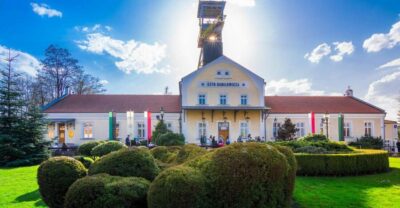
Wieliczka Salt Mine Tour & Skip the Line Ticket
Read our review →
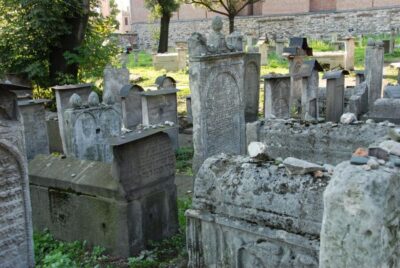
Auschwitz-Birkenau: Skip-the-Line Entry Ticket & Guided Tour
Read our review →
Schindler’s Factory in Krakow: Guided Tour & Skip the Line Ticket
Read our review →
Auschwitz-Birkenau Skip-the-Line Ticket and Guided Tour
Read our review →Auschwitz-Birkenau: Skip-the-Line Entry Ticket & Guided Tour
Read our review →Auschwitz-Birkenau: Skip-the-Line Ticket and Guided Tour
Read our review →Browse the lists this tour appears in