
REVIEW · KRAKóW TOURS
TOUR AL CAMPO DE CONCENTRACIÓN DE PLASZOW. El campo de la Lista de Schindlert.
The past is still visible here. Just 3 kilometers from Krakow’s center, this four-hour walking tour takes you through Plaszow, the former concentration camp connected with Steven Spielberg’s Schindler’s List. I like the Spanish-speaking guide and the use of old photographs, which help you understand a site that can otherwise look like an ordinary open area. I also like the small maximum group of 20 people.
The main drawback is the outdoor setting. Much of the ground is easy to walk, but you will be outside for several hours, with little shelter from poor weather. The subject matter is painful and the tour is best suited to visitors aged 14 and older who are ready for a serious visit, not a light sightseeing stop.
In This Review
- Key points about the Plaszow tour
- Why Plaszow deserves a guided visit
- Starting at Sienna 2a and getting ready
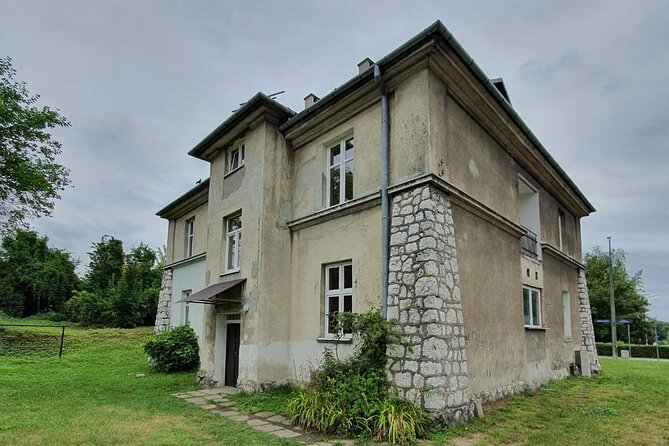
- The Gray House and the camp administration
- Jewish cemetery ruins and the September 1939 memorial
- The Polish prisoner area and the camp’s central square
- Executions, Hujowa Gorka, and the memorial
- The quarry and forced labor
- Amon Göth’s residence and the film connection
- What the guide adds to the experience
- Is $40.49 a fair price?
- Who should book this tour?
- Should you book the Plaszow tour?
- FAQ
- How long does the Plaszow concentration camp tour last?
- Where does the tour start and end?
- Is transportation included?
- Is the tour available in Spanish?
- Is Plaszow suitable for wheelchair users?
- What happens if bad weather cancels the tour?
Key points about the Plaszow tour
- A four-hour visit close to Krakow: Plaszow is only about 3 kilometers from the city center, making it practical to fit into a Krakow itinerary.
- Spanish guidance throughout: A native Spanish-speaking guide leads the walk and explains the different parts of the former camp.
- David may be your guide: Several highly positive reports single out David for his care, preparation, and willingness to spend extra time explaining the site.
- Old photographs add vital context: Historic images can help you picture buildings and camp areas that are now damaged, altered, or gone.
- A mostly easy walking route: The ground is described as easy to walk in most places, but the tour is not wheelchair accessible.
- Weather matters: Dress for several hours outdoors, and wear firm, comfortable shoes.
Why Plaszow deserves a guided visit
Plaszow is not presented as a neatly arranged museum complex. It is a broad former camp site near Krakow, with ruins, memorials, open ground, and locations that are difficult to interpret without help. That is exactly why a guide matters here.
Without context, a visitor could pass the former camp area and see little more than paths, grass, stone, and fragments of buildings. The guide connects those physical remains to the camp’s structure and explains what each location meant. The result is not just a walk through a film location. It is an attempt to understand a place shaped by imprisonment, forced labor, executions, and the destruction of Krakow’s Jewish community.
I like the fact that the tour covers the full site rather than stopping at one famous viewpoint. You move through administrative areas, prisoner spaces, execution locations, the quarry, and memorial sites. The route asks for time and attention, but that is also its value.
The four-hour length is important. A short visit might give you a quick photo stop and a few facts. This tour allows the guide to explain the camp’s layout and the relationship between different locations. It also leaves room for questions, which can be especially useful at a site where the remains are not always obvious.
A few more Kraków trips worth weighing up
- From Krakow: Auschwitz-Birkenau Guided Tour & Hotel Pickup
★ 4.5 · 33,358 reviews - From Krakow: Auschwitz-Birkenau Guided Tour & Hotel Pickup
★ 4.5 · 29,340 reviews - Krakow: Auschwitz Guided Tour with Optional Hotel Pickup
★ 4.5 · 15,280 reviews
Starting at Sienna 2a and getting ready
The tour starts at Sienna 2a in Krakow at 10:30 am and ends back at the same meeting point. Public transportation is not included, so you should budget about 2 euros for that part of the outing. The meeting point is near public transportation, which keeps the journey fairly practical, but you need to plan your own way there.
The operator sends booking confirmation by email. Check that message carefully for the meeting details and any instructions before setting out. If the guide contacts you with a nearby meeting suggestion, as happened for one visitor staying at a hostel, that may make the morning easier, but you should treat the confirmed meeting information as the official plan.
Wear comfortable shoes. The site is mostly easy to walk, but this is still a four-hour outdoor visit, not a quick city stroll. Choose clothing that works in changing weather, and bring protection from rain or sun as needed. The tour can be canceled in poor weather, with a choice of another date or a full refund.
The Gray House and the camp administration
One of the first important locations is the Gray House, identified as the office of Amon Göth. Göth was the camp commander portrayed in Schindler’s List, so this building carries a strong connection to the film. A guide can explain the difference between the movie’s dramatic treatment and the actual place, helping you avoid seeing Plaszow only through Hollywood’s version.
The nearby telephone exchange, SS headquarters, and SS barracks show how the camp functioned as an organized system. These are not separate attractions in the usual sightseeing sense. Together, they help you understand how authority, communication, surveillance, and daily control were arranged.
I find this section especially useful for visitors who know the film but have trouble placing its scenes in the real setting. The guide can point out where the camp’s administrative power was concentrated and how the site’s buildings related to one another.
Some remains are ruins rather than complete structures. That means you should not expect polished interiors or a large display of objects. The value comes from the explanation and the physical location, not from a museum collection.
Jewish cemetery ruins and the September 1939 memorial
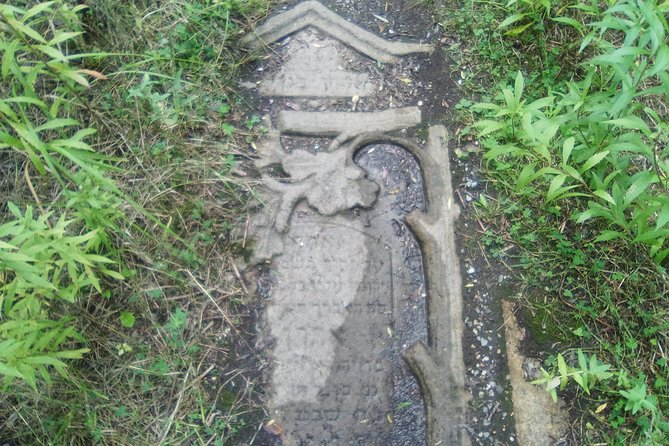
The tour also reaches the ruins of the Jewish funeral hall and the remains of the Jewish cemetery. These places add an older layer to the visit. You are not only seeing a former camp. You are also seeing what happened to Jewish spaces that existed before the camp was created.
The memorial to the victims of September 10, 1939, marks another part of the site’s wartime story. A guided explanation is useful here because memorials can be easy to pass without understanding their date or purpose.
These stops call for quiet attention. I would not plan another rushed attraction immediately afterward. Four hours may sound long on a schedule, but the length allows the guide to pause at places that deserve more than a passing glance.
A completely different kind of day out in Kraków:
- Krakow–Zakopane: Cable Car, Chocholow Baths, Cheese & Vodka
★ 5.0 · 10,720 reviews - Krakow: Auschwitz-Birkenau Guided Tour with Pickup & Lunch
★ 4.5 · 9,800 reviews - From Krakow: Wieliczka Salt Mine Tour
★ 4.6 · 9,393 reviews - Krakow: Auschwitz-Birkenau Guided Tour Pickup/Lunch Options
★ 4.5 · 9,057 reviews
The Polish prisoner area and the camp’s central square
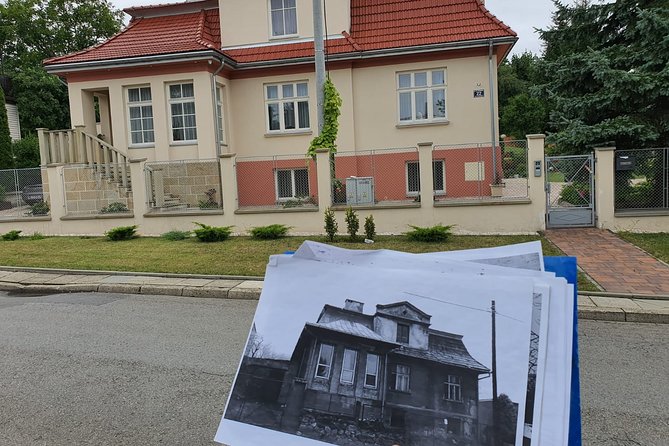
Plaszow included a camp for Polish prisoners as well as areas for Jewish prisoners. The tour’s route helps show that the site was not a single undifferentiated space. Different groups, functions, and zones formed part of a larger camp system.
The central square gives you a clearer sense of the camp’s organization. From there, the guide can explain how the prisoner barracks, functional buildings, and other areas fitted together. This is one of the places where a map or old photograph can make a major difference.
Several positive accounts praise David for bringing historic photographs. Those images are practical tools, not just souvenirs. They allow you to compare the present ground with the former camp and picture buildings that no longer survive. If David is leading your tour, his personal preparation may add a great deal to the visit, although the exact guide cannot be guaranteed in advance.
The prisoner barracks and functional buildings are likely to be more meaningful after this overview. Instead of hearing a list of locations, you begin to see how the camp operated and how confined daily life must have been.
Executions, Hujowa Gorka, and the memorial
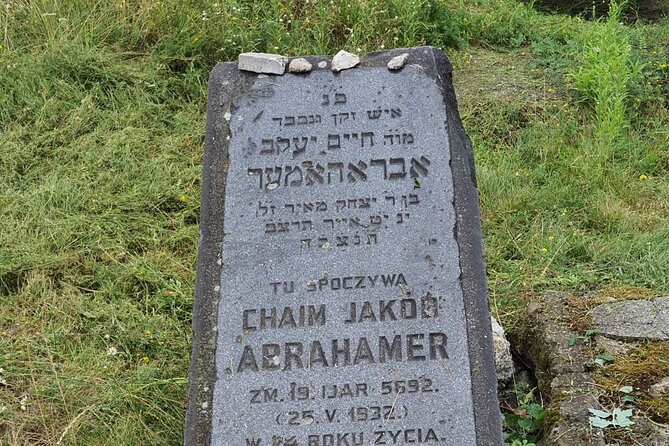
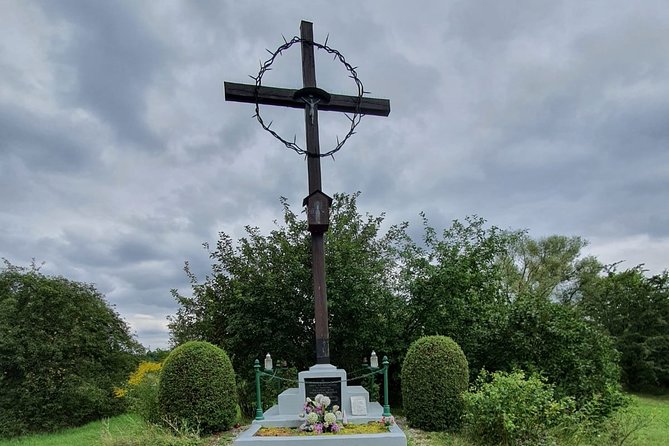
The tour includes the main mass execution site, Hujowa Gorka, and a second mass execution location. These are among the most difficult stops. The guide’s role is especially important here, since the ground may not immediately reveal what occurred there.
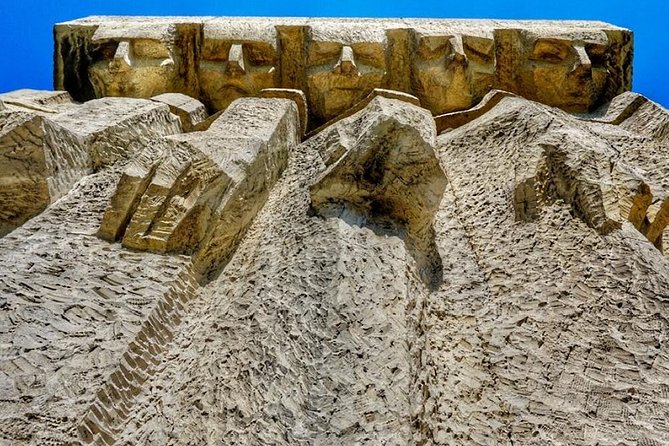
The tour also visits the camp victims’ memorial. This provides a place to consider the human cost after seeing the administrative and physical structure of the camp. The route is not designed to soften the subject. It presents the site directly and asks you to take in its different parts.
You should prepare yourself emotionally. The recommended minimum age is 14, and that guidance makes sense. Parents should decide based on the maturity of each child, not simply on age. The tour is educational, but it deals with imprisonment, executions, persecution, and mass death.
The quarry and forced labor
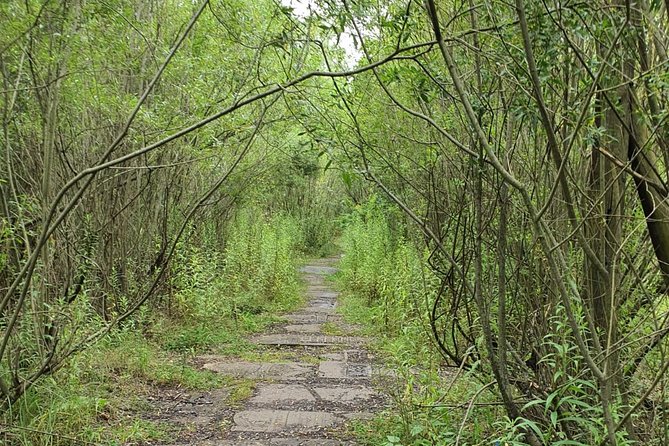
The quarry is one of the clearest reminders that the camp was also a place of forced labor. The tour explains the work carried out there and shows how labor was tied to the camp system.
This stop adds an important practical dimension. The camp was not only a place of detention. Prisoners were compelled to work under brutal conditions, and the quarry helps you understand the physical demands of that system.
The open terrain can make this section tiring in hot, wet, or cold weather. Still, the quarry is worth including because it connects the site’s geography with the camp’s purpose. You see how the location itself was used.
Amon Göth’s residence and the film connection
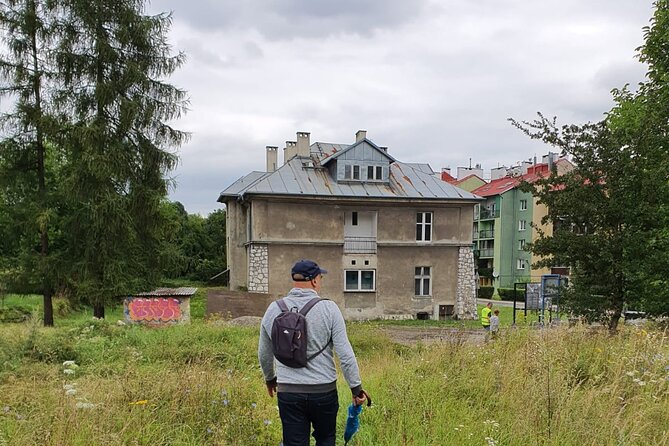
The route includes the residence of Amon Göth, the camp commander. For people familiar with Schindler’s List, this is likely to be one of the most anticipated stops. The film connection gives you a point of reference, but the tour is not simply a movie-location walk.
The guide also points out the area used to represent the camp during filming. This can help you separate the actual Plaszow site from the sets and reconstructed scenes used in the movie. Spielberg’s film introduced many people to the story, but the real location is more restrained and less visually dramatic.
That contrast is worth keeping in mind. You may recognize ideas or places from the film, yet much of the actual visit involves remains, open ground, and memorials rather than cinematic scenery. I see that as a strength, provided you arrive ready for a historical site rather than a film attraction.
What the guide adds to the experience
A Spanish guide changes the visit from a self-guided walk into a structured explanation. You can ask questions in your own language and spend time on details that are easy to miss.
The most strongly praised quality of David is not a single fact or story. It is his commitment to giving the site proper attention. One couple had a very small group and described a visit with no rush, including extra time when needed. Another account describes him contacting the visitor before the tour and suggesting a more convenient nearby meeting point.
You should not assume that every departure will be private or led by David. The advertised group limit is 20 people, so the size can vary. Still, the small maximum is a benefit. It should make it easier to hear the guide and ask questions than on a large coach excursion.
The guide also appears to bring old photographs to compare past and present. At Plaszow, that preparation has real value. Buildings have disappeared, and some areas may be difficult to identify without visual help.
Is $40.49 a fair price?
At $40.49 per person, this is not the cheapest way to spend four hours in Krakow. The price does include a native Spanish-speaking guide and a long visit across the former camp site. There is no separate admission charge listed, although you pay for your own public transportation, estimated at about 2 euros.
I think the price is fair if you want a serious, explained visit in Spanish. You are paying for time, guidance, and interpretation rather than entry to a large indoor museum. That distinction matters. If you only want to see the main film-related locations quickly, the tour may feel longer than necessary. If you want to understand the camp’s layout and memorial places, the four-hour format gives better value.
The group limit of 20 also supports the price. A smaller group can make the guide’s explanations more useful, particularly at outdoor points where sound and distance can be an issue.
Who should book this tour?
I would recommend it to adults and mature teenagers interested in World War II, Krakow’s Jewish history, or the real places connected with Schindler’s List. It is also a strong choice if you prefer Spanish-language guidance and want more than a short photo stop.
It may not suit you if you want a light activity, dislike long outdoor walks, or prefer a traditional museum with indoor exhibits and clear displays. The subject is heavy, and the open setting may feel physically or emotionally demanding.
The route is not wheelchair accessible. Although the ground is mostly easy to walk, it is not described as suitable for people who move around in wheelchairs. Pregnant visitors are also advised against taking the tour.
Free cancellation is available if you cancel at least 24 hours before the 10:30 am start. Cancellations made later are not refunded, and changes inside that period are not accepted. If bad weather forces the operator to cancel, you receive another date or a full refund.
Should you book the Plaszow tour?
Book it if you want a careful, four-hour explanation of Plaszow in Spanish, especially if the camp’s connection with Schindler’s List is what first brought it to your attention. The old photographs, the full-site route, and the possibility of a highly attentive guide such as David add real value.
Skip it if you need an indoor, wheelchair-accessible attraction or if your Krakow schedule allows only a quick stop. For the right visitor, this is a serious and worthwhile visit to a place that is easy to overlook without guidance.
FAQ
How long does the Plaszow concentration camp tour last?
The tour lasts approximately four hours and covers the full former camp site.
Where does the tour start and end?
It starts at Sienna 2a, 31-041 Krakow, at 10:30 am. The activity ends back at the meeting point.
Is transportation included?
No. Public transportation is not included. The estimated cost is about 2 euros, and the meeting point is near public transportation.
Is the tour available in Spanish?
Yes. The tour includes a native Spanish-speaking guide.
Is Plaszow suitable for wheelchair users?
No. The tour is not accessible for people who move around in wheelchairs, although the ground is described as easy to walk in most places.
What happens if bad weather cancels the tour?
If poor weather causes a cancellation, you are offered another date or a full refund. You can also cancel your booking for a full refund if you do so at least 24 hours before the start time.
Just added around Kraków
- Rynek Underground Museum & Wawel Castle, Cathedral – Cracow★ 5.0 · 3 reviews
- Schindler’s Factory, Ghetto and Plaszow Camp Guided Tour★ 4.7 · 3 reviews
- Nowa Huta – a guided tour of a utopian socialist city★ 5.0 · 3 reviews
- Krakow: Kazimierz by Golf Cart and Schindler’s Factory Tour★ 4.8 · 3 reviews
- Krakow: Jewish Traces Private Electric Car Tour★ 4.1 · 3 reviews
- Private Krakow City Tour by Car and Walk with private tour guide★ 5.0 · 3 reviews
- Krakow: Indoor Go-Karting (24-Minute Races)★ 4.8 · 3 reviews
- Discover the Jewish Quarter with a Bike Tour★ 5.0 · 3 reviews
Kraków Tours, compared.

Auschwitz-Birkenau Guided Tour & Hotel Pickup
Read our review →Auschwitz-Birkenau Guided Tour & Hotel Pickup
Read our review →
Auschwitz Guided Tour with Optional Hotel Pickup
Read our review →
Zakopane: Cable Car, Chocholow Baths, Cheese & Vodka
Read our review →
Auschwitz-Birkenau Guided Tour with Pickup & Lunch
Read our review →

Auschwitz-Birkenau Guided Tour Pickup/Lunch Options
Read our review →