
REVIEW · CITY TOURS
Warsaw: Behind the Scenes City Tour with Hotel Pickup
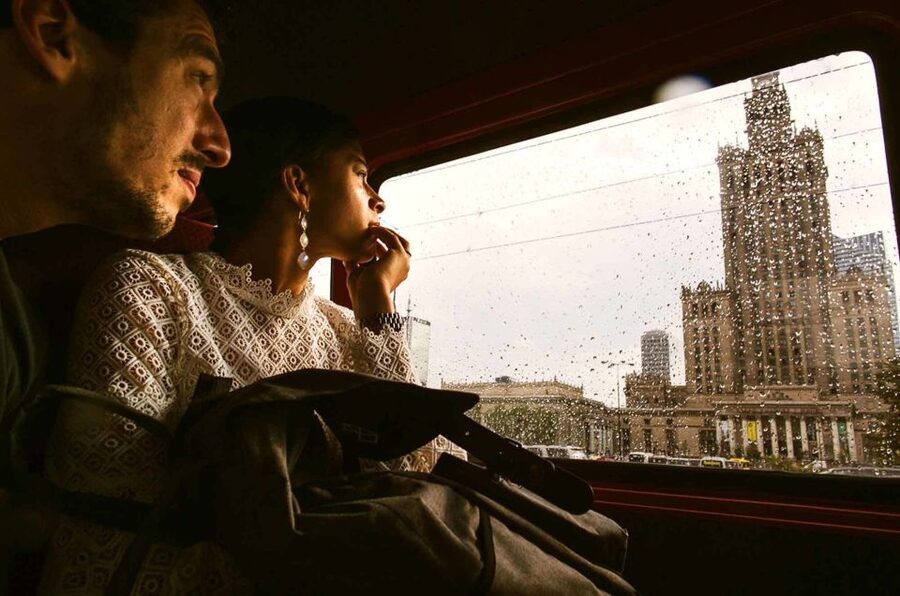
Warsaw has more than its postcard center. This three-hour ride in a classic Żuk minibus takes you beyond the usual monuments, into places tied to the Jewish Ghetto, both Warsaw Uprisings, communist planning, and the city’s modern revival. I like the mix of serious history and quirky transport, and I like that the guide can adjust the conversation to your interests. The main drawback is comfort: these historic vehicles may lack air conditioning, and some do not have seat belts.
You pay $129 per person for hotel pickup, drop-off, an English-speaking guide, and a small group of up to eight people. That is not a budget city ride, but the price makes more sense if you want context, local stories, and out-of-the-way districts rather than a quick circuit of famous sights.
In This Review
- Key points at a glance
- Why a Żuk makes a better classroom than a coach
- The opening history lesson sets the city in order
- The Jewish Ghetto and the scars of wartime Warsaw
- Both uprisings, two different chapters of resistance
- Muranów shows how a ruined district was rebuilt
- Across the Vistula to Praga
- Communist planning and the Warsaw you see today
- What the three hours feel like
- Price, comfort, and who gets good value
- Who should book this Warsaw tour?
- Should you book it?
- FAQ
- How long is the Warsaw Behind the Scenes City Tour?
- What language is the tour conducted in?
- Is hotel pickup included?
- How many people fit in each Żuk minibus?
- Are children under 150 centimeters allowed?
- Is the tour suitable for wheelchair users?
- What should I wear and bring?
Key points at a glance
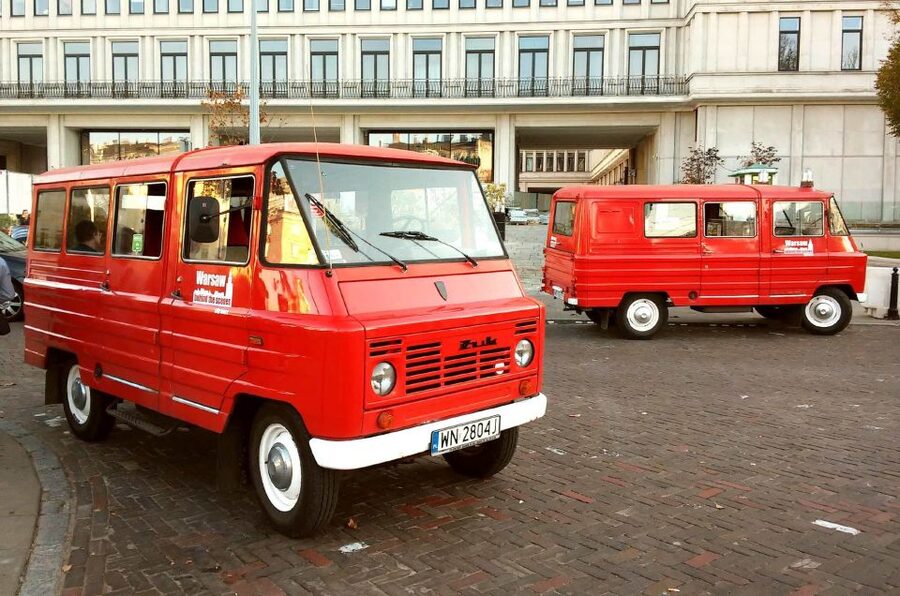
- Ride through Warsaw in a genuine Żuk: This boxy communist-era minibus is part of the experience, not just transport between stops.
- See the Jewish Ghetto and uprising sites: The route connects physical places with the events that shaped modern Warsaw.
- Cross into old Praga: This district escaped much of the wartime destruction and offers a very different view of the city.
- Learn how communism reshaped Warsaw: Grand avenues, rebuilt neighborhoods, and Soviet-influenced planning still affect the city today.
- Expect walking at each stop: The minibus moves you between areas, but comfortable shoes are important.
- Book for personal guidance: Guides such as Marcin, Konrad, Mark, Marius, and Lukas have been praised for warmth, humor, and strong command of Polish history.
Why a Żuk makes a better classroom than a coach
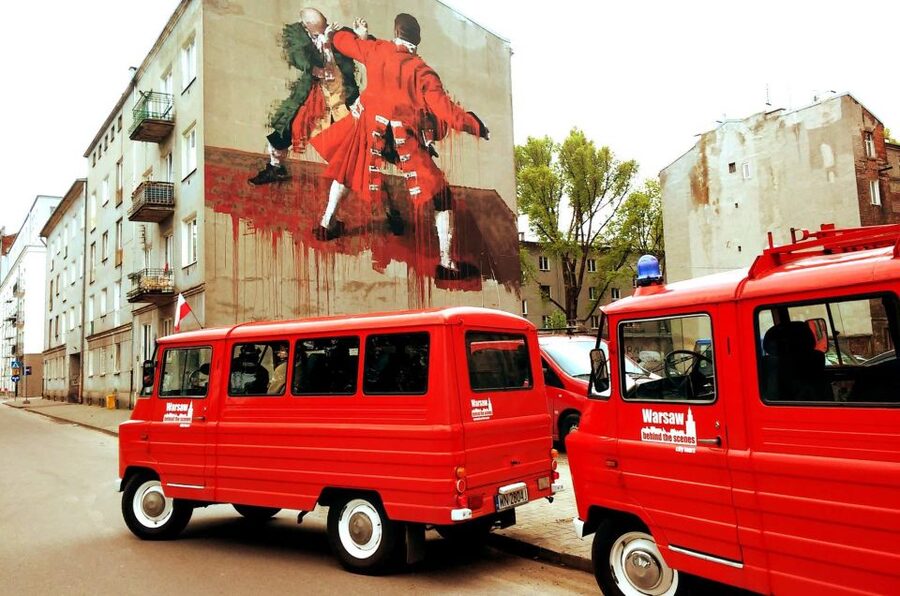
The Żuk is an instantly recognizable relic of Poland’s communist period. Its old-fashioned shape gives the tour a sense of place before the guide even begins speaking. You are not simply being carried around in a modern vehicle with tinted windows. The transport helps connect the city’s past with the present.
Each minibus holds up to eight people, and the operator has a fleet of five. That small size matters. You can hear the guide without a microphone, ask questions easily, and have a more natural exchange than you would on a large coach.
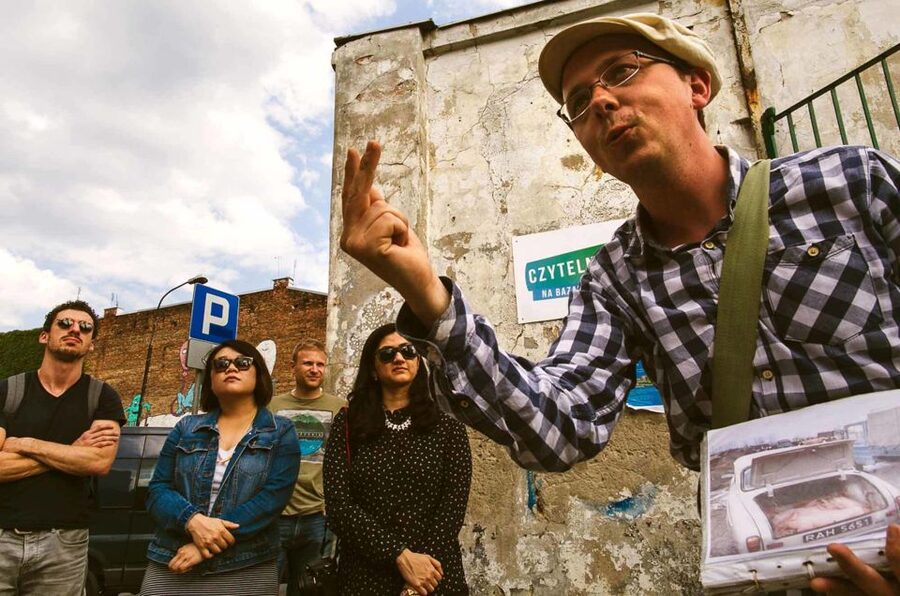
The guides are a major part of the appeal. Past outings have been led by Marcin, Konrad, Mark, Marius, Lukas, and others. Their styles differ, but the strongest pattern is clear: the guiding is conversational rather than a long speech delivered at you. Marcin has been praised for combining passion, humor, and a full schedule of less-touristed stops. Konrad has been singled out for adapting the route and discussion to individual interests.
I especially like this format for Warsaw because the city can be hard to read at first glance. A new apartment block may sit beside a prewar remnant. A broad avenue may reflect postwar ideology more than local taste. A quiet patch of grass may mark a place connected to terrible events. The guide helps you notice those layers.
A few more Warsaw trips worth weighing up
- Warsaw: Chopin Concert in the Old Town
★ 4.8 · 2,287 reviews - Warsaw: Traditional Galar Cruise on The Vistula River
★ 4.6 · 1,640 reviews - Warsaw: Old Town Highlights Walking Tour in English
★ 4.7 · 1,516 reviews
The opening history lesson sets the city in order
The tour begins with an overview of Warsaw’s past. That may sound basic, but it is useful here. Warsaw’s story moves through several sharp breaks: the prewar Jewish and Polish city, World War II and Nazi occupation, the destruction of much of the center, communist rule, and the rapid changes after 1989.
You need this framework before visiting the individual districts. Without it, the remnants of the Jewish Ghetto and the rebuilt areas of Muranów can look like disconnected city blocks. With it, you begin to understand why so much of Warsaw feels both old and new at the same time.
The guide also explains how to read the buildings. You may learn to distinguish prewar structures from postwar reconstruction and later development. This architectural focus is valuable because Warsaw does not present its history in one neat museum quarter. Much of it is written into street widths, building styles, memorials, and the spaces between newer structures.
The tone appears to be serious when it needs to be, but not gloomy for three hours. Several guides have been praised for making the subject accessible, personal, and even fun. That balance is important when a tour covers occupation, destruction, and life under Soviet rule.
The Jewish Ghetto and the scars of wartime Warsaw
The route continues to places connected with the Jewish Ghetto. You should not expect a perfectly preserved historic quarter. Much of wartime Warsaw was destroyed, and the surviving traces can be subtle. That is precisely why a guide helps.
The value here lies in connecting what remains with what once occupied the site. The guide can explain the boundaries, the wartime conditions, and the way the area changed after the war. You may pass through streets that look ordinary until you understand what happened there.
This section is likely to be moving, but it is not presented as a quick memorial stop with a few dates. The tour places the Ghetto within the wider story of Warsaw, including the city’s prewar character and the destruction that followed. That broader setting gives the visit more meaning.
Allow yourself to listen rather than rush for photographs. Some stops involve walking, and the points of interest may not all be concentrated around a single monument. Comfortable shoes will make the experience easier.
Both uprisings, two different chapters of resistance
Warsaw’s wartime story includes two major uprisings, and the tour discusses both. They are often confused by first-time visitors, so this is one of the most useful parts of the route.
The Jewish Ghetto Uprising and the 1944 Warsaw Uprising were separate events involving different groups, aims, and circumstances. A guide can help you keep those distinctions clear while showing how both belong to the city’s larger story of resistance under Nazi occupation.
The tour’s strength is not only naming the sites. It is explaining how those events affected the city and its people. The surrounding streets become easier to understand once you know why certain areas were destroyed, rebuilt, or memorialized in particular ways.
You should expect a thoughtful historical account rather than a simple list of heroic moments. Warsaw’s wartime experience was marked by extreme destruction and enormous human loss. A good guide gives you the facts while also explaining the choices and pressures faced by people living through that period.
A completely different kind of day out in Warsaw:
- Warsaw Concert: Chopin – Painted by Candlelights with Wine
★ 4.8 · 1,442 reviews - Warsaw: City Sightseeing Hop-On Hop-Off Bus Tour
★ 3.6 · 1,415 reviews - Warsaw: POLIN Museum of the History of Polish Jews Ticket
★ 4.7 · 1,142 reviews - #1 Pub Crawl Warsaw with Optional Premium 1 Hour Open Bar
★ 5.0 · 790 reviews
Muranów shows how a ruined district was rebuilt
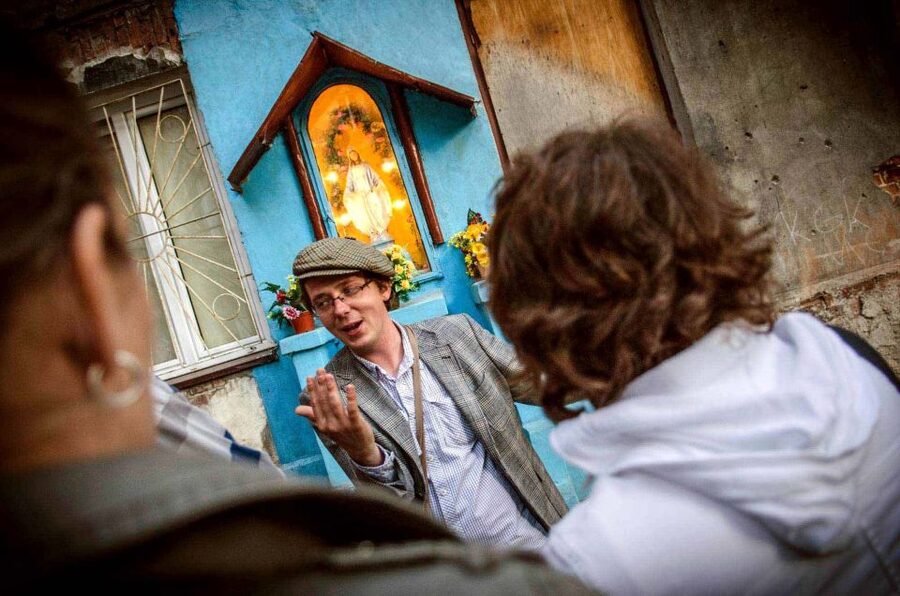
Muranów is an important stop because it shows the physical result of postwar reconstruction. Warsaw’s planners did not simply restore every street exactly as it had been. They created new neighborhoods over the ruins, using different materials, layouts, and ideas about how a modern city should function.
This gives you a chance to look at the city as a planning project. The rebuilt district carries traces of the old Warsaw, but it also reflects the decisions made after 1945. The guide explains how planners worked with a ruined city and how the new design changed daily life.
That context helps you avoid a common mistake: assuming that every old-looking building is original. Some parts of Warsaw were reconstructed with great care, while others were reshaped according to postwar needs and political ideals. The result is a city where appearance and age do not always match.
Muranów is also a good example of why this tour works better than a standard highlights trip. You are not just checking off a neighborhood. You are learning how Warsaw rebuilt itself and how the past remains present in the layout of the streets.
Across the Vistula to Praga
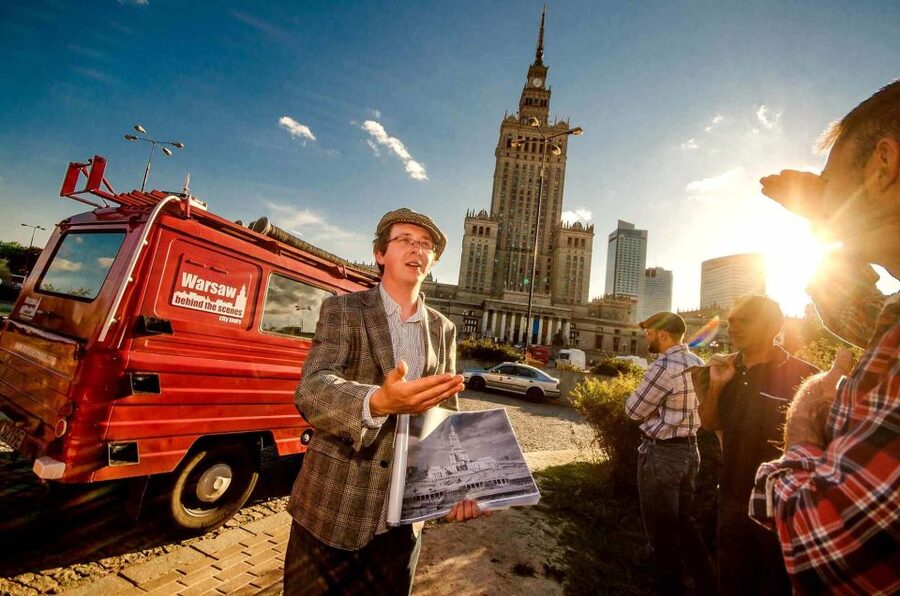
Crossing the Vistula River takes you into Praga, one of the tour’s most distinctive changes of scenery. Praga survived the war more intact than central Warsaw, so its streets can offer a stronger sense of the city before the destruction.
That does not mean Praga is a preserved museum district. It has had a rough reputation, and its older buildings sit alongside newer creative spaces. The tour presents the area as a neighborhood that has changed from one of Warsaw’s tougher districts into a center for murals, workshops, and independent culture.
I like this part because it complicates the usual Warsaw story. The rebuilt center can look grand and orderly, while Praga often feels more irregular and layered. You get a chance to see original architecture and a different side of local city life without pretending the district has lost its past.
The guide can also explain how Praga’s survival affected its character. Because it escaped much of the wartime destruction, it gives you a useful comparison with Muranów and the central districts. One side shows postwar rebuilding. The other shows more of what remained.
Expect walking at the stops, and do not treat the minibus as a door-to-door ride. The vehicle is used mainly to connect locations. The actual viewing happens on foot.
Communist planning and the Warsaw you see today
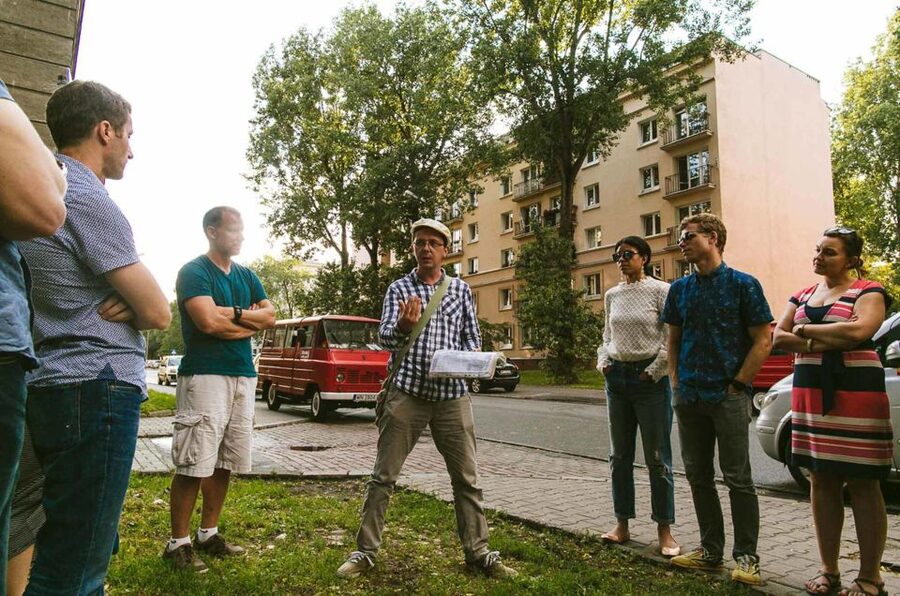
The tour then turns to the communist period and its effect on Warsaw’s appearance. After the war, planners faced ruins, housing shortages, and a political system that favored monumental public spaces and Soviet-influenced urban design.
The guide explains how new neighborhoods and broad avenues were shaped during that period. These decisions still influence traffic, public space, housing, and the way different parts of Warsaw connect. You are looking not only at old buildings, but at the city’s underlying structure.
This is one of the more valuable ideas on the tour: history is not confined to memorials. It can be seen in the scale of a street, the position of a housing block, or the contrast between a monumental building and a modest older neighborhood.
The experience also covers everyday life under Soviet rule. That gives you more than a political overview. You gain a sense of how the period affected ordinary routines and how the city changed after 1989.
The post-1989 section brings the story into the present. Warsaw’s growth, innovation, and cultural revival are presented as part of a continuing transformation rather than a clean break from the past. The modern city has not erased its earlier chapters. It has built over, around, and sometimes beside them.
What the three hours feel like
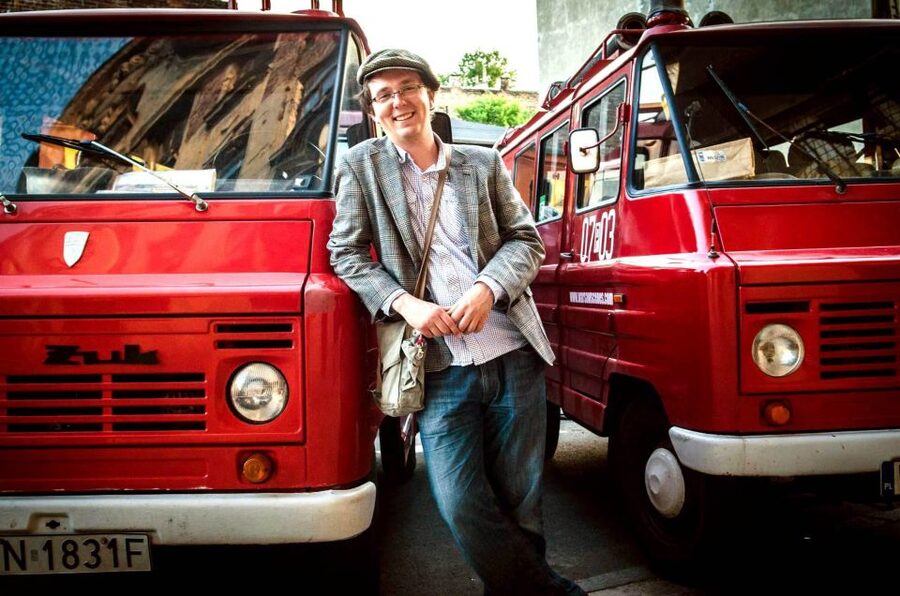
Three hours is a useful length for this subject. It is long enough to connect several districts, but short enough to fit into a busy Warsaw visit. You cover a lot of ground by vehicle, then get out for walking and discussion.
The small group makes the pace more flexible. If you have already visited one major museum or memorial, tell the guide. Past guides have adjusted the conversation and route to avoid repeating subjects and to respond to specific interests.
You should still expect a full schedule. The tour moves across multiple areas, so it is not designed for long, leisurely stops at every site. If you want to study one memorial or museum in detail, plan a separate visit.
The experience is conducted in English. Hotel pickup and drop-off are included for accommodations within one kilometer of the city center, so provide full hotel details when booking. Pickup is convenient, but it also means the exact start time needs to be checked for your date.
The vehicles are historic, not luxurious. They have heating for winter, but classic minibuses are not fitted with air conditioning. Some do not have seat belts, which is permitted for historic vehicles. In warm weather, this could be uncomfortable, especially if the minibus is full.
Price, comfort, and who gets good value
At $129 per person, this is a premium-priced three-hour tour. You are paying more than you would for a basic walking tour or a standard public transport ride.
The value comes from the combination of transport, hotel pickup, a small group, and interpretation across several districts. If you are new to Warsaw and want a fast but meaningful orientation, the tour can save you time and help you choose which museums and neighborhoods deserve a longer visit.
It is also good value for people who enjoy local perspective more than polished sightseeing. The ride reaches areas you might not find on your own, and the guides have been praised for taking people beyond the regular circuit.
The price is harder to justify if you mainly want famous landmarks, air-conditioned transport, or long visits at individual sites. You should also remember that the current listed inclusions are the ride, guide, and pickup service. Some earlier versions of the outing included a simple Polish lunch, cakes, coffee, or a vodka tasting, but you should not assume food is included in the current price.
For the smoothest experience, wear comfortable shoes and clothes suited to the weather. Do not bring luggage or large bags. Pets are not allowed.
Who should book this Warsaw tour?
I would choose this outing if you:
- Have limited time and want a strong city orientation
- Care about World War II, the Jewish Ghetto, both uprisings, and communist-era Poland
- Prefer small groups to large coaches
- Enjoy unusual transport and local stories
- Want to see Praga and other districts beyond central Warsaw
- Like asking questions and having a conversational guide
- Are comfortable with a vintage vehicle rather than modern conveniences
I would look elsewhere if you need wheelchair access, require a seat belt, or are under 150 centimeters tall. Children under 150 centimeters can only join if the operator confirms that a mandatory booster seat is available. The tour cannot be booked instantly for those children without checking first.
This is also not the right choice if you dislike walking. The Żuk connects the stops, but you leave the vehicle at each location.
Should you book it?
Book this tour if you want Warsaw explained as a living city rather than presented as a row of monuments. The most praised qualities are the guides’ warmth and command of the subject, the personal feel of the small group, and the chance to reach places you would probably miss alone.
I would place it early in a Warsaw stay. It gives you a useful map of the city’s major historical layers, then helps you decide where to return on foot or by museum visit.
The one caution is practical: the Żuk is charming, but it is old. On a hot day, limited ventilation may matter. If you accept that tradeoff, this is a memorable and unusually personal introduction to Warsaw, with far more substance than a simple city loop.
FAQ
How long is the Warsaw Behind the Scenes City Tour?
The tour lasts three hours. Starting times vary, so you need to check availability for your chosen date.
What language is the tour conducted in?
The live tour guide speaks English.
Is hotel pickup included?
Yes. Pickup and drop-off are included from accommodations within one kilometer of Warsaw’s city center. You should provide complete accommodation details when booking.
How many people fit in each Żuk minibus?
Each minibus accommodates up to eight passengers. The operator has a fleet of five minibuses.
Are children under 150 centimeters allowed?
Children under 150 centimeters may be able to join, but you must contact the operator first to check booster-seat availability. Booster seats are mandatory under Polish law.
Is the tour suitable for wheelchair users?
No. The tour is not suitable for wheelchair users. It is also not suitable for people under 150 centimeters tall.
What should I wear and bring?
Wear comfortable clothing and suitable footwear because the tour includes walking at each stop. Pets, luggage, and large bags are not allowed. Vintage minibuses have heating in winter, but some do not have air conditioning or seat belts.
Just added around Warsaw
- Jewish heritage in Warsaw★ 4.5 · 3 reviews
- Warsaw Outdoor Paintball with Transfers (all year round)★ 5.0 · 3 reviews
- World War II Warsaw Old Town, Military Cemetery Walking Tour★ 4.7 · 3 reviews
- Warsaw: Wolf’s Lair & Swieta Lipka Small-Group Tour + Lunch★ 5.0 · 3 reviews
- Sunset Boat Tour with Unlimited Drinks in Warsaw★ 3.5 · 3 reviews
- Majdanek – German camp from II World War – Private Tour – 1 DAY TRIP FROM WARSAW★ 5.0 · 3 reviews
- From Warsaw: Guided Tour to Wieliczka Salt Mine and Krakow★ 4.5 · 3 reviews
- Warsaw Sightseeing with NEW Mercedes Sclass !!!★ 5.0 · 3 reviews
City Tours, compared.
City Sightseeing Tour Eco Electric Buggy Golf Cart
Read our review →


Gdańsk City Sights & History Guided Walking Tour in English
Read our review →
Extended City Sightseeing Tour – Eco Buggy Golf Cart
Read our review →
Browse the lists this tour appears in