
REVIEW · KRAKóW TOURS
WOMAI Cracow – Into the darkness experience
Turn off sight, and Krakow feels new. WOMAI’s Into the Darkness experience gives you about an hour in complete darkness, guided by a blind guide who leads you through ordinary tasks using touch, hearing, smell, and balance. It is not a sightseeing tour, but a thoughtful way to understand how much work your eyes normally do.
I like the strong personal insight this experience offers, and I like the chance to ask questions and learn how Braille works at the end. The main consideration is practical: total darkness can feel unsettling, and the experience is not recommended for people with severe claustrophobia, significant mobility limitations, or hearing problems.
The price is about $17.33 per person, which I consider fair for a distinctive one-hour activity in Krakow. You will not see monuments or collect photographs, but you will leave with a better sense of how daily life changes when sight is removed.
In This Review
- Key points to know before you book
- What WOMAI’s darkness experience is really about
- Entering a world without sight
- Everyday tasks become the main attraction
- Why the blind guide matters
- The one-hour format works well
- Is $17.33 a good value?
- Who will enjoy Into the Darkness most?
- What may be difficult about the darkness
- A thoughtful way to discuss accessibility
- Booking and cancellation advice
- Six practical questions to ask yourself
- Should you book WOMAI Into the Darkness?
- FAQ
- How long does WOMAI Into the Darkness last?
- How much does the experience cost?
- Is the experience offered in English?
- Is the experience suitable for people with claustrophobia?
- Can people with hearing or mobility problems take part?
- Can I cancel for a refund?
Key points to know before you book
- A blind guide leads the experience: You are guided through the darkness by someone who understands the subject from personal experience.
- Everyday tasks become difficult: You rely on your other senses and may at times feel alone when you cannot find the person or object in front of you.
- The tour lasts about one hour: That is long enough to make an impression without turning the experience into an exhausting ordeal.
- Braille is part of the learning: You have time to ask questions and receive an introduction to how Braille works.
- English is available: The experience is offered in English and comes with a mobile ticket.
- Plan ahead for popular dates: It is booked an average of 18 days in advance, so leaving it until the last minute may be risky.
What WOMAI’s darkness experience is really about
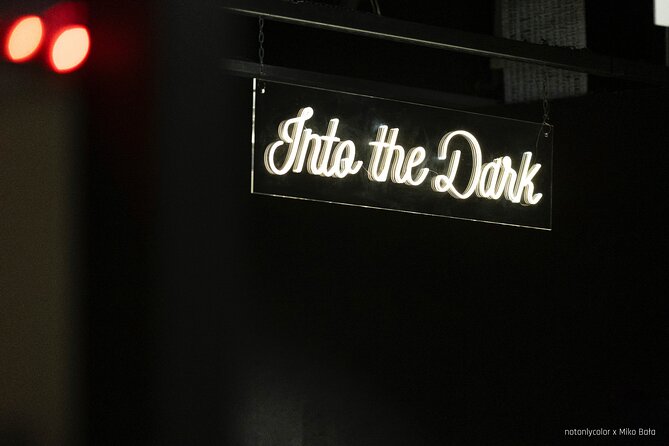
WOMAI’s Into the Darkness is built around a simple challenge: remove sight and see how you cope. Once the lights go out, familiar actions require patience, concentration, and trust.
The point is not to pretend that one hour in darkness can recreate the daily life of a blind or partially sighted person. It cannot. But it can give you a small, direct sense of how much you depend on vision for movement, orientation, communication, and simple tasks.
That makes this different from a standard museum visit. You are not standing in front of objects and reading labels. You are using your body and senses to work out what is happening around you.
The experience is led by a blind guide, which adds real value. Your guide is not simply explaining blindness from a distance. The guide takes you through the activity and can answer questions about the experience from a personal and practical point of view.
A few more Kraków trips worth weighing up
- From Krakow: Auschwitz-Birkenau Guided Tour & Hotel Pickup
★ 4.5 · 33,358 reviews - From Krakow: Auschwitz-Birkenau Guided Tour & Hotel Pickup
★ 4.5 · 29,340 reviews - Krakow: Auschwitz Guided Tour with Optional Hotel Pickup
★ 4.5 · 15,280 reviews
Entering a world without sight

The first major shift is mental. In a dark room, your usual habit is to look around, find the nearest object, and move toward it. Here, that option disappears.
You may need to listen closely, reach out carefully, and remember where people or objects are in relation to you. A person standing nearby can feel strangely far away if you cannot touch or hear them.
That uncertainty is one of the most useful parts of the activity. It shows how quickly confidence can disappear when you lose visual information. You might find yourself moving more slowly, checking each step, and paying close attention to sounds that you normally ignore.
The darkness also changes how you relate to the group. You may not know exactly where everyone is. At times, you can feel alone even when another person is close by. This is not a flaw in the design. It is part of the lesson, though it may feel uncomfortable for some people.
A calm attitude helps. You do not need to perform well or race through the tasks. The experience is about noticing how you react and how you adapt.
Everyday tasks become the main attraction
The activity takes you through everyday situations in total darkness. The available details do not specify each individual task, so you should not expect a precise list in advance. The central idea is clear, though: ordinary actions become problems to solve with your remaining senses.
Touch becomes more important. You may use your hands to identify an object, understand its position, or work out what to do next. Sound also takes on a new role, helping you judge where people are and what is happening around you.
Your sense of smell may become more noticeable too. When vision is removed, other signals receive more attention. Even a familiar situation can feel unfamiliar because you are processing it in a different order.
The guide helps you move through the experience, but you should expect to take an active role. This is not a performance where you sit back and watch. The value comes from trying, making mistakes, and adjusting.
I appreciate that the activity focuses on common situations rather than theatrical scares. It is designed to build awareness, not frighten you for entertainment. Still, the feeling of not knowing what is directly in front of you can be intense, especially at the beginning.
Why the blind guide matters
The guide is central to the experience. Without a guide, a room in total darkness could quickly become a simple novelty. With a blind guide, it becomes a chance to ask better questions and gain a more grounded view of daily life without sight.
You can ask about the experience and about the practical challenges faced by blind and partially sighted people. The guide also helps keep the activity safe and gives the darkness a clear purpose.
A particularly useful part comes at the end, when you can learn how Braille works. This gives the experience a practical finish. You are not left with only the memory of feeling disoriented. You also leave with a new way to think about written communication.
The information supplied for the experience does not name the guides, so you should not expect to request a particular person. What is clear is that the staff are focused on sharing personal knowledge and making the activity meaningful.
A completely different kind of day out in Kraków:
- Krakow–Zakopane: Cable Car, Chocholow Baths, Cheese & Vodka
★ 5.0 · 10,720 reviews - Krakow: Auschwitz-Birkenau Guided Tour with Pickup & Lunch
★ 4.5 · 9,800 reviews - From Krakow: Wieliczka Salt Mine Tour
★ 4.6 · 9,393 reviews - Krakow: Auschwitz-Birkenau Guided Tour Pickup/Lunch Options
★ 4.5 · 9,057 reviews
The one-hour format works well
The experience lasts approximately one hour. That is a good length for an activity this concentrated.
A shorter session might feel like a quick stunt. A much longer one could become tiring, particularly for anyone who finds darkness or close spaces stressful. One hour gives you time to adjust, take part in the tasks, ask questions, and learn about Braille without taking over your whole day.
I would place this activity between major Krakow sights rather than build an entire day around it. It works well as a change of pace from churches, museums, and historic streets. You can also consider it when the weather is poor, since the experience takes place indoors.
The mobile ticket makes arrival simple. Confirmation is normally issued at booking, although bookings made within three hours of the start time are confirmed as soon as possible and depend on availability.
The experience is near public transportation, which makes it easy to add to a Krakow itinerary. You do not need to treat it as a full-day outing, but allow enough time to arrive calmly. Rushing into an experience based on darkness is not ideal.
Is $17.33 a good value?
At about $17.33 per person, I see good value here if you want an activity with substance rather than another quick attraction. The price pays for a guided, structured experience and the chance to engage with a subject that most sightseeing does not address.
You are not paying for a long program or a large collection of exhibits. The session is about an hour, and its worth depends on how open you are to the idea. If you want photos, grand architecture, or a detailed display of objects, this will not feel like good value.
If you want a memorable activity that may change how you think about sight and accessibility, the cost is modest. It is also a useful choice for repeat visitors who have already seen Krakow’s main sights and want something different.
The experience has received a five-star rating from 363 reviews, with 100 percent of reviewers recommending it. Those figures suggest broad satisfaction, but they do not remove the need to consider your own comfort level. A highly rated experience can still be the wrong choice if you dislike darkness or have difficulty following spoken guidance.
Who will enjoy Into the Darkness most?
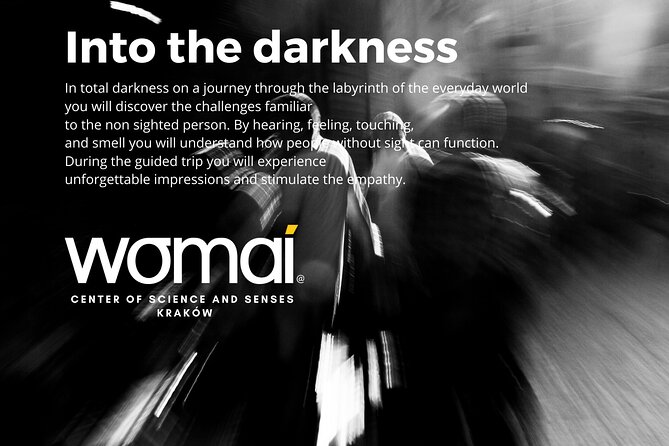
I would recommend this to adults, older children, students, families, and curious visitors who enjoy experiences that make them think. It suits people who are willing to be patient and who do not need constant visual entertainment.
It can also work well for a group of friends. You may discover that people react very differently when they cannot see. Some become quiet and careful. Others try to solve every task immediately. That difference can lead to useful conversation afterward.
The experience is especially suitable if you want to understand more about blindness without reducing the subject to a brief museum label. The guide-led format gives you a chance to ask questions rather than simply receive information.
I would hesitate to recommend it to anyone with severe claustrophobia. The activity is also not recommended for people with significant mobility disabilities or hearing problems. Since the experience depends on darkness, spoken guidance, and careful movement, these concerns are important rather than minor footnotes.
A moderate level of physical fitness is advised. The available information does not describe strenuous exercise, but you should be comfortable moving through the experience and following instructions.
What may be difficult about the darkness
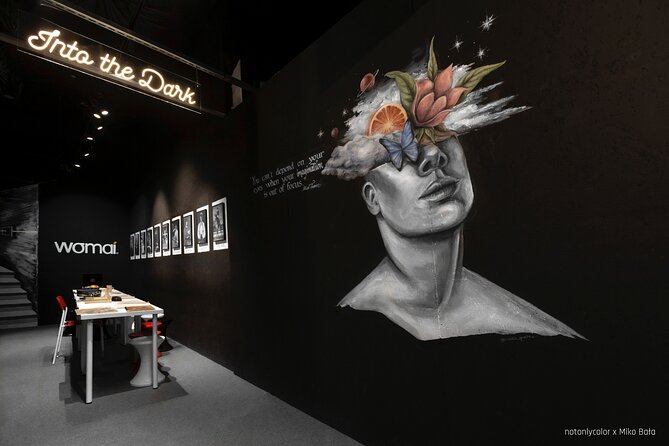
The biggest drawback is the loss of control you may feel at the start. Even if you know you are in a supervised activity, the darkness can make ordinary movement feel uncertain.
You may reach for someone and not find them. You may hear a sound without knowing its source. You may also feel that you need more time than usual to understand a basic task.
That discomfort is part of what makes the session useful, but it is not enjoyable for everyone. If you strongly dislike enclosed or dark spaces, think carefully before booking. The activity is meant to challenge your senses, not provide a relaxed break.
Hearing is important because the guide gives instructions and helps you navigate. Anyone with hearing problems should consider the stated restriction seriously. The information does not describe alternative arrangements, so do not assume that the activity can be adapted.
Mobility also matters. The experience requires you to move and respond to your surroundings without visual help. If you have a significant mobility limitation, ask WOMAI directly before booking rather than relying on guesswork.
A thoughtful way to discuss accessibility
One of the best reasons to choose this experience is that it encourages a more practical conversation about accessibility. You are not simply told that blind people face challenges. You experience a small version of the confusion and dependence that can arise when visual information disappears.
That distinction matters. Reading about accessibility can remain abstract. Trying to locate a person or object without sight makes the subject more immediate.
You should also keep the limits of the activity in mind. One hour in controlled darkness is not the same as living without sight. The experience works best when you treat it as an introduction, not a complete picture.
The Braille section helps widen the discussion. It shows that communication does not depend on printed text alone. You can ask questions and leave with a better understanding of how blind people read and receive information.
Booking and cancellation advice
The experience is offered in English and includes a mobile ticket. It is booked an average of 18 days ahead, so I would reserve before your Krakow visit if the timing matters.
You can cancel for a full refund up to 24 hours before the local start time. Cancellations made within 24 hours are not refunded, and changes inside that period are not accepted.
The experience requires a minimum number of participants. If WOMAI cancels because that minimum is not reached, you will be offered another date or experience, or receive a full refund.
For a last-minute booking made within three hours of the start time, confirmation may arrive later and depends on availability. I would avoid relying on this if you have a tight schedule.
Six practical questions to ask yourself
Before booking, consider these points:
- Can you follow spoken instructions in English?
- Are you comfortable moving without seeing?
- Do you have a moderate level of physical fitness?
- Do you have severe claustrophobia?
- Do you have significant mobility or hearing problems?
- Will you give yourself enough time to arrive without rushing?
If you can answer those questions comfortably, the experience is likely to suit you. If one of the restrictions applies, contact WOMAI first or choose another Krakow activity.
Should you book WOMAI Into the Darkness?
You should book it if you want a short, unusual, thoughtful experience that gives you a practical glimpse into life without sight. The blind guide, everyday tasks, open questions, and Braille introduction give the session more purpose than a simple novelty attraction.
I would skip it if you are looking for Krakow views, historic objects, or an easygoing activity with no physical or emotional challenge. Total darkness can be disorienting, and the restrictions around hearing, mobility, and claustrophobia deserve careful attention.
For most visitors who meet the requirements, $17.33 is a reasonable price for an experience you are likely to remember after the rest of the day’s sightseeing has blurred together. Book ahead, arrive ready to listen, and allow yourself to move slowly. That is where the value lies.
FAQ
How long does WOMAI Into the Darkness last?
The experience lasts approximately one hour.
How much does the experience cost?
The listed price is $17.33 per person.
Is the experience offered in English?
Yes. The experience is offered in English.
Is the experience suitable for people with claustrophobia?
It is not recommended for people with severe claustrophobia because the activity takes place in total darkness.
Can people with hearing or mobility problems take part?
The experience is not recommended for people with hearing problems or significant mobility disabilities. A moderate level of physical fitness is advised.
Can I cancel for a refund?
Yes. You can receive a full refund if you cancel at least 24 hours before the experience’s local start time. Cancellations within 24 hours are not refunded.
Just added around Kraków
- Rynek Underground Museum & Wawel Castle, Cathedral – Cracow★ 5.0 · 3 reviews
- Schindler’s Factory, Ghetto and Plaszow Camp Guided Tour★ 4.7 · 3 reviews
- Nowa Huta – a guided tour of a utopian socialist city★ 5.0 · 3 reviews
- Krakow: Kazimierz by Golf Cart and Schindler’s Factory Tour★ 4.8 · 3 reviews
- Krakow: Jewish Traces Private Electric Car Tour★ 4.1 · 3 reviews
- Private Krakow City Tour by Car and Walk with private tour guide★ 5.0 · 3 reviews
- Krakow: Indoor Go-Karting (24-Minute Races)★ 4.8 · 3 reviews
- Discover the Jewish Quarter with a Bike Tour★ 5.0 · 3 reviews
Kraków Tours, compared.

Auschwitz-Birkenau Guided Tour & Hotel Pickup
Read our review →Auschwitz-Birkenau Guided Tour & Hotel Pickup
Read our review →
Auschwitz Guided Tour with Optional Hotel Pickup
Read our review →
Zakopane: Cable Car, Chocholow Baths, Cheese & Vodka
Read our review →
Auschwitz-Birkenau Guided Tour with Pickup & Lunch
Read our review →

Auschwitz-Birkenau Guided Tour Pickup/Lunch Options
Read our review →