
REVIEW · AUSCHWITZ-BIRKENAU MEMORIAL TOURS
Auschwitz- Birkenau and Wieliczka Salt Mine in One Day
Two powerful places, one very long day. This Krakow excursion pairs the sobering Auschwitz-Birkenau memorial with the extraordinary Wieliczka Salt Mine, making it an efficient way to see two UNESCO World Heritage sites outside the city. I like the included transport and the fact that specialist museum guides lead both visits, with headphones at Auschwitz so you can hear without standing shoulder to shoulder with the guide.
I also like the steady organization. Hotel pickup and drop-off, admission tickets, an air-conditioned minivan, and a driver who keeps you informed remove much of the day’s hassle. The catch is simple: 12 hours is a lot, and Auschwitz can feel rushed when crowds and tight museum scheduling leave little time to pause.
If you have only a few days in Krakow, this is a sensible use of one full day. If you have more time, I would prefer to visit the two places on separate days, especially because Auschwitz deserves quiet attention and the salt mine involves a great deal of walking and stairs.
In This Review
- Key points to know before booking
- Why combine Auschwitz and Wieliczka?
- Getting from Krakow to Oświęcim
- Entering Auschwitz I with a museum guide
- Birkenau adds scale and silence
- The break between the two sites
- Descending into the Wieliczka Salt Mine
- Walking, stairs, and the energy required
- Is $187.53 a fair price?
- What works well, and what does not
- Who should book this day trip?
- Should you book Auschwitz-Birkenau and Wieliczka in one day?
- FAQ
- How long does the tour last?
- What sites are included?
- Is hotel pickup and drop-off included?
- Is lunch included?
- What size bag can I take into Auschwitz?
- Do I need identification?
- How many stairs are there at the Wieliczka Salt Mine?
- Is the tour suitable for someone with moderate fitness?
Key points to know before booking
- Two major sights in one day: Auschwitz-Birkenau and Wieliczka Salt Mine are both covered, with tickets included.
- Auschwitz uses museum guides: You spend about two and a half hours at Auschwitz I and about one hour at Birkenau with an English-speaking guide supplied by the museum.
- The salt mine goes 140 meters underground: The route lasts about two and a half hours and covers more than 2.5 kilometers.
- Expect serious walking: Reaching the first salt mine level means descending 378 wooden stairs to 64 meters below ground.
- Lunch is not included: There is usually a break between sites, but bring snacks or arrange food ahead of time.
- Small bags only at Auschwitz: The museum permits bags no larger than 30 by 20 by 10 centimeters.
Why combine Auschwitz and Wieliczka?
At first glance, these places have little in common beyond their distance from Krakow. One is a memorial to mass murder and human suffering. The other is a remarkable underground complex shaped by centuries of salt mining.
That contrast is exactly why the pairing can work. Auschwitz asks for attention, restraint, and emotional space. Wieliczka offers a more visually dramatic visit, with carved chambers, statues, and chapels made from salt. After the difficult morning at the memorial, the mine gives you a different kind of historical experience.
The practical reason is even stronger. Both sights are outside Krakow, and arranging transport, admission times, and separate guides can take work. This tour puts the transport and tickets in one booking. For a short stay, I can see the appeal.
The tradeoff is pace. You are not simply visiting two nearby attractions for an hour each. The total day runs about 12 hours, and much of it is spent walking, waiting, or traveling by minivan. You will see a great deal, but you will not have unlimited time at either place.
More Auschwitz-Birkenau memorial tours:
- From Krakow: Auschwitz-Birkenau Guided Tour & Hotel Pickup
★ 4.5 · 33,358 reviews - From Krakow: Auschwitz-Birkenau Guided Tour & Hotel Pickup
★ 4.5 · 29,340 reviews - Krakow: Auschwitz Guided Tour with Optional Hotel Pickup
★ 4.5 · 15,280 reviews
Getting from Krakow to Oświęcim
Auschwitz is in Oświęcim, about 50 kilometers west of Krakow. Pickup is advertised as free from your hotel, although the stated meeting point is Przystanek Turystyczny Kiss&Ride at Wielopole 2 in central Krakow. Confirm the exact pickup arrangement before the day, particularly if you are staying in an apartment or outside the main hotel area.
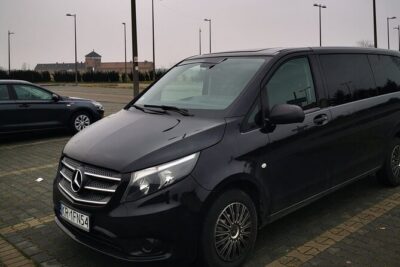
The transport is by air-conditioned minivan, with a maximum group size of 30 people. That is not a tiny private tour, but it is more manageable than a large coach. Several accounts praise drivers for being prompt, polite, and clear about meeting times. Drivers named Dawid, Thomas, Michael, Patrick, and Martin received especially warm comments, though the driver assigned to your departure may be different.
Minivan comfort can vary by seat. One couple found the legroom tight, particularly for a taller passenger during a long ride. If you are tall, board promptly and ask about seating rather than assuming every place has equal space.
The driver is not your main historical guide. Their job is to move the group, handle timing, and help with tickets and meeting points. The actual tours at Auschwitz and Wieliczka are led in English by guides from the sites.
Entering Auschwitz I with a museum guide
The Auschwitz portion begins at Auschwitz I, the original camp site. You spend about two and a half hours here on an English guided visit, with admission included.
This is not a light sightseeing stop. The grounds and exhibitions deal directly with imprisonment, forced labor, deportation, starvation, murder, and the destruction of families. You should arrive ready for a serious visit, not a standard museum tour. The experience can be especially difficult for children, and the content is not suited to a rushed or casual mood.
The museum guide provides the essential context that you would struggle to assemble alone during a short visit. Headphones are supplied, which is useful in crowded rooms and outdoor areas. You can hear the guide clearly without needing to stay right beside them.
The limitation is the schedule. Groups move through the site in sequence, and the route can feel hurried when several parties are following the same path. You may have only a short time at certain displays or memorial spaces before the group moves on. That is partly a result of the museum’s own organization and visitor numbers, not simply the transport company.
I would not plan to read every display in detail. Listen closely to the guide, stay with the group, and accept that this visit provides an introduction rather than the time for private study. If you want long periods of reflection, this one-day combination may not suit you.
A small bag rule matters here. Large bags cannot enter the museum, and the maximum permitted size is 30 by 20 by 10 centimeters. Bring only what you need. You also need your passport or other identification on the day, and everyone entering the museum passes through security checks.
Birkenau adds scale and silence
After Auschwitz I, the minivan transfers you about 2 kilometers to Auschwitz II-Birkenau. You spend about one hour there with the same museum guide.
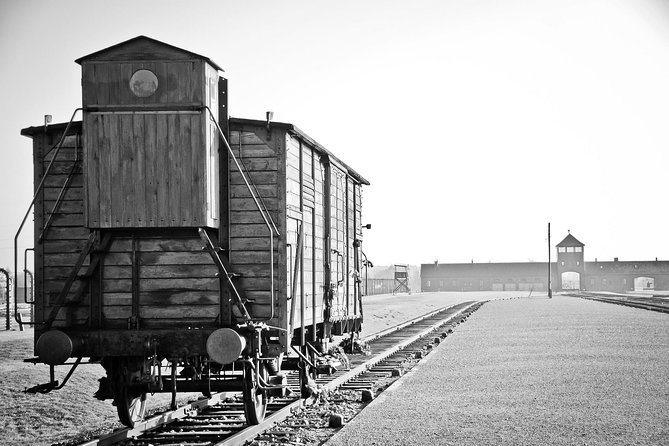
Birkenau is physically much larger, and that scale changes how the visit feels. The open grounds, long rows of barracks, railway area, and remains of the camp structures help you understand the size of the Nazi extermination system in a way that indoor displays alone cannot.
The hour passes quickly. You will walk outdoors, and conditions can change with the weather. Wear comfortable shoes and bring suitable clothing. Rain turned one visitor’s return journey into a miserable experience, so a waterproof layer is practical, even if the Krakow morning looks fine.
This is the portion where patience matters. You may want to stop, look, and remain quiet, while the group must keep moving. The guide’s commentary gives meaning to the places along the route, but you should not expect long unscheduled pauses.
Auschwitz and Birkenau together take about four hours, including the movement between the two sections and the organized visit. It is an important amount of time, but not a leisurely one.
More Wieliczka Salt Mine tours:
- From Krakow: Wieliczka Salt Mine Tour
★ 4.6 · 9,393 reviews - Krakow: Auschwitz-Birkenau and Salt Mine Guided Tour
★ 4.7 · 9,020 reviews - Krakow: Wieliczka Salt Mine Guided Tour with Transport
★ 4.4 · 7,429 reviews - Krakow: Wieliczka Salt Mine Fast-Track Ticket & Guided Tour
★ 4.5 · 5,872 reviews
The break between the two sites
Lunch is not included in the price. The day normally allows a break of about an hour before the salt mine, and there may be an opportunity to eat at a nearby restaurant. Some groups have had lunch organized for them, but you should not rely on that unless the arrangement is confirmed.
The safest plan is to buy a packed meal and snacks in Krakow beforehand. Several people found this useful, and the driver may allow food and drink in the vehicle. Carry water, too. Four hours at Auschwitz followed by an underground walking tour is tiring before you even add the road time.
If you prefer a sit-down meal, ask the operator in advance whether a reservation can be arranged. One restaurant near the mine was described as inexpensive, but cash was needed there. Card payment should not be assumed.
Descending into the Wieliczka Salt Mine
Wieliczka is about 15 kilometers southeast of Krakow and has produced table salt for more than 700 years. The guided route takes you as far as 140 meters underground and lasts about two and a half hours.
The first practical fact is the stairs. To reach the first level at 64 meters below ground, you descend a wooden staircase with 378 steps. After the tour, a lift takes you back to the surface.
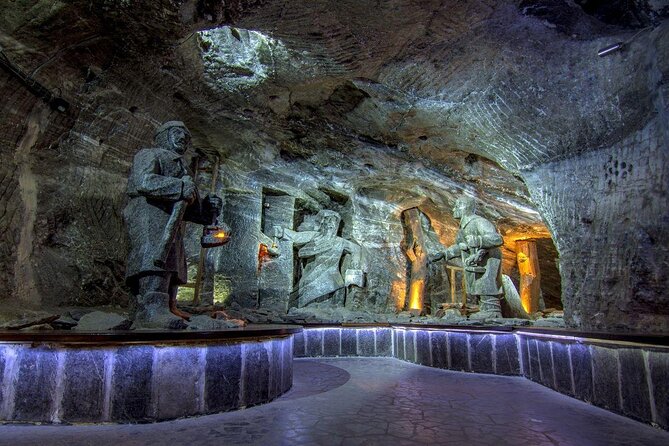
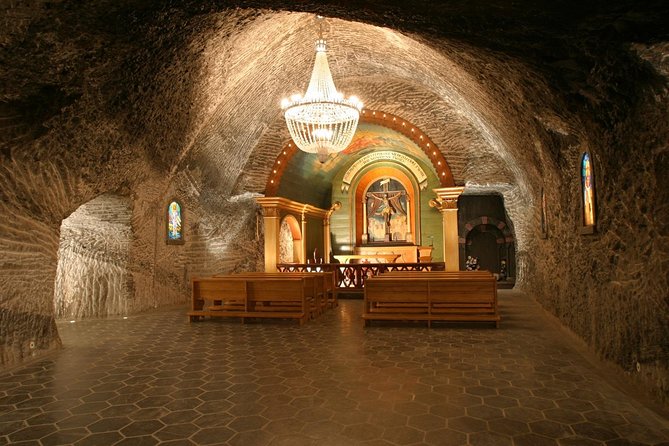
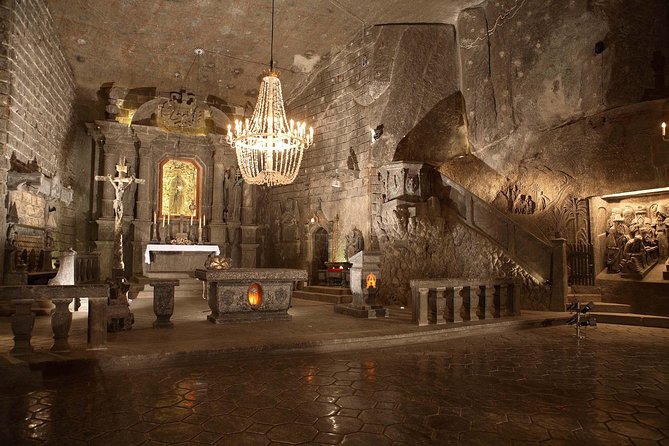
This is not an underground attraction you simply stroll through for half an hour. The route covers more than 2.5 kilometers and passes through chambers, carvings, statues, and religious spaces cut from salt. The craftsmanship and sheer amount of labor are the main reasons the mine feels so remarkable.
The English guided tour gives the underground rooms a useful human story. You learn how the mine worked and see how miners shaped salt into decorative and devotional art. Some guides are especially lively. Dominik was singled out for an engaging presentation, while Justine was praised for her pace and enthusiasm. Your guide will depend on the day.
The mine can also feel rushed. Some sections allow little time for photographs, and guides may skip or pass quickly through exhibits when the route is busy. The large chapel is a highlight, but you may not have as long there as you would like.
One confusing detail is the exit. The tour may finish at a different point from the entrance, and you may need instructions for returning to the meeting area. Ask your driver or guide before leaving the group so you know where to go next.
Walking, stairs, and the energy required
You need a moderate level of fitness for this day. The physical demands are not extreme for most people who walk regularly, but they add up.
At Auschwitz, you walk across large outdoor areas and stand during explanations. At Wieliczka, you descend 378 stairs, walk over 2.5 kilometers underground, and spend much of the tour on your feet. The lift returns you to the surface, but it does not remove the effort required inside.
Wear shoes with good support. This is one of those days when comfortable footwear matters more than looking polished. Bring water, a small snack, and a light layer for changing conditions.
The tour can suit adults and older teenagers who are prepared for the subject matter and the walking. It is less suitable for young children because of the content at Auschwitz and the length of the day.
Is $187.53 a fair price?
At $187.53 per person, this is not the cheapest way to visit either attraction. But the price includes both admission tickets, transport, an English-speaking driver or tour representative, the museum and mine tours, headphones at Auschwitz, and hotel pickup and drop-off where available.
That bundle has real value if you are short on time or do not want to coordinate two separate excursions. You avoid arranging a vehicle to Oświęcim, finding onward transport to Wieliczka, and matching timed admissions. The tour also reduces the risk of missing one site because of a delayed connection.
The value is weaker if you have several days in Krakow. Visiting Auschwitz and Wieliczka separately would give you more breathing room and make it easier to process each place. Auschwitz, in particular, benefits from a slower pace and personal reflection.
The price does not cover lunch or drinks. Budget for food, and carry cash if you plan to use a restaurant selected during the day.
What works well, and what does not
The strongest part of the experience is its organization. Prompt pickup, clean vehicles, clear meeting instructions, and helpful drivers make a demanding day easier. The headphones at Auschwitz are a small but important touch, especially when groups are large.
The site guides are another major strength. Guides such as Martin at Auschwitz and Dominik at the mine were praised for clear explanations and strong subject knowledge. The quality can vary by individual guide, but the structure gives you far more context than walking through alone.
The weak point is time. At Auschwitz, you may pass through rooms before you have fully absorbed them. At the salt mine, you may want more time for photographs or closer looks at the carvings. The maximum group size of 30 also means you might not always see exactly what the guide is pointing out.
Transport comfort is another minor concern. The minivan is convenient, but legroom may be limited. Drop-off arrangements can also vary, so confirm whether you will return directly to your hotel or to the central meeting point at Wielopole 2.
Free cancellation is available if you cancel at least 24 hours before the start time. Changes or cancellations made later are not accepted for a refund.
Who should book this day trip?
I would choose this tour if you have only two or three days in Krakow and want to cover both major sights without planning the transport yourself. It is also a good fit if you value an organized day, prefer English guided visits, and are willing to trade free time for efficiency.
I would think twice if you dislike fixed schedules, need long breaks, or want to study the Auschwitz exhibitions at your own pace. In that case, split the visits over two days.
For anyone booking, I would confirm four things before departure: the exact pickup location, the lunch plan, the salt mine exit arrangements, and the permitted bag size at Auschwitz. Those small checks can prevent the main practical frustrations.
Should you book Auschwitz-Birkenau and Wieliczka in one day?
Yes, if your time in Krakow is limited and you understand what you are buying: a full, tiring, tightly scheduled day with two excellent guided visits.
The Auschwitz portion is moving but may feel too quick for some people. The salt mine is visually astonishing, but it also brings stairs, long walks, and limited time in some chambers. The tour’s value lies in fitting both sites into one organized trip, not in offering a slow or private experience.
If you can spare two days, separate visits would be my first choice. If you cannot, this is a practical and well-supported way to see both, provided you wear good shoes, pack snacks, carry identification, and leave room in your evening for a very early night.
FAQ
How long does the tour last?
The experience lasts approximately 12 hours, including transport, guided visits, and the break between the two main sites.
What sites are included?
The tour includes Auschwitz I, Auschwitz II-Birkenau, and the Wieliczka Salt Mine. Admission tickets to Auschwitz-Birkenau and the salt mine are included.
Is hotel pickup and drop-off included?
Hotel pickup and drop-off are included where available. The stated central meeting point is Przystanek Turystyczny Kiss&Ride at Wielopole 2 in Krakow, and the activity ends back at the meeting point.
Is lunch included?
No. Food and drinks are not included. You should bring snacks or make your own lunch arrangements.
What size bag can I take into Auschwitz?
The maximum permitted bag size is 30 by 20 by 10 centimeters. Large bags cannot be brought inside the museum.
Do I need identification?
Yes. You need your ID or passport on the day of the tour. Security checks are required before entering the Auschwitz museum grounds.
How many stairs are there at the Wieliczka Salt Mine?
You descend 378 wooden stairs to reach the first level, which is 64 meters underground. The tour reaches as far as 140 meters underground, and a lift returns you to the surface afterward.
Is the tour suitable for someone with moderate fitness?
The tour requires a moderate level of fitness. You will walk and stand at Auschwitz, then walk more than 2.5 kilometers and use 378 stairs at the salt mine.
Just added around Kraków
- Rynek Underground Museum & Wawel Castle, Cathedral – Cracow★ 5.0 · 3 reviews
- Schindler’s Factory, Ghetto and Plaszow Camp Guided Tour★ 4.7 · 3 reviews
- Nowa Huta – a guided tour of a utopian socialist city★ 5.0 · 3 reviews
- Krakow: Kazimierz by Golf Cart and Schindler’s Factory Tour★ 4.8 · 3 reviews
- Private Krakow City Tour by Car and Walk with private tour guide★ 5.0 · 3 reviews
- Krakow: Jewish Traces Private Electric Car Tour★ 4.1 · 3 reviews
- Discover the Jewish Quarter with a Bike Tour★ 5.0 · 3 reviews
- Krakow: Indoor Go-Karting (24-Minute Races)★ 4.8 · 3 reviews
Auschwitz-Birkenau Memorial Tours, compared.

Auschwitz-Birkenau Guided Tour & Hotel Pickup
Read our review →Auschwitz-Birkenau Guided Tour & Hotel Pickup
Read our review →
Auschwitz Guided Tour with Optional Hotel Pickup
Read our review →
Auschwitz-Birkenau Guided Tour with Pickup & Lunch
Read our review →
Auschwitz-Birkenau Guided Tour Pickup/Lunch Options
Read our review →
Krakow to Auschwitz Birkenau Guided Tour with Transfer and Ticket
Read our review →
Browse the lists this tour appears in