
REVIEW · AUSCHWITZ-BIRKENAU MEMORIAL TOURS
Auschwitz Birkenau Self-Guided Tour from Krakow
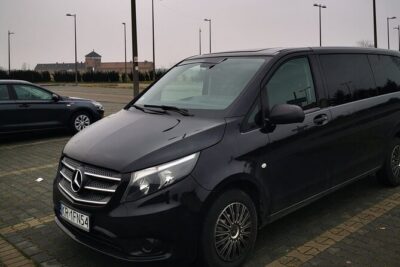
Some places demand your full attention. This Auschwitz-Birkenau trip from Krakow combines round-trip transport, admission, and help from a tour leader, giving you time to see the memorial at your own pace. I like the simple setup: you meet at Pawia 18B in Krakow, ride in an air-conditioned minivan or bus, and avoid arranging separate transport to Oświęcim. I also like the chance to spend time at Auschwitz I and Birkenau without being rushed from display to display.
The main point to check is the guiding format. The experience is described as self-guided, with independent entry after your tour leader explains the layout. Yet the schedule also refers to a licensed Auschwitz museum guide leading part of the visit. Ask for clarification before booking, since the level of guided commentary can change the whole feel of the day.
In This Review
- Key points to know before booking
- What this Auschwitz day trip really offers
- Meeting in Krakow at 2:30 pm
- Auschwitz I, the first preserved camp
- Birkenau, where the scale becomes harder to grasp
- Self-guided freedom, with one important question
- The return journey and the 15-minute pause
- Physical demands and emotional preparation
- Who will get the most from this tour
- Booking advice and final verdict
- FAQ
- Where does the tour start and finish?
- What time does the tour begin?
- How long does the full experience last?
- Are Auschwitz I and Birkenau both included?
- Is transportation included?
- Is the visit guided or self-guided?
Key points to know before booking
- A 2:30 pm Krakow departure: The tour begins at Pawia 18B, making it useful if you want a later start rather than an early morning departure.
- Both Auschwitz sites are included: You visit Auschwitz I and Auschwitz II-Birkenau, about three kilometers apart.
- Transport is handled for you: The ride takes about 1.5 hours each way in an air-conditioned minivan or bus.
- Self-guided time gives you space: The main description allows you to walk independently and reflect without staying beside a guide at every moment.
- Expect a long, serious day: The full outing lasts about seven to eight hours, with walking across two large memorial sites.
- Book well ahead: This experience is commonly reserved about 71 days in advance, and the group can reach 30 people.
What this Auschwitz day trip really offers
This is not a sightseeing stop you squeeze between cafés and castles. Auschwitz-Birkenau is a place of remembrance, evidence, and grief. The visit asks for attention and stamina, and the long ride from Krakow gives the day a clear shape: leave the city, spend several hours confronting the site, then return quietly.
At $38.05 per person, the price is reasonable for a package that includes transport and entry tickets. You are paying for convenience as much as for the visit itself. Reaching Oświęcim independently means arranging transport, finding the museum, and managing admission. Here, a tour leader helps your group enter and explains how Auschwitz I and Birkenau fit together.
The price does not automatically mean a fully guided museum tour. That distinction matters. The main description says you explore independently, while the detailed schedule mentions a professional museum guide. If you want a continuous, expert-led explanation, confirm that before paying. If you prefer quiet time with the exhibits and memorial grounds, the self-guided format may suit you well.
More Auschwitz-Birkenau memorial tours:
- From Krakow: Auschwitz-Birkenau Guided Tour & Hotel Pickup
★ 4.5 · 33,358 reviews - From Krakow: Auschwitz-Birkenau Guided Tour & Hotel Pickup
★ 4.5 · 29,340 reviews - Krakow: Auschwitz Guided Tour with Optional Hotel Pickup
★ 4.5 · 15,280 reviews
Meeting in Krakow at 2:30 pm
Your day begins at Pawia 18B, 31-154 Kraków. The stated start time is 2:30 pm, so arrive early enough to locate the meeting point without turning a solemn day into a frantic one. The activity ends back at the same meeting point.
The later departure has a practical advantage. You can spend the morning in Krakow without setting an alarm at an unreasonable hour. The tradeoff is a return in the evening, after roughly 1.5 hours on the road from Oświęcim. Make sure the timing fits your dinner plans or any evening train.
The ride takes about 1.5 hours to reach the museum. Transport is provided by air-conditioned minivan or bus, and the group may include up to 30 people. A smaller minivan can feel more personal, while a full-size group makes the experience less intimate. Either way, you do not need to worry about driving, parking, or navigating between the two sites.
A lunchbox may be available if desired, and there is a short break on arrival for coffee or a stretch. Treat this as basic practical support, not a full meal stop. You should still plan around the length of the day and the limited opportunities to pause.
Auschwitz I, the first preserved camp
The first main stop is Auschwitz I, reached through the familiar gate bearing Arbeit Macht Frei. The camp began operating in 1940 in former Polish army barracks. It was first used for Polish prisoners of war and political prisoners, then became part of a much larger system of imprisonment, forced labor, and mass murder.
The preserved barracks and original fences make Auschwitz I especially direct. You move through buildings that now hold exhibitions, photographs, objects, and written evidence. Watchtowers and barriers show how tightly the camp was controlled. The setting is not abstract. The buildings are still there, arranged in a way that makes the scale of confinement easier to grasp.
The visit here is scheduled for about 1 hour and 50 minutes. That is enough time to see major exhibitions, but it can feel short if you read every panel closely. A self-guided visit gives you control over your pace. You can stop longer at an exhibit that affects you, then move on when you are ready.
The scale of the crime is difficult to absorb. More than 1.5 million prisoners were brought to the Auschwitz complex, including Jewish, Polish, Italian, and French prisoners. About 1.1 million people were murdered there. These figures are important, but the museum’s power comes from the physical evidence and the individual lives represented within it.
If a licensed museum guide is included for this section, you may receive a stronger historical framework and clearer explanations of the camp’s purpose. If not, take time with the exhibitions and use the site itself as your guide. Either format requires patience. This is not a place for hurried photography or casual conversation.
Birkenau, where the scale becomes harder to grasp
The second part takes you to Brzezinka, the village site where Auschwitz II-Birkenau was built. Birkenau lies about three kilometers from Auschwitz I and was the largest of more than 40 camps and sub-camps in the Auschwitz complex.
The physical scale changes everything. Auschwitz I feels enclosed by its barracks and pathways. Birkenau opens out into a much larger area, with long lines, fences, watchtowers, and the remains of camp buildings. The camp was designed to hold as many as 125,000 prisoners at one time.
Construction began in October 1941, using slave laborers after the village of Brzezinka had been displaced and largely destroyed. The camp was first intended for Soviet prisoners of war, then became a concentration camp for people from many countries and a central location for the murder of Jews.
The scheduled time at Birkenau is about 1 hour and 10 minutes. You may find that the open grounds require more walking than the timetable suggests. Paths can feel exposed, and the emotional weight of the site can be tiring. Wear practical shoes and keep your attention on the group’s meeting instructions, since the area is much larger than Auschwitz I.
This part of the visit is valuable because it shows the machinery of the camp system on a vast scale. The fences, watchtowers, barracks, and railway area help you understand how prisoners arrived, were sorted, confined, and deprived of basic human needs. The bare setting also leaves room for reflection, which is one reason a self-guided approach can work well here.
A few more Kraków trips worth weighing up
- Krakow: Vistula River Sightseeing Cruise with Audio Guide
★ 4.4 · 820 reviews - From Krakow: Auschwitz-Birkenau and Self-Guided Day Tour
★ 4.1 · 576 reviews - Krakow: Sightseeing Cruise on Vistula River with Audio Guide
★ 4.4 · 480 reviews - Krakow: Vistula River Sightseeing Cruise with Audio Guide
★ 3.9 · 270 reviews
Self-guided freedom, with one important question
The tour’s strongest feature is also its most important point to clarify. The main description says you receive entry tickets and walk through the camps independently. Your tour leader helps you enter, explains the layout, and then allows you to explore at your own pace.
That format suits you if you want to read carefully, pause in silence, or move through difficult displays without trying to keep up with a commentary. It also avoids the feeling of being hurried through a personal moment.
At the same time, the schedule says a local licensed expert from the Auschwitz-Birkenau museum will lead an insightful guided tour. Another section refers to a professional guide meeting you at the gate. Those details do not perfectly match the self-guided description.
I would not ignore this difference. Ask whether the price includes a museum guide, a tour leader only, or a mixture of both. A tour leader may handle transport and entry, while a museum guide may explain the exhibitions and camp history. Knowing which service you are buying helps you judge the $38.05 price fairly.
The return journey and the 15-minute pause
After the Birkenau visit, you rejoin the group for the ride back to Krakow. The schedule allows at least 15 minutes for a break, with the option to visit a bookstore or simply rest. That small pause matters after several hours of walking and emotionally demanding material.
The return journey takes about 1.5 hours. The total outing lasts around seven to eight hours, although the precise timing can change because of the museum’s schedule. The stated timing may also be adjusted by Auschwitz staff, so avoid booking a fixed evening commitment immediately afterward.
This is a group day trip, not an open-ended visit. You need to return when instructed, even if you would prefer another hour at Birkenau. That is the normal tradeoff for included transport. The benefit is that your ride back is waiting and your day ends where it began, at Pawia 18B.
Physical demands and emotional preparation
A moderate level of physical fitness is recommended. You will walk through two extensive sites, spend time standing, and move between buildings and open grounds. The distance between Auschwitz I and Birkenau is short by vehicle, but the Birkenau grounds themselves cover a large area.
Comfortable shoes are a practical choice. The tour does not present itself as physically extreme, but this is not a seated museum afternoon. The combination of walking, weather exposure, and serious subject matter can leave you tired.
You should also prepare emotionally. The first review supplied for this experience makes a simple point: knowing the story is different from seeing the place. That is the central reason to visit, but it is also why you should not treat the day as an ordinary excursion.
Photography and personal conduct matter here, even when formal rules are not spelled out in the tour details. Speak quietly, follow staff instructions, and give other people room to reflect. The best way to experience Auschwitz-Birkenau is with respect rather than with a checklist mentality.
Who will get the most from this tour
I would recommend this outing if you are staying in Krakow and want the practical parts handled for you. The included ride and entry ticket remove several hurdles, while the later start leaves your morning free.
It is a good match for you if:
- You want to see both Auschwitz I and Birkenau in one day.
- You prefer some freedom to read and pause independently.
- You are comfortable with a seven to eight-hour outing.
- You can manage moderate walking and standing.
- You value simple transport over a fully private experience.
- You want a lower-cost way to visit from Krakow.
It may not suit you if you need a tightly timed private tour, dislike group travel, or want complete control over how long you spend at each site. A group of up to 30 people can also mean waiting during entry and regrouping.
The tour has a five-star rating from four reviews, but that is a very small sample. The strongest praise focuses on the impact of seeing Auschwitz in person, not on luxury transport or entertainment. That is the right standard here. The experience earns its value through access, structure, and the chance to confront the site directly.
Booking advice and final verdict
Reserve ahead if your Krakow dates are fixed. The experience is often booked about 71 days in advance, which suggests that last-minute places may be limited. The cancellation terms are strict: the booking is non-refundable and cannot be changed for any reason.
Before you book, confirm three things: the exact departure time, the guiding format, and the transport arrangement for the short journey between Auschwitz I and Birkenau. The museum can change the schedule, so keep the rest of your evening flexible.
Book this tour if you want a practical, fairly priced day trip with transport and entry included, and if independent reflection appeals to you. I would choose it for the straightforward logistics and access to both camp sites, but I would first clarify whether a licensed museum guide is actually included.
Skip it if you need a private guide or a flexible return time. For most people based in Krakow, though, this is a sensible way to reach one of Europe’s most important memorial sites without spending the day solving transport problems.
FAQ
Where does the tour start and finish?
The tour starts at Pawia 18B, 31-154 Kraków, Poland. It ends back at the same meeting point.
What time does the tour begin?
The stated start time is 2:30 pm.
How long does the full experience last?
The outing lasts approximately seven to eight hours, including transport from Krakow and the return journey.
Are Auschwitz I and Birkenau both included?
Yes. The visit includes Auschwitz I and Auschwitz II-Birkenau, also called Brzezinka.
Is transportation included?
Yes. Round-trip transportation from Krakow is provided in an air-conditioned minivan or bus. The drive takes about 1.5 hours each way.
Is the visit guided or self-guided?
The main description says the visit is self-guided after assistance with entry and an explanation of the site layout. The schedule also refers to a licensed museum guide leading part of the visit, so you should confirm the exact guiding arrangement before booking.
Just added around Kraków
- Rynek Underground Museum & Wawel Castle, Cathedral – Cracow★ 5.0 · 3 reviews
- Schindler’s Factory, Ghetto and Plaszow Camp Guided Tour★ 4.7 · 3 reviews
- Nowa Huta – a guided tour of a utopian socialist city★ 5.0 · 3 reviews
- Krakow: Kazimierz by Golf Cart and Schindler’s Factory Tour★ 4.8 · 3 reviews
- Private Krakow City Tour by Car and Walk with private tour guide★ 5.0 · 3 reviews
- Krakow: Jewish Traces Private Electric Car Tour★ 4.1 · 3 reviews
- Discover the Jewish Quarter with a Bike Tour★ 5.0 · 3 reviews
- Krakow: Indoor Go-Karting (24-Minute Races)★ 4.8 · 3 reviews
Auschwitz-Birkenau Memorial Tours, compared.

Auschwitz-Birkenau Guided Tour & Hotel Pickup
Read our review →Auschwitz-Birkenau Guided Tour & Hotel Pickup
Read our review →
Auschwitz Guided Tour with Optional Hotel Pickup
Read our review →
Auschwitz-Birkenau Guided Tour with Pickup & Lunch
Read our review →
Auschwitz-Birkenau Guided Tour Pickup/Lunch Options
Read our review →
Krakow to Auschwitz Birkenau Guided Tour with Transfer and Ticket
Read our review →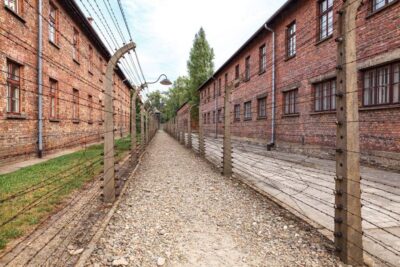
Browse the lists this tour appears in