
REVIEW · AUSCHWITZ-BIRKENAU MEMORIAL TOURS
Auschwitz Birkenau Tour from Krakow: Private Transfer + Ticket
Some places change how you see history. This Auschwitz-Birkenau tour makes a difficult visit easier to arrange, pairing private hotel transportation from Krakow with admission and a guided visit inside both former camps. I especially like the door-to-door service and the chance to join a professional museum guide rather than trying to make sense of the site alone. The main drawback is that the private part covers the car ride, not the museum tour, so you still join a larger group once you arrive.
I also like the direct journey, which avoids collecting other passengers and makes the long day less tiring. Drivers such as Michael, Dominic, Conrad, Pieter, and Przemek have been praised for being prompt, courteous, and helpful, with some showing a documentary during the drive. Still, the quality of the driver can vary, and a few people had problems with unclear pickup details, poor communication, or a driver who spoke little or no English.
In This Review
- Key points to know before booking
- Why this Krakow day trip matters
- The 90-minute drive from Krakow
- Auschwitz I and the gate with its chilling inscription
- The short transfer to Birkenau
- Birkenau’s railway ramp and open barracks
- How private is this experience?
- Is $214.32 per person good value?
- Walking, weather, and emotional preparation
- Who should book this tour?
- FAQ
- Is hotel pickup included?
- How long does the tour take?
- Is the transportation private?
- Is admission to Auschwitz-Birkenau included?
- Is the museum tour private?
- What size bag can I bring?
- Is the tour offered in English?
- Can I cancel for a refund?
- Should you book it?
Key points to know before booking
- Private transport means a private ride, not a private museum guide: You travel alone with your own group from Krakow, then join a guided group at Auschwitz-Birkenau.
- The full day takes about seven to eight hours: The drive is roughly 90 minutes each way, leaving about two and a half to three hours at the memorial.
- Auschwitz I and Birkenau feel very different: The first site has preserved buildings and indoor exhibitions, while Birkenau spreads across a much larger, more exposed area.
- The guide makes a major difference: Strong guides explain the camp system carefully and respectfully, but large groups can make it hard to hear or keep up.
- Bring only a small bag: The museum allows handbags or backpacks no larger than 30 by 20 by 10 centimeters.
- This is an emotionally demanding visit: Plan quiet time afterward rather than scheduling a packed evening.
Why this Krakow day trip matters
Auschwitz-Birkenau is outside the town of Oświęcim, about an hour and a half from Krakow by car. The distance is one reason this arrangement can be useful. You do not need to work out separate bus connections, find the entrance, or worry about getting back after a serious and tiring visit.
The camp complex was created by Nazi Germany during the Second World War. Auschwitz began in 1940, initially holding Polish political prisoners. After the construction of Birkenau, also called Auschwitz II, the site became a major concentration and extermination center for Jews from across Europe, along with Polish, Italian, French, and other prisoners.
About 1.1 million people were murdered at Auschwitz by the end of the war, the great majority of them Jews. The museum preserves buildings, documents, personal belongings, roads, fences, watchtowers, railway areas, and other parts of the camp so that the history is tied to real places rather than left as an abstract date in a textbook.
I would not describe this as a pleasant excursion. It is important, solemn, and often shattering. The visit can give new weight to what you have read or seen in documentaries, but you should arrive ready for difficult material and long periods of silence.
More Private Driver Tours in Kraków
- Krakow to Auschwitz Birkenau Guided Tour with Transfer and Ticket
★ 5.0 · 8,197 reviews - From Krakow: Auschwitz Birkenau Tour with Transfer
★ 4.0 · 6,134 reviews - Krakow: Auschwitz-Birkenau Guided Tour with Ticket and Transfer
★ 4.5 · 3,784 reviews
The 90-minute drive from Krakow
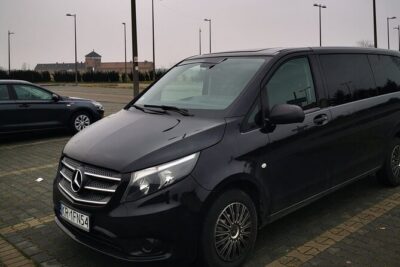
Your driver collects you at your Krakow hotel at an agreed departure time. The car travels directly to Auschwitz without picking up other passengers, which is the chief comfort of paying for a private transfer.
The drive takes about 90 minutes in each direction, though traffic and road conditions can affect the timing. The total experience lasts roughly seven to eight hours, so this is a full-day commitment. You will not be back in Krakow quickly after lunch.
Several drivers have made the journey especially useful by offering information about Poland or showing a documentary about the camps on a screen inside the vehicle. Michael, Dominic, and Conrad received particularly warm praise for being considerate and informative. A good driver can help prepare you for the visit, then leave room for quiet when the subject becomes heavy.
That service is not guaranteed. Some drivers were described as silent, unable to speak English, or uncomfortable behind the wheel. One person complained about hard braking and speeding. If driver communication matters to you, contact the operator before departure and clarify what is included. The listed service is an English-speaking professional driver, but the driver is not the guide at the memorial.
Pickup details also deserve attention. You are asked to confirm the exact start time the day before. If your hotel sits on a road with restricted vehicle access, you may need to walk to a nearby pickup point. Do not assume the exact time shown at booking is final until it has been confirmed.
Auschwitz I and the gate with its chilling inscription
At the visitor center, you meet the museum guide and enter Auschwitz I. The first approach is through the famous gate bearing Arbeit macht frei, translated as Work sets you free. The words are chilling because they present a lie designed to deceive and control prisoners.
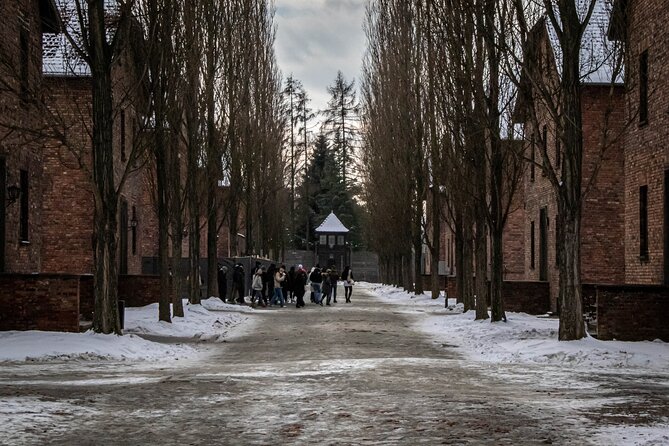
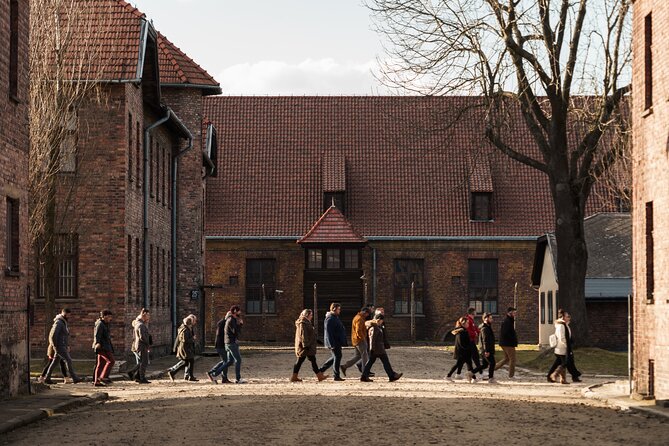
Auschwitz I occupies the site of former Polish army barracks. Many of the original brick buildings remain, along with camp roads, fences, watchtowers, and the Death Wall. Inside several barracks, museum exhibitions use documents, photographs, prisoners’ possessions, and objects taken from people when they arrived.
This section usually lasts about one hour and 45 minutes, though the exact time can vary. It is the more concentrated part of the visit, with buildings close together and indoor displays that require careful attention. You may see only selected blocks rather than every exhibition.
That limited coverage is one of the tradeoffs. The guided route gives you a clear framework and keeps the visit moving, but it does not allow unlimited time to read every plaque or explore each block at your own pace. One person felt the group saw only a small part of Auschwitz I and Auschwitz II. If you want to examine every display slowly, a basic guided route may feel rushed.
The guide’s tone matters here. The strongest guides explain how the camp operated while keeping the focus on individual lives and suffering. Guides named Krzysztof and others were praised for clear, respectful explanations. Headsets are normally provided, which helps, though a large group or crowded corridors can make the sound difficult to follow.
The short transfer to Birkenau
After Auschwitz I, you travel the short distance to Birkenau, the second and much larger part of the complex. The private driver normally handles the transfer between the two sites, a useful feature because walking between them would add time and fatigue.
There may be a brief break between sections. Accounts of the timing vary, with some people having only 10 to 20 minutes for a toilet stop or refreshment. Food and drinks are available at restaurants and kiosks at Auschwitz I and Birkenau, though queues can form and the break may be short.
I would still carry water and a small snack if you can fit them within the museum’s strict bag limit. Large backpacks are not allowed inside. The maximum permitted size is 30 by 20 by 10 centimeters, so leave bulky day bags at your accommodation or confirm storage arrangements before you go.
More Auschwitz-Birkenau memorial tours:
- From Krakow: Auschwitz-Birkenau Guided Tour & Hotel Pickup
★ 4.5 · 33,358 reviews - From Krakow: Auschwitz-Birkenau Guided Tour & Hotel Pickup
★ 4.5 · 29,340 reviews - Krakow: Auschwitz Guided Tour with Optional Hotel Pickup
★ 4.5 · 15,280 reviews - Krakow: Auschwitz-Birkenau Guided Tour with Pickup & Lunch
★ 4.5 · 9,800 reviews
Birkenau’s railway ramp and open barracks
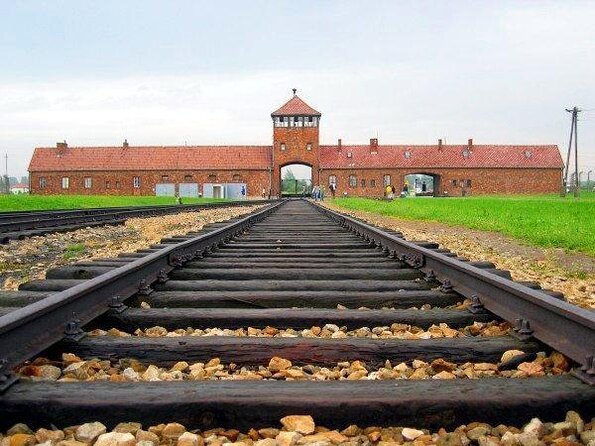
Birkenau was built about three kilometers from Auschwitz I, beginning in 1941 on the site of the displaced village of Brzezinka. It was planned to hold up to 125,000 prisoners and eventually became the main killing center within the Auschwitz complex.
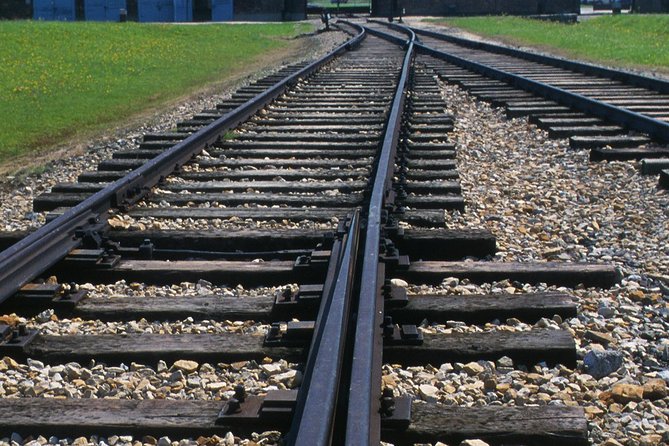
The scale changes the feeling of the visit. At Auschwitz I, the buildings and exhibitions hold your attention at close range. At Birkenau, the railway ramp, fences, watchtowers, open ground, barracks, and ruined gas chambers stretch across a broad area. The size makes the industrial nature of the camp easier to grasp.
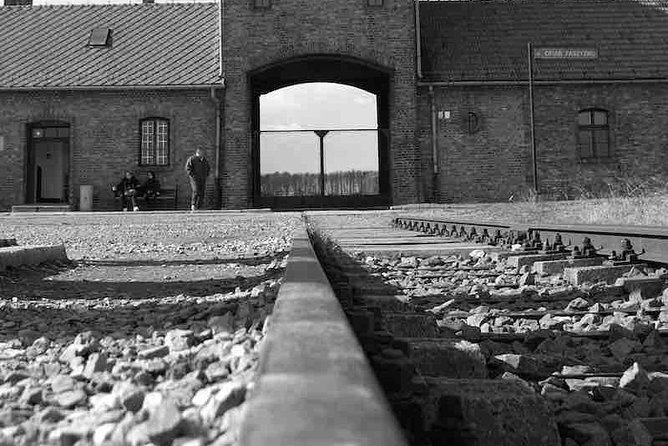
The railway ramp was where arriving prisoners underwent selection. A decision made in moments determined who would be sent to forced labor and who would be murdered. The gas chambers were only a short distance from the ramp, a fact that is difficult to take in while standing there.
You can enter preserved barracks and see the harsh conditions in which prisoners were forced to live. The site is exposed, and the ground can be uneven. There are also stairs and a great deal of walking. Wear solid, comfortable shoes and expect the visit to be physically tiring even if you usually manage long city walks.
Birkenau typically receives about an hour and a half of the day’s visit, although some people had closer to an hour with the guided group. The ruins and memorial area call for quiet reflection, but the group schedule may not leave as much time as you want. Stay close to your guide, especially if the group is spread out or you are listening through a headset.
How private is this experience?
The private element is easy to misunderstand. Your transportation from Krakow is private, and only your party rides in that vehicle. You do not share the car with other hotel pickups.
At Auschwitz-Birkenau, however, you join a museum tour with other people. The guide is shared, and group sizes can be medium or large. This arrangement is common for visits to the memorial, but it is important to know what you are paying for.
The advantage is simplicity. You have a driver waiting at the end, receive admission, and get the benefit of a guide who explains the museum’s selected route. The disadvantage is less personal attention and less control over the pace.
A few problems have involved people becoming separated from the group during the move between sites. Follow the guide’s instructions closely, confirm where the driver will wait, and keep your phone charged. One booking went wrong when a participant was left without the second-site guide after a confusing transfer. It appears to have been an exception, but it shows why clear meeting instructions matter.
Is $214.32 per person good value?
At about $214.32 per person, this is not the cheapest way to visit Auschwitz-Birkenau. You are paying for private round-trip transport, hotel pickup and drop-off, admission, and a guided visit in your chosen language, listed here as English.
For two people or a small group, the private car can be worth the extra cost. You avoid a crowded coach, do not need to reach a central departure point, and can go straight from your accommodation to the site. It is especially helpful if you value comfort, have limited time in Krakow, or do not want to manage public transportation on an emotionally difficult day.
The value is weaker if your priority is a slow, independent museum visit. The included guide follows a set route, and you may have only two and a half hours of actual touring after the road journey and transfer between camps. Booking directly through the museum or arranging a different format may suit someone who wants more time with individual exhibitions, but this package removes much of the planning work.
The experience is often booked well ahead, with an average advance booking period of about 53 days. That suggests you should not leave it until the last minute, particularly if your Krakow dates are fixed.
Walking, weather, and emotional preparation
This is a lot of walking over uneven ground, with stairs in some buildings and long exposed stretches at Birkenau. Good footwear is more important than smart clothing. Conditions can make the open site feel especially demanding, so dress for the weather and keep your bag small.
The emotional weight is just as real as the physical effort. You will see places connected with imprisonment, forced labor, mass murder, and the destruction of families and communities. The guide handles the subject in a respectful manner, but no guide can make it easy.
I would avoid booking a major evening activity afterward. Give yourself time to sit quietly, eat, or return to your hotel. If you are visiting with a young child, consider the subject matter and the amount of walking carefully. One family found the basic route manageable with a three-year-old, but that does not mean the content will suit every child.
This is also not a casual photo stop. Follow the museum’s instructions, listen to your guide, and treat the grounds as a memorial. The most valuable part of the visit may be the time when you stop looking for the next exhibit and simply remember the people who were imprisoned and killed there.
Who should book this tour?
I would choose this experience if you want the easiest door-to-door option from Krakow and are comfortable joining a shared museum group. It suits first-time visitors who want context, transport, admission, and a guide arranged together.
It also makes sense for a small group that would rather ride privately than share a coach. The ride can be comfortable, direct, and informative when you receive a driver like Michael, Dominic, Conrad, Pieter, or Przemek.
I would think twice if you expect a truly private guided tour. The car is private, but the camp visit is not. I would also compare other options if you want to spend many hours reading displays or moving at your own pace.
Before you leave Krakow, confirm the pickup time, pickup location, language of the museum guide, and the meeting point at Birkenau. Those few checks can prevent the most common frustrations.
FAQ
Is hotel pickup included?
Yes. Pickup and drop-off at your Krakow hotel are included. If the hotel is in an area with restricted vehicle access, you may need to walk to the nearest suitable pickup point.
How long does the tour take?
The experience lasts approximately seven to eight hours. The drive takes about 90 minutes each way, with the remaining time spent at Auschwitz I, Birkenau, and the transfer between the two sites.
Is the transportation private?
Yes. You travel in private transportation with only your own group from Krakow to Auschwitz-Birkenau and back. The guided museum visit is shared with other people.
Is admission to Auschwitz-Birkenau included?
Yes. Admission to the Auschwitz-Birkenau Memorial and Museum is included in the package.
Is the museum tour private?
No. The private part is the transportation. At the memorial, you join a group tour with a professional guide.
What size bag can I bring?
Your handbag or backpack cannot exceed 30 by 20 by 10 centimeters. Larger bags are not permitted inside the museum and memorial.
Is the tour offered in English?
Yes. English is listed as an available language, and the guided tour can be provided in the language selected at booking.
Can I cancel for a refund?
No. The experience is non-refundable and cannot be changed for any reason. If you cancel or request an amendment, the amount paid will not be refunded.
Should you book it?
Book this tour if convenience is your priority. Private hotel transportation, included admission, and a guide remove the hardest planning tasks from a long day outside Krakow. The best drivers add useful context on the road, and the museum guides can help you understand what you are seeing without turning the visit into a hurried collection of famous sights.
Do not book it expecting a private guide or unlimited time inside every building. You will join a group, walk at its pace, and may spend only a short period at some exhibitions. Confirm the pickup and guide details before the day, bring a small bag, wear good shoes, and leave emotional space afterward. For many people, this is one of the most meaningful days they spend near Krakow, but it deserves preparation and respect.
Just added around Kraków
- Rynek Underground Museum & Wawel Castle, Cathedral – Cracow★ 5.0 · 3 reviews
- Schindler’s Factory, Ghetto and Plaszow Camp Guided Tour★ 4.7 · 3 reviews
- Nowa Huta – a guided tour of a utopian socialist city★ 5.0 · 3 reviews
- Krakow: Kazimierz by Golf Cart and Schindler’s Factory Tour★ 4.8 · 3 reviews
- Krakow: Jewish Traces Private Electric Car Tour★ 4.1 · 3 reviews
- Private Krakow City Tour by Car and Walk with private tour guide★ 5.0 · 3 reviews
- Discover the Jewish Quarter with a Bike Tour★ 5.0 · 3 reviews
- Krakow: Indoor Go-Karting (24-Minute Races)★ 4.8 · 3 reviews
Auschwitz-Birkenau Memorial Tours, compared.

Auschwitz-Birkenau Guided Tour & Hotel Pickup
Read our review →Auschwitz-Birkenau Guided Tour & Hotel Pickup
Read our review →
Auschwitz Guided Tour with Optional Hotel Pickup
Read our review →
Auschwitz-Birkenau Guided Tour with Pickup & Lunch
Read our review →
Auschwitz-Birkenau Guided Tour Pickup/Lunch Options
Read our review →
Krakow to Auschwitz Birkenau Guided Tour with Transfer and Ticket
Read our review →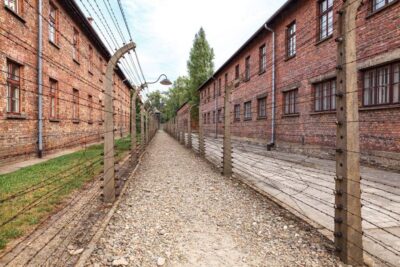
Browse the lists this tour appears in