
REVIEW · AUSCHWITZ-BIRKENAU MEMORIAL TOURS
From Krakow: Auschwitz-Birkenau Tour with Transportation
A solemn day, handled with practical care. This Krakow excursion makes visiting Auschwitz-Birkenau fairly simple, with round-trip transport, a film on the road, and help from an English-speaking host. I like the chance to see both Auschwitz I and Birkenau, and I appreciate the included booklet option, which gives you maps, descriptions, and a suggested route. The main drawback is that the trip can last anywhere from seven to 11 hours, and the pickup time may shift by 30 to 60 minutes.
I also like the visit to the Judenrampe, including the original camp train car. That detail helps connect the vast Birkenau site with the machinery of deportation. Just check your booking option carefully: some packages are self-guided, some include a professional guide, and entry is not included with the transport and tour-host assistance option.
In This Review
- Key points at a glance
- Why this Krakow day trip matters
- Pickup in Krakow and the 75-minute ride
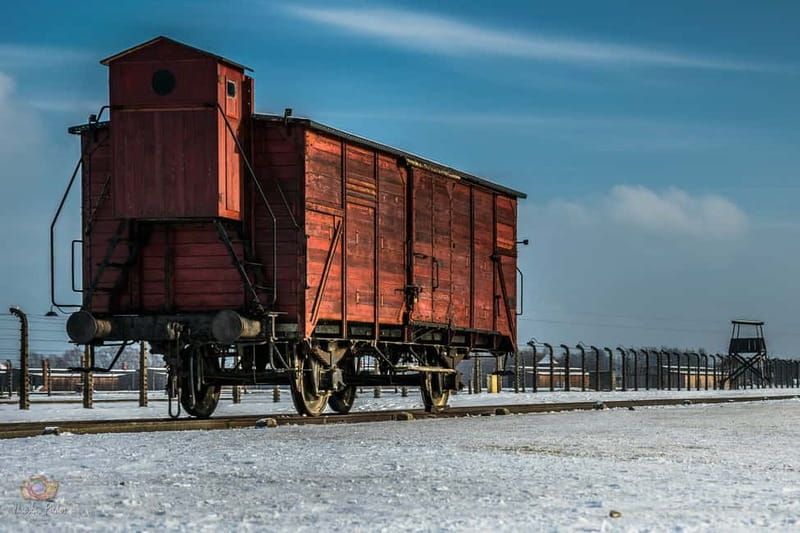
- The Judenrampe and the original train car
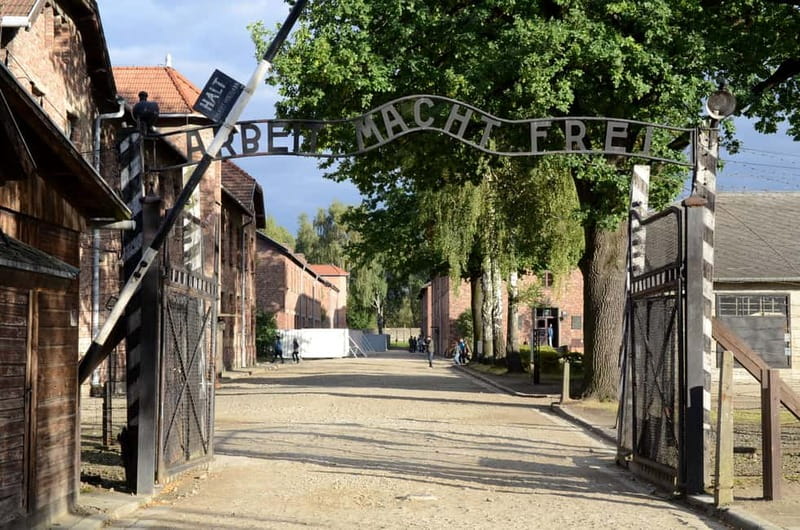
- Auschwitz I: preserved blocks and the first camp
- The short break between the two camps
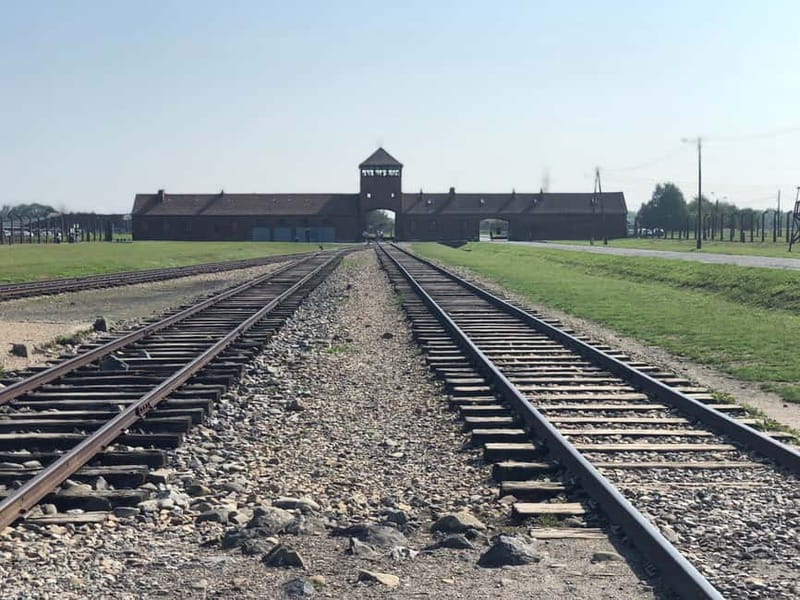
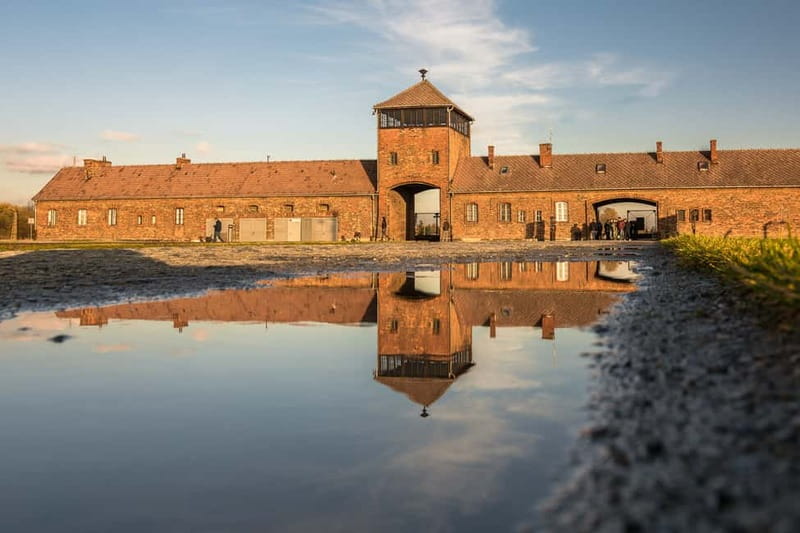
- Birkenau across nearly 200 hectares
- Choosing between self-guided and live-guided options
- Is $22 good value?
- What to bring and what to leave behind
- Who should book this experience?
- Should you book the Krakow Auschwitz-Birkenau tour?
- FAQ
- Where does the tour meet in Krakow?
- How long does the tour take?
- Is transportation included?
- Is a professional guide included?
- Is the entrance ticket included?
- What identification do I need?
- Can I bring luggage or use a wheelchair?
Key points at a glance
- Two very different camp sites: Auschwitz I has preserved blocks, exhibitions, and the notorious Block 11, while Birkenau spreads across nearly 200 hectares.
- The Judenrampe comes first: You see the former unloading area and original train car before continuing to the museum grounds.
- Transport is the strong practical feature: Modern vans, minibuses, or coaches collect you in central Krakow and return you to the city.
- You choose your level of guidance: Select a booklet for independent touring or a professional guide for a structured 3.5-hour visit.
- The ride includes an educational film: The approximately 75-minute journey is used to provide background before arrival.
- The $22 starting price needs a close look: It can be good value, but inclusions depend on the option you select.
Why this Krakow day trip matters
Auschwitz-Birkenau is not a light sightseeing stop. It is a place of murder, imprisonment, forced labor, and mass extermination. The physical remains are powerful, but the visit asks for patience and attention rather than entertainment.
This tour helps by taking care of the basic mechanics. You get to a difficult site without arranging separate transport, and a tour host explains the rules and next steps. That matters because the museum has strict entry procedures, timed access, and requirements for identification.
The day also gives you two forms of understanding. Auschwitz I is more contained and museum-like, with brick blocks and preserved rooms. Birkenau is far larger and more open, with rows of barracks, fences, roads, ruins, and the railway area. Seeing both prevents you from reducing the camp complex to a single building or famous photograph.
I would plan this as one of the most serious days of your Krakow visit. Give yourself quiet time afterward. The return journey may be comfortable, but the subject remains heavy.
More Auschwitz-Birkenau memorial tours:
- From Krakow: Auschwitz-Birkenau Guided Tour & Hotel Pickup
★ 4.5 · 33,358 reviews - From Krakow: Auschwitz-Birkenau Guided Tour & Hotel Pickup
★ 4.5 · 29,340 reviews - Krakow: Auschwitz Guided Tour with Optional Hotel Pickup
★ 4.5 · 15,280 reviews
Pickup in Krakow and the 75-minute ride
The standard meeting point is in front of the Radisson Blu Hotel at the tourist bus stop. Look for a vehicle with KrakowDirect markings. You should arrive 15 minutes before the confirmed time, and you should keep your phone available because the operator may adjust the pickup time.
The advertised pickup window can fall between 5:00 AM and 11:00 AM. A change of 30 to 60 minutes is common, although a larger change may sometimes be needed. The new time is sent by email or WhatsApp 12 to 24 hours before departure, so check both before going to bed.
The road trip takes about 75 minutes. A documentary about the liberation of Auschwitz-Birkenau is shown during the drive. I consider this a useful choice. It gives you basic context before you arrive, rather than asking you to absorb every fact while standing inside the memorial.
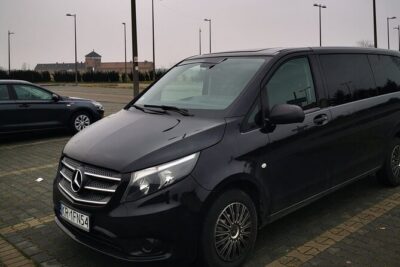
Transport quality appears to depend on the assigned vehicle, but the available information points to modern vans, minibuses, and coaches. One recent departure used a clean Mercedes minibus with seat belts, comfortable seats, heating, and a drop-down screen. That is exactly what you want for a long morning transfer.
The host speaks English or Polish. Several highly praised hosts and drivers include Michael, also called Walker, Chris, Gregory, and Pawel. Their role is not simply to drive you. They help keep the group together, explain the schedule, answer practical questions, and make the transitions less confusing.
The Judenrampe and the original train car
The first stop is the Judenrampe, reached after the initial drive. You spend about 30 minutes here on a self-guided visit before a short, approximately 10-minute transfer to the main museum area.
This stop is easy to underestimate. The Judenrampe was a railway unloading area used before the Birkenau platform was built. Deportees arrived by train and were processed there, with families separated and people selected for forced labor or immediate murder.
The original camp train car gives the site a physical focus. Instead of hearing only about deportation in the abstract, you can see the type of railway vehicle connected with that process. The visit is brief, so use your booklet or the host’s instructions to understand what you are seeing.
The limitation is time. Thirty minutes is enough to look, read, and pause, but not enough for a long, detailed interpretation. If this part matters greatly to you, read the relevant section of your guide book before arrival or ask the host what you should notice.
Auschwitz I: preserved blocks and the first camp
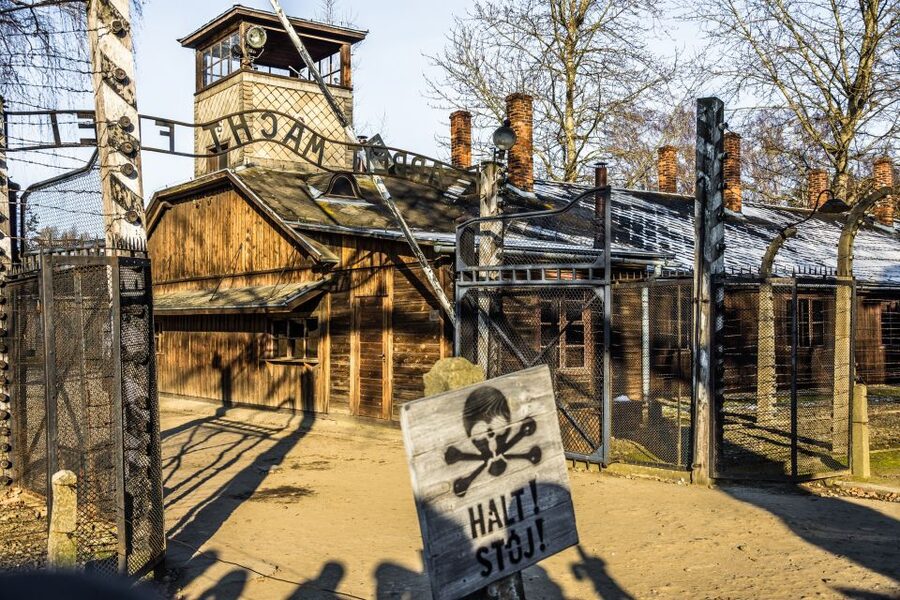
At Auschwitz I, the Nazis established the first camp for men and women. It later became the central administrative site for the wider complex, with the commandant’s office, SS offices, and the prison in Block 11.
This section feels more enclosed than Birkenau. Brick buildings line defined paths, and museum exhibitions occupy many of the blocks. The setting can make the camp’s system feel organized and deliberate, which is part of what makes it so difficult.
The camp was the site of early experiments using Zyklon B, the murder of the first mass transports of Jews, criminal experiments on prisoners, and many executions by shooting. The museum explains these events through preserved spaces, documents, photographs, and objects.
Block 11 deserves careful attention. It functioned as a prison within the camp complex and held prisoners from different parts of Auschwitz. Its basement cells and execution area show how punishment and terror operated alongside forced labor and mass murder.
This is the section where a professional guide can add real value. A guide can direct you through the exhibitions in a set order and explain why certain blocks matter. The guided option includes a 3.5-hour tour of Auschwitz-Birkenau, while the booklet option lets you set your own pace.
A self-guided visit may suit you if you prefer silence, reading, and time alone with the material. The tradeoff is that you must manage your route and decide how much detail to absorb. The site is emotionally demanding, so a booklet with a map and suggested route is more useful than a basic handout.
A few more Kraków trips worth weighing up
- Krakow–Zakopane: Cable Car, Chocholow Baths, Cheese & Vodka
★ 5.0 · 10,720 reviews - Krakow: Auschwitz-Birkenau Guided Tour with Pickup & Lunch
★ 4.5 · 9,800 reviews - From Krakow: Wieliczka Salt Mine Tour
★ 4.6 · 9,393 reviews - Krakow: Auschwitz-Birkenau Guided Tour Pickup/Lunch Options
★ 4.5 · 9,057 reviews
The short break between the two camps
After the first section, you get a short break before continuing to Birkenau. Do not expect a leisurely lunch stop. This is mainly a chance to collect yourself, use facilities if available, and prepare for the next part.
The break matters because the two sites demand different kinds of attention. Auschwitz I is dense with exhibitions and preserved buildings. Birkenau covers a huge area, and you spend more time walking outside.
Wear comfortable shoes. The tour is not suitable for wheelchair users or people with mobility impairments, and the long day includes uneven outdoor areas and substantial walking. Large bags and luggage are not allowed, so bring only what you need for the visit.
Birkenau across nearly 200 hectares
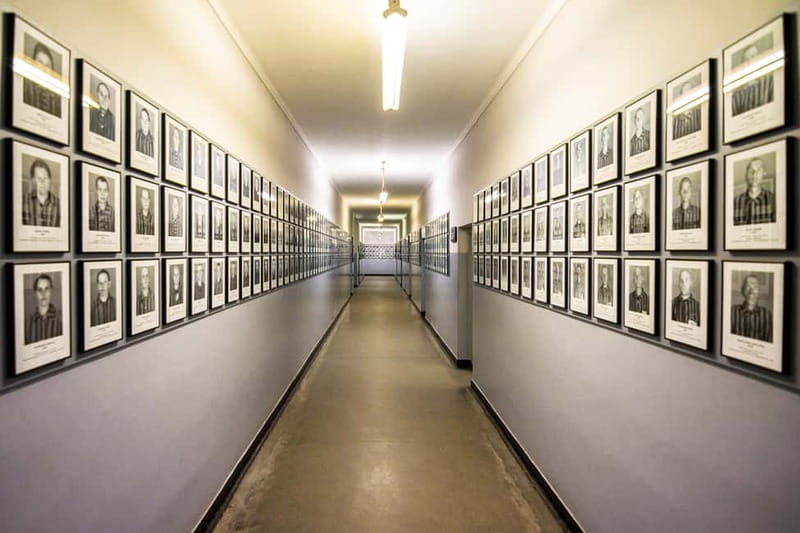
Auschwitz II-Birkenau is the larger camp and the place where most of the mass extermination facilities were built. In 1944, more than 100,000 prisoners were held there, including Jews, Poles, Roma, and others.
The size changes your understanding. Birkenau was not a single building or compact memorial. It covered nearly 200 hectares and contained close to 300 mostly wooden barracks, along with roads, fences, watchtowers, railway infrastructure, and facilities connected with mass murder.
Approximately one million Jews were murdered at Birkenau. Ruins of gas chambers remain, as do sites where human ashes were placed. Many wooden barracks are gone, but the scale of the rows and the preserved fencing make the camp’s size clear.
You may find this part less information-dense than Auschwitz I, but it can be more physically demanding. The open space and repeated lines of barracks create a stark sense of distance. Listen closely to the guide’s explanations or follow the booklet map so that you do not simply walk from one photo stop to another.
A live guide is particularly useful here. The site is broad, and it is easy to miss the meaning of a ruin, a roadway, or a section of fencing without context. A guide also helps keep the group together, which is important when the schedule is fixed.
Choosing between self-guided and live-guided options
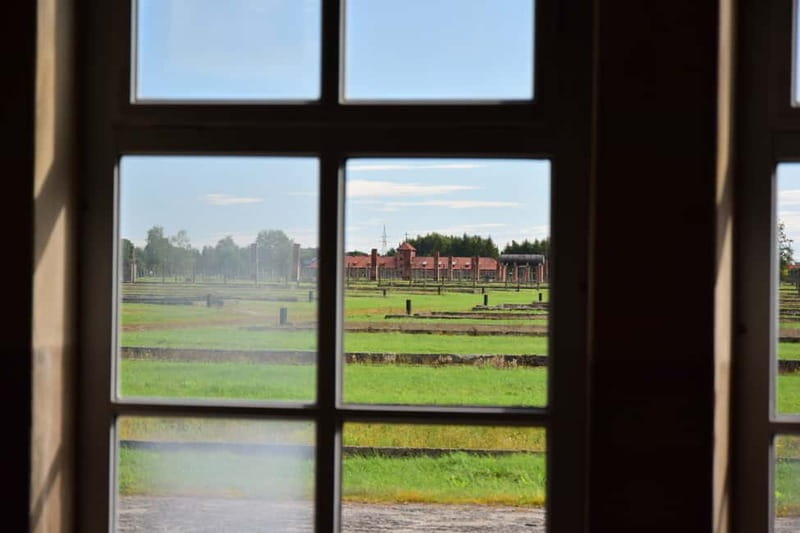
Your choice of format will shape the day.
The self-guided option is best if you want control. You can read at your own pace, pause when needed, and avoid being hurried through an exhibition. The booklet may be available in your chosen language and includes maps, descriptions, and a recommended sightseeing route.
The weakness is that independent touring requires more preparation. You will need to follow instructions, watch the clock, and decide which details deserve your attention. The tour host provides assistance, but this is not the same as having a professional guide interpret each location.
The live-guided option includes a professional guide and a 3.5-hour guided tour. This is the better choice if you want a clear narrative, help understanding the camp layout, and answers to questions during the visit. The stated maximum is 30 people per guide, so do not assume a tiny private group unless your selected package specifically says small group.
Some options also include skip-the-line tickets. Others do not. Read the exact package title before paying, especially the option described as round-trip transport plus tour-host assistance to get a ticket. The entry ticket is not included in that version.
Is $22 good value?
At $22 per person, the advertised starting price is attractive for a Krakow to Auschwitz-Birkenau transfer. You are paying for transportation, a tour host, the documentary, insurance, and the basic structure of a full-day visit. Arranging a separate return journey would take more time and planning.
The catch is that the $22 price may apply only to one booking type. Guided tours, skip-the-line access, and booklet packages have different inclusions. Treat the headline figure as a starting point, not a guarantee that every feature is bundled into one price.
The value is strongest if you want a practical shared transfer and are comfortable with a self-guided visit. If interpretation is important to you, the guided option may be worth paying more for. A professional guide can make the difference between seeing buildings and understanding how the camp system worked.
The day lasts roughly seven to 11 hours depending on the selected option and museum scheduling. One published duration is 570 minutes, or nine and a half hours. The listed travel and visit times already add up to several hours, and museum rules control the exact pace, so avoid scheduling another fixed activity in Krakow that evening.
What to bring and what to leave behind
Bring your passport or ID card. The museum requires the full name and contact details of every participant, and the name on your booking must match the identification you present at entry. A mismatch can result in refused admission.
Wear comfortable shoes and dress for a long visit with outdoor walking at Birkenau. The supplied information does not promise storage for luggage, so do not arrive with suitcases or large bags.
Alcohol and drugs are prohibited. Keep your belongings limited to the essentials, and remember that the memorial’s rules and visitor service determine the route and timing.
Cancellation is flexible up to 24 hours before departure for a full refund, and reserve-now-pay-later availability may help if your Krakow plans are still shifting. Those terms are useful, but the exact option details still deserve a careful check before booking.
Who should book this experience?
I would recommend it to you if you are staying in Krakow and want the simplest way to reach both Auschwitz sites. It suits first-time visitors who prefer having transport, a host, and a planned route rather than handling the journey alone.
Choose a guided option if you want historical explanation throughout the visit, especially at Block 11, the gas chamber ruins, and the railway areas. Choose a booklet option if you value quiet reading and personal pacing.
This is not a good fit if you have limited mobility, use a wheelchair, or dislike long shared excursions with an adjustable departure time. It is also a poor match if you want a private, highly flexible schedule. The museum controls much of the timing, and groups can include up to 30 people per guide.
The strongest practical praise goes to the transport staff and guides. Michael, Chris, Gregory, Pawel, Marcin, and Lucaz are specifically noted for clear explanations, kindness, good English, and keeping groups organized. That human support is valuable on a day that can otherwise feel confusing and heavy.
Should you book the Krakow Auschwitz-Birkenau tour?
Book it if you want reliable shared transport and a clear route to both camps without spending your day arranging trains, buses, and museum access. The documentary, Judenrampe stop, original train car, and return drop-off make the package useful at a low starting price.
Before you commit, check three things: the exact guidance level, whether entry tickets are included, and the possible pickup adjustment. I would pay extra for a live guide if you want context at each site. If you prefer to read and reflect on your own, the booklet package offers better personal control.
For many people in Krakow, this is a sensible way to reach Auschwitz-Birkenau. Just approach it as a memorial visit, not a normal sightseeing outing, and leave enough emotional and practical space around the rest of your day.
FAQ
Where does the tour meet in Krakow?
The meeting point is in front of the Radisson Blu Hotel at the tourist bus stop. Look for a KrakowDirect van, minibus, or coach, and arrive 15 minutes before the confirmed pickup time.
How long does the tour take?
The total duration depends on the selected option and museum scheduling. It is advertised as roughly seven to 11 hours, with one listed duration of 570 minutes.
Is transportation included?
Round-trip transportation from a selected Krakow meeting point is included. The vehicle may be a van, minibus, or coach.
Is a professional guide included?
A professional guide is included only with the guided options. Self-guided options use a booklet or provide tour-host assistance, depending on the package selected.
Is the entrance ticket included?
Skip-the-line tickets are included only with the guided and skip-the-line options. The round-trip transport plus tour-host assistance to get a ticket option does not include the entry ticket.
What identification do I need?
Bring a passport or ID card. Your name must match the full name supplied during booking, or entry may be refused.
Can I bring luggage or use a wheelchair?
Large bags and luggage are not allowed. The experience is not suitable for wheelchair users or people with mobility impairments.
Just added around Kraków
- Rynek Underground Museum & Wawel Castle, Cathedral – Cracow★ 5.0 · 3 reviews
- Schindler’s Factory, Ghetto and Plaszow Camp Guided Tour★ 4.7 · 3 reviews
- Nowa Huta – a guided tour of a utopian socialist city★ 5.0 · 3 reviews
- Krakow: Kazimierz by Golf Cart and Schindler’s Factory Tour★ 4.8 · 3 reviews
- Private Krakow City Tour by Car and Walk with private tour guide★ 5.0 · 3 reviews
- Krakow: Jewish Traces Private Electric Car Tour★ 4.1 · 3 reviews
- Discover the Jewish Quarter with a Bike Tour★ 5.0 · 3 reviews
- Krakow: Indoor Go-Karting (24-Minute Races)★ 4.8 · 3 reviews
Auschwitz-Birkenau Memorial Tours, compared.

Auschwitz-Birkenau Guided Tour & Hotel Pickup
Read our review →Auschwitz-Birkenau Guided Tour & Hotel Pickup
Read our review →
Auschwitz Guided Tour with Optional Hotel Pickup
Read our review →
Auschwitz-Birkenau Guided Tour with Pickup & Lunch
Read our review →
Auschwitz-Birkenau Guided Tour Pickup/Lunch Options
Read our review →
Krakow to Auschwitz Birkenau Guided Tour with Transfer and Ticket
Read our review →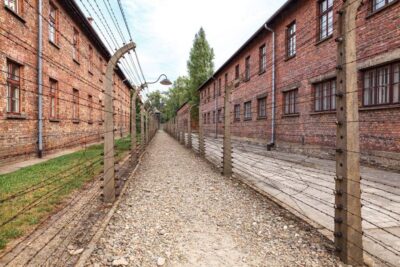
Browse the lists this tour appears in