
REVIEW · AUSCHWITZ-BIRKENAU MEMORIAL TOURS
from Kraków: Auschwitz excursion with guaranteed Dutch guide
Auschwitz asks for your full attention. This early start from Kraków makes the difficult day easier to manage, with official museum entry and a Dutch-speaking guide who explains the sites clearly and respectfully. I especially like the route through all three parts of the former camp complex: Auschwitz I, Birkenau, and the less-visited Monowitz memorial.
I also like the small group size, capped at 29 people, and the dedicated guide system, which helps you hear the commentary outdoors. Guides such as Wesley, Jeroen, Marijke, and Roland are praised for calm storytelling, personal details, and thoughtful questions. The main drawback is the length and emotional weight: you are away for eight to nine hours, much of it walking and standing, so this is not a light sightseeing outing.
In This Review
- Key points at a glance
- Why the Dutch guide matters at Auschwitz
- The 6:00 am start from Kraków
- Auschwitz I: barracks, photographs, and personal evidence
- The transfer to Birkenau and the Judenrampe
- Birkenau: scale, barracks, and destroyed gas chambers
- Monowitz: the part many day trips skip
- What the $102.14 price gets you
- The emotional and physical demands
- Who should choose this excursion?
- Should you book the DutchPoint Auschwitz excursion?
- FAQ
- Where does the Auschwitz excursion begin?
- What time does the tour start?
- How long does the whole excursion last?
- How long is the guided program at Auschwitz?
- Which Auschwitz sites does the tour visit?
- Is museum admission included?
- Is transport from Kraków included?
- Is the tour suitable for children?
- Is the booking refundable or changeable?
Key points at a glance
- A guaranteed Dutch-speaking guide: The tour is designed for Dutch speakers, with guides including Wesley, Jeroen, Marijke, and Roland praised for clear and respectful explanations.
- Three Auschwitz sites in one day: You visit Auschwitz I, Auschwitz II-Birkenau, and Auschwitz III-Monowitz, rather than stopping only at the two main museums.
- A long, serious study tour: The guided program lasts about six hours, not counting the journeys between Kraków and Oświęcim.
- A practical early start: Meet at DutchPoint Kraków on Karmelicka 3 at 6:00 am, with the return to the same place after the visit.
- Admission and transport included: Museum tickets, minibus or bus transport, and a tour guide system are covered in the price.
- A demanding visit: You need moderate fitness, and the tour is not suitable for children under 14 or people with mobility impairments.
Why the Dutch guide matters at Auschwitz
Auschwitz is not a place where you want to hurry through a standard audio track. The buildings, photographs, personal belongings, and empty spaces need explanation, and a guide can connect them without turning the visit into a flood of dates.
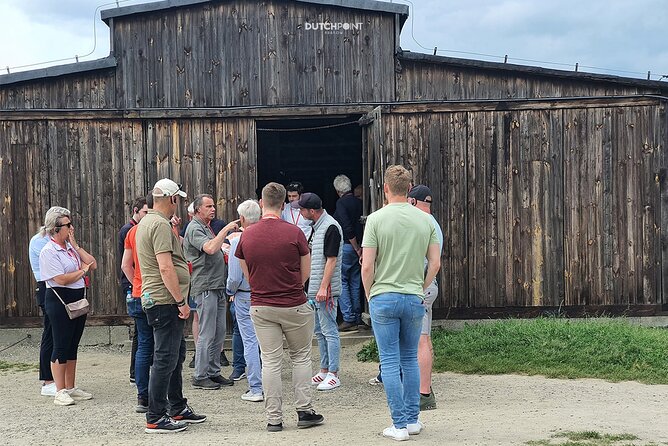
That is the main reason to choose this excursion over simply arranging transport. The Dutch-speaking guide gives you the chance to ask questions in your own language and follow the story in detail. Wesley is praised for asking questions that make you think more deeply about what you are seeing. Jeroen is noted for adding fresh insights, while Marijke and Roland are described as calm, respectful, and clear storytellers.
You should not expect a cheerful tour-guide performance here, nor should you want one. The strongest descriptions focus on restraint, facts, personal stories, and respect for the people who were imprisoned and killed. That tone is right for the place.
The group can contain up to 29 people. That is not intimate, but it is small enough for a guide system and organized movement through the museum. At busy moments, you will still be part of a larger flow of visitors. The practical advantage is that the guide can keep the day moving while allowing time for questions.
More Auschwitz-Birkenau memorial tours:
- From Krakow: Auschwitz-Birkenau Guided Tour & Hotel Pickup
★ 4.5 · 33,358 reviews - From Krakow: Auschwitz-Birkenau Guided Tour & Hotel Pickup
★ 4.5 · 29,340 reviews - Krakow: Auschwitz Guided Tour with Optional Hotel Pickup
★ 4.5 · 15,280 reviews
The 6:00 am start from Kraków
The day begins at DutchPoint Kraków, Karmelicka 3, in central Kraków. The listed meeting time is 6:00 am, and some experiences have an even earlier practical departure around 5:50. Check your final instructions carefully, because an Auschwitz visit is not the moment to arrive casually.
The drive to Oświęcim takes about 80 minutes. That early departure helps fit the full program into one day, especially since the route includes Monowitz, which many shorter excursions leave out. It also means you should arrange breakfast in advance. A breakfast box is available as an optional extra, and a lunch box can also be ordered.
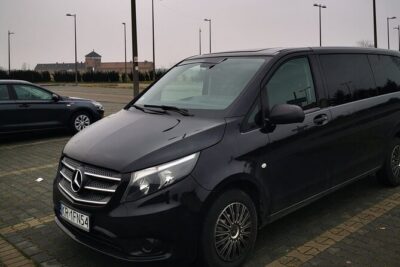
Transport is by bus or minibus. The ride gives you a chance to rest before the museum portion, though the return journey comes after a long day of walking and concentration. The tour ends back at the same Kraków meeting point, with the complete day lasting roughly eight to nine hours.
There are five restroom opportunities during the outing, including a break around entry and transfer points. That sounds minor, but it matters on a full-day program with long outdoor sections. Bring water and dress for the weather. The supplied information does not promise a particular meal, so do not assume food is included unless you have added a breakfast or lunch box.
Auschwitz I: barracks, photographs, and personal evidence
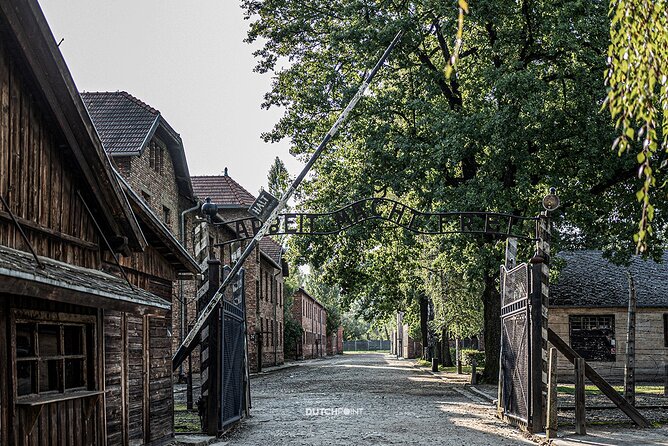
The first main visit lasts about 150 minutes at Auschwitz I. This is the more compact, built-up part of the former camp, with brick barracks and museum exhibitions inside the original buildings.
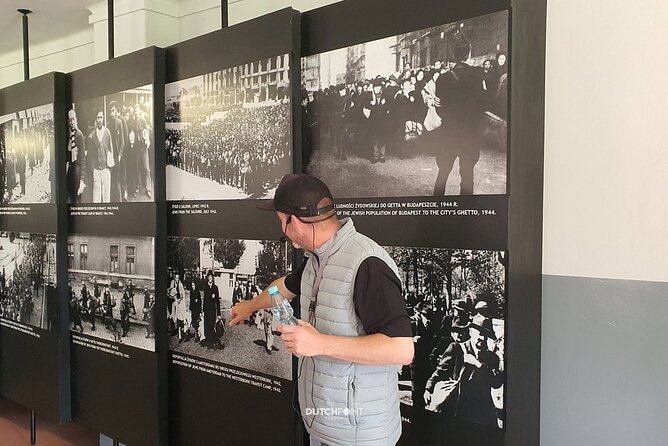
Your guide traces the camp’s story from the first deportations through liberation on January 27, 1945. The account is supported by photographs, documents, objects, and the barracks themselves. The setting can feel ordered and almost deceptively quiet, which makes the evidence inside the buildings especially hard to absorb.
The route includes a visit to the Dutch barrack for Dutch participants. Belgian participants visit the Belgian barrack. This national focus gives the guide room to connect the wider camp system to people deported from the Low Countries. The tour information notes that approximately 60,000 Dutch people and 24,000 Belgians were killed as part of the more than 1.2 million people murdered at Auschwitz.
You will also pass through a gas chamber. This is one of the moments that can make the visit feel physically and emotionally difficult. The experience is not arranged as entertainment, and you should allow yourself quiet time rather than trying to photograph every stop.
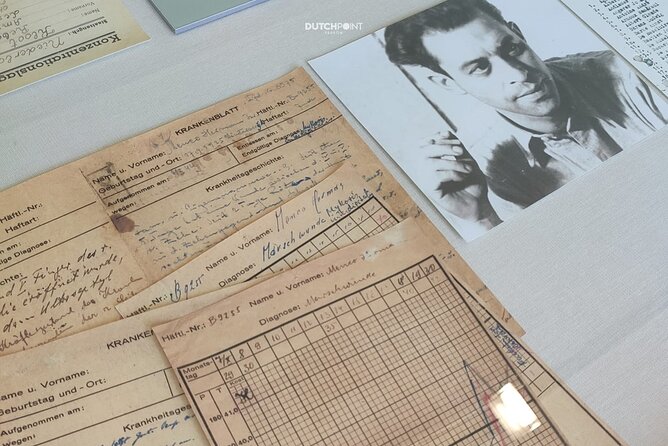
The guides are especially valued for adding small personal stories to the larger account. A photograph is not treated only as an historical illustration. The person shown, the object left behind, or the circumstances of an arrest may receive attention. That human scale helps prevent Auschwitz from becoming a list of statistics.
The museum visit takes place mostly indoors, but you will walk between buildings and wait at certain points. Comfortable shoes are essential. A moderate level of fitness is required, and the full day can be tiring even if you normally enjoy walking tours.
The transfer to Birkenau and the Judenrampe
After Auschwitz I, you have a short break before continuing by bus toward Birkenau. The program includes the Judenrampe, the railway unloading point between Auschwitz I and Birkenau where trains arrived and people were selected.
This section gives the day a stronger sense of movement. Instead of seeing the camp only as a group of museum rooms, you follow the route taken by people brought there by train. The guide explains how the arrival process worked and how selections shaped what happened next.
The transfer and break are listed as about 30 minutes, followed by roughly 30 minutes at the Judenrampe. That is a significant amount of time for a place that may look simple at first glance. Its importance comes from what happened there and from the way it connects the railway system to the camp complex.
You will want a coat or rain protection here. Birkenau is open and exposed, and conditions can change quickly. The tour information does not give a weather adjustment plan, so practical clothing is part of preparing well for the day.
A few more Kraków trips worth weighing up
- Krakow–Zakopane: Cable Car, Chocholow Baths, Cheese & Vodka
★ 5.0 · 10,720 reviews - Krakow: Auschwitz-Birkenau Guided Tour with Pickup & Lunch
★ 4.5 · 9,800 reviews - From Krakow: Wieliczka Salt Mine Tour
★ 4.6 · 9,393 reviews - Krakow: Auschwitz-Birkenau Guided Tour Pickup/Lunch Options
★ 4.5 · 9,057 reviews
Birkenau: scale, barracks, and destroyed gas chambers
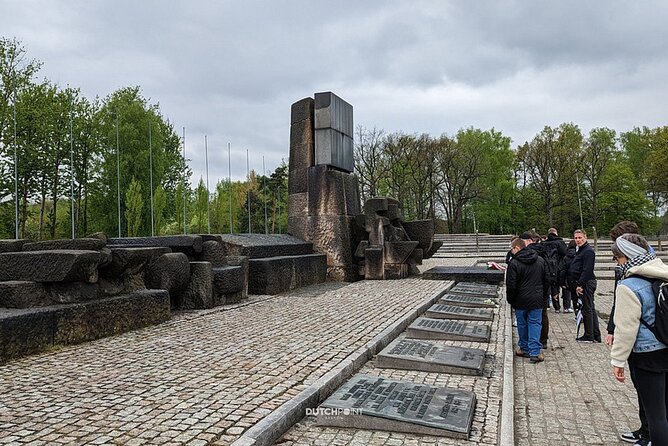
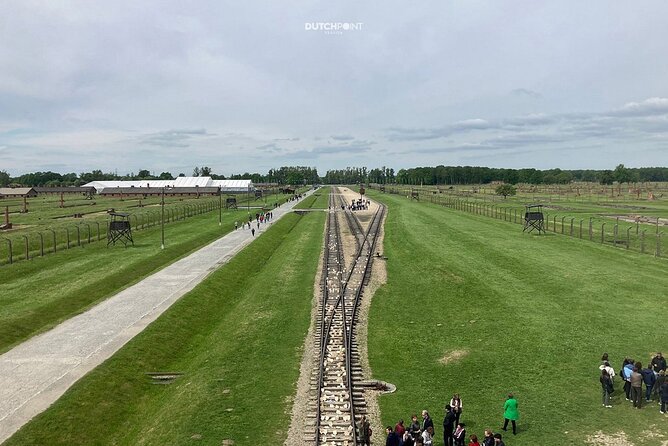
Auschwitz II-Birkenau is vast compared with Auschwitz I. The entrance, railway line, wooden barracks, watchtowers, and open ground create a different impression. Here, scale does much of the communicating. You can see how large the camp was and how difficult it is to take in all at once.
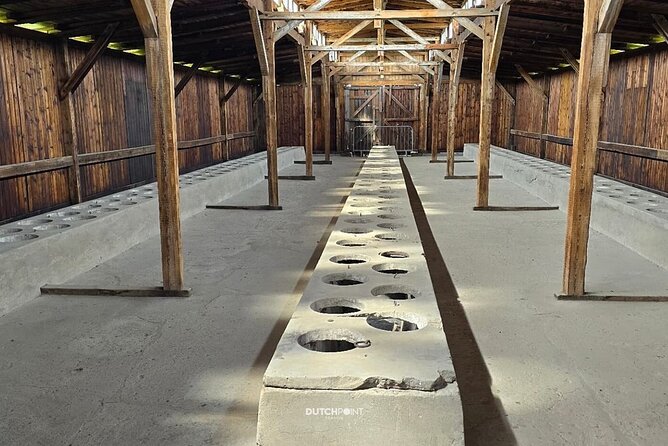
The visit lasts about 90 minutes at Birkenau, with the route beginning from the Judenrampe. You walk toward the site and enter wooden barracks that show the living conditions during the war years. The buildings are stark, and the difference between the camp’s size and the limited space available to prisoners is difficult to miss.
The route continues past the train station toward the remains of gas chambers II and III. Because these structures were destroyed, what you see is incomplete. That absence is part of the site’s meaning, but it can also leave you wanting more explanation. Your guide’s commentary is important here, especially when physical remains alone cannot show the full process.
The visit then includes the Dutch monument before returning toward the gate and making a short stop at the bookstore. This gives you a chance to buy books or educational material, but do not count on having a long shopping break. The program is tightly timed.
Birkenau can be the most physically demanding part of the day. You cover open paths and uneven ground, and there are periods of standing while the guide speaks. Since the tour is not suitable for people with mobility impairments, you should consider the walking conditions honestly before booking.
Monowitz: the part many day trips skip
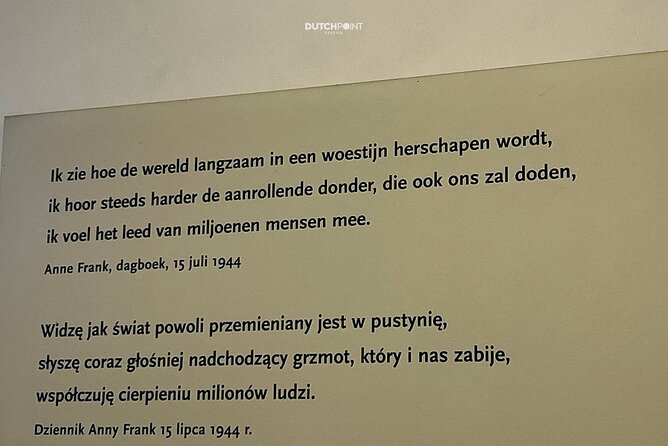
The final site is Auschwitz III-Monowitz, also known as Monowitz, located about 10 kilometers from Auschwitz I. The transfer and visit take about 45 minutes before the return drive to Kraków.
Unlike Auschwitz I and Birkenau, Monowitz does not offer rows of preserved prisoner barracks. Instead, you see the factories connected with the Buna works and some surviving bunker remains. The Monowitz camp itself is no longer visible in the same way, so this part depends heavily on the guide’s explanation.
That makes it valuable for anyone who wants to understand the forced-labor system linked to Auschwitz. The camp was established near the immense factory complex, and the program presents Monowitz as the most grueling camp in which to work. You finish at the Monowitz monument, a quieter ending than the main museum sites.
I like the inclusion of Monowitz because it widens the picture. Auschwitz was not only a place of mass murder. It was also part of a Nazi system that used prisoners as forced labor for industrial projects. Still, you should know what you are getting: this is a memorial and industrial site visit, not another preserved museum complex.
The longer drive back to Kraków takes about 90 minutes from Monowitz. After six hours of guided study, that final transfer may feel welcome. It also explains why the excursion takes most of a day.
What the $102.14 price gets you
At $102.14 per person, this is not the cheapest way to reach Auschwitz. The value comes from bundling several things that can be awkward to arrange independently: return transport from central Kraków, official tickets for the Auschwitz-Birkenau State Museum, a guaranteed Dutch guide, and the guide communication system.
The key question is not simply the ticket price. It is how much you value a full Dutch-language explanation and the extra Monowitz visit. If you only want to see Auschwitz I and Birkenau, a shorter outing may cost less and take less time. If you want the three-site route and do not want to manage transport, timed admission, and museum arrangements yourself, the price is easier to justify.
The group limit of 29 keeps the experience from becoming a giant coach tour, though it is still a group outing rather than a private visit. Tips are not included. Breakfast and lunch boxes are optional, so budget for those if you do not want to arrange your own food.
One practical money tip comes from a participant who drove independently and found Sunday parking surprisingly expensive, at 13 euros. That does not make driving the better option for everyone. The included Kraków transport removes parking worries and lets you rest on the return journey.
The emotional and physical demands
You should approach this as a memorial visit and study tour, not as a normal day trip. The subject is genocide, forced labor, starvation, imprisonment, and mass murder. Even the most carefully presented tour can leave you upset or quiet for the rest of the day.
The guides appear to handle that weight well. The strongest praise centers on respectful delivery, thoughtful questions, useful details, and the ability to connect past events with the value of freedom today. That last point comes up often in the guide style: freedom is not treated as an automatic condition.
Plan for walking, standing, outdoor exposure, and a very early start. Children under 14 cannot join, and the activity requires moderate physical fitness. There is no claim that the route is suitable for wheelchairs or other mobility needs, so people with mobility impairments should not book it.
Photography and personal reactions require judgment. Follow the museum’s rules and remember that other people may be processing grief or family history. The guide system should help you hear, but it does not remove the need to stay attentive and respectful.
Who should choose this excursion?
I would choose this tour if you want Auschwitz explained in Dutch from beginning to end. It suits people who value a guide’s context, want to see Monowitz, and prefer a single organized day from Kraków.
It is also a strong choice if you are uneasy about arranging museum tickets and transport yourself. The meeting point is central, admission is included, and the day has a clear structure with breaks and restroom stops.
I would think twice if you dislike early starts, long group outings, or emotionally heavy memorials. The six-hour guided program is demanding, and the extra Monowitz stop adds value for some people but may feel like too much after Auschwitz I and Birkenau.
Confirmation is normally issued at booking. If you book within nine days of travel, confirmation can take up to 48 hours and depends on availability. The booking is non-refundable and cannot be changed, so make sure your date, meeting point, and group details are correct before paying.
Should you book the DutchPoint Auschwitz excursion?
Book it if the guaranteed Dutch guide is the deciding factor, or if you want more than a quick visit to the two main camp sites. The inclusion of Monowitz, national memorial points, museum tickets, transport, and a guide system gives the day real substance.
Skip it if you need a flexible schedule, a private experience, or an easier walking program. For the right person, this is a well-organized and serious way to visit Auschwitz from Kraków, with guides such as Wesley, Jeroen, Marijke, and Roland praised for the calm, clear style the subject requires.
FAQ
Where does the Auschwitz excursion begin?
The tour begins at DutchPoint Kraków, Karmelicka 3, 31-133 Kraków, Poland.
What time does the tour start?
The listed start time is 6:00 am. Some practical departure information refers to an earlier time around 5:50, so check the final instructions you receive.
How long does the whole excursion last?
The complete outing takes approximately eight to nine hours, including travel from Kraków and transfers between the sites.
How long is the guided program at Auschwitz?
The study tour lasts about six hours, excluding travel time.
Which Auschwitz sites does the tour visit?
The route includes Auschwitz I Museum, Auschwitz II-Birkenau, the Judenrampe, and Auschwitz III-Monowitz.
Is museum admission included?
Yes. Official tickets for the Auschwitz-Birkenau State Museum are included in the price.
Is transport from Kraków included?
Yes. The excursion includes bus or minibus transport from Kraków and returns to the original meeting point.
Is the tour suitable for children?
No. The activity is not suitable for children under 14 years old.
Is the booking refundable or changeable?
No. The experience is non-refundable and cannot be changed for any reason after booking.
Just added around Kraków
- Rynek Underground Museum & Wawel Castle, Cathedral – Cracow★ 5.0 · 3 reviews
- Schindler’s Factory, Ghetto and Plaszow Camp Guided Tour★ 4.7 · 3 reviews
- Nowa Huta – a guided tour of a utopian socialist city★ 5.0 · 3 reviews
- Krakow: Kazimierz by Golf Cart and Schindler’s Factory Tour★ 4.8 · 3 reviews
- Private Krakow City Tour by Car and Walk with private tour guide★ 5.0 · 3 reviews
- Krakow: Jewish Traces Private Electric Car Tour★ 4.1 · 3 reviews
- Discover the Jewish Quarter with a Bike Tour★ 5.0 · 3 reviews
- Krakow: Indoor Go-Karting (24-Minute Races)★ 4.8 · 3 reviews
Auschwitz-Birkenau Memorial Tours, compared.

Auschwitz-Birkenau Guided Tour & Hotel Pickup
Read our review →Auschwitz-Birkenau Guided Tour & Hotel Pickup
Read our review →
Auschwitz Guided Tour with Optional Hotel Pickup
Read our review →
Auschwitz-Birkenau Guided Tour with Pickup & Lunch
Read our review →
Auschwitz-Birkenau Guided Tour Pickup/Lunch Options
Read our review →
Krakow to Auschwitz Birkenau Guided Tour with Transfer and Ticket
Read our review →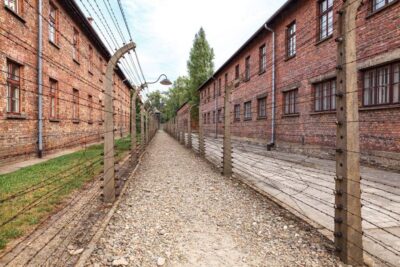
Browse the lists this tour appears in