REVIEW · GUIDED
Guided Tour in Kraków-Płaszów Former Concentration Camp
History is close to Kraków’s city center. This two-hour walking tour connects Ghetto Heroes Square, the former Płaszów concentration camp, and a surviving fragment of the Kraków Ghetto wall. I like that it looks beyond Auschwitz and explains how the Holocaust shaped Kraków itself. I also like the small-group limit of 25 people, which should make it easier to hear the guide and ask questions.
The main consideration is the setting. Płaszów is now an open, uneven area with few visible camp structures, so you need to be ready for a reflective visit rather than a conventional museum tour. At $30.01 per person, the price is reasonable if you want historical context and a guided route, but less appealing if you expect many preserved buildings or large indoor exhibits.
In This Review
- Key points to know before booking
- Why Płaszów adds something different to Kraków
- Starting at Ghetto Heroes Square
- Walking from the square to Płaszów
- Understanding the former Płaszów camp
- The emotional weight of an open memorial site
- The surviving wall fragment near the end
- What $30.01 buys you
- Who will get the most from this tour
- Should you book the Płaszów tour?
- FAQ
- How much does the Płaszów tour cost?
- How long does the experience last?
- What language is the tour offered in?
- Where does the tour begin?
- Where does the tour end?
- What places are included?
- Is admission to Płaszów included?
- How large can the group be?
- Is the tour near public transportation?
- Can I cancel for a refund?
Key points to know before booking
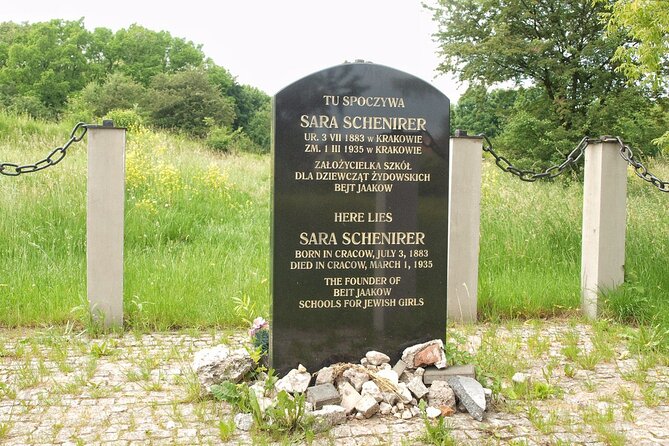
- Płaszów sits inside modern Kraków: The former camp is close to homes, shops, a shopping center, Wielicka Street, and Krakus Mound, making its wartime past easy to miss.
- The route begins at Ghetto Heroes Square: You start near Apteka pod Orłem, an important location in Podgórze’s former ghetto district.
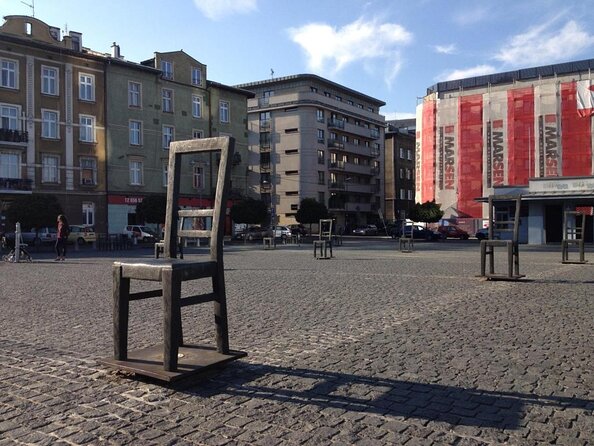
- Seventy metal chairs shape the square: The unusual memorial represents people leaving the ghetto and the absence left behind.
- The camp visit lasts about one hour: The guide provides the explanation that the largely open site cannot provide on its own.
- You see an original ghetto wall fragment: A 12-meter section remains, with a memorial plaque in Hebrew and Polish.
- Olga has received special praise: One review describes her as very prepared and helpful, including assistance with tram tickets.
Why Płaszów adds something different to Kraków
Many people use Kraków as a base for Auschwitz, and that visit can take most of a day. Płaszów offers a different kind of historical experience because it is within the city itself. You do not leave Kraków’s streets behind for a separate memorial complex. Instead, you move through Podgórze and see how ordinary modern surroundings sit beside a place shaped by Nazi persecution.
That contrast is important. The former camp area is described as wild and uneven, with little obvious evidence of what once stood there. A sign or preserved building does not tell the full story for you. The guide’s explanation gives meaning to a place that might otherwise look like undeveloped ground.
I like this approach because it asks you to pay attention. The absence of structures is not a flaw to ignore. It is part of what makes the visit difficult. Płaszów was once the site of the German Nazi concentration camp known as Konzentrationslager Plaszow bei Krakau. Today, the area is surrounded by the city and can look like a rough public green space.
That does mean you should set your expectations carefully. This is not a tour through restored barracks, furnished rooms, or a large exhibition. The value comes from the guide, the location, and the connection between the camp and the wider story of Kraków during the Holocaust.
A few more Kraków trips worth weighing up
- From Krakow: Auschwitz-Birkenau Guided Tour & Hotel Pickup
★ 4.5 · 33,358 reviews - From Krakow: Auschwitz-Birkenau Guided Tour & Hotel Pickup
★ 4.5 · 29,340 reviews - Krakow: Auschwitz Guided Tour with Optional Hotel Pickup
★ 4.5 · 15,280 reviews
Starting at Ghetto Heroes Square
The tour begins at Apteka pod Orłem, at Plac Bohaterów Getta 18. This places you directly in Ghetto Heroes Square, across the river in the Podgórze district. The square was once called Plac Zgody. After the war, it became Plac Bohaterów Getta, or Ghetto Heroes Square, and later received its current memorial design.
The square has had an uneasy modern history. For decades after the war, it was neglected and used as a public toilet and parking area. Its renovation in 2005 caused debate, partly because the design is so stark and unusual.
Seventy large metal chairs are spaced across the square. They represent departure and the absence left by people who were forced to leave the Kraków Ghetto. The chairs are simple, but they change how you read the open space. Instead of looking at a typical monument, you walk through a field of empty seats.
I find this a strong place to begin because it introduces the human cost before you reach Płaszów. You are not starting with dates and names alone. You are starting with a public space shaped around people who were removed from their homes.
The meeting point near Apteka pod Orłem also makes practical sense. It is near public transportation, and the route begins in a recognizable part of Podgórze. One particularly helpful detail comes from a visit led by Olga. She was praised not only for her preparation and kindness, but also for helping with tram tickets. That is useful if you are still getting used to Kraków’s transport system.
Walking from the square to Płaszów
From Ghetto Heroes Square, the tour moves toward the former camp. The exact walking route is not described in detail, so you should allow for a walk through the Podgórze area rather than expecting to remain in one memorial plaza.
This transition matters. The former ghetto and Płaszów were not isolated from city life. You pass through a modern district and then reach a site that can appear surprisingly undeveloped. The movement between the two places helps you understand that the Holocaust was part of the city’s physical story, not something that happened in a distant location with no connection to daily life.
The tour lasts about two hours overall, with about one hour listed for the Płaszów section. That leaves time for the opening stop, walking, explanations, and the final visit to the ghetto wall fragment. You should wear shoes suited to uneven ground and walking, though no special equipment is listed.
Because the area is open and exposed, your experience may depend on the conditions on the day. The provided details describe rough, uneven land and limited development. This is another reason the guide matters. You will not be relying on a polished visitor center to organize the story for you.
Understanding the former Płaszów camp
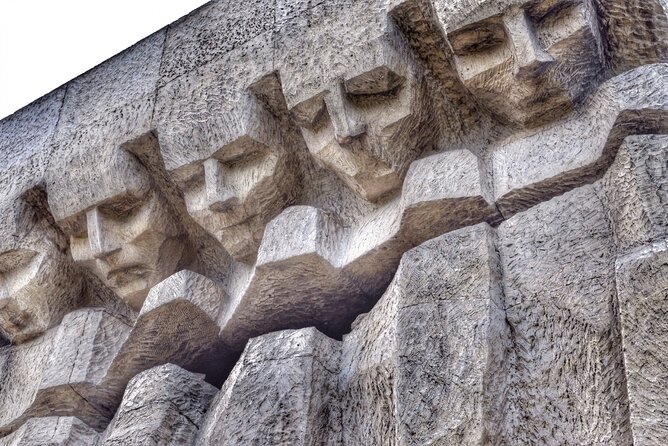
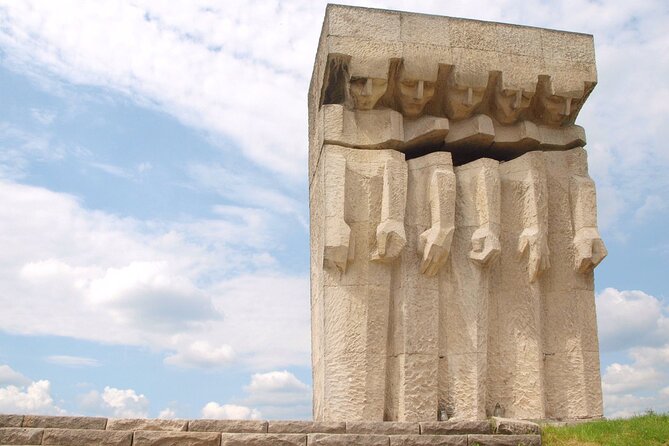
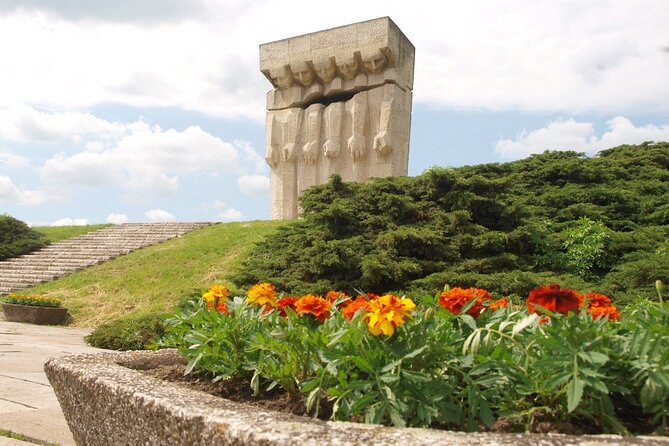
Płaszów is the heart of the tour. The guide walks you through the former camp site and explains its place in Kraków’s wartime history. The area is in the depths of Podgórze, near Wielicka Street, opposite the Bonarka shopping center, and not far from Krakus Mound.
That location is one of the tour’s most striking details. Płaszów is not hidden in a remote forest. It is close to busy roads, retail buildings, residential areas, and a well-known Kraków attraction. You can be going about an ordinary city day and remain only a short distance from ground connected to mass imprisonment and murder.
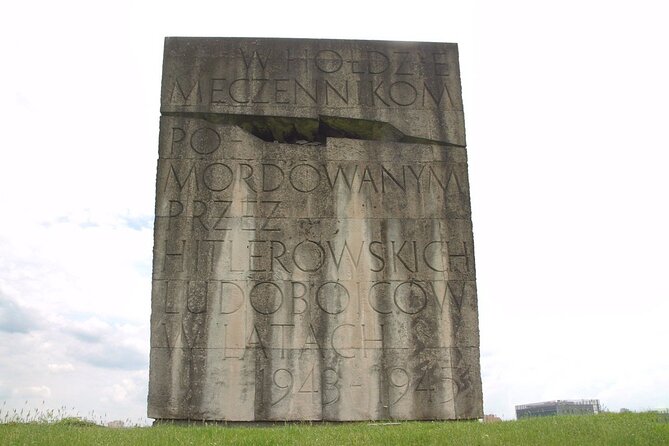
The site’s lack of obvious remains may surprise you. The description presents it as a largely undeveloped area that, until recently, gave little sign of its wartime purpose. You may find it difficult to picture the camp without a guide pointing out the significance of the place and explaining how it fits into the broader story.
That is why I would not choose this tour simply for scenery. The land itself is not the attraction in the usual sightseeing sense. The guide’s words, the sense of place, and the connection to the former ghetto give the visit its weight.
One Spanish-language account describes the guide as a young woman who knew the camp in great detail and explained the story from beginning to end. That kind of full narrative is especially useful at Płaszów, where the physical evidence can be hard to read. A well-prepared guide can help you understand what you are seeing without turning the visit into a list of disconnected facts.
The small group limit also helps. With no more than 25 people, the guide should be easier to hear than on a large coach excursion. One visit had only three participants, which created a very personal experience. You cannot count on such a small group, but the maximum is still modest enough for questions and conversation.
A completely different kind of day out in Kraków:
- Krakow–Zakopane: Cable Car, Chocholow Baths, Cheese & Vodka
★ 5.0 · 10,720 reviews - Krakow: Auschwitz-Birkenau Guided Tour with Pickup & Lunch
★ 4.5 · 9,800 reviews - From Krakow: Wieliczka Salt Mine Tour
★ 4.6 · 9,393 reviews - Krakow: Auschwitz-Birkenau Guided Tour Pickup/Lunch Options
★ 4.5 · 9,057 reviews
The emotional weight of an open memorial site
Płaszów is not an easy place to visit, and it should not be treated like a quick photo stop. The site’s present-day appearance can create a strange feeling: people may walk nearby, roads carry traffic, and modern buildings are visible, while the ground holds memories of severe violence.
A review described the area as a pleasant garden for walking and paying respect to the victims. That observation captures the tension of the place, but you should not confuse today’s greenery with a lighthearted park visit. The calm setting may make the history feel even more unsettling.
I appreciate tours that do not pretend every historic place has been preserved in perfect condition. Płaszów forces you to listen and think. It also shows why local guides can add real value. Without context, you may see an open area. With context, you begin to understand why this particular part of Kraków matters.
Still, this format will not suit everyone. If you prefer museums with maps, photographs, artifacts, and indoor displays, you may want to pair the tour with another Kraków history site. The tour provides explanation at the location, but the supplied information does not include a museum exhibition or extensive preserved interiors.
The surviving wall fragment near the end
After the camp visit, the route passes the Fragment of the Ghetto Wall, a 12-meter section of the original wall. It is one of Kraków’s clearest physical reminders of the former ghetto.
A plaque added in 1983 is written in Hebrew and Polish. Its message explains that people lived and suffered there, died at the hands of German persecutors, and began their final journey to the death camps from that place.
The wall is not large, but its size is part of its power. You are looking at an actual remnant rather than a later reconstruction. The rough stretch of wall gives the earlier visit a physical point of focus, especially after spending time at Płaszów, where so little is visible.
The wall also completes the historical connection between the two locations. Ghetto Heroes Square recalls the people forced out of the ghetto. Płaszów shows the former camp site connected to Kraków’s wartime persecution. The wall provides a tangible reminder of confinement and forced removal.
Do not expect a long stop with a large presentation. The information gives the wall’s length and plaque, but not a separate museum program. Its value comes from seeing it in place and understanding it as part of the walking route.
What $30.01 buys you
At $30.01 per person, this is a moderate-cost historical walking tour. Admission to the Płaszów site is listed as free, so you are mainly paying for the guide’s time, route planning, explanations, and the link between several difficult locations.
That can be good value in Kraków. Płaszów is not a site that explains itself clearly, and the tour gives you a structured way to reach it from Ghetto Heroes Square. You also see the ghetto wall fragment, rather than arranging each stop on your own.
The value is strongest if you want interpretation. If you already know Kraków’s Holocaust history well and are comfortable finding the sites independently, the price may feel less necessary. But if you want a clear account from someone who can explain the setting, the cost is fair.
The 29-day average advance booking period is a useful sign that you should not leave this until the last minute, especially if your Kraków dates are fixed. Confirmation is provided at booking, and free cancellation is available up to 24 hours before the start time. Cancellations made less than 24 hours before the start are not refunded, and changes within that period are not accepted.
Who will get the most from this tour
I would recommend this experience to you if you want to understand Kraków beyond its old town and famous churches. It is particularly suited to people who plan to visit Auschwitz but also want to see a site inside Kraków itself.
It should also suit visitors who prefer a guide-led walk to a self-guided history lesson. The former camp’s open setting makes an explanation especially useful. The group limit of 25 keeps the format more manageable than a large tour.
You should think twice if you want a relaxed city stroll. The subject is serious, and the ground is uneven. You should also consider another option if your main goal is a museum collection or preserved camp buildings, since those are not described as part of this experience.
The tour is offered in English. Most people can participate, and the meeting point is near public transportation. The finish is at the bus stop at 57 Kamienskiego Street, listed as Henryka Kamieńskiego 57, 30-644 Kraków. That gives you a clear endpoint, though you should plan what you will do next rather than assuming the route returns to the starting square.
Should you book the Płaszów tour?
Book it if you want a short, serious, city-based history experience with a guide who can make an open site understandable. I especially like the combination of Ghetto Heroes Square, Płaszów, and the original wall fragment. Together, they create a stronger picture than any one stop alone.
The tour is not for you if you expect a large museum, many preserved structures, or a fully developed memorial complex. But for $30.01, two hours, and a maximum group of 25, it offers a thoughtful way to connect Kraków’s streets with the Holocaust history that shaped them. Olga’s help with tram tickets is a nice practical touch, and the perfect recommendation rate from 19 reviews supports choosing it when the subject fits your plans.
FAQ
How much does the Płaszów tour cost?
The listed price is $30.01 per person.
How long does the experience last?
The tour lasts approximately two hours. The Płaszów section is listed as about one hour.
What language is the tour offered in?
The tour is offered in English.
Where does the tour begin?
It begins at Apteka pod Orłem, Plac Bohaterów Getta 18, 33-332 Kraków, Poland.
Where does the tour end?
It ends at the bus stop at 57 Kamienskiego Street, also listed as Henryka Kamieńskiego 57, 30-644 Kraków.
What places are included?
The route includes Ghetto Heroes Square, the former Płaszów concentration camp, and a fragment of the Kraków Ghetto wall.
Is admission to Płaszów included?
The Płaszów visit is listed with free admission.
How large can the group be?
The tour can have a maximum of 25 participants.
Is the tour near public transportation?
Yes. The meeting point is near public transportation, and one guide, Olga, helped a small group with tram tickets.
Can I cancel for a refund?
Yes. You can cancel up to 24 hours before the experience starts for a full refund. Cancellations or changes made less than 24 hours before the start are not accepted for a refund.
Just added around Kraków
- Rynek Underground Museum & Wawel Castle, Cathedral – Cracow★ 5.0 · 3 reviews
- Schindler’s Factory, Ghetto and Plaszow Camp Guided Tour★ 4.7 · 3 reviews
- Nowa Huta – a guided tour of a utopian socialist city★ 5.0 · 3 reviews
- Krakow: Kazimierz by Golf Cart and Schindler’s Factory Tour★ 4.8 · 3 reviews
- Krakow: Jewish Traces Private Electric Car Tour★ 4.1 · 3 reviews
- Private Krakow City Tour by Car and Walk with private tour guide★ 5.0 · 3 reviews
- Krakow: Indoor Go-Karting (24-Minute Races)★ 4.8 · 3 reviews
- Discover the Jewish Quarter with a Bike Tour★ 5.0 · 3 reviews
Guided, compared.

Auschwitz-Birkenau Guided Tour & Hotel Pickup
Read our review →Auschwitz-Birkenau Guided Tour & Hotel Pickup
Read our review →
Auschwitz Guided Tour with Optional Hotel Pickup
Read our review →
Auschwitz-Birkenau Guided Tour with Pickup & Lunch
Read our review →
Auschwitz-Birkenau Guided Tour Pickup/Lunch Options
Read our review →

Krakow to Auschwitz Birkenau Guided Tour with Transfer and Ticket
Read our review →