REVIEW · GUIDED
Guided Tour of Plaszow Concentration Camp, Kraków
History feels different here. Plaszow is an open, quiet site where a skilled guide helps you read the ground, memorials, and few surviving buildings.
I like the patient, detailed guiding, especially the way the tour connects camp history with Oskar Schindler and the filming locations of Schindler’s List. I also like the slow pace, which gives you time to stop at memorials rather than hurry from one point to the next.
The main consideration is simple: Plaszow has few intact structures. If you want museum displays and preserved rooms, this may feel sparse. You need to be ready to listen, picture what once stood here, and spend two hours outdoors with difficult history.
In This Review
- Key points before you book
- Why Plaszow requires a guided walk
- From Kraków Ghetto to forced-labor camp
- The Grey House and the camp’s remaining traces
- Memorials that ask for silence
- Executions, mass graves, and the scale of the camp
- Oskar Schindler and the story behind the film
- The guide’s role makes the difference
- What the two-hour route feels like
- Is $29 a fair price?
- Who will appreciate this tour most
- Should you book the Plaszow camp tour?
- FAQ
- How long does the Plaszow concentration camp tour last?
- What language is the tour conducted in?
- What is included in the price?
- Where should I meet the guide?
- Is the tour wheelchair accessible?
- Can I cancel the booking for a full refund?
Key points before you book
- Plaszow began on two Jewish cemeteries: The camp opened in October 1942 after the liquidation of Kraków Ghetto.
- The Grey House and cemetery traces anchor the visit: These remains help you understand how the camp was organized.
- The Monument of Torn-Out Hearts is a major stopping point: It honors the victims and gives the tour a place for quiet reflection.
- Oskar Schindler’s story is part of the camp’s history: His factory employed prisoners registered through Plaszow and helped save more than a thousand lives.
- A tram ticket is included: The tour lasts two hours, is conducted in English, and requires you to arrive 10 minutes early.
- The pace favors thought over spectacle: This is a memorial walk, not a fast sightseeing circuit.
Why Plaszow requires a guided walk
Plaszow is not laid out like a traditional museum. You do not move through a line of preserved barracks, exhibition halls, and labeled rooms. Much of the camp has disappeared, leaving open ground, memorials, fragments, and a few surviving structures.
That makes a guide especially useful. Without context, you might see the Grey House or a stretch of uneven ground and have trouble understanding its role. With the right explanation, the site begins to make sense as a forced-labor camp, prison, killing site, and transit point.
The guide explains the camp’s different sections, including living quarters, hospital facilities, administrative areas, and industrial zones. You learn how the place functioned, not just where something once stood. That matters at Plaszow because the physical evidence alone cannot tell the full story.
The tone is serious and measured. The strongest feedback about the experience focuses on the guide’s detailed explanations, passion, and willingness to answer questions. That is exactly what this site needs. A rushed or purely factual walk would leave too many gaps.
A few more Kraków trips worth weighing up
- From Krakow: Auschwitz-Birkenau Guided Tour & Hotel Pickup
★ 4.5 · 33,358 reviews - From Krakow: Auschwitz-Birkenau Guided Tour & Hotel Pickup
★ 4.5 · 29,340 reviews - Krakow: Auschwitz Guided Tour with Optional Hotel Pickup
★ 4.5 · 15,280 reviews
From Kraków Ghetto to forced-labor camp
Plaszow was established by Nazi German occupiers in October 1942 on the grounds of two Jewish cemeteries in Kraków. It first served as a forced-labor camp for Jews from the liquidated Kraków Ghetto.
The setting is important. The camp was not built on an empty patch of land with no earlier story. It took over sacred Jewish cemetery grounds, and traces of those cemeteries remain part of the visit. Paths were paved with fragments of gravestones, an especially grim reminder of how the camp authorities treated Jewish memory and burial places.
From July 1943, Plaszow also held Poles in a separate penal-labor section. In January 1944, the camp was officially redesignated as a concentration camp. Later, it became a transit camp for Hungarian Jews being sent to Auschwitz.
Your guide places these changes in order. That timeline helps you see that Plaszow was not one fixed institution. Its role shifted as Nazi policy changed, but imprisonment, forced labor, violence, and murder remained at its core.
More than 35,000 people were imprisoned at Plaszow during its existence. Around 6,000 were murdered. Executions took place at several sites within the camp, and mass graves and memorials now mark parts of the area.
The Grey House and the camp’s remaining traces
The Grey House is one of the key surviving buildings. Its presence gives you a rare physical link to the camp’s administration and daily operation. The guide uses it to explain how the site was controlled and how different parts of Plaszow related to one another.
You also visit the ruins of the pre-burial hall. Even in ruined form, this stop helps connect the site to the Jewish cemeteries that existed before the camp. The remains are not presented as dramatic scenery. Their value comes from what they reveal about the destruction of a community and its sacred places.
Traces of the cemeteries appear in other ways, too. The fragments of gravestones used in paths are a detail I find difficult to forget. They make the history physical without turning it into a spectacle.
The camp’s roll-call square is another important stop. Here, the guide explains how prisoners were assembled and managed. The site may not look remarkable at first glance, so this is where clear storytelling makes the difference. You are learning to read a place whose original structures have mostly vanished.
Memorials that ask for silence
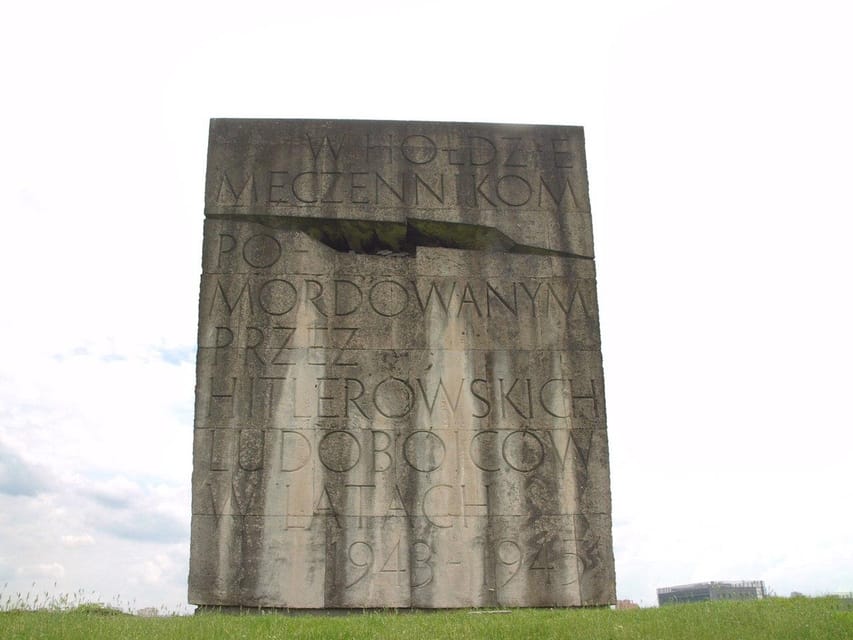
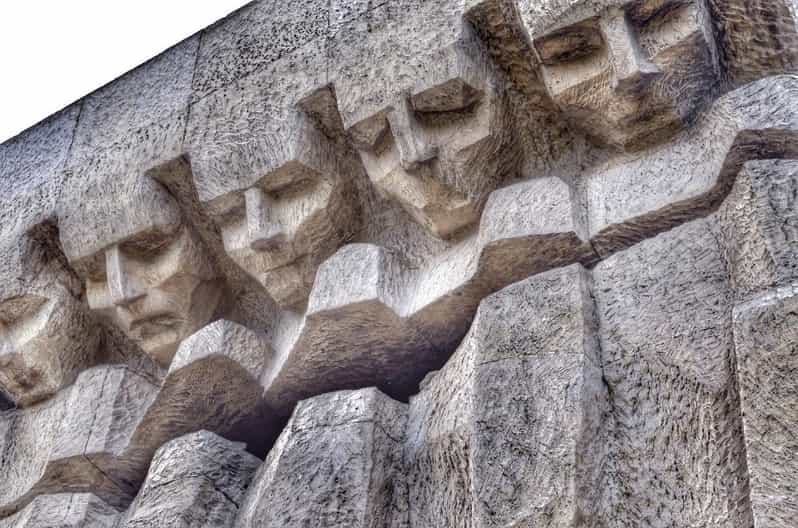
The tour pauses at the major memorials, including the Monument of Torn-Out Hearts. Its shape and name convey the violence suffered by those imprisoned and killed here. Your guide provides the meaning and historical setting, then gives you room to think.
That pause is one of the best features of the experience. Plaszow is not a place to rush through with a camera in hand. The route is paced for reflection, and the silence between explanations is part of the visit.
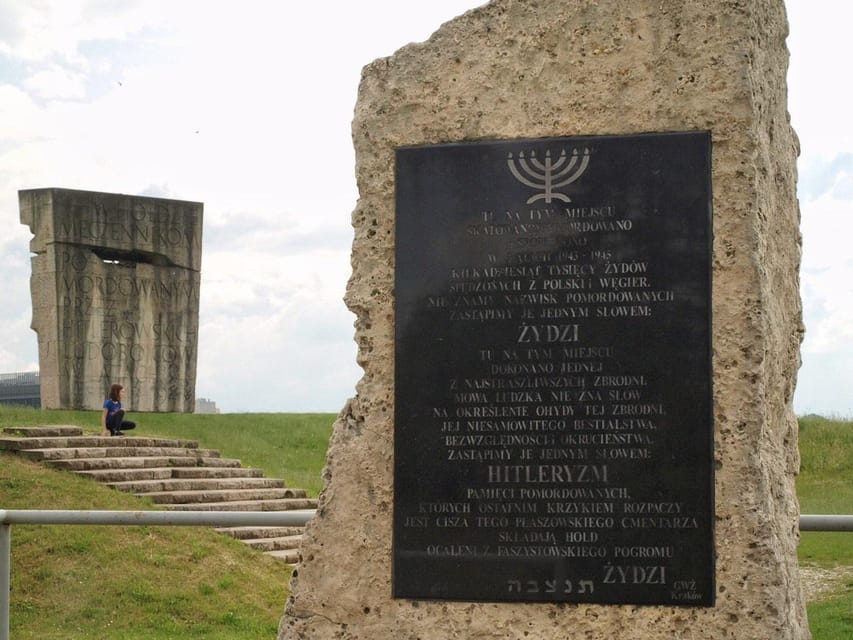
The memorials also help you understand how the site is cared for today. Since so little of the camp remains, these markers carry a large share of the public memory. They identify places of murder and mass burial while reminding you that the camp was once filled with people, routines, fear, and forced work.
This is a heavy visit. Younger children may find the subject hard to process, and anyone looking for a light historical outing should choose a different activity. The tour is educational, but it is also an act of remembrance.
A completely different kind of day out in Kraków:
- Krakow–Zakopane: Cable Car, Chocholow Baths, Cheese & Vodka
★ 5.0 · 10,720 reviews - Krakow: Auschwitz-Birkenau Guided Tour with Pickup & Lunch
★ 4.5 · 9,800 reviews - From Krakow: Wieliczka Salt Mine Tour
★ 4.6 · 9,393 reviews - Krakow: Auschwitz-Birkenau Guided Tour Pickup/Lunch Options
★ 4.5 · 9,057 reviews
Executions, mass graves, and the scale of the camp
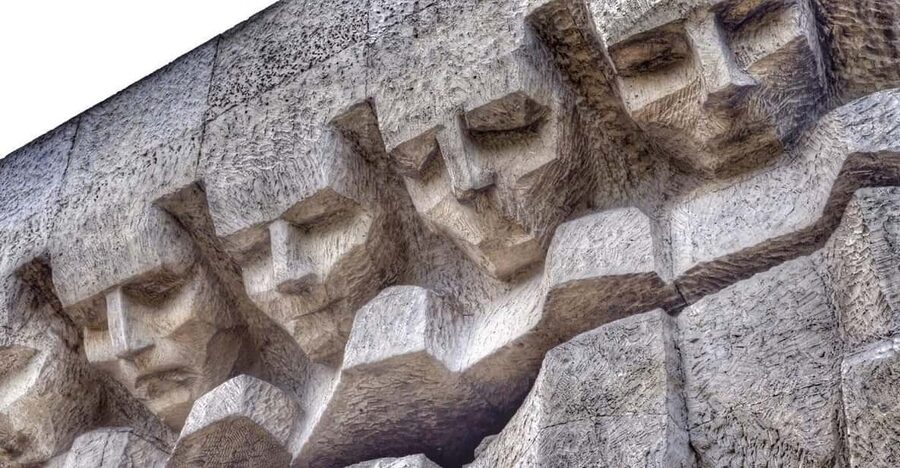
Plaszow was not simply a labor camp where people were held under brutal conditions. Executions took place at several locations within the camp, and thousands were murdered here. The guide points out the sites and explains how mass graves and memorials relate to the area around you.
Because the camp has few preserved buildings, you may need to use your imagination. That does not mean inventing details. It means allowing the guide’s account, the remaining traces, and the memorials to rebuild the site in your mind.
I appreciate that the tour does not depend on shock value. The subject is already powerful. The guide’s job is to provide accurate context and help you understand the structure of the camp, the treatment of prisoners, and the scale of the killings.
The two-hour length works well for this purpose. It gives enough time to cover the main points without turning the visit into an exhausting full-day program. You still need to pay attention, though. This is not a casual stroll where you can drift in and out of the story.
Oskar Schindler and the story behind the film
Oskar Schindler is closely tied to Plaszow because his enamelware enterprise employed Jewish prisoners registered through the camp. By obtaining work permits, he shielded some prisoners from further transports.
Later, Schindler organized their transfer to his wartime plant in Brünnlitz. His actions helped save more than a thousand lives. The guide explains this within the wider camp story, rather than treating Schindler as a separate hero detached from Plaszow.
That distinction matters. Schindler’s List brought worldwide attention to Kraków, Schindler, and the Holocaust. The film also used locations connected with Plaszow. You learn about those filming sites during the walk, but the real value is seeing how the movie relates to the historical place.
The film can help people recognize names and events, but it cannot show every part of Plaszow’s history. This tour fills in some of that wider picture. You learn about the prisoners who were not saved, the camp’s different sections, the executions, and the thousands who suffered and died.
If you are visiting Kraków because of Schindler’s List, this walk adds weight and context to the story. If you have not seen the film, you can still follow the tour without trouble. The history of Plaszow does not depend on movie knowledge.
The guide’s role makes the difference
The guide is the main reason to book a tour rather than visit the area without help. Recent comments praise a guide who explains the camp in detail, answers questions, and brings clear passion to the subject. One booking even had a very small group, allowing extensive conversation and a flexible exchange of questions.
You should not count on having a private tour, since group size can vary. Still, the experience is designed around a live English-speaking guide, not a recorded script. That gives you the chance to ask about the camp’s organization, Schindler, the memorials, or points that need clarification.
The best guides at sites like this know when to speak and when to stop. Here, the reported strengths are patience and accuracy. Those qualities matter because the subject is complicated, and the physical remains do not always explain themselves.
The tour is offered in one language at a time. Choose English when booking if that is your preference. A mixed-language group would make a serious site harder to follow, so the single-language format is a sensible feature.
What the two-hour route feels like
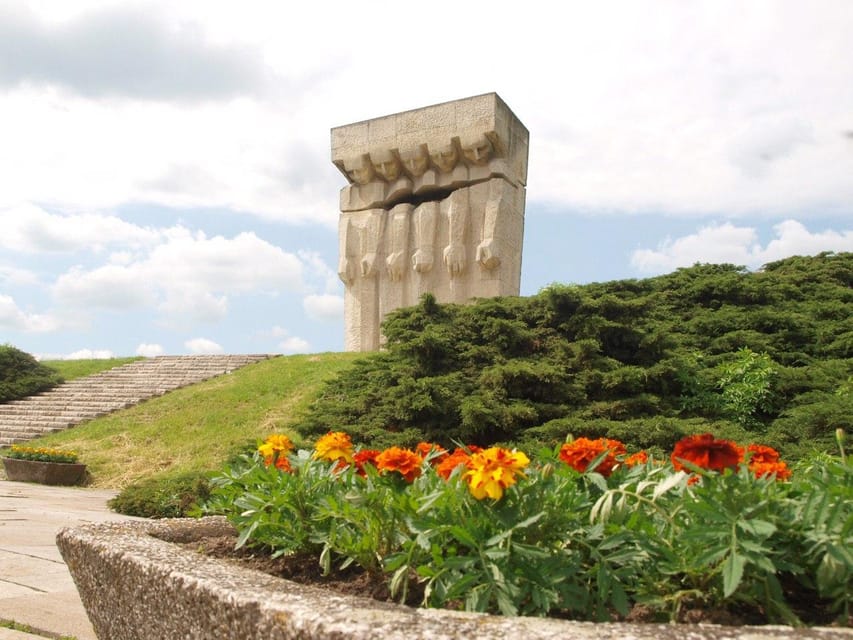
The walk brings together the Grey House, the pre-burial hall ruins, cemetery traces, the roll-call square, paths paved with gravestone fragments, and the main memorials. Along the way, the guide explains the camp’s living, hospital, administrative, and industrial sections.
You should expect a route built around explanation and pauses rather than a long list of attractions. The guide stops to establish what happened at each place, then gives you time to take in the memorial or remains.
Plaszow is an open site, so the experience has a different feel from a museum visit. There are no preserved interiors to protect you from the weather or provide a steady stream of displays. The openness creates room for silence, but it also means you should prepare for an outdoor walk.
The activity is listed as wheelchair accessible. Since the tour takes place across an open former camp site, you may still want to ask the provider about the exact route if you have specific mobility needs. The information provided confirms accessibility, but it does not describe every surface or slope.
Is $29 a fair price?
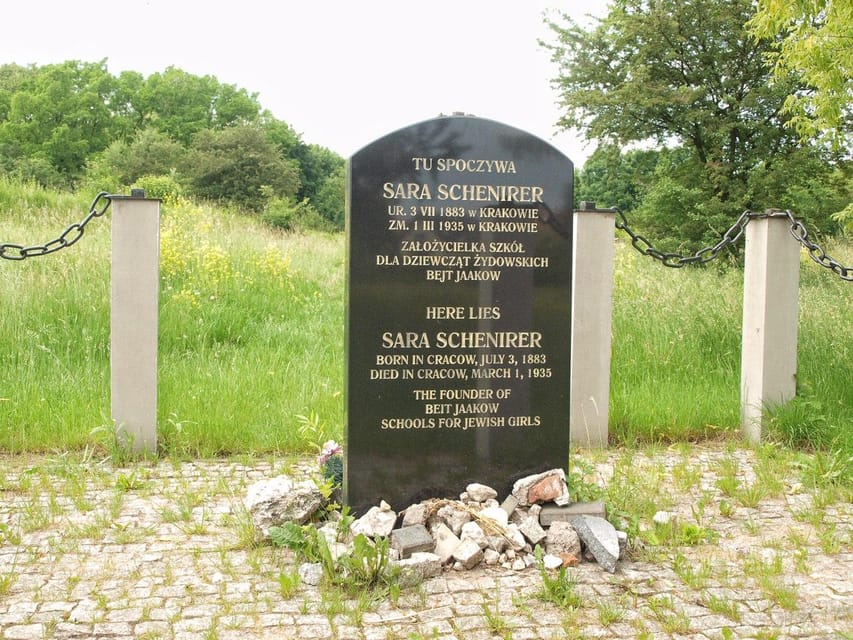
At $29 per person, the tour is reasonably priced for a two-hour guided experience that includes a licensed guide and a single tram ticket. The value comes less from the number of structures you see and more from the information that allows you to understand them.
A self-guided visit might cost less, but it would leave you to assemble the story from scattered remains and memorials. At Plaszow, that can be difficult. The camp’s scale, changing function, and connection to Kraków Ghetto, Auschwitz transports, and Schindler require a clear explanation.
You are also paying for the right pace. A good guide prevents you from treating the site as a quick stop between other attractions. The most useful moments are not necessarily the most visible ones. They are the explanations of how the camp worked and the pauses at places of execution and burial.
The price is less compelling if you want a conventional attraction with many preserved objects. In that case, you may feel that two hours covers a lot of open ground. For someone who wants historical context and a respectful memorial visit, the cost is justified.
Who will appreciate this tour most
I recommend the tour to adults and older teenagers who want to understand Kraków’s wartime history beyond the city center. It is especially useful if you are visiting Schindler’s Factory or watching Schindler’s List as part of your Kraków plans.
It also suits you if you prefer a guide who explains carefully and welcomes questions. The strongest feedback centers on passion, detail, and patient answers, so curious visitors should get the most from it.
You may want to skip it if your schedule is already full of emotionally difficult sites and you need a lighter day. Plaszow deals directly with forced labor, murder, mass graves, and the destruction of Jewish cemeteries.
The tour is also not ideal for anyone who expects a polished museum setting. Its power comes from absence. You see what remains, hear what happened, and use the guide’s account to understand the rest.
Arrive 10 minutes before the start. Once the group leaves, late arrivals cannot join and tickets cannot be refunded. A tram ticket is included, and you should look for the guide holding an excursions.city sign.
Should you book the Plaszow camp tour?
Book it if you want a serious, well-explained visit to one of Kraków’s most important memorial sites. The combination of a licensed English-speaking guide, a reflective two-hour route, cemetery traces, memorials, and Schindler’s story gives the visit real value.
Skip it only if you are seeking preserved buildings, display cases, or an easygoing sightseeing walk. Plaszow asks more from you, but it also gives you a quieter and more personal way to confront the history.
The best reason to choose this experience is the guide. At a site where many physical clues have disappeared, patient explanation is not an extra. It is the key to understanding what you are seeing.
FAQ
How long does the Plaszow concentration camp tour last?
The tour lasts two hours.
What language is the tour conducted in?
The live guided tour is conducted in English. Group tours are offered in one language at a time, so select English when booking.
What is included in the price?
The price includes a licensed guide and one tram ticket.
Where should I meet the guide?
Look for the guide holding an excursions.city sign.
Is the tour wheelchair accessible?
Yes, the activity is listed as wheelchair accessible.
Can I cancel the booking for a full refund?
Yes. You can cancel up to 24 hours before the tour begins for a full refund. You can also reserve now and pay later.
Just added around Kraków
- Rynek Underground Museum & Wawel Castle, Cathedral – Cracow★ 5.0 · 3 reviews
- Schindler’s Factory, Ghetto and Plaszow Camp Guided Tour★ 4.7 · 3 reviews
- Nowa Huta – a guided tour of a utopian socialist city★ 5.0 · 3 reviews
- Krakow: Kazimierz by Golf Cart and Schindler’s Factory Tour★ 4.8 · 3 reviews
- Krakow: Jewish Traces Private Electric Car Tour★ 4.1 · 3 reviews
- Private Krakow City Tour by Car and Walk with private tour guide★ 5.0 · 3 reviews
- Krakow: Indoor Go-Karting (24-Minute Races)★ 4.8 · 3 reviews
- Discover the Jewish Quarter with a Bike Tour★ 5.0 · 3 reviews
Guided, compared.

Auschwitz-Birkenau Guided Tour & Hotel Pickup
Read our review →Auschwitz-Birkenau Guided Tour & Hotel Pickup
Read our review →
Auschwitz Guided Tour with Optional Hotel Pickup
Read our review →
Auschwitz-Birkenau Guided Tour with Pickup & Lunch
Read our review →
Auschwitz-Birkenau Guided Tour Pickup/Lunch Options
Read our review →

Krakow to Auschwitz Birkenau Guided Tour with Transfer and Ticket
Read our review →