REVIEW · GUIDED
Krakow: Former Concentration Camp Plaszow Guided Tour
Some places ask for quiet, not sightseeing. This two-hour Plaszow tour brings Krakow’s former concentration camp into focus through its memorials, ruins, labor sites, and wartime story. I like the way it connects the camp to the deportation of Jews from the Krakow ghetto and to Oskar Schindler, rather than treating the place as only a film location. I also like that a licensed English-speaking guide leads the walk, since the site can otherwise feel difficult to read.
The main drawback is that Plaszow is now a large public open space with scattered information boards, memorials, and remains rather than a fully developed museum. That makes a guide especially useful, but you should come prepared for an outdoor visit, changing weather, and a serious subject. At $23 per person, the tour offers good value if you want context, not just a quick look at a movie landmark.
In This Review
- Key points to know before visiting
- Why Plaszow needs a guided visit
- Starting at Apteka Pod Orlem
- Following the camp’s changing purpose
- Memorials, ruins, and the difficulty of reading the site
- The 1942 deportations and Krakow’s wartime story
- Oskar Schindler and the movie connection
- What the two-hour format feels like
- Is $23 a fair price?
- Who should book this Plaszow tour?
- Should you book it?
- FAQ
- How long does the Plaszow guided tour last?
- What language is the tour offered in?
- Where does the tour begin?
- Where does the tour finish?
- Are tram tickets included?
- What should I bring?
- Can I cancel the tour for a refund?
Key points to know before visiting
- The camp began as a forced labor camp in 1940 before becoming a concentration camp in 1941.
- The site is spread through open public space, so the guide helps connect memorials, ruins, work areas, and historical events.
- The tour explains the 1942 deportations from the Krakow ghetto and the effect of Nazi rule on local Jewish life.
- The Liban Quarry replica is about a hundred meters away, where scenes connected with Schindler’s List were filmed.
- Oskar Schindler’s story is part of the visit, but the tour keeps attention on the people imprisoned and murdered at Plaszow.
- The meeting point is at Apteka Pod Orlem, and you need to bring your own tram tickets if public transport is part of your route.
Why Plaszow needs a guided visit
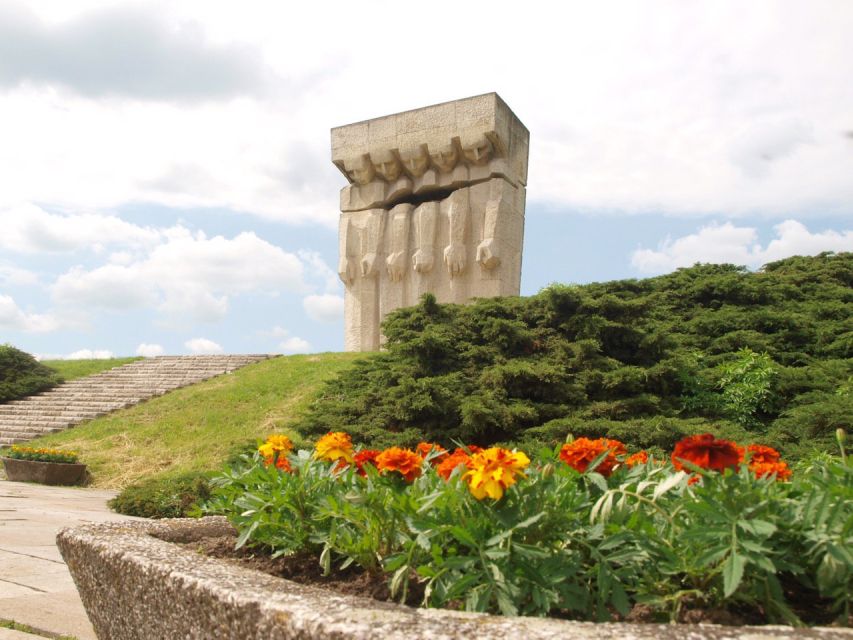
Plaszow is not the kind of historic site that explains itself at every turn. You will find memorials, information boards, ruins, and broad public areas, but the pieces do not automatically form a clear picture of what happened here. A guide gives the ground beneath your feet meaning.
That matters at a former camp. Without historical direction, you might see an open space and a few remnants, then leave with only a vague idea of its past. With an English-speaking guide, you can follow how the site changed from a forced labor camp into a concentration camp and how its purpose grew harsher under Nazi rule.
I value the tour’s focus on the camp’s human story. You will learn about the intense labor carried out in the quarry and military factories, along with the conditions of camp life. The information is not presented as a string of dates alone. It helps you understand how forced labor, imprisonment, deportation, and industrial wartime production fit together.
The experience also explains the deportation of Jews from the Krakow ghetto, which began in 1942. This gives you a wider view of the city’s wartime history. Plaszow was not isolated from Krakow. It was tied to the city, its Jewish community, and the machinery of Nazi persecution.
A few more Kraków trips worth weighing up
- From Krakow: Auschwitz-Birkenau Guided Tour & Hotel Pickup
★ 4.5 · 33,358 reviews - From Krakow: Auschwitz-Birkenau Guided Tour & Hotel Pickup
★ 4.5 · 29,340 reviews - Krakow: Auschwitz Guided Tour with Optional Hotel Pickup
★ 4.5 · 15,280 reviews
Starting at Apteka Pod Orlem
The tour begins at the entrance of Apteka Pod Orlem. Look for the guide holding an excursions.city sign. This is a useful meeting point because it gives you a fixed place to gather before heading toward the former camp.
You should allow enough time to find the entrance without rushing. The instructions identify the pharmacy entrance as the starting point, so do not simply head directly to Plaszow and expect to meet the group there. The activity begins in the city and ends back at the same meeting point.
Transportation is one detail to watch. Tram tickets are not included, so you will need to arrange those separately if the tour uses public transport to reach or return from the site. The activity description does not specify the exact tram route or ticket type, so check the current meeting instructions after booking.
One useful touch is the guide’s help after the tour. Olga, one of the guides associated with this experience, has walked participants to the nearest bus stop and helped them catch the correct bus back toward Krakow’s Old Town. That kind of practical help can make a difference after an emotionally heavy visit, especially if you are unfamiliar with the city’s transport system.
Following the camp’s changing purpose
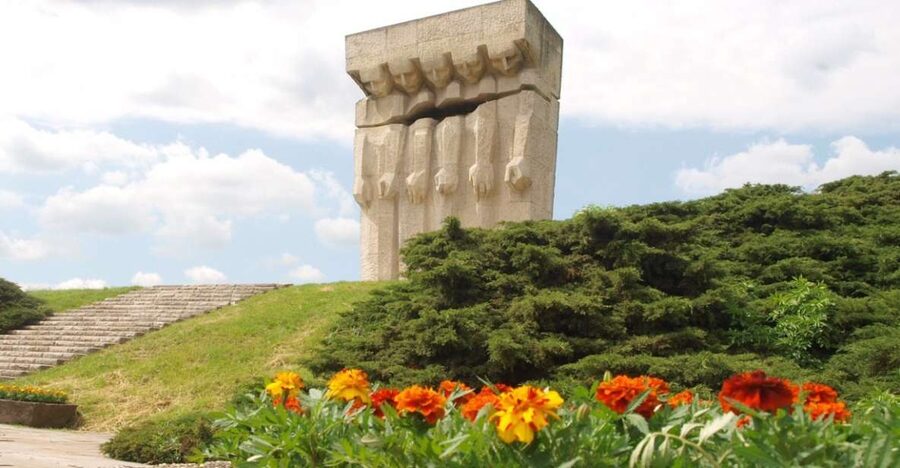
The first major part of the visit explains how Plaszow developed. The camp opened in 1940 as a forced labor camp. In 1941, it was converted into a concentration camp, marking a major change in its role and conditions.
Your guide will help you understand this progression on the ground. The distinction is important because it shows that the camp was not created as one fixed institution from the beginning. Its function changed as Nazi control tightened and wartime demands grew.
The tour then connects Plaszow with the forced labor carried out in the quarry and military factories. These details help you picture the camp as a working system, not simply a place of confinement. Prisoners were forced to labor in dangerous and demanding conditions, supporting military production while living under camp control.
I find this part especially valuable for visitors who already know something about Krakow during the Second World War. It adds detail to the broad story. You are not just hearing that people were imprisoned. You are learning how labor shaped daily life and why the quarry and factories mattered.
The guide also discusses what life inside the camp was like. Since much of the site is now open public space, this explanation gives you a stronger sense of the contrast between the present-day setting and its wartime use.
Memorials, ruins, and the difficulty of reading the site
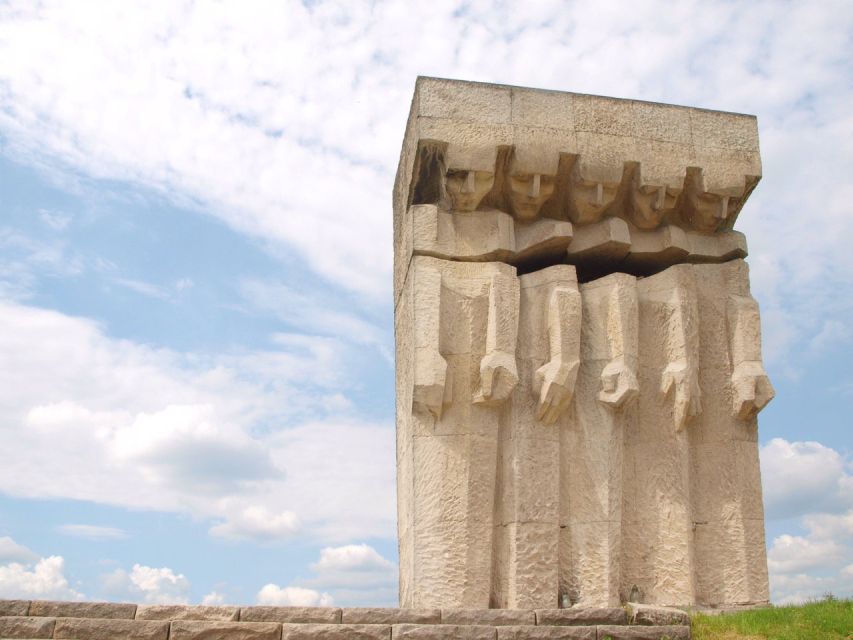
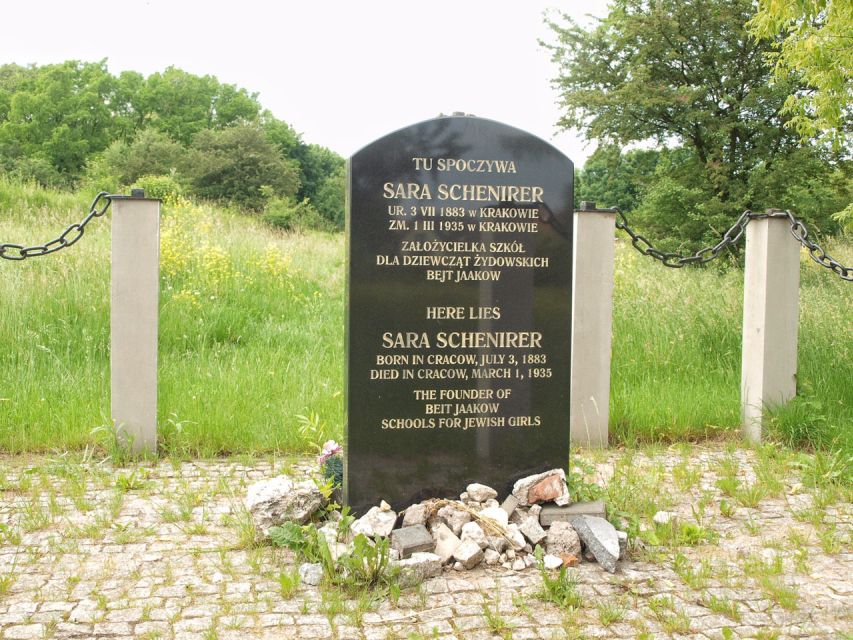
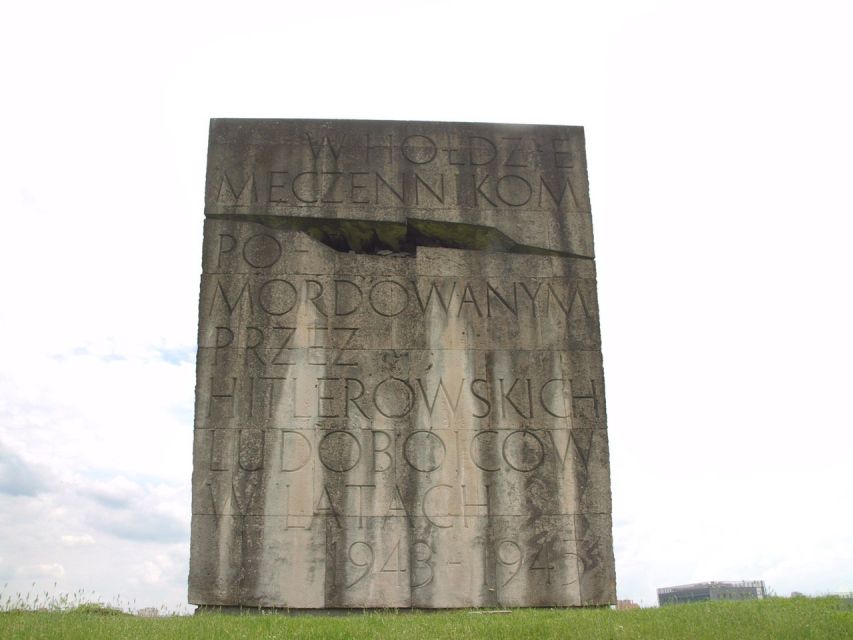
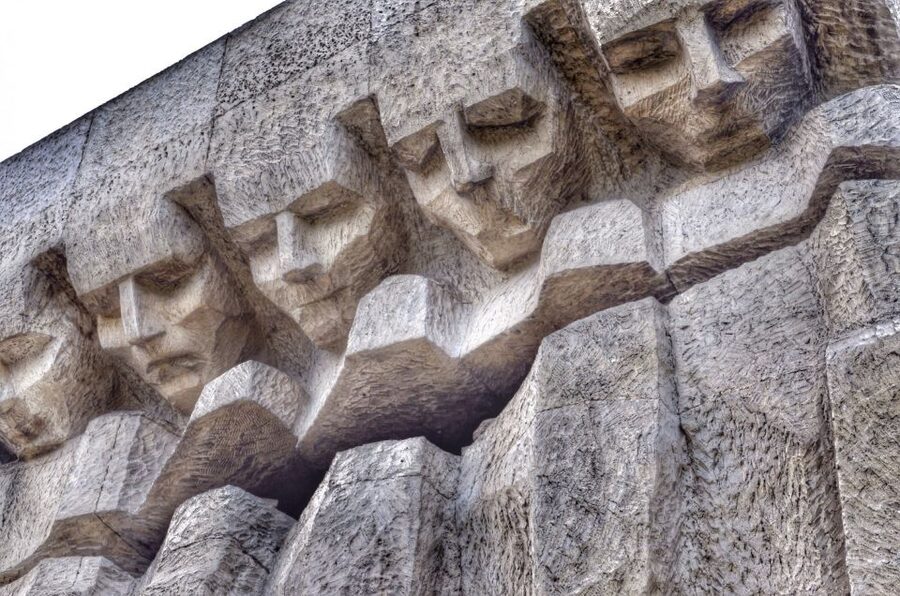
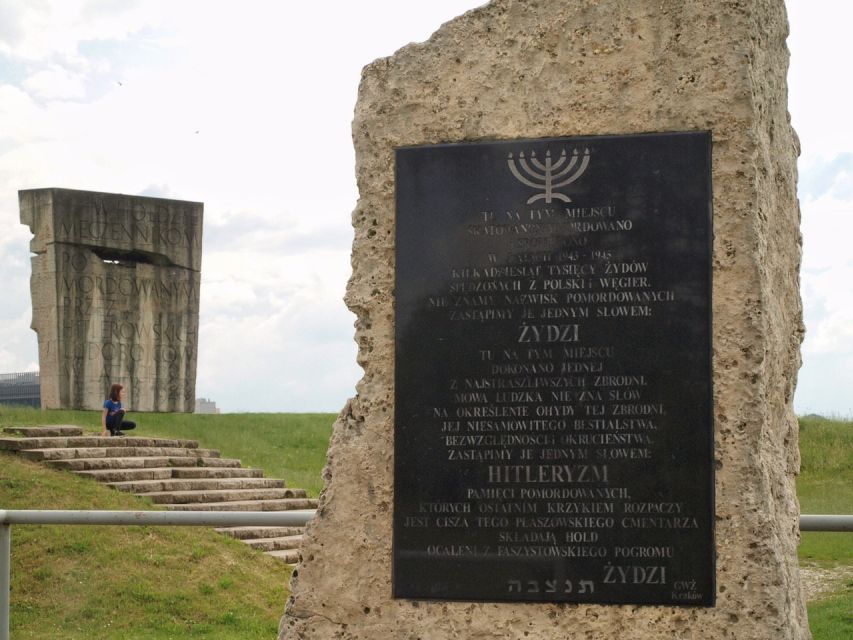
Plaszow includes several memorials dedicated to the victims. These are the quiet centers of the visit. You will have time to remember the people who suffered and died here, while the guide explains what the memorials represent within the wider story.
The physical setting requires some imagination, but not the careless kind. You are not asked to turn the place into a movie set or a dramatic display. Instead, the guide points out the different parts of the former camp and helps you understand how the site was organized.
Today, Plaszow is described as a large public space dotted with information boards, memorials, and building ruins. That means the experience is more open and less controlled than a traditional museum visit. There may not be a clear indoor route, polished exhibition rooms, or a single building that tells the whole story.
For me, that is both the strength and the weakness of the tour. The open setting can feel stark and unsettling because the former camp does not look like a preserved historical attraction. At the same time, you need the guide to explain what you are seeing. This is not the best place for a self-guided visit if you want a clear account of the camp.
The planned future development of the area is also worth noting. The guide may explain official plans to turn the site into a more formal museum location. Those plans suggest that Plaszow may look different in years to come, but you should visit now with the understanding that its interpretation remains spread across the open site.
A completely different kind of day out in Kraków:
- Krakow–Zakopane: Cable Car, Chocholow Baths, Cheese & Vodka
★ 5.0 · 10,720 reviews - Krakow: Auschwitz-Birkenau Guided Tour with Pickup & Lunch
★ 4.5 · 9,800 reviews - From Krakow: Wieliczka Salt Mine Tour
★ 4.6 · 9,393 reviews - Krakow: Auschwitz-Birkenau Guided Tour Pickup/Lunch Options
★ 4.5 · 9,057 reviews
The 1942 deportations and Krakow’s wartime story
A key strength of the tour is its connection to the Krakow ghetto. Beginning in 1942, Jews from the ghetto were deported, and the tour explains how those events related to Plaszow and Nazi rule in the area.
This part helps you place the camp within Krakow rather than viewing it as a remote historical site. The city’s streets, neighborhoods, and Jewish history are linked to what happened here. You will come away with a clearer sense of how persecution moved from legal control and forced relocation to deportation, imprisonment, and forced labor.
The guide’s role is important because this subject can easily become abstract. Dates and terms alone do not explain what the changes meant for ordinary people. A good guide connects policy with place, showing how the camp affected the city and the people who were forced into it.
The experience remains serious throughout. It is not designed as a light city walk with a few wartime facts added for interest. You should give yourself time afterward if you need it. The two-hour length is enough to build a solid understanding without turning the visit into an all-day commitment, but the subject deserves your full attention.
Oskar Schindler and the movie connection
Oskar Schindler is an important part of the tour, and you will hear about his life and his connection to the prisoners he helped. The guide also explains how Plaszow was portrayed in the 1993 film Schindler’s List.
This film connection is useful as an introduction, especially if the movie shaped your interest in Krakow’s wartime history. The tour shows where the story fits into the real places and events around the city. It also helps separate cinema from documented history.
The film was not shot entirely inside the original camp site. Under Steven Spielberg’s direction, a replica of the camp was built in the nearby Liban Quarry, about a hundred meters away. Visiting this location gives you a practical understanding of how the movie recreated parts of Plaszow.
That short distance is one of the more interesting details of the outing. You can compare the actual former camp area with the nearby film replica and discuss why the filmmakers used that quarry. The movie connection adds interest, but it should not take over the visit. The strongest part of the tour remains the history of the camp and the remembrance of its victims.
If you are coming mainly because of Schindler’s List, you will get the film context you want. Just keep your expectations in check. This is not a studio tour or a collection of film props. It is a historical walk that includes the movie’s use of the area.
What the two-hour format feels like
Two hours is a sensible length for Plaszow. It gives the guide time to explain the camp’s origins, the forced labor system, the deportations, the memorials, and the Schindler’s List connection without requiring a full day.
The pace will depend on the group and the guide, but you should expect an outdoor walking experience rather than a seated lecture. Wear weather-appropriate clothing. There is no promise of indoor shelter during the visit, and the site’s open nature makes rain, cold, heat, or strong sun more noticeable.
The walk may feel physically manageable for many people, but the available information does not provide a detailed accessibility assessment. If you have specific mobility needs, ask the provider before booking rather than assuming the open public site will suit you.
The tour is offered in English with a live guide. That is a good choice if you want to ask questions and hear the story in a clear sequence. The small set of available ratings gives it a strong 4.8 score from ten ratings, and the praise centers on the guides’ care, warmth, and ability to make the history understandable.
Olga receives especially warm approval for her enthusiasm and personal attention. One small group of two people felt safe and welcomed, and Olga even shared stories connected to her own family. That personal link is not something you should expect from every guide, but it shows how this tour can become more than a standard historical walk.
Is $23 a fair price?
At $23 per person, I consider this a reasonable price for a two-hour guided visit. You are paying for a licensed guide at a site where the physical remains alone do not tell the full story. That interpretive help is the main value.
The price does not include tram tickets, so budget a little extra for transport. Still, the total cost should remain modest compared with a longer day tour or a museum package. You also get a focused experience rather than spending hours moving between several unrelated attractions.
The value is strongest if you are interested in the Second World War, Holocaust history, Krakow’s Jewish heritage, or the real locations connected with Schindler’s List. If you only want a quick photo stop, the cost may feel less worthwhile because the site itself is open and largely free to walk through.
Free cancellation up to 24 hours before the start and the option to reserve now and pay later make the booking fairly flexible. Keep those terms in mind if the weather looks poor or your Krakow schedule changes.
Who should book this Plaszow tour?
I would recommend it to you if you want a serious, guided account of Krakow under Nazi rule. It suits history-minded visitors, people studying the Holocaust, and anyone who wants to understand the real places behind Schindler’s List.
It is also a good choice if you prefer personal explanation to reading signs on your own. The site can feel bare and hard to interpret without help, so a guide adds real value.
You should think twice if you want a polished museum visit with preserved rooms and a large indoor exhibition. Plaszow is more open, more scattered, and less visually complete. Its power comes from the history, the memorials, and the effort required to imagine what stood there.
Bring suitable clothing, prepare for a solemn visit, and do not schedule your tightest activity immediately afterward. The guide may make the past clearer, but clarity does not make the subject easy.
Should you book it?
Book this tour if you want Plaszow explained with care. The strongest reason to go is not the movie connection alone. It is the chance to understand how a forced labor camp became a concentration camp, how deportations from the Krakow ghetto shaped the site, and how prisoners were forced to work in the quarry and military factories.
The guided format is particularly important because the area is now an open public space with limited visible remains. At $23, it is a sensible investment in context. Choose it over a solo visit if you want the memorials, ruins, and film locations tied into one clear story.
FAQ
How long does the Plaszow guided tour last?
The tour lasts two hours. Starting times vary, so check availability when choosing your date.
What language is the tour offered in?
The live guided tour is offered in English.
Where does the tour begin?
It begins at the entrance of Apteka Pod Orlem. Look for the guide holding an excursions.city sign.
Where does the tour finish?
The activity ends back at the meeting point at Apteka Pod Orlem.
Are tram tickets included?
No. Tram tickets are not included in the tour price.
What should I bring?
Bring weather-appropriate clothing because the visit takes place at an open former camp site.
Can I cancel the tour for a refund?
Yes. You can cancel up to 24 hours in advance for a full refund. The tour also offers reserve now and pay later booking.
Just added around Kraków
- Rynek Underground Museum & Wawel Castle, Cathedral – Cracow★ 5.0 · 3 reviews
- Schindler’s Factory, Ghetto and Plaszow Camp Guided Tour★ 4.7 · 3 reviews
- Nowa Huta – a guided tour of a utopian socialist city★ 5.0 · 3 reviews
- Krakow: Kazimierz by Golf Cart and Schindler’s Factory Tour★ 4.8 · 3 reviews
- Krakow: Jewish Traces Private Electric Car Tour★ 4.1 · 3 reviews
- Private Krakow City Tour by Car and Walk with private tour guide★ 5.0 · 3 reviews
- Krakow: Indoor Go-Karting (24-Minute Races)★ 4.8 · 3 reviews
- Discover the Jewish Quarter with a Bike Tour★ 5.0 · 3 reviews
Guided, compared.

Auschwitz-Birkenau Guided Tour & Hotel Pickup
Read our review →Auschwitz-Birkenau Guided Tour & Hotel Pickup
Read our review →
Auschwitz Guided Tour with Optional Hotel Pickup
Read our review →
Auschwitz-Birkenau Guided Tour with Pickup & Lunch
Read our review →
Auschwitz-Birkenau Guided Tour Pickup/Lunch Options
Read our review →

Krakow to Auschwitz Birkenau Guided Tour with Transfer and Ticket
Read our review →