
REVIEW · CYCLING TOURS
Krakow: Hidden Bike Tour
Krakow’s quieter stories deserve a ride. This three-hour cycling tour takes you beyond the usual Old Town route, into parks, viewpoints, and Podgórze sites tied to World War II and Poland’s difficult postwar years. I like the focus on lesser-known places and the way the tour connects Polish history with events in the Netherlands and Italy.
I also like the slow pace and solid bicycles. You are not racing from one sight to the next, and guide Bryan, also referred to as Brian in one account, has been praised for taking time at each stop. The main drawback is clear: you must walk up a hill to reach the best viewpoint, and the tour is not suitable for people with mobility impairments.
This is not a replacement for Krakow’s classic Old Town cycling route. It is a thoughtful companion to Auschwitz and a useful choice if you want to understand how World War II shaped Polish people, places, and national pride.
In This Review
- Key points at a glance
- Why this route adds something new to Krakow
- Starting beyond the standard Krakow circuit
- A quiet park filled with Polish heroes
- The hill and the city view
- Entering Podgórze and its wartime sites
- Stories of courage, loss, and Poland after the war
- What the guides add to the experience
- Bicycles, helmets, and the pace of the ride
- Is $41 a fair price?
- Who should book this tour?
- Booking flexibility and practical details
- Final verdict: a strong choice for history-minded cyclists
- FAQ
- How long is the Hidden Krakow Bike Tour?
- How much does the tour cost?
- What historical period does the tour focus on?
- Which Krakow areas does the tour visit?
- Does the tour visit Schindler’s factory?
- Does the tour visit the former Jewish ghetto?
- Is a bicycle included?
- Are helmets and ponchos provided?
- Is the tour suitable for people with mobility impairments?
Key points at a glance
- A World War II focused route: The tour explains Polish heroes, victims, resistance, and the country’s role in the liberation of the Netherlands and Italy.
- Podgórze takes center stage: Expect stops connected with the Jewish cemetery, Schindler’s factory, and the former Jewish ghetto.
- A quiet park with powerful memorials: Statues of Polish heroes provide a setting away from Krakow’s busiest streets.
- A relaxed three-hour ride: The pace is designed for looking, listening, and stopping rather than covering huge distances.
- Strong guide praise: Bryan, or Brian, is known for detailed explanations, enthusiasm, pauses, and a clear interest in Polish history.
- Useful tour gear: A quality bicycle is included, with a helmet if requested and a poncho if needed.
Why this route adds something new to Krakow
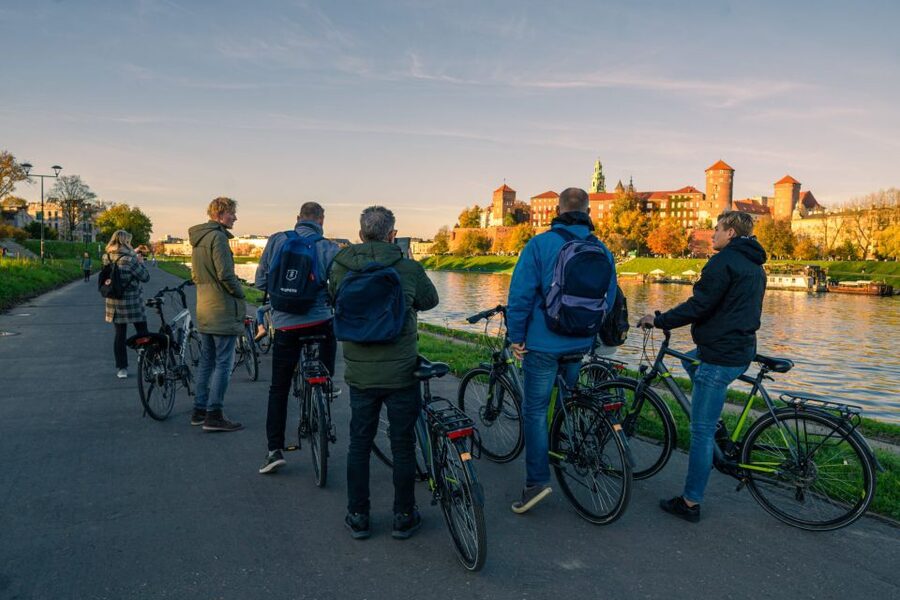
Krakow is easy to visit in layers. The Old Town gives you the grand churches, market square, and royal atmosphere. Kazimierz adds Jewish heritage, courtyards, and a lively restaurant scene. This bicycle tour takes a different path, using places outside the center to explain what happened to Poland during and after World War II.
That choice matters. You are not simply collecting more sights. You are seeing how national history is recorded in parks, cemeteries, factories, former district boundaries, and statues of people who may not appear in a standard city tour.
I especially like the connection to Poland’s role beyond its own borders. The tour asks you to consider how Polish people helped in the liberation of the Netherlands and Italy, a part of the war story that many Dutch visitors may not have learned in detail. That international link gives the route a wider reach than a simple tour of wartime buildings.
The tone is serious, but the tour is not presented as a dry lecture. The stories include courage, grief, pride, and hope. That mix is important in Krakow, where wartime sites can easily become a list of dates and tragedies without much sense of the people involved.
More Bike Tours in Kraków
- Complete Cracow Bike Tour (small group of maximum 15 people!)
★ 5.0 · 1,322 reviews - Krakow: Bike Tour of Old Town, Jewish Quarter and the Ghetto
★ 4.9 · 1,155 reviews - Highlights of Krakow Bike Tour – Small group
★ 5.0 · 662 reviews
Starting beyond the standard Krakow circuit
The route is designed for visitors who have already seen, or plan to see, the central sights. It does not repeat the usual Old Town and Kazimierz highlights covered by the operator’s Complete Krakow Bike Tour.
That makes the choice fairly simple. If this is your first hour in Krakow and you want the city’s famous landmarks, choose a standard introduction first. If you already understand the basic layout and want to see how modern Poland was shaped, the Hidden Bike Tour offers a more specific subject.
The three-hour length is useful. A shorter ride could touch the sites without giving the guide enough time to explain them. A much longer ride might become tiring, especially when the subject matter is emotionally heavy. Here, the slow pace leaves room for stops and conversation.
The route is also a practical way to cover districts outside the center without arranging separate public transport trips. You get from place to place by bicycle, while the guide provides the thread connecting each stop.
A quiet park filled with Polish heroes
One of the most distinctive parts of the route is a beautiful park outside the city center. It contains statues of Polish heroes and provides a setting for stories about World War II that many international visitors may not know.
The park matters because memorials are not just decoration. A statue tells you who a country chooses to remember, and the guide can explain why those figures matter in Polish memory. You will hear about people who made an impact during some of Poland’s darkest years, along with the larger struggles that continued afterward.
This is the kind of stop that rewards patience. You may find yourself paying as much attention to the arrangement of the memorials as to the individual stories. The bicycle lets you reach this quieter area without turning the visit into a long walk from the center.
The information provided does not identify the park by name, so I would not book this tour expecting a specific famous park attraction. The value is in the guide’s interpretation of the statues and wartime stories, not in checking off a named landmark.
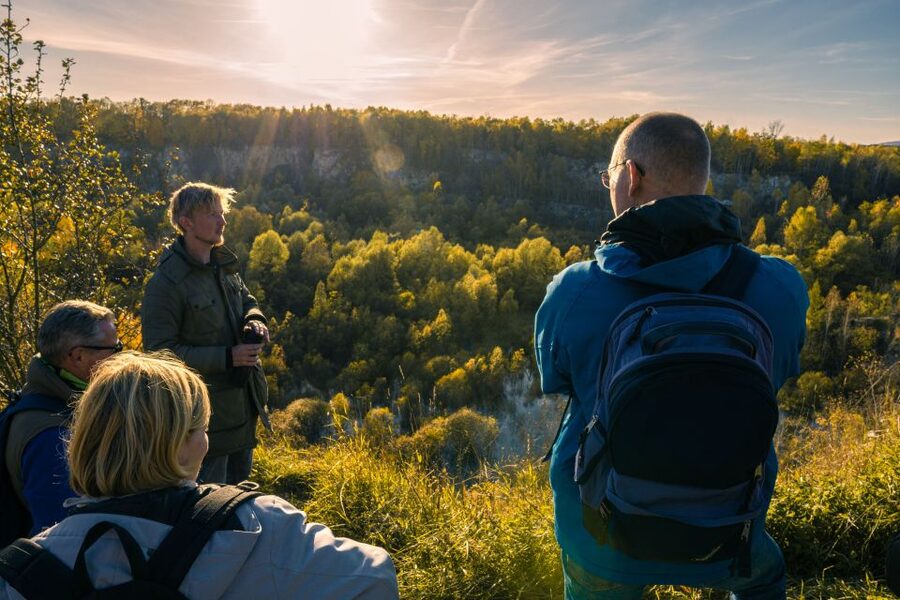
The hill and the city view
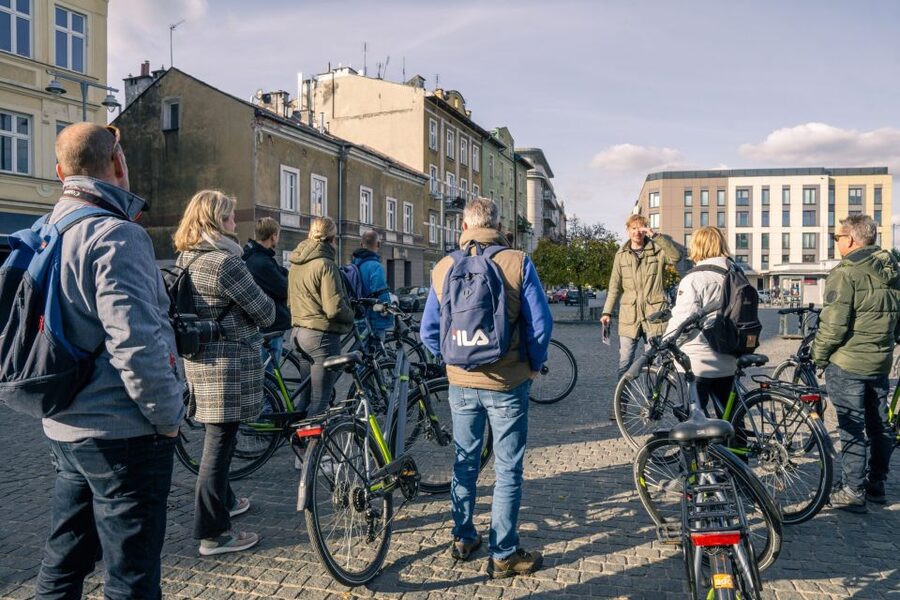
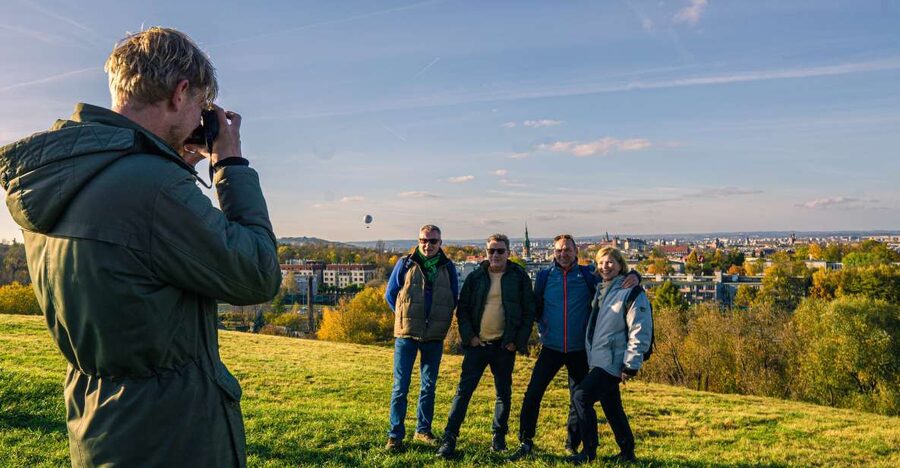
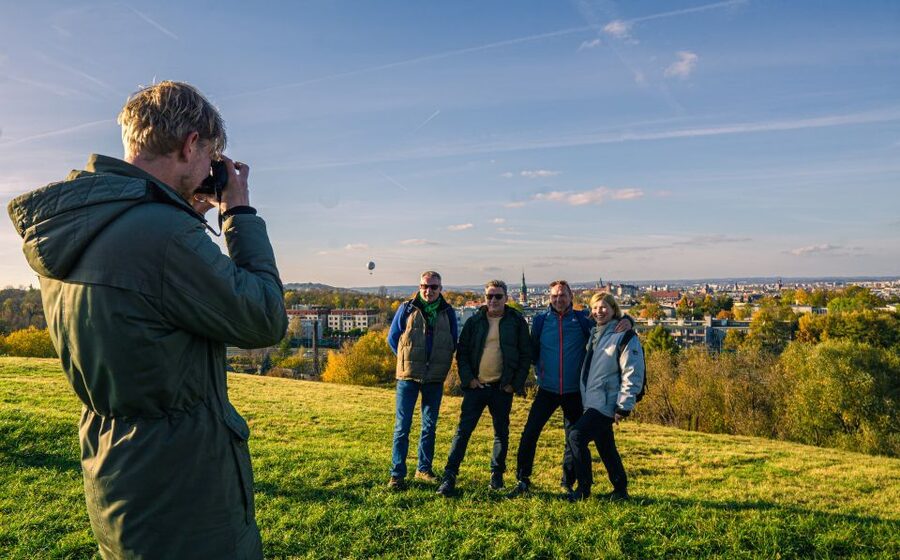
The tour includes a climb on foot to reach its most beautiful viewpoint over Krakow. This is the main physical warning, and you should take it seriously if hills or uneven walking are difficult for you.
The bicycles do not remove every physical demand. You may ride at a relaxed pace, but you still need to get off and walk uphill. The listing specifically says that the experience is not suitable for people with mobility impairments.
For most reasonably active visitors, the hill should be manageable, but the tour is not completely flat and effortless. Wear comfortable shoes, and do not assume the bicycle will carry you through every part of the route.
The reward is a broader view of the city. A viewpoint can help you understand Krakow’s districts and see how far the route has taken you from the central streets. It also gives the tour a pause from the heavy wartime material.
A completely different kind of day out in Kraków:
- From Krakow: Auschwitz-Birkenau Guided Tour & Hotel Pickup
★ 4.5 · 33,358 reviews - From Krakow: Auschwitz-Birkenau Guided Tour & Hotel Pickup
★ 4.5 · 29,340 reviews - Krakow: Auschwitz Guided Tour with Optional Hotel Pickup
★ 4.5 · 15,280 reviews - Krakow–Zakopane: Cable Car, Chocholow Baths, Cheese & Vodka
★ 5.0 · 10,720 reviews
Entering Podgórze and its wartime sites
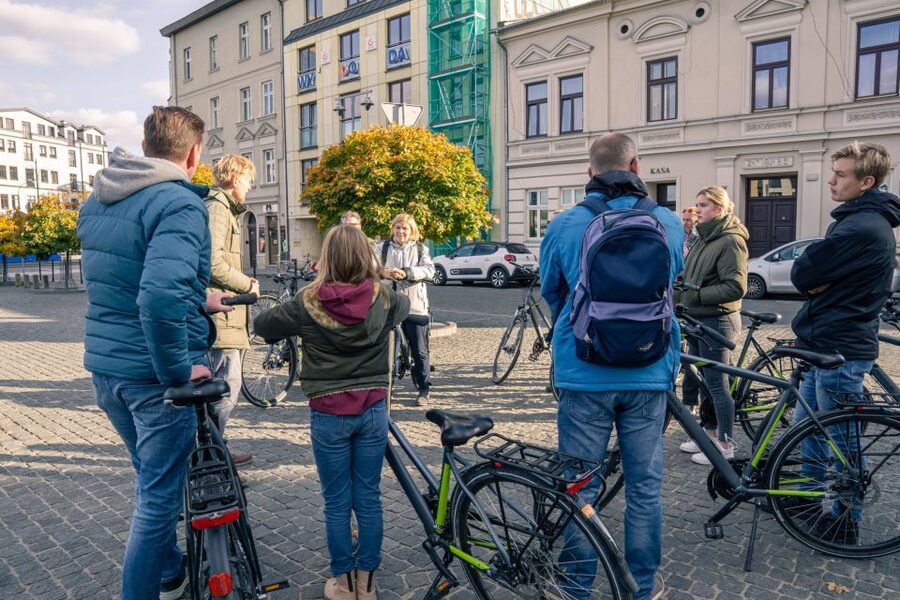
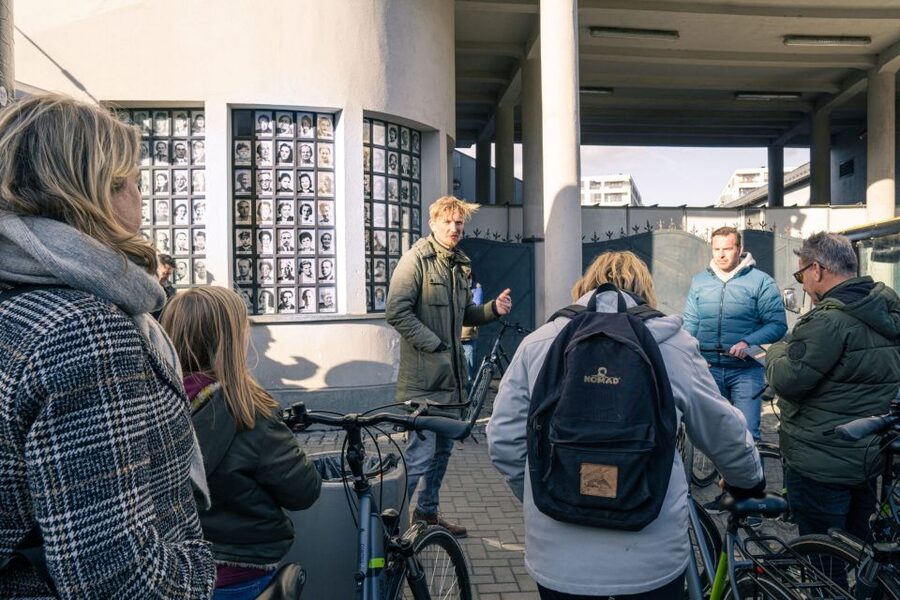
The Podgórze district is the tour’s strongest historical section. Here, the route visits a Jewish cemetery, Schindler’s factory, and the former Jewish ghetto.
Each site offers a different way into the period.
The Jewish cemetery brings the story to a place of memory and mourning. It is not simply another stop for photographs. The guide’s role is especially important here, since the meaning of a cemetery depends on knowing who was affected, how Jewish life was disrupted, and what the site represents today.
Schindler’s factory connects Krakow with one of the best-known individual stories from the Holocaust. The tour does not promise an interior museum visit, so you should not book it expecting museum admission or a long indoor presentation. Instead, you will visit the area as part of a wider account of the people and events linked with the factory.
The former Jewish ghetto gives physical shape to a policy that can otherwise feel abstract. Streets and district boundaries help you understand that persecution was imposed on real neighborhoods, not only recorded in textbooks. Seeing the area by bicycle also shows how the district relates to the rest of modern Krakow.
The tour’s strength here is the combination of place and explanation. You are not only hearing about wartime Krakow in a classroom setting. You are moving through locations where those events unfolded.
Stories of courage, loss, and Poland after the war
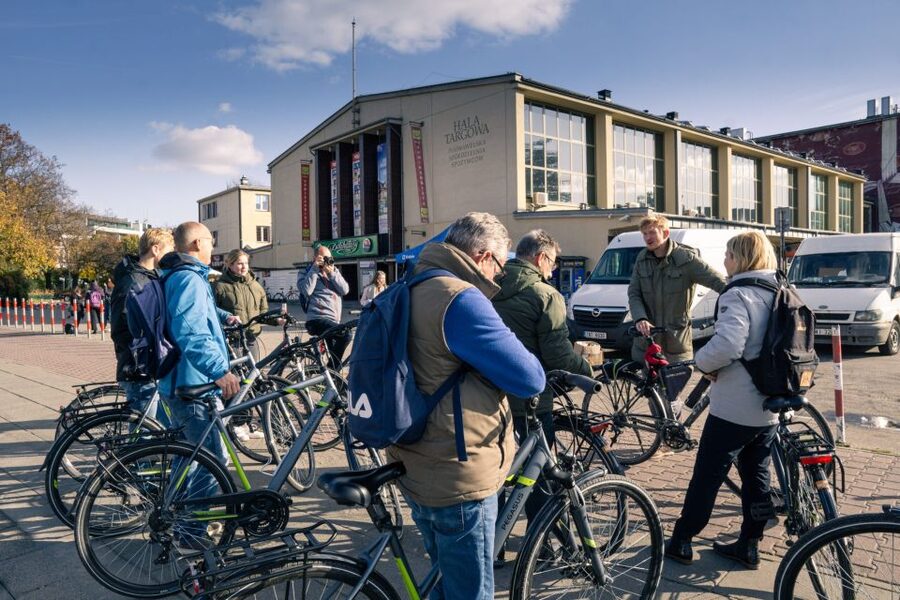
The subject extends beyond the war itself. You will also hear about what happened to Poland afterward and how wartime experiences shaped its inhabitants.
That broader view is one of the tour’s best features. A visit limited to occupation and destruction can leave you with an incomplete picture. Poland’s story continued through political change, national rebuilding, and the long process of remembering heroes and victims.
The guide presents stories that include impressive acts of courage, emotional accounts of suffering, and examples of national pride. The supplied information describes the tone as hopeful as well as sorrowful, which sounds right for a route built around remembrance rather than shock.
I would allow yourself some quiet time after the tour. Three hours of wartime history can be demanding, even at a relaxed cycling pace. Pairing it with a light evening rather than another major museum may help you take in what you have heard.
What the guides add to the experience
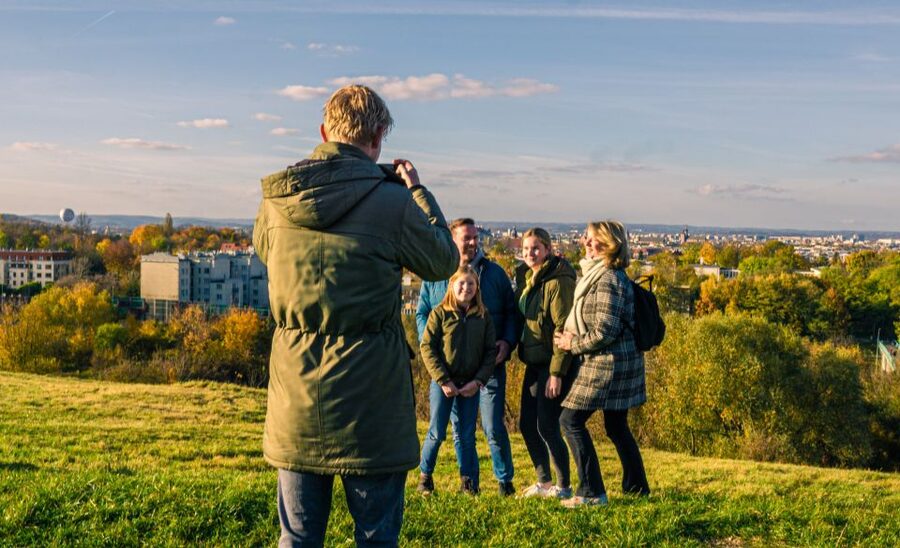
The guide can be Dutch, English, or German depending on your preference, although the activity information also identifies Dutch as the live guide language. If language is important to you, confirm the available option before booking.
Guide Bryan, also named Brian in one account, receives particularly warm praise for his enthusiasm and the time he gives to each stop. The strongest practical detail is that he does not rush through explanations. He pauses, tells the stories fully, and includes a break during the afternoon.
That matters on a historical tour. A guide who races through facts can make even important places blur together. A guide who gives each stop room allows you to ask questions and connect one event to the next.
His approach also seems to suit visitors who want more than a basic introduction. The tour is built around stories that many people have not heard, including Polish contributions to the liberation of the Netherlands and Italy. You should expect a guide-led interpretation, not a quiet scenic cycle with occasional facts.
Bicycles, helmets, and the pace of the ride
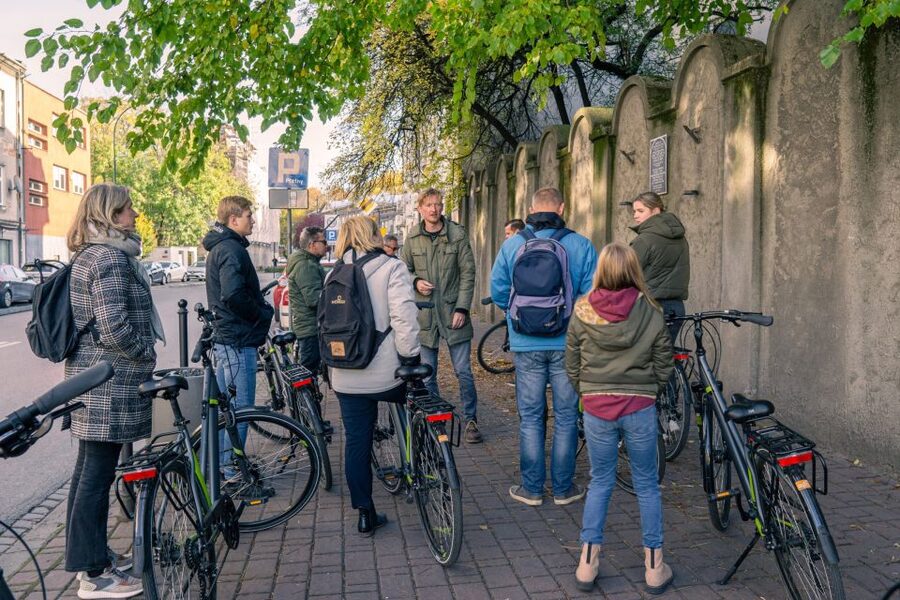
A quality bicycle is included in the $41 per-person price. A helmet is available if requested, and a poncho can be provided if needed.
The bicycle quality is worth noting because equipment affects the whole afternoon. A poor bicycle can turn a gentle tour into a chore, especially when you are riding between several districts. Here, the positive comments about the bikes support the idea that the equipment is part of the value, not an afterthought.
The tour is described as relaxed and slow-paced. That should appeal to you if you want time to look around, listen, and stop for explanations. It may disappoint you if you are hoping for a long, athletic ride or a fast way to cover every corner of Krakow.
An e-bike is not included. No information is provided about an e-bike upgrade, so you should ask the operator directly if pedal assistance is important to you.
Food and drinks are also not included. Plan to eat before or after, or carry what you need if permitted and practical. The tour includes a pause, but it is not sold as a food experience.
Is $41 a fair price?
At $41 per person, this is a reasonable price for a three-hour guided ride that includes a quality bicycle and a specialist historical route.
You are paying for more than bicycle use. The real value is the combination of transport, local storytelling, and access to areas you might not choose on your own. A self-guided ride could cost less if you already have a bicycle, but it would not provide the same explanation of the park memorials, Podgórze, or Polish wartime figures.
The price is easier to justify if you plan to visit Auschwitz. The tour does not replace Auschwitz, but it provides Krakow-based context and shows how the war affected the city itself. It also avoids repeating the Old Town and Kazimierz route, so you can build two different cycling experiences into your visit.
The value is weaker if you want only famous sights, a strenuous ride, or a low-cost way to move around. This is a history tour first and a bicycle outing second.
Who should book this tour?
I would recommend it to you if you:
- Want to understand Krakow beyond its medieval center
- Have an interest in World War II and Polish culture
- Plan to visit Auschwitz and want more local context
- Enjoy guided stories with emotional and national themes
- Prefer a gentle cycling pace
- Have already visited, or will separately visit, Old Town and Kazimierz
- Appreciate a guide who spends time at each stop
I would think twice if you:
- Have mobility limitations that make an uphill walk difficult
- Want a flat route with no walking
- Prefer a sports-style bike ride
- Are looking mainly for Krakow’s famous central landmarks
- Need an e-bike, since one is not included
- Find wartime subjects too heavy for a long afternoon
You do not need to be a serious cyclist, based on the slow pace described. Still, you should be comfortable riding a bicycle for three hours with at least one uphill section on foot.
Booking flexibility and practical details
The activity lasts three hours, with starting times depending on availability. You can cancel up to 24 hours in advance for a full refund, and the reserve-now, pay-later option lets you hold a place without paying immediately.
Those terms are useful when your Krakow schedule is still moving around. I would place the tour after you have seen the central city, but not necessarily on the same day as Auschwitz. The subjects overlap, yet the physical and emotional demands may make both activities feel like too much in one day.
Request a helmet when booking if you want one, since it is provided on request rather than automatically stated as standard equipment. Ask about the language choice as well, because the information lists Dutch as the live guide language while also offering English and German depending on preference.
Final verdict: a strong choice for history-minded cyclists
Book the Hidden Krakow Bike Tour if you want a slower, more personal look at Poland’s modern history. Its best qualities are the unusual route, the Podgórze stops, the park memorials, and the guide’s willingness to give each story proper time.
The experience is not for every visitor. It includes a hill, serious wartime subjects, no food or drinks, and no e-bike. But if you are comfortable on a bicycle and want the Krakow that exists beyond the postcard center, $41 buys a useful afternoon with real historical weight.
FAQ
How long is the Hidden Krakow Bike Tour?
The tour lasts three hours.
How much does the tour cost?
The listed price is $41 per person.
What historical period does the tour focus on?
The main focus is World War II and what happened to Poland afterward.
Which Krakow areas does the tour visit?
The tour includes locations outside the city center and visits the Podgórze district.
Does the tour visit Schindler’s factory?
Yes, Schindler’s factory is included as one of the Podgórze stops.
Does the tour visit the former Jewish ghetto?
Yes, the route includes the former Jewish ghetto.
Is a bicycle included?
Yes, a quality bicycle is included in the tour price.
Are helmets and ponchos provided?
A helmet is available if requested, and a poncho can be provided if needed.
Is the tour suitable for people with mobility impairments?
No. The tour includes walking up a hill to reach a viewpoint and is listed as unsuitable for people with mobility impairments.
Just added around Kraków
- Rynek Underground Museum & Wawel Castle, Cathedral – Cracow★ 5.0 · 3 reviews
- Schindler’s Factory, Ghetto and Plaszow Camp Guided Tour★ 4.7 · 3 reviews
- Nowa Huta – a guided tour of a utopian socialist city★ 5.0 · 3 reviews
- Krakow: Kazimierz by Golf Cart and Schindler’s Factory Tour★ 4.8 · 3 reviews
- Private Krakow City Tour by Car and Walk with private tour guide★ 5.0 · 3 reviews
- Krakow: Jewish Traces Private Electric Car Tour★ 4.1 · 3 reviews
- Discover the Jewish Quarter with a Bike Tour★ 5.0 · 3 reviews
- Krakow: Indoor Go-Karting (24-Minute Races)★ 4.8 · 3 reviews
Cycling Tours, compared.
Complete Cracow Bike Tour (small group of maximum 15 people!)
Read our review →
Bike Tour of Old Town, Jewish Quarter and the Ghetto
Read our review →
Full Bike Tour – the Old Town, Jewish Qtr & the Ghetto NEW BIKES
Read our review →
Bike Tour of the Old Town, Kazimierz, and the Ghetto
Read our review →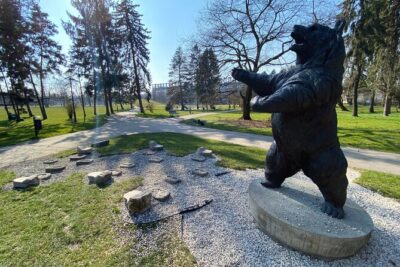
Half-Day Warsaw City Sightseeing Bike Tour for Small Group
Read our review →Browse the lists this tour appears in