
REVIEW · OLD TOWN WALKING TOURS
Lublin Old Town Highlights Private Walking Tour
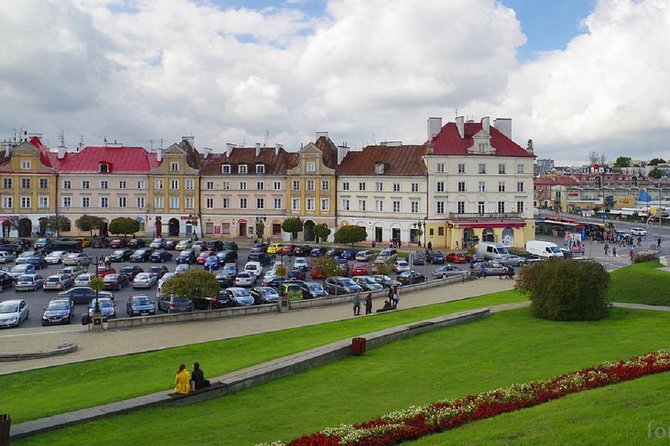
Small streets, big stories. Lublin’s Old Town rewards slow walking, and this private tour gives you a clear route through its medieval gates, Renaissance buildings, churches, castle, and royal connections. With a licensed guide at your side, you get more than pretty façades. You learn why Lublin mattered as an administrative, trade, and military center in the Polish kingdom.
I especially like the private format, which lets you set the pace with your family or friends, and the range of sights packed into two to three hours. The tour also includes St. John the Baptist Cathedral and practical suggestions for local restaurants, patisseries, and pubs. One point to consider: church interiors may be limited on Sunday mornings during Mass, and the top of Trinity Tower costs an extra 2 EUR.
The meeting point under Krakowska Gate is easy to find, and the route covers the main Old Town sights without transport or complicated transfers. A past booking with guide Damien earned strong praise for keeping a full three-hour tour informative and entertaining, a useful sign for anyone worried about a long history talk becoming a dry lecture.
In This Review
- Key points to know before you book
- Why Lublin is worth a closer look
- Starting under Krakowska Gate
- Market Square and the former Town Hall
- Grodzka Gate and the old defensive route
- Fara Square and Trinity Tower
- Lublin Castle and the royal story
- St. John the Baptist Cathedral and its ornate interior
- Church of the Holy Spirit and the longer route
- Romanesque houses and the Osterwy Theatre
- Ending at the Lublin Union Monument
- What the private format is worth at $107
- Who will get the most from this walk?
- Booking advice and final verdict
- FAQ
- Where does the Lublin Old Town tour begin?
- How long does the walking tour last?
- Is this a private tour?
- Which languages are available?
- Is St. John the Baptist Cathedral included?
- Is entry to the top of Trinity Tower included?
- What sights are covered on the two-hour route?
- What extra sights may be included on the three-hour route?
- Is the tour wheelchair accessible?
- Can church visits be limited on Sunday mornings?
Key points to know before you book
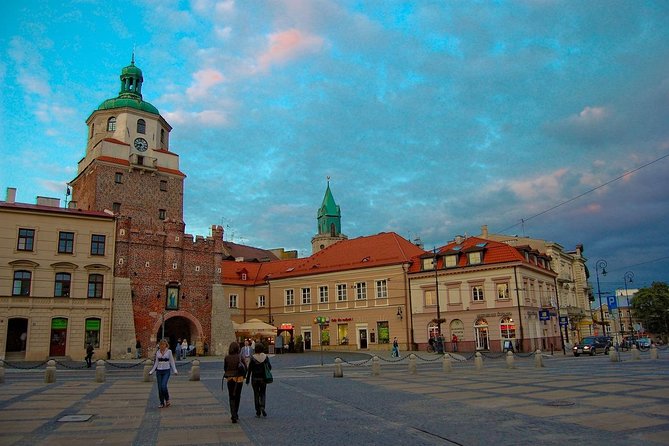
- Krakowska Gate is the starting point: Meet under this old defensive gateway, then walk directly into Lublin’s historic center.
- The tour is private: You explore with your own family or friends rather than joining a large mixed group.
- The two-hour route covers the essentials: Expect Market Square, Renaissance buildings, both major gates, the castle, cathedral, churches, and the Lublin Union Monument.
- The three-hour option adds more churches and architecture: You may see the Carmelite Church, St. Piotr and Paul Church, and Romanesque townhouses near the Osterwy Theatre.
- Trinity Tower is optional: Admission to the top is not included and costs 2 EUR.
- Sunday mornings need extra care: Mass can limit access to Catholic churches, with some sights viewed only from outside.
Why Lublin is worth a closer look
Lublin can be overlooked beside Kraków, Warsaw, and Gdańsk. That is part of its appeal. Its Old Town is described as one of the best-preserved historic complexes in Poland, and its compact size makes it well suited to a walking tour.
The city’s importance came from its position and its role in Polish government, commerce, and defense. You will hear about Polish kings as you move through narrow lanes and old gateways. The setting helps those stories land. You are not hearing history in a classroom. You are standing beside defensive walls, old civic buildings, royal landmarks, and churches that still shape the city center.
I like tours that connect buildings to use and purpose. Here, a gate is not just a photogenic arch. A square is not just a place to take pictures. Your guide explains how the city worked and how Lublin fit into the Polish kingdom.
The route is also a good first introduction to the city. After two or three hours, you should know which streets deserve another walk, where to stop for a pastry, and which parts of the center deserve a return visit.
More old town walking tours in Poland:
- Warsaw: Chopin Concert in the Old Town
★ 4.8 · 2,287 reviews - Warsaw: Old Town Highlights Walking Tour in English
★ 4.7 · 1,516 reviews - Old Town Krakow & Wawel Castle Walking Tour
★ 5.0 · 1,508 reviews
Starting under Krakowska Gate
Your guide meets you under Krakowska Gate, one of the two historic entrances highlighted on the walk. This is a practical starting point because it puts you right at the edge of the Old Town, with the historic streets immediately ahead.
The gate is also a reminder that Lublin was once protected by defensive walls dating from the 14th century. As you pass through, the city changes from modern streets to a tighter old-center plan. Narrow alleys, small squares, and old façades make the walking feel more personal than a coach-based sightseeing tour.
You should wear comfortable shoes. The route is only two to three hours, but it is a walking experience from start to finish, with frequent stops for explanations and views.
The private arrangement matters here. If you want more detail about Polish customs, a particular building, or the city’s royal past, you can ask without worrying about holding up a large group. Families can also keep the pace sensible for children or older relatives.
Market Square and the former Town Hall
The Market Square gives you the best early look at Lublin’s civic heart. You will stroll among Renaissance buildings and hear about the former Town Hall, an important reminder of how the city was governed.
The square is a place to pay attention to details. Look up at the façades rather than rushing from one major landmark to the next. Lublin’s appeal comes from the collection of buildings and streets, not from one single monument.
A private guide can help you notice how the architecture changes across the Old Town. The descriptions provided for the tour point to Renaissance buildings, Romanesque townhouses, and later church architecture, so the walk gives you several periods to compare in a small area.
I find this kind of introduction useful because it gives you a visual key for the rest of the visit. You start to recognize civic buildings, religious sites, defensive structures, and private houses as separate parts of Lublin’s story.
Grodzka Gate and the old defensive route
After Krakowska Gate, the walk includes Grodzka Gate, another surviving gateway from the city’s defensive system. Seeing both gates helps you understand the shape of old Lublin better than seeing one in isolation.
The route through the gates also adds a sense of movement. You are following the way people entered and crossed the historic center centuries ago, rather than simply checking off monuments from a distance.
The tour information places particular attention on the old walls and the military role of Lublin. That context gives the gates more weight. Their scale and position tell part of the story, while the guide fills in the political and civic background.
You should expect the narrow lanes to be a central part of the experience. They are not merely connectors between attractions. They are the atmosphere of the Old Town, and they make the route feel like an exploration of a preserved historic district.
More walking tours in Poland:
- Creepy Krakow: 2-Hour City Walking Tour
★ 4.7 · 1,131 reviews - Gdańsk City Sights & History Guided Walking Tour in English
★ 4.8 · 876 reviews - Krakow: The Old Town Walking Tour
★ 4.8 · 794 reviews - Main Town Gdańsk Walking Tour
★ 5.0 · 644 reviews
Fara Square and Trinity Tower
The old remains of Fara Square offer a quieter historical stop. The site is tied to the former parish church, and its remains give you a sense of how the city has changed over time.
Nearby, Trinity Tower provides one of the tour’s optional additions. The basic experience does not include admission to the top, but you can pay 2 EUR if you want to climb it. That small extra cost may be worthwhile if you want a higher view of Lublin and are comfortable adding steps to a walking tour.
The tower is also useful as a landmark during the route. From street level, it helps you understand how religious buildings once formed part of the city’s visual identity. Ask your guide how the tower and surrounding sites fit into Lublin’s development.
Because the climb is optional, this part works for mixed groups. One person can skip the ascent while others continue, though you should confirm the exact meeting arrangement with your guide before splitting up.
Lublin Castle and the royal story
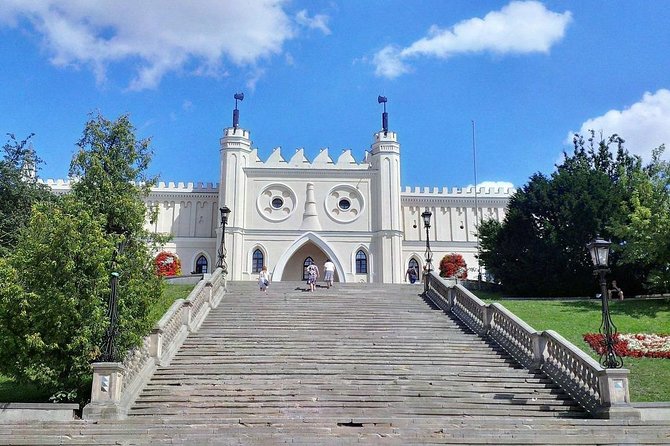
Lublin Castle is one of the major sights on the route, and the tour treats it as more than a dramatic building on the edge of the Old Town. Its presence connects the city to Poland’s royal and political past.
You will hear about Polish kings while walking the old streets, and the castle gives those stories a strong physical setting. This is where the tour’s historical focus becomes especially useful. A guide can link the castle to Lublin’s role in administration, trade, and military affairs.
The description calls the castle neo-Gothic, so you should expect a building with a very different look from the Renaissance houses in the Market Square. That contrast makes the route more interesting. Lublin is not frozen in one architectural period. Its center contains layers from different stages of the city’s life.
The walk is primarily a highlights tour, so do not assume it includes a full interior visit to every castle space. The listed inclusions specifically mention entry to St. John the Baptist Cathedral, while the castle is presented as a major exterior sight. If you want detailed castle interiors, ask before booking.
St. John the Baptist Cathedral and its ornate interior
St. John the Baptist Cathedral is the clearest interior visit included in the experience. You can step inside to see its decorated interior and impressive organs, giving the tour a welcome change from outdoor sightseeing.
Churches are best understood with a guide when you have limited time. Your guide can point out details you might otherwise miss and explain the place of Catholic traditions in Polish life. The tour also includes discussion of Polish customs, so this stop is not only about architecture.
The organ is a specific feature worth watching for. Even if you are not an architecture specialist, a large historic instrument gives the interior a strong focal point. Take a moment to look around before moving on. The pace of a private walk makes it easier to pause when a detail catches your eye.
Sunday morning is the main limitation. Mass takes place in Catholic churches, and sightseeing may be restricted or limited to the outside during prayer time. If visiting church interiors is important to you, schedule the tour for another time of day or another day of the week.
Church of the Holy Spirit and the longer route
The Church of the Holy Spirit comes next, with a particularly striking altar. This stop adds another interior and another style to the tour’s religious architecture.
If you choose the three-hour option, the route can include additional sacral buildings such as the Carmelite Church or the Roman Catholic Church of St. Piotr and Paul. The longer version makes sense if you enjoy church art, historic buildings, and guided explanation. It gives the walk more room to breathe rather than forcing every stop into a short overview.
The two-hour route is likely enough for a first look at the city’s main sights. The three-hour option is better if you want more context or prefer not to hurry through the Old Town.
Again, Sunday morning services can affect what you see inside. This is not a flaw in the tour itself, but it is an important planning detail. Respect for worship comes first, and some buildings may need to be viewed from outside.
Romanesque houses and the Osterwy Theatre
Lublin’s architecture is not limited to gates, castles, and churches. The route also points out Romanesque townhouses in the center, including the building associated with the Osterwy Theatre.
These smaller structures are easy to pass without a guide. They do not always have the visual force of a castle or cathedral, but they help show how people lived, worked, and built within the Old Town.
I like this part of the route because it keeps the experience from becoming a list of grand monuments. You get a better sense of the city as a place shaped by ordinary streets and buildings as well as major religious and civic landmarks.
The three-hour extension is especially useful for this kind of close-looking. If you are interested in architectural details, ask your guide to point out the townhouses slowly rather than treating them as a quick stop between larger attractions.
Ending at the Lublin Union Monument
The walk ends at the Lublin Union Monument, where your guide explains the story behind it. This gives the tour a clear final chapter and returns the experience to the political history of Poland.
Ending here is useful because the monument ties together themes introduced earlier: kings, administration, regional importance, and the city’s place in Polish history. It also gives you a final landmark to remember when you continue exploring on your own.
The route therefore has a sensible shape. You begin at a defensive gate, pass through civic and religious sites, see the castle, and finish with a monument tied to a major political story. That is a better structure than wandering from sight to sight without a clear connection.
What the private format is worth at $107
At $107 per person, this is not a budget walk. The value depends heavily on your group size and how much you want personal attention.
For a couple, the cost is a sizable investment for two or three hours. For a family or group of friends, the price may make more sense because the guide is reserved for your party rather than shared with strangers. You are also paying for a licensed guide, church entry to St. John the Baptist Cathedral, local food suggestions, and a route that brings together several major sights.
The strongest value comes from the guide’s role. You could walk through the Old Town independently, but you would need to research the city’s royal connections, defensive walls, churches, and political importance yourself. If you prefer to learn as you go, the private format can justify the price.
The food advice at the end is a useful extra. Tips about restaurants, patisseries, and pubs help you turn the tour into a starting point for the rest of your day. I would ask for specific recommendations that match your budget and preferred style of food.
The optional 2 EUR Trinity Tower ticket is modest, but it is not included. Bring a little extra if you want the climb.
Who will get the most from this walk?
I would recommend this experience to you if:
- You have only a few hours in Lublin and want the main historic sights organized clearly.
- You prefer a private guide to a large group.
- You enjoy Polish history, church architecture, and old city streets.
- You want practical advice about where to eat and drink afterward.
- You are visiting with family or friends and want control over the pace.
- You want an introduction before exploring Lublin independently.
It may be less suitable if you want a long museum visit, extensive castle interiors, or a tour focused on one narrow subject. It is a highlights walk, not a full-day study of every period in Lublin’s past.
The tour is wheelchair accessible, and live guiding is available in English, German, and Polish. Since the activity lasts two to three hours, it is also manageable for many people who do not want a full-day walking program, though the route still requires regular walking and standing.
Booking advice and final verdict
This is a strong choice for a first visit to Lublin, especially if you want the city’s main sights explained in a compact route. I like the balance of defensive gates, market architecture, churches, castle views, royal stories, and local food advice.
Book it if your party values a private guide and wants a useful introduction rather than a self-guided wander. Choose three hours if churches and architectural details matter to you. Choose two hours if you mainly want orientation and the major landmarks.
Before confirming, check the timing carefully if you are visiting on a Sunday morning. If the price fits your group and you want history delivered in a personal, flexible way, this tour earns its place on a Lublin itinerary.
FAQ
Where does the Lublin Old Town tour begin?
The meeting point is under Krakowska Gate in Lublin.
How long does the walking tour last?
You can choose a two-hour or three-hour version, depending on availability and the route selected.
Is this a private tour?
Yes. A private group option is available, so you can tour with your family and friends.
Which languages are available?
The live guide can conduct the tour in English, German, or Polish.
Is St. John the Baptist Cathedral included?
Yes. A visit to St. John the Baptist Cathedral is included in the tour.
Is entry to the top of Trinity Tower included?
No. Going to the top of Trinity Tower is optional and costs 2 EUR.
What sights are covered on the two-hour route?
The route includes the Market Square, Renaissance buildings, the former Town Hall, Krakowska Gate, Grodzka Gate, Fara Square, Trinity Tower, Lublin Castle, St. John the Baptist Cathedral, the Church of the Holy Spirit, and the Lublin Union Monument.
What extra sights may be included on the three-hour route?
The longer option may include the Carmelite Church, the Roman Catholic Church of St. Piotr and Paul, and Romanesque townhouses such as the building associated with the Osterwy Theatre.
Is the tour wheelchair accessible?
Yes, the activity is listed as wheelchair accessible.
Can church visits be limited on Sunday mornings?
Yes. Catholic Mass takes place on Sunday mornings, so sightseeing inside churches may be limited or possible only from outside.
Just added around Poland
- Rynek Underground Museum & Wawel Castle, Cathedral – Cracow★ 5.0 · 3 reviews
- Schindler’s Factory, Ghetto and Plaszow Camp Guided Tour★ 4.7 · 3 reviews
- Jewish heritage in Warsaw★ 4.5 · 3 reviews
- Poznan Old Town and Croissant Museum Private Walking Tour★ 5.0 · 3 reviews
- Warsaw Outdoor Paintball with Transfers (all year round)★ 5.0 · 3 reviews
- Nowa Huta – a guided tour of a utopian socialist city★ 5.0 · 3 reviews
- Half-Day Chelmno Kulmhof Concentration Camp Private Tour★ 4.5 · 3 reviews
- 4 hours skitour trip in Tatra Mountains for beginners with renting equipment★ 5.0 · 3 reviews
Old Town Walking Tours, compared.




Bike Tour of Old Town, Jewish Quarter and the Ghetto
Read our review →

Sightseeing EcoCruise around the Old Town of Gdansk
Read our review →
Browse the lists this tour appears in