
REVIEW · OLD TOWN WALKING TOURS
Multi-ethnic Warsaw – guided walk through the old town
Warsaw’s old town tells more than one story. This two-hour walk links the city’s German-speaking settlers, Saxon-era building boom, Polish culture, and famous businesses into one clear route. I like the way it connects grand buildings with the people behind them, and I especially like the finish at the E.Wedel chocolate café. The main drawback is pace: seven stops in two hours leaves little time for long visits or museum interiors.
The private format is another strong point. Your group stays together, and guide Marzena has been praised for warm, lively explanations and careful answers to questions. At $70.01 per person, the walk is not the cheapest way to see Warsaw, but it can be good value if you want a focused historical theme rather than a basic old town introduction. Public transport tickets are not included.
In This Review
- Key points to know before you book
- Why this old town walk offers more than pretty streets
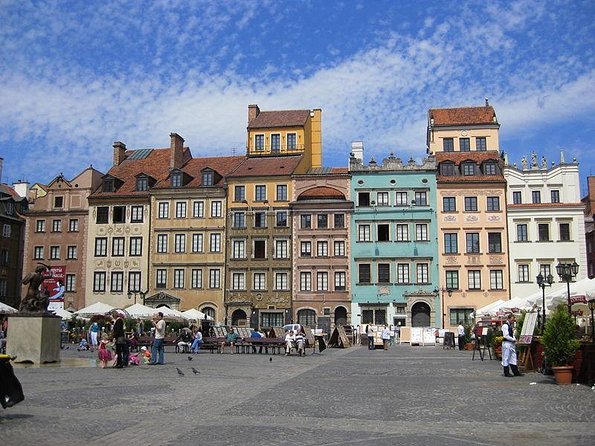
- Rynek Starego Miasta: starting with a mixed city
- Royal Castle area: buildings shaped by power and planning
- Krakowskie Przedmiescie: the people who built modern Warsaw
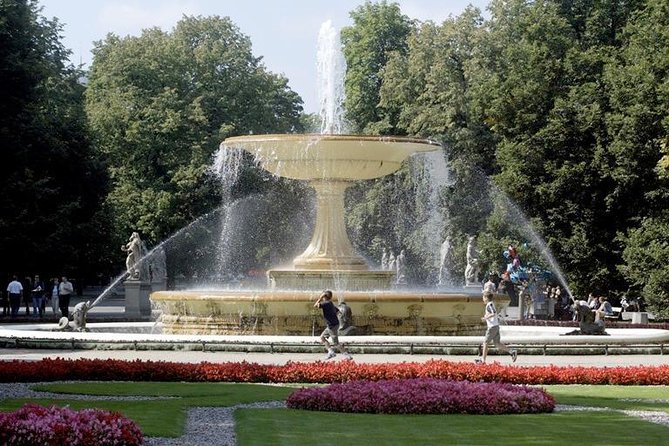
- Saxon Gardens: urban development in a green setting
- Evangelical Augsburg Lutheran Church: a different religious thread
- University of Warsaw: science, culture, and the names on the map
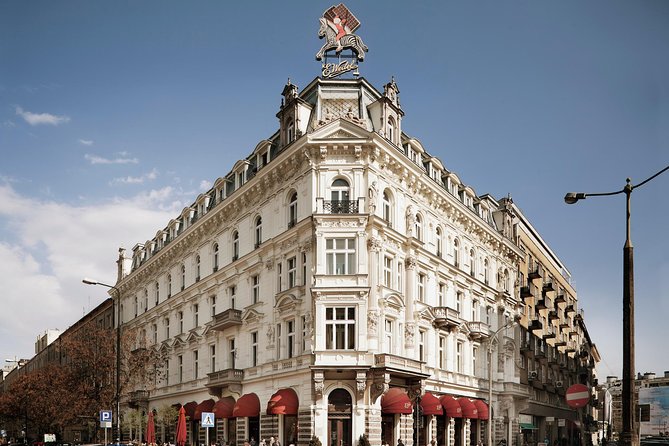
- E.Wedel chocolate: ending with a taste of Warsaw’s business history
- Is $70.01 a fair price for two hours?
- Timing, transport, and practical planning
- Who should book this Warsaw walk?
- Should you book Multi-ethnic Warsaw?
- FAQ
- Where does the tour begin?
- Where does the tour end?
- How long does the experience last?
- Is this a private tour?
- What is included in the price?
- Are public transport tickets included?
- Is the tour available by mobile ticket?
- Can I cancel for a full refund?
- What happens if bad weather cancels the tour?
Key points to know before you book
- German-speaking roots in Warsaw: Learn why families from German-speaking lands settled in Warsaw and helped shape its commercial and cultural life.
- Seven compact stops: The route runs from Rynek Starego Miasta to the E.Wedel café on Szpitalna Street.
- Saxon-era city building: Saxon Gardens, churches, representative buildings, and urban planning receive special attention.
- People behind the city: Entrepreneurs, industrialists, architects, publishers, artists, scientists, and poets are part of the story.
- Private two-hour format: Only your group takes part, which makes it easier to ask questions and keep the discussion focused.
- A chocolate finish: The walk ends at Pijalnia Czekolady E.Wedel, a Warsaw institution with more than 150 years of chocolate-making tradition.
Why this old town walk offers more than pretty streets
Warsaw’s old town is easy to admire at street level. Colorful façades, church towers, the market square, and the Royal Route give you plenty to photograph. Yet the city makes more sense when you ask who built it, who paid for it, who published its ideas, and who helped its businesses grow.
That is the angle here. Instead of treating Warsaw as a collection of monuments, the walk follows the people and communities that shaped it. German-speaking families are central to the theme, but the story widens to include Polish architects, artists, academics, publishers, industrialists, and poets.
I like this approach because it gives you a useful thread through a complicated city. Warsaw has been rebuilt, altered, and politically reshaped many times. A guide who can connect streets, institutions, and family names helps you see the city as a place of work and ideas, not only as a historic setting.
The tour is also private, which matters during a short walk. A large group can make a two-hour city tour feel rushed and impersonal. Here, your party is the only group taking part, so you can ask for clarification or spend a little longer on a subject that catches your interest, as long as the timing allows.
More Old Town Walking Tours in Warsaw
- Warsaw: Chopin Concert in the Old Town
★ 4.8 · 2,287 reviews - Warsaw: Old Town Highlights Walking Tour in English
★ 4.7 · 1,516 reviews - Warsaw: Old Town Guided Walking Tour
★ 4.9 · 599 reviews
Rynek Starego Miasta: starting with a mixed city
The meeting point is Rynek Starego Miasta, Warsaw’s Old Town Market Square. This is a sensible place to begin because it puts you at the center of the historic core and gives the guide a clear visual setting for the opening story.
The first 15 minutes focus on German-born families and the reasons many people from German-speaking countries settled in Warsaw over the centuries. You will hear how immigrants made the city their home and took part in its economic and social life.
That opening can change how you read the square. Look beyond the façades and imagine the market as a place where languages, professions, and family networks met. The point is not simply that foreigners arrived. It is that they became part of Warsaw and helped shape its future.
This section is likely to be strongest for you if you enjoy social history. If you mainly want detailed information about every building in the square, you may find the family and migration theme more prominent than architectural description.
Royal Castle area: buildings shaped by power and planning
From the market square, the walk continues toward the Royal Castle in Warsaw. The listed stop allows about 15 minutes, and the focus is on representative buildings, churches, and gardens that shaped the city’s architectural character.
You should not expect a full museum visit. Admission is free for the stop, and the tour is designed as an outdoor walk. The value here comes from seeing the castle area in relation to the wider city, while the guide explains how Warsaw developed during the Saxon period.
The Saxon period receives repeated attention throughout the walk because it was a time of intensive construction and urban change. That makes this stop useful as a bridge between political history and the streets around you. Grand projects were not isolated decorations. They helped define routes, institutions, and the public face of Warsaw.
Because the entire experience lasts about two hours, you will probably spend more time listening and looking than entering buildings. Wear shoes suited to city walking, and keep your schedule realistic if you plan to visit the Royal Castle interior afterward.
Krakowskie Przedmiescie: the people who built modern Warsaw
The longest stop is Krakowskie Przedmiescie, with about 30 minutes set aside for it. This is where the tour broadens from families and buildings to the people who helped drive Warsaw’s economy, science, and culture.
The guide discusses entrepreneurs, industrialists, architects, publishers, artists, scientists, and poets. That range is one of the best features of the experience. You are not given a single heroic version of the city. Instead, you get a picture of progress made through many kinds of work.
Krakowskie Przedmiescie is also a natural place for this discussion. It is one of Warsaw’s best-known ceremonial streets, lined with buildings and institutions tied to public life. The route lets you see how cultural and academic activity sat alongside business and religious life.
I would pay close attention to names during this part of the walk. The tour points out that familiar brands founded in earlier periods are still present in Warsaw, while streets and neighborhoods continue to carry the names of notable Poles. Those details give you something practical to notice later, even after the guide has moved on.
The drawback is that 30 minutes can only introduce a large cast of people. If one architect, publisher, or industrialist interests you, ask for the name and write it down. This is a starting point for further exploration, not a full biography course.
More Walking Tours in Warsaw
- Half-Day Polish Food Walking Tour with Guide and Dinner
★ 4.5 · 381 reviews - Warsaw: Warsaw Ghetto Private Walking Tour with Hotel Pickup
★ 4.9 · 369 reviews - Old Town Warsaw Walking Tour
★ 4.5 · 333 reviews - Warsaw: Jewish History Guided Walking Tour in English
★ 4.7 · 324 reviews
Saxon Gardens: urban development in a green setting
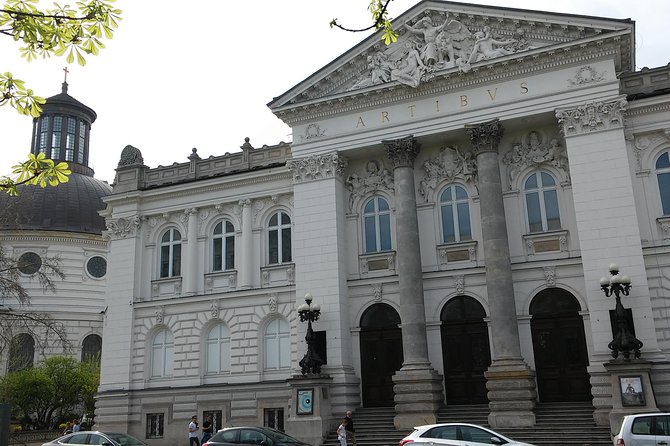
The 15-minute stop at Saxon Gardens gives the urban story some breathing room. The gardens are tied to the Saxon period and help explain how construction and city planning changed Warsaw.
This stop is valuable because gardens are easy to treat as decoration. Here, they become evidence of how rulers and planners imagined the city. Public spaces, formal buildings, religious sites, and routes through the city all worked together to create a new urban order.
The walk does not present Saxon Gardens as a separate nature outing. Instead, it uses the setting to explain construction and planning. You will get more from it if you listen for connections between the garden, the buildings already seen, and the next parts of the route.
Since the tour requires good weather, this outdoor stop is also one reason to keep an eye on the forecast. In poor conditions, the experience may be moved to another date or canceled with a full refund.
Evangelical Augsburg Lutheran Church: a different religious thread
The Evangelical Augsburg Lutheran Church receives about 15 minutes. You will admire the church and hear about its eventful history, adding a religious and community dimension to the tour’s focus on German-speaking settlers.
This is an important inclusion. A city’s immigrant story is not only about trade or industry. Churches can preserve language, customs, family ties, and a sense of belonging. The stop helps show how a German-speaking community found a place within Warsaw while contributing to the city’s wider life.
The brief timing means you should think of the church visit as an exterior-focused historical stop unless the guide indicates otherwise. The description does not promise an interior tour or admission. If seeing the inside is essential to you, ask about that before booking.
University of Warsaw: science, culture, and the names on the map
The University of Warsaw is another 15-minute stop. Here, the emphasis returns to representative buildings and the people who helped develop science and culture.
Architects, publishers, artists, scientists, and poets all enter the story. This is a good reminder that Warsaw’s identity was shaped not only by political leaders and wealthy business owners. Academic and creative work also changed how the city thought about itself.
The university setting gives the guide a useful way to explain the connection between education and urban growth. Institutions attract ideas, people, publications, and professional networks. Those networks can influence business as much as culture.
You will also hear more about well-known brands that began in earlier periods and remain visible in the city. The guide links these surviving names with streets and neighborhoods named for important Poles. Keep your eyes open for signs after the tour. The old names are not just background information, they remain part of the way you navigate Warsaw.
This section should suit anyone who likes to connect a place with its intellectual life. It may feel quick if you want a detailed university history, but it works well within the larger two-hour route.
E.Wedel chocolate: ending with a taste of Warsaw’s business history
The final stop is Pijalnia Czekolady E.Wedel on Szpitalna Street, where the walk ends. About 15 minutes are allotted to the Emil Wedel coffee house, a business with more than 150 years devoted to chocolate.
The ending is smart. After a lot of names, buildings, and urban planning, you finish with a familiar brand and a more relaxed setting. Wedel is not simply a sweet treat added at random. It connects directly with the tour’s interest in entrepreneurs, commercial life, and businesses that remain part of Warsaw’s cityscape.
The supplied details do not state that a drink or chocolate purchase is included in the $70.01 price, so budget for your own order if you want one. The stop is best understood as a café visit and historical conclusion, not a formal tasting program.
The walk begins at Rynek Starego Miasta and ends at Szpitalna 8. That point-to-point route is useful if you want to continue exploring central Warsaw afterward. It also means you should not expect to finish where you started.
Is $70.01 a fair price for two hours?
At $70.01 per person, this is a premium price for a two-hour walk. You are paying for a licensed guide, a private format, and a specialized subject rather than for entry tickets. All listed stops are free, and public transport is not included.
The price makes more sense for a small group that wants personal attention. A private tour can be worthwhile if you prefer to ask questions, need explanations at a comfortable pace, or want a guide who can adapt the conversation. Group discounts are available, though the exact terms are not provided, so check the final booking details.
The value is weaker if you want a standard overview of Warsaw’s top sights or a long stop inside the Royal Castle. You could see many of these locations independently at no guiding cost. What you cannot easily recreate on your own is the linked story about German-born families, Saxon urban development, professional communities, and enduring Polish names.
The strongest praise has focused on Marzena. She is described as warm, passionate, experienced, and able to explain difficult subjects clearly. One group also valued how thoroughly she answered questions, while another found that she kept a German-speaking group engaged despite the short time. Guide quality matters greatly here because the appeal lies in interpretation, not admission tickets.
Timing, transport, and practical planning
The walk lasts about two hours, with the seven stops adding up to the full period. You will move through central Warsaw on foot, and the starting point is near public transport. Tickets for buses, trams, or other public transport are not included.
A mobile ticket is available, which keeps the booking simple. Confirmation is normally sent at booking, though bookings made within 12 hours of the start may require additional time and remain subject to availability.
Most people can take part, and the activity is private to your group. The information provided does not state a specific accessibility route, surface type, or accommodation for mobility needs, so ask PolinTours directly if those details matter for you.
Free cancellation is available when you cancel at least 24 hours before the start time. Changes or cancellations inside that period are not refunded, and late changes are not accepted. The local weather cut-off applies, so keep the forecast in mind when planning an outdoor walk.
Who should book this Warsaw walk?
I would recommend it most strongly to you if you:
- Want a focused theme instead of a basic monument-by-monument tour
- Enjoy social, commercial, religious, and cultural history
- Are interested in Warsaw’s German-speaking communities
- Prefer a private tour with room for questions
- Like learning how brands, streets, and institutions connect
- Have two hours and want to finish near central Warsaw
It is less suitable if you want extensive museum time, a long food tasting, or a broad introduction to every major sight in Warsaw. The tour covers a lot, but it does so through short stops and spoken explanation.
Should you book Multi-ethnic Warsaw?
Book this walk if you want Warsaw explained through its people. The route gives you a useful framework for understanding German-born families, Saxon building projects, religious communities, academic life, and businesses that still appear in the modern city.
I especially like the private format, the strong guide feedback about Marzena, and the Wedel ending. The price is high for a short walk with no included admissions, but the subject is distinctive and the guide’s role is central. If that kind of focused storytelling suits you, the cost can be justified. If you simply want to tick off Warsaw’s landmarks, spend your money elsewhere and explore the route on your own.
FAQ
Where does the tour begin?
It begins at Rynek Starego Miasta, 00-272 Warszawa, Poland.
Where does the tour end?
The walk ends at Pijalnia Czekolady E.Wedel, Szpitalna 8, 00-031 Warszawa, Poland.
How long does the experience last?
The guided walk lasts approximately two hours.
Is this a private tour?
Yes. Only your group takes part in the activity.
What is included in the price?
A licensed tour is included.
Are public transport tickets included?
No. Public transport tickets are not included.
Is the tour available by mobile ticket?
Yes. Mobile ticketing is listed as a feature.
Can I cancel for a full refund?
Yes, if you cancel at least 24 hours before the experience start time. Cancellations made less than 24 hours in advance are not refunded.
What happens if bad weather cancels the tour?
You will be offered another date or a full refund if the experience is canceled because of poor weather.
Just added around Warsaw
- Jewish heritage in Warsaw★ 4.5 · 3 reviews
- Warsaw Outdoor Paintball with Transfers (all year round)★ 5.0 · 3 reviews
- World War II Warsaw Old Town, Military Cemetery Walking Tour★ 4.7 · 3 reviews
- Warsaw: Wolf’s Lair & Swieta Lipka Small-Group Tour + Lunch★ 5.0 · 3 reviews
- Sunset Boat Tour with Unlimited Drinks in Warsaw★ 3.5 · 3 reviews
- Majdanek – German camp from II World War – Private Tour – 1 DAY TRIP FROM WARSAW★ 5.0 · 3 reviews
- From Warsaw: Guided Tour to Wieliczka Salt Mine and Krakow★ 4.5 · 3 reviews
- Warsaw Sightseeing with NEW Mercedes Sclass !!!★ 5.0 · 3 reviews
Old Town Walking Tours, compared.




Bike Tour of Old Town, Jewish Quarter and the Ghetto
Read our review →

Sightseeing EcoCruise around the Old Town of Gdansk
Read our review →
Browse the lists this tour appears in