
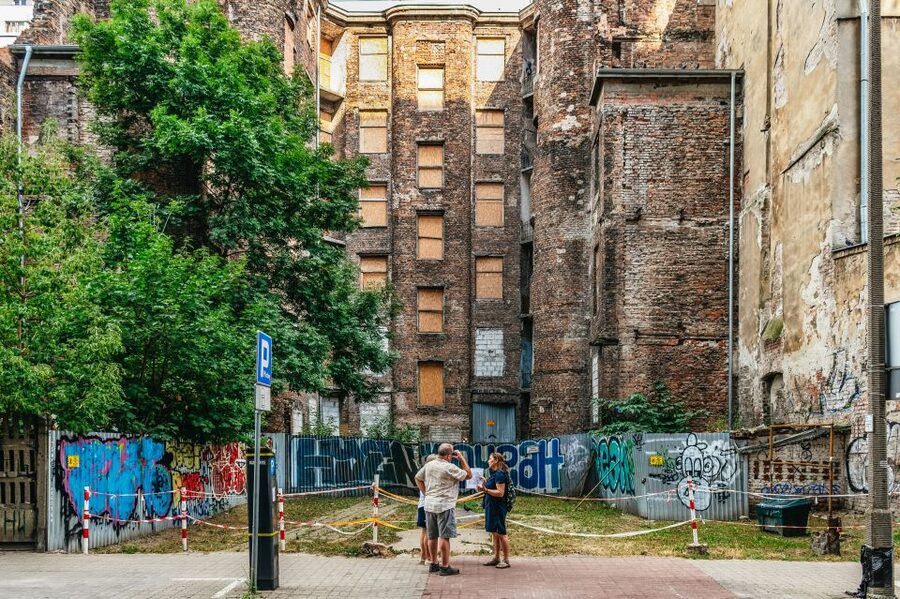
REVIEW · JEWISH QUARTER & GHETTO TOURS
Warsaw: Warsaw Ghetto Private Walking Tour with Hotel Pickup
History feels different when you can stand on its streets. This three-hour private tour traces the creation and destruction of the Warsaw Ghetto, using surviving wall fragments, historic photographs, maps, and real locations to explain how Nazi policy became daily terror. I especially like the small private group, which gives you room to ask questions, and the guide’s use of old photographs to show what has vanished. The main drawback is the price: at $84 per person, it costs more than a large group walk.
I also like that the route includes the last surviving street of the ghetto, the Umschlagplatz, the Monument to the Ghetto Heroes, and the only Warsaw synagogue that survived the Second World War and still operates. Plan carefully, though: hotel pickup is advertised as optional, and some past bookings created confusion about whether a guide would actually collect you at the hotel. Confirm the meeting arrangement before the day.
In This Review
- Key points at a glance
- Why the Warsaw Ghetto needs a guided walk
- Starting with the ghetto’s creation in 1940
- Seeing fragments of the walls and the last street
- The Umschlagplatz and the machinery of deportation
- Standing at the Monument to the Ghetto Heroes
- Visiting the surviving synagogue
- How the guides make the vanished city understandable
- What $84 per person buys you
- Pickup, meeting point, and practical preparation
- Who should book this experience?
- Should you book the Warsaw Ghetto tour?
- FAQ
- How long does the Warsaw Ghetto tour last?
- What languages are available?
- Is this a private tour?
- Is hotel pickup included?
- Where is the meeting point?
- Is there an extra fee for the synagogue?
- What should I bring?
- Can children join the tour?
- Can I visit the POLIN Museum afterward?
Key points at a glance
- A private three-hour history lesson: The guide can adapt the pace and answer questions without a large group slowing things down.
- Historic photographs bring vanished streets back: Maps and wartime images help you understand sites that now look like ordinary city streets.
- The route covers the ghetto’s full story: You learn about its creation in 1940, daily life, mass deportations, destruction, and the 1943 uprising.
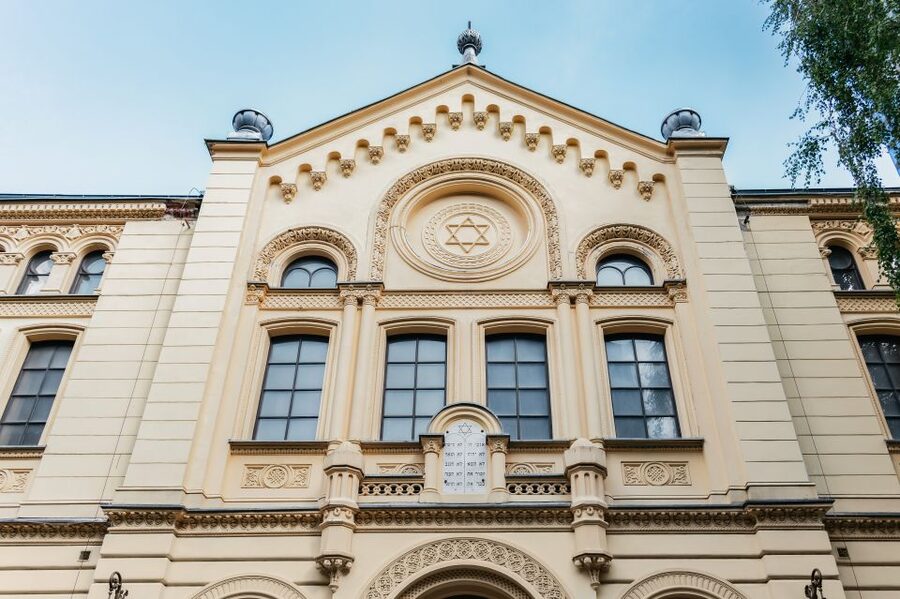
- A surviving synagogue adds a living connection: The synagogue visit is not just another historic stop, but an active place of worship. A 20 PLN, 5 EUR, or 5 USD donation is required.
- The tour ends near the POLIN Museum: This makes it easy to continue your study of Jewish life in Poland, though museum entry is not included.
- Come prepared for serious walking: Comfortable shoes, sun protection, cash, and a head covering are useful. The tour is not suitable for children under 14 or people with mobility impairments.
Why the Warsaw Ghetto needs a guided walk
Warsaw once had one of Europe’s largest Jewish communities. Before the Second World War, Jewish residents made up about 30 percent of the city’s population. In 1940, the Nazis forced more than 400,000 Jews from Warsaw and nearby areas into a four-square-kilometer enclosure.
Those numbers are difficult to grasp from a book. A guide gives them a physical setting. You see how the former ghetto occupied part of a functioning city, not some remote camp beyond the edge of civilization. You also learn how streets, buildings, and neighborhoods were divided, controlled, and eventually erased.
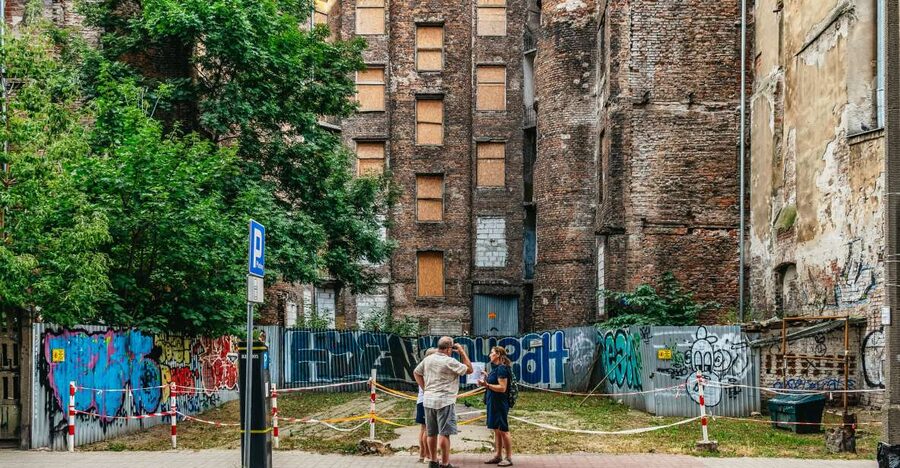
The ghetto itself is gone. Nazi forces destroyed much of it after the Warsaw Ghetto Uprising, and postwar Warsaw was rebuilt. That creates the central challenge of this tour: many important places no longer look like the places they were.
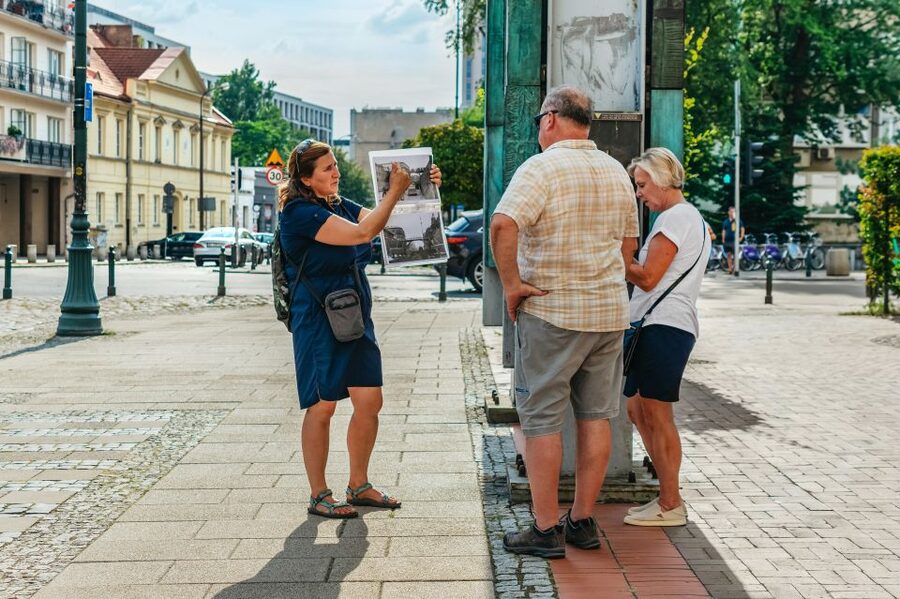
A good guide bridges that gap. Guides such as Marzena and Mary have used maps, tablets, and albums of historic photographs to compare the present-day streets with wartime Warsaw. That visual method is one of the strongest parts of the experience. You are not asked to picture everything from a few plaques and abstract dates. You can look at a photograph, turn toward the modern street, and see the distance between the two.
More Jewish Heritage Tours in Warsaw
- Warsaw: Ghetto, Jewish Cemetery & POLIN Museum Private Tour
★ 4.8 · 132 reviews - Tour of the Warsaw Ghetto
★ 5.0 · 119 reviews - Warsaw: 2-Hour Tour of Daily Life in the Ghetto Warsaw
★ 4.9 · 26 reviews
Starting with the ghetto’s creation in 1940
The tour begins by explaining how the ghetto was established and why its location mattered. The Nazis did not simply lock people away in an empty field. They concentrated Warsaw’s Jewish population in the center of the city, then imposed overcrowding, hunger, disease, forced labor, and strict control.
More than 100,000 people died inside the ghetto from exhaustion, hunger, and disease. Another 300,000 or more were deported to Treblinka, where they were murdered. The guide places those events in order, helping you follow the process from segregation to starvation and then mass deportation.
This chronological approach matters. Without it, a walking tour can become a string of grim stops with little connection between them. Here, each location helps explain a stage in the Nazi plan. You learn how the ghetto functioned, how people tried to maintain ordinary life under impossible conditions, and how the system moved toward total destruction.
The subject is painful, and this is not a light sightseeing activity. The best guides keep the presentation respectful and clear. Past tours with Marzena, Mary, Eva, and Wojtek were praised for their calm delivery, strong English, and willingness to answer difficult questions without turning the experience into a lecture.
Seeing fragments of the walls and the last street
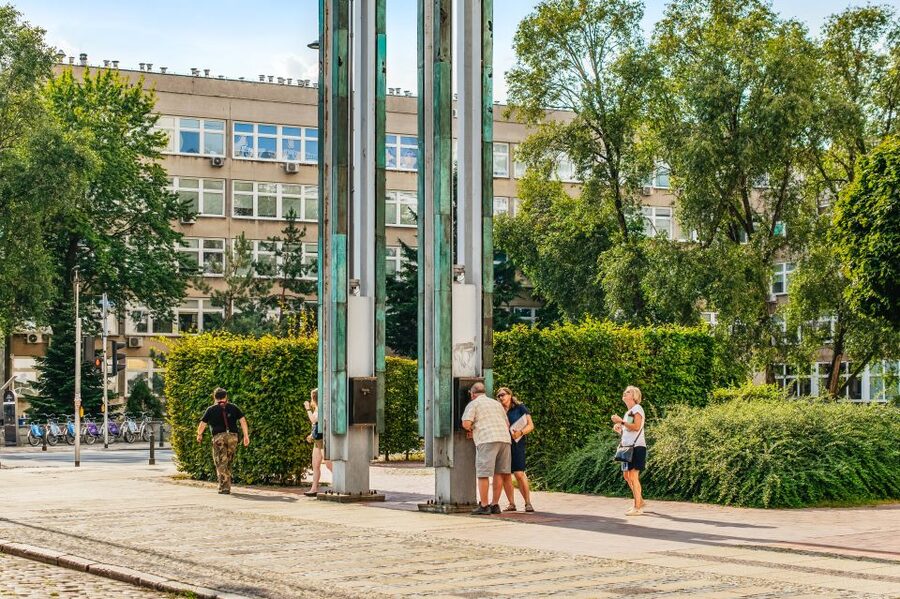
One of the most useful features is the attention to small surviving traces. You see fragments of the ghetto walls and the last remaining street associated with the ghetto. These pieces are modest. Do not expect a preserved medieval quarter or a large open-air museum.
That is exactly why a guide helps. A wall fragment can look easy to miss if you walk past alone. Its meaning comes from knowing where the barrier ran, who was trapped behind it, and how the city was divided. Historic photographs and maps help you understand the former boundaries even when modern buildings cover most of the old streets.
The last street of the ghetto offers a similar lesson. It is not presented as a dramatic movie set. Instead, the guide connects the surviving street to the surrounding neighborhoods and explains what stood there during the war. You may find the contrast unsettling: everyday modern life continues in places where people once faced hunger, fear, and deportation.
The route covers a lot of ground in three hours. That is useful if you have limited time in Warsaw, but you should expect steady walking and frequent stops. One past participant completed a similar route in about two and a half hours, while another older visitor appreciated a slower pace and regular breaks. Since the group is private, you can ask for a more measured rhythm.
The Umschlagplatz and the machinery of deportation
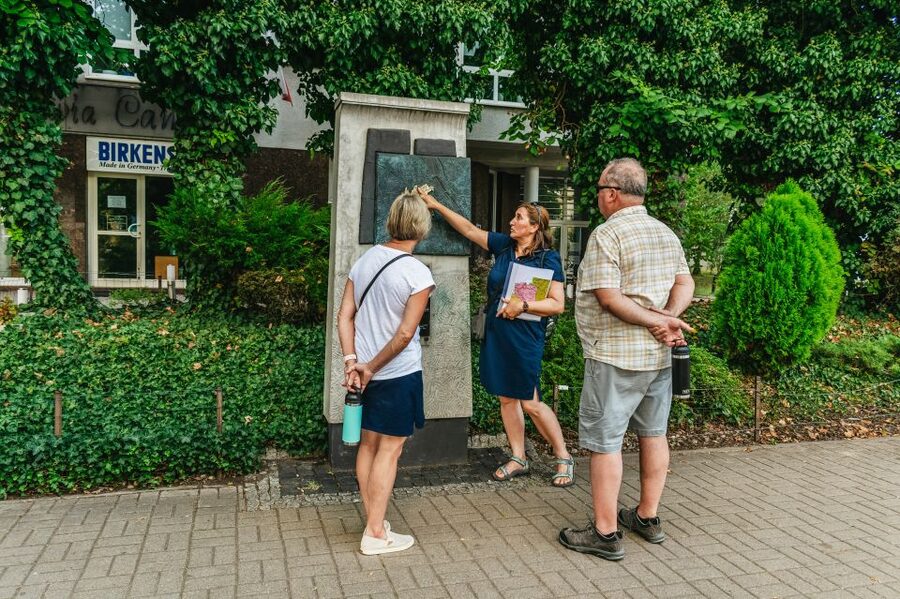
The Umschlagplatz, or collection point, is one of the key places on the route. This was where Jews were gathered before deportation, including the transports sent to Treblinka. The tour explains the symbolism of the site and the role it played in the destruction of the ghetto.
This stop helps you understand how the Nazi system turned mass murder into an organized procedure. People were assembled, forced onto trains, and removed from Warsaw under armed guard. The language of administration hid the reality of murder, and the guide explains how the plan for the Final Solution was put into action.
You will hear about the supposed logic used by the Nazis to justify their actions, but the tour does not treat that language as neutral or acceptable. The value is in seeing how propaganda, racial law, confinement, hunger, forced labor, and deportation worked together.
For me, this is where the chronological structure pays off. The earlier stops explain how the ghetto was created. The Umschlagplatz shows the system at its most organized and deadly. You are not just learning a date. You are following the machinery from policy to human consequence.
More Walking Tours in Warsaw
- Warsaw: Old Town Highlights Walking Tour in English
★ 4.7 · 1,516 reviews - Warsaw: Old Town Guided Walking Tour
★ 4.9 · 599 reviews - Half-Day Polish Food Walking Tour with Guide and Dinner
★ 4.5 · 381 reviews - Old Town Warsaw Walking Tour
★ 4.5 · 333 reviews
Standing at the Monument to the Ghetto Heroes
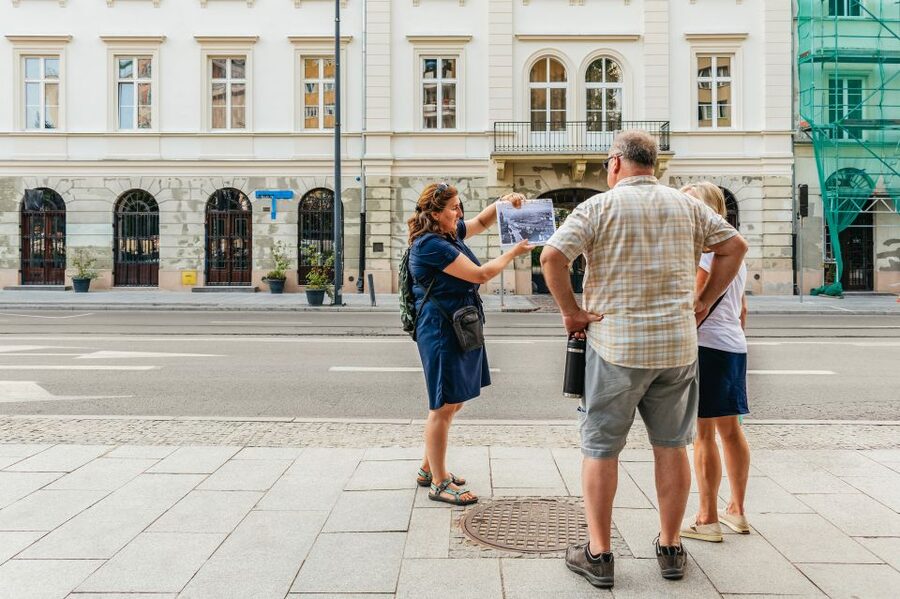
The Monument to the Ghetto Heroes marks the site of one of the most important memorials in Warsaw. It honors the people who fought in the 1943 Warsaw Ghetto Uprising, when Jewish resistance fighters took up arms against German forces attempting to liquidate the remaining ghetto.
The uprising lasted nearly one month. The rebels were badly outgunned, but they resisted rather than accept deportation without a fight. After defeating the resistance, the Nazis destroyed the ghetto.
The guide sets the uprising within the wider story of life inside the ghetto. You learn why some people decided to fight, who helped them, and what resistance meant when food, weapons, information, and escape routes were scarce. The result is a fuller picture than the familiar image of a single heroic battle.
The monument is also a good place to pause. This is not a stop to rush through while listening to dates. Give yourself time to look at the memorial and consider the scale of what happened around it. The tour’s emotional force comes from connecting the monument to the streets already covered, rather than treating it as an isolated landmark.
Visiting the surviving synagogue
The synagogue visit adds a different tone to the day. It is the only synagogue in Warsaw that survived the Second World War and remains in operation. That makes it both a historical site and a living religious space.
A donation of 20 PLN, 5 EUR, or 5 USD is required for entrance. Bring cash, since this payment is separate from the tour price. You also need a head covering or kippah, so pack one or use the arrangements available at the synagogue.
This stop is valuable because it shifts the focus away from destruction alone. The tour deals honestly with the murder of Warsaw’s Jewish population, but the synagogue reminds you that Jewish religious life was not only a subject of wartime history. It continues in Warsaw today.
Be respectful during the visit. It is an active place of worship, not simply a room preserved for sightseeing. Food and drinks are not included anywhere on the tour, so plan a meal before or after rather than expecting a refreshment break along the route.
How the guides make the vanished city understandable
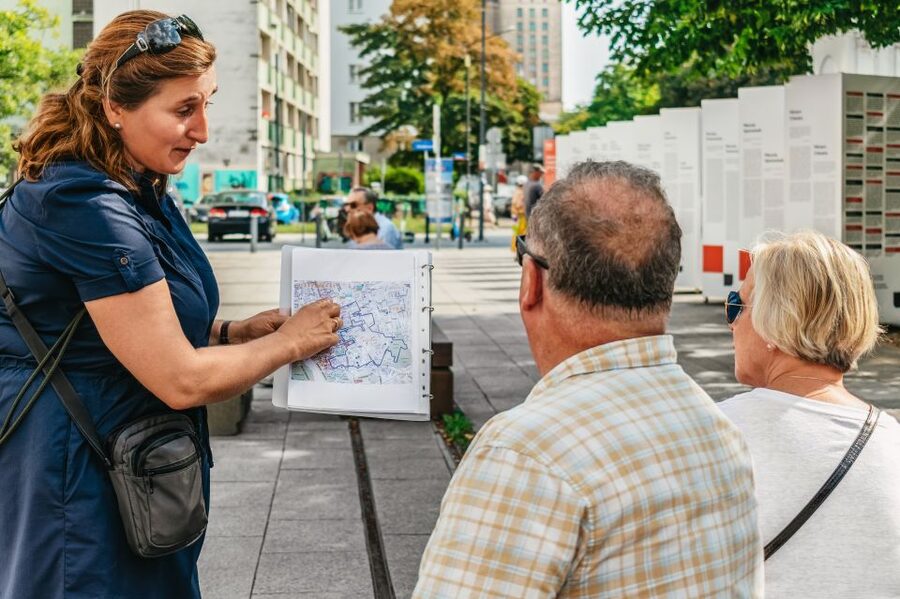
The guide can make or break this experience. The repeated praise for Marzena, Mary, Eva, and Wojtek centers on the same qualities: clear explanations, patience, warmth, and the ability to answer questions without losing the thread of the story.
Marzena is especially suited to people who want a detailed account. She has been praised for linking each stop to the wider wartime context, showing photographs, and adapting the route to a visitor’s background. One particularly useful feature is her ability to explain both what survived and what disappeared after the war.
Mary has also been praised for adjusting the pace and bringing extra photographs and maps. She has helped visitors who used public transport to reach the route and has tailored discussions to different levels of prior knowledge. If you already know a great deal about the Holocaust, a private guide can still add value by locating lesser-known traces and explaining how the postwar city changed.
That flexibility is the main advantage over walking alone. You can ask about Polish Jewish life before the war, the Nazi occupation, resistance, the destruction of Warsaw, or the few survivors who remained. The guide can spend more time where you need it and less time on material you already understand.
The languages offered are English and German. The experience is private, so you are not sharing the guide with a large public group. That usually makes a serious subject easier to discuss, though private touring also explains the higher price.
What $84 per person buys you
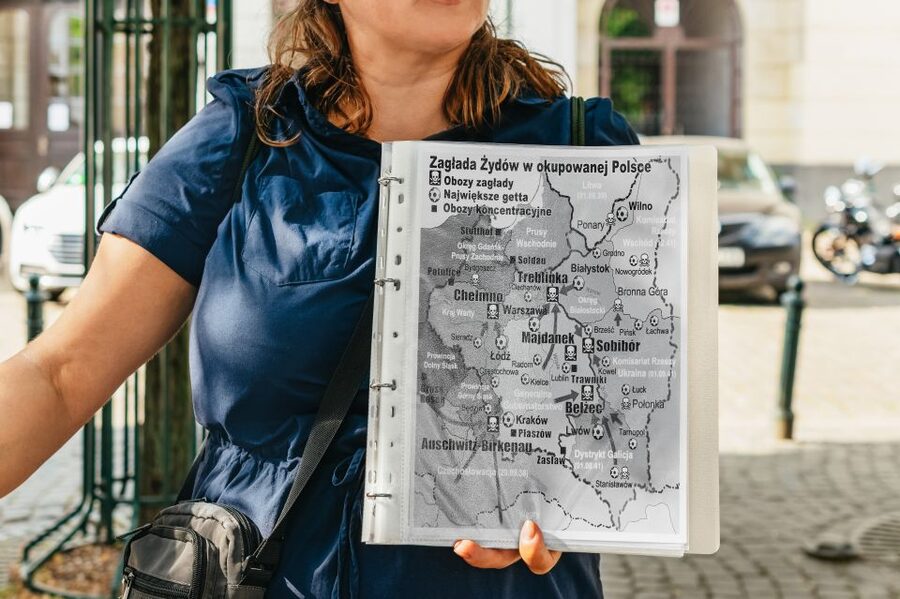
At $84 per person, this is not the cheapest way to see the former ghetto. The value comes from the guide, private format, and transport by car when pickup is arranged. You also receive a city plan and information booklets.
If you simply want to walk past a few memorials, the price may feel high. Much of the former ghetto is now ordinary Warsaw, and some stops are small fragments rather than large preserved buildings. You are paying for interpretation and organization, not for a collection of major admission-ticket attractions.
I think the cost makes more sense for first-time visitors, families with older teenagers, and anyone with a serious interest in the Holocaust or Jewish Warsaw. A private guide can also be good value if you have only one morning available and want to cover several scattered sites efficiently.
The synagogue donation is extra, and the POLIN Museum is not included. If you finish near POLIN, consider reserving at least two additional hours for the museum. The tour can give you useful context before you enter, but the museum visit is a separate activity and needs its own time.
Pickup, meeting point, and practical preparation
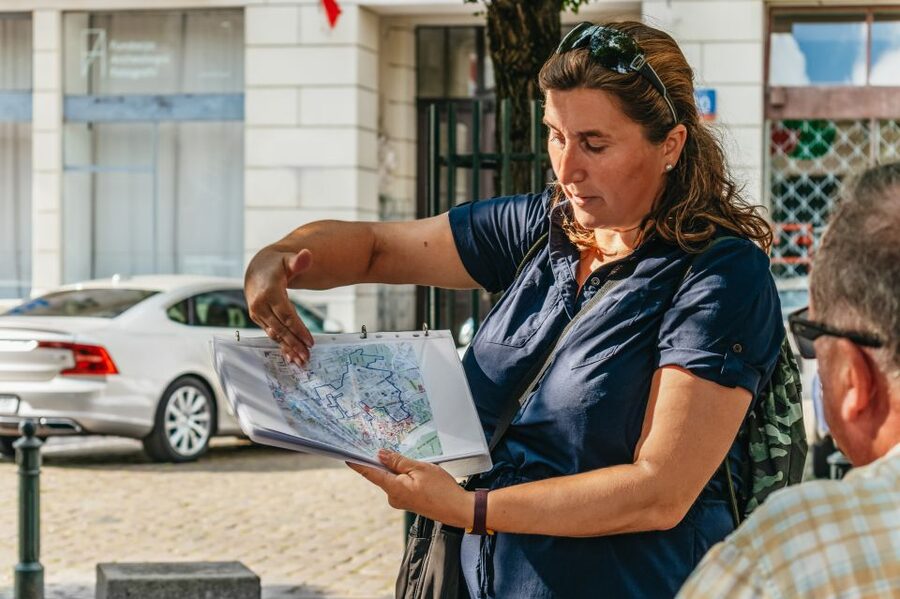
Hotel pickup and drop-off are listed as included, but the pickup service has caused confusion for some bookings. Confirm this directly before setting out. If you are meeting in the city, the stated point is Prozna Street 9, between Bistro Charlotte Menora and Strefa Restaurant. Look for the guide holding a PolinTours sign.
Transportation by car is part of the service, but this remains primarily a walking tour. Wear comfortable shoes and expect to spend much of the three hours outdoors. A hat and sunscreen are sensible in warm weather.
The tour is not suitable for children under 14 or people with mobility impairments. Large bags and oversize luggage are not allowed. Do not arrive with suitcases, and keep your belongings light.
The booking terms are flexible: you can cancel up to 24 hours before the start for a full refund, and reserve now while paying later. Starting times vary, so check availability for your chosen date.
Who should book this experience?
I would choose this tour if you want a serious, place-based account of Warsaw during the Second World War. It suits you best if you prefer asking questions, moving at a personal pace, and seeing small traces that would be easy to miss alone.
It is also a strong choice for anyone who has seen The Pianist and wants to understand the city behind the film. The tour discusses the few Jews who survived the ghetto’s destruction, including Władysław Szpilman, whose story was portrayed in Roman Polanski’s film.
You should skip it if you want a quick overview, dislike walking, or are looking for a family activity for young children. The subject is emotionally heavy, and the route requires attention. It is not a casual sightseeing loop.
Should you book the Warsaw Ghetto tour?
Book it if you value context more than cheap admission. The surviving wall fragments and memorials are meaningful, but they need explanation. The strongest feature here is the private guide who links modern Warsaw to wartime photographs, maps, and personal stories.
At $84 per person, the tour asks for a real investment. Still, the private format, car transport, synagogue visit, and careful three-hour route make it worthwhile for visitors who want to understand rather than simply look. Confirm hotel pickup, bring cash for the synagogue, and leave time afterward for the POLIN Museum.
FAQ
How long does the Warsaw Ghetto tour last?
The tour lasts three hours, although the pace may vary slightly with the private group.
What languages are available?
The live guide is available in English or German.
Is this a private tour?
Yes. The experience is arranged for a private group rather than a large shared group.
Is hotel pickup included?
Hotel pickup and drop-off are listed as included, but pickup is optional and previous bookings have had some confusion about the arrangement. Confirm the details before the tour.
Where is the meeting point?
The meeting point is Prozna Street 9, between Bistro Charlotte Menora and Strefa Restaurant. Look for a guide holding a PolinTours sign.
Is there an extra fee for the synagogue?
Yes. Entrance requires a payment of 20 PLN, 5 EUR, or 5 USD. This payment is separate from the tour price.
What should I bring?
Bring comfortable shoes, a hat, sunscreen, cash, and a head covering or kippah for the synagogue visit.
Can children join the tour?
The tour is not suitable for children under 14 years old.
Can I visit the POLIN Museum afterward?
The tour can end at the POLIN Museum, but museum admission is not included. Allow at least two additional hours if you want to explore it afterward.
Just added around Warsaw
- Jewish heritage in Warsaw★ 4.5 · 3 reviews
- Warsaw Outdoor Paintball with Transfers (all year round)★ 5.0 · 3 reviews
- World War II Warsaw Old Town, Military Cemetery Walking Tour★ 4.7 · 3 reviews
- Warsaw: Wolf’s Lair & Swieta Lipka Small-Group Tour + Lunch★ 5.0 · 3 reviews
- Sunset Boat Tour with Unlimited Drinks in Warsaw★ 3.5 · 3 reviews
- Majdanek – German camp from II World War – Private Tour – 1 DAY TRIP FROM WARSAW★ 5.0 · 3 reviews
- From Warsaw: Guided Tour to Wieliczka Salt Mine and Krakow★ 4.5 · 3 reviews
- Warsaw Sightseeing with NEW Mercedes Sclass !!!★ 5.0 · 3 reviews
Jewish Quarter & Ghetto Tours, compared.


Bike Tour of Old Town, Jewish Quarter and the Ghetto
Read our review →
Kazimierz, Schindler’s Factory & Ghetto Guided Tour
Read our review →
Full Bike Tour – the Old Town, Jewish Qtr & the Ghetto NEW BIKES
Read our review →
Bike Tour of the Old Town, Kazimierz, and the Ghetto
Read our review →
Browse the lists this tour appears in