
REVIEW · OLD TOWN WALKING TOURS
Old Town Warsaw Walking Tour
Warsaw tells its best stories on foot. This 2.5-hour walk links the royal Krakowskie Przedmieście with the rebuilt Old Town and Maria Skłodowska-Curie’s New Town, giving you a quick, useful introduction to Poland’s capital. I like the clear route and the guides’ mix of history, humor, and personal insight. The main catch is that a group of up to 40 people can feel large, and one past participant found a strong accent and weak microphone hard to follow.
I also like that the walk reaches the Warsaw Barbican, rather than stopping in the prettiest Old Town streets. Guides such as Aga, Andrzej, Jacek, Ania, and Oliwia have been praised for making difficult subjects easier to absorb. You should still dress for the weather, gather close to the guide, and expect a fast stream of facts and jokes.
In This Review
- Key points to know before you book
- Why this Warsaw walk makes sense early in your stay
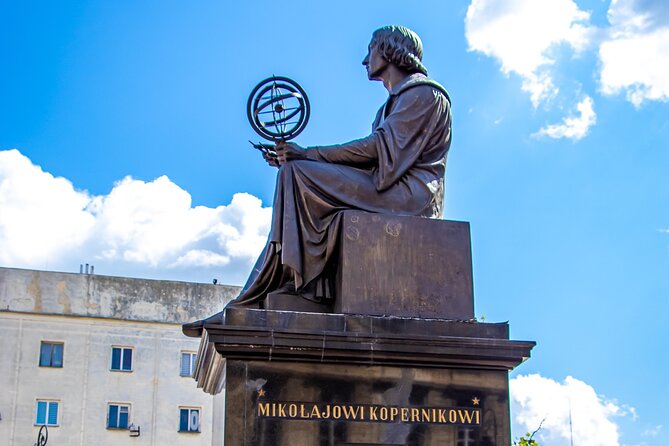
- Starting beside the Copernicus Monument
- Krakowskie Przedmieście: Warsaw’s royal front door
- Old Town and the remarkable rebuilt city
- New Town Square and the Barbican finish
- The guide can make or break the experience
- Weather, group size, and comfort
- Who will get the most from this walk?
- Should you book the Old Town Warsaw Walking Tour?
- FAQ
- Where does the Old Town Warsaw Walking Tour start?
- Where does the tour finish?
- How long does the tour last?
- Is the tour conducted in English?
- Are admission tickets included?
- What happens if I need to cancel?
Key points to know before you book
- A compact route with three distinct areas: Walk from royal Krakowskie Przedmieście through Old Town and finish at New Town Square and the Barbican.
- Warsaw’s destruction and rebuilding are central themes: The Old Town looks medieval, but much of what you see was rebuilt after World War II.
- Strong guide-led storytelling: Aga, Andrzej, Jacek, Ania, and Oliwia are among the guides praised for humor, clarity, and useful historical context.
- Not a museum-entry tour: Admission to the stops is free, and the experience focuses on outdoor explanation rather than interior visits.
- Reasonable pace, but not silent sightseeing: The walk includes plenty of commentary, and you need to stay close enough to hear.
- Good value at $26.60: The price covers the reservation and guide payment for a general pay-as-you-wish format, with no extra payment required.
Why this Warsaw walk makes sense early in your stay
I see this tour as an orientation walk rather than a full survey of Warsaw. In one route, you get the old royal approach into the city, the famous rebuilt core, and the medieval area beyond it. That gives you a useful mental map before you return on your own for museums, churches, restaurants, or longer walks.
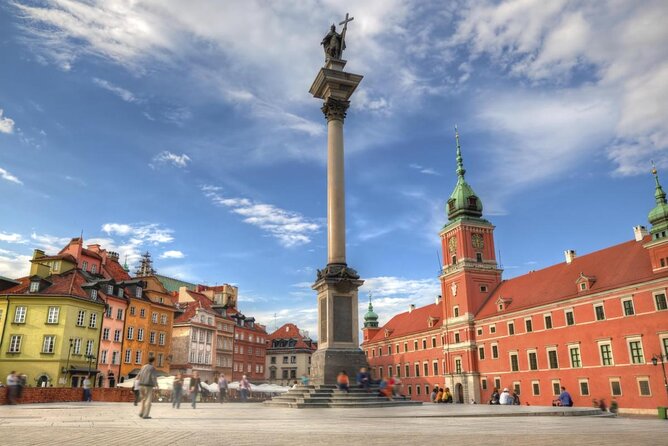
The route is also valuable because Warsaw can be visually misleading. Its Old Town has red roofs, colorful façades, and a handsome castle, yet it was almost entirely destroyed during World War II. The careful reconstruction became a UNESCO World Heritage Site, an unusual honor for a modern rebuilding project.
A good guide helps you notice that tension. Instead of seeing only a pretty square, you begin to understand how the city rebuilt its streets, buildings, and identity. Several guides have been praised for explaining not only what happened in the past, but how those events still affect Warsaw and Polish life today.
The walk is conducted in English and uses a mobile ticket. The stated price is $26.60 per person. That is a fair rate for two and a half hours with a professional local guide, especially since the fee covers both the reservation and the guide’s payment in this general pay-as-you-wish format. You can choose to offer an additional tip if you feel the guide earned it, but the listed amount already covers the experience.
More Old Town Walking Tours in Warsaw
- Warsaw: Chopin Concert in the Old Town
★ 4.8 · 2,287 reviews - Warsaw: Old Town Highlights Walking Tour in English
★ 4.7 · 1,516 reviews - Warsaw: Old Town Guided Walking Tour
★ 4.9 · 599 reviews
Starting beside the Copernicus Monument
The meeting point is the Nicolaus Copernicus Monument on Krakowskie Przedmieście. This is a practical starting place because the street itself is one of Warsaw’s main historical routes. You are not being dropped into an isolated square with no context. The tour begins on a boulevard tied to the city’s royal past.
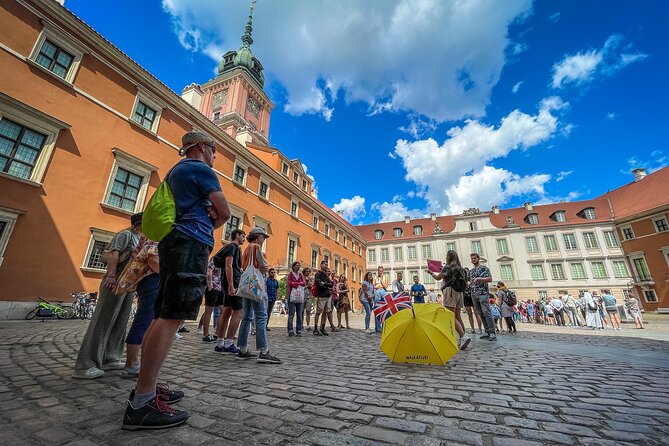
The first hour covers Krakowskie Przedmieście and its important buildings. You should expect outdoor stops rather than formal visits inside each landmark. The guide’s job here is to explain how the street worked as part of Warsaw’s political, religious, and cultural center.
Look for the Presidential Palace, the Bristol Hotel, and St. Cross Church. Each gives the guide a different way into the city’s story. The Presidential Palace points toward modern government and national power. The Bristol Hotel recalls Warsaw’s grander urban life. St. Cross Church connects the city with Frédéric Chopin, whose heart is interred there.
That Chopin detail is easy to miss if you walk the boulevard alone. It also shows why this tour works best as a first look. You get small human details alongside the large political story, which keeps the walk from becoming a list of dates.
Guides have different personalities, and that matters on a walking tour. Aga has been praised for combining music, art, war history, politics, and the rebuilding of Warsaw. Andrzej has been described as especially enthusiastic when covering Polish history. Jacek, sometimes listed as Jack, is praised for mixing facts with humor.
You may hear a slightly opinionated local perspective rather than a dry, neutral script. For many people, that is a strength. One guide was praised for explaining serious events with humor and personal storytelling, while another was appreciated for staying afterward to answer questions.
Krakowskie Przedmieście: Warsaw’s royal front door
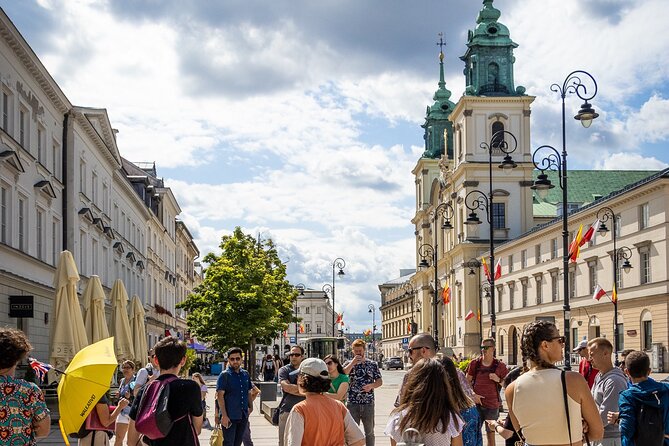
The boulevard section is not just a transfer to the Old Town. It sets up the city’s long movement from royal capital to modern national center. The palaces, churches, monuments, and hotels make more sense when your guide explains how this road connected important parts of Warsaw.
The listed time is one hour, so expect a measured series of stops. It is enough time to hear the main story without spending the whole day on one street. The walk is not built around entering every building, so you should book a separate interior visit if a particular church, palace, or museum is a priority.
I like this opening because it gives you cultural clues before the tour reaches the famous square. Chopin is not just a name on a concert poster. The Presidential Palace is not just a guarded façade. The Bristol Hotel is not merely an elegant building. The guide links these places to people and events, giving the boulevard more meaning.
The main practical issue is sound. The route may have a large group, with as many as 40 people, and one person found a strong accent and a microphone that did not carry well. That does not appear to be the usual experience, since other participants praised clear speech and good volume, but it is worth taking seriously if you have hearing difficulties.
Stay close to the guide. The commentary can come quickly, and the walk may include sly jokes or short references that are easy to miss from the back. If you prefer a quiet stroll with occasional facts, this is not that kind of outing.
Old Town and the remarkable rebuilt city
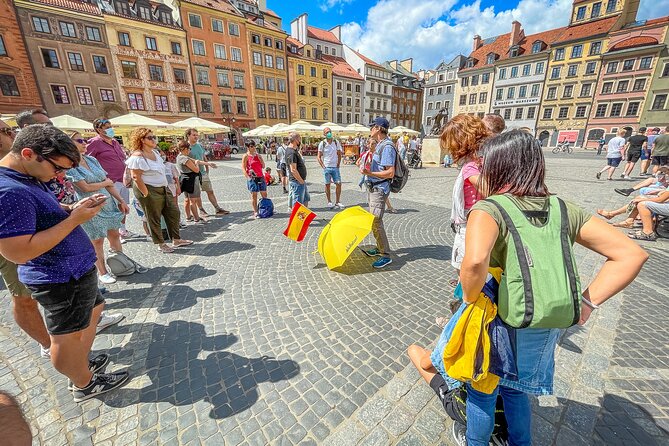
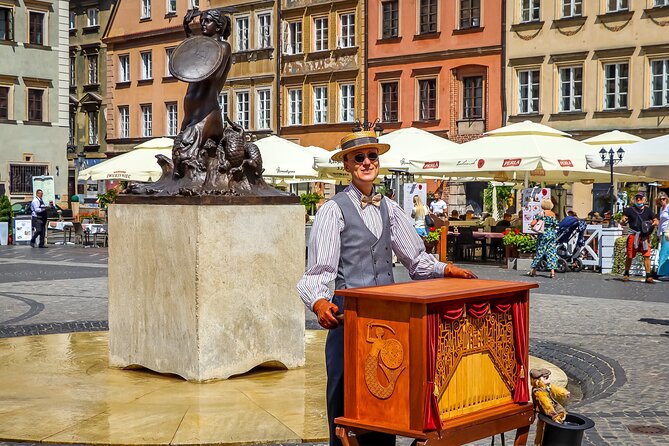
The second stop gives you one hour in Warsaw’s Old Town. This is the visual center of the walk, with colorful houses, red roofs, medieval-style streets, and the Royal Castle. It is also where the city’s modern history becomes impossible to ignore.
Warsaw’s Old Town was nearly destroyed during World War II. The buildings you see today were reconstructed with extraordinary care. That fact changes the way you look at the square. You are not simply admiring old architecture. You are looking at a deliberate act of restoration and national renewal.
The guide’s explanation is especially useful here because the rebuilding is easy to misunderstand. Without context, you may assume the Old Town survived intact. With context, the painted façades and carefully restored details become part of a much larger story about memory, identity, and determination.
Aga has received particular praise for explaining which parts are original and how the reconstruction was carried out. That is one of the most useful themes on the whole route. It helps you read Warsaw with sharper eyes, instead of treating the Old Town as a postcard setting.
The Royal Castle adds another layer. The route does not include an admission ticket or an interior tour, so you will mainly receive an outside introduction. I would use the walk to decide if you want to return later for a more detailed visit. The same is true of other sites along the route. The tour gives you the framework, then you choose where to spend more time.
The pace here seems manageable. One person described the walk as about two and a half hours without an unreasonable amount of walking. Another liked that there was less walking than on some other tours. You will still be on your feet, but the route is designed around stops and explanations rather than covering a huge distance.
More Walking Tours in Warsaw
- Half-Day Polish Food Walking Tour with Guide and Dinner
★ 4.5 · 381 reviews - Warsaw: Warsaw Ghetto Private Walking Tour with Hotel Pickup
★ 4.9 · 369 reviews - Warsaw: Jewish History Guided Walking Tour in English
★ 4.7 · 324 reviews - World War 2 in Warsaw walking tour in English
★ 4.7 · 237 reviews
New Town Square and the Barbican finish
The final 30 minutes take you into New Town Square. The name can fool you. This part of Warsaw was also established in the Middle Ages, so New Town is new only compared with the older settlement beside it.
This short section adds variety to the route. You are no longer seeing only the most polished Old Town streets. The guide can explain how Warsaw expanded beyond its original center and introduce Maria Skłodowska-Curie, who was born in this part of the city.
Maria Skłodowska-Curie gives the guide a chance to move from buildings into science, education, and Polish identity. Her life also connects Warsaw with the wider world. It is a fitting subject for the end of a walk that has already moved through royal, religious, artistic, and wartime chapters.
The tour finishes at the Warsaw Barbican, at Nowomiejska 15/17. The Barbican once formed part of the city’s defensive system, and its position between Old Town and New Town makes it a logical ending point. You finish with a clear landmark and remain in a useful part of the historic center.
The ending is practical, too. You are not returned to the starting point, so plan your next move from the Barbican. The activity does not include transportation to or from attractions, and hotel pickup and drop-off are not included. The stated start and finish points are both in central Warsaw, near public transportation.
The guide can make or break the experience
The strongest praise goes to the people leading the walk. Aga is repeatedly described as warm, funny, and able to handle complex subjects without making the mood heavy. Andrzej and Andrew are praised for strong command of Polish and Warsaw history, with one Andrew especially noted for focusing on the period from 1939 to the present.
Jacek is described as both well informed and amusing. Ania is praised for being charming and clear, with one person noting that the tour involved less walking than expected. Oliwia is described as witty, bright, and good at explaining both current and historical subjects.
The names matter because the tone may vary by guide. This is a general tour, not a private booking with one guaranteed person. You may get a guide who leans into humor, one who focuses more heavily on World War II, or one who moves rapidly through many subjects.
Most of the praise centers on three things:
- Clear explanations of Warsaw’s destruction and reconstruction
- Humor that keeps difficult history approachable
- Time for questions during or after the walk
There are also limits. One person felt the guide talked too much about tips and personal qualifications, which came across poorly. Another wanted more about World War II. One low rating said the Old Town portion felt limited and that New Town was not covered enough.
Those complaints point to a real tradeoff. A two-and-a-half-hour introduction cannot give equal attention to royal Warsaw, Chopin, the Holocaust and wartime destruction, the postwar period, Maria Skłodowska-Curie, and modern Poland. The value depends on whether you want a broad first picture or a narrow, scholarly treatment of one subject.
Weather, group size, and comfort
The tour operates in all weather. Bring clothing suited to the forecast, because much of the activity takes place outdoors. Winter needs serious preparation: warm layers, a hat, gloves, and thermal clothing were specifically advised by one person who took the walk in cold conditions.
The physical requirement is listed as moderate. You will walk and stand for roughly two and a half hours, though the route is described as well paced and not excessively demanding. If you need frequent seating or have trouble keeping up with spoken commentary, consider the group format carefully.
A maximum of 40 people is allowed. That is not a tiny group, and the experience will feel more personal if attendance is well below that limit. In a full group, stand near the guide and move in quickly at each stop. The large-group possibility also explains why the tour can offer good value at $26.60.
Children must be accompanied by an adult. The content covers war, destruction, politics, and national trauma, so parents should decide if that approach suits their children. The guide’s humor may help younger listeners stay involved, but the subject matter is not light throughout.
Who will get the most from this walk?
I would recommend it most strongly for a first visit to Warsaw. You get the basic city story, a route through the most important central areas, and enough practical orientation to plan the rest of your stay.
It also suits you if you enjoy history delivered through stories rather than long museum labels. The best guides appear to connect dates with buildings, personalities, and the effect of past events on Polish life today.
This may not be your ideal choice if you want extensive interior access, a very small group, or a single subject treated in great detail. It is also not the best match if you dislike humor during serious historical discussion. The tour uses wit as part of its teaching style, and that can work brilliantly for one person and irritate another.
Book it near the start of your visit if you can. The meeting point on Krakowskie Przedmieście and the finish at the Barbican make it easy to continue exploring afterward. The tour is often reserved about 22 days ahead, so booking early is sensible for a particular date, especially during busy periods.
You can cancel for a full refund up to 24 hours before the start time. Cancellations or changes made within 24 hours are not refunded or accepted. The experience also requires a minimum number of participants, so a provider cancellation would result in another date or a full refund.
Should you book the Old Town Warsaw Walking Tour?
Yes, if you want a lively first look at central Warsaw for $26.60. The route is well chosen, the rebuilding of Old Town gives the walk real substance, and the best guides make the city’s difficult past understandable without turning the outing into a lecture.
Go in with the right expectations. This is a general English-language group walk, not a private deep study or a building-by-building tour. Dress for the weather, stay near the guide, and ask questions when you can. If you want an efficient introduction to Warsaw’s royal boulevard, reconstructed Old Town, and medieval New Town, this is a strong value.
FAQ
Where does the Old Town Warsaw Walking Tour start?
The tour starts at the Nicolaus Copernicus Monument on Krakowskie Przedmieście in Warsaw.
Where does the tour finish?
The walk ends at the Warsaw Barbican, at Nowomiejska 15/17.
How long does the tour last?
The experience lasts approximately 2 hours and 30 minutes. The route allocates about one hour to Krakowskie Przedmieście, one hour to Old Town, and 30 minutes to New Town Square.
Is the tour conducted in English?
Yes. The tour is offered in English.
Are admission tickets included?
The listed stops have no admission charge, and the tour does not include paid entry into attractions. Hotel pickup, hotel drop-off, and transportation to or from attractions are also not included.
What happens if I need to cancel?
You can receive a full refund if you cancel at least 24 hours before the experience starts. Cancellations or changes made less than 24 hours before the start time are not refunded or accepted.
Just added around Warsaw
- Jewish heritage in Warsaw★ 4.5 · 3 reviews
- Warsaw Outdoor Paintball with Transfers (all year round)★ 5.0 · 3 reviews
- World War II Warsaw Old Town, Military Cemetery Walking Tour★ 4.7 · 3 reviews
- Warsaw: Wolf’s Lair & Swieta Lipka Small-Group Tour + Lunch★ 5.0 · 3 reviews
- Sunset Boat Tour with Unlimited Drinks in Warsaw★ 3.5 · 3 reviews
- Majdanek – German camp from II World War – Private Tour – 1 DAY TRIP FROM WARSAW★ 5.0 · 3 reviews
- From Warsaw: Guided Tour to Wieliczka Salt Mine and Krakow★ 4.5 · 3 reviews
- Warsaw Sightseeing with NEW Mercedes Sclass !!!★ 5.0 · 3 reviews
Old Town Walking Tours, compared.




Bike Tour of Old Town, Jewish Quarter and the Ghetto
Read our review →

Sightseeing EcoCruise around the Old Town of Gdansk
Read our review →
Browse the lists this tour appears in