REVIEW · PRIVATE
Nikiszowiec Industrial District Private Tour
Katowice tells a different Polish story. This private walking tour takes you through Nikiszowiec, a planned mining district shaped by coal, Silesian identity, war, communism, and art. I like the way it connects handsome brick courtyards with the real lives of the people who worked nearby, and I especially like that the route includes both historic sites and contemporary Silesian artwork.
The guide, Malwina, receives warm praise for her cheerful presentation and clear explanations. The private format also gives your group a more personal visit than a large city walk. The main consideration is location: although the experience may appear under Krakow in some booking information, the meeting point is in Katowice, and the tour remains in Nikiszowiec for about 2 hours 45 minutes.
In This Review
- Key points to know before booking
- Why Nikiszowiec is worth your time
- Starting beside Saint Anne’s Church
- The Zillmann plan at Emil and Georg Zillmann Square
- Reading Liberation Square and the common portals
- Courtyards, quarters, and everyday life
- The Silesian Embassy and the twentieth century
- The Pułaski Shaft Complex and the work behind the homes
- Silesian legends at Grzegorz Chudy’s atelier
- The old school and the Janów Artists’ Square
- Inside a typical Nikiszowiec flat
- What $93.45 per person buys you
- Who should take this private walk
- Timing, meeting point, and cancellation advice
- Should you book the Nikiszowiec tour?
- FAQ
- Where does the Nikiszowiec tour start?
- Where does the tour end?
- How long does the experience last?
- Is the tour private?
- Is admission to the museum included?
- Can I cancel for a full refund?
Key points to know before booking
- Nikiszowiec is a purpose-built mining district: You learn how its quarters, courtyards, portals, school, church, and mine were planned to support working families.
- Silesian identity gets proper attention: The walk covers the Autonomous Region of Silesia, the Silesian Uprisings, both World Wars, and the changes brought by communism.
- The private format is a real advantage: Only your group takes part, making it easier to ask questions and keep the pace comfortable.
- Art is part of the story: You visit an atelier, see Janów Group works, view colourful murals, and enter a museum flat furnished to show local life.
- The former mine adds practical context: The Pułaski Shaft Complex and historic railway help explain where residents worked and how industrial estates were linked.
- The tour costs $93.45 per person: That is a serious price for a walking tour, but it includes a private guide and the Museum of Katowice History.
Why Nikiszowiec is worth your time
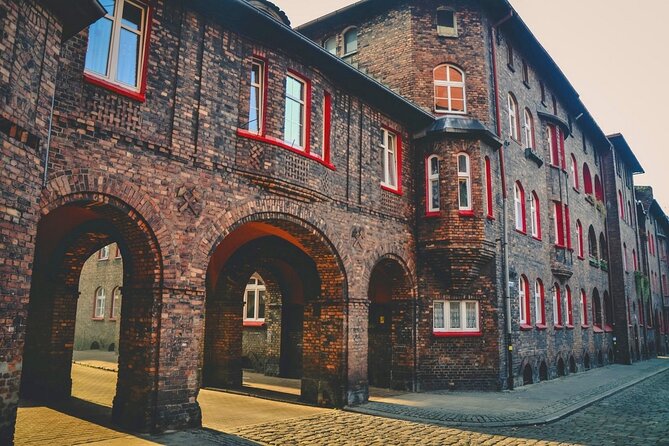
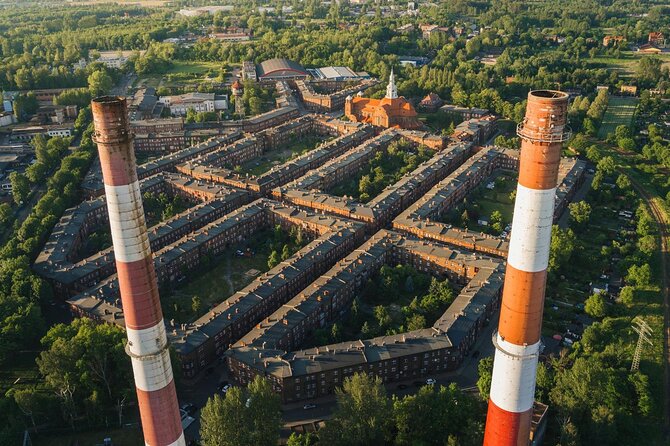
Nikiszowiec is not simply a pretty old quarter. It was built around the needs of mining families, with housing, a school, a church, work connections, and shared courtyards arranged as one planned community.
That gives the district an unusual character. You are not looking at isolated monuments. You are reading an entire settlement, block by block. The brick buildings and broad square make more sense once you understand why the district was designed this way.
The tour also gives you a useful correction to the usual Polish city route. Krakow, Warsaw, and Poznan each tell different national stories, but Silesia has its own regional identity. Here, Polish, Silesian, industrial, and Central European influences meet in a compact area.
I would choose this visit if you want history with a human scale. You will hear about political events, but the strongest parts are often the small details about daily routines, housing, work, family life, and local traditions.
A few more Kraków trips worth weighing up
- From Krakow: Auschwitz-Birkenau Guided Tour & Hotel Pickup
★ 4.5 · 33,358 reviews - From Krakow: Auschwitz-Birkenau Guided Tour & Hotel Pickup
★ 4.5 · 29,340 reviews - Krakow: Auschwitz Guided Tour with Optional Hotel Pickup
★ 4.5 · 15,280 reviews
Starting beside Saint Anne’s Church
The tour begins at Kościół pw. św. Anny w Katowicach, at plac Wyzwolenia 21. This is a useful place to begin because the church introduces Nikiszowiec as both a historic settlement and a place connected to local ethnicity and remembrance.
The opening stop is brief, only about three minutes, so do not expect a long church visit. Its purpose is to set the scene before the group moves into the district itself.
From the start, remember that this is a walking experience. Comfortable shoes will matter more than smart clothes, and you should allow enough time to reach Katowice before the scheduled start. Public transport is nearby, but the provided details do not specify a particular route from Krakow.
The Zillmann plan at Emil and Georg Zillmann Square
At the square named for Emil and Georg Zillmann, the guide explains the architects’ general plan for Nikiszowiec and the surrounding areas. This ten-minute stop is short, but it provides the key to everything that follows.
I find this kind of explanation especially useful before walking through a historic district. Without it, you may notice brick buildings and decorative details but miss the logic behind the arrangement. Here, you learn about the purpose of the district and how its parts were meant to work together.
The Zillmann name matters because Nikiszowiec was planned rather than assembled over centuries. That does not make it feel artificial. Instead, it helps you see how industrial communities could be designed around work, housing, movement, and shared space.
Reading Liberation Square and the common portals
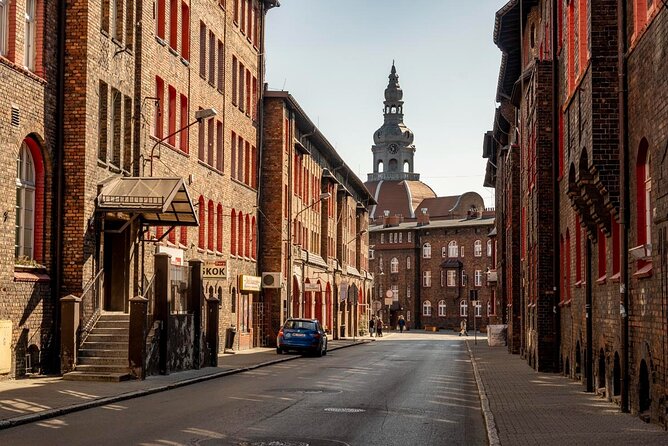
The next section moves through the common portals around Liberation Square. The guide explains the district’s urban layout, including the division into quarters, the purpose of each quarter, and the structure of the buildings.
You also hear about the daily routines of the inhabitants. This is where the tour shifts from architecture to people. A portal is no longer just an entrance. A quarter is no longer just a group of apartments. Each part becomes connected to the rhythms of families who lived and worked here.
The fifteen-minute stop should suit you if you prefer context over a quick photo visit. It is not designed as a long pause at one monument. Instead, the guide keeps you moving while building a picture of how Nikiszowiec functioned as a community.
A completely different kind of day out in Kraków:
- Krakow–Zakopane: Cable Car, Chocholow Baths, Cheese & Vodka
★ 5.0 · 10,720 reviews - Krakow: Auschwitz-Birkenau Guided Tour with Pickup & Lunch
★ 4.5 · 9,800 reviews - From Krakow: Wieliczka Salt Mine Tour
★ 4.6 · 9,393 reviews - Krakow: Auschwitz-Birkenau Guided Tour Pickup/Lunch Options
★ 4.5 · 9,057 reviews
Courtyards, quarters, and everyday life
The longest outdoor section lasts about 30 minutes and takes you through the residential part of the district. You pass several quarters and their interior gardens while learning how everyday life once looked and how it looks today.
These inner spaces are among the most useful parts of the tour because they show the district from more than one angle. From the main square, Nikiszowiec can seem formal and monumental. Inside the quarters, you get a better sense of the residential side and the shared spaces used by local families.
The guide also covers Nikiszowiec during World War I and the Silesian Uprisings. Those subjects are important because Silesia’s political identity cannot be separated from its industrial communities and questions of regional belonging.
This part may be less suited to anyone who wants only architecture. It is a history-heavy section, and the value depends on your interest in social and political context. If you enjoy understanding why a place became what it is, it is likely to be one of the strongest parts of the walk.
The Silesian Embassy and the twentieth century
The stop connected with Łukasz Kohut’s Ślōnsko Ambasada introduces the interwar period and the era of the Autonomous Region of Silesia. You then move into Silesia during World War II and the changes communism brought to Nikiszowiec.
The phrase Silesian Embassy points toward regional identity and self-expression. The tour does not treat Nikiszowiec as a frozen industrial relic. Instead, it shows how the district fits into changing ideas about Silesia and its place within Poland.
This fifteen-minute section is valuable because it links local streets to wider events. You are not given a general European history lecture. You are shown how major political shifts affected one district and its residents.
I would listen closely here if you are unfamiliar with Silesia. The region may feel noticeably different from the better-known Polish cities, and this stop helps explain why.
The Pułaski Shaft Complex and the work behind the homes
At the Pułaski Shaft Complex, the tour reaches the former coal mine where many Nikiszowiec residents worked. The stop lasts about 20 minutes and gives the residential district a practical backbone.
You see the historic railway once used to move industrial materials and people between Silesian industrial estates. That detail helps connect the mine to the wider network around it. Nikiszowiec was not an isolated housing project. It was part of an industrial system, and the railway made that system visible.
This is also where you can better understand the relationship between home and work. The earlier courtyards and apartments were designed for families whose lives were closely tied to the mine. Seeing the former industrial facilities keeps the tour from becoming a purely decorative walk through old brick buildings.
The stop may interest history fans more than casual sightseers, but it should not feel separate from the rest of the route. It explains why the district exists in the first place.
Silesian legends at Grzegorz Chudy’s atelier
The visit to Grzegorz Chudy’s Atelier z akwarelami shifts the mood from industrial history to art. You see contemporary paintings of Nikiszowiec, Katowice, and the Silesian region, along with Silesian legends and mythical creatures.
I like this change of pace. After hearing about mining, political upheaval, and wartime change, you get to see how the region is imagined and remembered through painting.
This ten-minute stop also helps show that Nikiszowiec is a living place. Its identity is not limited to old buildings or museum labels. Contemporary artists continue to interpret its streets, local stories, and regional symbols.
Because the visit is brief, you should think of it as a focused introduction rather than a long gallery session. Still, it adds colour and personality to a tour that could otherwise lean heavily toward architecture and politics.
The old school and the Janów Artists’ Square
The route passes the historic Nikiszowiec school, a very short stop of about two minutes. There is no admission charge, and the visit is mainly a chance to place education within the district’s original community plan.
The school matters because it reinforces the idea that Nikiszowiec was built as a complete working settlement. Families did not simply sleep here and leave for work elsewhere. Housing, education, worship, and employment were all part of the district’s structure.
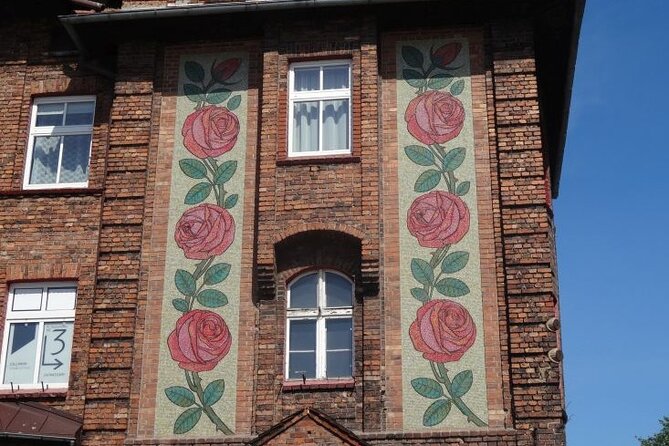
Next comes Skwer Artystów Grupy Janowskiej, or the square of Janów District Artists. Here, colourful murals reproduce works by leading artists from Nikiszowiec.
The fifteen-minute stop is a good photo opportunity, but it also has a clear purpose. The murals bring the local art tradition into public space, allowing you to see how the district’s creative identity has been displayed beyond galleries and private interiors.
If you are visiting with children, this visual section may be easier to enjoy than the more detailed political explanations. One review specifically praised the tour as a good family experience, and the mixture of murals, stories, and courtyards helps explain why.
Inside a typical Nikiszowiec flat
The tour ends at the Museum of Katowice History, City Ethnology Department. This is the only listed stop with an admission ticket included, and it lasts about 30 minutes.
You see the interior of a typical Nikiszowiec flat and original works by Janów Group artists showing daily and festive life. This is where the earlier discussion of routines becomes concrete. Rooms, objects, and artworks can make social history easier to picture than an explanation in the street.
The museum also presents surrealistic work by artists sometimes compared with Silesian Salvador Dali. That gives the final section a striking artistic note and shows the range of local creativity.
For me, this museum stop is essential to the tour’s value. Outdoor architecture can tell you how people were housed, but an interior can suggest how that housing was used. You leave with a fuller sense of ordinary life, celebrations, and local imagination.
The activity ends back at the starting point, so you do not need to arrange a separate return transfer from the final museum stop.
What $93.45 per person buys you
At $93.45 per person, this is not a bargain-priced stroll. The cost makes the most sense for a private group that wants a dedicated English-speaking guide and a structured look at Nikiszowiec rather than a quick independent visit.
The private format is the main value. Only your group participates, so you can ask questions about Silesian identity, the mine, the artworks, or the district’s wartime history without competing with a large crowd. A private guide can also spend more time on the subjects that interest you most, although the exact flexibility is not specified.
The museum admission is included, while the other listed stops are free. Group discounts are available, which may improve the price for larger parties.
I would judge the price this way:
- Good value for families or small private groups that want history explained in English.
- Less compelling for solo visitors focused only on seeing the architecture from outside.
- Worth considering for art fans because the route includes an atelier, murals, museum works, and Janów Group paintings.
- Useful for first-time visitors to Silesia who want the regional story organized by a local guide.
The tour’s approximately 2 hour 45 minute length is another part of the value. It is long enough to cover the district properly, but short enough to fit into a day in Katowice.
Who should take this private walk
I would recommend it to you if you enjoy places shaped by work and community rather than royal palaces or grand city squares. It suits history-minded visitors, families, architecture fans, and anyone curious about why Silesia feels distinct from other parts of Poland.
It is also a strong choice if you want a guide to connect several subjects that are easy to miss when visiting alone: mining, regional politics, urban planning, social life, local art, and the effects of war and communism.
You may want to skip it if you have very little time in Katowice and only want a short photo stop. You should also consider the weather. The experience requires good weather, and poor conditions can lead to a different date or a full refund.
The tour is offered in English. Mobile tickets are available, service animals are allowed, and most people can participate. Since the walking route includes residential quarters, public spaces, a former mine complex, and a museum, ask the operator directly if your group has specific mobility needs.
Timing, meeting point, and cancellation advice
The start point is Kościół pw. św. Anny w Katowicach, plac Wyzwolenia 21, 40-423 Katowice, Poland. The tour returns to this same meeting point.
Nearby public transportation makes the location practical within Katowice. Still, the advertised location may create confusion because Krakow is sometimes shown in the general tour information, while the actual meeting point is in Katowice. Confirm your route and arrival time before booking.
You receive confirmation within 48 hours, subject to availability. Free cancellation is offered up to 24 hours before the local start time for a full refund. Cancellations or changes made less than 24 hours in advance are not refunded or accepted.
The experience also requires a minimum number of participants. If that minimum is not met, you can choose another date or experience, or receive a full refund.
Should you book the Nikiszowiec tour?
Book it if you want more than attractive brick buildings. The best reason to go is the way the tour ties architecture to mining work, Silesian identity, war, communism, family routines, and local art.
The private format and Malwina’s praised presentation add real value, especially for families or small groups. At $93.45 per person, I would not choose it for a casual look at the district, but I would consider it a fairer purchase if you want a clear, personal explanation in English and plan to spend nearly three hours with the subject.
If Nikiszowiec is your main reason for visiting Katowice, this is a sensible way to see it. If you are staying in Krakow, remember that you must arrange your own way to Katowice and meet at the church there.
FAQ
Where does the Nikiszowiec tour start?
It starts at Kościół pw. św. Anny w Katowicach, plac Wyzwolenia 21, 40-423 Katowice, Poland.
Where does the tour end?
The activity ends back at the starting point.
How long does the experience last?
The tour lasts approximately 2 hours 45 minutes.
Is the tour private?
Yes. Only your group takes part in this private activity.
Is admission to the museum included?
Yes. Admission to the Museum of Katowice History, City Ethnology Department, is included. The other listed stops have no admission charge.
Can I cancel for a full refund?
Yes. You can cancel at least 24 hours before the experience start time for a full refund. Poor weather or failure to meet the minimum number of participants may also result in an alternative date or a full refund.
Just added around Kraków
- Rynek Underground Museum & Wawel Castle, Cathedral – Cracow★ 5.0 · 3 reviews
- Schindler’s Factory, Ghetto and Plaszow Camp Guided Tour★ 4.7 · 3 reviews
- Nowa Huta – a guided tour of a utopian socialist city★ 5.0 · 3 reviews
- Krakow: Kazimierz by Golf Cart and Schindler’s Factory Tour★ 4.8 · 3 reviews
- Private Krakow City Tour by Car and Walk with private tour guide★ 5.0 · 3 reviews
- Krakow: Jewish Traces Private Electric Car Tour★ 4.1 · 3 reviews
- Discover the Jewish Quarter with a Bike Tour★ 5.0 · 3 reviews
- Krakow: Indoor Go-Karting (24-Minute Races)★ 4.8 · 3 reviews
Private, compared.

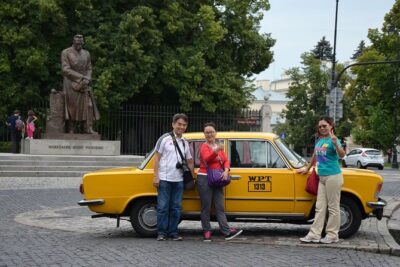
Private Tour: Warsaw City Sightseeing by Retro Fiat
Read our review →
Warsaw Ghetto Private Walking Tour with Hotel Pickup
Read our review →
Private Departure Transfer: Krakow City To Krakow Airport Balice
Read our review →
Private Old Town Guided Walking Tour (2 hours)
Read our review →
Legendary Private Nowa Huta Communism Tour with Crazy Guides
Read our review →