
REVIEW · HISTORICAL TOURS
Private tour: Jewish heritage in Warsaw
Warsaw remembers in layers. This private tour connects Muranów’s Jewish past with its present streets, memorials, murals, and surviving synagogue. I like the mix of major sites and easy-to-miss corners, and I like having a private guide who can answer questions as they arise. The main consideration is emotional weight: the tour deals directly with deportation, the Warsaw Ghetto, and the Holocaust, so it is not a light sightseeing stroll.
The two-and-a-half-hour route covers the Monument to the Ghetto Heroes, Umschlagplatz, two fragments of the ghetto wall, and Nozyk Synagogue. I also appreciate the practical shape of the tour: one group of up to 10 people, a central starting point at Cinema Muranów, and an ending near Plac Grzybowski. If Anna is your guide, expect clear explanations and a thoughtful approach, with enough flexibility to pause for questions or even a cool drink on a warm day.
In This Review
- Key points to know before booking
- Why Muranów is the right place to start
- The Monument to the Ghetto Heroes and the uprising
- Umschlagplatz and the meaning of a departure point
- Two ghetto wall fragments in an ordinary backyard
- Nozyk Synagogue, the tour’s surviving place of worship
- What a private format changes
- Who will get the most from this tour
- Timing, meeting point, and small practical details
- How the guide shapes the experience
- Should you book this Jewish heritage tour?
- FAQ
- How long does the private Jewish heritage tour last?
- How much does the tour cost?
- Is the tour private?
- Where does the tour start?
- Where does the tour end?
- Which main sites are included?
- Is admission to Nozyk Synagogue included?
- Can I cancel the tour for a full refund?
- Is the tour accessible by public transportation and are service animals allowed?
Key points to know before booking
- Muranów was built over the ruins of the Warsaw Ghetto, making ordinary streets part of the historical setting.
- The Monument to the Ghetto Heroes marks the place where the uprising began, with discussion of both the 1942 deportations and the 1943 revolt.
- Street art adds a modern layer to the route, honoring Jewish residents who once lived in the district.
- Umschlagplatz gives the tour its starkest focus, marking the departure point for deportations to Treblinka.
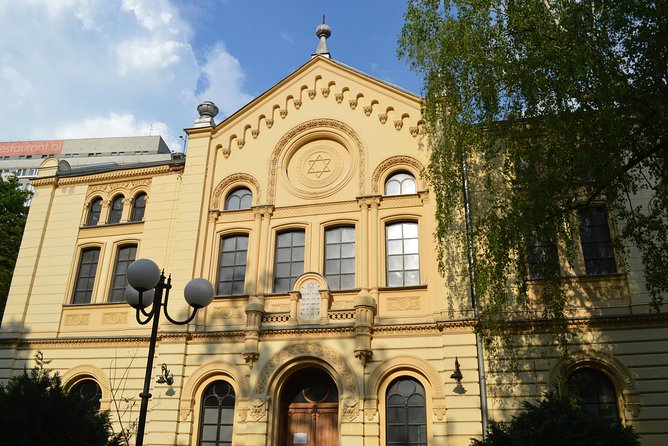
- Nozyk Synagogue is the only Warsaw synagogue to survive World War II, and it closes the walk near Plac Grzybowski.
- The $161.95 price covers your whole private group, up to 10 people, making the value strongest when shared by family or friends.
Why Muranów is the right place to start
Begin at Cinema Muranów, at General Władysław Andersa 5. This is not just a convenient meeting point. The surrounding Muranów district was built on the ruins of the former Warsaw Ghetto, so the tour begins with the difficult idea that a living neighborhood can also be a place of destruction and remembrance.
I find this setting more useful than starting with a museum label or a single monument. You see present-day streets while your guide explains what existed here before. The connection between the pavement under your feet and the people who once lived in this area gives the history a physical scale.
The route also includes street art connected with Poland’s Jewish community. These pieces are an important part of the experience because they show that remembrance in Warsaw is not limited to formal memorials. You might pass an artwork honoring former residents or referring to Jewish life, then hear how the district changed after the war.
That blend of old and new is one of the tour’s best features. It helps you see Jewish heritage as more than a wartime story. The route points toward the people who lived here, the culture that existed before the Nazi occupation, and the ways Warsaw continues to mark that loss.
More History Tours in Warsaw
- Warsaw: POLIN Museum of the History of Polish Jews Ticket
★ 4.7 · 1,142 reviews - Warsaw: Chopin Concert at Historical Venue in Old Town
★ 4.7 · 445 reviews - Small-Group Historical Guided Tour of Warsaw with pick up/drop off. Public Tour.
★ 4.5 · 343 reviews
The Monument to the Ghetto Heroes and the uprising
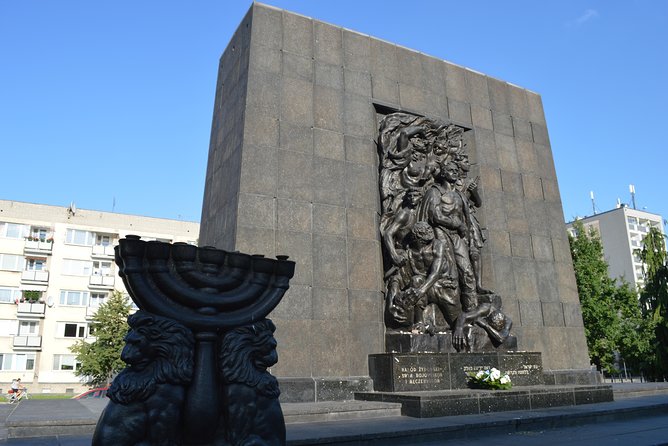
The next major stop is the Monument to the Ghetto Heroes, one of Warsaw’s most important memorials. The tour identifies this area as the place where the Warsaw Ghetto Uprising began.
Allow about 20 minutes here. That may sound brief, but a good guide can use the time well by explaining the events of 1942 and 1943. You will hear about the deportations to Treblinka in 1942 and the armed Jewish resistance against the Nazis in 1943.
This is a place where context matters. The memorial is not simply a dramatic sculpture to photograph. It marks a struggle that came after the ghetto population had already suffered starvation, terror, and mass deportation. Your guide helps place the uprising within that sequence rather than presenting it as an isolated event.
Anna is praised for explaining difficult subjects clearly and for going beyond the ghetto itself. That broader approach can help you understand how the wartime period fits into Poland’s changing political and social life, including the later Communist era. The result is more useful than a list of dates.
Expect this stop to be serious and quiet. You can ask questions throughout because the tour is private, but it is worth giving yourself a little mental space here. The subject is painful, and the tour does not try to soften it with excessive entertainment.
Umschlagplatz and the meaning of a departure point
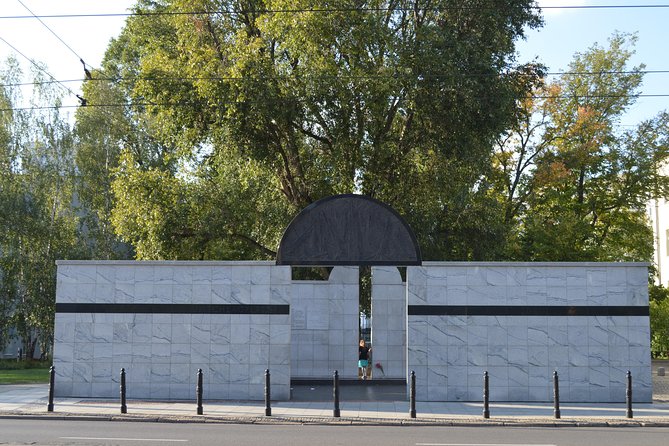
The route continues to Umschlagplatz, a memorial marking the location from which thousands of people were deported to Treblinka in 1942. The stop lasts around 20 minutes.
Umschlagplatz is different from the Monument to the Ghetto Heroes. The earlier memorial focuses on resistance. This one centers on forced removal and the people who were sent away. That contrast gives the tour a clear emotional and historical structure.
The memorial is described as beautiful, but its purpose remains severe. You are standing at a place associated with deportation, not a former railway station presented as a curiosity. Your guide can help you understand why the site matters and how it fits with the larger story of the Warsaw Ghetto.
I would not rush this stop. The scheduled time is enough for an explanation, but you may want to pause before moving on. Since this is a private group, you can ask for clarification without worrying about holding up a large party.
The route’s order also works well. After learning about the ghetto’s residents and the uprising, you reach the point tied to mass deportation. The walk becomes a series of connected locations rather than separate attractions.
Two ghetto wall fragments in an ordinary backyard
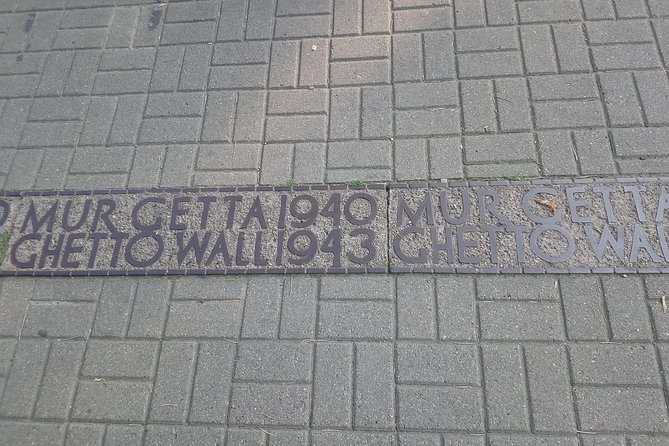
One of the more unusual stops is a pair of surviving fragments of the ghetto wall, tucked away in a backyard. The visit lasts about 15 minutes.
This is exactly the kind of place that can be difficult to find without local guidance. Unlike the large memorials, the wall fragments are not presented as a grand civic space. Their modest setting makes the remains feel especially direct. You are looking at physical evidence in a place that can easily seem like an everyday corner of the city.
The hidden location is also the main reason to take a guide. A map may point you toward a general area, but it will not provide the same explanation of what the fragments represent or why they survived. Your guide gives the site its proper scale and meaning.
Do not expect a large preserved section of wall. The information specifies two fragments, so this is a short stop rather than a major monument visit. That limitation is not a flaw, but it helps set expectations. The value comes from seeing what remains and understanding how little of the original barrier is still visible.
A completely different kind of day out in Warsaw:
- Warsaw: Chopin Concert in the Old Town
★ 4.8 · 2,287 reviews - Warsaw: Traditional Galar Cruise on The Vistula River
★ 4.6 · 1,640 reviews - Warsaw: Old Town Highlights Walking Tour in English
★ 4.7 · 1,516 reviews - Warsaw Concert: Chopin – Painted by Candlelights with Wine
★ 4.8 · 1,442 reviews
Nozyk Synagogue, the tour’s surviving place of worship
The final stop is Nozyk Synagogue, reached near the ending point at Plac Grzybowski. The visit lasts about 15 minutes, and admission is not included in the tour price.
Nozyk Synagogue is described as the only synagogue in Warsaw to survive World War II. That fact gives the building special importance, but the stop also broadens the tour beyond memorials and death sites. Here, you encounter a surviving place of Jewish worship in the city.
Because the entrance fee is not included, check the cost before you go if you want to enter. The supplied information does not give the admission amount, so you should treat this as a possible extra rather than assuming the whole visit is covered by the tour fee.
The synagogue also makes a fitting end point. After memorials, wall fragments, and stories of destruction, you finish with a building connected to continuing Jewish life. The route ends at Plac Grzybowski, which is practical for continuing your time in central Warsaw.
What a private format changes
The private format is the strongest practical feature here. Only your group participates, with up to 10 people included in the quoted price of $161.95.
For one or two people, that can feel expensive compared with a large group walk. For a family or group of friends, the calculation changes. Ten people sharing the full price would pay about $16.20 each, before any synagogue admission. Even with fewer people, you are paying for flexibility and direct access to the guide rather than only for a seat on a scheduled walk.
The ability to ask questions is especially useful on a subject this complicated. You can ask about a date, a memorial, a family connection, or the difference between two sites and receive an immediate explanation. A large group can make that harder.
The private format may also help with pacing. Anna is praised for adapting to the group and for stopping for a cool drink during warm weather. That does not mean every guide will make the same arrangement, but the experience appears suited to a conversation rather than a rigid march from one stop to the next.
The tour lasts approximately two hours and 30 minutes. The listed stop times add up to about 110 minutes, leaving the remaining time for walking, transitions, and explanation. You should plan for a substantial walking experience, even though the supplied details do not give a total distance.
Who will get the most from this tour
I would choose this tour if you want historical context at the actual sites rather than a quick round of photographs. It suits people visiting Warsaw for the first time, especially if you want a clear introduction to the city’s Jewish heritage before visiting other museums or memorial spaces.
It also fits families and small groups with mixed levels of interest. A private guide can explain the basics without assuming prior study, then go further when someone wants more detail. The tour has enough structure to keep the morning or afternoon focused, but enough personal contact for a real exchange.
History students, relatives tracing Polish Jewish connections, and visitors interested in wartime Warsaw may find the route particularly useful. Anna is praised for discussing Poland beyond the ghetto and for including the Communist era in her explanations. That wider frame can help you understand why the city looks and feels as it does today.
I would think twice if you want a cheerful, relaxed city walk. Street art and modern Muranów provide lighter visual moments, but the central subject is the destruction of Warsaw’s Jewish community and the Nazi occupation. The tour asks for attention and respect.
Timing, meeting point, and small practical details
The tour starts at Kino Muranów, General W. Andersa 5, 00-147 Warszawa, Poland. It ends at Plac Grzybowski, so you do not return to the starting point. That point-to-point design is useful if you want to continue sightseeing from central Warsaw after the tour.
The area is near public transportation, and a mobile ticket is provided. Confirmation arrives at booking. Service animals are allowed, and most people can participate, according to the supplied access information.
The tour is available for a private group of up to 10 people. Since the price is per group rather than per person, compare the total with the size of your party before booking. The value is strongest when several people share the cost.
You can cancel for a full refund if you do so at least 24 hours before the start time. Cancellations or changes made within 24 hours are not accepted for a refund, and the cut-off follows local Warsaw time.
How the guide shapes the experience
The guide matters greatly on this route. A list of monuments cannot explain the area’s full meaning on its own. You need someone who can connect the Jewish community’s prewar life, the ghetto, deportations, resistance, surviving traces, and postwar Poland.
Anna receives especially warm praise for her clear explanations, broad historical knowledge, and thoughtful treatment of Warsaw’s past. One account describes the tour as an important part of a stay in Poland because her explanations went beyond the ghetto and placed events in a wider national story.
That kind of guidance is the main reason to choose a private experience instead of walking between the same sites alone. You are not just locating a monument. You are learning why it is there, what happened nearby, and what has changed since.
The guide’s manner also seems important. Anna is described as easygoing, considerate, and willing to answer questions. On a warm day, the flexibility to stop for a cool drink can make a serious walking tour more manageable.
Should you book this Jewish heritage tour?
Book it if you want a focused, private introduction to Jewish Warsaw with both major memorials and less obvious remains. The combination of Muranów street art, the Monument to the Ghetto Heroes, Umschlagplatz, ghetto wall fragments, and Nozyk Synagogue gives you a strong two-and-a-half-hour route.
The price makes the most sense for a family or group of friends sharing the $161.95 cost. Solo visitors or couples may prefer a lower-cost group option if one is available, but the private format offers real value when you want time for questions and a flexible pace.
Choose it with the right expectations. This is a serious history tour, not a general orientation walk, and Nozyk Synagogue admission costs extra. If you are prepared for difficult subject matter and want clear, human explanations at the places connected to it, this is a worthwhile way to spend part of your time in Warsaw.
FAQ
How long does the private Jewish heritage tour last?
The tour lasts approximately 2 hours and 30 minutes.
How much does the tour cost?
The price is $161.95 per group, with up to 10 people included.
Is the tour private?
Yes. Only your group participates in the activity.
Where does the tour start?
The meeting point is Kino Muranów, General W. Andersa 5, 00-147 Warszawa, Poland.
Where does the tour end?
The tour ends at Plac Grzybowski in Warsaw.
Which main sites are included?
The route includes Cinema Muranów, the Monument to the Ghetto Heroes, Umschlagplatz, two fragments of the ghetto wall, and Nozyk Synagogue.
Is admission to Nozyk Synagogue included?
No. Admission to Nozyk Synagogue is not included in the tour price.
Can I cancel the tour for a full refund?
Yes. You can receive a full refund if you cancel at least 24 hours before the experience starts. Cancellations within 24 hours are not refunded.
Is the tour accessible by public transportation and are service animals allowed?
The meeting area is near public transportation, and service animals are allowed. The supplied information also says most people can participate.
Just added around Warsaw
- Jewish heritage in Warsaw★ 4.5 · 3 reviews
- Warsaw Outdoor Paintball with Transfers (all year round)★ 5.0 · 3 reviews
- World War II Warsaw Old Town, Military Cemetery Walking Tour★ 4.7 · 3 reviews
- Warsaw: Wolf’s Lair & Swieta Lipka Small-Group Tour + Lunch★ 5.0 · 3 reviews
- Sunset Boat Tour with Unlimited Drinks in Warsaw★ 3.5 · 3 reviews
- Majdanek – German camp from II World War – Private Tour – 1 DAY TRIP FROM WARSAW★ 5.0 · 3 reviews
- From Warsaw: Guided Tour to Wieliczka Salt Mine and Krakow★ 4.5 · 3 reviews
- Warsaw Sightseeing with NEW Mercedes Sclass !!!★ 5.0 · 3 reviews
Historical Tours, compared.


POLIN Museum of the History of Polish Jews Ticket
Read our review →

Gdańsk City Sights & History Guided Walking Tour in English
Read our review →

Small-Group Historical Guided Tour of Warsaw with pick up/drop off. Public Tour.
Read our review →Browse the lists this tour appears in