
REVIEW · SCHINDLER FACTORY TOURS
Schindler’s Factory Visit & Skip-the-Line Entry
The film is only the beginning. Krakow’s Schindler’s Factory Visit takes you beyond Schindler’s List into the wider story of wartime Krakow, its Polish and Jewish residents, and the Nazi occupation. I like the guaranteed museum entry and the guide’s added explanation, especially when the displays become dense or emotionally heavy.
I also like the exhibition’s unusual design, with a tram, a hairdresser, a photographer, a photoplasticon, and a recreated Jewish apartment. The main drawback is time: 90 minutes can feel rushed, particularly in crowded rooms where you want to stop and read.
This English-language tour costs $50.46 per person and is offered by Cracow Local Tours. It earns a solid 4.1 out of 5 from 157 ratings. The strongest praise goes to the guides, while the main complaints concern oversized groups, unclear meeting arrangements, and not enough time with the displays.
In This Review
- Key points before you book
- What this Schindler’s Factory tour is really about
- Meeting up and getting through the entrance
- Walking through occupied Krakow
- The ghetto passages and Płaszów section
- Oskar Schindler, the factory, and the film connection
- Why the guided format adds value
- Group size, walking, and the pace of the visit
- Is $50.46 good value?
- Who should book this experience?
- My booking advice
- FAQ
- How long does the Schindler’s Factory tour last?
- Is admission to Schindler’s Factory Museum included?
- Is the tour offered in English?
- Do I need to bring identification?
- Is the exact start time guaranteed?
- Can I cancel for a full refund?
Key points before you book
- This is mainly a Krakow WWII museum visit, not a tour devoted only to Oskar Schindler or enamel production.
- Skip-the-line entry is useful, though some people still experienced waiting or confusion outside.
- Guides are the tour’s greatest strength, with Helen and Barbara singled out for clear, thoughtful presentations.
- The museum uses powerful settings and multimedia, including a tram sequence, narrow ghetto passages, photographs, and eyewitness material.
- Groups can be large, sometimes around 20 people or more, which makes confined rooms feel crowded.
- Bring your passport or ID, and make sure your full name matches the personalized museum ticket.
What this Schindler’s Factory tour is really about
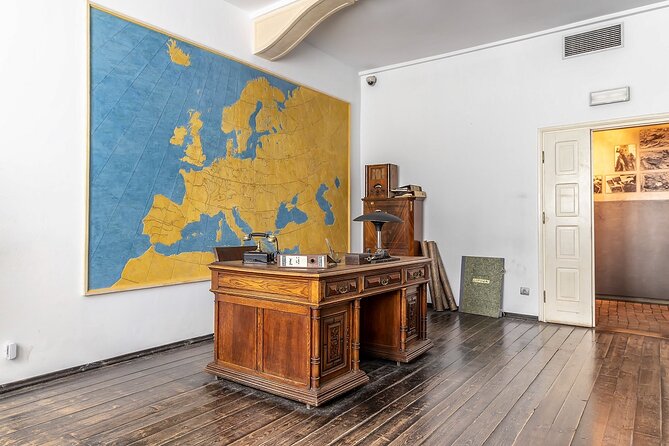
The name naturally sets up a certain expectation. You may arrive hoping for a detailed account of Oskar Schindler, his enamel factory, and the people he helped save. You will get some of that, but the museum’s main subject is Krakow during the Nazi occupation.
The story begins before the full horror of the war and follows the city through occupation, persecution, the Jewish ghetto, the Płaszów camp, and liberation. Schindler is part of this story, but he is not the sole focus.
That distinction matters. If you want a compact biography of Schindler, this visit may feel light on him. Several people felt there was too little about the factory owner himself, while others appreciated learning about the Polish population and Jewish communities as a whole.
I think the wider approach is useful. Schindler’s actions make more sense when you understand the city around him, the Nazi system, and the pressure placed on ordinary families. The tour gives you that setting instead of treating one heroic figure as the entire story.
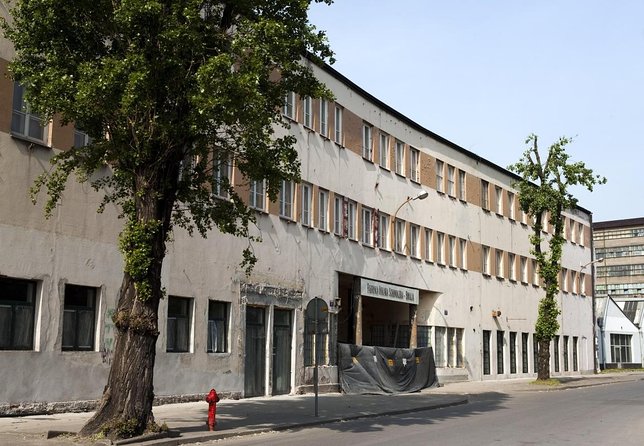
The present museum occupies the former factory building, but you are not touring an active enamel works. The production operation had moved to the Czech Republic near the end of the war, and the current visit is built around a historical exhibition. That is why the experience feels more like a carefully designed city museum than a factory-floor tour.
More Schindler Factory tours:
- Krakow: Oskar Schindler’s Factory Entry Ticket & Guided Tour
★ 4.2 · 3,793 reviews - Krakow: Schindler’s Factory Tour with Entrance Ticket
★ 4.5 · 3,182 reviews - Krakow: Schindler’s Factory Skip-the-Line Ticket
★ 4.4 · 3,105 reviews
Meeting up and getting through the entrance
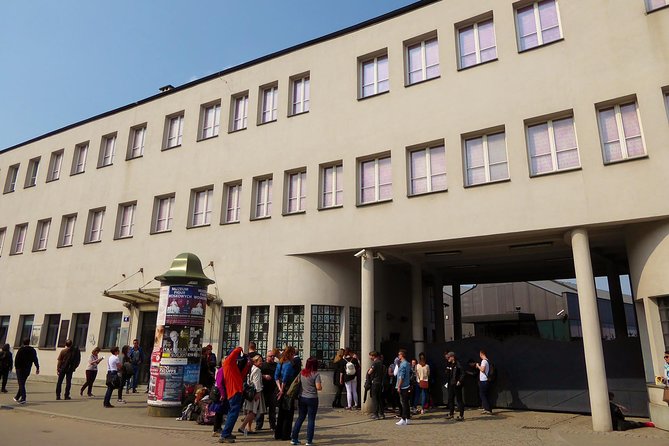
The tour promises skip-the-line admission, and this can be a real help. Schindler’s Factory is popular, and avoiding the main ticket queue gives you a stronger reason to book ahead, particularly during busy periods.
Still, do not assume the process will be perfectly obvious. Some people found a guide outside with a sign showing a different start time. Others were unsure where to stand because there was no clear representative explaining the line or meeting point.
One person with a 10:30 a.m. booking nearly missed the group after seeing a sign for 10:15 a.m. The practical lesson is simple: arrive early, look for the guide, and ask directly if the displayed time does not match your confirmation.
A separate problem occurred after a time change had been confirmed but not passed on to the local operator. The group arrived late to the correct time and was initially refused admission before being allowed to join. That appears to have been a communication failure, but it shows why you should keep your booking details ready.
The entrance area may also be uncomfortable. One account describes a hot day with little shade and no clear advice outside. If the weather is warm, arrive prepared to wait briefly outdoors, even with skip-the-line entry.
The museum issues personalized tickets. You must provide the full name of every participant when booking and bring a passport or other identification document. The name on the ticket must match the document. Without proper ID, museum staff may refuse entry.
Walking through occupied Krakow
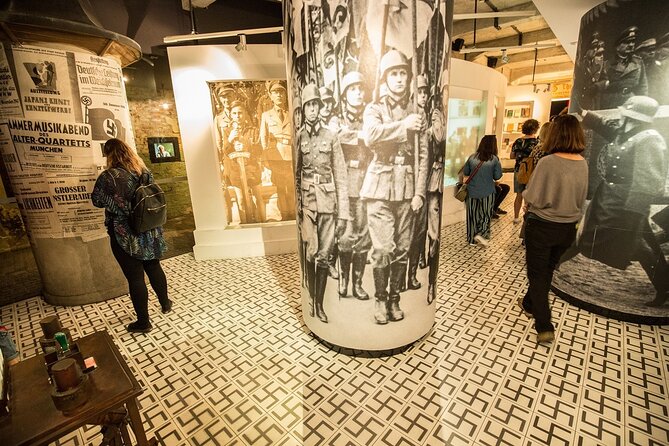
Once inside, the tour moves through a staged version of wartime Krakow. You walk along cobbled streets and pass settings designed to suggest everyday city life before and during the occupation.
A hairdresser and photographer help make the period feel less abstract. You are not simply looking at objects behind glass. The exhibition uses familiar places and activities to show how normal life changed under German rule.
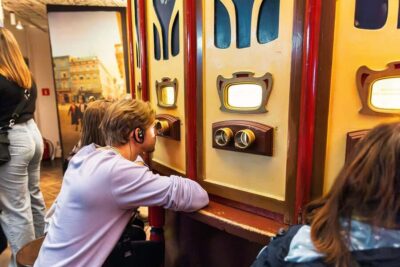
The photoplasticon is another unusual feature. This old-style viewing device fits the museum’s effort to show the city through personal images and fragments of daily life. It is a small detail, but it gives the exhibition a more human scale.
The tram section is especially effective. You board a tram and look through its windows while a film shows wartime city life. The idea is clever because you experience Krakow as a place people moved through, rather than as a set of dates on a wall.
A guide adds the meaning that the displays alone may not provide. The best guides build a clear timeline and explain how individual scenes connect to the larger events. Helen was praised for a sensitive, well-prepared presentation, while Barbara was described as easy to understand and very well informed.
The tour uses headsets, which is helpful in a crowded museum. One person specifically found the sound clear and reliable. That matters because the rooms can be busy, and trying to hear a guide across a group of 20 people would be tiring.
The ghetto passages and Płaszów section
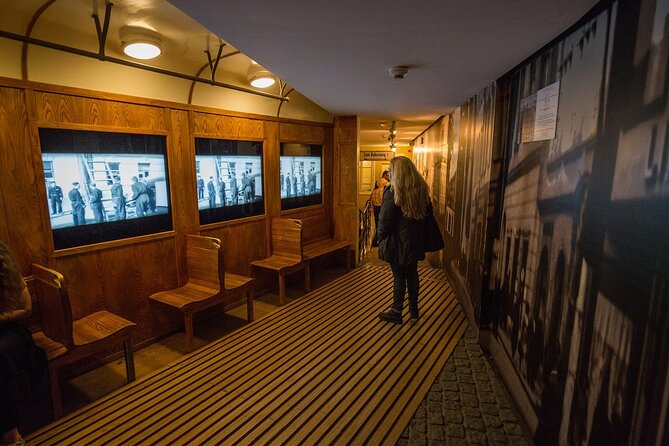
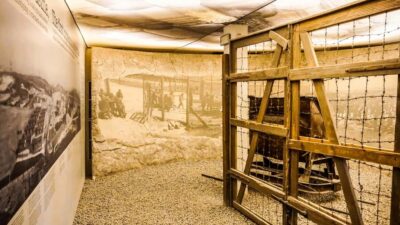
The emotional center of the visit comes as the exhibition turns toward the Jewish ghetto and the Płaszów camp. You pass through narrow passages and enter a recreated Jewish apartment before moving onward with the people of the city toward the camp.
These spaces are intentionally restrictive. The narrow layout and close quarters give you a physical sense of fear and confinement. It is not a light museum stop, and you should allow yourself time afterward before rushing to another attraction.
The exhibition also uses photographs, uniforms, objects, film, and eyewitness accounts. These materials help show how persecution affected both Jewish and Polish residents, while keeping the chronology tied to Krakow.
A guide is particularly valuable here. Without context, you might notice the set design but miss the sequence of events and the difference between civilian life, ghetto confinement, forced labor, and the camp system.
The displays are not designed only to explain what happened to Jewish residents. The story also covers the broader treatment of the Polish population under Nazi occupation. Several tour experiences praised this wider view because it left them with a better understanding of Poland and its people during the war.
That said, the emotional presentation will not suit everyone in the same way. The subject is difficult, and the tour moves through painful material at a set pace. If you need a quiet, unhurried museum visit, the group format may feel too brisk.
A few more Kraków trips worth weighing up
- From Krakow: Wieliczka Salt Mine Tour & Skip the Line Ticket
★ 4.4 · 3,925 reviews - Schindler’s Factory in Krakow: Guided Tour & Skip the Line Ticket
★ 4.5 · 1,714 reviews - Auschwitz-Birkenau: Skip-the-Line Ticket and Guided Tour
★ 4.2 · 1,034 reviews - Auschwitz Birkenau Guided Tour/Skip The Line/PickUp/Guide ENG
★ 4.5 · 930 reviews
Oskar Schindler, the factory, and the film connection
The building’s connection to Oskar Schindler is the obvious draw. Steven Spielberg’s 1993 film brought his story to a worldwide audience, and visiting the former factory adds a strong sense of place.
You will learn about Schindler, his role as a factory owner, and his efforts during the occupation. Yet the museum does not place him in every room. Its purpose is to explain Krakow’s wartime experience, with Schindler’s life included within that account.
That can be either the tour’s strength or its weakness. I would recommend it to someone who has seen Schindler’s List and wants to understand the surrounding events. I would be more cautious if your only goal is to see original factory machinery or follow a complete account of Schindler’s personal life.
One useful point is that the factory connection is historical rather than industrial. You are visiting the building and its exhibition, not a preserved enamel production line. The facility’s identity today is tied to the museum presentation, multimedia displays, and historical reconstruction.
The film connection still adds weight. Scenes you may remember from the movie gain a real Krakow setting, but the tour does not depend on your having seen it. The guide explains the occupation and persecution in a way that can work for first-time visitors too.
Why the guided format adds value
I would choose the guided option over walking through the exhibition alone if your schedule allows it. The museum contains a lot of material, and the guide helps you decide what matters most.
The strongest guides do three jobs:
- They put the exhibits in chronological order.
- They explain the connection between Krakow, the ghetto, Płaszów, and Schindler.
- They point out details you might otherwise pass without understanding.
Several people described their guide as excellent, clear, and deeply informed. One guide stayed after the formal end to answer questions. Another was compared to a history professor because she built a strong narrative around the events.
The tradeoff is that a guided visit leaves less time for private reading. The guide must keep the group moving, and the museum’s schedule may require the next group to enter. If you stop at every photograph or paragraph, you may fall behind.
This is why the tour can feel both useful and rushed. You receive a strong explanation, but you do not always get enough time to absorb every panel. I would listen closely during the guide’s main story, then return to the displays that interest you if the schedule permits.
Group size, walking, and the pace of the visit
The advertised duration is about one hour and 30 minutes. That is long enough for a meaningful overview, but short for a museum with this much material.
Expect plenty of standing and walking. The route leads through several rooms and staged areas, with narrow sections that can become crowded. Around 20 people in a group is manageable with headsets, but it is not intimate.
Larger groups create two problems. You may wait for people ahead to clear a small room, and you may have trouble examining a photograph or display before the guide moves on. Some people felt packed into the space, while others still found the organization good enough to recommend the tour.
The time pressure can be worse when groups overlap or when an operator needs to finish for another scheduled entry. One person described the final part as rushed. Another said the guide was on time and easy to find but did not allow enough time to read or interact with the exhibition.
I suggest wearing comfortable shoes and treating this as an active museum visit, not a quick photo stop. If you have teenagers, the tram, recreated streets, and interactive elements may help hold their attention. Two teenagers were reported to have enjoyed the experience, which is a useful sign for families with older children.
Is $50.46 good value?
At $50.46 per person, this is not the cheapest way to enter a Krakow museum. The price makes the most sense if skip-the-line access and an English-speaking guide are important to you.
You are paying for more than the admission ticket. The tour adds a structured explanation, a reserved place in a scheduled group, and help connecting the displays to Krakow’s wartime story. For a first visit, that can save you from wandering through a powerful but complicated exhibition without a clear thread.
The value drops if you prefer to read every panel at your own speed. You might feel that you paid for a guided visit but received too little independent museum time. It also drops if your group is merged into a much larger one or if unclear timing causes you to miss part of the presentation.
The 4.1 out of 5 rating reflects that split. Praise is strongest for the guides and the quality of the museum. Lower marks usually focus on crowding, rushed pacing, or problems outside the building.
The tour is booked, on average, 26 days ahead. That suggests planning early is sensible, especially if you need a particular time. From January 1, 2026, the selected time may be only a preference because the museum’s schedule can change. Do not build a tight connection around the exact minute shown at booking.
Who should book this experience?
I would recommend it to you if you want a serious introduction to Krakow under Nazi occupation and prefer having the story explained as you move through the museum.
It is especially suitable for:
- First-time visitors to Krakow who want historical context.
- People who have seen Schindler’s List and want to understand the real setting.
- Families with teenagers who respond well to film, staged rooms, and interactive displays.
- Visitors who want skip-the-line entry and do not mind a fixed pace.
- Anyone who finds wartime history easier to follow with a guide.
I would hesitate if you mainly want a detailed Oskar Schindler biography, original factory machinery, or a slow museum afternoon. You may also prefer a different arrangement if crowds and standing are difficult for you.
The English language is a major advantage, but guide quality can vary. Most reports describe clear, strong presentations, while one person found a guide’s English difficult to follow. That is a normal risk in any group tour, though the headsets help.
Free cancellation is available if you cancel at least 24 hours before the start time. Changes or cancellations made inside that period are not accepted for a refund.
My booking advice
I would book this tour, but I would book it for the museum’s wider Krakow story, not for Schindler alone. The best part is the combination of a carefully built exhibition and a guide who can explain what the rooms mean.
Arrive early, carry matching ID, and confirm the meeting point if the sign outside shows a different time. Keep your schedule open after the visit, since the tour may run at a brisk pace and the material deserves a little quiet thought.
If you want a clear, guided introduction to wartime Krakow, $50.46 is a fair price for the convenience and interpretation. If you want to set your own pace or focus tightly on the factory owner, consider visiting only if you can arrange enough time to explore the museum independently.
FAQ
How long does the Schindler’s Factory tour last?
The guided visit lasts approximately one hour and 30 minutes.
Is admission to Schindler’s Factory Museum included?
Yes. The museum admission ticket is included in the experience.
Is the tour offered in English?
Yes. This experience is offered in English.
Do I need to bring identification?
Yes. Bring a passport or other identification document. The full name on your personalized ticket must match the name on your ID.
Is the exact start time guaranteed?
Not always. From January 1, 2026, you can select a preferred time, but the exact time may change because of the museum’s scheduling.
Can I cancel for a full refund?
Yes, if you cancel at least 24 hours before the experience start time. Cancellations or changes made less than 24 hours in advance are not accepted for a refund.
Just added around Kraków
- Rynek Underground Museum & Wawel Castle, Cathedral – Cracow★ 5.0 · 3 reviews
- Schindler’s Factory, Ghetto and Plaszow Camp Guided Tour★ 4.7 · 3 reviews
- Nowa Huta – a guided tour of a utopian socialist city★ 5.0 · 3 reviews
- Krakow: Kazimierz by Golf Cart and Schindler’s Factory Tour★ 4.8 · 3 reviews
- Private Krakow City Tour by Car and Walk with private tour guide★ 5.0 · 3 reviews
- Krakow: Jewish Traces Private Electric Car Tour★ 4.1 · 3 reviews
- Discover the Jewish Quarter with a Bike Tour★ 5.0 · 3 reviews
- Krakow: Indoor Go-Karting (24-Minute Races)★ 4.8 · 3 reviews
Schindler Factory Tours, compared.
Oskar Schindler’s Factory Entry Ticket & Guided Tour
Read our review →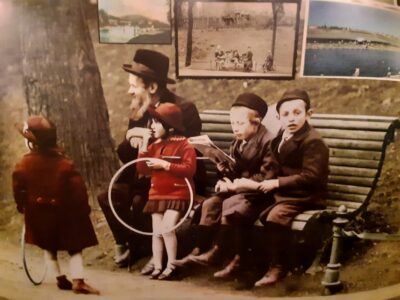
Schindler’s Factory Tour with Entrance Ticket
Read our review →
Schindler’s Factory Tour with Entrance Ticket
Read our review →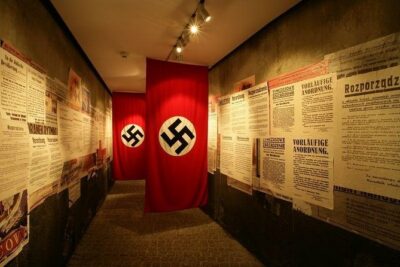
Schindler’s Factory in Krakow: Guided Tour & Skip the Line Ticket
Read our review →
Schindler’s Factory Ticket with Guided Tour Option
Read our review →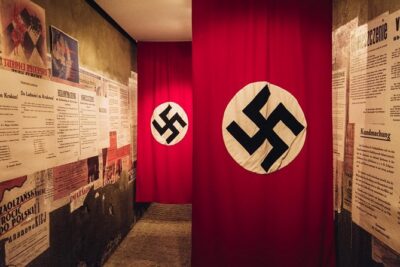
Krakow Schindler’s Factory Guided Tour with Admission Ticket
Read our review →Browse the lists this tour appears in