

REVIEW · MUSEUMS
Skip-the-Line Polin Museum Warsaw Jewish History Tour
Warsaw’s past comes into focus here. This private experience combines the POLIN Museum with important Jewish Ghetto sites, giving you both the broad story of Jewish life in Poland and the physical places tied to wartime persecution. I especially like the private guide format and the chance to see the museum with skip-the-line ticket-office access. I also like that the four-hour option adds a serious walking tour beyond the museum.
The main consideration is price: $167.97 per person is a lot for two to four hours, especially if you choose the shorter version. The two-hour option does not include the Warsaw Ghetto walk, so you need to select carefully if the outdoor sites are central to your plans.
In This Review
- Key points to know before booking
- Why pair POLIN with the former Jewish Ghetto?
- Starting near the Palace of Culture and Science
- The Ghetto Heroes Monument and its difficult silence
- One hour among the stones of the Jewish Cemetery
- Touching the surviving Ghetto Wall fragment
- Understanding the Warsaw Ghetto in context
- Nożyk Synagogue and the limits of included entry
- Jewish records, Prozna Street, and Grzybowski Square
- Two hours inside POLIN Museum
- Is $167.97 per person good value?
- Timing, meeting point, and tour choices
- Who should book this POLIN Museum tour?
- Should you book it?
- FAQ
- Where does the tour start?
- Where does the tour end?
- How long does the tour last?
- Does the two-hour tour include the Warsaw Ghetto walk?
- What is included with the four-hour tour?
- What does skip-the-line access cover?
- Which POLIN exhibitions are included?
- Is entry to Nożyk Synagogue included?
- Can I cancel for a full refund?
Key points to know before booking
- The four-hour option includes the POLIN Museum and a Warsaw Ghetto walking tour, while the two-hour option does not include the Ghetto walk.
- Your guide leads a private group, so the pace and explanations can be adjusted more easily than on a large public tour.
- POLIN tickets cover the main exhibition, current temporary exhibition, and Heritage Gallery, but skip the ticket line only, not security or the museum entrance queue.
- Guide Yulia earned especially strong praise for explaining the museum clearly and keeping a six-year-old interested during the longer tour.
- The Jewish Cemetery takes about an hour, making it one of the more substantial outdoor stops rather than a quick photo break.
- Nożyk Synagogue entry is not included and may be possible only by request, so treat it as an exterior stop unless your guide confirms access.
Why pair POLIN with the former Jewish Ghetto?
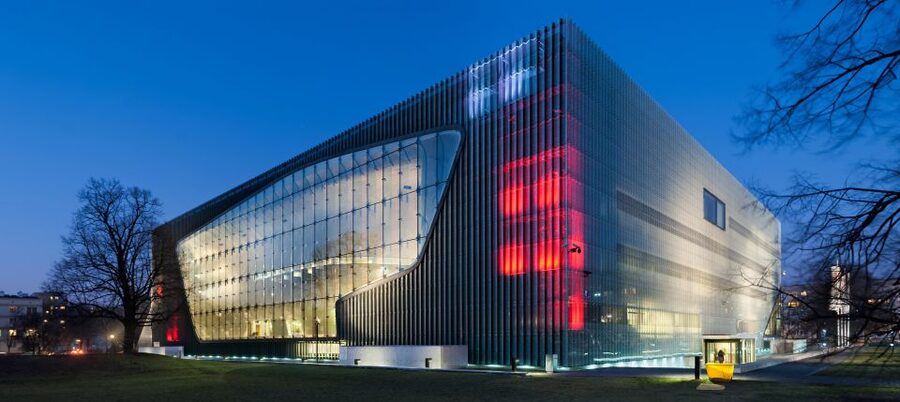
POLIN is not only a Holocaust museum. Its main exhibition follows roughly a thousand years of Jewish life in Poland, including culture, religion, community life, and the destruction brought by Nazi occupation. That wider frame matters. If you visit only memorials and wartime ruins, you can leave with a story focused almost entirely on death. POLIN also explains the life that existed before the catastrophe.
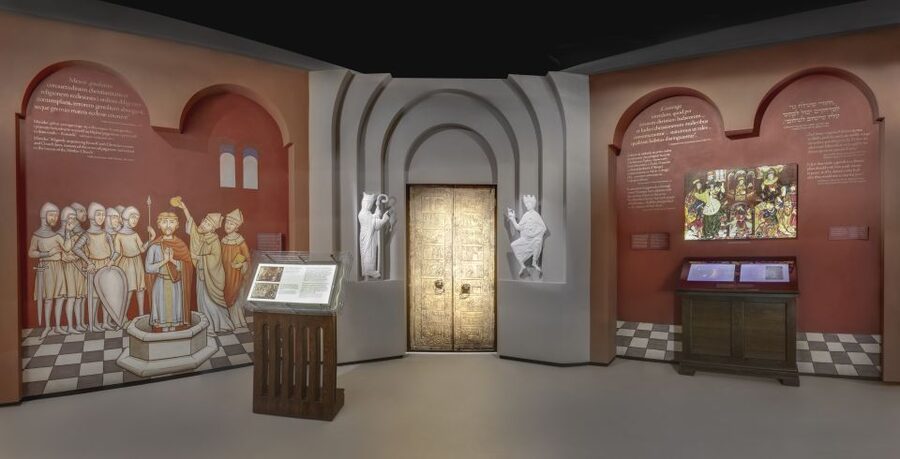
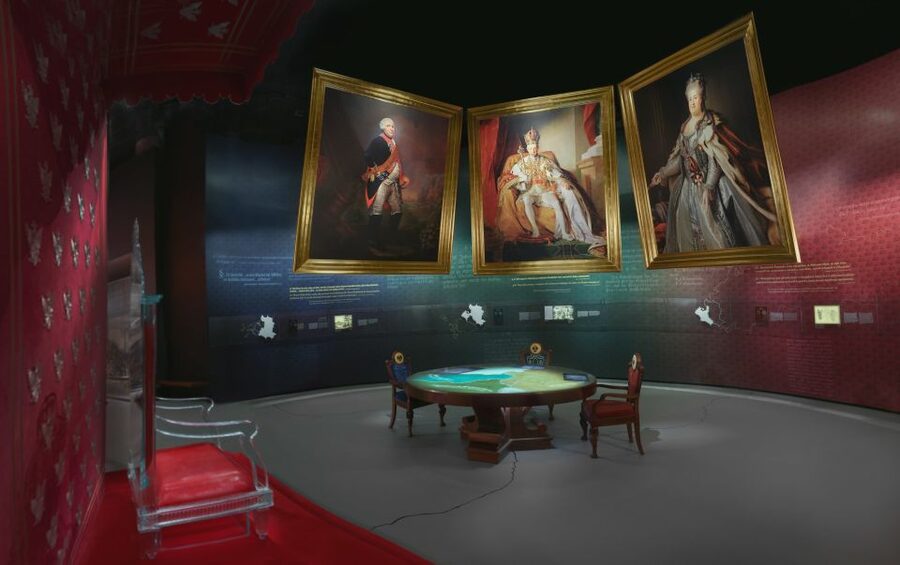
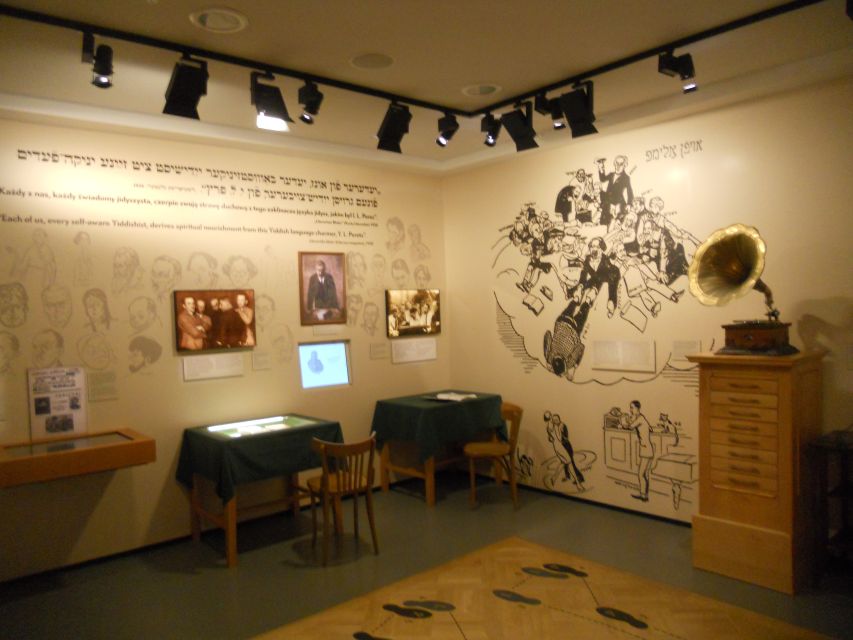
The museum uses objects, photographs, films, documents, screens, and interactive features. You may find drawers to open and displays to touch, which gives the visit a more active rhythm than a traditional room filled with glass cases. The exhibition is large enough that reading and listening to everything could take a full day.
That is where a good guide earns the fee. In two hours, your guide cannot explain every panel, but can point you toward the main ideas and keep the visit from becoming a blur of dates and names. The experience with Yulia is a useful example. She summarized the key points in two hours, then connected them to the outdoor sites. That approach should suit you if you want a clear route through the museum instead of trying to absorb every detail alone.
More History Tours in Warsaw
- Warsaw: POLIN Museum of the History of Polish Jews Ticket
★ 4.7 · 1,142 reviews - Warsaw: Chopin Concert at Historical Venue in Old Town
★ 4.7 · 445 reviews - Small-Group Historical Guided Tour of Warsaw with pick up/drop off. Public Tour.
★ 4.5 · 343 reviews
Starting near the Palace of Culture and Science
The itinerary includes the Palace of Culture and Science, Poland’s highest building and one of Warsaw’s most recognizable symbols. The visit here is focused on the exterior architecture, and admission is free.
This is a brief orientation point rather than a major part of the Jewish history tour. Its value is visual and urban. You get a reminder that Warsaw is a city of dramatic contrasts, with monumental postwar architecture alongside surviving fragments and memorials connected to the Ghetto.
Do not expect an interior visit or a long architectural tour at this stop. Think of it as a quick look at one of Warsaw’s defining buildings before the focus shifts to Jewish history.
The Ghetto Heroes Monument and its difficult silence

The Monument to the Ghetto Heroes is a short stop of about 15 minutes, but it carries considerable weight. It honors Polish Jews and recalls persecution during the German occupation of Poland.
A guide can help you read the monument as more than a landmark. The surrounding space asks for quiet attention, and the visit works best when you allow time to look closely rather than rushing through for a photograph. The short duration may feel limited, but the site does not need a long lecture to make its point.
This stop also prepares you for the POLIN Museum. Outside, you encounter a memorial to resistance and loss. Inside, you get the much longer story of the people and communities behind that memorial.
One hour among the stones of the Jewish Cemetery
The Jewish Cemetery, established between 1799 and 1806, is one of the longer outdoor stops, with about an hour scheduled. Its tombstones, known as masebas, include carved symbols and ornaments in marble and sandstone.
This is a different experience from the city streets. The cemetery offers a quiet setting where names, dates, and carved images provide a personal connection to Warsaw’s Jewish community. The symbolism on the stones gives your guide useful material to explain Jewish customs and the people buried there.
The itinerary also points to the symbolic grave of Janusz Korczak, the famous writer and teacher who died in Auschwitz. That detail gives the cemetery stop a direct link to one of the best-known figures connected with Jewish children and wartime Warsaw.
An hour is helpful here. You have enough time to walk, look at the stones, and listen without turning the cemetery into a rushed checklist. If you prefer a fast-moving city tour, this may feel slow. For anyone who wants the reflective side of Warsaw’s Jewish story, it is one of the more valuable stops.
More Museum Visits in Warsaw
- Warsaw: Polish Vodka Museum Tour with Tasting
★ 4.6 · 788 reviews - Warsaw: Museum World of Illusion Entry Ticket
★ 3.9 · 666 reviews - Warsaw: Ghetto, Jewish Cemetery & POLIN Museum Private Tour
★ 4.8 · 132 reviews - World of Illusion Museum Skip-the-Line Ticket
★ 4.0 · 55 reviews
Touching the surviving Ghetto Wall fragment
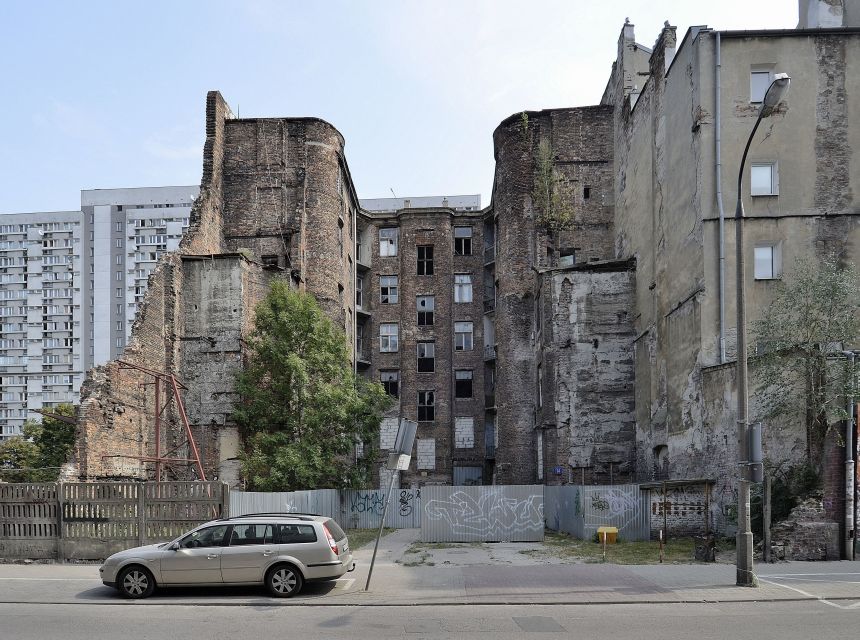
The Ghetto Wall fragment is a small but powerful physical remnant. You can see its height, touch the construction, and hear ordinary city life on the other side. That contrast is central to understanding the Ghetto: people were confined behind a barrier while the rest of Warsaw continued around them.
The stop lasts about 15 minutes and is free. Its strength comes from scale. A museum can explain the boundaries and population figures, but a surviving piece of wall gives you a direct sense of the material barrier.
The fragment is not a complete preserved district. Much of wartime Warsaw was destroyed or rebuilt, so you should not expect a large intact Ghetto quarter. Your guide’s explanation is important because the physical evidence can otherwise seem too small compared with the events it represents.
Understanding the Warsaw Ghetto in context
The Warsaw Ghetto was established in October and November 1940. It occupied only about 2.4 percent of Warsaw’s land area, yet more than 450,000 Jews were forced into its crowded confines by the Germans.
The four-hour tour spends about 20 minutes at the Warsaw Ghetto area, in addition to the other outdoor sites. That time is enough for a focused explanation of the district and its role during the occupation, but not enough for an exhaustive walking history of every street.
This is the key difference between the two tour options. On the two-hour version, the Ghetto walking tour is not included. If you want to visit the wall fragment, monument, cemetery, and other outdoor locations with a guide, choose four hours.
I would also keep your expectations realistic. The Ghetto is not presented as a single preserved attraction with a clear entrance and exit. You encounter separate locations across modern Warsaw, and the meaning comes from the guide connecting them.
Nożyk Synagogue and the limits of included entry
Nożyk Synagogue is the only surviving synagogue of the 400 that existed in Warsaw before the war. It has been restored and functions as a synagogue today, making it an important stop for anyone interested in Jewish Warsaw.
The scheduled visit is about 30 minutes, but admission is not included. Entry may be possible by request, so you should ask about it when arranging the tour rather than assume you will go inside.
This is a useful practical distinction. The tour can take you to the synagogue, but an exterior visit is the safest expectation unless access has been confirmed. Since it remains a functioning place of worship, ordinary visitor access may not follow the same pattern as a standard museum.
Jewish records, Prozna Street, and Grzybowski Square
The Jewish Historical Institute holds records, photographs, videos, and objects connected with the Warsaw Ghetto during the Nazi occupation. The tour treats it as a related point of interest rather than a separate included museum visit, so do not plan on a full indoor visit unless your guide specifies otherwise.
Prozna Street receives about 20 minutes. It is connected with the history of the Nazi occupation and offers another reminder that Warsaw’s Jewish story is tied to ordinary streets, not just formal memorials.
Grzybowski Square takes about 15 minutes. The area was part of the Jewish Ghetto during World War II, and today you can find a Jewish theater and a memorial garden with a fountain. The square shows how modern Warsaw has reused and reshaped places marked by wartime history.
These shorter stops work best as links in the larger route. None replaces the POLIN Museum or the cemetery, but together they help you see that the Ghetto was a district within a living city, not an isolated historical set.
Two hours inside POLIN Museum
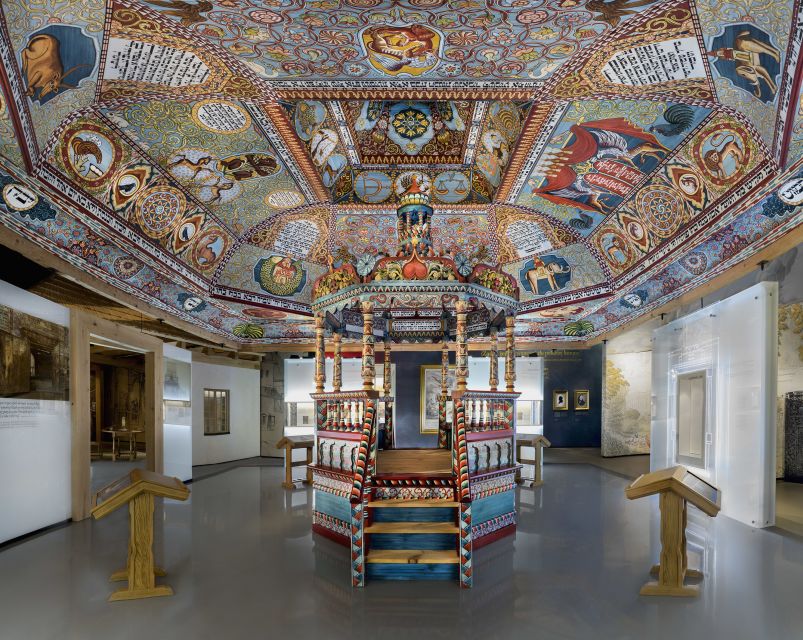
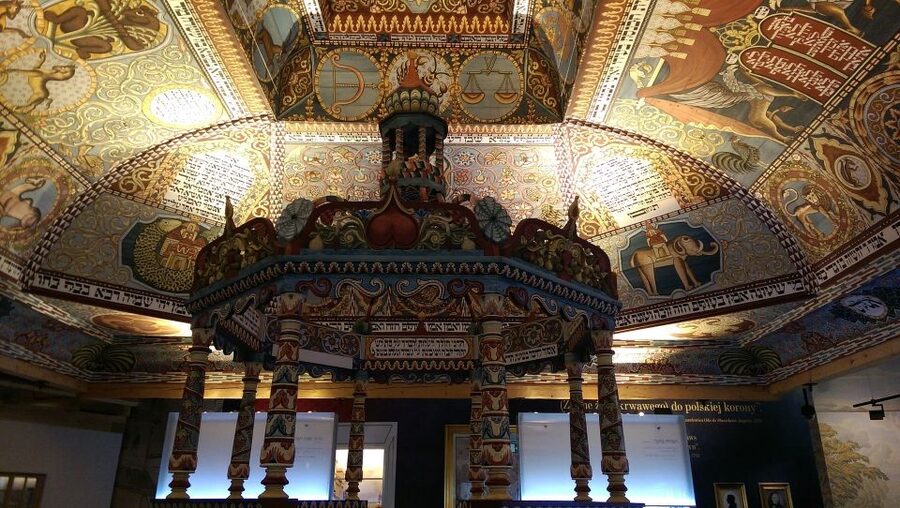
The POLIN Museum is the main event. Its purpose is to restore the memory of the civilization created by Polish Jews over a thousand years. That makes it especially useful for first-time visitors who know the Holocaust story but want a fuller picture of Jewish life in Poland.
The exhibition moves chronologically through Polish history while following Jewish history within it. A guide can help you connect the sections, rather than treating each room as a separate subject. The result is a more balanced understanding of Jewish communities, traditions, achievements, and suffering.
You should plan on about two hours inside. That is enough for a guided overview, but not enough to inspect every object, document, film, and interactive display. If you read every label, the museum could occupy much of a day.
The museum’s design is a strong part of the visit. You may open drawers, use screens, and examine objects in a way that keeps the experience active. This can work well for families. A six-year-old on the four-hour tour remained interested and asked many questions, which suggests that the guide can adapt difficult material for younger minds. Still, the subject is serious, and parents should decide how much wartime detail suits their children.
The included admission covers the main exhibition, the ongoing temporary exhibition, and the Heritage Gallery. Skip-the-line access applies at the ticket office, not necessarily at security or the entrance itself. That saves a step, but it does not guarantee instant entry.
Is $167.97 per person good value?
At $167.97 per person, this is priced as a private, guide-led experience rather than a basic museum ticket. The value depends on how much structure and explanation you want.
I see the price as easier to justify for a small group that chooses the four-hour option. You receive a licensed guide, expert commentary on Jewish history and the Holocaust in Poland, museum admission, and a private route through important outdoor locations. A private tour also means your group is not joined by strangers, and the guide can respond to your questions.
The price is harder to justify if you only want to enter POLIN and read at your own speed. The museum itself offers enough material for an independent visit, and the two-hour tour leaves out the Warsaw Ghetto walk. In that case, you are paying mainly for guided interpretation and convenience.
Group discounts are available, so the total cost may work better when shared among several people. The tour is offered in English and uses mobile tickets. Confirmation arrives at booking, and you should check your email the day before for important information.
Timing, meeting point, and tour choices
The tour begins at Ludwika Zamenhofa 11 in Warsaw. The activity ends at a different location, so check the final meeting details before setting up your next plan.
The full experience takes about four hours. The shorter version takes about two hours and does not include the Warsaw Ghetto walking tour. Since POLIN itself receives roughly two hours, the shorter option is best understood as a museum-centered visit with fewer outdoor locations.
Most people can participate, and the meeting point is near public transportation. The itinerary includes several walking stops, including the cemetery and Ghetto-related sites, so comfortable footwear is a sensible choice even though the provided details do not specify the exact walking distance.
Free cancellation is available if you cancel at least 24 hours before the local start time. Inside that window, the payment is not refunded and changes are not accepted.
Who should book this POLIN Museum tour?
I would choose this tour if you want Warsaw’s Jewish history explained in plain language and tied to actual places in the city. It suits first-time visitors, families who want help making the museum accessible, and people who prefer a private guide instead of a large group.
The four-hour option is the better choice for a serious introduction. It gives you POLIN plus the cemetery, wall fragment, Ghetto area, synagogue, and other related places. The two-hour option makes sense if your schedule is tight or you mainly want a guided museum visit.
I would skip it if you prefer to spend a full day reading every museum display, or if the price is too high for your budget. I would also not book the shorter tour expecting a full outdoor history walk, because that is specifically not included.
Should you book it?
Book the four-hour private tour if you want a clear, human explanation of both Jewish life in Poland and the destruction of Warsaw’s Jewish community. The strongest part is the combination of POLIN’s broad chronological story with the cemetery, Ghetto wall, monument, and city streets.
Choose the two-hour version only when the museum is your main goal. Ask about Nożyk Synagogue entry in advance, and remember that skip-the-line tickets do not bypass security. For many visitors, the guide’s ability to summarize POLIN without flattening its story is the best reason to pay the premium.
FAQ
Where does the tour start?
The tour starts at Ludwika Zamenhofa 11, 00-153 Warszawa, Poland.
Where does the tour end?
The activity ends at a different location. The exact end details are provided with the booking information.
How long does the tour last?
The experience lasts approximately two to four hours, depending on the option selected.
Does the two-hour tour include the Warsaw Ghetto walk?
No. The Warsaw Ghetto walking tour is not included in the two-hour option.
What is included with the four-hour tour?
The four-hour option includes a private POLIN Museum and Warsaw Ghetto tour, a licensed guide, expert commentary, the walking tour, and skip-the-line tickets to POLIN.
What does skip-the-line access cover?
The ticket lets you skip the line at the POLIN Museum ticket office. It does not let you skip the entrance or security checks.
Which POLIN exhibitions are included?
Admission covers the main exhibition, the ongoing temporary exhibition, and the Heritage Gallery.
Is entry to Nożyk Synagogue included?
No. Admission is not included. Entry may be possible by request.
Can I cancel for a full refund?
Yes, if you cancel at least 24 hours before the experience starts. Cancellations or changes made less than 24 hours before the start time are not refunded or accepted.
More Skip the Line
- Warsaw: Skip-the-Line Royal Castle Guided Tour
★ 4.9 · 79 reviews - Warsaw: Lunch or dinner at Hard Rock Cafe with Skip-the-Line
★ 4.4 · 70 reviews - Skip-the-Line Polin Museum Warsaw Jewish History Tour
★ 5.0 · 14 reviews - Chopin Tour in Warsaw with Skip-the-line Museum & Concert
★ 4.9 · 13 reviews
Just added around Warsaw
- Jewish heritage in Warsaw★ 4.5 · 3 reviews
- Warsaw Outdoor Paintball with Transfers (all year round)★ 5.0 · 3 reviews
- World War II Warsaw Old Town, Military Cemetery Walking Tour★ 4.7 · 3 reviews
- Warsaw: Wolf’s Lair & Swieta Lipka Small-Group Tour + Lunch★ 5.0 · 3 reviews
- Sunset Boat Tour with Unlimited Drinks in Warsaw★ 3.5 · 3 reviews
- Majdanek – German camp from II World War – Private Tour – 1 DAY TRIP FROM WARSAW★ 5.0 · 3 reviews
- From Warsaw: Guided Tour to Wieliczka Salt Mine and Krakow★ 4.5 · 3 reviews
- Warsaw Sightseeing with NEW Mercedes Sclass !!!★ 5.0 · 3 reviews
Museums, compared.
Auschwitz-Birkenau Museum and Memorial Guided Tour from Krakow
Read our review →
POLIN Museum of the History of Polish Jews Ticket
Read our review →


Krakow Schindler’s Factory Museum Guided Tour in English
Read our review →
Auschwitz Birkenau Museum Guided Tour with Pickup
Read our review →
Browse the lists this tour appears in