

REVIEW · WALKING TOURS
Warsaw: 2-Hour Praga Walking Tour
Praga keeps Warsaw’s past close to the pavement. On this private two-hour walk, you explore a side of the city that feels very different from the polished Old Town, with bullet-marked tenements, communist-era blocks, old trading streets, and former industrial buildings now used by artists and restaurants. I like the focus on everyday history, and I like that the tour connects architecture with personal stories, including the Warsaw Zoo couple who helped save Jews from the ghetto. The main consideration is the price: at $69 per person, this is best value for a private group that wants a focused guide rather than a cheap general walk.
You meet guide Marzena, whose clear explanations and patient answers have been praised by English-speaking participants, at the Metropolitan Cathedral of Maria and Magdalena. The tour is short, so you will not see every corner of Praga. Instead, you get a concentrated introduction to its streets, faiths, industries, markets, wartime scars, and changing food and art scene.
In This Review
- Key points to know before booking
- Why Praga feels unlike Warsaw’s Old Town
- Meeting at the cathedral and the M2 subway
- Reading the scars on pre-war tenements
- From communist apartment blocks to creative spaces
- St. Florian Cathedral and the Orthodox story
- Różycki Bazaar and the sound of street life
- The Warsaw Zoo couple and a difficult wartime story
- Koneser, the former vodka factory
- What the two-hour format does well
- Is $69 per person a fair price?
- Who should book this Praga walk?
- Should you book the Warsaw Praga Walking Tour?
- FAQ
- Where does the Warsaw Praga walking tour meet?
- How long does the tour last?
- Is this a private tour?
- Which languages are available?
- Is the guide certified?
- What does the tour visit?
- Are food and drinks included?
- Can I cancel for a full refund?
Key points to know before booking
- Praga tells a different Warsaw story: The district grew through trade and industry, and Christians, Jews, and Orthodox communities lived close together.
- The walk includes visible wartime traces: Old tenement houses still show bullet holes, while communist apartment blocks and post-industrial sites reveal later chapters.
- Koneser gives the tour a strong finish: The former vodka factory complex now houses creative businesses, restaurants, boutiques, and cultural spaces.
- The Warsaw Zoo story adds emotional weight: You hear how the zoo director and his wife helped save hundreds of Jews from the Warsaw Ghetto.
- Marzena is a major strength: Her style is described as friendly, patient, entertaining, and able to handle detailed questions about architecture and local society.
- It is a private two-hour walk: You pay more than for a large group tour, but you gain a more personal pace and the chance to ask your own questions.
Why Praga feels unlike Warsaw’s Old Town
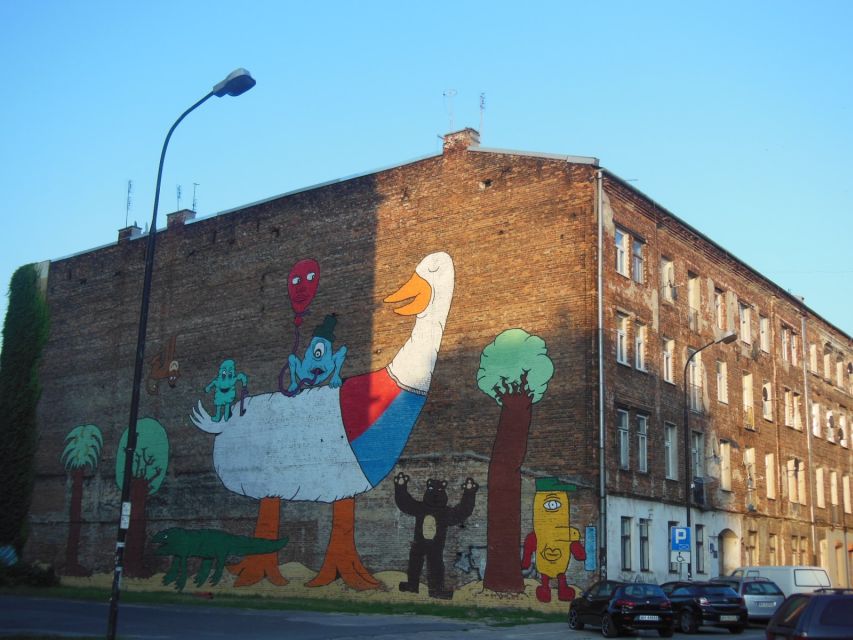
Warsaw’s left bank gets much of the postcard attention. The Old Town, royal route, and rebuilt monuments tell an important story, but Praga gives you a less polished view of the capital. It sits on the right bank of the Vistula, only a short distance from the historic center, yet its streets developed under different economic and social conditions.
Praga was shaped by trade, workshops, factories, and small businesses. Over time, Christians, Jews, and Orthodox residents lived side by side here. That mix can still be read in the religious buildings, market traditions, street names, and older tenements.
I like this setting because the history is not confined to one grand monument. You look at a worn doorway, a church, an apartment block, or an old industrial wall, and the guide explains what kind of people used the place and why the neighborhood developed as it did. You get a portrait of Warsaw built from ordinary streets.
The district also carries a complicated reputation. Its rougher appearance is part of its appeal, but you should not expect a tidy museum quarter. Some buildings are weathered, and parts of the walk pass through gray communist blocks and former industrial areas. That contrast is exactly what makes Praga useful for understanding the city beyond its restored center.
More Walking Tours in Warsaw
- Warsaw: Old Town Highlights Walking Tour in English
★ 4.7 · 1,516 reviews - Warsaw: Old Town Guided Walking Tour
★ 4.9 · 599 reviews - Half-Day Polish Food Walking Tour with Guide and Dinner
★ 4.5 · 381 reviews
Meeting at the cathedral and the M2 subway
The meeting point is in front of the Metropolitan Cathedral of Maria and Magdalena at aleja Solidarności 52. The guide waits at the exit from the M2 subway with a PolinTours sign. This is practical if you are using public transportation, though you should allow a few minutes to orient yourself around the cathedral and subway exit.
The cathedral gives you an immediate sense of Praga’s religious importance. From here, the tour moves into the surrounding district rather than treating the church as an isolated sight. You begin to see how religious buildings, homes, markets, and commercial spaces sit within the same urban fabric.
Because the tour lasts only two hours, arriving on time matters. A private walk can adjust slightly to your questions, but it cannot cover every street if the group loses time at the start. Comfortable shoes are sensible, and sunglasses, a hat, and sunscreen are useful on a sunny day. Large bags, oversized luggage, smoking, pets, alcohol, and drugs are not allowed.
Reading the scars on pre-war tenements
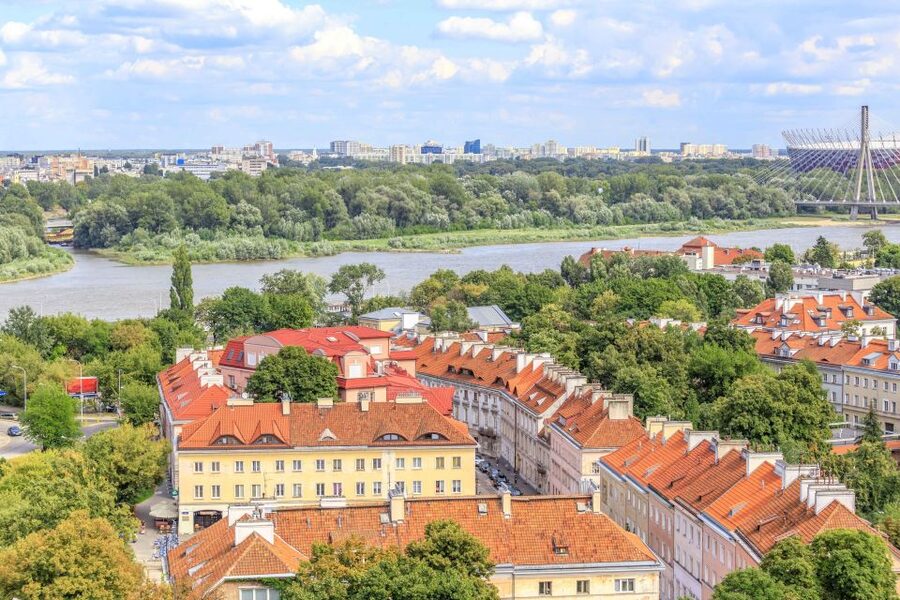
One of the strongest parts of the walk is the look at old tenement houses. These buildings help you picture pre-war Warsaw before the destruction of the Second World War and the rebuilding that followed. Some still carry bullet holes, a small but powerful reminder that the city’s wartime damage was not limited to famous battle sites.
I find these details more effective than a long list of dates. A damaged facade brings history down to eye level. You can imagine homes, shops, and neighbors occupying the same streets before the war, then consider how much of that city disappeared or changed.
The tour also explains the entrepreneurs who helped make Praga a major trading hub before the war. That business history matters because it shows the district as more than a poor or neglected quarter. It was a working part of Warsaw, connected to commerce and movement across the river.
Your guide’s role is especially important here. A facade alone cannot tell you who lived behind it or why a particular street mattered. Marzena has been praised for explaining architecture and local history in an accessible way, and that is the kind of guidance this section needs. You can ask about details that catch your eye instead of simply walking past them.
From communist apartment blocks to creative spaces
The next layer is the communist period. You see gray apartment blocks and the remains of industrial zones, a sharp change from the older tenements. These structures may not look beautiful, but they explain how Warsaw’s housing and working life changed after the war.
The contrast is useful. Praga was not frozen in its pre-war identity. It adapted to a new political and economic system, and later became associated with informal commerce and free trade during the communist era. The guide connects the buildings with the people and businesses that used them, giving the district a social story as well as an architectural one.
Some former industrial buildings now house art galleries, boutique designers, and restaurants. This is where you see Praga changing again. The old industrial shell remains, but the use has shifted. That can be exciting if you like urban renewal and creative neighborhoods, though it may feel less authentic if you expect every corner to remain untouched.
I appreciate that the tour does not present change as purely good or bad. New restaurants and design shops bring energy and investment, but they also signal that Praga is moving away from its older working-class character. In two hours, you get an introduction to that tension without pretending the district has one simple identity.
A completely different kind of day out in Warsaw:
- Warsaw: Chopin Concert in the Old Town
★ 4.8 · 2,287 reviews - Warsaw: Traditional Galar Cruise on The Vistula River
★ 4.6 · 1,640 reviews - Warsaw Concert: Chopin – Painted by Candlelights with Wine
★ 4.8 · 1,442 reviews - Warsaw: City Sightseeing Hop-On Hop-Off Bus Tour
★ 3.6 · 1,415 reviews
St. Florian Cathedral and the Orthodox story
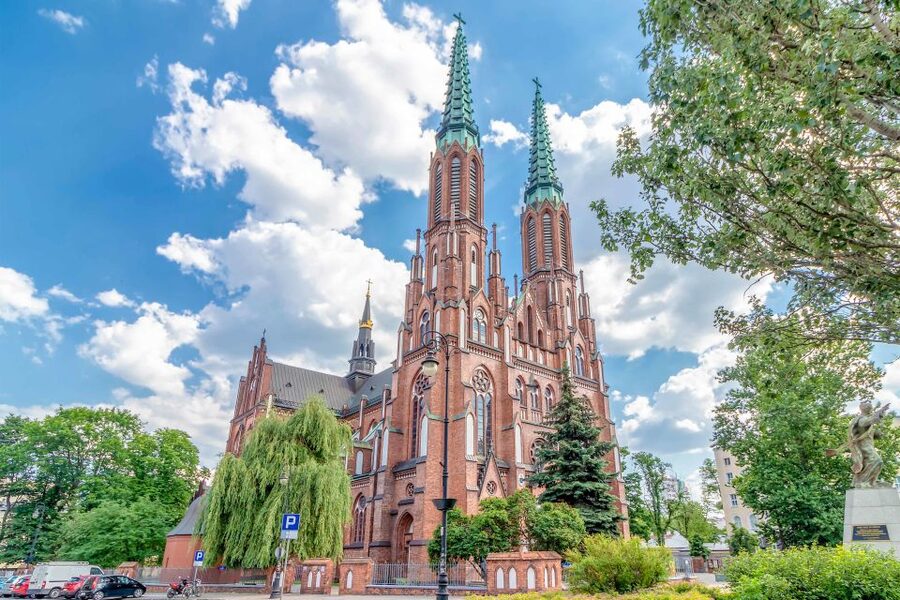
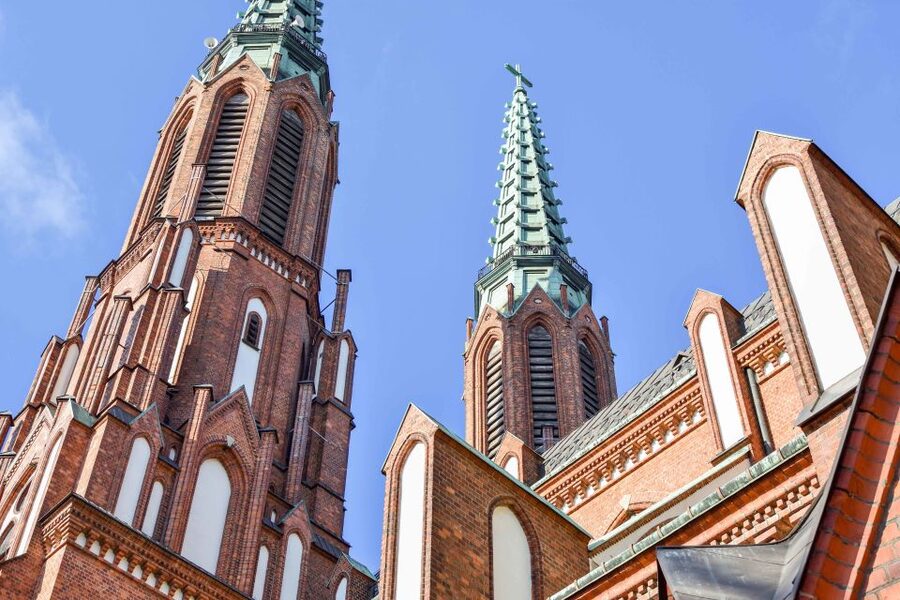
St. Florian Cathedral is another important stop. It helps explain the Christian history of Praga and gives the route a major architectural landmark amid the residential streets.
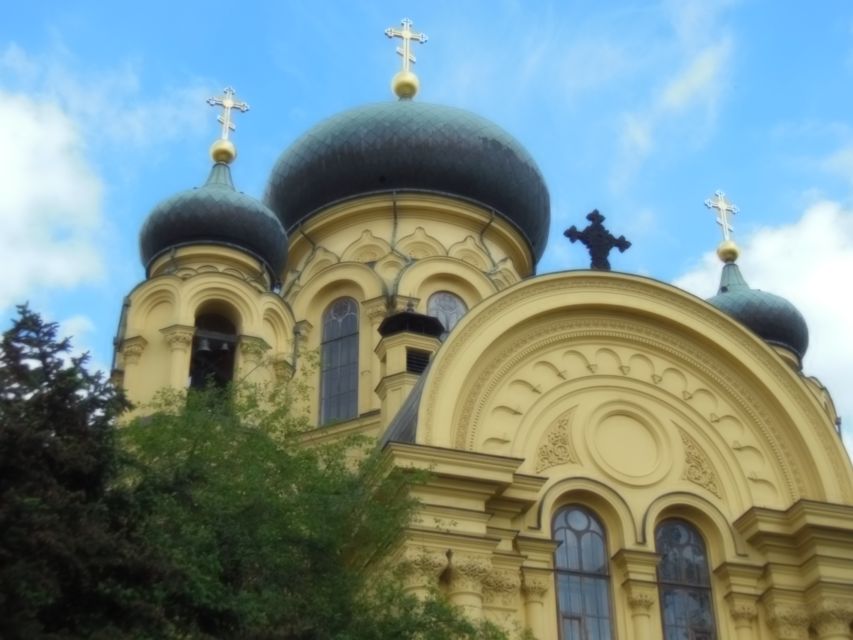
The tour also includes an Orthodox church connected to the site of a former synagogue and ritual bath. That single location reflects the district’s layered religious past. You are not simply looking at separate places of worship. You are seeing how the neighborhood’s communities occupied the same area over time, with buildings and sites changing function as the population and political conditions changed.
This is one reason I would choose a guided walk instead of exploring Praga without help. You could photograph the churches and pass through the streets on your own, but you might miss the connection between the Orthodox site, Jewish life, Christian institutions, and the district’s commercial growth.
The information is presented during a walking route, so expect a mix of outdoor explanation and looking closely at buildings rather than extended interior visits. The supplied details do not promise entry into every religious site. If going inside a particular church matters to you, ask the guide when booking.
Różycki Bazaar and the sound of street life
Różycki Bazaar represents Praga’s trading tradition. Markets matter here because they connect the district’s pre-war commercial life with its later reputation for informal trade under communism.
You hear about the entrepreneurs who helped turn Praga into a key trading center, then learn how commerce continued to shape the area in the communist period. The bazaar gives that story a physical setting. It is easier to understand the importance of trade when you are standing in a place associated with buying, selling, and neighborhood exchange.
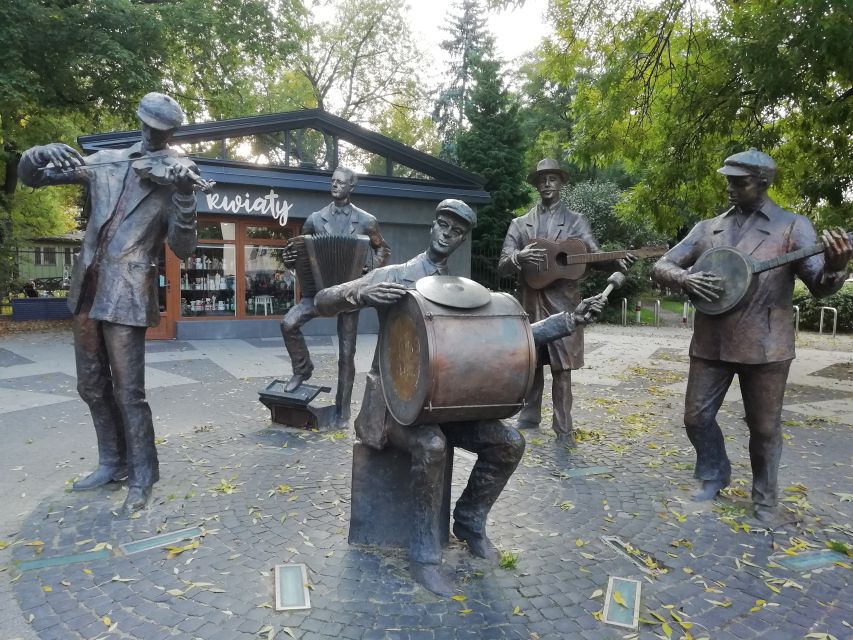
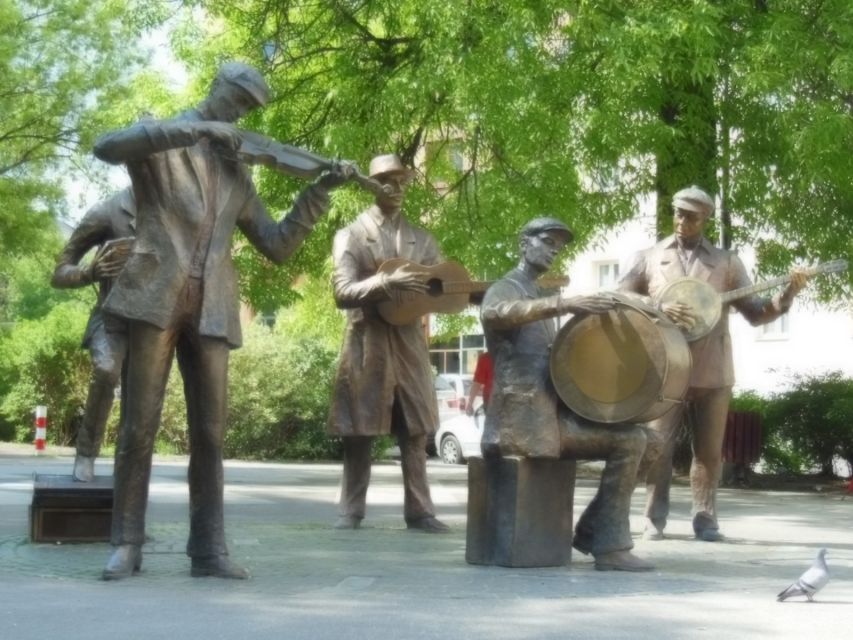
The nearby monument to the Praga Street Band adds a lighter, more local note. It points toward the district’s street culture and public character. This is not only a route through war memorials and industrial history. Music, markets, small businesses, and neighborhood identity all have a place in the story.
I would especially recommend this section if you want to understand how a city’s character survives through ordinary habits. Grand monuments tell you what a city chooses to honor. A market and a street-band monument can tell you what people enjoyed, bought, heard, and remembered in daily life.
The Warsaw Zoo couple and a difficult wartime story
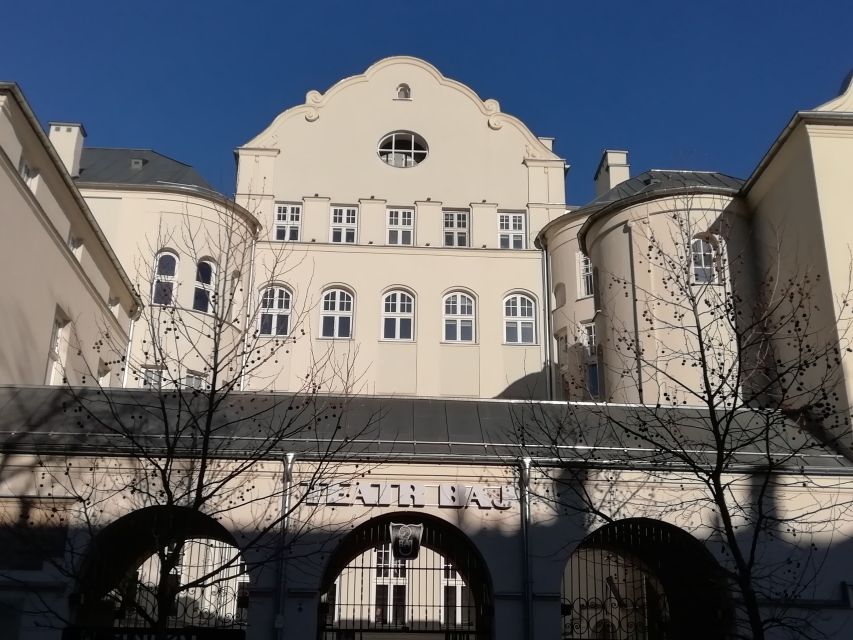
The most moving historical thread concerns the director of the Warsaw Zoo and his wife. You hear how they helped save hundreds of Jews from the Warsaw Ghetto.
This story adds a human scale to the wartime history. Instead of discussing only destruction, occupation, and dates, the guide shows how individual people made dangerous choices to help others. The zoo connection also broadens your understanding of Warsaw’s wartime experience beyond the better-known sites in the city center.
The subject is serious, and the tour does not treat it as a quick photo stop. You should expect this part to carry emotional weight, especially because it links a familiar public institution with private acts of courage.
The details provided do not promise a visit inside the zoo or a full tour of its grounds. The value here is the story and its connection to Praga, not an admission ticket or animal visit. If you want the zoo itself, plan that separately.
Koneser, the former vodka factory
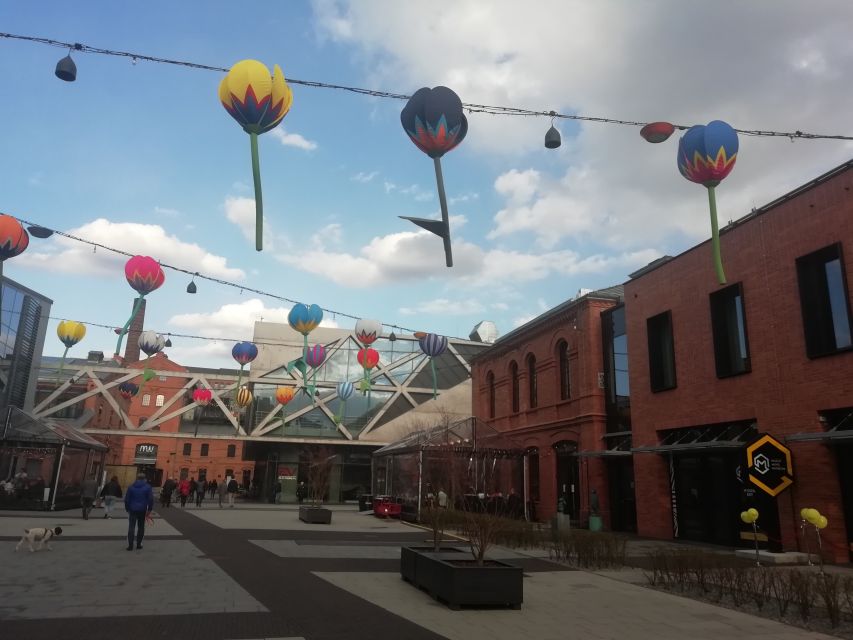
The Koneser complex is one of the tour’s most distinctive stops. The former vodka factory shows how an industrial site can take on a new role without losing its earlier identity.
The complex now includes art-related spaces, boutique designers, and restaurants. That makes it a useful final chapter for the walk. You have seen Praga as a trading district, a multi-faith neighborhood, a wartime setting, a communist-era commercial center, and now a place attracting creative businesses.
Koneser also gives you a chance to think about the price of change. Reuse can preserve old industrial buildings and bring people back into areas that once had limited public life. At the same time, the new shops and restaurants may feel more polished and commercial than the older streets nearby.
I like the way this stop ties the whole walk together. Praga is not simply a relic of pre-war Warsaw, nor is it only an up-and-coming district. It is a place where old industry, difficult memory, local trade, and new culture sit close together.
What the two-hour format does well
Two hours is enough for a strong introduction, but not enough for an exhaustive study of Praga. You will see key examples and hear the main historical threads, then leave with a clearer idea of where to return on your own.
A short walk also keeps the experience manageable. You can fit it into a day that includes the Old Town, museums, or a meal elsewhere. The downside is that some stops will receive a brief explanation rather than a long visit, especially if your group asks many questions.
The private format helps make up for the limited time. You can ask about architecture, Jewish and Orthodox history, communist housing, local business, or the meaning of a particular building. Marzena has been singled out for patience and for answering detailed questions, which is valuable in a district with so many overlapping stories.
The available languages are English, German, and Polish. The activity is offered for a private group, so it suits couples, families, and small parties that prefer conversation over a fixed large-group script.
Is $69 per person a fair price?
At $69 per person, this is not a bargain walk. You are paying for a certified guide, a private group, and a focused route through a district that can be confusing without local context. Lunch, drinks, hotel pickup, and drop-off are not included.
The price makes the most sense for a small group. If several people share the private booking, the personal attention becomes easier to justify. For a solo participant, the cost is harder to assess, especially since the tour lasts just two hours.
I would also compare the price with your priorities. If you mainly want free sightseeing and photographs, you can walk around parts of Praga independently. If you want the links between pre-war commerce, religious communities, wartime rescue, communist trade, and present-day redevelopment, a guide adds real value.
Flexible booking helps reduce the risk. You can cancel up to 24 hours before the start for a full refund, and you can reserve now and pay later. One serious practical warning is that a previous booking had its start time changed from 10 a.m. to 2 p.m. at the last minute, and the participant could not attend. Confirm the time before setting other plans.
Who should book this Praga walk?
I would recommend it to you if you have already seen central Warsaw and want a less familiar side of the city. It is also a good fit if you enjoy architecture, social history, wartime stories, religious heritage, markets, and old industrial buildings more than a long list of famous monuments.
You will get the most from it if you ask questions. Marzena’s patient style suits curious participants who want to discuss why a building matters or how Praga changed over time.
This may not be your best choice if you need an accessible route, a food-focused tour, or a full-day experience. The information provided does not describe accessibility arrangements, interior access, or tastings, so ask before booking if any of those are essential.
Should you book the Warsaw Praga Walking Tour?
Book it if you want context rather than checklist sightseeing. The tour’s best features are its personal guide, visible traces of pre-war and wartime Warsaw, the Warsaw Zoo rescue story, and the unusual mix of churches, markets, communist blocks, and the Koneser factory.
I would be more cautious if you are watching every dollar or visiting Warsaw for only one day and have not yet seen the main center. For a private group with an interest in local history, the $69 price can be worthwhile. For a solo visitor seeking a low-cost stroll, it is a more serious expense.
The strongest reason to choose this walk is simple: Praga makes Warsaw harder to summarize, and that is a good thing. You leave with a picture of a district shaped by trade, faith, war, industry, and change, not just a collection of attractive streets.
FAQ
Where does the Warsaw Praga walking tour meet?
The meeting point is in front of the Metropolitan Cathedral of Maria and Magdalena at aleja Solidarności 52, 03-402 Warsaw. The guide waits at the M2 subway exit with a PolinTours sign.
How long does the tour last?
The walking tour lasts two hours.
Is this a private tour?
Yes. The activity is offered for a private group.
Which languages are available?
The live guide is available in English, German, and Polish.
Is the guide certified?
Yes. A certified tour guide is included.
What does the tour visit?
The route includes Praga streets and pre-war tenements, St. Florian Cathedral, an Orthodox church connected with a former synagogue and ritual bath, Różycki Bazaar, the Praga Street Band monument, and the Koneser former vodka factory complex.
Are food and drinks included?
No. Lunch, food, and drinks are not included.
Can I cancel for a full refund?
Yes. You can cancel up to 24 hours in advance for a full refund. You can also reserve now and pay later.
More 2-Hour Experiences
- Warsaw: 2-Hour Guided Segway Tour
★ 4.8 · 34 reviews - Warsaw: 2-Hour Tour of Daily Life in the Ghetto Warsaw
★ 4.9 · 26 reviews - Warsaw: 2-Hour Chopin’s Life Walking Tour
★ 5.0 · 19 reviews - Warsaw: 2-Hour Old Town Walking Tour
★ 5.0 · 17 reviews
Just added around Warsaw
- Jewish heritage in Warsaw★ 4.5 · 3 reviews
- Warsaw Outdoor Paintball with Transfers (all year round)★ 5.0 · 3 reviews
- World War II Warsaw Old Town, Military Cemetery Walking Tour★ 4.7 · 3 reviews
- Warsaw: Wolf’s Lair & Swieta Lipka Small-Group Tour + Lunch★ 5.0 · 3 reviews
- Sunset Boat Tour with Unlimited Drinks in Warsaw★ 3.5 · 3 reviews
- Majdanek – German camp from II World War – Private Tour – 1 DAY TRIP FROM WARSAW★ 5.0 · 3 reviews
- From Warsaw: Guided Tour to Wieliczka Salt Mine and Krakow★ 4.5 · 3 reviews
- Warsaw Sightseeing with NEW Mercedes Sclass !!!★ 5.0 · 3 reviews
Walking Tours, compared.




Gdańsk City Sights & History Guided Walking Tour in English
Read our review →


Browse the lists this tour appears in