
REVIEW · OLD TOWN WALKING TOURS
Warsaw: 2-Hour Old Town Walking Tour
Warsaw’s Old Town rose from ruin. This two-hour walk makes that remarkable story the center of the visit, while leading you along the Royal Route, Castle Square, the Market Square, and New Town. I especially like the focus on postwar reconstruction and the way local guides connect grand monuments with people such as Chopin, Marie Curie, and Pope John Paul II. The main drawback is time: two hours passes quickly, and there is no included entry to interiors or meal.
I also like that this is a private-group tour, with an English-speaking guide and headsets for groups of up to 10 people. Guides such as Marzena and Mary have brought a warm, personal touch, answering questions and adding food tips along the way. At $69 per person, it is most appealing when you want a strong introduction rather than a slow, inside-by-inside examination of Warsaw.
In This Review
- Key points to know before booking
- Why Warsaw’s youngest Old Town matters
- Starting at the Copernicus Monument
- The Royal Route and Warsaw’s royal center
- St. John’s Cathedral and a church at the front line
- Market Square, the Barbican, and New Town
- Chopin, Curie, John Paul II, and the people behind the city
- What two hours can and cannot cover
- Who will get the most from this walk
- Practical verdict: should you book it?
- FAQ
- How long is the Warsaw Old Town walking tour?
- Where is the meeting point?
- How will I identify the guide?
- Which languages are available?
- Is the tour wheelchair accessible?
- Are food and entrance tickets included?
Key points to know before booking
- Warsaw’s rebuilt Old Town: See a district destroyed in World War II and reconstructed in its prewar form.
- Royal Route setting: Begin near the Nicolaus Copernicus Monument and walk toward the city’s royal core.
- Major landmarks included: Castle Square, Sigismund’s Column, St. John’s Cathedral, the Market Square, Barbican, and New Town.
- Unusual wartime story: Learn about the church described as the only one in the world to have served as a war front.
- Small private setting: Your group has a guide to itself, with headsets used for groups of up to 10.
- Easy planning: English, German, and Polish tours are available, with free cancellation up to 24 hours before departure.
Why Warsaw’s youngest Old Town matters
At first glance, Warsaw’s Old Town looks like the sort of place that has been patiently aging for centuries. Its colorful facades, narrow lanes, church towers, and market square suggest a long, uninterrupted past. The surprise is that much of what you see today was rebuilt after World War II.
The Old Town was almost completely destroyed. The reconstruction followed prewar plans, photographs, records, and paintings, creating a district that earned UNESCO World Heritage status. That makes this walk different from a standard monument tour. You are not simply looking at pretty buildings. You are learning how a city rebuilt its identity in stone, brick, and carefully restored street lines.
I find that context especially useful in Warsaw. Without it, the Old Town can seem almost too polished. With it, the painted facades and rebuilt churches carry a far heavier meaning. Your guide can point out how Canaletto’s paintings helped preserve a visual record of Warsaw before the destruction, giving builders important clues during the restoration.
The phrase youngest old town in the world captures the oddity well. The district is old in design and memory, but young in its present physical form. That tension gives the walk its strongest theme.
More Old Town Walking Tours in Warsaw
- Warsaw: Chopin Concert in the Old Town
★ 4.8 · 2,287 reviews - Warsaw: Old Town Highlights Walking Tour in English
★ 4.7 · 1,516 reviews - Warsaw: Old Town Guided Walking Tour
★ 4.9 · 599 reviews
Starting at the Copernicus Monument
The meeting point is in front of the Nicolaus Copernicus Monument and Staszic Palace at ul. Nowy Świat 72. The address is also listed as Krakowskie Przedmiescie, 00-333 Warsaw, so I would use the supplied map link and arrive a little early rather than rely on a quick glance at street signs.
Look for the guide holding a sign marked PolinTours, Private Guide. This is a central location on the Royal Route, and it gives the tour a fitting start. Copernicus represents one of Poland’s best-known scientific figures, while the surrounding route leads toward royal residences, churches, monuments, and historic public spaces.
This is a walking tour, not a bus trip with brief photo stops. You should wear comfortable shoes and prepare for outdoor conditions. Sunglasses, a hat, sunscreen, and cash are sensible additions, particularly on a sunny day. Large bags, oversize luggage, pets, alcohol, and drugs are not allowed.
The tour is wheelchair accessible, an important practical point for visitors who need a step-free activity. Still, the walk takes place through historic streets and public spaces, so you should confirm any specific mobility needs when booking.
The Royal Route and Warsaw’s royal center
The Royal Route gives the walk a clear backbone. It links important areas of Warsaw and provides a steady stream of monuments, palaces, residences, and architectural details. Your guide does more than name buildings. The aim is to explain why these places mattered and how they fit into Warsaw’s political and cultural life.
The route also helps you get oriented quickly. If you have just arrived in Warsaw, two hours here can give you a useful mental map for later exploring. You will know where the Old Town begins, how it connects to New Town, and which streets lead back toward the modern center.
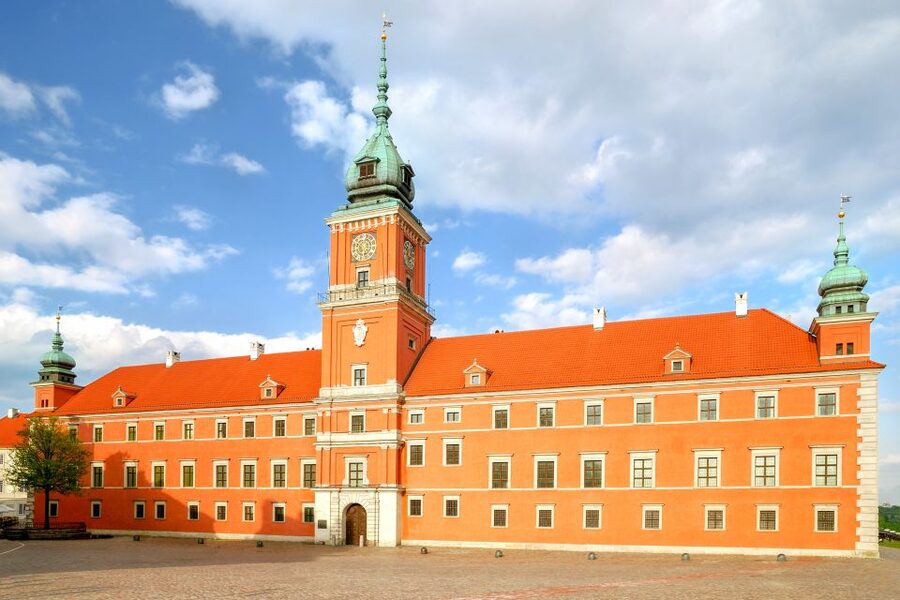
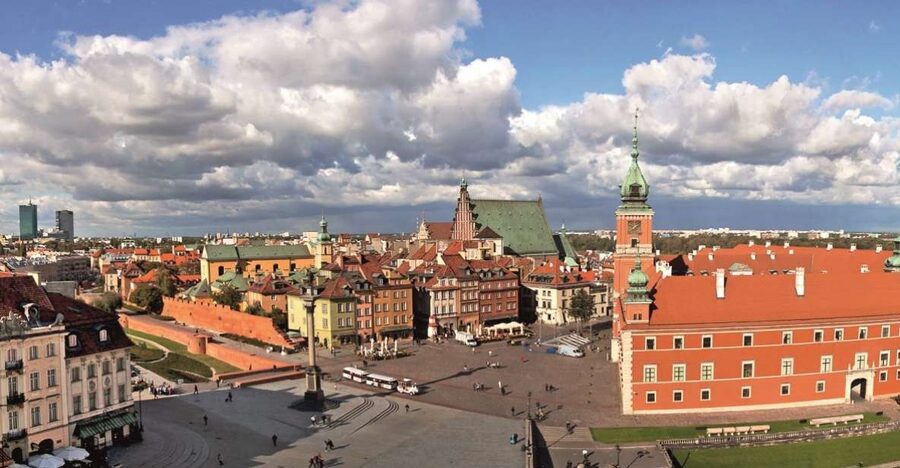
One of the key stops is Castle Square. This broad space introduces the royal side of Warsaw, with the Royal Castle nearby and King Sigismund’s Column at its center. The column honors Sigismund III Vasa, the king who moved Poland’s capital from Krakow to Warsaw in the late sixteenth century. The tour uses this setting to explain Warsaw’s role as a seat of royal power.
The Royal Castle is also tied to the adoption of the second oldest constitution in the world. That fact gives the building more than visual appeal. It connects Warsaw to a crucial moment in political history and helps explain why Castle Square remains one of the city’s central symbols.
The tour does not include entrance tickets. You should think of the castle as an exterior stop unless you arrange an interior visit separately. That is not a flaw in a two-hour walk, but it matters if your main goal is to see palace rooms and collections.
St. John’s Cathedral and a church at the front line
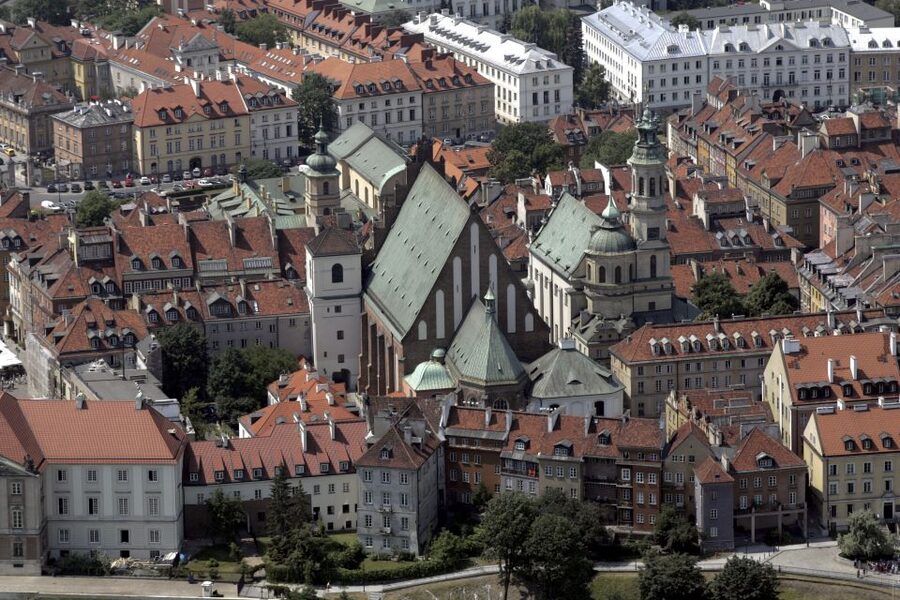
St. John’s Cathedral is one of the most important religious buildings on the route. Its tall brick exterior and prominent place in the Old Town make it easy to notice, but the real value comes from the stories connected to it.
The tour also covers a church described as the only church in the world that served as a war front. This is one of the walk’s more unusual subjects, and it brings the wartime experience down to a human scale. Instead of treating World War II as a distant chapter, the guide connects it to specific buildings and streets.
That approach is one reason I prefer a local guide to wandering alone with a map. You can see a church on your own, but you may not understand how its location, damage, and use during wartime fit into the wider story. The guide supplies the missing links.
Religious sites can be sensitive and active places of worship. The tour is primarily an outdoor history walk, and no admission is included, so you should not assume there will be time for a full interior visit or a quiet private look inside.
More Walking Tours in Warsaw
- Half-Day Polish Food Walking Tour with Guide and Dinner
★ 4.5 · 381 reviews - Warsaw: Warsaw Ghetto Private Walking Tour with Hotel Pickup
★ 4.9 · 369 reviews - Old Town Warsaw Walking Tour
★ 4.5 · 333 reviews - Warsaw: Jewish History Guided Walking Tour in English
★ 4.7 · 324 reviews
Market Square, the Barbican, and New Town
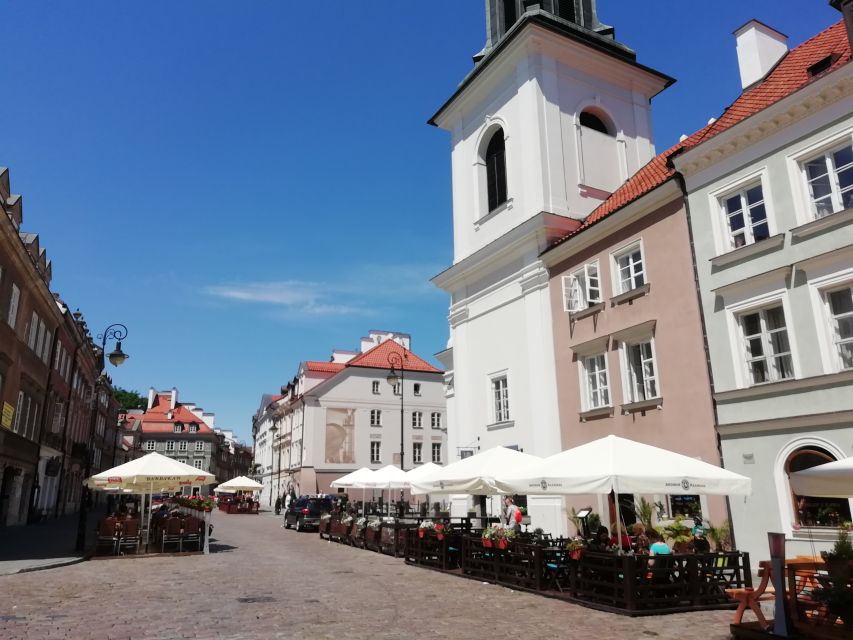
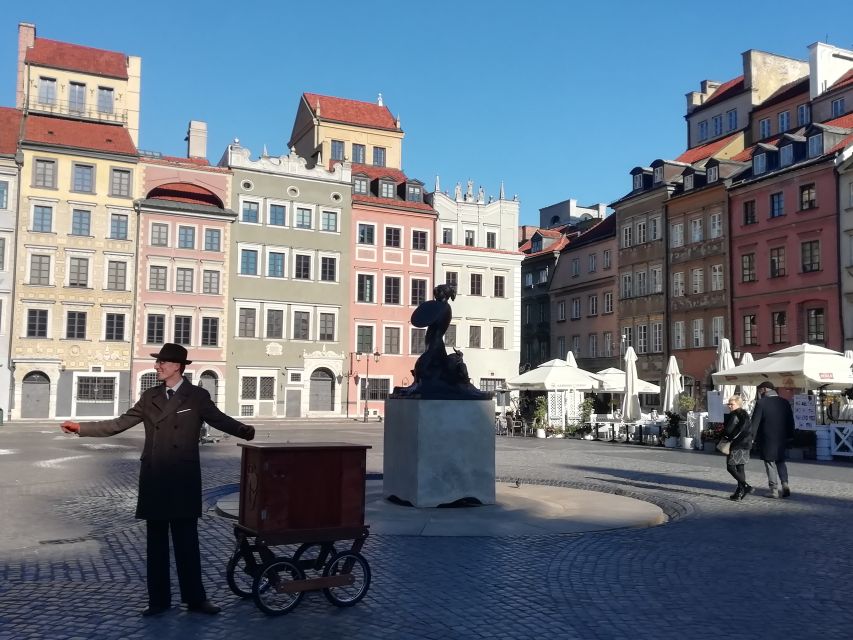
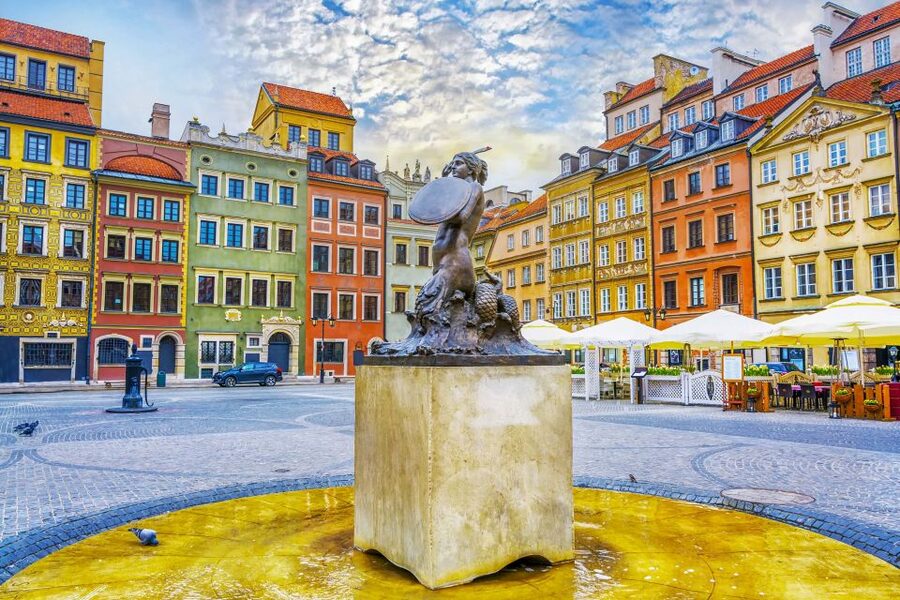
The Market Square is the Old Town’s most photogenic public space. Its facades and compact shape make it feel intimate, especially after the broad openness of Castle Square. Your guide can point out architectural features that are easy to miss when you are busy taking pictures.
This is also where legends and local stories help. The walk promises authentic stories and Warsaw legends, which add a lighter layer to the serious wartime material. That balance matters. Two hours of destruction, occupation, and reconstruction could become heavy, so folklore gives the route some breathing room.
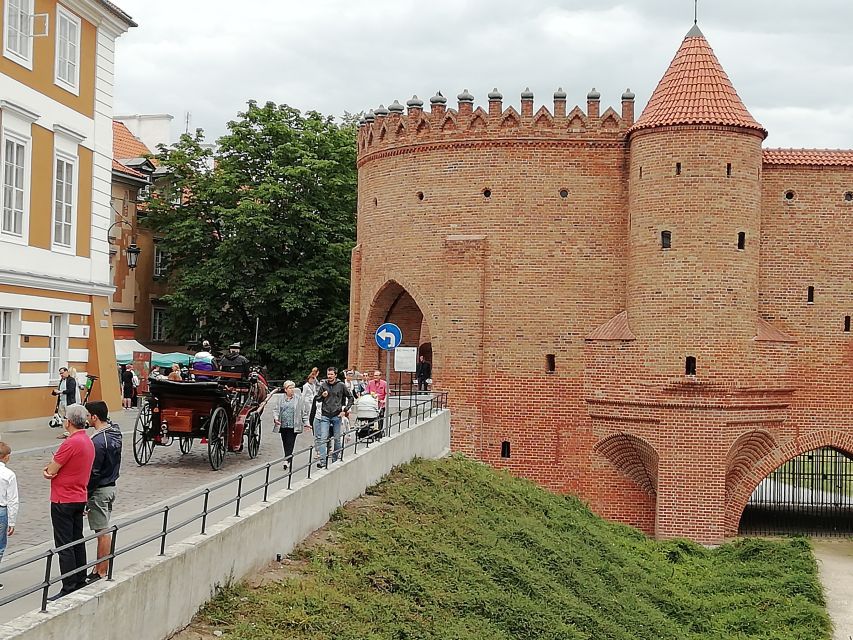
The Barbican marks another change in the city’s defensive story. Its walls and rounded form make the medieval Warsaw of the imagination visible, even though the surrounding Old Town has such a complicated modern history. A guide can help you separate what is genuinely old, what was restored, and what was rebuilt.
New Town extends the walk beyond the most famous square. This is useful because it prevents your Warsaw visit from ending at the standard postcard views. You get a broader sense of the historic city and see how the old districts connect.
The tour covers plenty of ground in two hours. That is efficient, but it also means you should not expect long stops at every site. If you like detailed photography, quiet church interiors, or extended museum visits, plan extra time before or after the walk.
Chopin, Curie, John Paul II, and the people behind the city
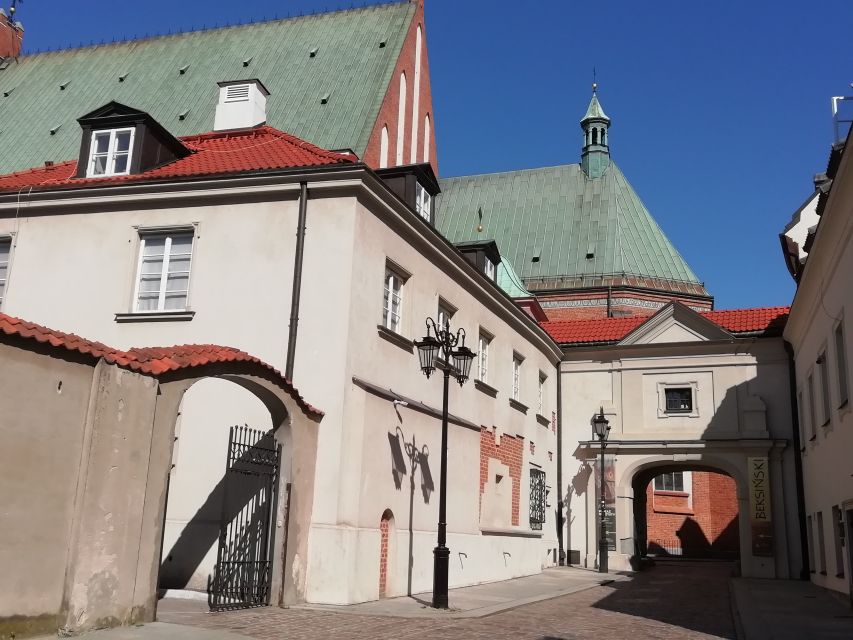
Warsaw is easier to remember through its people. The tour points out places linked with Frédéric Chopin, Pope John Paul II, and Marie Curie, along with locations associated with the Solidarity movement.
These connections help prevent the route from becoming a string of dates and building names. Chopin brings music and national identity into the story. Curie connects Warsaw with science and international achievement. John Paul II and the Solidarity movement point toward Poland’s modern political and religious life.
I like this people-first approach because it gives you several ways into the city. You do not need to be a specialist in Polish history to follow the story. You can focus on music, science, faith, politics, or architecture and still come away with a better sense of Warsaw.
The guide’s personality matters here. Marzena has led the walk in English and German, and a German-language tour has been praised for clear explanations, useful answers, and practical food advice. Mary has also guided the route, bringing a personal and passionate approach to the city’s wartime story. Guide availability can change, so book the language you need rather than a particular person unless the provider confirms the guide.
What two hours can and cannot cover
Two hours is a good length for a first look at Warsaw. It is long enough to connect the Royal Route with Old Town, and short enough to fit into a busy arrival day. You can use it early in your stay, then return to the places that deserve more time.
The pace is likely to be steady. You will stop for explanations, but this is not a lounge-around tour. Comfortable shoes are essential, and you should bring water even though it is not listed as a required item. The activity includes no lunch, but a cafe is available where you can purchase food.
There are no included entrances. That keeps the route focused and avoids spending much of the two hours inside one building, but it also means your $69 covers the guide, the private setting, the walking route, the map and information booklets, and headsets for groups up to 10, not museum admission or food.
For a private group, the price can be reasonable, especially if several people share the guide’s attention. For one person or a couple, it is a bigger spend than a standard group walk. I would choose it when personal questions and a flexible conversation matter more than finding the cheapest possible introduction.
A 15 to 20 percent tip is recommended and is not included. Keep some cash with you for that and for any cafe stop.
Who will get the most from this walk
I would recommend this tour to first-time visitors who want Warsaw explained rather than simply photographed. It suits families, couples, and small private groups who prefer asking questions as they go.
It is also a strong choice for anyone interested in World War II and the rebuilding of cities. The destruction and reconstruction story is not a brief aside. It is the thread tying together the Old Town streets, Canaletto’s paintings, the churches, and the rebuilt facades.
Families can benefit from the legends, famous personalities, and shorter format. A two-hour walk is easier to manage than a full-day history program, although children who dislike walking may find the steady pace tiring.
German and Polish speakers have the option of taking the tour in their own language, as well as English. The use of headsets for groups up to 10 can make explanations easier to hear in busy public spaces.
I would hesitate only if you want extensive interior access, a food-focused tour, or a very slow photography walk. This experience is built around interpretation and orientation. It gives you the story, then leaves you to explore the details on your own.
Practical verdict: should you book it?
Book this Warsaw Old Town walk if you want a focused introduction with a strong guide and a serious look at the city’s wartime destruction and rebirth. The route covers the Royal Route, Castle Square, the Royal Castle exterior, Sigismund’s Column, St. John’s Cathedral, Market Square, the Barbican, and New Town, while adding stories about Chopin, Curie, John Paul II, Canaletto, and Solidarity.
The $69 price makes the most sense for a private group that values conversation and local advice. Arrive at the Copernicus Monument with comfortable shoes, sun protection, cash for a tip, and no large luggage. If you want palace interiors or a meal, add those separately.
For a compact first morning or afternoon in Warsaw, this is a useful choice. It does not attempt to cover every museum or historic room. Instead, it gives you the framework to understand why this apparently old district is also one of Europe’s most remarkable modern reconstructions.
FAQ
How long is the Warsaw Old Town walking tour?
The tour lasts two hours. Starting times vary, so you should check availability when booking.
Where is the meeting point?
Meet in front of the Nicolaus Copernicus Monument and Staszic Palace at ul. Nowy Świat 72. The location is also given as Krakowskie Przedmiescie, 00-333 Warsaw.
How will I identify the guide?
Look for a guide holding a sign that says PolinTours, Private Guide.
Which languages are available?
The tour is offered in English, German, and Polish.
Is the tour wheelchair accessible?
Yes, the activity is listed as wheelchair accessible.
Are food and entrance tickets included?
No. Lunch and entrance tickets are not included. A cafe is available where you can buy food, and gratuities are separate.
More 2-Hour Experiences
- Warsaw: 2-Hour Guided Segway Tour
★ 4.8 · 34 reviews - Warsaw: 2-Hour Tour of Daily Life in the Ghetto Warsaw
★ 4.9 · 26 reviews - Warsaw: 2-Hour Chopin’s Life Walking Tour
★ 5.0 · 19 reviews - Warsaw: 2-Hour Praga Walking Tour
★ 4.5 · 18 reviews
Just added around Warsaw
- Jewish heritage in Warsaw★ 4.5 · 3 reviews
- Warsaw Outdoor Paintball with Transfers (all year round)★ 5.0 · 3 reviews
- World War II Warsaw Old Town, Military Cemetery Walking Tour★ 4.7 · 3 reviews
- Warsaw: Wolf’s Lair & Swieta Lipka Small-Group Tour + Lunch★ 5.0 · 3 reviews
- Sunset Boat Tour with Unlimited Drinks in Warsaw★ 3.5 · 3 reviews
- Majdanek – German camp from II World War – Private Tour – 1 DAY TRIP FROM WARSAW★ 5.0 · 3 reviews
- From Warsaw: Guided Tour to Wieliczka Salt Mine and Krakow★ 4.5 · 3 reviews
- Warsaw Sightseeing with NEW Mercedes Sclass !!!★ 5.0 · 3 reviews
Old Town Walking Tours, compared.




Bike Tour of Old Town, Jewish Quarter and the Ghetto
Read our review →

Sightseeing EcoCruise around the Old Town of Gdansk
Read our review →
Browse the lists this tour appears in