
REVIEW · HISTORICAL TOURS
Warsaw: Jewish Heritage 4-Hour Private Tour
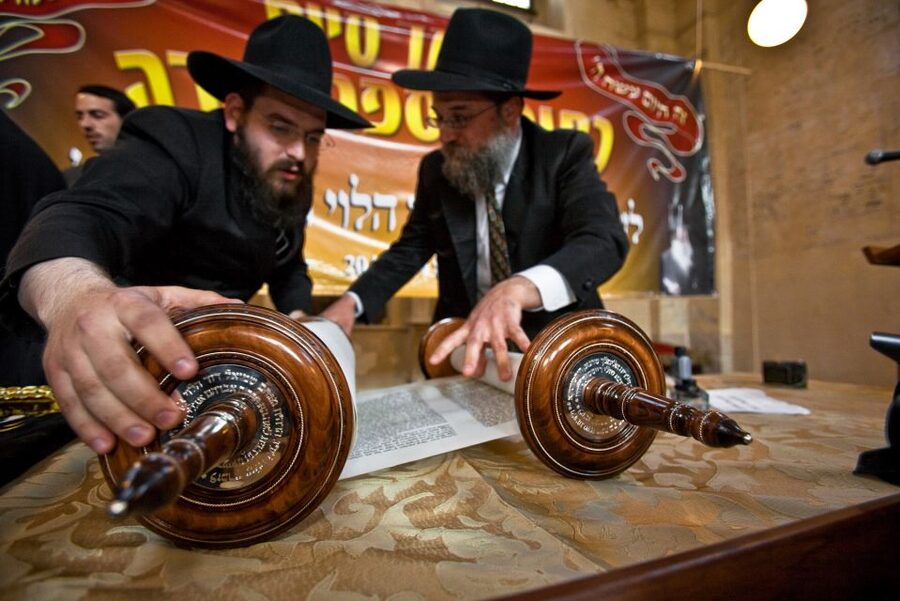
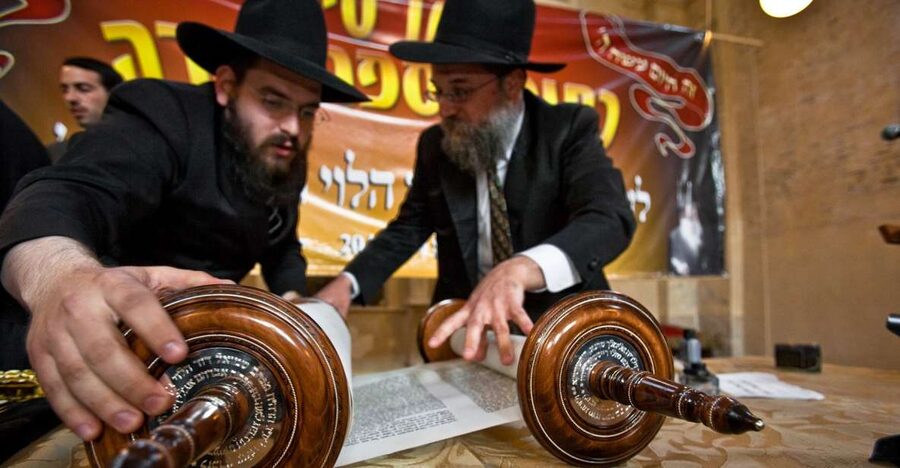
Warsaw’s Jewish story is written in stones. This private four-hour tour connects the city’s Jewish cemetery, ghetto memorials, Umschlagplatz, Próżna Street, and surviving Nożyk Synagogue, giving you a clear path through a subject that can otherwise feel scattered. I like the hotel pickup and private format, which save time and let your guide adjust the pace. I also like the focus on real places, not just museum displays.
The tour’s strongest feature is its human scale. You hear about Janusz Korczak, Ludwik Zamenhof, Jewish writers, ghetto fighters, and ordinary families caught in Nazi persecution. The main consideration is emotional: much of the visit centers on murder, deportation, and loss. Admission fees are not included, so add those costs if you want to enter a site such as the POLIN Museum.
In This Review
- Key points to know before booking
- Why Warsaw’s Jewish story needs a guided route
- At the Ghetto Heroes Monument
- Umschlagplatz and the cost of deportation
- The Jewish Cemetery on Okopowa Street
- The former ghetto boundary at Chłodna Street
- Próżna Street and Nożyk Synagogue
- What your guide adds to the experience
- Finishing at POLIN Museum
- Price, timing, and practical value
- Who should book this Warsaw tour?
- Should you book it?
- FAQ
- How long does the Jewish Heritage tour last?
- Is the tour private?
- Is transportation included?
- Where does the guide meet you?
- What languages are available?
- Does the price include entry fees?
- Does the tour visit the Jewish Cemetery?
- Can you visit POLIN Museum during the tour?
- Can you cancel for a full refund?
Key points to know before booking
- Private hotel pickup: Your guide meets you in the lobby with your name and transportation is included.
- A tightly connected memorial route: The itinerary links the former ghetto, the Ghetto Heroes Monument, Umschlagplatz, and the Memorial Route of the Martyrdom and Struggle of Jews.
- Jewish Cemetery on Okopowa Street: This huge Kirkut includes the graves of Esperanto creator Ludwik Zamenhof and writer Ischok Leib Perec.
- A surviving synagogue: Nożyk Synagogue, built in the Neo-Romanesque style, is one of the key Jewish buildings still standing in Warsaw.
- A personal guide makes the difference: Guides such as Wojciech and Ziggy have been praised for clear explanations, warmth, flexibility, and care with difficult material.
- A useful POLIN finish: You can ask to be dropped at the POLIN Museum, then continue the subject on your own for several more hours.
Why Warsaw’s Jewish story needs a guided route
Before World War II, Warsaw was one of the largest Jewish centers in Europe. Only New York had a larger Jewish population, and Jewish life shaped the capital’s daily routines, buildings, literature, art, religious practice, and politics.
That scale can be difficult to picture from a modern street. Warsaw was almost entirely destroyed during the war and the postwar rebuilding changed much of the city. A guide helps you read the gaps, plaques, pavement markers, and memorials that remain.
I see this tour as a history lesson anchored in specific addresses. You are not simply told that Warsaw had a large Jewish population. You visit a cemetery where notable figures are buried, trace the former ghetto boundary, pause at the site of deportations, and see a synagogue that survived the Holocaust.
The private setup matters here. In a large group, it can be hard to ask sensitive questions or pause when something needs more explanation. With your own guide, you can spend longer at a memorial, move faster through a stop that is less important to you, or shape the discussion around family history, architecture, religion, or the Holocaust.
More History Tours in Warsaw
- Warsaw: POLIN Museum of the History of Polish Jews Ticket
★ 4.7 · 1,142 reviews - Warsaw: Chopin Concert at Historical Venue in Old Town
★ 4.7 · 445 reviews - Small-Group Historical Guided Tour of Warsaw with pick up/drop off. Public Tour.
★ 4.5 · 343 reviews
At the Ghetto Heroes Monument
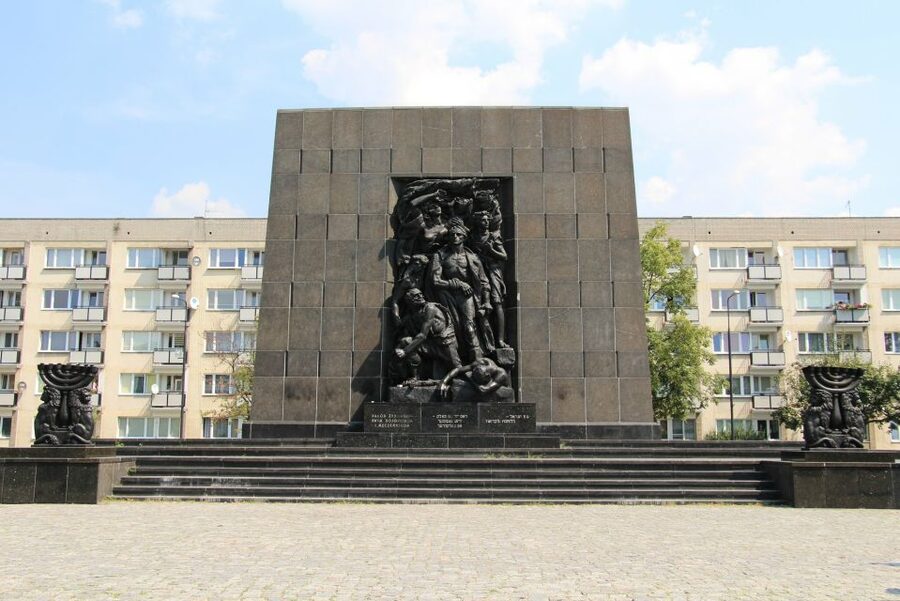
The tour brings you into the former Jewish ghetto area, where the Monument to the Ghetto Heroes commemorates those who fought and died during the Warsaw Ghetto Uprising.
The uprising began in 1943. A few hundred Jewish fighters resisted German forces armed with heavy artillery and dive bombers. The military balance was hopeless, but the revolt became a powerful act of resistance and a central part of Warsaw’s wartime memory.
This is a good place to let the guide provide context rather than rushing through a quick photo stop. The monument is not only about a battle. It also raises questions about courage, survival, forced choices, and the destruction of a community.
You then walk along the Memorial Route of the Martyrdom and Struggle of Jews toward Umschlagplatz. Commemorative stones along the route recall important figures and events connected with the ghetto. They give the walk a structure, helping you connect names and dates with the streets around you.
The area can feel surprisingly ordinary in places. That contrast is part of the experience. Modern Warsaw continues around memorials to people who were confined, starved, deported, and killed on the same ground.
Umschlagplatz and the cost of deportation
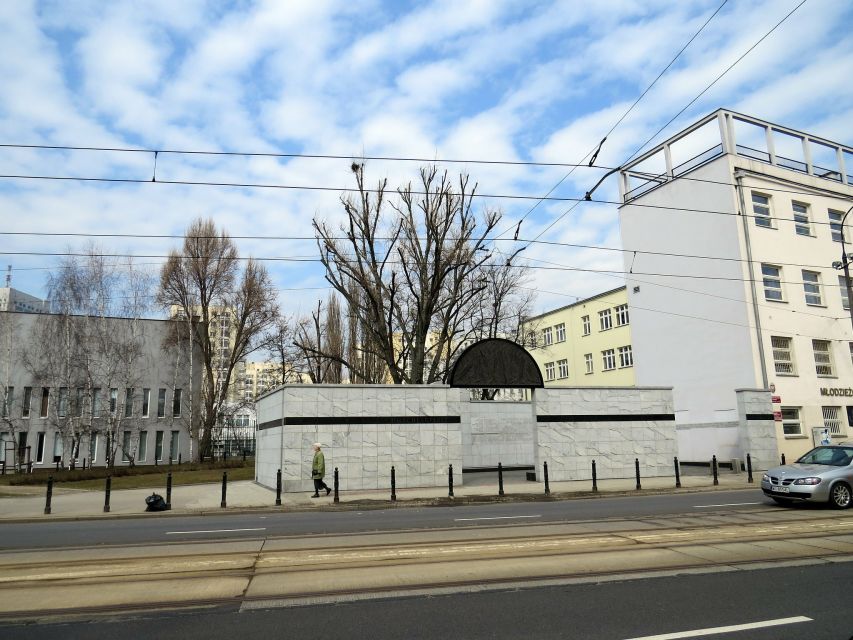
At Umschlagplatz, the subject becomes especially stark. This was the assembly and deportation point where Jewish residents were sent toward extermination camps and never returned.
The monument’s shape suggests both the walls of the ghetto and a railway wagon. More than 400 victims’ names are engraved on its walls. Those details give the memorial a personal focus. Instead of confronting only an enormous death toll, you encounter names and the physical idea of people being forced toward trains.
Your guide can explain how deportations fit into the wider destruction of Warsaw’s Jewish community. This is one of the moments when a private tour is useful because you can ask for more background or take a quiet pause without feeling pressure to keep up with a crowd.
You should expect this stop to be painful. The tour does not soften the subject, and that is appropriate. Still, you may want to plan some quiet time afterward rather than scheduling a cheerful activity immediately next door.
The Jewish Cemetery on Okopowa Street
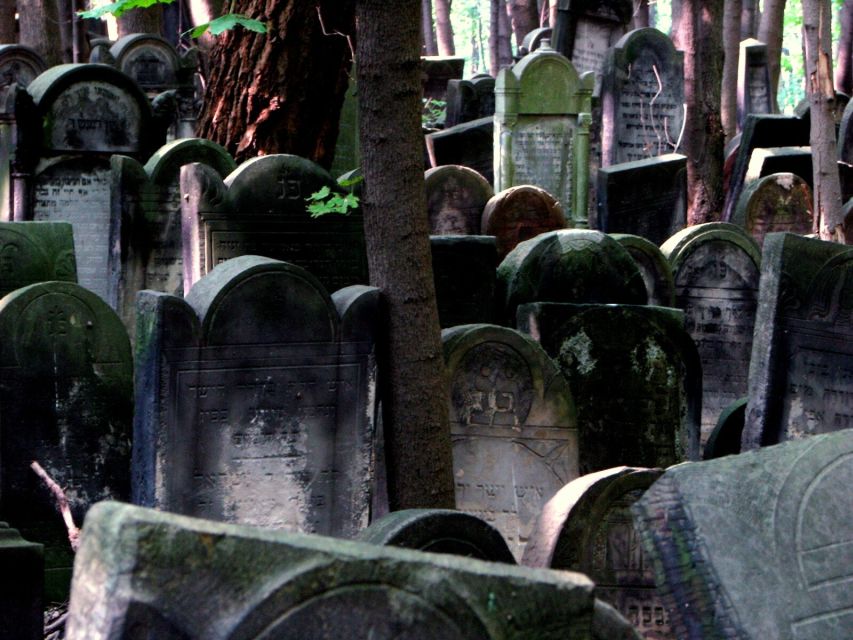
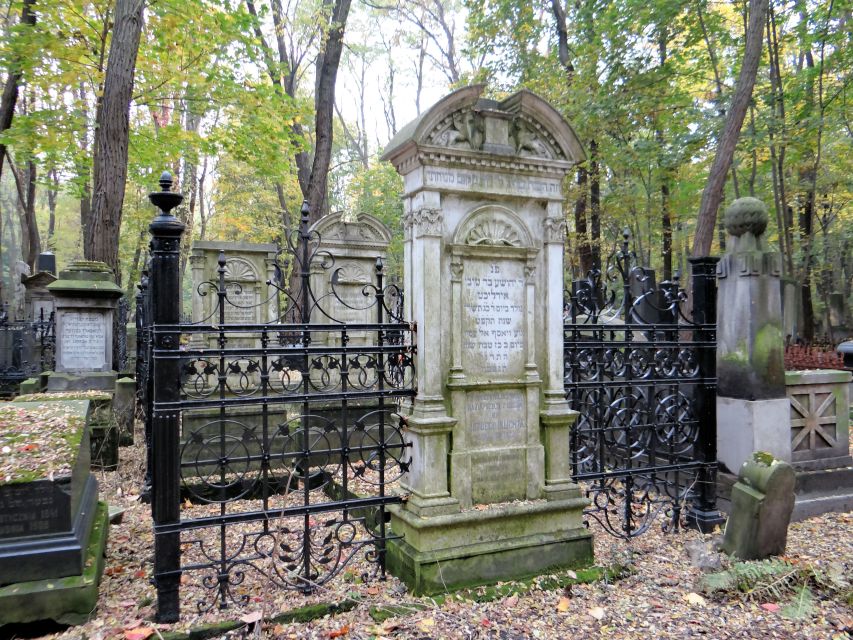
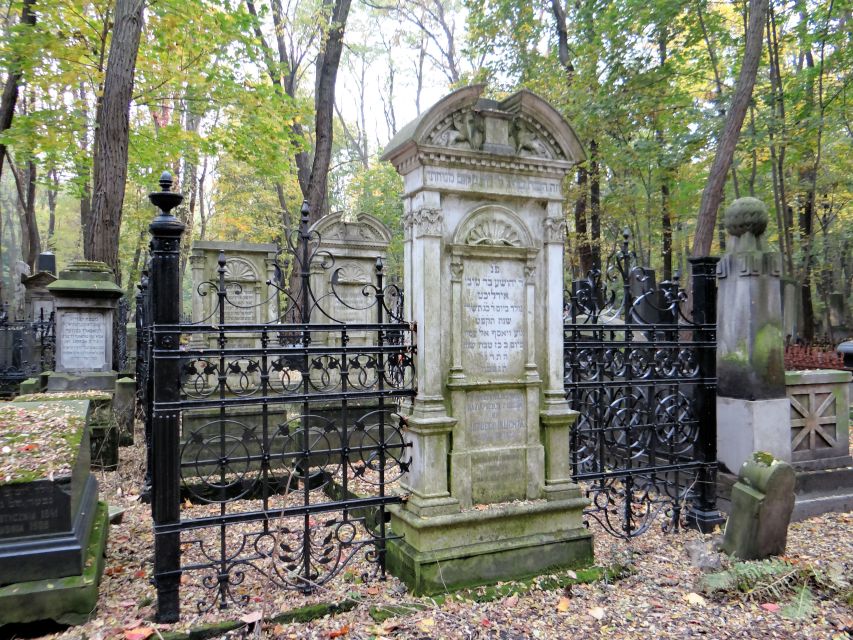
The Jewish Cemetery on Okopowa Street is one of the largest Kirkuts in Europe. It offers a different way to understand Jewish Warsaw, moving from wartime destruction to generations of religious, cultural, and civic life.
Here, the guide can point out the graves of prominent figures. Ludwik Zamenhof, who created Esperanto, is buried here, as is the writer Ischok Leib Perec. Their presence helps show the breadth of Jewish contribution to Warsaw. This was not a separate footnote to the city’s story. Jewish residents shaped language, writing, education, commerce, and public life.
The cemetery also includes a symbolic grave for Janusz Korczak. A doctor, writer, and protector of children, Korczak was murdered at Treblinka with the children in his care. The stop is particularly moving because it turns a broad account of wartime murder into the story of one adult who stayed with the children under his protection.
Allow time for the cemetery to sink in. It is not simply another landmark on a checklist. Its size, graves, and memorials give you a sense of the community that existed before the war and the people who were lost.
A completely different kind of day out in Warsaw:
- Warsaw: Chopin Concert in the Old Town
★ 4.8 · 2,287 reviews - Warsaw: Traditional Galar Cruise on The Vistula River
★ 4.6 · 1,640 reviews - Warsaw: Old Town Highlights Walking Tour in English
★ 4.7 · 1,516 reviews - Warsaw Concert: Chopin – Painted by Candlelights with Wine
★ 4.8 · 1,442 reviews
The former ghetto boundary at Chłodna Street
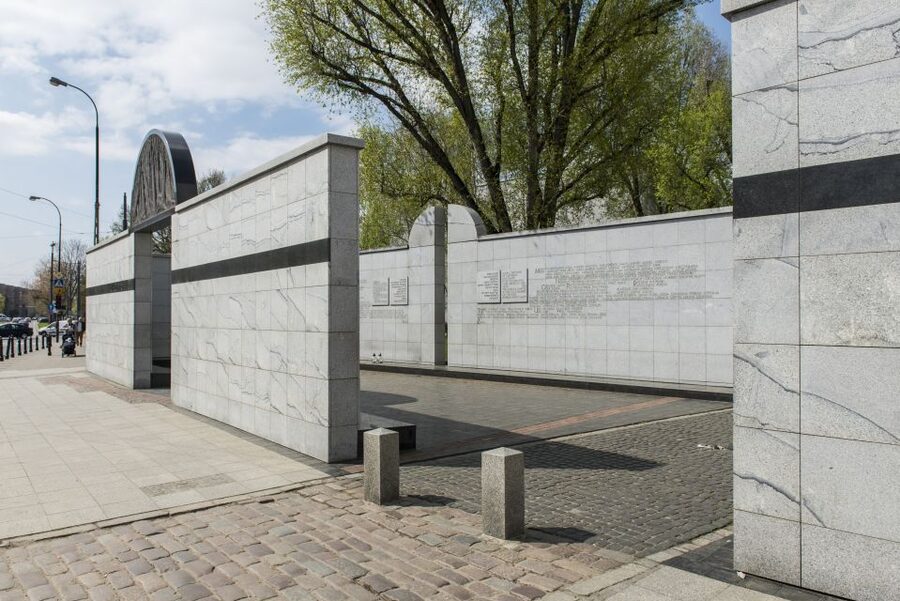
One of the tour’s most memorable visual stops is the Footbridge of Remembrance over Chłodna Street. A wooden bridge once connected the small and large sections of the ghetto. Today, a multimedia art installation recalls the tragic history of that crossing.
The bridge is important because it makes the ghetto’s physical division easier to understand. Maps and dates can feel abstract. A crossing over a modern street gives you a direct sense of how movement was controlled and how the two sections were linked.
You also stop at fragments of the former ghetto wall. Iron slabs set into the pavements mark the old boundaries, even where the original wall has disappeared. Watch for these markers as you move through Warsaw after the tour. They are easy to miss if you do not know what they signify.
This part of the tour is a good reminder that Warsaw’s Jewish history is not confined to one memorial district. Its traces are spread through the modern city, often beside ordinary roads and buildings.
Próżna Street and Nożyk Synagogue
Próżna Street offers one of the clearest glimpses of the atmosphere of Jewish Warsaw that has survived in the city’s built environment. It is a short stop, but it helps balance the wartime memorials with a sense of the neighborhood that existed before 1939.
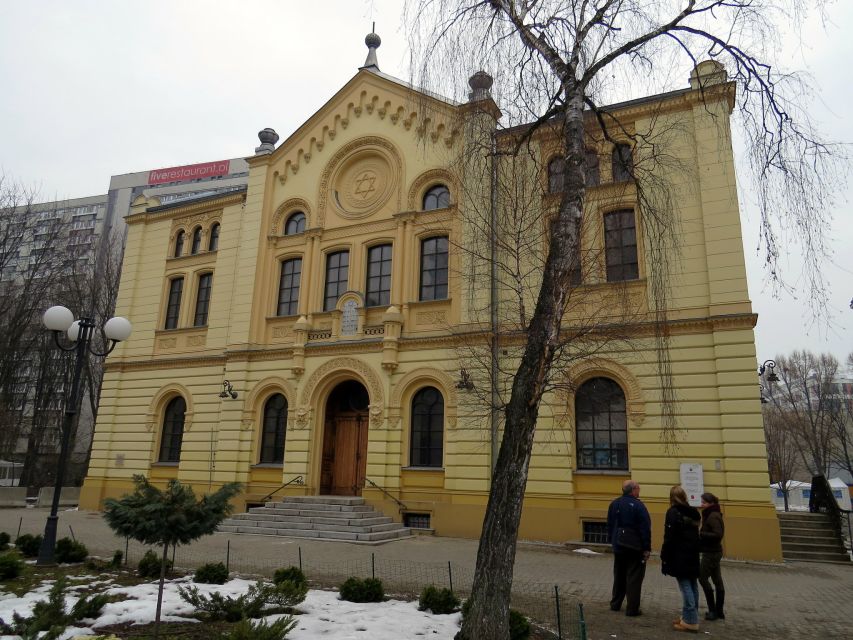
The tour also visits Nożyk Synagogue, built in the Neo-Romanesque style. It survived the Holocaust period and remains one of the most important Jewish buildings in Warsaw.
The synagogue gives the tour a living religious point of reference. You are not only looking at places of death and destruction. You are also seeing evidence of Jewish worship and cultural continuity in the city.
Entry fees are not included, so confirm the day’s visiting arrangements and any admission cost before you go. The tour description promises a visit to the synagogue, but the exact access conditions can depend on opening arrangements.
What your guide adds to the experience
The quality of the guide is central to this tour. Historical sites alone cannot explain how Jewish Warsaw functioned or why each memorial matters.
Wojciech has been praised for combining dates and facts with personal stories and broader insight. His flexibility is useful if you want to change the pace or focus. Ziggy has also received strong praise for clear explanations, helpfulness, warmth, and his sensitive handling of a deeply painful period.
The guide language list is unusually broad: English, Spanish, German, Russian, Polish, French, Italian, and Portuguese are available. You should select your preferred language when booking and confirm it in advance.
The private format also makes this a good choice for families or small groups with different interests. One person may want more detail about the uprising, another may care about architecture, and another may be researching relatives. A private guide can respond to those priorities more easily than a fixed group tour.
Finishing at POLIN Museum
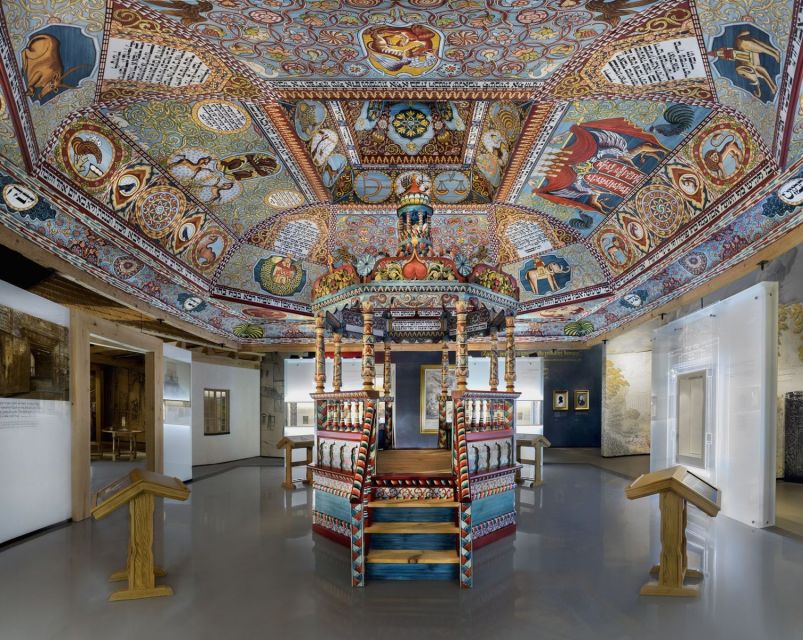
If you have extra time, ask your guide about the POLIN Museum of the History of Polish Jews. The tour can provide advice on what to see there, and one visitor arranged a drop-off at the museum after the four-hour route before spending several more hours inside.
That combination makes sense. The outdoor tour gives you physical orientation and a guided explanation of key sites. POLIN can then provide a larger chronological and cultural framework, from the Middle Ages to the present.
Do not assume the museum entrance is included. It is not. Treat it as a separate visit and check its admission arrangements and opening hours for your date.
A full museum visit after four hours of memorials may be demanding. I would choose this plan if Jewish history is a major reason for your Warsaw visit. If you prefer a slower day, book the tour in the morning and leave the museum for another time.
Price, timing, and practical value
The listed price is $42 per person for four hours, with transportation and a private local guide included. That is strong value for a private sightseeing experience, particularly if two or more people share the booking. You are paying for hotel pickup, transport between locations, and the ability to ask questions without a large group setting.
The price does not include admission fees. This matters most if you plan to enter Nożyk Synagogue or add the POLIN Museum. Ask the provider what is open on your chosen date so you can budget accurately.
Pickup is included from your hotel lobby. Your guide waits with your name, which removes the usual uncertainty of finding a meeting point in an unfamiliar part of Warsaw.
The tour lasts four hours, but the emotional weight can make it feel full. Wear practical shoes because the itinerary includes walking between memorial locations and through the cemetery. The exact balance between driving and walking may depend on traffic, access, and your guide’s route.
Free cancellation is available up to 24 hours before the start time, and you can reserve now and pay later. Those terms are useful if your Warsaw plans are still shifting.
Who should book this Warsaw tour?
I would recommend it to anyone who wants a serious introduction to Jewish Warsaw but has limited time. It suits first-time visitors, families, couples, and anyone who prefers a private conversation over a fixed group experience.
It is especially useful if you want to understand the relationship between prewar Jewish life, the ghetto, the uprising, deportation, and the city’s present-day memorials. The route does not treat the Holocaust as an isolated chapter. It begins with culture and community, then explains what was destroyed.
You may want a different plan if you are looking for light sightseeing or an entertainment-focused excursion. The subject is difficult, and several stops concern mass murder and personal loss. Also consider adding time for POLIN if you want a fuller account of Jewish life in Poland beyond the wartime years.
The high rating of 4.9 from 26 reviews fits the tour’s main strengths: strong guides, a private pace, clear historical explanation, and thoughtful handling of a sensitive subject. One assessment called it a little expensive but still worth the cost, which is a fair way to view it. The value comes less from the vehicle than from the guide’s ability to make Warsaw’s scattered evidence understandable.
Should you book it?
Book this tour if you want a focused and respectful introduction to Warsaw’s Jewish past, especially if you value private pickup, transport, and a guide who can adapt to your questions. I would pair it with POLIN Museum if you have a full day available.
Skip it only if you are not ready for an emotionally heavy experience or if you want to explore independently at a slower pace. For most visitors with a serious interest in Warsaw’s past, four hours offers a well-chosen route and a useful foundation for further exploring the city.
FAQ
How long does the Jewish Heritage tour last?
The tour lasts four hours.
Is the tour private?
Yes. It is offered for a private group.
Is transportation included?
Yes. Transportation is included, and hotel pickup is provided.
Where does the guide meet you?
The guide waits in your hotel lobby with your name.
What languages are available?
The tour is available in English, Spanish, German, Russian, Polish, French, Italian, and Portuguese.
Does the price include entry fees?
No. Entry or admission fees are not included.
Does the tour visit the Jewish Cemetery?
Yes. The route includes the Jewish Cemetery on Okopowa Street, one of the largest Kirkuts in Europe.
Can you visit POLIN Museum during the tour?
The tour can explain what you can discover at POLIN Museum, but museum admission is not included. You may also arrange to be dropped off there afterward, as one visitor did.
Can you cancel for a full refund?
Yes. You can cancel up to 24 hours in advance for a full refund. You can also reserve now and pay later.
Just added around Warsaw
- Jewish heritage in Warsaw★ 4.5 · 3 reviews
- Warsaw Outdoor Paintball with Transfers (all year round)★ 5.0 · 3 reviews
- World War II Warsaw Old Town, Military Cemetery Walking Tour★ 4.7 · 3 reviews
- Warsaw: Wolf’s Lair & Swieta Lipka Small-Group Tour + Lunch★ 5.0 · 3 reviews
- Sunset Boat Tour with Unlimited Drinks in Warsaw★ 3.5 · 3 reviews
- Majdanek – German camp from II World War – Private Tour – 1 DAY TRIP FROM WARSAW★ 5.0 · 3 reviews
- From Warsaw: Guided Tour to Wieliczka Salt Mine and Krakow★ 4.5 · 3 reviews
- Warsaw Sightseeing with NEW Mercedes Sclass !!!★ 5.0 · 3 reviews
Historical Tours, compared.


POLIN Museum of the History of Polish Jews Ticket
Read our review →

Gdańsk City Sights & History Guided Walking Tour in English
Read our review →


Small-Group Historical Guided Tour of Warsaw with pick up/drop off. Public Tour.
Read our review →Browse the lists this tour appears in