
REVIEW · HISTORICAL TOURS
Wroclaw: Third Reich and World War Two Historical Tour
Wroclaw’s past is written in ruins and rebuilt streets. This two-hour walk connects the Old Town with the city’s German-era story, the Holocaust, and the dramatic changes that followed 1945. I like the serious, focused subject and the chance to see places such as the former Gestapo building, White Stork Synagogue, and Cathedral Island in one route.
I also like that the tour does not stop at wartime facts. It explains how Wroclaw belonged to Germany until the end of World War Two, then became part of postwar Poland. The main drawback is simple: much of the wartime city was destroyed, so some stops are places of memory rather than preserved wartime buildings. You should also expect a fair amount of walking.
At $31 per person, this is a sensible buy if you want historical context rather than a quick sightseeing loop. Guides such as Mihael have been praised for detailed explanations, clear communication, and thoughtful answers. Snow or rain can make the route less comfortable, since the walk operates in all weather.
In This Review
- Key points to know before booking
- Why Wroclaw needs a wartime history walk
- Meeting at Hotel Monopol and entering the Old Town
- The former Gestapo building and the weight of occupation
- Wolności Square and the city’s damaged center
- White Stork Synagogue and Jewish Wroclaw
- The Dietrich Bonhoeffer Memorial and moral choices
- University Church and the role of religious buildings
- Ossolineum Garden, Sand Island, and the changing city
- Cathedral Island is a fitting finish
- What the guide adds to the experience
- Is $31 a fair price?
- Walking, weather, and who should book
- Should you book the Wroclaw wartime tour?
- FAQ
- Where does the tour begin?
- Where does the tour finish?
- How long does the tour last?
- What language is the tour conducted in?
- Is the tour wheelchair accessible?
- Does the tour operate in bad weather?
Key points to know before booking
- Two hours on foot: The route begins at Hotel Monopol and finishes on Cathedral Island, so you will not return to the starting point automatically.
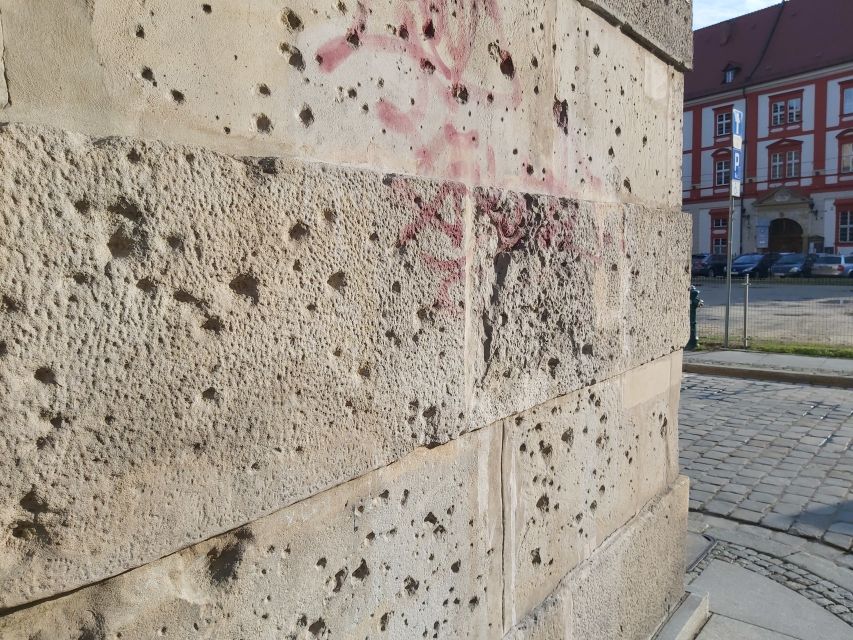
- A city shaped by 1945: The tour explains how the siege from February to May 1945 damaged or destroyed most of Wroclaw’s buildings.
- History beyond military events: Jewish heritage, the Holocaust, German rule, and postwar population changes all form part of the story.
- Several meaningful landmarks: Expect Wolności Square, White Stork Synagogue, the former Gestapo building, the Dietrich Bonhoeffer Memorial, University Church, Ossolineum Garden, Sand Island, and Cathedral Island.
- Strong guide-led experience: The guide speaks English and is licensed. Mihael has received especially warm comments for his detailed knowledge and willingness to answer questions.
- Plan for weather and walking: The tour runs rain or shine, and at least four participants are needed for it to operate.
Why Wroclaw needs a wartime history walk
Wroclaw can look wonderfully old at first glance, with its market squares, churches, islands, and restored facades. But the city’s identity is not as straightforward as its architecture suggests.
For centuries, the city was tied to different political powers and languages. In the period covered by this tour, it belonged to Germany and was known as Breslau. That German chapter ended with World War Two, when the city became a major battlefield in the final months of the conflict.
The 1945 siege lasted from February through May. By the time the fighting ended, most of the city had been damaged or destroyed. That fact changes how you read Wroclaw. A graceful square may contain rebuilt structures. A church or garden may matter less for what survived than for the people and events connected with it.
I find that this is the tour’s main value. It helps you read the gaps. You are not simply looking at old buildings and checking off names. You are learning why the city feels partly German, partly Polish, and deeply shaped by war and forced change.
More history tours in Wrocław:
- Best of Wroclaw 3-Hour History and Culture Walking Tour
★ 4.9 · 49 reviews - Wroclaw: Private Tour by smal Historic Tram (1,5h, 16 seats)
★ 4.8 · 24 reviews - UNESCO World Heritage-listed Church of Peace Day Tour from Wroclaw
★ 4.5 · 14 reviews
Meeting at Hotel Monopol and entering the Old Town
The meeting point is outside the main entrance of the Monopol Hotel. Look for a guide holding a sign marked World War Two Tour. This is a useful arrangement in a busy central area because you have a clear landmark and a visible meeting point.
The walk then moves into Wroclaw’s Old Town. Your guide begins with the city’s earlier identity and explains how it belonged to Germany until the end of the war. This opening matters because the rest of the route depends on understanding that Wroclaw was not always the Polish city you see today.
You should listen for the change in names, borders, and population. The tour is not only about what Nazi Germany did during the war. It also looks at what happened when the war ended and the city changed hands.
That wider frame keeps the experience from becoming a narrow military tour. You get the political setting, the human cost, and the difficult postwar transition in one story.
The former Gestapo building and the weight of occupation
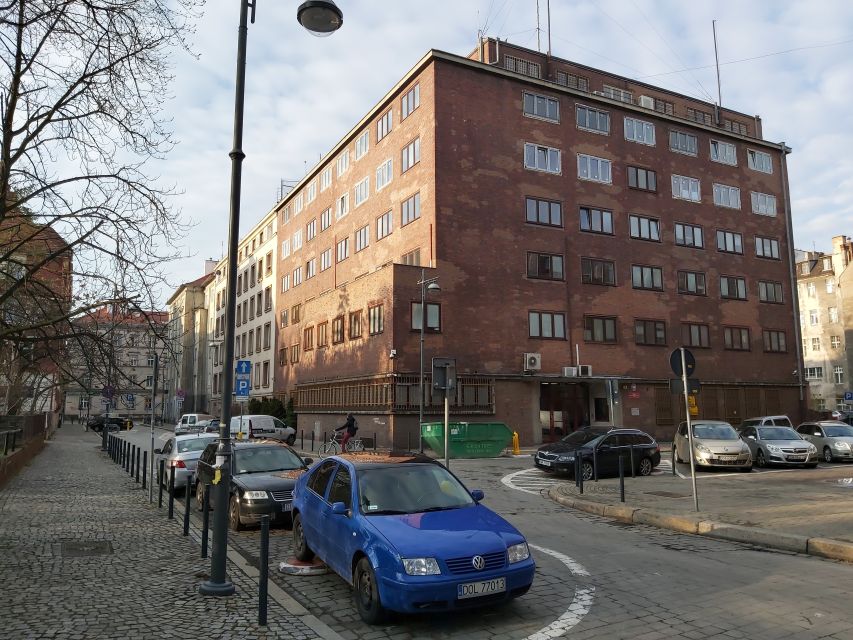
The former Gestapo building is one of the route’s most direct links to the machinery of Nazi rule. Even if little of the original interior can be seen, the location gives the guide a fixed point for discussing repression, fear, and the way occupation affected daily life.
This is the kind of stop where the guide’s skill matters more than the building itself. A good explanation can help you picture how an official address became part of a system that controlled, interrogated, and persecuted people.
You should not expect a museum visit here. The tour is an outdoor walking experience, and the building is one part of a larger route. If you want displays, objects, or long indoor visits, you will need to add a separate museum to your Wroclaw plans.
Still, the stop works well in sequence. After learning about Wroclaw’s political position, you see a place connected directly with German state power. The history becomes less abstract.
Wolności Square and the city’s damaged center
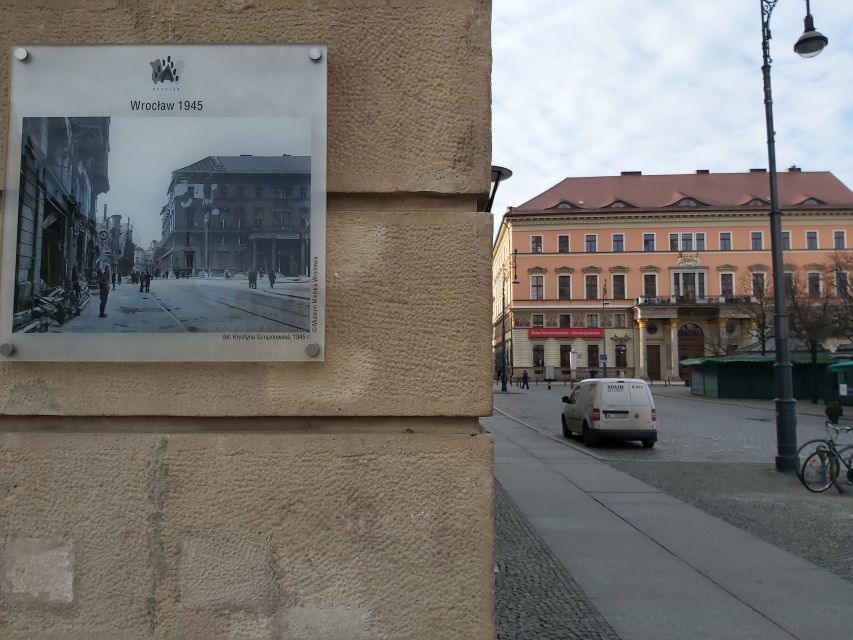
Wolności Square helps show how public spaces carry several layers of memory. Your guide uses the area to explain wartime destruction and the changes that followed. This is also where you may begin to notice the tour’s central challenge: Wroclaw’s wartime story is often visible through rebuilt streets and remembered sites, not intact ruins.
One strength of a walking tour is that you can compare the present-day city with the picture created by the guide’s account. The square may look open and modern, but the story behind it reaches back to German rule, the final siege, and reconstruction.
If you prefer a tour packed with surviving wartime structures, you may find this route less visually dramatic than expected. The value comes from interpretation. You are being shown how to understand a city that lost much of its physical past.
A few more Wrocław trips worth weighing up
- Wroclaw: E-Car Tour and Audio Guide
★ 4.6 · 1,738 reviews - Wroclaw: 2-Hour Private Guided Tour by Electric Car
★ 4.8 · 805 reviews - Wrocław: Old Town and Ostrów Tumski Walking Tour in English
★ 4.8 · 311 reviews - Wroclaw: Private Old Town Guided Walking Tour (2 hours)
★ 4.8 · 275 reviews
White Stork Synagogue and Jewish Wroclaw
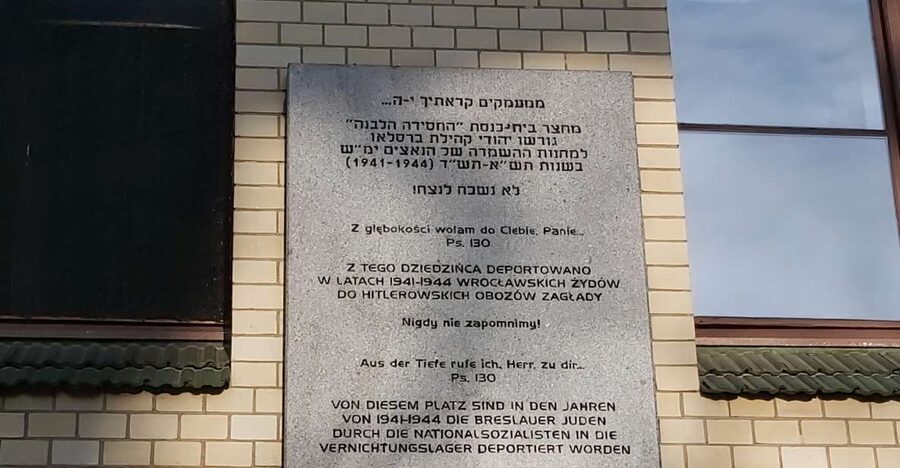
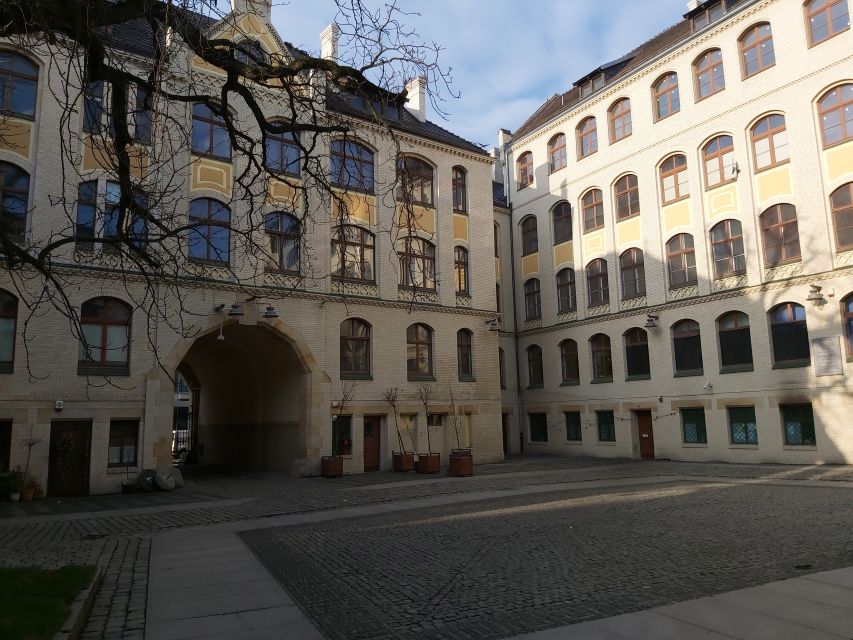
The White Stork Synagogue is one of the most important stops because it brings Jewish heritage into the center of the tour. Here, the story moves beyond armies and borders to the Jewish community that lived in Wroclaw and the destruction caused by the Holocaust.
The synagogue gives the route a place where the city’s Jewish past can be discussed with a clear physical reference. Your guide shares information about Jewish life, persecution, and the Holocaust, helping you see that wartime history was also the story of families, faith, work, and community.
This portion may be especially meaningful if you have already visited Holocaust memorials or Jewish quarters elsewhere in Poland. It also works for first-time visitors because the guide links local events to the wider history without requiring you to know a great deal in advance.
The tone is serious, as it should be. This is not a light sightseeing outing with a few war facts added for flavor. Give yourself room to listen. The subject deserves attention, and a rushed attitude would miss the point.
The Dietrich Bonhoeffer Memorial and moral choices
The Dietrich Bonhoeffer Memorial adds a personal and moral dimension. Bonhoeffer was a German theologian and opponent of Hitler, and his name helps the guide discuss resistance, conscience, and the difficult choices people faced under dictatorship.
The memorial is valuable because it prevents the story from becoming too broad. Instead of hearing only about governments and armies, you are directed toward one individual and the question of how a person responds to an unjust state.
Your guide may also use this stop to answer questions about German society and resistance. Several visitors have found the guide especially strong when handling questions and suggesting books or further material for reading. That is useful if this tour sparks a larger interest in the period.
Do not expect a long stop with extensive displays. The memorial works as a prompt for discussion. Its importance comes from the story attached to it and the way your guide connects it to the wider route.
University Church and the role of religious buildings
The University Church gives the tour another way to look at wartime Wroclaw. Churches and other religious buildings can survive political upheaval, serve changing communities, and preserve memories that official histories leave out.
The stop also helps break up the route. Two hours of difficult history can feel heavy, so moving through different parts of the city gives the walk a natural rhythm. You continue hearing about the war while also seeing the architectural and religious character of central Wroclaw.
Operating hours for monuments can change, so do not assume every interior will be open. The supplied information specifically warns that monument hours are subject to change. If you are counting on entering a particular site, check current conditions before you go.
That uncertainty is not a reason to skip the tour. It simply means you should treat the experience as a guided city walk, not a guaranteed series of indoor admissions.
Ossolineum Garden, Sand Island, and the changing city
The route continues through Ossolineum Garden and toward Sand Island. These quieter areas allow the guide to explain how Wroclaw changed after the war and how the city rebuilt itself.
The postwar story is essential. When borders shifted and populations moved, Wroclaw had to reconstruct more than walls. It had to create a new civic identity while living among the remains of a city that had been German for generations.
Ossolineum Garden offers a calmer setting for this part of the discussion. Sand Island then brings you closer to the Oder River and the cluster of islands that gives central Wroclaw its distinctive shape. I like this section because the walk begins to connect wartime destruction with the city’s present-day form.
There is also a practical benefit. The route does not trap you in one compact square. You see how the historic center opens toward the river and islands, and you finish with a clearer sense of Wroclaw’s geography.
Cathedral Island is a fitting finish
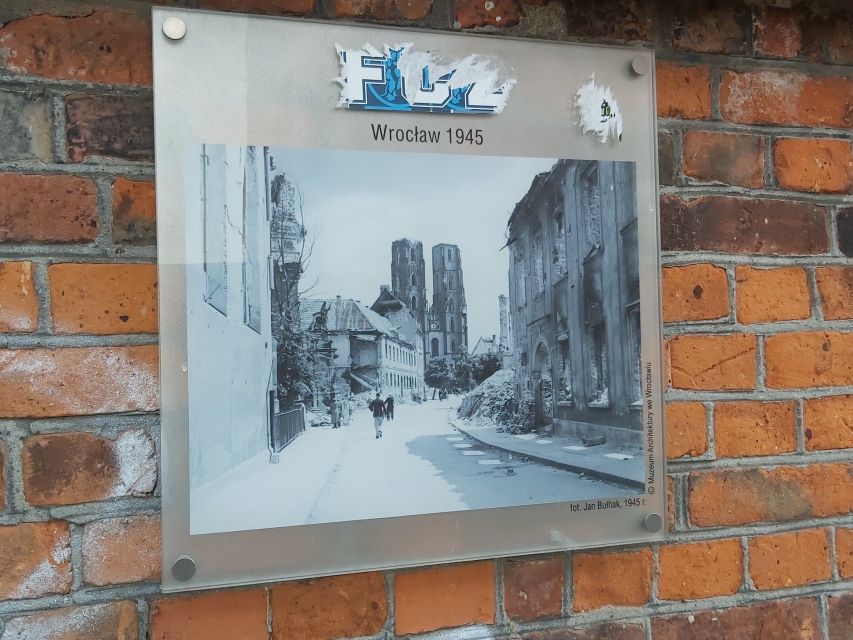
The walk ends on Cathedral Island, known in Polish as Ostrów Tumski. This is a strong finishing point because the route moves from political power and wartime suffering toward one of Wroclaw’s most important historic areas.
The ending does not erase the damage discussed earlier. Instead, it shows the city as a place that continued after disaster. You have heard how much was destroyed, then walked through parts of a center that were rebuilt, repaired, or given new meaning.
Since the tour ends here, plan your next move in advance. You will need to make your own way back to Hotel Monopol or continue with another activity. The route is not a hotel pickup and drop-off service, and no food or drinks are included.
This final location also makes the tour easy to combine with a separate visit to Wroclaw’s churches or river islands. Just do not pack the schedule too tightly. The walk may take the full two hours, and you will likely want time afterward to think through what you heard.
What the guide adds to the experience
This tour rises or falls on the guide. The buildings alone cannot tell the full story because so much of wartime Wroclaw disappeared or was rebuilt.
The strongest guide reports focus on clear explanations, detailed facts, and an ability to answer questions. Mihael is specifically noted for having a very high level of historical knowledge and for making the subject engaging. Another guide, Michal, is described as friendly and strong on both this subject and broader local history.
You may also receive practical suggestions for books or other material if you want to keep studying after the walk. That is a real advantage for anyone with a family connection to wartime Poland, German Breslau, or the postwar expulsion of German residents.
The language is English. A German-language option would be useful for some visitors, particularly those researching family roots, but this experience is currently described as an English guided tour.
Is $31 a fair price?
At $31, I consider the tour fairly priced for a licensed guide and two hours of focused history in central Wroclaw. You are paying for interpretation, not a ticket-filled sightseeing package. All fees and taxes are included, but food, drinks, and hotel transfers are not.
The value is best for you if you would otherwise walk past the landmarks without understanding their wartime connections. The former Gestapo building, White Stork Synagogue, Bonhoeffer Memorial, and the route toward Cathedral Island create a useful framework for exploring more on your own.
The price is less attractive if you want extensive access to interiors or a large collection of preserved wartime buildings. The city suffered such heavy destruction that the tour often relies on explanation, memory, and comparison with the rebuilt present.
You can also reduce your risk with the flexible booking terms. You may reserve now and pay later, and cancellation is allowed up to 24 hours before the tour for a full refund. The tour requires at least four participants to operate, so check that it is confirmed before building your whole day around it.
Walking, weather, and who should book
This is a walking tour, not a bus ride with short photo stops. One participant specifically noted that there is a fair amount of walking, while also praising the guide for allowing time during the route. Wear comfortable shoes and leave enough space in your schedule.
The tour operates rain or shine. Snow made one winter outing less comfortable, so check the forecast and dress for the season. The route is wheelchair accessible, but weather, pavement, crowds, and monument access can still affect comfort.
I would recommend this experience to:
- First-time visitors who want Wroclaw’s modern identity explained through its past
- People interested in World War Two, Nazi occupation, the Holocaust, and postwar borders
- Visitors with Polish, German, or Jewish family connections
- Anyone who prefers a thoughtful guided walk to a general city tour
- Readers who want suggestions for books and further study
I would be more cautious if you want a cheerful introduction to Wroclaw, dislike emotionally difficult subjects, or expect a museum-like collection of original wartime sites. This tour asks you to listen closely and use your imagination.
Should you book the Wroclaw wartime tour?
Book it if you want the city’s story explained plainly and locally. The strongest parts are the guide’s detailed knowledge, the links between German rule and postwar Poland, and the stops connected with Jewish heritage and the Holocaust.
Keep your expectations realistic. Wroclaw does not offer a perfectly preserved wartime center. Much of it was damaged or destroyed during the 1945 siege, so the tour’s power comes from the guide’s account and the meaning attached to surviving places.
For $31, two hours, and a central route ending on Cathedral Island, I think it is a good choice for historically curious visitors. Bring comfortable shoes, prepare for any weather, and give the subject the attention it deserves.
FAQ
Where does the tour begin?
The tour begins outside the main entrance of Hotel Monopol in Wroclaw. The guide will hold a sign that says World War Two Tour.
Where does the tour finish?
The guided walk finishes on Cathedral Island in Wroclaw, not back at Hotel Monopol.
How long does the tour last?
The tour lasts two hours.
What language is the tour conducted in?
The live guided tour is conducted in English.
Is the tour wheelchair accessible?
Yes, the activity is described as wheelchair accessible.
Does the tour operate in bad weather?
Yes. The tour takes place rain or shine. The tour also requires at least four participants to operate.
Just added around Wrocław
- Wrocław: Following the dwarfs’. See the city differently! 2h★ 4.4 · 3 reviews
- Wroclaw to Rock City in Adsprach and Church of Peace in Świdnica Private Tour★ 5.0 · 3 reviews
- Wroclaw: Skip the Line Panorama Raclawicka and Ostrow Tumski Guided Tour★ 4.5 · 3 reviews
- From Wroclaw: Full-Day Stolowe Mountains Trekking Tour★ 3.9 · 3 reviews
- Wrocław: Polish Craft Beer Walking Tour with Tastings★ 4.1 · 3 reviews
- Segway Tour Wroclaw: Ostrów Tumski Tour – 1,5-Hours of Magic!★ 5.0 · 3 reviews
- Private Transfer from Wroclaw (WRO) Airport to Wroclaw city centre★ 5.0 · 3 reviews
- Wrocław: Ostrów Tumski and Old Town Highlights Private Tour★ 5.0 · 3 reviews
Historical Tours, compared.


POLIN Museum of the History of Polish Jews Ticket
Read our review →

Gdańsk City Sights & History Guided Walking Tour in English
Read our review →

Small-Group Historical Guided Tour of Warsaw with pick up/drop off. Public Tour.
Read our review →Browse the lists this tour appears in