
REVIEW · AUSCHWITZ-BIRKENAU MEMORIAL TOURS
From Katowice: Auschwitz-Birkenau Skip-the-Line Guided Tour
Auschwitz demands your full attention. This six-hour trip from Katowice combines hotel transport, reserved entry, and an English-speaking museum guide, making a difficult visit easier to manage. I especially like the direct ride from Katowice and the chance to see both Auschwitz I and Birkenau without arranging separate tickets. The main consideration is timing: museum capacity can force a last-minute change to your pickup time.
This is not a cheerful day out, and it should not be treated like one. It is a serious visit to the site of mass murder, handled with care by guides such as Wanda, Magda, Sabina, Michal, and Oskar, whose clear explanations help you understand what you are seeing. Plan for an emotional, physically demanding visit, and leave room afterward to process it.
In This Review
- Key points before you book
- Why this Katowice tour makes sense
- The ride from Katowice to Oświęcim
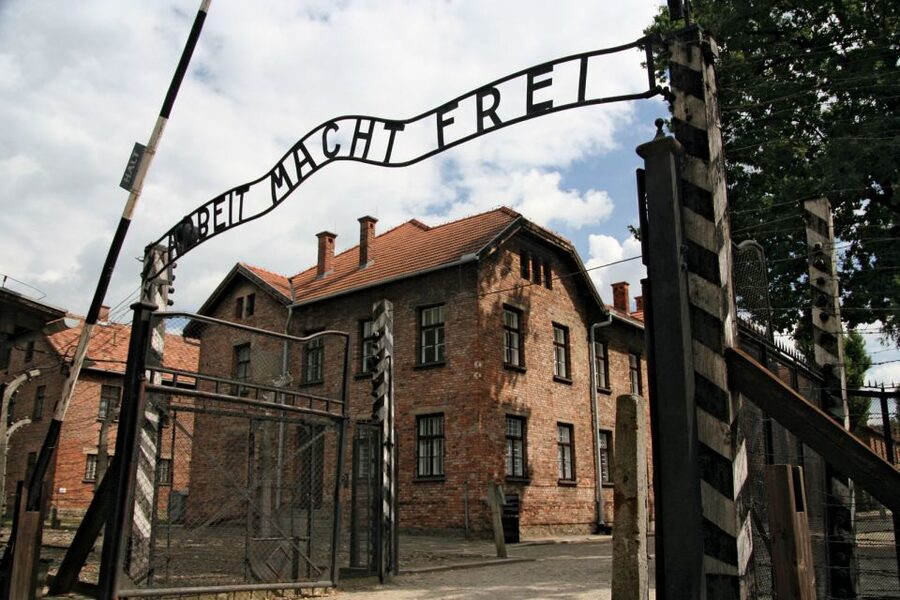
- Entering Auschwitz I and its original buildings
- Walking through Auschwitz II-Birkenau
- What the guide adds to a difficult place
- Timing, group size, and the real six-hour schedule
- Is $114 a fair price?
- Who should book this experience?
- Final verdict: a serious visit made easier
- FAQ
- How long does the Auschwitz-Birkenau tour from Katowice last?
- Is transport from Katowice included?
- Where do I meet the tour if I am not staying at a hotel?
- Does the tour include skip-the-line admission?
- Is the tour conducted in English?
- Can children join the Auschwitz-Birkenau tour?
- What should I bring?
- Can I bring a large bag?
Key points before you book
- Auschwitz is about 25 kilometers from Katowice, and the round-trip ride is included with the hotel pickup option.
- You visit both main camp sites, Auschwitz I with its original buildings and exhibition, and Auschwitz II-Birkenau with its vast grounds and extermination facilities.
- Reserved entry saves time, especially when long queues form at the memorial.
- The museum guide leads the historical visit, while the Katowice host or driver handles transport, tickets, and meeting arrangements.
- Start times can change, sometimes from 9:00 to 6:30 or 10:30, so keep the rest of your day open.
- Bring identification and small luggage only. Bags larger than 30 by 20 by 10 centimeters must remain on the vehicle.
Why this Katowice tour makes sense
Auschwitz-Birkenau is one of those places where independent planning can become surprisingly awkward. Entry is controlled, English-language tours fill quickly, and you need to coordinate transport between Katowice and Oświęcim. At $114 per person, this outing is not cheap, but the cost covers the pieces that matter most: transportation, entrance, a live English-speaking guide, and the equipment needed to hear the tour clearly.
I see the value mainly in the time saved and the reduced stress. You do not need to hunt for a separate museum ticket or figure out how to reach the memorial by public transport. The driver meets you at your hotel if you choose that option, takes you to the site, helps with the entry process, and brings you back to Katowice.
The skip-the-line benefit should not be read as a private entrance with no procedures at all. You still pass through the memorial’s entry and security arrangements, and there can be short delays. The practical gain is that your ticket and tour place are already arranged, so you are not facing the main ticket queue with no plan.
If you are staying in a hostel, Airbnb, or private residence, hotel pickup does not apply. You must go to the local partner’s city-center meeting point. The exact location deserves attention because some visitors found the office hard to identify, with a cafe or bar now occupying the spot. Follow the final instructions closely, and arrive at least 15 minutes early.
More Auschwitz-Birkenau memorial tours:
- From Krakow: Auschwitz-Birkenau Guided Tour & Hotel Pickup
★ 4.5 · 33,358 reviews - From Krakow: Auschwitz-Birkenau Guided Tour & Hotel Pickup
★ 4.5 · 29,340 reviews - Krakow: Auschwitz Guided Tour with Optional Hotel Pickup
★ 4.5 · 15,280 reviews
The ride from Katowice to Oświęcim
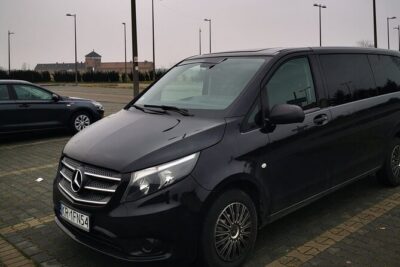
The drive is part of the practical appeal. Transport is usually in a clean car or minivan, and groups may share the vehicle with a few other people. Some bookings have used two cars when the group was larger, while smaller bookings have sometimes resulted in private transport.
Drivers such as Kamil, Kamila, Bartek, and Bartok have been praised for punctual pickups, friendly help, and good English. Their role is more useful than simply driving. They explain where to meet after the visit, hand over tickets, help you get oriented, and sometimes provide background about Katowice or the surrounding area during the ride.
That said, the transport schedule is not entirely fixed. Auschwitz Museum controls the number of people allowed into each time slot, and the operator may notify you the day before that your departure has changed. A 9:00 booking has been moved to 9:30, 10:30, and even 6:30 in different cases. You could see the change as an inconvenience, but it is better than arriving at a crowded memorial with no available entry.
My advice is simple: do not schedule another important activity immediately before or after this tour. The advertised duration is six hours, but transport, entry procedures, group movement, and museum timing can stretch the day. Check your email carefully on the day before departure, not just your original booking confirmation.
Entering Auschwitz I and its original buildings
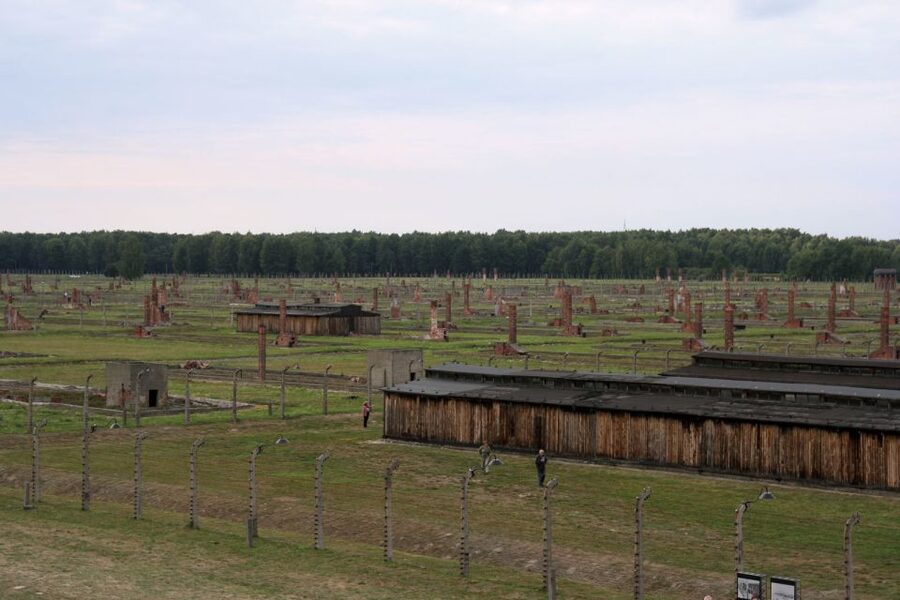
The visit normally includes Auschwitz I, the first camp and administrative center of the wider complex. This is the more enclosed part of the memorial, with original brick buildings arranged along ordered paths. The preserved setting can feel deceptively calm, which makes the evidence inside the buildings even harder to absorb.
The permanent exhibition gives the visit its essential context. Instead of seeing only empty buildings, you learn how the camp system operated, who was imprisoned, how people were transported, and how persecution became organized mass murder. The guide connects the objects and rooms to individual lives, helping you understand that the victims were not an anonymous crowd.
This is where the tour’s museum guide matters most. Guides such as Sabina, Wanda, Michal, Magda, and Oskar have been praised for clear English, careful pacing, and respectful delivery. A good guide does not sensationalize the site. The strongest explanations are measured, factual, and willing to pause when the material becomes difficult.
You may be given an audio headset or other listening equipment. This is important because groups can be large, and the guide may speak while you are standing several steps away. One group had about 29 people, and a few visitors felt the guide occasionally moved ahead before everyone had caught up. Stay alert, keep your group in sight, and tell the guide if you have been separated.
Expect to spend time indoors and outdoors. Original buildings, exhibition rooms, paths, and memorial areas all form part of the visit. Comfortable shoes are essential, and water is a smart addition because food and drink are not included.
Walking through Auschwitz II-Birkenau
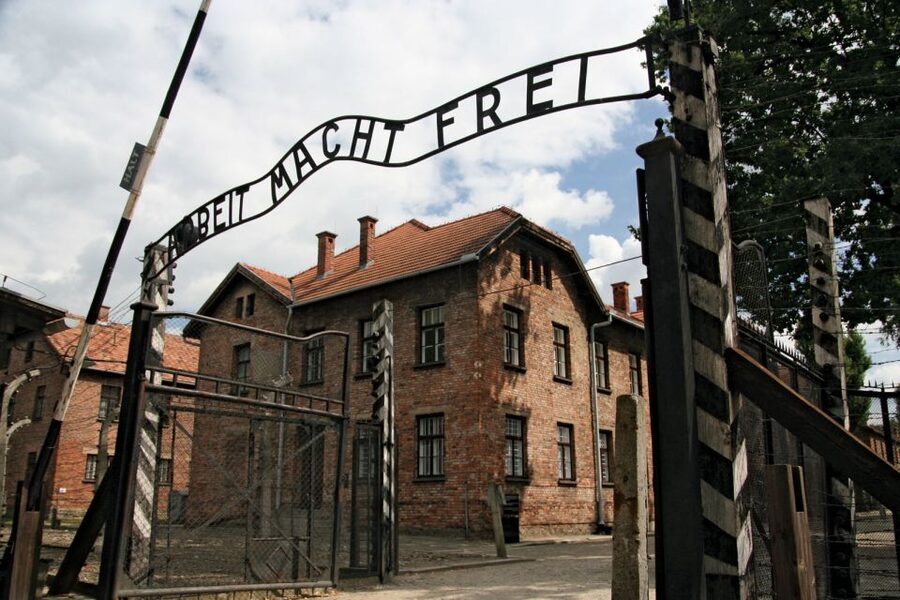
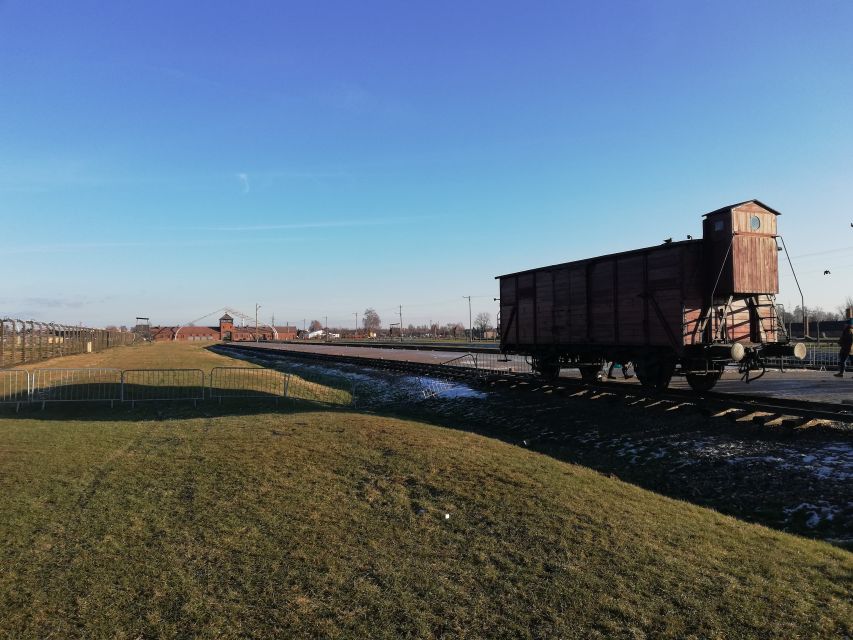
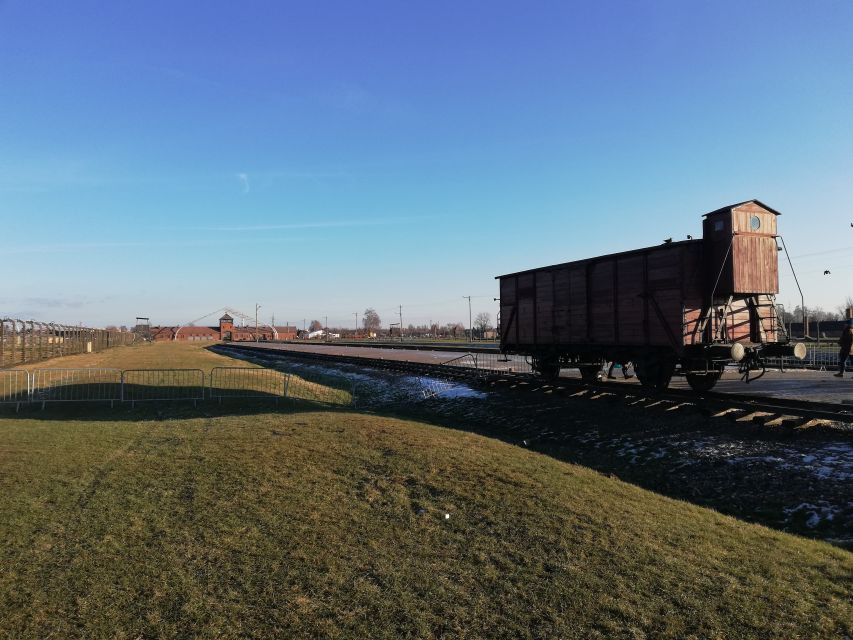
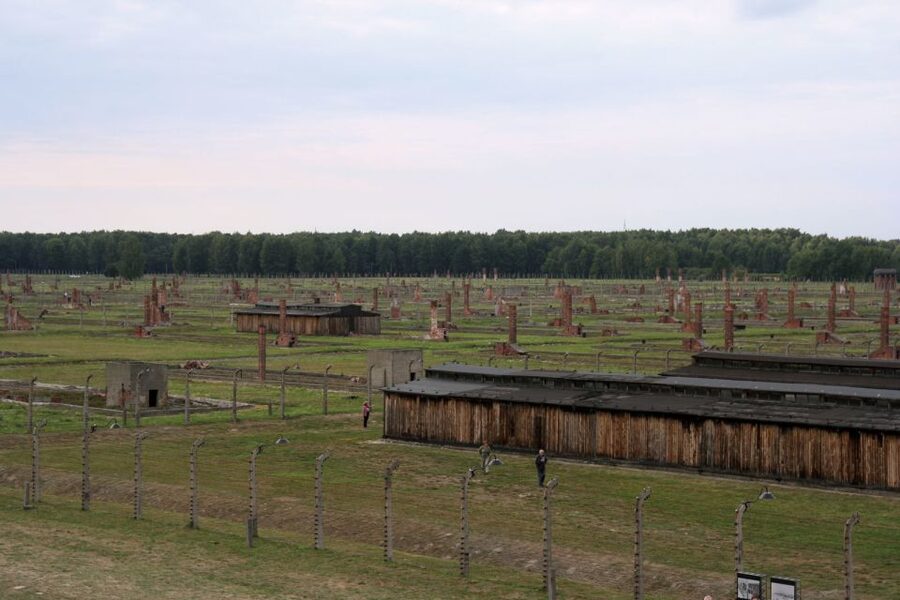
Birkenau, also called Auschwitz II, is the larger and more open part of the complex. It served as the extermination camp and is the place most people picture when they think of Auschwitz: the long railway approach, the entrance gate, rows of barracks, and an immense stretch of ground reaching toward the remains of the gas chambers.
The scale is difficult to grasp from photographs. You walk through an area built for mass imprisonment and murder, not a compact museum. The original objects and buildings help your guide explain how deportations, selection, forced labor, and killing were organized.
At least 1.1 million people were killed across the Auschwitz complex, and about 90 percent were Jewish people from almost every country in Europe. The guide explains the gas chambers and the use of Zyklon B, along with the machinery that supported the camp’s crimes. This information is grim, but the historical detail is necessary. Without it, the buildings can become a collection of symbols rather than evidence.
Birkenau also gives you time for quiet reflection. The remains of the gas chambers and crematoria are not presented as theatrical attractions. They are treated as places of mourning, and you should approach them in the same spirit. Photography may be possible in parts of the memorial, but your behavior should remain respectful and attentive to the setting.
The open grounds can be hard on your feet, particularly in rain or cold weather. One visit took place in heavy rain and was still described as deeply meaningful, but proper clothing would have made the day easier. Check the forecast, wear shoes with good support, and bring a rain layer when needed.
A few more Poland trips worth weighing up
- From Krakow: Wieliczka Salt Mine Tour & Skip the Line Ticket
★ 4.4 · 3,925 reviews - Auschwitz-Birkenau Skip-the-Line Guided Tour
★ 4.3 · 3,617 reviews - Krakow: Schindler’s Factory Skip-the-Line Ticket
★ 4.4 · 3,105 reviews - Auschwitz-Birkenau: Skip-the-Line Entry Ticket & Guided Tour
★ 4.4 · 3,052 reviews
What the guide adds to a difficult place
You can read about Auschwitz before visiting, but a guide helps put the site in the right order. The museum guide explains what happened at each location, identifies original structures and objects, and answers follow-up questions. That last point matters because the site raises complicated questions about Nazi policy, deportation, camp administration, and the difference between concentration, forced-labor, and extermination camps.
The guide also helps control the tone. This is not a place for dramatic storytelling or loose claims. The best guides let the facts carry the weight. One particularly strong guide was praised for combining precise information with the right amount of emotion, a difficult balance at a place where the facts are already overwhelming.
You will generally have two people helping you: the local host or driver from Katowice, and the museum guide at Auschwitz. Do not confuse their roles. The driver may be warm, informative, and extremely helpful, but the detailed historical tour is led by the museum guide.
English is the stated tour language. An audio system is included, which should make it easier to follow the guide in a larger group. If you have hearing or mobility concerns, mention them when arranging the booking. The activity is listed as wheelchair accessible, although the scale of the grounds and amount of walking still deserve personal consideration.
Timing, group size, and the real six-hour schedule
Six hours sounds generous, but it is best understood as the complete Katowice outing rather than six uninterrupted hours inside exhibitions. The total includes pickup, the drive to Oświęcim, entry, guided visits, movement between Auschwitz I and Birkenau, and the return journey.
Group size can vary. Some people have shared a minivan with several others, while solo bookings have occasionally received private transport. At the memorial itself, you may become part of a larger English-language museum group. That arrangement keeps the official tour running efficiently, but it means the pace is not fully yours.
The schedule can be moved because entry times depend on museum capacity. This is the one recurring weakness I would take seriously. If you need to catch a train, join another tour, or attend an evening event, leave a wide buffer. The operator has sometimes handled changes well, but the change itself can still disrupt a carefully planned day.
The meeting instructions also vary by booking type. Hotel pickup is available only from hotels in Katowice, not private homes or short-term rentals. If you use the city-center option, arrive 10 to 15 minutes early and confirm the exact meeting point. A location that looks like an unmarked storefront or cafe is not the time to rely on guesswork.
Is $114 a fair price?
For a person who wants maximum independence, $114 may feel high. You could try to arrange transport and tickets yourself, then manage the museum schedule without a host. But admission availability can be limited, and the administrative work takes time.
For most people based in Katowice, I think the price is fair. You are paying for a reliable round trip, reserved entry, an English-speaking museum tour, and help navigating a site where a mistake can cost you the entire visit. The value rises if you are visiting during a busy period or have found that regular tickets are sold out.
Food and drink are not included, so bring water and a small snack for the transport breaks if appropriate. Large luggage is not practical. The maximum hand-luggage size is 30 by 20 by 10 centimeters, and larger bags must stay on the bus or vehicle during the visit.
Free cancellation is available up to 24 hours before the activity, and you can reserve now and pay later. Those terms help if your Katowice plans are still moving, but they do not remove the need to monitor any time change sent shortly before the tour.
Who should book this experience?
I would choose this tour if you are staying in Katowice and want a guided visit without spending time arranging separate transport and entry. It is also useful if regular museum tickets are unavailable, or if you prefer having a local person manage the morning and return journey.
It suits adults and teenagers who are prepared for the subject. The experience is not recommended for children under 13, and parents or guardians must decide whether an older child is ready. I would not book it as a casual family outing or squeeze it between light sightseeing plans.
You should also book it if you value historical explanation. The site can be visited without a guide, but the original buildings and ruins do not explain themselves. An English-speaking museum guide gives you the factual framework and helps you notice the difference between Auschwitz I, Birkenau, and the wider camp system, including Monowitz, the third major camp.
If you need a very flexible schedule, this may not be the best match. Start-time changes are the main drawback, and the group pace may feel brisk in places. Visitors with limited stamina should also ask questions about the walking demands despite the wheelchair-accessible designation.
Final verdict: a serious visit made easier
I recommend this Auschwitz-Birkenau tour from Katowice for its practical setup and respectful guiding. The strongest parts are the arranged transport, the no-queue ticket handling, and the museum guides who explain the evidence without turning the visit into a spectacle.
I would book it if Auschwitz is important to your Poland plans and you want the day organized from hotel door to hotel door. Keep your schedule open, watch for a time update, bring identification, water, and comfortable shoes, and allow yourself quiet time afterward. The $114 price buys convenience, but the real value is knowing you will reach this essential memorial with the historical help and logistical support the place requires.
FAQ
How long does the Auschwitz-Birkenau tour from Katowice last?
The activity lasts about six hours, including transport from Katowice, the memorial visit, and the return journey.
Is transport from Katowice included?
Hotel pickup and drop-off in Katowice are included when you select that option. Pickup is not available from hostels, Airbnbs, or private residences.
Where do I meet the tour if I am not staying at a hotel?
You must go to the local partner’s office at the city-center meeting point. Arrive at least 10 to 15 minutes early and check the final meeting instructions carefully.
Does the tour include skip-the-line admission?
Yes. A skip-the-line entrance ticket is included, although you still need to follow the memorial’s entry and security procedures.
Is the tour conducted in English?
Yes. The live tour guide and the included audio equipment are in English.
Can children join the Auschwitz-Birkenau tour?
The activity is not suitable for children under 13. Parents or guardians make the final decision about whether older children should attend.
What should I bring?
Bring a passport or ID card and comfortable shoes. Water is also useful, since food and drink are not included.
Can I bring a large bag?
No. Hand luggage must be no larger than 30 by 20 by 10 centimeters. Larger luggage must remain on the vehicle during the visit.
Just added around Poland
- Rynek Underground Museum & Wawel Castle, Cathedral – Cracow★ 5.0 · 3 reviews
- Schindler’s Factory, Ghetto and Plaszow Camp Guided Tour★ 4.7 · 3 reviews
- Jewish heritage in Warsaw★ 4.5 · 3 reviews
- Poznan Old Town and Croissant Museum Private Walking Tour★ 5.0 · 3 reviews
- Warsaw Outdoor Paintball with Transfers (all year round)★ 5.0 · 3 reviews
- Nowa Huta – a guided tour of a utopian socialist city★ 5.0 · 3 reviews
- Half-Day Chelmno Kulmhof Concentration Camp Private Tour★ 4.5 · 3 reviews
- 4 hours skitour trip in Tatra Mountains for beginners with renting equipment★ 5.0 · 3 reviews
Auschwitz-Birkenau Memorial Tours, compared.

Auschwitz-Birkenau Guided Tour & Hotel Pickup
Read our review →Auschwitz-Birkenau Guided Tour & Hotel Pickup
Read our review →
Auschwitz Guided Tour with Optional Hotel Pickup
Read our review →
Auschwitz-Birkenau Guided Tour with Pickup & Lunch
Read our review →
Auschwitz-Birkenau Guided Tour Pickup/Lunch Options
Read our review →
Krakow to Auschwitz Birkenau Guided Tour with Transfer and Ticket
Read our review →
Browse the lists this tour appears in