
REVIEW · AUSCHWITZ-BIRKENAU MEMORIAL TOURS
From Krakow: Wieliczka Salt Mine & Auschwitz Guided Trip
Some days ask more of you. This 12-hour trip from Krakow pairs two powerful Polish sights: the Auschwitz-Birkenau Memorial and Museum, followed by the Wieliczka Salt Mine. I like the hotel pickup and return transport, which removes a lot of planning, and I like having licensed guides, entrance tickets, and headsets included. The main drawback is the long day, with an early start possible and a schedule that can shift by up to three hours.
This is not a casual sightseeing outing. Auschwitz calls for quiet attention, while Wieliczka involves about 800 steps and several hours underground. I also appreciate the practical care built into the day: driver Wojtek was praised for being friendly, helpful, and clear about meeting points, and the route includes time for coffee, snacks, or lunch stops.
In This Review
- Key points at a glance
- One long day from Krakow, with the details handled
- Auschwitz I: barracks, belongings, and a difficult silence
- Birkenau: railway tracks and the remains of the camp
- Wieliczka Salt Mine: 800 steps below the surface
- Food stops and the driver’s role
- Group size, headsets, and the pace of the day
- Who will get the most from this trip?
- What to bring and what to leave behind
- Should you book this Auschwitz and Wieliczka tour?
- FAQ
- How long does the tour last?
- Does the tour always visit Auschwitz first?
- Is transport from Krakow included?
- What identification should I bring?
- How cold is the Wieliczka Salt Mine?
- Is the tour suitable for children or people with mobility impairments?
Key points at a glance
- Two major sights in one day: Visit Auschwitz-Birkenau and Wieliczka Salt Mine without arranging separate transport or tickets.
- A serious Auschwitz visit: See Auschwitz I, the barracks and personal belongings, then continue to Birkenau’s railway platform and camp remains.
- An underground world at Wieliczka: Walk through salt-carved chambers filled with sculptures and bas-reliefs made by miners.
- Headsets keep the guides audible: This matters in groups of up to 40 people and in large rooms where voices can easily fade.
- Group size affects the feel: Choose from groups of 20, 25, 30, 35, or 40, with the exact vehicle depending on numbers.
- Plan for a demanding day: Comfortable shoes, warm layers for the mine, identification, and a small bag are essential.
One long day from Krakow, with the details handled
At $167 per person, this trip is not the cheapest way to see either site. Still, the price covers hotel pickup, professional transport, skip-the-line entrance tickets, two live English-speaking guides, headsets, and the ride back toward central Krakow.
That bundle has real value if you want the day arranged for you. You do not need to work out how to reach Oświęcim, connect to Wieliczka, buy timed tickets, or find your way back to Krakow after a full day. The tradeoff is control. You are following a fixed schedule, sharing transport, and accepting that departure time and the order of the stops can change.
The two locations are also very different. Auschwitz-Birkenau is a place of remembrance and evidence of mass murder. Wieliczka is a historic working mine presented through carved chambers and religious art. Seeing both in one day gives you a wide look at the region, but it also means you need to manage your energy and attention.
The tour may use a small bus, van, or car, depending on the number of people booked. Group choices range from 20 to 40 people. That gives you some idea of the scale: this is organized group sightseeing, not a private visit.
More Auschwitz-Birkenau memorial tours:
- From Krakow: Auschwitz-Birkenau Guided Tour & Hotel Pickup
★ 4.5 · 33,358 reviews - From Krakow: Auschwitz-Birkenau Guided Tour & Hotel Pickup
★ 4.5 · 29,340 reviews - Krakow: Auschwitz Guided Tour with Optional Hotel Pickup
★ 4.5 · 15,280 reviews
Auschwitz I: barracks, belongings, and a difficult silence
The first stop may be Auschwitz, or the Salt Mine may come first. The order depends on the date and departure time selected, so you should be ready for either sequence.
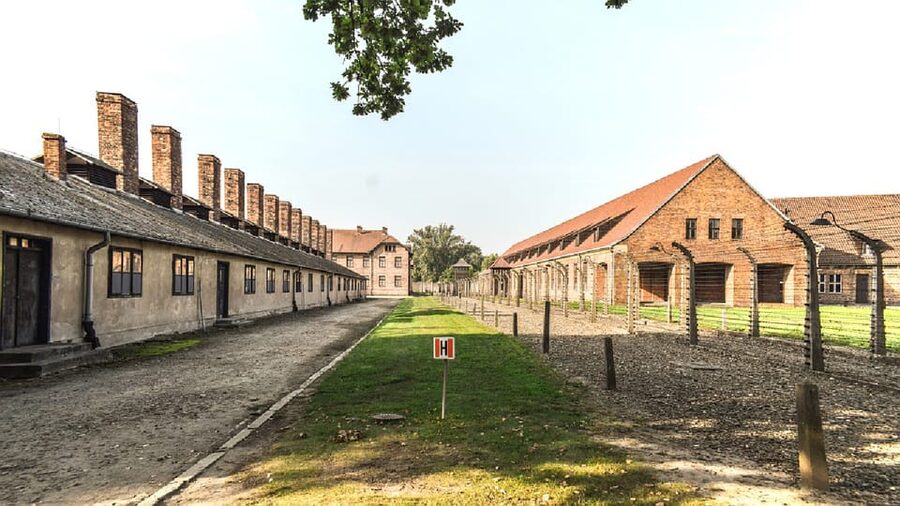
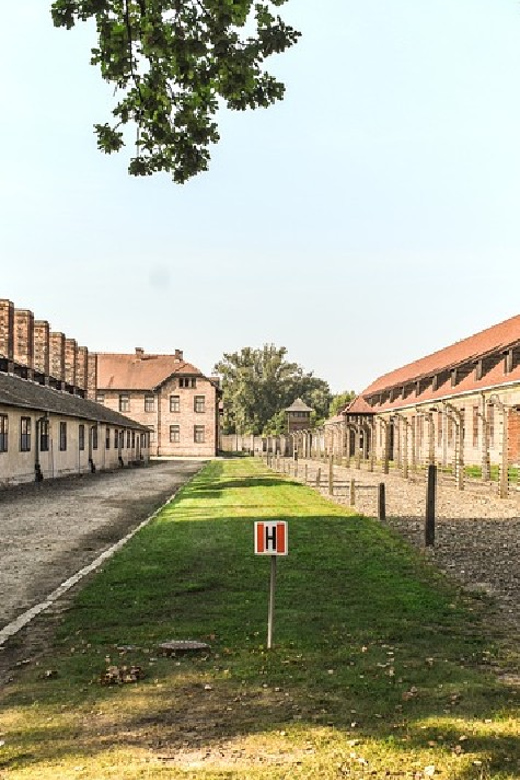
At Auschwitz I, you enter the former camp built in 1940 with an authorized live guide. The visit takes you across the grounds and into exhibitions showing everyday objects taken from people imprisoned there, including shoes and cooking pots. These objects are plain, which is part of their force. They bring the human scale of the camp into view without relying on spectacle.
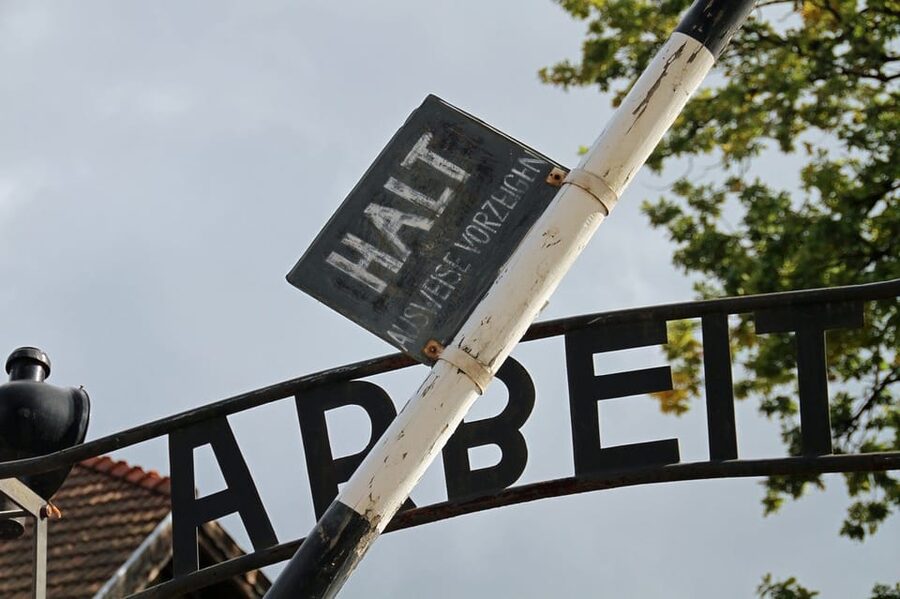
You will also see the infamous entrance gate and former barracks. The guide explains what you are looking at as you move through the site, and the headset lets you hear clearly even if you are not beside the guide at every moment.
That headset is more than a minor convenience. A group can include as many as 40 people, and Auschwitz requires your attention. You should not have to choose between staying close to the guide and taking in the exhibits. The audio system helps you keep moving at the required pace while still following the explanation.
The visit is guided, not self-directed. The memorial’s visitor service determines the pace, route, and length of breaks, so your guide cannot simply add extra time wherever you wish. This is worth knowing before you arrive. The site has its own rules and operating rhythm, and the day is built around them.
Bring a passport or ID card. Your full name and contact details are supplied during booking, and the name must match your identification or entry may be refused. Pack lightly too. The largest permitted bag is 30 by 20 by 10 centimeters, roughly the size of an A4 sheet in footprint. A small purse, backpack, or day bag is fine if it fits those limits.
Birkenau: railway tracks and the remains of the camp
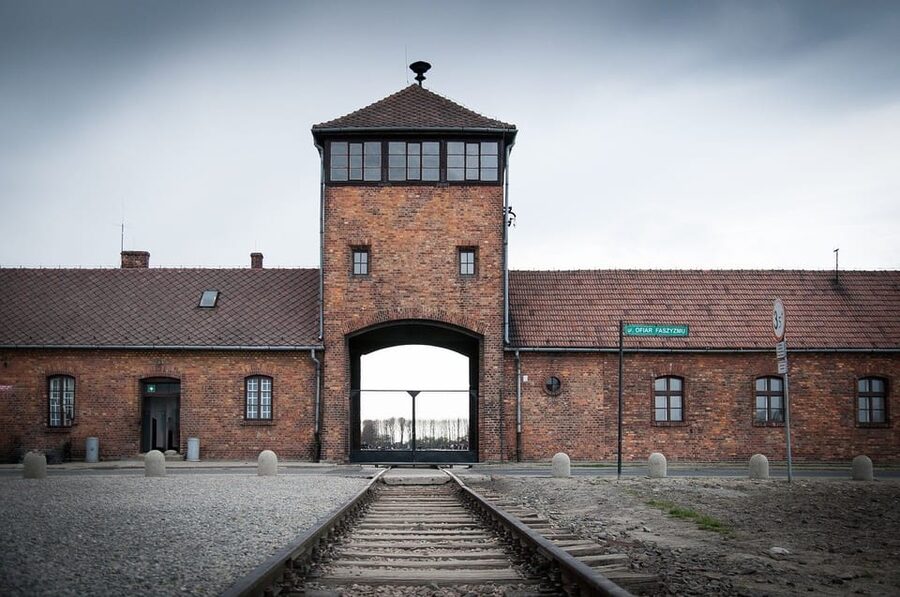
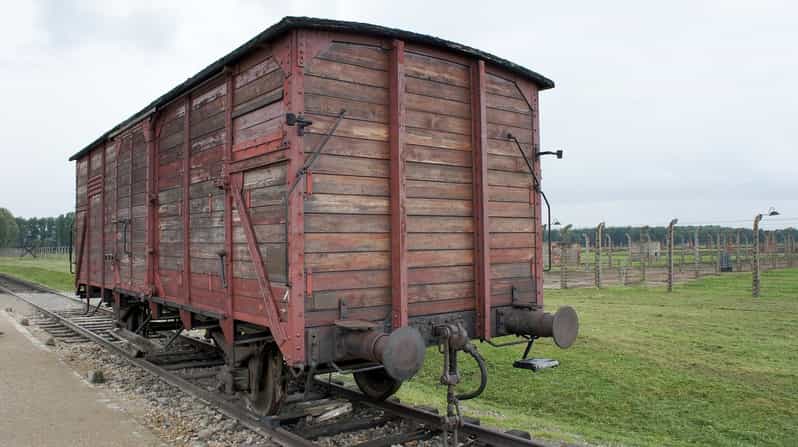
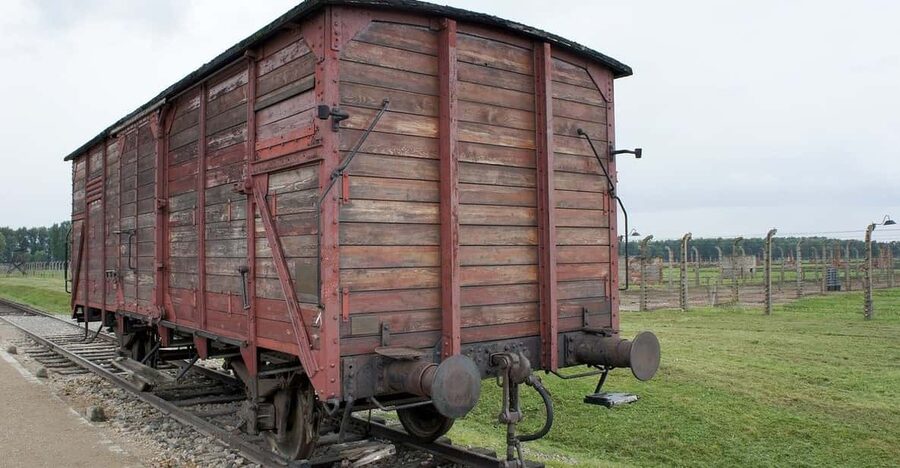
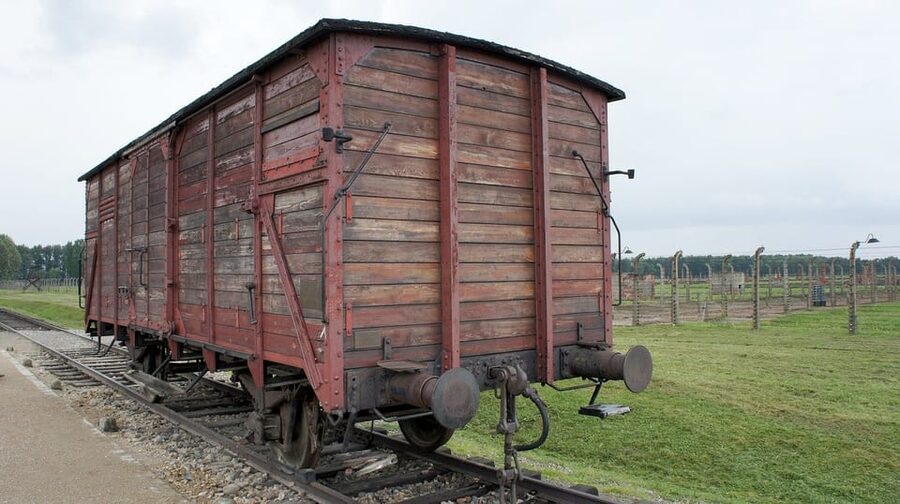
Auschwitz II-Birkenau presents a different scale. Here, you walk along the railway route used to transport people into the camp. The platform makes the process of arrival easier to understand, and the broad grounds show how extensive the camp complex was.
You will see the ruins of gas chambers where people were murdered on a mass scale. This part of the visit can feel especially stark because much of the site is open and exposed. You are not simply moving from one indoor display to another. You are walking through a place where the physical setting itself carries much of the meaning.
I would approach this section slowly in your mind, even though the group pace may not be slow. Listen carefully, stay with the guide, and allow yourself a little quiet afterward. This is not a stop to squeeze between photo opportunities. Photography rules and memorial guidance should be followed closely, and respectful behavior matters throughout.
The early departure can be a benefit here. The April 2024 visit praised the informative, friendly guide and the value of beginning very early. An early start may make the day feel tiring, but it can also leave more room in the schedule and reduce the pressure of trying to fit both sites into a late start.
Wieliczka Salt Mine: 800 steps below the surface

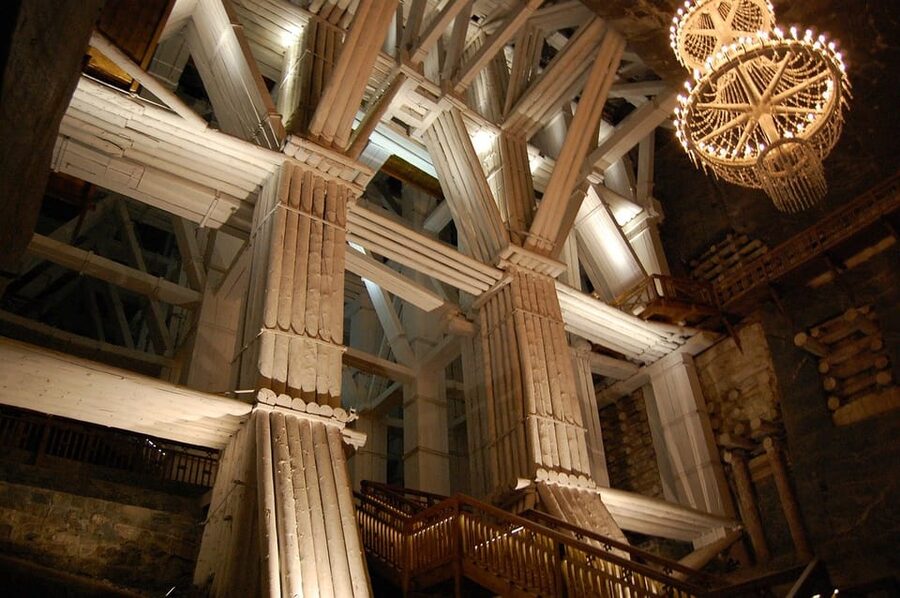
After Auschwitz, your driver takes you to Wieliczka Salt Mine, unless the day begins there. The underground route lasts about two to two and a half hours, and you descend roughly 800 steps in total.
Do not read that number as one continuous staircase. You stop on several levels along the visitor route, but you should still be ready for a lot of walking and stairs. The experience is not suitable for people with mobility impairments, and children under 14 are not accepted on this activity.
The mine temperature stays around 14 to 15 degrees Celsius. That is cool enough to notice after walking outside, so bring a light jacket or sweater. Comfortable shoes are essential for both attractions, but especially here, where the route includes stairs and extended time on foot.
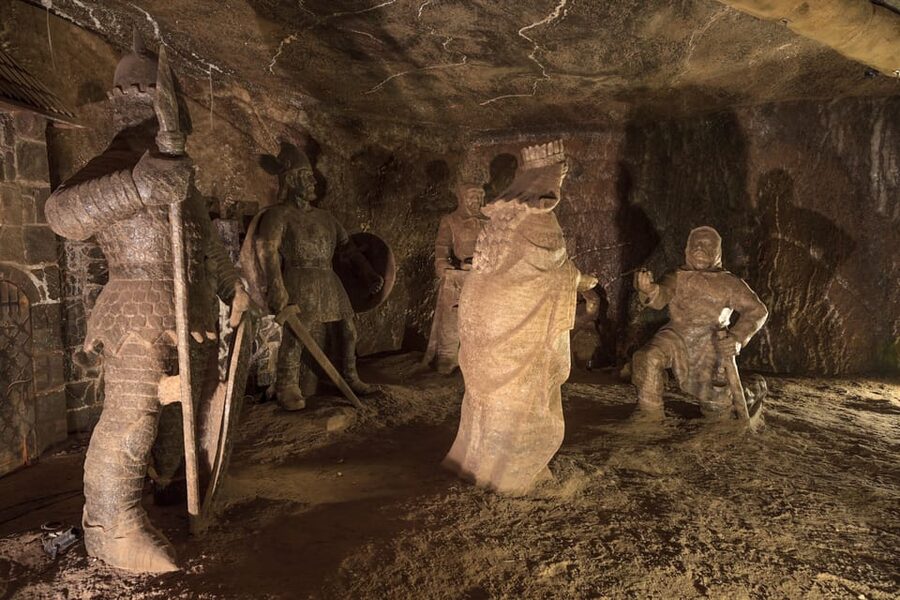
Inside, miners created salt sculptures, bas-reliefs, and other objects that remain along the route. The appeal is not only the underground setting. It is the evidence of people shaping their workplace into something expressive and personal. Your guide explains the mine’s story and points out the carvings while the headset keeps the commentary audible.
The mine gives the day a very different mood from Auschwitz. Its chambers and carvings offer visual interest and a sense of craft, while the first stop asks you to confront painful evidence. That contrast can make the itinerary feel unusually full. It can also leave you mentally and physically spent by the final hours.
At the end of the route, you take a lift back up. Your driver then brings you toward Krakow, with the return point near the city center rather than necessarily the exact place where you began.
More Wieliczka Salt Mine tours:
- From Krakow: Wieliczka Salt Mine Tour
★ 4.6 · 9,393 reviews - Krakow: Auschwitz-Birkenau and Salt Mine Guided Tour
★ 4.7 · 9,020 reviews - Krakow: Wieliczka Salt Mine Guided Tour with Transport
★ 4.4 · 7,429 reviews - Krakow: Wieliczka Salt Mine Fast-Track Ticket & Guided Tour
★ 4.5 · 5,872 reviews
Food stops and the driver’s role
Food is not listed as part of the price, so plan to buy your own coffee, snacks, or lunch. The day does include opportunities to stop on the way to Auschwitz and again before Wieliczka. One account praised the chance to take breaks, including a lunch stop, and described the driver Wojtek as especially friendly and helpful.
That detail matters because the driver is your practical link between the two major visits. A good driver makes a group day easier by explaining where to meet, helping you enter each site, and keeping the transport side orderly. Wojtek was also described as careful about safety and willing to help when passengers needed direction.
Still, you should carry a payment method that works for small food purchases. One lunch stop became awkward when people did not have cash, and Wojtek paid for food and drinks for another group. You should not rely on the driver to solve that kind of problem.
Alcohol is not allowed in the vehicle, and you should not arrive intoxicated. Weapons and sharp objects are prohibited. Sleeveless shirts and shorts are also listed as not allowed, so dress in a way that fits the memorial’s rules and the cool mine temperature.
Group size, headsets, and the pace of the day
You can select a group size of 20, 25, 30, 35, or 40 people. The smaller options may feel easier to manage, but every group is still large enough that you should expect a shared experience rather than one-on-one guiding.
The headsets are a strong feature at this size. They let you hear the English-speaking guide from a short distance, which is useful when the group spreads out around exhibits or chambers. They also reduce the need for everyone to crowd around one person.
The departure time is approximate and can change by as much as three hours. That is a major planning point. Do not schedule a tight evening reservation, train, or flight immediately after the tour. The exact order of Auschwitz and Wieliczka can change too, so keep your morning and afternoon open.
The memorial visitor service controls the pace and break times at Auschwitz. Your guide has no power to extend the visit whenever you wish. At Wieliczka, the underground route is also structured, so this is best for you if you value a well-organized introduction over wandering independently.
Who will get the most from this trip?
I would recommend this outing to you if you have limited time in Krakow and want both sites covered in one day. It is also a good choice if arranging separate tickets and transport feels like work, or if you prefer having an English guide explain the sites as you go.
It suits adults and older teenagers who can handle a serious memorial visit, a long day, and extensive walking. The minimum age is 14, and the activity is not designed for people with mobility limitations.
You should think twice if you prefer slow travel. The itinerary packs two major attractions into 12 hours, and the order and timing are not fully in your hands. You may also want separate visits if Auschwitz deserves a quieter day for you, or if you want more time underground at Wieliczka.
What to bring and what to leave behind
Keep your packing simple:
- Passport or ID card matching the booking name
- Comfortable walking shoes
- A warm layer for the 14 to 15 degree mine
- A small bag no larger than 30 by 20 by 10 centimeters
- Money or a suitable payment method for food stops
Leave large luggage, sharp objects, alcohol, and oversized backpacks behind. If a child is under 150 centimeters tall, tell the supplier in advance so a child seat can be arranged. The activity is listed as non-refundable, so check the date, names, and practical requirements before paying.
Should you book this Auschwitz and Wieliczka tour?
Book it if you want maximum convenience in one demanding day. The strongest parts are the included transport, organized entry, authorized guides, clear headsets, and the driver support between sites. The positive experience with Wojtek also shows how much a helpful driver can improve a long group outing.
Skip it if you need a flexible schedule, dislike early starts, have mobility concerns, or want to give Auschwitz the unhurried attention it deserves. At $167, the value comes from removing the planning burden and combining two complicated visits, not from a relaxed pace.
For many short stays in Krakow, this is a sensible one-day choice. Just treat it as a full, serious day, not a light excursion, and arrive prepared for stairs, cool air, strict entry rules, and a schedule that may move around.
FAQ
How long does the tour last?
The full experience lasts about 12 hours, including pickup, visits to both attractions, transport between them, and the return to Krakow near the city center.
Does the tour always visit Auschwitz first?
No. Auschwitz-Birkenau or Wieliczka Salt Mine may be visited first, depending on the day and selected departure time.
Is transport from Krakow included?
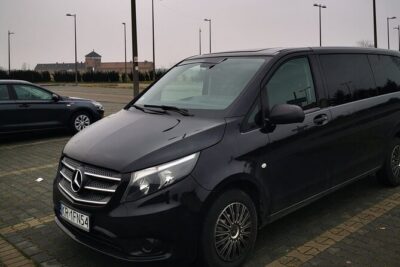
Yes. Hotel or accommodation pickup, transport between the sites, and transport back toward Krakow are included. The vehicle may be a small bus, van, or car depending on the number of participants.
What identification should I bring?
Bring a passport or ID card. Your booking name must match your identification details, or entry may be refused.
How cold is the Wieliczka Salt Mine?
The temperature inside the mine is about 14 to 15 degrees Celsius. You spend around two to two and a half hours underground, so bring a suitable warm layer.
Is the tour suitable for children or people with mobility impairments?
The activity is not suitable for children under 14 or for people with mobility impairments. If a child is under 150 centimeters tall, notify the supplier so a child seat can be arranged.
Just added around Poland
- Rynek Underground Museum & Wawel Castle, Cathedral – Cracow★ 5.0 · 3 reviews
- Schindler’s Factory, Ghetto and Plaszow Camp Guided Tour★ 4.7 · 3 reviews
- Jewish heritage in Warsaw★ 4.5 · 3 reviews
- Poznan Old Town and Croissant Museum Private Walking Tour★ 5.0 · 3 reviews
- Warsaw Outdoor Paintball with Transfers (all year round)★ 5.0 · 3 reviews
- Half-Day Chelmno Kulmhof Concentration Camp Private Tour★ 4.5 · 3 reviews
- 4 hours skitour trip in Tatra Mountains for beginners with renting equipment★ 5.0 · 3 reviews
- Nowa Huta – a guided tour of a utopian socialist city★ 5.0 · 3 reviews
Auschwitz-Birkenau Memorial Tours, compared.

Auschwitz-Birkenau Guided Tour & Hotel Pickup
Read our review →Auschwitz-Birkenau Guided Tour & Hotel Pickup
Read our review →
Auschwitz Guided Tour with Optional Hotel Pickup
Read our review →
Auschwitz-Birkenau Guided Tour with Pickup & Lunch
Read our review →
Auschwitz-Birkenau Guided Tour Pickup/Lunch Options
Read our review →
Krakow to Auschwitz Birkenau Guided Tour with Transfer and Ticket
Read our review →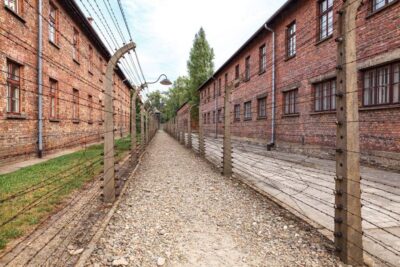
Browse the lists this tour appears in