
REVIEW · SCHINDLER FACTORY TOURS
Jewish Quarter Kazimierz and Schindler’s Factory Guided Tour
Krakow’s hardest stories are best read on foot. This 3.5-hour tour connects the surviving streets of Kazimierz with Krakow under Nazi occupation, giving you a clear introduction to Jewish life before World War II and the persecution that followed. I especially like the walk along Szeroka Street, where synagogues, old townhouses, and memorial sites make the past feel close at hand. I also like the fast-track entry to Schindler’s Factory Museum, where a guide helps organize a large and emotional subject.
The main consideration is the museum itself. Despite its name, you do not tour a working enamel factory filled with original machinery. The museum occupies the former factory’s administrative building and focuses mainly on Krakow during the Nazi occupation, with Schindler’s role forming one part of the story. The guided visit can also feel rushed if you want time to read every display.
In This Review
- Key points to know before booking
- Why Kazimierz matters before you visit
- Szeroka Street and Kazimierz’s surviving synagogues
- From Jewish life to wartime persecution
- Entering Schindler’s Factory Museum
- Why a guide helps, and where the clock hurts
- Price, group size, and practical value
- Who will get the most from this experience?
- Should you book the Kazimierz and Schindler tour?
- FAQ
- How long does the tour last?
- Where does the tour begin?
- Where does the tour end?
- Is the tour offered in English?
- What is included in the price?
- Are food and drinks included?
- Is the original factory still preserved?
- How many people can join the group?
- What happens if I arrive late or need to cancel?
Key points to know before booking
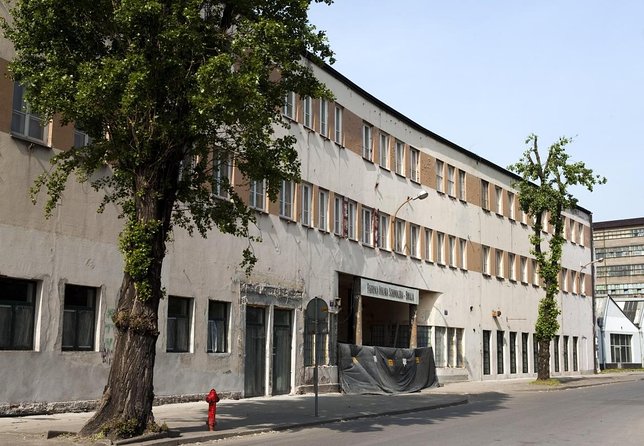
- Kazimierz begins on Szeroka Street, the old center of Krakow’s Jewish community, with the Old Synagogue, Remuh Synagogue and Cemetery, Kupa Synagogue, and Tempel Synagogue along the route.
- The museum is not a factory-floor tour. The original production equipment is gone, and the exhibition is mainly about Krakow from 1939 to 1945.
- A licensed English-speaking guide leads both sections, with guides such as Margaret, Helena, Magda, Dominika, Barbara, Janna, and Filipe praised for clear explanations and strong local knowledge.
- The total duration is about 3 hours 30 minutes, usually split into roughly 90 minutes in Kazimierz and 90 minutes at the museum, with travel between them.
- The museum group can reach 25 people, and several tour groups grow larger after the smaller Kazimierz walk.
- At $71.20 per person, the price is reasonable if you want one organized history experience with museum admission and fast-track entry, but less attractive if you prefer exploring museums at your own pace.
Why Kazimierz matters before you visit
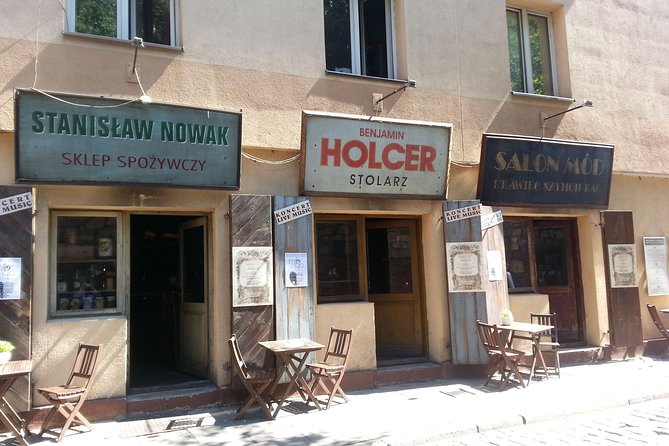
Kazimierz was not simply an old quarter with a few historic synagogues. For centuries, it was a center of Jewish religious, family, commercial, and cultural life in Krakow. The tour begins at Szeroka 24, a useful starting point because this street gathers several of the district’s most important landmarks in one compact area.
Your guide introduces the Jewish community’s role in the city before World War II, then explains how the neighborhood changed under Nazi rule. This opening context matters. Without it, the later museum visit can become a blur of dates, uniforms, forced removals, and photographs. With it, you can better understand what was lost when people were driven from their homes and herded into the ghetto in Podgórze.
I like this order. You first see a neighborhood where religious life and daily routines once shaped the streets. Only afterward do you move into the period of occupation and mass persecution. It gives the museum’s exhibits a human setting instead of presenting the Holocaust as a collection of disconnected facts.
The walk is also a useful introduction to Krakow itself. Guides explain the relationship between Jewish and Christian communities and point out how both developed side by side. That broader view prevents the tour from treating Kazimierz as a memorial zone only. It remains a lived-in Krakow district, with restaurants, cafés, cultural venues, and active religious sites.
More Schindler Factory tours:
- Krakow: Oskar Schindler’s Factory Entry Ticket & Guided Tour
★ 4.2 · 3,793 reviews - Krakow: Schindler’s Factory Tour with Entrance Ticket
★ 4.5 · 3,182 reviews - Krakow: Schindler’s Factory Skip-the-Line Ticket
★ 4.4 · 3,105 reviews
Szeroka Street and Kazimierz’s surviving synagogues
Szeroka Street is the visual center of the first section. Historic townhouses from the 16th to 18th centuries frame the street, while synagogues mark the area’s religious importance. The Old Synagogue is the oldest preserved synagogue in Poland and now operates as a museum of Jewish history.
You see the exterior and hear why the building matters, but this experience is not designed as a full synagogue-by-synagogue interior tour. If you want to enter each site, allow extra time on another day. One useful point from the tour is that Kupa Synagogue once served poorer members of the community, while Tempel Synagogue remains an active cultural center.
The Remuh Synagogue and Cemetery are among the most important Jewish religious sites in Poland. The revered 16th-century rabbi Moses Isseries, known as Remuh, taught here, and his name remains closely tied to the synagogue and cemetery. This is the sort of detail that can disappear in a guidebook timeline, but it gives the district a personal anchor.
The walking pace is generally manageable. One guide was praised for keeping the first section easy-paced, and another for repeating key facts so children could follow the story. Still, you should expect to be on your feet and outdoors. Wear sensible shoes, and check the forecast before setting out. The tour runs in all weather, so rain or strong heat can change how comfortable the walk feels.
From Jewish life to wartime persecution
The strongest part of the walk is the shift from cultural history to wartime history. Your guide explains what happened to Krakow’s Jewish population under Nazi occupation and how people were forced into the ghetto. The subject is painful, but the tour’s value comes from placing those events at actual streets and buildings rather than keeping them abstract.
Some guides also show historic images of Kazimierz and film stills connected with Schindler’s List. This helps explain why Steven Spielberg used the district to represent the Jewish ghetto of Podgórze. The film made creative choices about locations, and the real neighborhood is not identical to every scene on screen. That distinction is useful if the movie is part of your reason for booking.
Do not expect a movie-location tour from beginning to end. Film references are part of the walk, not its main purpose. The focus remains Krakow’s Jewish heritage, the destruction of that community, and the physical traces left behind.
The supplied route describes about 90 minutes in Kazimierz. Some accounts also refer to the ghetto area, Hero Square, and a remaining section of the ghetto wall. Since the exact route and timing can change with site scheduling, it is sensible to ask your guide at the start which locations are included that day.
Entering Schindler’s Factory Museum
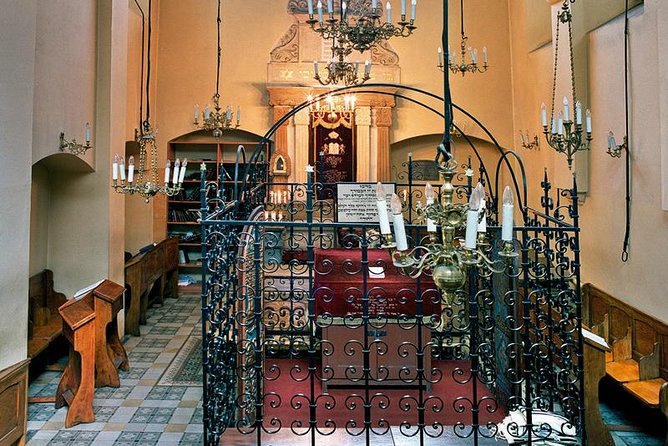
The second section takes you to Lipowa 4, where the experience concludes. The museum is housed in the former administrative part of Oskar Schindler’s enamelware factory. It is now one of Krakow’s most visited museums, but it no longer contains the original factory production equipment.
That distinction is important. You are not walking through a preserved workshop to see rows of enamel pots or machinery. The remaining connection to Schindler’s factory is tied to the building, documents, exhibits, and the story of the workers he employed. One account noted that only a small amount of the original factory setting remains, including Schindler’s office and a single pot. The museum’s strength is its historical presentation, not industrial archaeology.
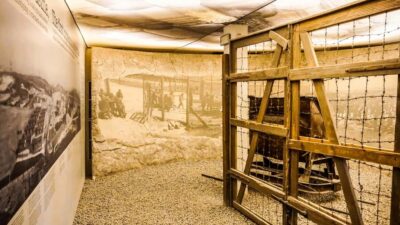
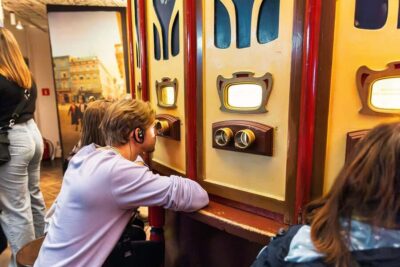
The main exhibition, Krakow under Nazi Occupation 1939 to 1945, places Schindler’s story inside the wider experience of the city. You encounter photographs, personal objects, reconstructed streets, and material showing the fear and uncertainty of daily life during the occupation. The exhibition covers far more than Schindler alone, including the experience of Krakow’s Jewish population and the wider destruction brought by Nazi rule.
Schindler employed Jewish workers and used his influence and resources to protect more than a thousand people from deportation. Those survivors are often called Schindlerjuden. The museum presents this story against the grim setting of occupation, which makes Schindler’s decisions easier to understand as actions taken within a system of violence and corruption.
I find this wider focus worthwhile, but you should know what you are buying. If you want a museum devoted almost entirely to Schindler’s personal life, factory operations, or the making of the film, this may disappoint. If you want to understand what happened in Krakow during the war, the museum offers much more.
More Jewish heritage tours in Kraków:
- Krakow: Schindler’s Factory & Ghetto Guided Tour
★ 4.7 · 1,694 reviews - Krakow: Jewish Quarter and Former Ghetto Tour
★ 4.9 · 1,441 reviews - Krakow: Bike Tour of Old Town, Jewish Quarter and the Ghetto
★ 4.9 · 1,155 reviews - Krakow: Kazimierz Jewish Quarter Walking Tour
★ 4.8 · 571 reviews
Why a guide helps, and where the clock hurts
Guiding quality appears to be the biggest strength of this experience. Several guides received praise for clear English, strong storytelling, and the ability to answer detailed questions. Barbara was singled out for giving a full explanation to a small group, while Helena was praised for bringing personal family experience into the subject. Filipe used old photographs and film images to show how the district had changed.
Those details matter because Kazimierz can look like a pleasant old neighborhood if you do not know what you are seeing. An informed guide points out religious traditions, explains legends and local customs, and connects buildings to the people who once used them. The best guides also keep the tone respectful without turning the walk into a dry lecture.
The museum guide can be equally useful. One person said the museum was worth visiting with a guide because the exhibition contains so much material. Another preferred exploring alone, arguing that the guided time was too short for such a large museum. Both points are fair.
The planned museum visit lasts about 90 minutes. That is enough for a guided overview, but not enough to read every panel slowly. If you are the sort of person who stops at every photograph, you may want to return independently. The tour gets you inside efficiently and gives you a framework. You then decide if the exhibition deserves another visit.
The museum’s narrow passageways and immersive layout can feel uncomfortable. This is intentional, as the design aims to reflect Krakow during World War II, but it may not suit anyone who dislikes confined spaces. Nazi symbols and wartime regalia are also displayed. They serve the historical purpose of the exhibition, yet the material can be deeply unsettling.
Price, group size, and practical value
At $71.20 per person, this is not the cheapest way to walk around Kazimierz. You can stroll Szeroka Street and view the main synagogues from outside without paying for a tour. The price becomes easier to justify when you add a licensed guide, fast-track museum admission, transportation between the two sections, and a connected explanation of the district and occupation.
The value depends on your habits. I would pay it if I had limited time in Krakow, wanted an English-language guide, and did not want to arrange the museum separately. Fast-track entry is useful when queues are long, and the museum’s personalized tickets mean that booking details need to be correct.
I would hesitate if I wanted a private, slow-paced experience or planned to spend half a day in the museum. The group limit is 25, but the Kazimierz portion may be much smaller before more people join at the museum. Several accounts describe a small walking group that became 15 to 20 people inside the museum. That is still manageable, but it is not the same as a private tour.
The tour is advertised at about 3 hours 30 minutes, although exact times can shift because of museum scheduling. Arrive at least 10 minutes early at Szeroka 24. Late arrivals cannot be accommodated once the group enters, and missed tickets are not refundable.
All groups operate in one language, so choose English when booking. Full names for everyone in your party are required because the museum issues personalized tickets. Free cancellation is available up to 24 hours before the start time. Changes or cancellations inside that window are not accepted.
Who will get the most from this experience?
I would recommend this tour to first-time visitors who want a clear introduction to Krakow’s Jewish past and wartime history. It also suits anyone who has seen Schindler’s List and wants to understand which parts reflect real Krakow and which locations were adapted for the film.
Families can benefit from the guide’s ability to repeat key facts and explain difficult events in plain language. The subject is serious, so parents should decide how much detail is right for younger children. The walk itself is easier paced, but the museum contains disturbing images and Nazi material.
This tour also works well early in a Krakow stay. The guide may suggest current places to eat or visit, and the walk gives you useful bearings in Kazimierz. You can then return later to explore a synagogue, cemetery, restaurant, or museum at your own speed.
It is less suitable for anyone expecting a preserved factory tour. It is also not ideal if you want a full day at Schindler’s Museum, since the guided schedule moves you through the exhibition rather than leaving you to linger.
Should you book the Kazimierz and Schindler tour?
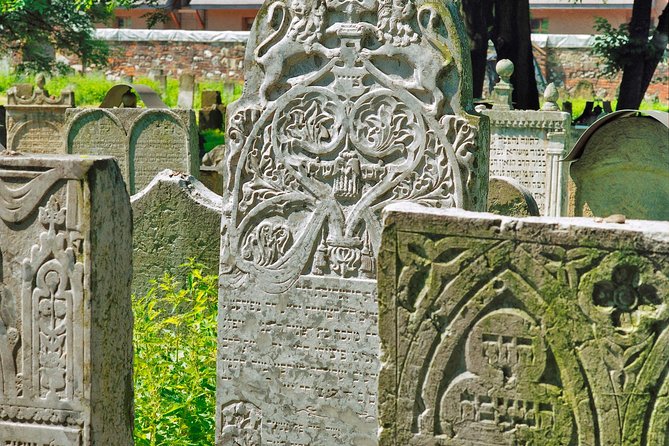
Book it if you want the two major subjects connected: Jewish life in Kazimierz and Krakow under Nazi occupation. The strongest part is the combination of place and explanation. You see the synagogues, hear about figures such as Remuh, learn how the community was destroyed, and then enter a museum that places Schindler’s actions within the city’s larger wartime story.
Go in with accurate expectations. This is not a tour of a functioning enamel factory, and the museum section may feel short. For about $71.20, the tour offers good value when fast entry, a licensed English guide, and limited holiday time matter most. If you want to study every exhibit, use the tour as your introduction and return to the museum alone.
FAQ
How long does the tour last?
The tour lasts approximately 3 hours 30 minutes, with about 1 hour 30 minutes in Kazimierz and about 1 hour 30 minutes at Schindler’s Factory Museum. Times may change because of museum or site scheduling.
Where does the tour begin?
It begins at Szeroka 24 in Krakow’s Kazimierz district.
Where does the tour end?
The tour ends at Lipowa 4, the address of Schindler’s Factory Museum.
Is the tour offered in English?
Yes. The experience is offered in English, and each group is conducted in a single language.
What is included in the price?
The price includes the guided walk through Kazimierz, a professional licensed guide, and fast-track admission to Schindler’s Factory Museum.
Are food and drinks included?
No. Food and drinks are not included unless specifically stated.
Is the original factory still preserved?
The building originally operated as Schindler’s factory, but it now functions as a museum and does not contain the original production equipment.
How many people can join the group?
Museum guidelines limit the group to a maximum of 25 people. The walking group may be smaller before additional people join for the museum section.
What happens if I arrive late or need to cancel?
You should arrive at least 10 minutes before the start. Late arrivals cannot be admitted after the group enters, and tickets are non-refundable in that case. You can cancel for a full refund up to 24 hours before the experience begins.
Just added around Kraków
- Rynek Underground Museum & Wawel Castle, Cathedral – Cracow★ 5.0 · 3 reviews
- Schindler’s Factory, Ghetto and Plaszow Camp Guided Tour★ 4.7 · 3 reviews
- Nowa Huta – a guided tour of a utopian socialist city★ 5.0 · 3 reviews
- Krakow: Kazimierz by Golf Cart and Schindler’s Factory Tour★ 4.8 · 3 reviews
- Private Krakow City Tour by Car and Walk with private tour guide★ 5.0 · 3 reviews
- Krakow: Jewish Traces Private Electric Car Tour★ 4.1 · 3 reviews
- Discover the Jewish Quarter with a Bike Tour★ 5.0 · 3 reviews
- Krakow: Indoor Go-Karting (24-Minute Races)★ 4.8 · 3 reviews
Schindler Factory Tours, compared.
Oskar Schindler’s Factory Entry Ticket & Guided Tour
Read our review →
Schindler’s Factory Tour with Entrance Ticket
Read our review →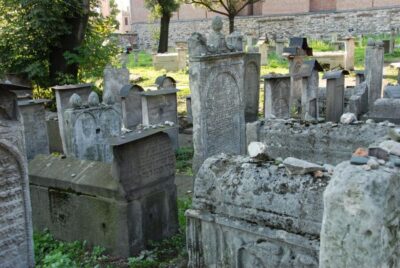
Schindler’s Factory Tour with Entrance Ticket
Read our review →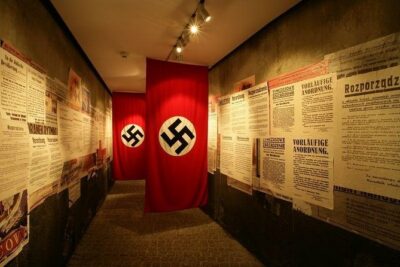
Schindler’s Factory in Krakow: Guided Tour & Skip the Line Ticket
Read our review →
Schindler’s Factory Ticket with Guided Tour Option
Read our review →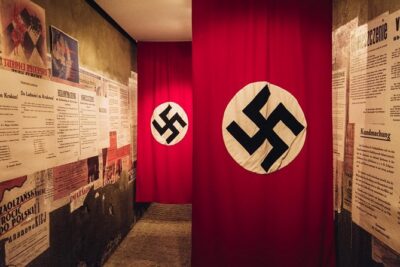
Krakow Schindler’s Factory Guided Tour with Admission Ticket
Read our review →Browse the lists this tour appears in