
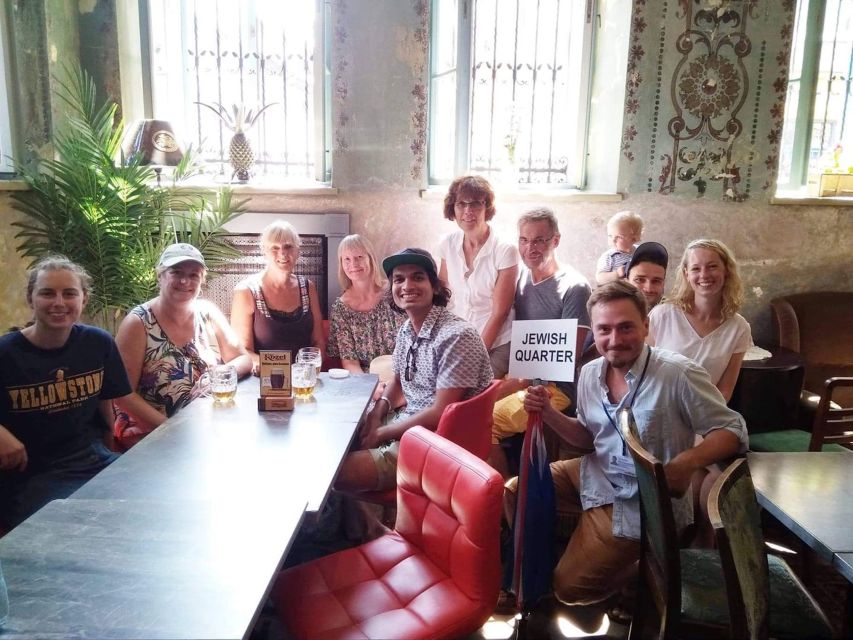
REVIEW · JEWISH QUARTER & GHETTO TOURS
Krakow: Jewish Quarter and Former Ghetto Tour
History here is written into the streets. This 2.5-hour walk connects Kazimierz’s synagogues and cemetery with the former ghetto across the river, giving you far more context than a self-guided stroll. I especially like the route’s mix of Jewish culture before World War II and the city’s wartime story, plus the chance to see Schindler’s List filming locations. Guides such as Bart, Magda, Slavek, Emily, and Matt are repeatedly praised for clear storytelling and a strong command of the subject.
The main drawback is the amount of information packed into 150 minutes. You keep moving, and one recent participant found the pace a little rushed when there was a lot to absorb. You will also be outdoors for more than two hours, so warm clothing and comfortable shoes matter, especially in colder months.
In This Review
- Key points to know before you go
- Starting at the Old Synagogue on Szeroka Street
- Kazimierz before 1939, a neighborhood with a full life
- Synagogues, lanes, and the details you could miss
- The Jewish cemetery and the weight of place
- Crossing into the former ghetto
- Schindler’s List locations and the limits of movie history
- How the 150 minutes feel on foot
- Is $19 a fair price?
- Who will get the most from this walk?
- Booking details worth knowing
- Should you book the Jewish Quarter and Former Ghetto Tour?
- FAQ
- Where does the tour meet?
- How long does the walking tour last?
- What language is the tour conducted in?
- What is included in the price?
- Are food and drinks included?
- Is the tour wheelchair accessible?
- Can I cancel and receive a refund?
Key points to know before you go
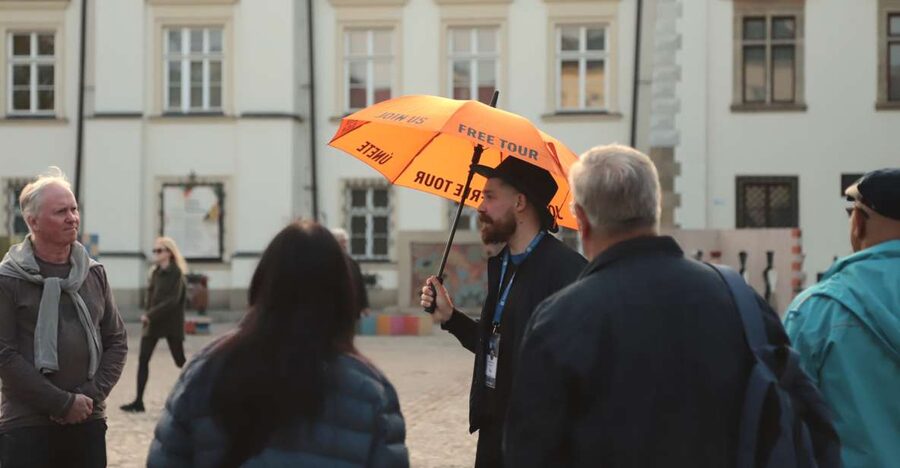
- The Old Synagogue is the starting point: Meet outside at ul. Szeroka 24, where guides carry an orange umbrella.
- The route links two districts: You begin in Kazimierz and continue to the former Jewish ghetto, so this is more than a walk around one historic neighborhood.
- The story covers life before the Holocaust: Expect discussion of Jewish traditions, Ashkenazim and Sephardim, local personalities, and prewar prosperity.
- The Holocaust memorials are central: The Jewish cemetery and Heroes of Ghetto Square bring the wartime story into clear, physical focus.
- Schindler’s List locations add a modern connection: The tour points out filming sites, though the emphasis remains history rather than cinema.
- The price is modest for a live guide: At $19 per person, the value comes from interpretation, organization, and access to details you could easily miss alone.
Starting at the Old Synagogue on Szeroka Street
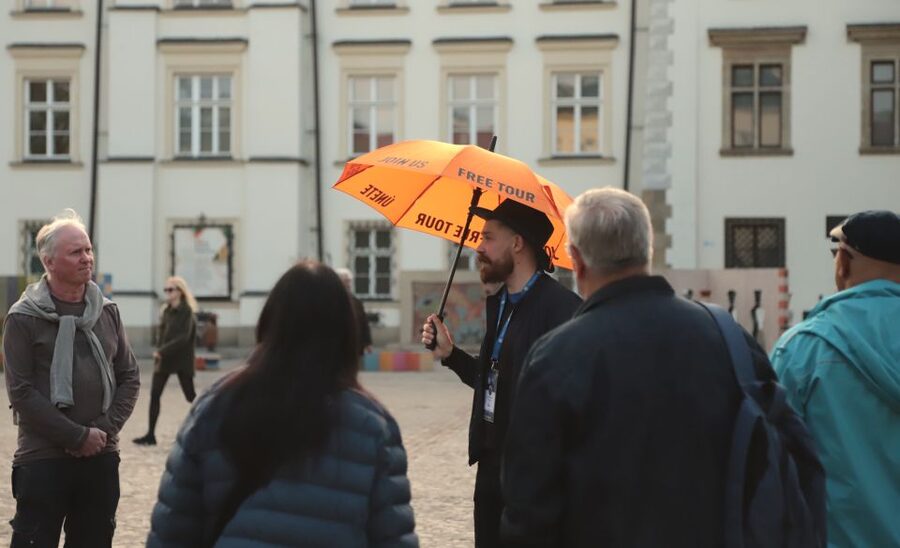
The walk begins in front of the Old Synagogue at ul. Szeroka 24. Look for the orange umbrella, a useful marker on a busy square where several groups may gather.
This is a fitting place to start. Kazimierz was established as a separate city on an island close to Kraków and was intended to rival its larger neighbor. Jewish communities began settling here in the Middle Ages, after persecution in parts of Western Europe, and Kazimierz later became a center of Jewish life and prosperity.
The Old Synagogue gives the guide a solid opening point for explaining that story. The attraction is presented as Poland’s oldest synagogue and is also highlighted as the second oldest synagogue in Europe. Since the supplied descriptions use both labels, I would treat the building chiefly as one of the most important surviving Jewish monuments in Kraków rather than get caught up in the exact ranking.
You should not expect a long indoor museum visit as part of the walk. The included activity is a guided walking tour, and the value lies in what the guide explains around the buildings, streets, and memorials.
More Jewish heritage tours in Kraków:
- Krakow: Schindler’s Factory & Ghetto Guided Tour
★ 4.7 · 1,694 reviews - Krakow: Bike Tour of Old Town, Jewish Quarter and the Ghetto
★ 4.9 · 1,155 reviews - Krakow: Kazimierz Jewish Quarter Walking Tour
★ 4.8 · 571 reviews
Kazimierz before 1939, a neighborhood with a full life
The best part of this experience is that it does not begin with the Holocaust. You first learn about Jewish life before the catastrophe, which helps you understand what was lost.
The narrow streets around Kazimierz once held homes, businesses, places of worship, schools, and community life. Today, you may see cafés and restored façades, but a guide can point out details that make the district’s earlier role easier to picture. One participant who had already walked through the Jewish Quarter alone said the area’s importance only became clear with a guide.
That is the difference between seeing an attractive old street and understanding it as part of a living community. The tour introduces Jewish customs and traditions and explains the difference between Ashkenazim and Sephardim. For many people, this is useful groundwork because it avoids treating Jewish history as one single, uniform story.
The guide also brings in people connected with Kraków, Poland, and Jewish cultural life. Names covered on the route include Helena Rubinstein, Roman Polanski, Ludwick Zamenhof, and Maximilian Faktorowicz. These references broaden the walk beyond buildings and dates. They show how individual lives, work, language, film, and cosmetics connect with the larger story.
Guides are a major part of the experience. Bart is often singled out for his strong voice, dry humor, passion, and ability to connect local details with wider history. Magda is praised for stopping for questions and making the group feel at ease. Emily is described as an engaging storyteller who handled a difficult subject with the right tone. Slavek is repeatedly noted for being friendly and easy to hear.
Guide assignments can change, of course, so do not book on the promise of one particular person. Still, the consistency of the comments about Bart, Magda, Emily, Matt, and Slavek suggests that the provider pays serious attention to its guiding team.
Synagogues, lanes, and the details you could miss
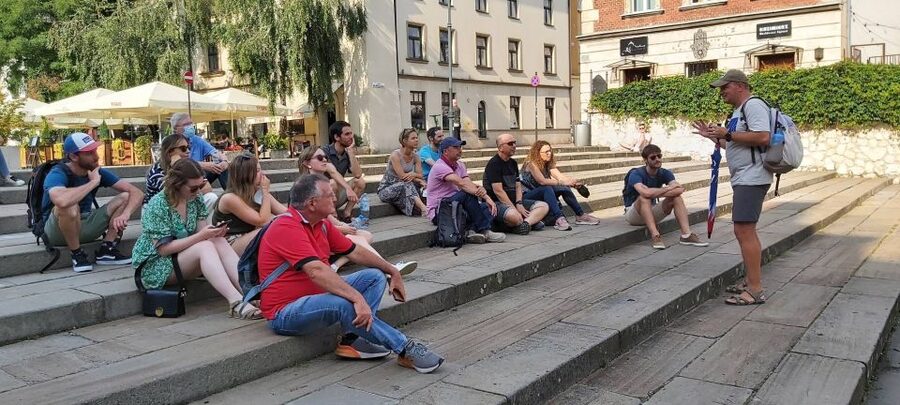
The synagogue area rewards patience, but a group walk has to keep to a schedule. You will pass historic buildings and small streets while the guide explains how the district functioned before the war and how it has changed since.
I like this portion because it places religious buildings in everyday context. A synagogue is not just an impressive façade. It was part of a network of homes, shops, family life, worship, and community traditions. A good guide helps you read the neighborhood as a place where people lived rather than as a collection of sightseeing stops.
The tradeoff is time. The route covers a great deal in 150 minutes, and the walk continues through several locations. One participant described the experience as very detailed and slightly rushed, with little time to pause and absorb every point. Another found the pace comfortable, with frequent stops for rest and explanation.
That difference may depend on the guide, group, weather, and your own listening pace. If you like slow photography stops or long visits inside monuments, this may feel brisk. If you want a strong orientation to the district before exploring independently, the pace should suit you.
Take notes on places the guide recommends returning to. Bart is specifically praised for pointing out locations worth revisiting after the tour. That is a practical strength: the walk gives you a map of what deserves a second look, instead of trying to fit every detail into one pass.
The Jewish cemetery and the weight of place
The Jewish cemetery is one of the most important stops because it shifts the story from architecture to people. The guide can explain its role within the community and place it in the wider account of Jewish life in Kraków.
A cemetery requires a different tone from the lively streets of Kazimierz. This is one reason a sensitive guide matters. The strongest descriptions of the experience praise guides for being respectful and reflective, especially when discussing painful parts of the past.
You should expect the Holocaust section to be emotionally difficult. That is not a flaw, but it is something to prepare for. The walk deals with persecution, displacement, and murder, and it does so in places connected to those events. Some participants describe the experience as deeply moving and thought-provoking rather than simply informative.
The cemetery also rewards quiet attention. You may want to listen rather than photograph constantly. The tour is conducted in English, and guides are described as speaking clearly and answering questions, but the subject requires concentration. If you prefer a light sightseeing outing, choose another activity for that day.
A few more Kraków trips worth weighing up
- From Krakow: Auschwitz-Birkenau Guided Tour & Hotel Pickup
★ 4.5 · 33,358 reviews - From Krakow: Auschwitz-Birkenau Guided Tour & Hotel Pickup
★ 4.5 · 29,340 reviews - Krakow: Auschwitz Guided Tour with Optional Hotel Pickup
★ 4.5 · 15,280 reviews - Krakow–Zakopane: Cable Car, Chocholow Baths, Cheese & Vodka
★ 5.0 · 10,720 reviews
Crossing into the former ghetto
The tour then connects Kazimierz with the former Jewish ghetto. This change matters because it shows how the Jewish experience was reshaped under Nazi occupation.
Rather than presenting the ghetto as an isolated stop, the route links it to the earlier community. You first see where Jewish life had developed over generations, then move toward the places associated with forced confinement and wartime destruction.
That contrast is one of the walk’s strongest features. It prevents the past from being reduced to a single chapter about suffering. You learn what existed before the ghetto, then see how quickly ordinary life was replaced by control, fear, and loss.
The route includes Heroes of Ghetto Square, one of Kraków’s best-known Holocaust memorial sites. The square gives the guide a place to explain the experiences of people forced into the ghetto and the meaning of the memorial itself.
Allow time for the square to sink in. A guide can supply names, dates, and context, but the physical setting also does important work. The open space, the memorial objects, and the shift away from Kazimierz make the history feel immediate without needing theatrical presentation.
The tour also includes a Holocaust memorial. The exact stop order may vary, but you should expect the wartime section to be central rather than a brief add-on at the end.
Schindler’s List locations and the limits of movie history
Film adds another layer to the walk. The route points out locations used in Schindler’s List, Steven Spielberg’s film about Oskar Schindler and the Kraków ghetto.
These sites are useful because many people first encountered the city’s wartime story through the film. Seeing the actual streets can help you understand how the production used Kraków’s historic areas to represent the period.
Still, this is not primarily a movie tour. The film locations support the history, but they do not replace it. You will hear about real people, Jewish life, persecution, and the ghetto rather than simply matching scenes to buildings.
One practical warning comes from a solo participant who lost sight of the group while taking photographs near Schindler’s locations. The person followed the wrong group and missed the rest of the walk. Keep the orange umbrella or your guide in view, and do not lag far behind when the group moves on. If you need extra time for photos, tell the guide first.
This is especially important because Kraków has several walking groups in the same area. A bright umbrella helps, but it is sensible to confirm the guide’s name and stay close at transitions.
How the 150 minutes feel on foot
The advertised duration is 150 minutes, or two and a half hours. It is long enough to connect Kazimierz, the cemetery, the ghetto, Heroes of Ghetto Square, and film locations, but not long enough for a slow, detailed visit inside every building.
Expect a walking route with regular stops. One participant described the walk as manageable despite a fair amount of walking, while another appreciated the pauses. You should still wear comfortable shoes. Cold weather deserves special attention because much of the experience takes place outside, and one February participant specifically advised wrapping up warm.
There is no food or drink included. Plan to eat before or after the tour rather than expecting a café stop during it. The route’s subject also makes it better suited to a focused morning or afternoon than to a casual outing squeezed between meals.
The activity is listed as wheelchair accessible. The supplied information does not describe the exact surfaces, slopes, or restroom arrangements, so if you have specific mobility needs, confirm the practical details before booking. The tour is conducted in English by a live guide.
Groups may contain people with different levels of interest. Guides are praised for answering questions, using humor carefully, and keeping people engaged, but the topic itself remains serious. You should be ready to listen for long stretches while standing outdoors.
Is $19 a fair price?
At $19 per person, this is inexpensive for a 2.5-hour guided walk in a major European city. The price is not buying admission to a string of attractions or a meal. It is paying for a guide who can connect places that might otherwise seem unrelated.
You can walk through Kazimierz for free. You can also find some of the memorials and filming locations on your own. The question is what you would understand without help. One participant put the value plainly: simply walking through the Jewish district would have provided very little compared with having the history explained.
There is also an unusual pricing detail. Similar walks may be available through a free-tour format, with visitors invited to make a donation at the end. Some people prefer that flexible approach. Others prefer paying $19 in advance because it gives a clear price and supports a structured, prearranged tour.
For me, the paid option makes sense if you want certainty, a live English guide, and a route that joins both Kazimierz and the former ghetto. It is less compelling if you already plan to visit each site slowly on your own and have time to read extensively.
Food and drinks are not included, but that is reasonable for a walking tour at this price. Bring your own water if needed and plan a meal separately.
Who will get the most from this walk?
I would recommend it to first-time visitors who want a clear introduction to Kraków’s Jewish heritage and wartime history. It is also a good choice if you have already wandered around Kazimierz and felt that the buildings were attractive but hard to place in context.
The tour suits you if you enjoy history told through real streets and personal stories. It should also appeal to anyone interested in Schindler’s List, though you should come for the historical setting rather than a film-only experience.
It may not suit you if you want a relaxed café walk, extensive free time, or a long indoor museum visit. The route is serious, information-heavy, and potentially upsetting. Families and older participants may manage it well, but everyone should be prepared for substantial walking and an outdoor stay of more than two hours.
Party groups are not allowed, and alcohol and drugs are prohibited. That fits the subject and helps keep the atmosphere respectful.
Booking details worth knowing
The meeting point is in front of the Old Synagogue at ul. Szeroka 24. Look for the orange umbrella, and arrive ready to walk.
The tour costs $19 per person and lasts 150 minutes. A live English-speaking guide is included, while food and drinks are not.
You can cancel up to 24 hours before the start for a full refund. The reserve-now, pay-later option lets you hold a place without paying immediately, useful if your Kraków schedule is still shifting.
Should you book the Jewish Quarter and Former Ghetto Tour?
Book it if you want the Jewish Quarter to make sense, not just look picturesque. The strongest feature is the full arc from medieval Jewish settlement and prewar community life to the cemetery, former ghetto, Holocaust memorials, and Heroes of Ghetto Square.
I would especially choose it early in a Kraków visit. The guide’s explanation can help you decide which synagogues, memorials, or museums deserve a slower return visit. Just wear good shoes, dress for the weather, keep your group in sight, and allow yourself time afterward to process what you have heard.
At $19, the tour offers strong value for a serious, well-organized introduction. It is not a light city walk, and the schedule can feel full, but for most history-minded visitors, that is a fair trade.
FAQ
Where does the tour meet?
The tour starts in front of the Old Synagogue at ul. Szeroka 24 in Kraków. Look for guides carrying an orange umbrella.
How long does the walking tour last?
The tour lasts 150 minutes, or 2.5 hours.
What language is the tour conducted in?
The live guided tour is conducted in English.
What is included in the price?
The price includes an experienced local tour guide and the 2.5-hour walking tour.
Are food and drinks included?
No. Food and drinks are not included.
Is the tour wheelchair accessible?
Yes, the activity is listed as wheelchair accessible.
Can I cancel and receive a refund?
Yes. You can cancel up to 24 hours in advance for a full refund. You can also reserve now and pay later to keep your plans flexible.
Just added around Kraków
- Schindler’s Factory, Ghetto and Plaszow Camp Guided Tour★ 4.7 · 3 reviews
- Rynek Underground Museum & Wawel Castle, Cathedral – Cracow★ 5.0 · 3 reviews
- Nowa Huta – a guided tour of a utopian socialist city★ 5.0 · 3 reviews
- Krakow: Kazimierz by Golf Cart and Schindler’s Factory Tour★ 4.8 · 3 reviews
- Krakow: Jewish Traces Private Electric Car Tour★ 4.1 · 3 reviews
- Private Krakow City Tour by Car and Walk with private tour guide★ 5.0 · 3 reviews
- Discover the Jewish Quarter with a Bike Tour★ 5.0 · 3 reviews
- Krakow: Indoor Go-Karting (24-Minute Races)★ 4.8 · 3 reviews
Jewish Quarter & Ghetto Tours, compared.


Bike Tour of Old Town, Jewish Quarter and the Ghetto
Read our review →
Kazimierz, Schindler’s Factory & Ghetto Guided Tour
Read our review →
Full Bike Tour – the Old Town, Jewish Qtr & the Ghetto NEW BIKES
Read our review →
Warsaw Ghetto Private Walking Tour with Hotel Pickup
Read our review →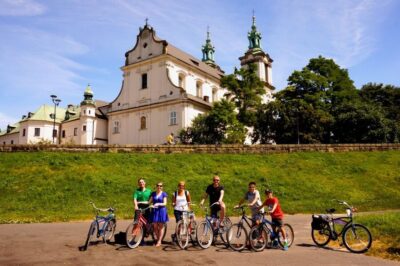
Bike Tour of the Old Town, Kazimierz, and the Ghetto
Read our review →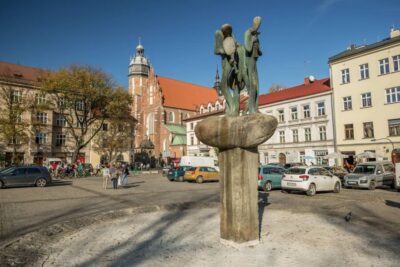
Browse the lists this tour appears in