
REVIEW · SCHINDLER FACTORY TOURS
Krakow: Schindler’s Factory and Jewish Ghetto Guided Tour
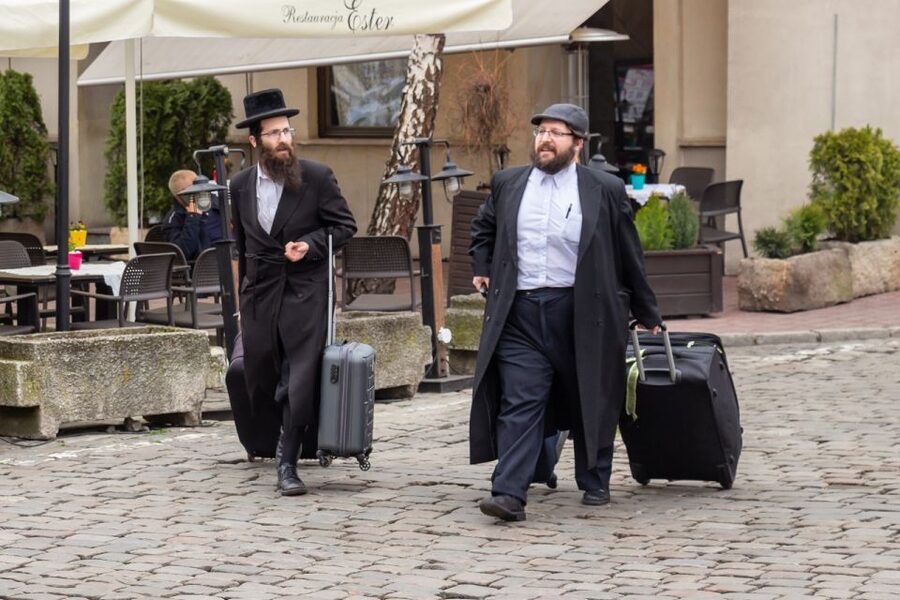
History feels close here. This three-hour tour links Schindler’s Factory with the streets of Podgórze, where Krakow’s Jewish Ghetto once confined thousands of people. I like the way it combines a museum visit with an outdoor walk, and I especially value the stop at the 68 Empty Chairs memorial, a simple sight with enormous meaning. The main drawback is that the museum can feel crowded, and later tours may reach the ghetto after dark.
The tour costs $58 per person and includes museum admission, a live guide, and the Podgórze walking route. Guides such as Helena, Ela, Christopher, and Joanna have earned strong praise for clear explanations and personal connections to the subject. You should allow about three hours, with the museum portion taking roughly 90 minutes and the outdoor walk about an hour, plus a possible break between them.
In This Review
- Key points to know before booking
- Why combine Schindler’s Factory with Podgórze?
- Starting at Oskar Schindler’s Enamel Factory
- What the museum tells you about daily life
- The break between museum and walking tour
- Walking through the former Jewish Ghetto in Podgórze
- Under the Eagle Pharmacy
- The 68 Empty Chairs at Heroes’ Square
- Guide quality and group size
- Is $58 good value?
- Who should book this tour?
- Practical details before you go
- Should you book Schindler’s Factory and the ghetto walk?
- FAQ
- How long does the tour last?
- What is included in the price?
- Are food and drinks included?
- Where is the meeting point?
- Which languages are available?
- Does the tour include the former Jewish Ghetto?
- Which memorials and sites are visited?
- Is museum admission included?
- Can I cancel the booking?
- What identification is needed from January 1, 2026?
Key points to know before booking
- Schindler’s Factory is a museum about more than one man: The exhibits place Oscar Schindler’s actions within the wider story of Krakow before, during, and after Nazi occupation.
- The Podgórze walk adds essential context: You see part of the surviving ghetto wall, former residential buildings, the pharmacy Under the Eagle, and Heroes’ Square.
- The 68 Empty Chairs memorial is the emotional center: The chairs represent the Jewish people forced from the ghetto and murdered or deported during the Holocaust.
- Guide quality is a major strength: Helena, Ela, Christopher, and Joanna are among the guides praised for strong storytelling and thoughtful presentations.
- Museum conditions can affect the visit: Narrow corridors, large groups, and unreliable audio controls may make it hard to hear or see every display.
- Choose your time with care: An afternoon tour in winter may bring you to the outdoor sites in darkness, so an earlier start is better if daylight matters to you.
Why combine Schindler’s Factory with Podgórze?
You can visit Schindler’s Factory on its own, but the guided walk gives the museum a physical setting. You do not only read about the ghetto. You walk through the district where people were forced to live, see remnants of the old boundary, and pause at places connected with daily survival under Nazi rule.
That pairing is the chief reason I would consider this tour. The museum explains the political and social story. Podgórze shows you the scale of the human cost in streets, buildings, and memorials.
This is not a light sightseeing outing. The subject is the Holocaust, Nazi occupation, displacement, and murder. The guide’s role matters because the sites are quiet and often ordinary in appearance. A row of houses or a section of wall may not explain itself. Good interpretation helps you understand what happened there without turning the experience into a list of dates.
The activity has a rating of 4.6 from 124 reviews, with repeated praise for the guides and the way they tell the story. That praise is especially useful here. I would rather take this tour with a strong guide than move through the museum alone without knowing which details deserve my attention.
More Schindler Factory tours:
- Krakow: Oskar Schindler’s Factory Entry Ticket & Guided Tour
★ 4.2 · 3,793 reviews - Krakow: Schindler’s Factory Tour with Entrance Ticket
★ 4.5 · 3,182 reviews - Krakow: Schindler’s Factory Skip-the-Line Ticket
★ 4.4 · 3,105 reviews
Starting at Oskar Schindler’s Enamel Factory
You meet your guide at the entrance to Oskar Schindler’s Enamel Factory Museum. Look for a guide holding an excursions.city sign. The meeting point is straightforward, but it is worth arriving with enough time to identify the guide before the group enters.
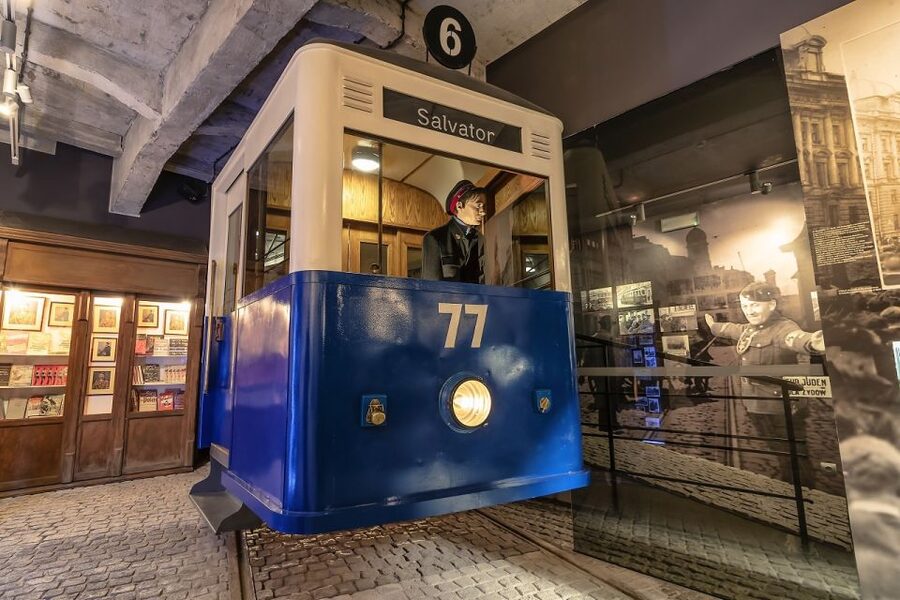
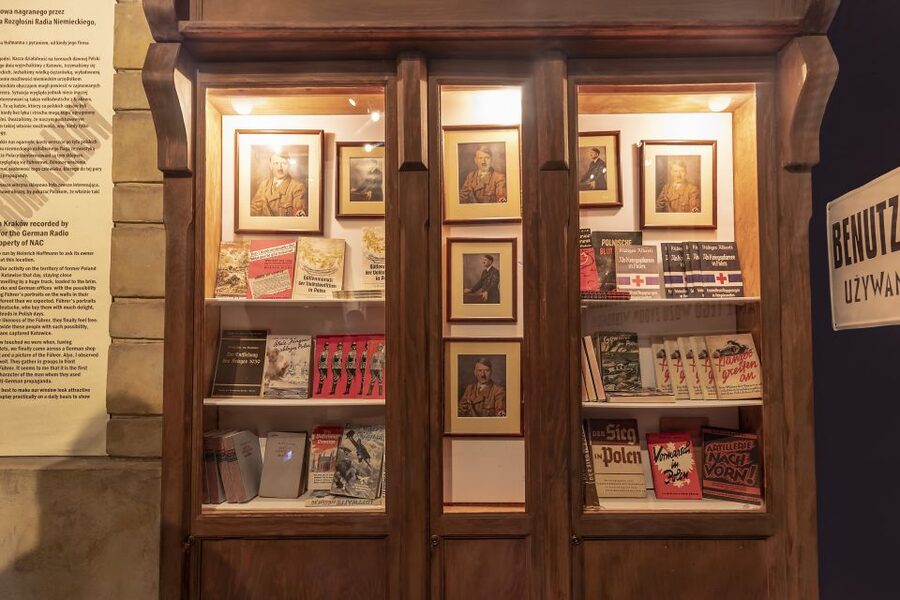
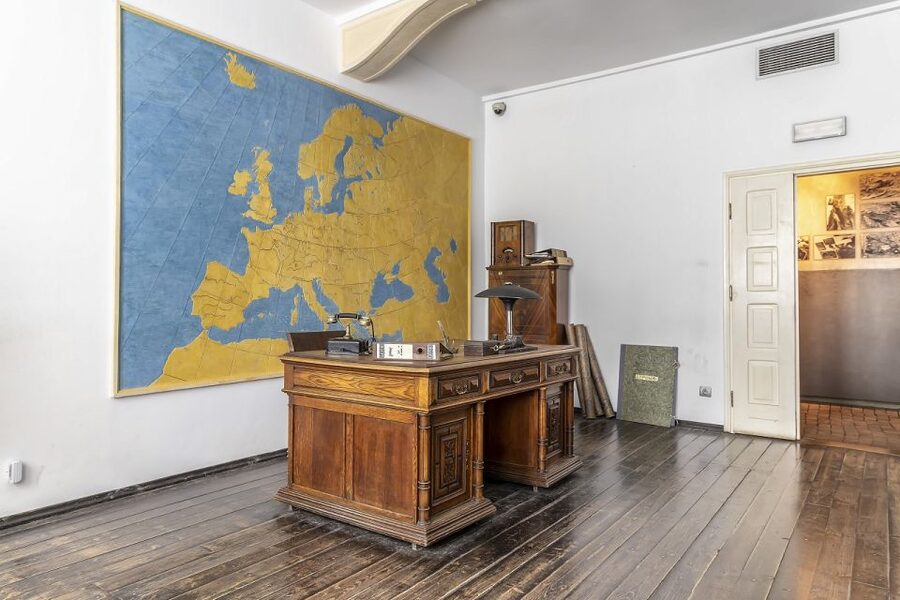
The museum visit lasts about an hour and a half. Its subject is not simply the factory owner made famous by Steven Spielberg’s Schindler’s List. You also learn about Krakow before the Nazi invasion, life under German occupation, the Jewish Ghetto, and the later period of Russian occupation.
That wider frame is important. Popular culture often reduces Schindler to a single heroic figure. The museum gives you a more complete picture of the German industrialist who used his factory and connections to protect many Jewish workers. His story is remarkable, but it makes sense only when you understand the system around him, including forced labor, racial persecution, deportation, and the danger faced by anyone who tried to help.
A guide can point out how the displays fit together and explain why specific objects are present. One visitor described the museum as a place where a guide helped explain exhibits that might otherwise be difficult to understand. That is a fair assessment. The museum contains plenty of information, but the right commentary helps you sort the central story from the smaller details.
What the museum tells you about daily life
The factory section helps explain how work, identity, and survival became tangled during the war. You hear about daily life inside the workplace and the ways Schindler’s factory was used to shelter Jewish workers from worse conditions.
Do not expect the entire visit to feel like a factory tour in the usual sense. The focus is the occupation and the people affected by it. The building is the setting, while the museum’s displays and the guide’s account carry the story.
This part is strongest when the guide moves beyond a simple good-versus-evil account. Schindler did save many people, but you also need to understand the danger, compromises, and shifting conditions surrounding his efforts. Several guides have been praised for presenting the material clearly and with feeling rather than rushing through it.
Personal connections can make the tour especially powerful. Helena was praised for sharing a family connection to the Holocaust, and Ela was described as bringing a strong personal connection to the city. Those details are not guaranteed on every departure, but they show the kind of presentation you may receive.
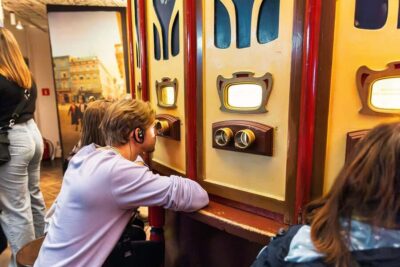
The museum’s narrow corridors are a practical issue. A large group can make it difficult to pause at every display, and the pace may feel a little quick when several people are trying to look at the same material. Headsets are supplied, which can help, although one account reported that the audio controls did not work well and the group eventually stopped using them.
I would not let that possibility rule out the tour, but I would set realistic expectations. You may not get a quiet, unhurried museum visit. The guide-led format is valuable for context, while independent visitors may have more freedom to linger.
The break between museum and walking tour
The museum and ghetto portions are not always continuous. One afternoon tour included a break of about 30 minutes before the outdoor walk. This pause can be useful after an intense museum visit, especially since there is no food or drink included.
You should plan to bring your own water or snack if needed. The tour price covers the guide, museum entry, and walking tour, not refreshments.
This gap also affects how you should think about timing. A 2:30 p.m. departure in December may finish the museum after sunset and begin the Podgórze walk in darkness. The walking portion can still be meaningful, but it may be harder to see the remaining wall, buildings, and other points the guide indicates.
I would choose an earlier departure if you have a choice, especially from late autumn through winter. Daylight makes the outdoor portion easier to follow and lets you see the physical details more clearly. The exact start time depends on availability, and from January 1, 2026, museum scheduling may make the selected time approximate rather than guaranteed.
More Jewish heritage tours in Kraków:
- Krakow: Schindler’s Factory & Ghetto Guided Tour
★ 4.7 · 1,694 reviews - Krakow: Jewish Quarter and Former Ghetto Tour
★ 4.9 · 1,441 reviews - Krakow: Bike Tour of Old Town, Jewish Quarter and the Ghetto
★ 4.9 · 1,155 reviews - Krakow: Kazimierz Jewish Quarter Walking Tour
★ 4.8 · 571 reviews
Walking through the former Jewish Ghetto in Podgórze
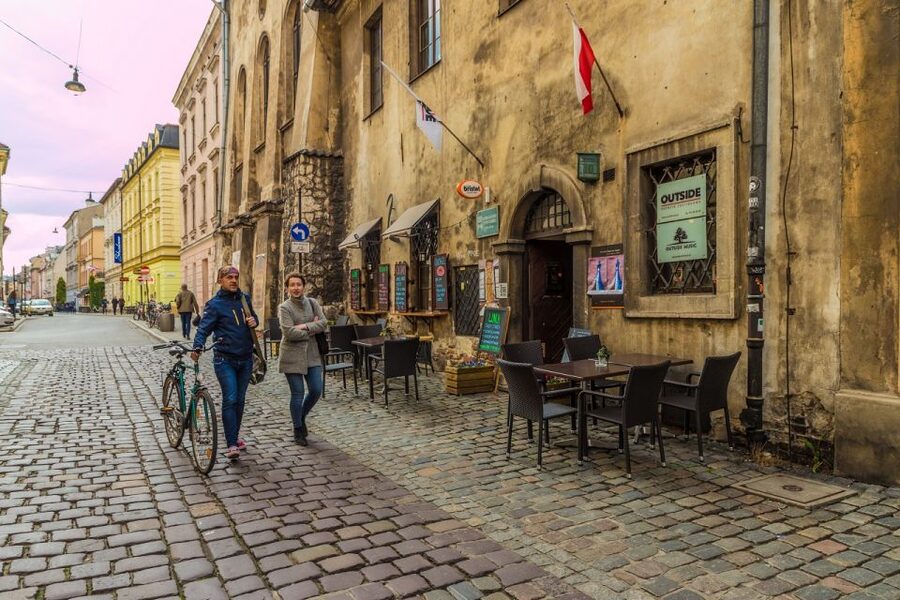
The second part moves into Podgórze, the district where the Jewish Ghetto was established during Nazi occupation. Here, the history is attached to the streets rather than arranged behind museum glass.
You see part of the undestroyed ghetto wall. That fragment gives you a direct sense of the boundary that separated the ghetto from the rest of Krakow. It is easy to pass such a remnant quickly, but the guide explains what the wall meant to the people trapped behind it.
You also see buildings where thousands of displaced Jews once lived. The buildings may look like normal city residences today, which is exactly why a guide is useful. The physical setting has changed in some ways, but the addresses and structures help you picture the crowding and forced movement imposed on the ghetto’s residents.
The walk is about an hour. It is not a long-distance hike, but you should be comfortable walking outdoors through city streets and standing at several stops. The outdoor group is often smaller than the museum group, which can make it easier to hear the guide and ask questions.
This section received especially strong praise for its storytelling. One guide, Joanna, was described as friendly and clear during both parts, while other guides were praised for explaining the key sites with care. The walking tour benefits from this more intimate format because the subject is personal and the stops are not always self-explanatory.
Under the Eagle Pharmacy
The pharmacy Under the Eagle is one of the most important stops in the ghetto. Its role was far greater than dispensing medicine. The pharmacy became a place connected with help and contact for Jewish people living under Nazi control.
The tour explains why this site mattered and how it fitted into life in the ghetto. You should not expect a long independent visit here as part of this three-hour route. Instead, the guide uses the location as one piece of the larger story of survival, communication, and assistance.
This is a good example of why I prefer the guided walk to simply following a map. A pharmacy can seem like a minor stop until you learn what happened there and why people depended on it. The guide gives the site its human meaning without requiring you to know the background in advance.
The 68 Empty Chairs at Heroes’ Square
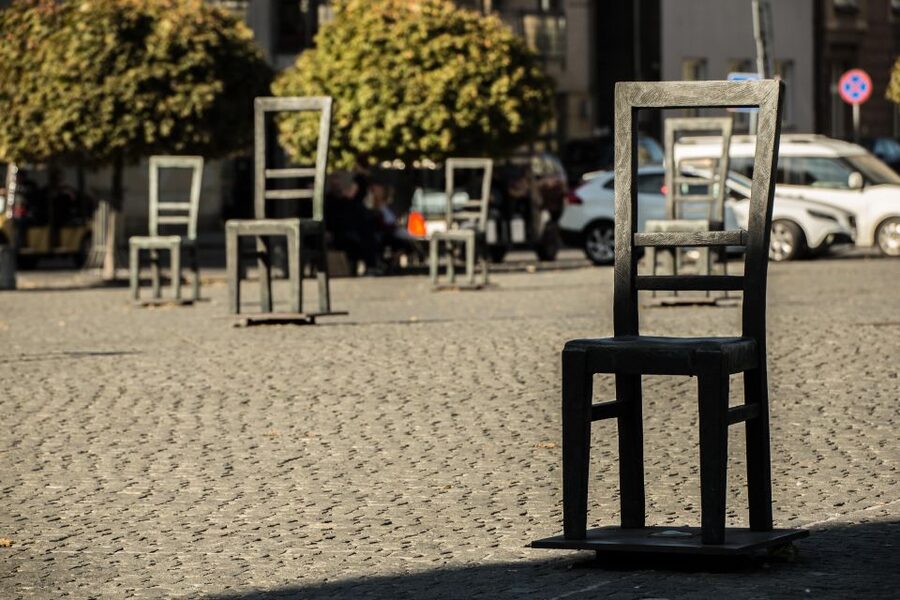
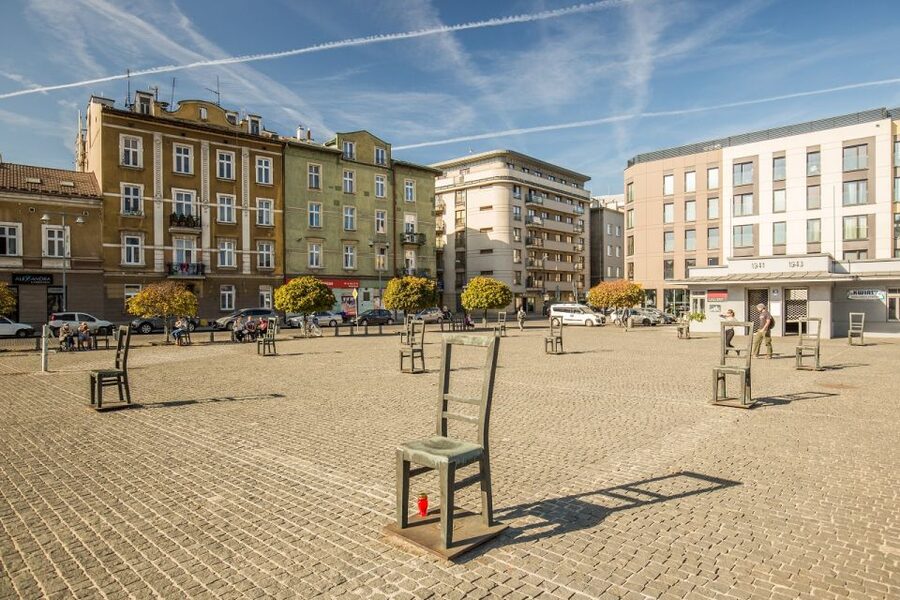
The 68 Empty Chairs at Heroes’ Square is likely to be the most memorable outdoor stop. The chairs represent the Jewish people removed from the ghetto. Their emptiness is the point: the memorial makes absence visible.
You do not need a large monument or a lengthy inscription to understand the message. The chairs occupy the square in a way that is direct and unsettling. Your guide explains the symbolism and connects it with the forced deportations and destruction of the ghetto community.
I like this stop because it gives the walking tour a clear emotional focus. The museum provides facts and context. The square leaves you with a visual image that is hard to dismiss.
The guide’s explanation matters here, too. Without context, you might see the chairs as an unusual public art installation. With the history explained, they become a memorial to people who were taken from their homes and did not return.
Guide quality and group size
The strongest feature of this experience is the live guide. Praise has been especially strong for guides who combine factual detail with personal, human storytelling. Christopher was described as passionate, while Helena and Ela were praised for making the subject feel personal and meaningful.
That does not mean every departure will feel identical. Guide style varies, and museum conditions can affect the experience. Still, the tour is built around explanation, not just admission, so the guide has a major effect on its value.
The museum group may be fairly large. Narrow corridors can make it hard to move freely, and you might need to keep pace rather than study every panel for as long as you wish. The supplied headsets are intended to help, but audio problems have occurred.
The ghetto walk tends to work better in this respect. A smaller group and direct speaking can make the guide easier to hear. I would treat the museum as a guided overview and the outdoor walk as the more personal part of the experience.
Is $58 good value?
At $58 per person, this is not the cheapest way to visit a Krakow museum, but the price includes entry to Schindler’s Factory, a guided museum visit, and a separate walking tour of Podgórze. You are paying for both access and interpretation.
The value is strongest if you want the history explained in person. The museum contains plenty of written information, but you might miss the purpose of certain displays without guidance. The ghetto walk is even more dependent on a guide because many important sites are streets, walls, buildings, and memorials rather than conventional attractions.
The price is less compelling if you prefer a slow, independent museum visit. A large group and fixed pace may limit how long you spend with individual displays. You also need to buy your own food and drinks, and the break between sections may add a little planning.
For most first-time visitors who want the museum and Podgórze in one outing, I think the combined format offers fair value. It saves you from arranging two separate visits and gives the sites a clear connection.
Who should book this tour?
I would recommend it to you if you want a serious introduction to Krakow’s wartime history and prefer having difficult subjects explained with care. It suits first-time visitors, history students, people interested in Schindler’s List, and anyone who wants to understand how the Jewish Ghetto fit into the city.
You should also book it if you value personal storytelling. The guides may add family or local connections that you cannot get from display panels alone.
I would think twice if you dislike group tours, want complete control over your time, or need a quiet museum visit. The corridors can be crowded, and the museum pace may not suit someone who wants to read every panel.
Families with older children or teenagers may find the subject useful, but the material is serious. You know your group best. This is not a casual sightseeing stop.
Practical details before you go
The tour lasts three hours and is offered with guides in English, French, Spanish, German, and Italian. Food and drinks are not included.
Bring the full names of all participants when booking. From January 1, 2026, Schindler’s Factory Museum requires personalized tickets, and each person must bring a passport or ID. Without the required identification, entry may be refused.
You can cancel up to 24 hours before the activity for a full refund, and the reserve-now, pay-later option keeps your plans flexible. The exact museum time can change because of museum scheduling, so do not build a tight connection immediately afterward.
Should you book Schindler’s Factory and the ghetto walk?
I would book this tour if you want the strongest context from a single three-hour experience. The museum explains Schindler’s actions and the occupation, while Podgórze gives you the streets, wall, pharmacy, and memorial that make the story concrete.
Choose an earlier time when possible, especially in winter. Go in expecting a serious subject, a possibly crowded museum, and a guide-led pace. If you can accept those limits, the combination of strong storytelling and important sites makes this one of the more worthwhile history outings in Krakow.
FAQ
How long does the tour last?
The tour lasts three hours. The museum portion takes about 90 minutes, and the Podgórze walking tour lasts about one hour, with a possible break between them.
What is included in the price?
The $58 price includes a live guide, entry to Schindler’s Factory, a guided tour of the museum, and the walking tour of Podgórze.
Are food and drinks included?
No. Food and drinks are not included.
Where is the meeting point?
Meet at the entrance to Schindler’s Factory Museum. Look for a guide holding an excursions.city sign.
Which languages are available?
The tour is offered in English, French, Spanish, German, and Italian.
Does the tour include the former Jewish Ghetto?
Yes. The walking portion explores Podgórze, the district where the Jewish Ghetto was located.
Which memorials and sites are visited?
The route includes part of the surviving ghetto wall, buildings where displaced Jews lived, the pharmacy Under the Eagle, and the 68 Empty Chairs at Heroes’ Square.
Is museum admission included?
Yes. Entry to Schindler’s Factory and the guided museum tour are included.
Can I cancel the booking?
You can cancel up to 24 hours in advance for a full refund.
What identification is needed from January 1, 2026?
Because the museum uses personalized tickets, you must provide the full names of all participants when booking and bring a passport or ID for entry.
Just added around Kraków
- Rynek Underground Museum & Wawel Castle, Cathedral – Cracow★ 5.0 · 3 reviews
- Schindler’s Factory, Ghetto and Plaszow Camp Guided Tour★ 4.7 · 3 reviews
- Nowa Huta – a guided tour of a utopian socialist city★ 5.0 · 3 reviews
- Krakow: Kazimierz by Golf Cart and Schindler’s Factory Tour★ 4.8 · 3 reviews
- Private Krakow City Tour by Car and Walk with private tour guide★ 5.0 · 3 reviews
- Krakow: Jewish Traces Private Electric Car Tour★ 4.1 · 3 reviews
- Discover the Jewish Quarter with a Bike Tour★ 5.0 · 3 reviews
- Krakow: Indoor Go-Karting (24-Minute Races)★ 4.8 · 3 reviews
Schindler Factory Tours, compared.
Oskar Schindler’s Factory Entry Ticket & Guided Tour
Read our review →
Schindler’s Factory Tour with Entrance Ticket
Read our review →
Schindler’s Factory Tour with Entrance Ticket
Read our review →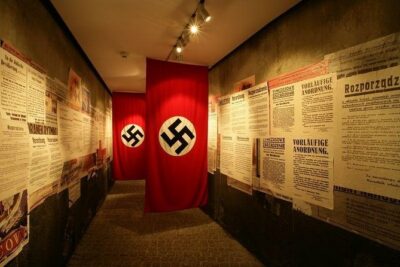
Schindler’s Factory in Krakow: Guided Tour & Skip the Line Ticket
Read our review →
Schindler’s Factory Ticket with Guided Tour Option
Read our review →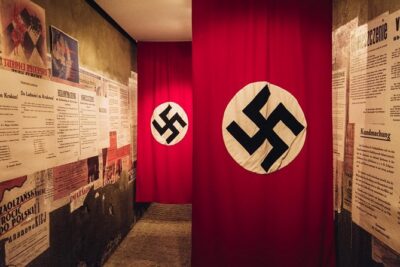
Krakow Schindler’s Factory Guided Tour with Admission Ticket
Read our review →Browse the lists this tour appears in