
REVIEW · AUSCHWITZ-BIRKENAU MEMORIAL TOURS
Oswiecim: Auschwitz-Birkenau Skip-the-Line Entry Tickets
Some places ask you to slow down. Auschwitz is one of them. This 210-minute visit covers both Auschwitz I and Birkenau, with a licensed English-speaking guide, reserved entry, and headsets so you can follow the explanation in a large group. I like the clear two-part route and the chance to see the sites with proper historical context. I also like that an English e-book is included for each participant.
The main drawback is practical: transportation is not included, and the meeting point can be hard to spot near the crowded museum entrance. The museum may also change your starting time, and its visitor service controls the pace. Treat this as a half-day visit on paper, but keep the whole day available.
In This Review
- Key points to know before booking
- Why the guided format matters at Auschwitz
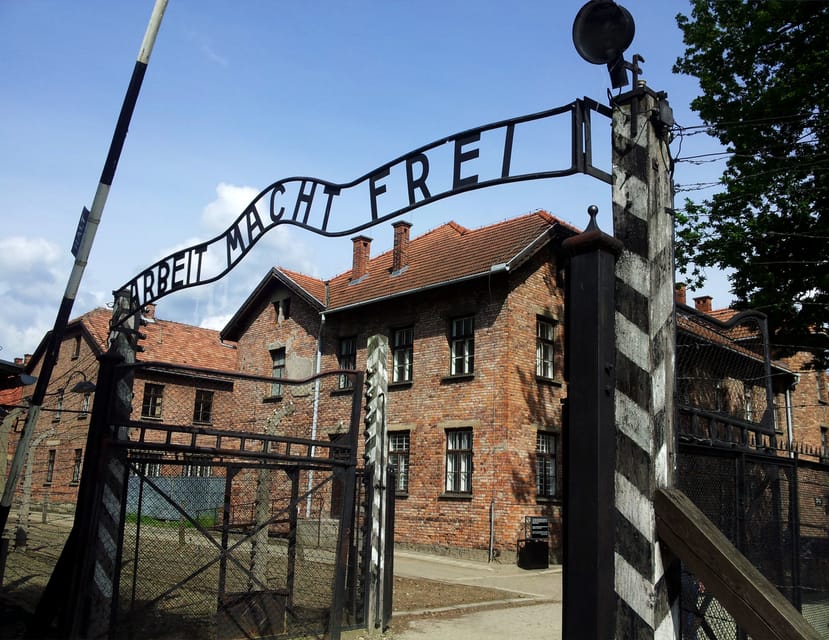
- Auschwitz I begins at the Arbeit Macht Frei gate
- Birkenau shows the size of the killing system
- The 210-minute schedule needs a full-day cushion
- Meeting point and transport require careful planning
- What the $81 price really buys you
- Identification and security are not optional details
- A solemn guide can make the difference
- Who will get the most from this visit
- Book ahead, then protect the day
- Should you book this Auschwitz-Birkenau visit?
- FAQ
- How long does the Auschwitz-Birkenau visit last?
- Does the ticket include transportation?
- What language is the guided tour in?
- Where is the meeting point?
- Do I need to bring identification?
- Can I bring a large bag or luggage?
- Can I cancel the booking?
Key points to know before booking
- Two camps in one visit: You see Auschwitz I first, then continue to Auschwitz II Birkenau, which is much larger and more open.
- The original Arbeit Macht Frei gate: The route begins through the famous entrance to Auschwitz I, followed by the brick barracks and museum displays.
- About 210 minutes in total: The usual plan allows roughly two hours at Auschwitz I and one hour at Birkenau, though the museum controls the exact schedule.
- A guide adds essential context: Prisoner photographs, personal artefacts, camp buildings, gas chamber remains, and crematoria are difficult to understand without explanation.
- Bring matching identification: Every participant’s full name must be entered correctly, and the name must match the passport or ID shown at entry.
- Arrive ready for security: Airport-style screening applies, and large bags, oversize luggage, sharp objects, alcohol, drugs, and pets are not allowed.
Why the guided format matters at Auschwitz
Auschwitz is not a normal sightseeing stop. You can walk through the grounds without a guide, but the buildings and displays do not explain themselves in a simple, complete way. A licensed guide helps connect the physical remains to the system that operated here.
At Auschwitz I, the route takes you through former brick barracks filled with photographs, written records, prisoner artefacts, and reconstructions. You see where people were registered, confined, and stripped of their identity. The guide provides the setting for these objects without turning the visit into a string of disconnected facts.
That matters here. The site can feel visually quiet, even ordinary, in places. The explanation shows what happened behind those walls and why each surviving object carries such weight. I would strongly choose the guided option for a first visit, especially if you want to understand the camp rather than simply walk through it.
The headsets are useful, too. Groups spread out inside the buildings, and the guide may need to speak softly out of respect for the place. Clear audio lets you stay with the group without crowding around the guide.
More Auschwitz-Birkenau memorial tours:
- From Krakow: Auschwitz-Birkenau Guided Tour & Hotel Pickup
★ 4.5 · 33,358 reviews - From Krakow: Auschwitz-Birkenau Guided Tour & Hotel Pickup
★ 4.5 · 29,340 reviews - Krakow: Auschwitz Guided Tour with Optional Hotel Pickup
★ 4.5 · 15,280 reviews
Auschwitz I begins at the Arbeit Macht Frei gate
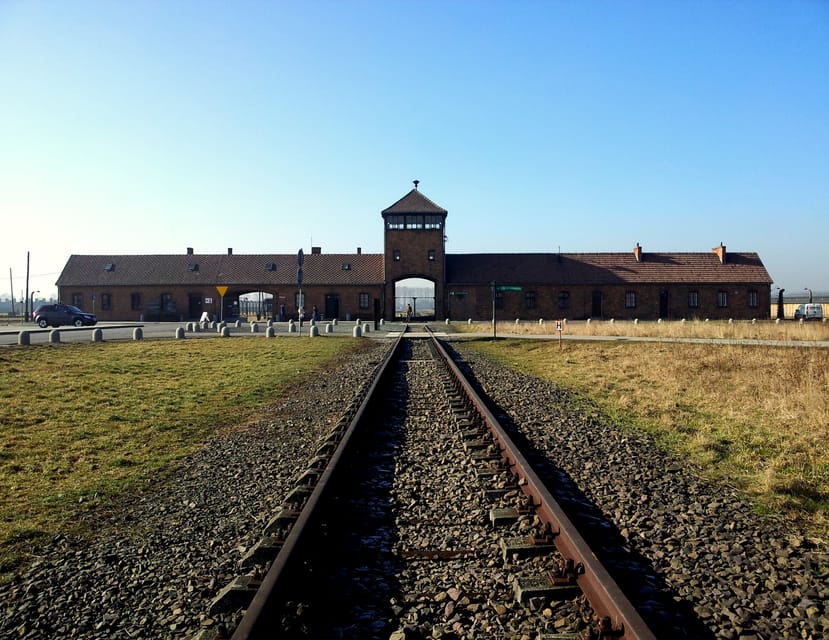
The first camp is Auschwitz I, reached through the main gate marked Arbeit Macht Frei. The words are among the most recognized symbols of the Nazi concentration camp system, and entering beneath them sets the tone immediately.
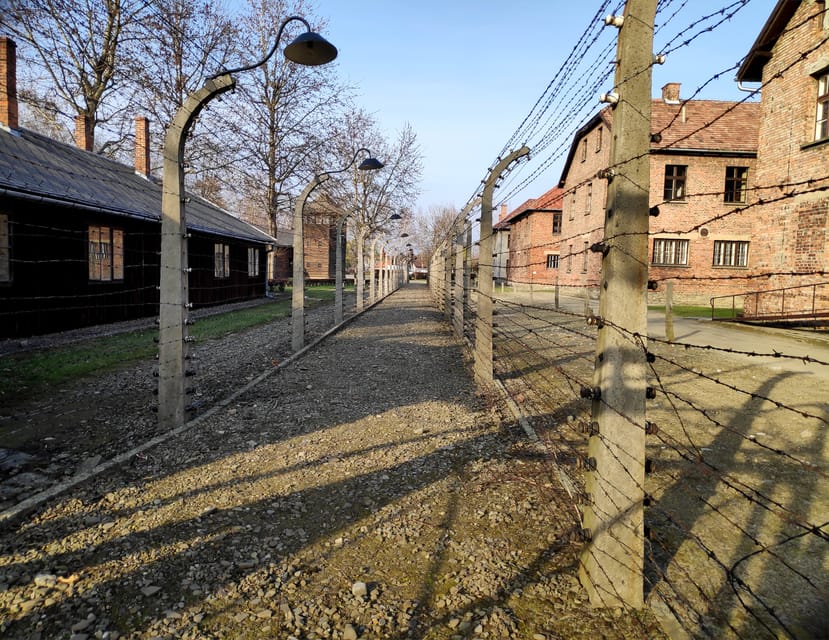
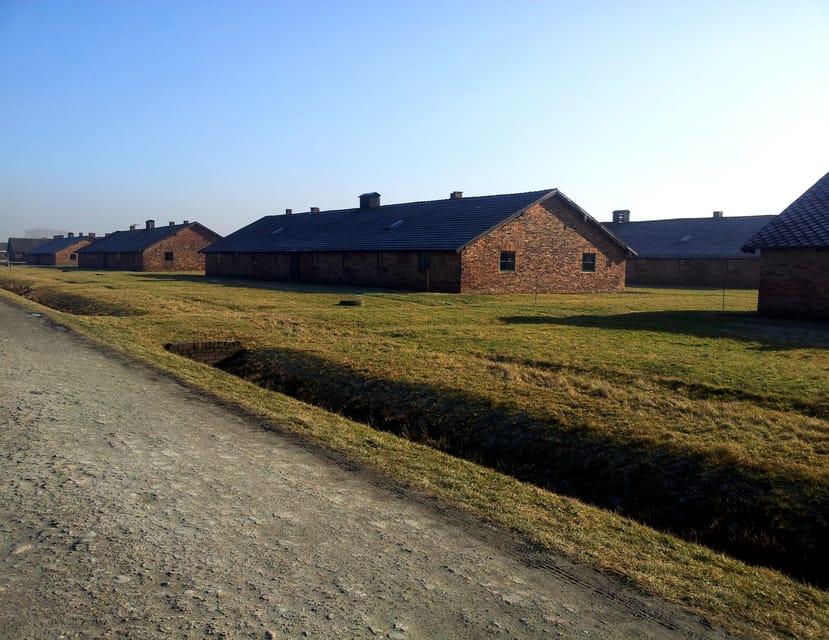
From there, the route passes between brick barracks. These buildings now contain exhibitions with prisoner photographs, artefacts, documents, and displays about life and death in the camp. The experience is not built around theatrical effects. Its force comes from the original setting and the plain evidence preserved inside it.
You can expect the guide to explain the camp structure, the prisoner population, and how Nazi Germany used the site as part of its wider system of imprisonment and murder. Reconstructions help show how the complex functioned, while the remaining gas chambers and crematoria make the purpose of the killing process brutally clear.
The Auschwitz I portion is listed as about two hours, although the exact pace belongs to the museum. That is worth understanding before you go. You are not buying a private tour where you can stop anywhere for as long as you wish. The guide follows the museum’s approved route and timing.
I like this part of the visit because it gives you the basic framework before you reach Birkenau. You learn what the camp system looked like in practice, then see how it expanded on a much larger scale.
Birkenau shows the size of the killing system
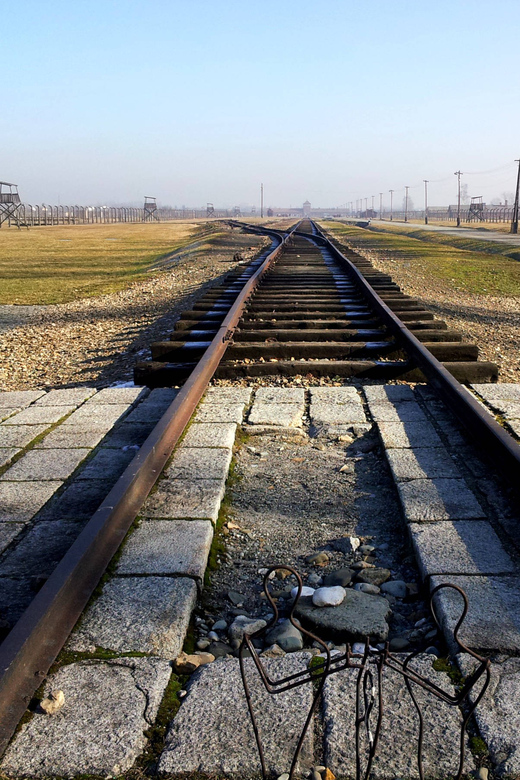
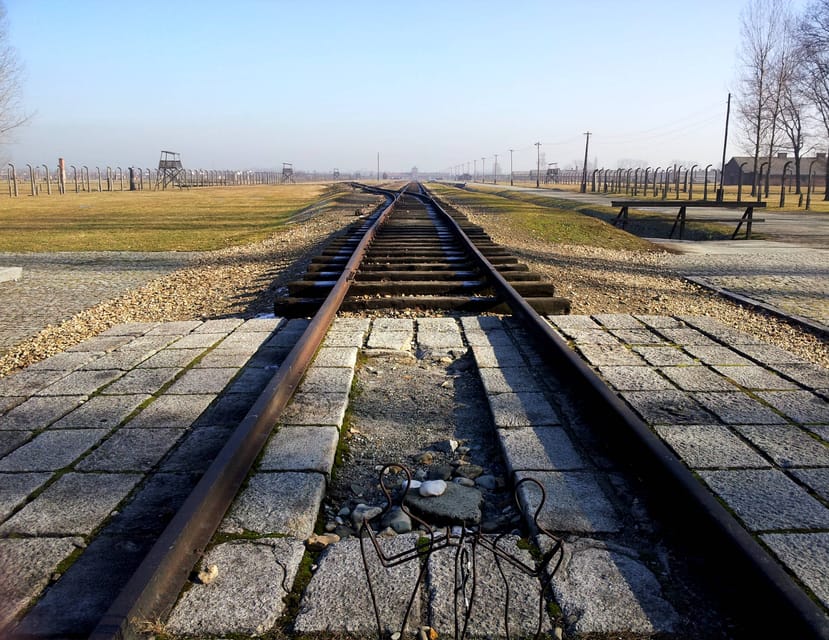
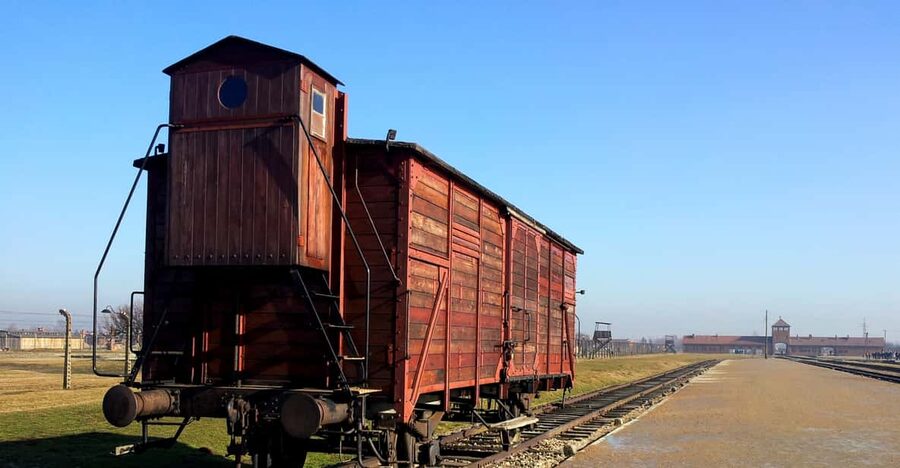
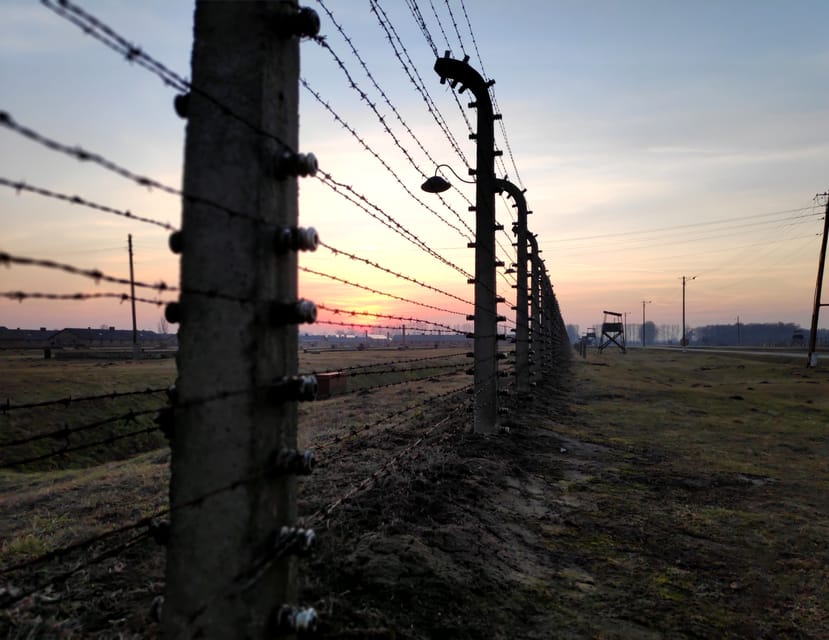
After Auschwitz I, the visit continues to Auschwitz II Birkenau for about an hour. Birkenau feels different at once. It is more open, more exposed, and far larger, with long lines of wooden barracks and wide areas of former camp ground.
The tour enters the wooden blocks where almost 1,000 people were housed in inhumane conditions. The buildings make the scale of overcrowding easier to grasp than a written statistic can. You see the basic structures and the conditions in which prisoners were forced to live.
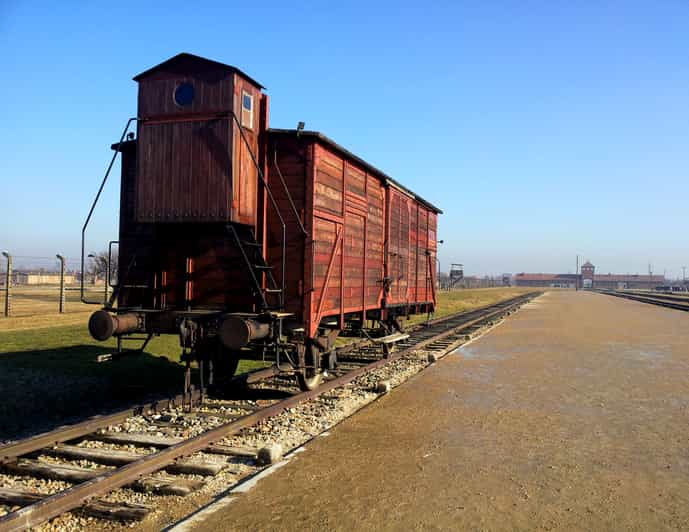
The route also includes the ruins of gas chambers and crematoria. These remains are a central part of the site’s evidence of industrialized murder under Nazi Germany. The ruins are not complete, and that is precisely why the guide’s explanation helps. You need context to understand what stood there, how the buildings were used, and what their destruction did and did not erase.
One hour is enough for an introduction to Birkenau, but it is not enough to see every corner. The grounds are enormous. If you arrive with your own transport, you may have more freedom to spend additional time at Birkenau after the guided portion, as long as the museum’s rules and your schedule allow it.
That extra time can matter. The guided route gives you the main story and key locations, while independent walking lets you pause at the site’s photographs and information panels. If your transport is fixed, you may need to leave before you have seen as much of Birkenau as you hoped.
The 210-minute schedule needs a full-day cushion
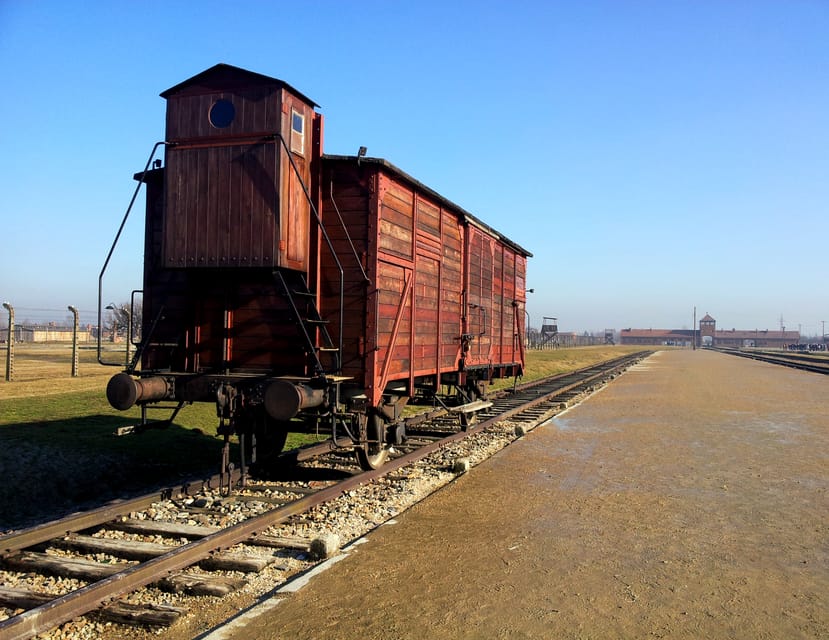
The advertised duration is 210 minutes, or three and a half hours. The planned breakdown is roughly two hours at Auschwitz I and one hour at Birkenau, with the remaining time used for movement and the organization of the visit.
Do not build a tight afternoon around this booking. The starting time you select is tentative and can change based on museum availability. The stated terms advise you to keep the whole day free, and refunds are not accepted simply because the museum changes the time.
That is not ideal for a tightly packed Poland itinerary, but it reflects how the memorial operates. The museum controls admissions, routes, and pacing. The tour provider cannot simply speed up the group to protect your next reservation.
I would avoid booking a restaurant, train, airport transfer, or major attraction immediately afterward. Give yourself room for delays and for the emotional weight of the visit. You may finish on time, but you should plan as if the day needs breathing space.
A few more Poland trips worth weighing up
- From Krakow: Wieliczka Salt Mine Tour & Skip the Line Ticket
★ 4.4 · 3,925 reviews - Auschwitz-Birkenau Skip-the-Line Guided Tour
★ 4.3 · 3,617 reviews - Krakow: Schindler’s Factory Skip-the-Line Ticket
★ 4.4 · 3,105 reviews - Auschwitz-Birkenau: Skip-the-Line Entry Ticket & Guided Tour
★ 4.4 · 3,052 reviews
Meeting point and transport require careful planning
You must make your own way to the meeting point at Auschwitz I. The location is near the luggage storage area on the side of the main entrance museum building. Transportation is not included in the $81 price.
This is the weakest practical part of the arrangement. The car park and entrance area can be crowded, and the exact meeting spot may not be obvious. One booking experience described finding the group as difficult, while another person named Daniel helped locate a participant. I would arrive early, stand near the stated luggage-storage area, and keep your phone available.
A clear sign, flag, or other marker would make this easier. Since that may not be present, do not wander around the entrance at the last minute hoping the guide will find you. Confirm the location before leaving for the museum and allow extra time for airport-style security.
Moving between Auschwitz I and Birkenau is another point to consider. The tour includes both sites, but you should not assume that the booking includes a private vehicle or a flexible shuttle. A fixed return arrangement can limit how long you remain at Birkenau.
If you are driving yourself, independent transport between the two sites gives you more control. One useful approach is to join the guided visit, then use any permitted free time to see more of Birkenau before returning. Check the day’s instructions carefully, since the museum controls access and timing.
What the $81 price really buys you
At $81 per person, this is not the cheapest way to reach Auschwitz. But the price includes entrance tickets to both memorial sites, a licensed guide in English, headsets, an English-speaking tour leader, and an English e-book for every participant.
You are paying for access and organization, not transportation. That distinction is important. If you need a ride from Krakow or another Polish city, you must arrange it separately or choose a different product that includes transport.
The value is strongest if you want a planned museum visit without handling entry arrangements yourself. Auschwitz tickets can be controlled by the museum, and an incorrect name or missed time can cause serious trouble. A reserved booking with a guide reduces some of that work.
The value is weaker if you already have a confirmed museum entry and prefer to explore alone. In that case, the guide and headset are the main extras you are paying for. At Auschwitz, though, those extras are not minor. The historical explanation is central to understanding what you see.
I would call the price reasonable for a guided visit with admission included, but only if you budget separately for transport and accept the lack of schedule control.
Identification and security are not optional details
Enter every participant’s full name exactly as it appears on the identification document. The museum requires this information, and a mismatch between the booking and your passport or ID card can lead to refused entry.
Bring your passport or ID card. Do not rely on a photograph of the document unless the museum specifically confirms that this is acceptable. The supplied instructions clearly say to bring identification.
All visitors pass through airport-style security. Pets, weapons, sharp objects, oversize luggage, large bags, alcohol, and drugs are not permitted. Pack lightly and avoid bringing anything you do not need.
The luggage restriction is particularly important because the meeting area is near luggage storage, but that does not mean every size of bag will be accepted. A small, practical bag is the safer choice. The site is serious about security, so allow time for screening rather than arriving at the exact starting minute.
A solemn guide can make the difference
The most praised part of the experience is the guiding. A guide called Suzanna was described as suitably solemn and very well informed, which is exactly the tone this memorial requires. You want clear facts, respect for the victims, and no attempt to turn the visit into entertainment.
A good guide also knows when to let the place speak for itself. The best moments may come while standing quietly in a barrack, looking at photographs, or facing the ruins at Birkenau. The explanation should help you see more, not compete with what is in front of you.
The English tour is the confirmed language option here. Headsets help, but you should still expect a shared group format rather than a private conversation. If you have questions, listen for the guide’s pauses and ask briefly when the group stops.
The pace and length are set by the museum’s visitor service. That means even an excellent guide cannot offer unlimited time at a particular display. Go in expecting a structured visit, not a free-form research day.
Who will get the most from this visit
I would recommend this experience to you if:
- You are visiting Auschwitz for the first time.
- You want both Auschwitz I and Birkenau in one organized visit.
- You value historical explanation more than independent wandering.
- You are comfortable keeping your schedule flexible for the entire day.
- You can arrange your own transport to the museum.
- You want English guiding and audio equipment.
It may not suit you if you need a guaranteed departure time, want to spend many hours at Birkenau alone, or are looking for a complete Krakow-to-Auschwitz transport package. It also requires emotional readiness. This is a difficult place, and the subject matter is presented directly.
Families should consider the ages and understanding of younger children before booking. The supplied information does not set a specific age policy, but the displays concern imprisonment, mass murder, and extreme suffering.
Book ahead, then protect the day
Free cancellation is available up to 24 hours before the visit, and the reserve-now-pay-later option gives you some flexibility before payment. Those are useful safeguards while you are building a Poland itinerary.
Still, the time-change rule deserves attention. If the museum shifts your booking, you are expected to keep the day open, and a refund will not be accepted simply because the new time disrupts your plans. Read the final confirmation closely and check messages before setting out.
Make a note of the exact meeting point, enter names carefully, carry identification, and arrange transport with plenty of spare time. These simple steps address the main risks more effectively than arriving with a hurried plan.
Should you book this Auschwitz-Birkenau visit?
I would book it if you want a serious, guided introduction to both camps and do not need transport included. The licensed English guide, headsets, museum admission, and clear two-site route make the $81 cost defensible.
I would choose another arrangement if your priority is flexible time at Birkenau or a guaranteed ride from Krakow. For this option, the best plan is to protect the full day, arrive early at the luggage-storage meeting area, and treat the guide as the backbone of your visit. The site deserves that much care.
FAQ
How long does the Auschwitz-Birkenau visit last?
The stated duration is 210 minutes, or three and a half hours. The visit generally allows about two hours at Auschwitz I and about one hour at Birkenau, but the museum controls the exact pace and duration.
Does the ticket include transportation?
No. Transportation is not included, so you must arrange your own way to the museum and plan how you will move between the two sites.
What language is the guided tour in?
The live tour guide is English-speaking. The package also includes an English e-book for each participant.
Where is the meeting point?
The meeting point is at Auschwitz I, near the luggage storage area on the side of the main entrance museum building.
Do I need to bring identification?
Yes. Bring a passport or ID card. The full names entered during booking must match the names on the identification documents shown at the entrance.
Can I bring a large bag or luggage?
No. Oversize luggage, large bags, weapons, sharp objects, alcohol, drugs, and pets are not allowed. All visitors must also pass through airport-style security.
Can I cancel the booking?
You can cancel up to 24 hours before the visit for a full refund. The reserve-now-pay-later option lets you reserve a place without paying immediately.
Just added around Poland
- Rynek Underground Museum & Wawel Castle, Cathedral – Cracow★ 5.0 · 3 reviews
- Schindler’s Factory, Ghetto and Plaszow Camp Guided Tour★ 4.7 · 3 reviews
- Jewish heritage in Warsaw★ 4.5 · 3 reviews
- Poznan Old Town and Croissant Museum Private Walking Tour★ 5.0 · 3 reviews
- Warsaw Outdoor Paintball with Transfers (all year round)★ 5.0 · 3 reviews
- Nowa Huta – a guided tour of a utopian socialist city★ 5.0 · 3 reviews
- Half-Day Chelmno Kulmhof Concentration Camp Private Tour★ 4.5 · 3 reviews
- 4 hours skitour trip in Tatra Mountains for beginners with renting equipment★ 5.0 · 3 reviews
Auschwitz-Birkenau Memorial Tours, compared.

Auschwitz-Birkenau Guided Tour & Hotel Pickup
Read our review →Auschwitz-Birkenau Guided Tour & Hotel Pickup
Read our review →
Auschwitz Guided Tour with Optional Hotel Pickup
Read our review →
Auschwitz-Birkenau Guided Tour with Pickup & Lunch
Read our review →
Auschwitz-Birkenau Guided Tour Pickup/Lunch Options
Read our review →
Krakow to Auschwitz Birkenau Guided Tour with Transfer and Ticket
Read our review →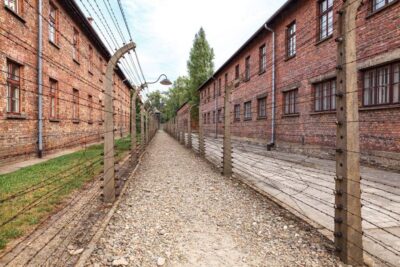
Browse the lists this tour appears in