
REVIEW · HISTORICAL TOURS
Warsaw: Historic Private Tour in Retro Fiat
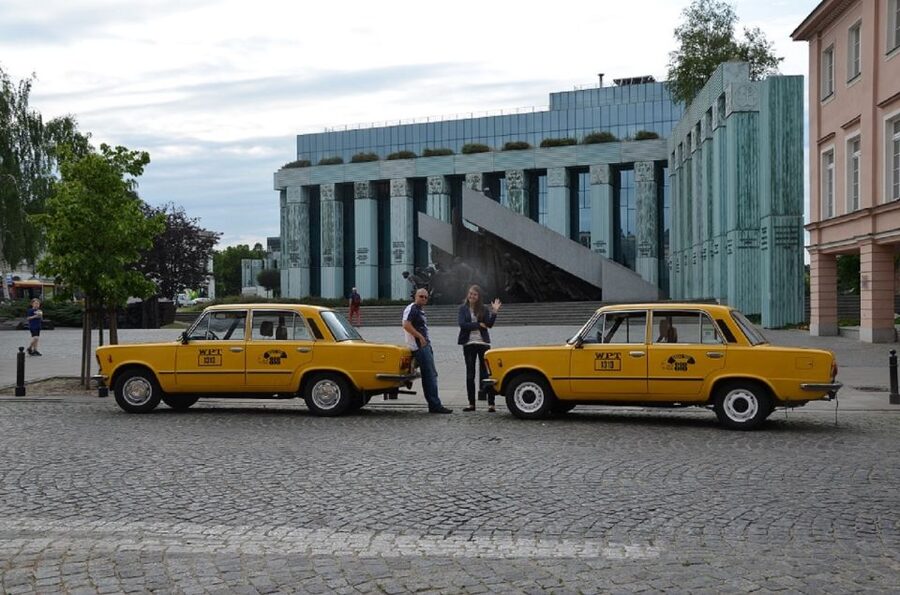
Warsaw’s past rides in the front seat. This four-hour private tour combines a retro Fiat 125p with serious history, taking you from Old Town landmarks to Praga, the former Jewish ghetto, and sites linked to the Warsaw Uprising. I like the way it covers ground without turning the city into a blur, and I like the personal touch from guides such as Karol, Martin, Olga, Pavel, and Jurek.
I also like that the route can be adjusted around your interests. You can choose Praga instead of Park Łazienki, as some guests did, and the tour can be adapted to include more walking or more driving. The main consideration is the car itself: it is a historic 1980s vehicle, so comfort and space are not quite those of a modern sedan. Groups larger than four use a blue vintage minivan.
In This Review
- Key points to know before booking
- Why the retro Fiat makes sense in Warsaw
- Starting with Warsaw Old Town
- The former Jewish ghetto and Warsaw’s hardest history
- Praga, old buildings, and a quieter side of the city
- The Warsaw Uprising and the city’s wartime turning point
- Seeing how Stalin-era Warsaw was rebuilt
- A four-hour balance of car time and walking
- How much value do you get for $105?
- Who will enjoy this tour most
- Practical booking advice for your Warsaw schedule
- Should you book the retro Fiat tour?
- FAQ
- How long is the Warsaw retro Fiat tour?
- What vehicle is used?
- Is the tour private?
- Is hotel pickup included?
- What language does the guide speak?
- Does the tour include walking?
- What food or drinks are included?
- Can the tour route change?
Key points to know before booking
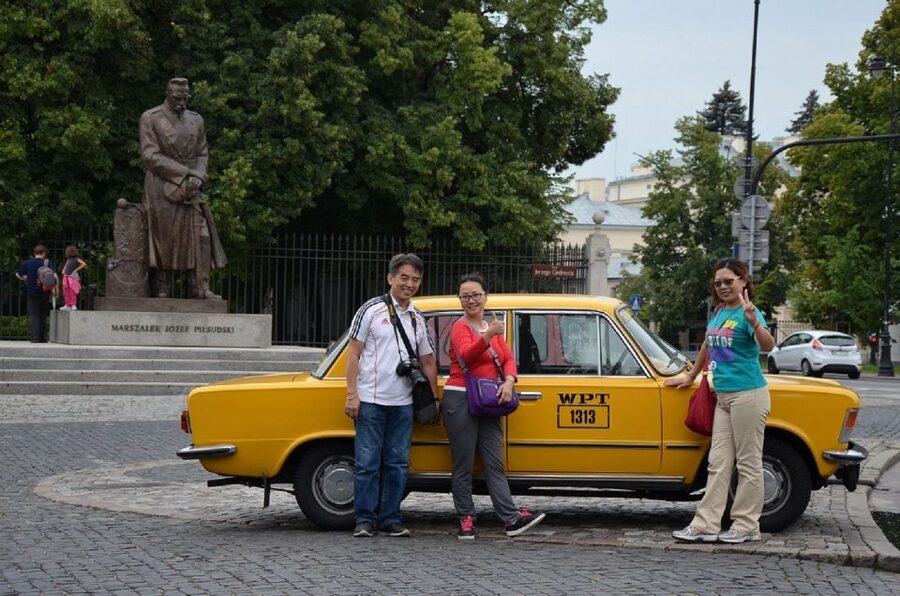
- A rare Warsaw viewpoint: You travel in a retro Polish Fiat 125p, a small but memorable link to the city’s Communist-era past.
- Three different stories in four hours: The route joins Old Town, the Jewish ghetto remains, Praga, the Warsaw Uprising, and postwar reconstruction.
- Praga gives the tour character: You may see older buildings and a secluded courtyard shrine that would be easy to miss alone.
- Strong guide-led experience: Guides including Karol, Martin, Jurek, Olga, Pavel, and Jakob are praised for clear English, good stories, and thoughtful answers.
- Useful for a short stay: Hotel pickup and a private car help you see far more than a standard Old Town walk.
- Plan for some walking: Comfortable shoes matter, but the balance between walking and driving can be changed to suit your needs.
Why the retro Fiat makes sense in Warsaw
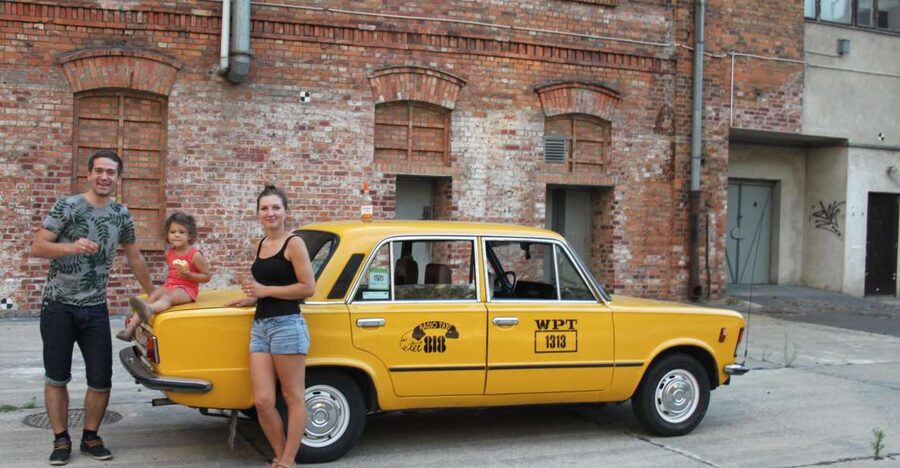
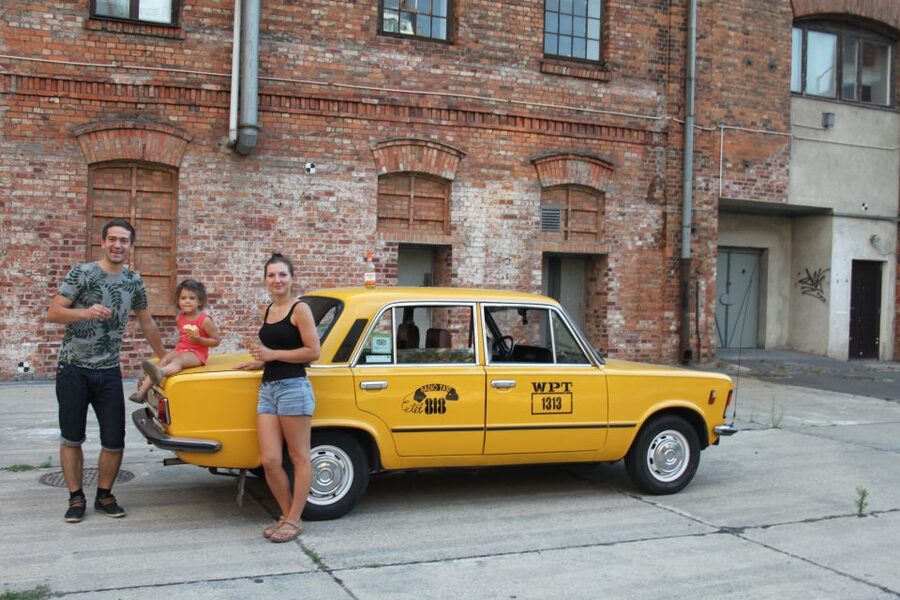
The Fiat 125p is more than a cute photo prop. It fits the subject. Warsaw spent decades under Communist rule, and this boxy Polish car recalls the ordinary streets and daily life of that period. You are not simply riding between monuments in a generic vehicle. The transport helps tie the city’s modern story to the places you see.
The car also gives the tour a friendly, slightly playful mood. Pedestrians may look over as you pass, and the unusual vehicle makes a simple city drive more memorable. At the same time, you should keep your expectations practical. This is a historic 1980s car, not a luxury touring vehicle. If your group has more than four people, you will ride in a blue vintage minivan instead.
I see the Fiat as a good trade for anyone who wants personality and local flavor. It is especially useful in Warsaw, where major sights are spread across a large area. You get the fun of a themed ride without giving up the chance to stop and walk.
More History Tours in Warsaw
- Warsaw: POLIN Museum of the History of Polish Jews Ticket
★ 4.7 · 1,142 reviews - Warsaw: Chopin Concert at Historical Venue in Old Town
★ 4.7 · 445 reviews - Small-Group Historical Guided Tour of Warsaw with pick up/drop off. Public Tour.
★ 4.5 · 343 reviews
Starting with Warsaw Old Town
The Old Town is the familiar face of Warsaw, with rebuilt streets and major landmarks that help you get your bearings. The tour uses this area as a starting point, then moves beyond the postcard view. That matters because Warsaw can seem like two cities at once: a carefully reconstructed historic center and a capital shaped by war, occupation, and Communist planning.
Your guide adds the missing context. Instead of only pointing out attractive buildings, the commentary links the streets to the city’s destruction and later rebuilding. The guides are also willing to answer questions, which makes a private tour feel less like a fixed speech.
If you have already walked around the Old Town, this part still has value because the guide can fill in gaps. Alexander, one guide praised for showing both older and newer Warsaw, was especially appreciated for adding context to a visitor’s earlier independent sightseeing. You can also ask to spend less time here if you have already seen the central sights.
The Old Town portion is not meant to replace a full walking visit. It is a foundation for the larger story. You see the famous center, then move into areas that reveal why Warsaw looks the way it does today.
The former Jewish ghetto and Warsaw’s hardest history
The visit to the remains of the Jewish ghetto is the most solemn part of the route. You will not find a fully preserved old district. The point is to understand what was destroyed and to recognize the fragments and places connected to Warsaw’s Jewish community.
This section needs attention rather than a quick photo stop. The guide explains the tragic history of the community and helps you read the city beyond its rebuilt surfaces. Jurek, praised for his account of the Second World War, Soviet occupation, the Jewish ghetto, and Chopin, shows the kind of broad historical connection that makes this part useful.
You may find the subject emotionally heavy, especially when it follows the cheerful novelty of the Fiat. That contrast is part of the experience, but it also means you should not book this as a light sightseeing ride. The tour deals directly with wartime suffering and the destruction of Warsaw.
A laminated photograph can make a strong difference at places where the original buildings are gone. Martin used old images to show how parts of the city looked before the war, giving you a visual comparison between the past and the streets around you. That approach is practical: it helps you understand absence, not just preservation.
Praga, old buildings, and a quieter side of the city
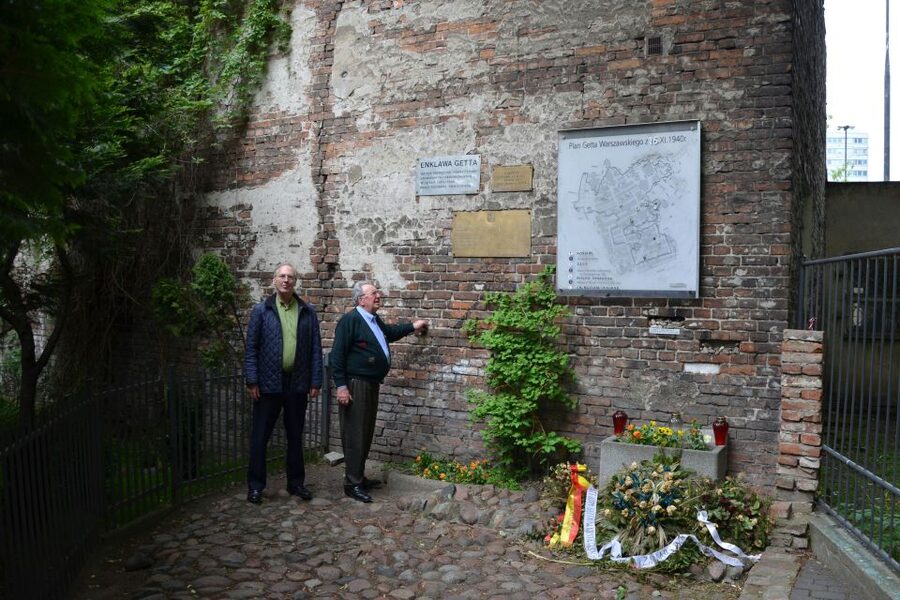
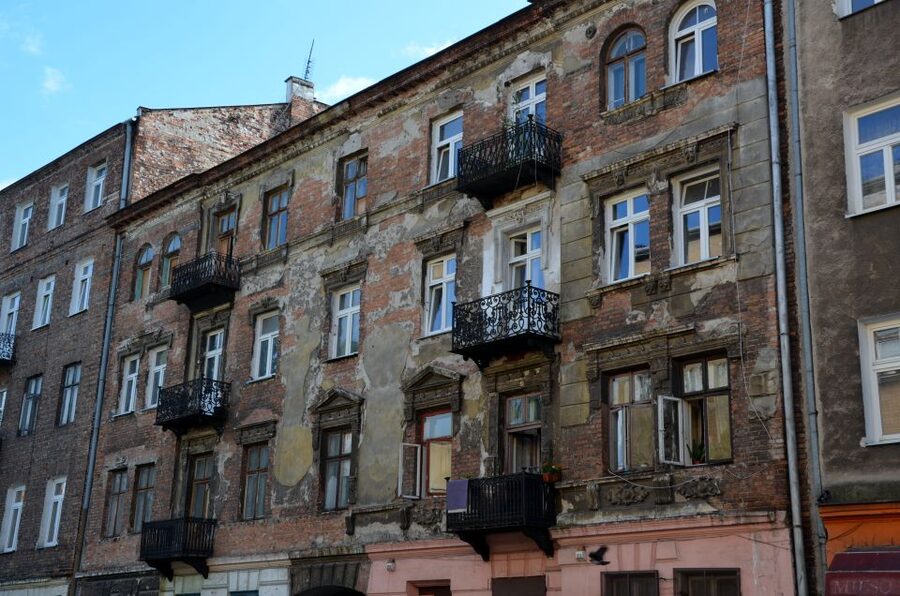
Praga gives the tour a different mood. It is presented as a distinctive district with older buildings and surviving traces of Warsaw’s past. Instead of seeing only the polished center, you get a look at an area where the city’s layers are easier to read.
One of the most useful details is the chance to visit a secluded courtyard with a Jewish shrine. This is the sort of place that can be hard to locate without someone who knows the district well. It does not need grand scale to matter. Its value comes from its setting and from the story your guide attaches to it.
The district also works well for people interested in architecture and everyday city life. You might find weathered façades, older courtyards, and a less formal atmosphere than in the reconstructed Old Town. The supplied route describes Praga as a UNESCO listed World Heritage site connected with Warsaw’s Old Town, so the guide’s explanation of the district’s status and history is worth hearing on site.
Praga may not suit you if you want a neat succession of famous monuments. Its appeal is less obvious. I would choose it if you have already seen the main Old Town or want the tour to include places you would probably miss on your own.
More Retro Car Tours in Warsaw
- Private Tour: Warsaw City Sightseeing by Retro Fiat
★ 5.0 · 562 reviews - Private Tour: Warsaw’s Jewish Heritage by Retro Fiat
★ 5.0 · 208 reviews - Private Historical Tour of Warsaw by a Retro Fiat with Pickup
★ 5.0 · 190 reviews - Warsaw Must-Sees: 4-Hour Private Tour by Retro Fiat
★ 4.9 · 123 reviews
The Warsaw Uprising and the city’s wartime turning point
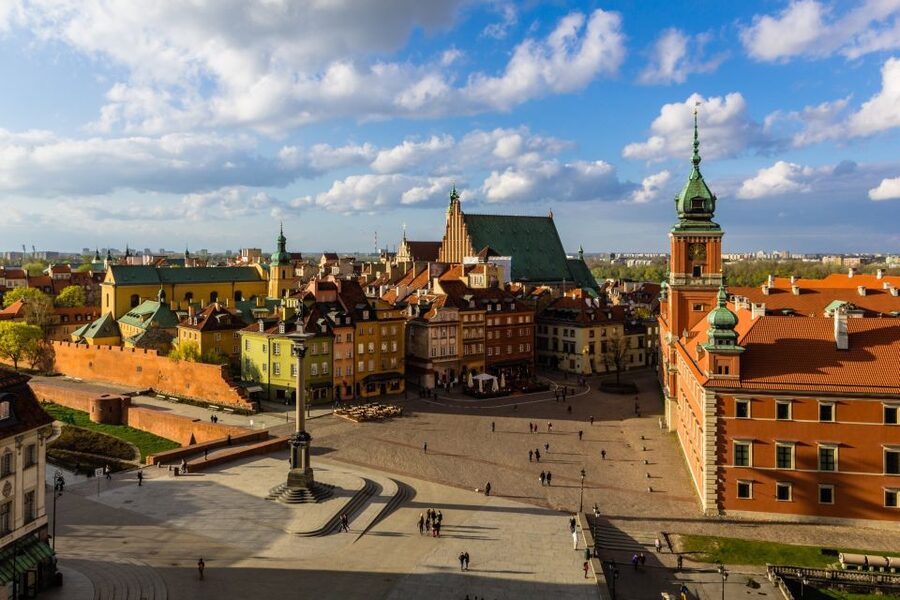
The route continues to important sites connected with the Warsaw Uprising, described as the largest armed uprising of civilians during the Second World War. Your guide uses the stops to explain what happened and why the uprising remains central to Warsaw’s identity.
The strength here is the combination of movement and explanation. You are not confined to one museum for four hours, nor are you simply passing monuments through a car window. The Fiat gets you from one area to another, while stops allow time to walk, look closely, and ask questions.
Pavel’s approach was praised for covering both the highlights and the sad moments of Polish history without losing the human side of the story. That balance is important. A good guide should not turn the uprising into a list of dates, but should also avoid reducing it to vague emotion.
The tour cannot provide the depth of a dedicated museum visit in this time. If the uprising is your main interest, plan a separate visit to a specialist museum or memorial site. If you want an informed first introduction as part of a wider Warsaw tour, this section gives you a useful base.
Seeing how Stalin-era Warsaw was rebuilt
The final section turns toward postwar reconstruction and the rebuilding of the Polish capital under Stalin’s regime. This is where the tour’s title becomes especially meaningful. You see not only what Warsaw lost, but also how the city was reshaped after its destruction.
The rebuilding story helps explain the mixture of old-looking streets, large Communist-era planning, and newer parts of the capital. Your guide can show how political power affected the city’s form, not just its government. For me, this is one of the tour’s most useful themes because it connects architecture with everyday history.
You should expect the reconstruction section to be more interpretive than scenic. Some stops may be impressive, while others matter because of what they reveal about policy and urban change. The route can also shift slightly with current traffic, so the exact order is not fixed.
That flexibility is sensible in Warsaw. Traffic can change the pace of a four-hour route, and a private guide can make small adjustments instead of forcing you to follow a rigid schedule. It is one reason this works better than a large coach tour for a first visit.
A four-hour balance of car time and walking
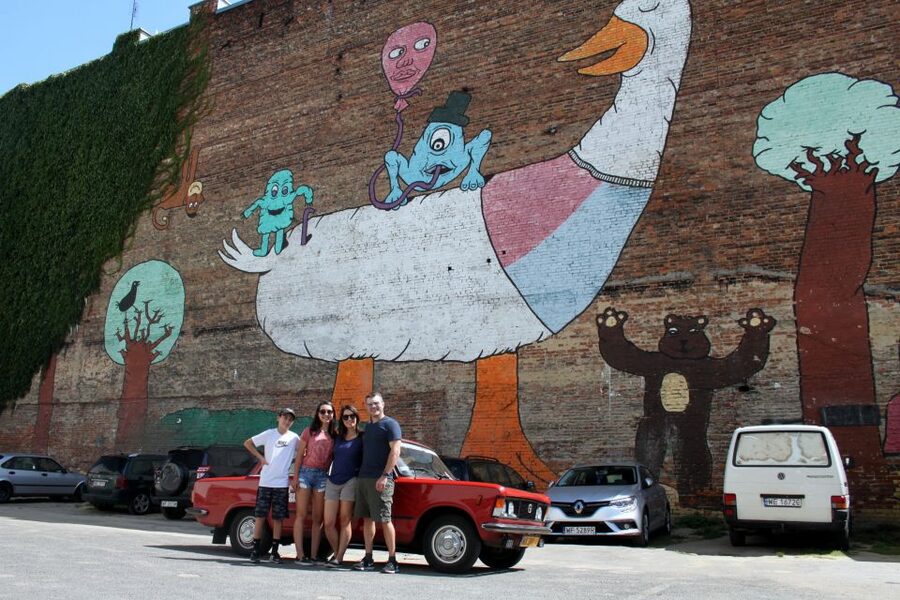
The experience is described as half walking and half driving, though it can be adjusted. That makes the tour manageable for most people who want to cover a lot without spending the whole day on foot. You should still wear comfortable shoes, since the stops require walking.
The driving time gives your feet a break and lets you reach districts that are not clustered around Old Town. The walking time keeps the tour from becoming a sightseeing loop where every building is viewed through glass. That balance is a real advantage.
Pickup and drop-off are included from your hotel or another centrally located point. This saves you the trouble of arranging taxis before and after the tour, though the pickup area is limited to the city center. Meals are not included, but that is not a major issue for a four-hour outing. You receive a Polish doughnut and a complimentary vodka shot, small extras that add local flavor without pretending to be a meal.
The vodka is optional in practical terms for anyone who does not drink, but the listed inclusion gives the tour a distinctly Polish finish. The doughnut is a simple touch, especially welcome during a morning or afternoon route.
How much value do you get for $105?
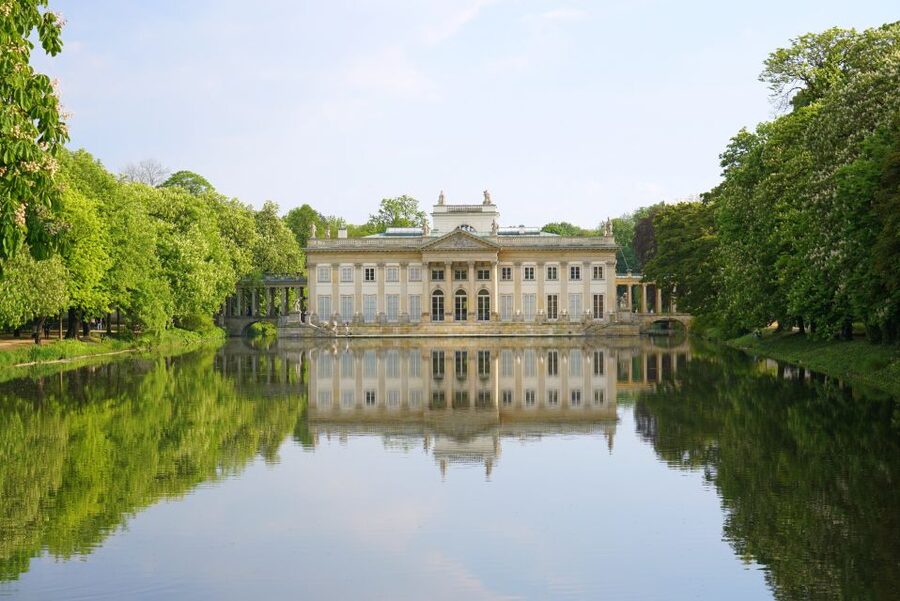
At $105 per person, this is not the cheapest way to see Warsaw. The value depends heavily on your group size and your time in the city. You are paying for a private English-speaking guide, hotel pickup and drop-off in the center, four hours of transport, flexible routing, and a vehicle with real character.
For two or three people, the price can make sense if you want a clear introduction without piecing together taxis, public transport, and several separate walks. For a larger group, the cost per person may feel easier to justify, although groups over four switch to the blue vintage minivan rather than the Fiat.
I would be less likely to recommend it to someone staying a week who enjoys slow, independent walking. You can explore Old Town on your own and spend more time in museums. I would recommend it more strongly to a first-time visitor with only a day or two, since the private format lets you ask questions and adjust the emphasis.
The 4.9 rating from 41 reviews supports the idea that guide quality is the key value. Karol was praised for shaping the route around what a couple had already seen and what they wanted to learn. Jakob was described as thoughtful and well informed. Martin was praised for his clear English and relaxed style. Those details matter more than the Fiat alone.
Who will enjoy this tour most
I think this tour suits you if you:
- Have limited time in Warsaw and want a broad first look.
- Prefer a private guide to a fixed large-group schedule.
- Enjoy political and wartime history alongside architecture.
- Want to see Praga and the Jewish ghetto remains, not only Old Town.
- Like unusual transport and do not require modern-car comfort.
- Want to ask questions and change the balance between walking and driving.
Families with older children may appreciate the variety, though the serious wartime material calls for a thoughtful approach. History-minded visitors will get the most from the tour, especially if they ask the guide to explain how each district changed over time.
It may be less suitable if you want a relaxed food tour, a museum-focused visit, or an entirely outdoor stroll. Pets are not allowed, and the tour does require some walking.
Practical booking advice for your Warsaw schedule
Book this early in your stay if you can. The tour gives you a map of the city in story form, and the guide’s suggestions can help you decide what to revisit independently. One person used the experience to plan the following days, including a separate visit to Park Łazienki.
If you have fewer than three hours, ask about the route before confirming, since the standard duration is four hours. One early morning visit was adapted to fit less than three hours, with Praga chosen instead of Park Łazienki. The route can be changed a little because of traffic, and it can be adjusted to suit your walking needs.
Free cancellation is available up to 24 hours before the tour for a full refund, and you can reserve now and pay later. Those terms are useful if your Warsaw schedule is still shifting. English is the stated tour language, and the group is private.
Should you book the retro Fiat tour?
I would book it if you want Warsaw explained as a city shaped by destruction, survival, political control, and rebuilding. The Fiat adds fun, but the real reason to choose this tour is the guide-led connection between Old Town, Praga, the Jewish ghetto remains, the Warsaw Uprising, and Stalin-era reconstruction.
Skip it if you prefer to spend four hours inside museums or if you want a fully independent walking day. For everyone else, especially first-time visitors with limited time, $105 buys useful access and local perspective, not just transport. Ask for the areas you care about, wear comfortable shoes, and let the guide adjust the route. That is where this private tour earns its price.
FAQ
How long is the Warsaw retro Fiat tour?
The tour lasts four hours. Starting times vary, so you need to check availability when booking.
What vehicle is used?
The standard vehicle is a historic 1980s Fiat 125p. Groups larger than four people are driven in a blue vintage minivan.
Is the tour private?
Yes. It is offered as a private group experience with a private local guide.
Is hotel pickup included?
Yes. Pickup and drop-off are included from hotels or other centrally located points in Warsaw’s city center.
What language does the guide speak?
The tour is conducted in English.
Does the tour include walking?
Yes. The experience is about half walking and half driving, although it can be adapted to suit your requirements. Comfortable shoes are recommended.
What food or drinks are included?
You receive a Polish sweet, described as a doughnut, and a complimentary vodka shot. Meals are not included.
Can the tour route change?
Yes. The route may change slightly because of current traffic, and it can be adjusted based on your interests and walking needs.
Just added around Warsaw
- Jewish heritage in Warsaw★ 4.5 · 3 reviews
- Warsaw Outdoor Paintball with Transfers (all year round)★ 5.0 · 3 reviews
- World War II Warsaw Old Town, Military Cemetery Walking Tour★ 4.7 · 3 reviews
- Warsaw: Wolf’s Lair & Swieta Lipka Small-Group Tour + Lunch★ 5.0 · 3 reviews
- Sunset Boat Tour with Unlimited Drinks in Warsaw★ 3.5 · 3 reviews
- Majdanek – German camp from II World War – Private Tour – 1 DAY TRIP FROM WARSAW★ 5.0 · 3 reviews
- From Warsaw: Guided Tour to Wieliczka Salt Mine and Krakow★ 4.5 · 3 reviews
- Warsaw Sightseeing with NEW Mercedes Sclass !!!★ 5.0 · 3 reviews
Historical Tours, compared.


POLIN Museum of the History of Polish Jews Ticket
Read our review →

Gdańsk City Sights & History Guided Walking Tour in English
Read our review →

Small-Group Historical Guided Tour of Warsaw with pick up/drop off. Public Tour.
Read our review →Browse the lists this tour appears in