
REVIEW · HISTORICAL TOURS
Warsaw Jewish Heritage Private Tour in Retro Fiat
A small car opens a painful chapter. This four-hour private tour uses a classic Fiat 125p to connect Warsaw’s Jewish sites, wartime stories, and surviving landmarks. I like the personal format, especially the chance to ask for a route shaped around your interests.
I also like the mix of driving and walking, with hotel pickup, snacks, a vodka shot, and a souvenir photo included. The main catch is that the synagogue and Jewish Cemetery close on Saturdays, while museum admission costs extra. Moderate walking is involved, though the route can be adjusted.
In This Review
- Key points to know before booking
- Why the vintage Fiat changes the feel of the tour
- From the ghetto wall to Grzybowski Square
- Nożyk Synagogue, Warsaw’s rare survivor
- Muranów and the Jewish Cemetery
- The Ghetto Heroes Monument and POLIN Museum
- Optional locations from The Pianist
- Four hours of driving, walking, and conversation
- Is $105 per person good value?
- Who should choose this Warsaw tour?
- Should you book the Fiat tour?
- FAQ
- How long is the Warsaw Jewish Heritage Private Tour in Retro Fiat?
- What vehicle is used for the tour?
- Is hotel pickup included?
- Is the tour private?
- Is the Nożyk Synagogue open every day?
- Is the Jewish Cemetery open on Saturdays?
- Is admission to POLIN Museum included?
- What should I bring?
Key points to know before booking
- The Fiat is part of the experience: You ride in an iconic 1980s Fiat 125p, not a standard tour vehicle. Groups larger than four use a blue vintage minivan.
- Nożyk Synagogue is the only surviving Warsaw synagogue from World War II: It remains active, but access is not guaranteed and it closes on Saturdays.
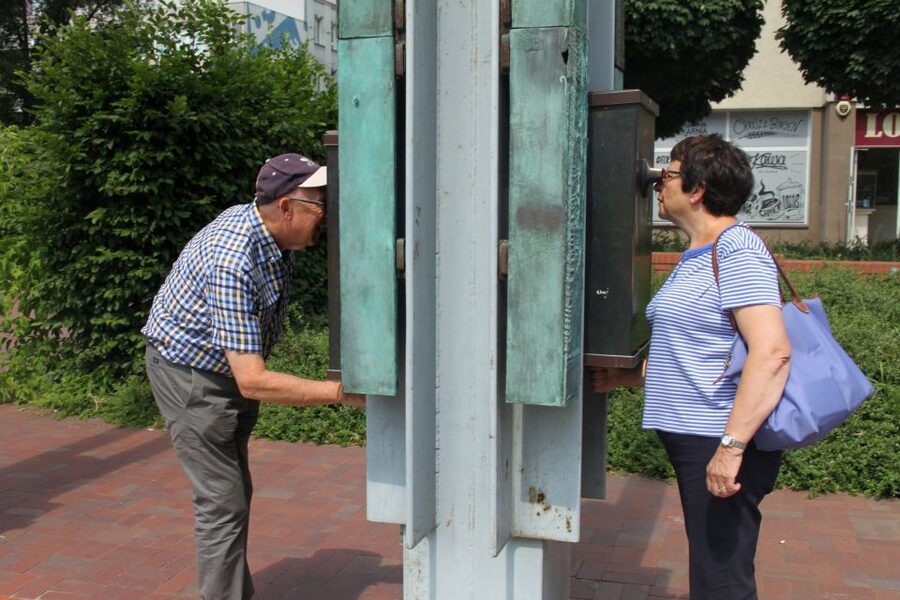
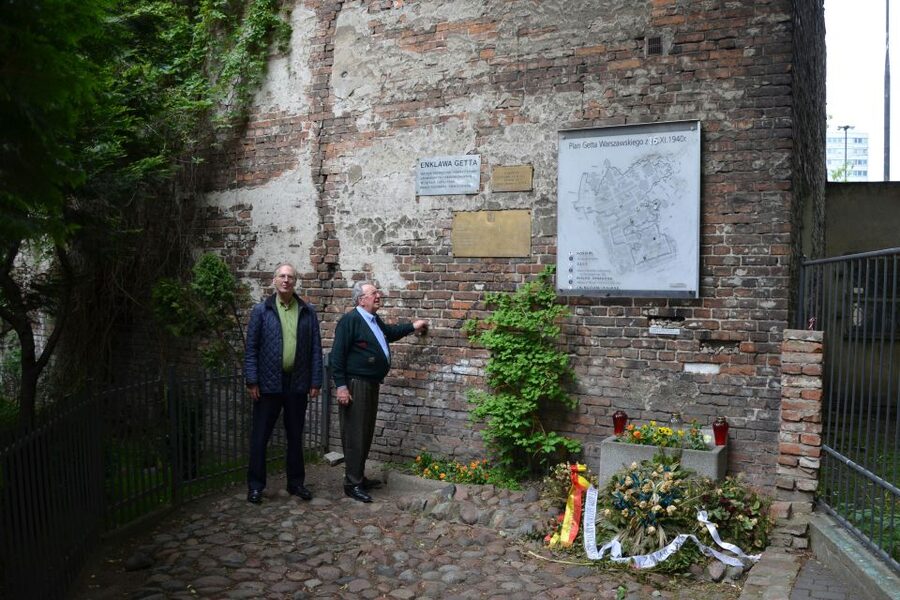
- The tour reaches the last visible pieces of the ghetto wall: These small fragments are easy to miss without a guide.
- Muranów was built on the rubble of the former Large Ghetto: Modern buildings and street art now cover much of the district.
- The Ghetto Heroes Monument gives the tour its emotional center: The nearby POLIN Museum can be visited at your own expense.
- The route is private and flexible: You can ask to add sites linked to The Pianist or adjust the amount of walking.
Why the vintage Fiat changes the feel of the tour
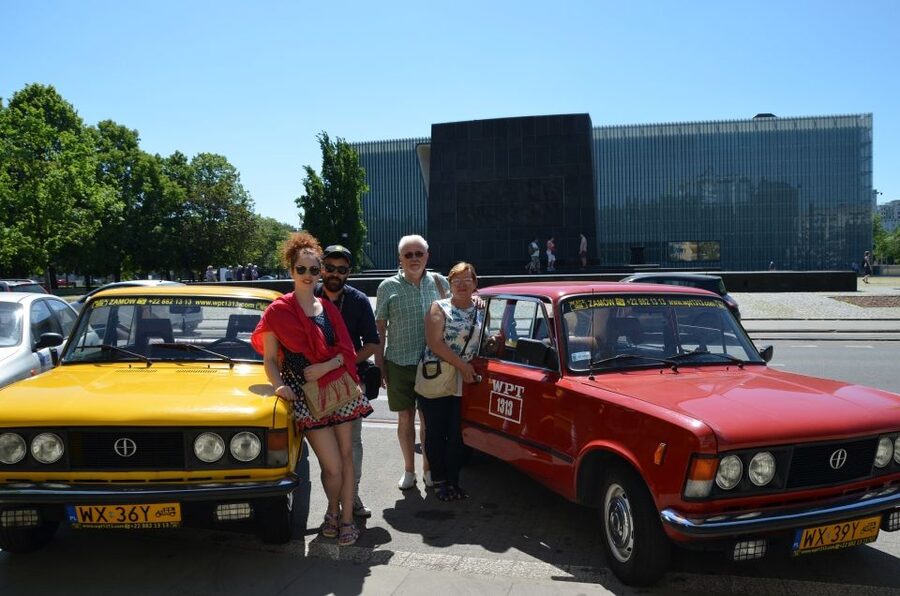
Warsaw has plenty of ways to study its Jewish past, but this tour gives you a very different starting point. You are collected at a centrally located hotel and driven through the city in a Fiat 125p, the boxy Polish car closely tied to everyday life in the 1980s.
The vehicle is more than a photo prop. It gives the outing a local, slightly playful character before the subject matter turns solemn. You receive a photo with the car after the tour, and Polish sweets plus a donut are provided during the drive. There is also a vodka shot on board, a small cultural touch that may not suit everyone, but it fits the old-fashioned Polish theme.
You should keep expectations realistic. This is a historical vehicle, so you are not booking a luxury car or a modern sightseeing bus. The charm comes from the setting and the novelty. For groups of more than four people, the operator uses a blue vintage minivan instead, so check the vehicle arrangements if the Fiat itself is a major reason for booking.
The private format is the bigger advantage. Your guide can explain what you are seeing, stop for walking sections, and respond to your questions without trying to keep a large group moving. Guides named Martin, Maks, and Konrad have been singled out for their clear explanations, friendly manner, and skill behind the wheel. One guest also praised the driver for getting the car through tight and impressive spaces.
More History Tours in Warsaw
- Warsaw: POLIN Museum of the History of Polish Jews Ticket
★ 4.7 · 1,142 reviews - Warsaw: Chopin Concert at Historical Venue in Old Town
★ 4.7 · 445 reviews - Small-Group Historical Guided Tour of Warsaw with pick up/drop off. Public Tour.
★ 4.5 · 343 reviews
From the ghetto wall to Grzybowski Square
The tour begins with the former Jewish Ghetto territory. In 1940, the Nazis built a red-brick wall that isolated more than 400,000 Jews from the rest of Warsaw. Today, most of that wall has disappeared, and the remaining fragments are easy to overlook among later buildings.
That is why this stop matters. Your guide can point out the exact pieces that survived and use photographs and personal stories to show how the enclosed area once functioned. The contrast between ordinary modern streets and the scale of what happened here is hard to avoid.
Do not expect a single grand ruin. The surviving wall fragments are modest. Their value comes from their location and the explanation around them, not from their size. This is a good example of why a private guide helps: without context, you could pass by without realizing what you are looking at.
The route continues through Grzybowski Square, or Plac Grzybowski. The square was once part of the ghetto, and it helps connect the scattered sites into a larger picture. You are not simply checking off monuments. You are following the changing boundaries of a district that was forcibly created, destroyed, and later absorbed into the modern city.
Nożyk Synagogue, Warsaw’s rare survivor
Nożyk Synagogue is one of the most important stops because it is the only synagogue in Warsaw to survive World War II. It is still operational, which gives the building a purpose beyond its historical value.
The synagogue is not just an exterior photo stop. Your guide may help you enter, but access can be difficult, so keep your expectations flexible. One visitor specifically praised the guide’s persistence in getting inside. That detail matters because a private guide may be able to help with practical questions, but entry is never something to treat as automatic.
The synagogue is closed on Saturdays. If seeing the interior is important to you, plan this tour for another day and confirm the current opening arrangements when booking. Even if you only see the outside, it remains a powerful reminder that Jewish life in Warsaw was not erased entirely.
This stop also adds balance to the tour. The ghetto sites focus on persecution and destruction. Nożyk Synagogue points toward continuity and present-day religious life, even within a city marked by enormous loss.
Muranów and the Jewish Cemetery
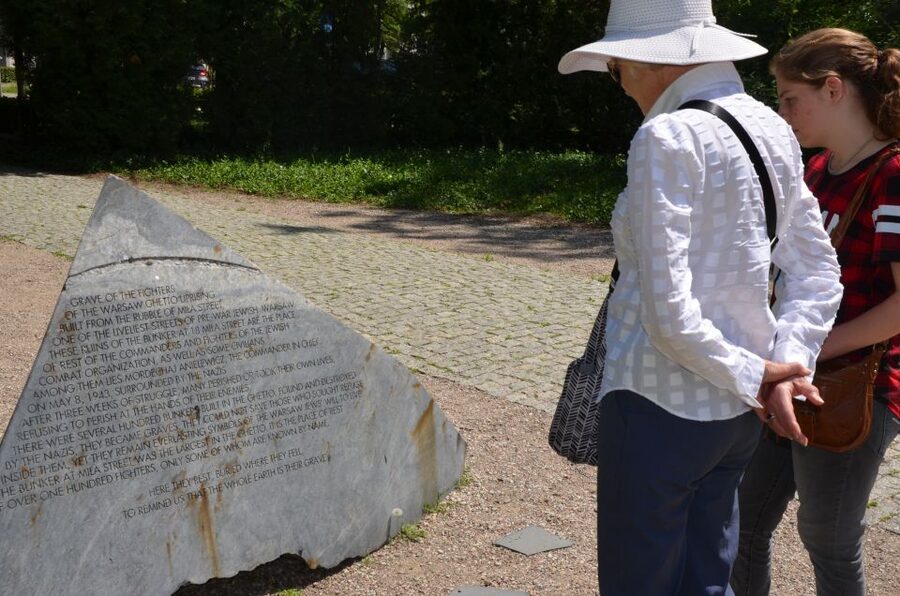
The tour then moves into Muranów, the former Large Ghetto district. Much of today’s neighborhood was built on top of the ghetto rubble, a fact that changes how you see the modern streets, apartments, and public spaces.
Muranów now includes modern buildings and street art. That mix can feel jarring, but it also shows how Warsaw has been rebuilt over layers of destruction. Your guide helps you connect the present streets with the vanished district beneath them.
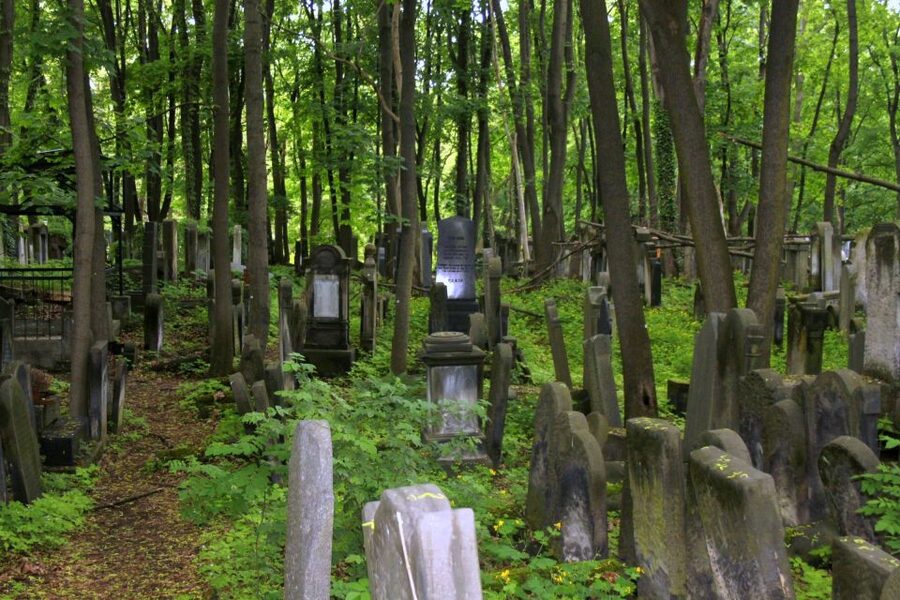
The tour includes a walking section around the Jewish Cemetery, where you can see some of its thousands of graves. This is a quieter part of the outing and one where comfortable shoes make a real difference. The experience requires a moderate amount of walking, although your guide can adapt the plan to reduce it.
The cemetery is closed on Saturdays, just like the synagogue. That makes Saturday a poor choice if you want the full route. The tour can still include other sites, but two of its most meaningful stops will not be available.
The cemetery visit also changes the pace. After the traffic and car ride, you get time to move slowly and look closely. You might find the walking more affecting than the larger monuments because the graves make the scale of Jewish life in Warsaw more personal.
More Retro Car Tours in Warsaw
- Private Tour: Warsaw City Sightseeing by Retro Fiat
★ 5.0 · 562 reviews - Private Tour: Warsaw’s Jewish Heritage by Retro Fiat
★ 5.0 · 208 reviews - Private Historical Tour of Warsaw by a Retro Fiat with Pickup
★ 5.0 · 190 reviews - Warsaw Must-Sees: 4-Hour Private Tour by Retro Fiat
★ 4.9 · 123 reviews
The Ghetto Heroes Monument and POLIN Museum
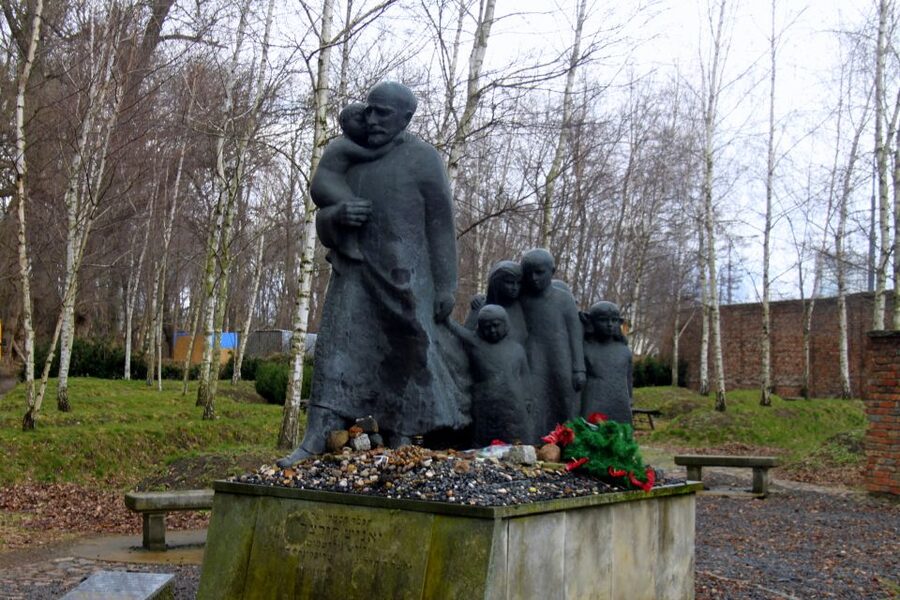
The Ghetto Heroes Monument is the tour’s clearest focal point. Its setting invites a pause, and your guide can explain the events connected with the Warsaw Ghetto Uprising and the people remembered there.
The monument is especially effective when you arrive with the earlier context in mind. You have already seen the wall fragments, crossed former ghetto territory, and walked through Muranów. By this point, the monument is not an isolated symbol. It becomes part of a route through real streets and surviving places.
Nearby, the POLIN Museum of the History of Polish Jews offers a much larger account of Jewish life in Poland across 1,000 years. The modernist museum opened in 2013 and uses artifacts and images to document that long story.
Museum admission is not included, so you will need to pay separately if you want to go inside. Also, the four-hour schedule may not leave enough time for a full museum visit, depending on traffic, walking speed, and the amount of time you spend at each stop. I would treat the museum as an optional addition rather than assume it is fully covered by the tour.
If you have already planned a separate visit to POLIN, this private tour works well as a city-based introduction. The guide supplies the physical setting, while the museum can provide a longer and more organized period-by-period account.
Optional locations from The Pianist
You can ask the guide to include places connected with Roman Polanski’s Oscar-winning film The Pianist. The story is set in Holocaust-era Warsaw, and some of the filming locations are in Praga-North, or Praga-Północ.
This option suits film fans and anyone who wants to compare cinema with the real city. It also shows the benefit of booking privately. The route is not locked into one fixed sequence, so you can tell the guide what interests you most.
Keep in mind that adding extra locations may mean less time at another stop. The tour lasts four hours, and traffic can change the route. Ask early in the outing how much time is available if the film sites are a priority.
Four hours of driving, walking, and conversation
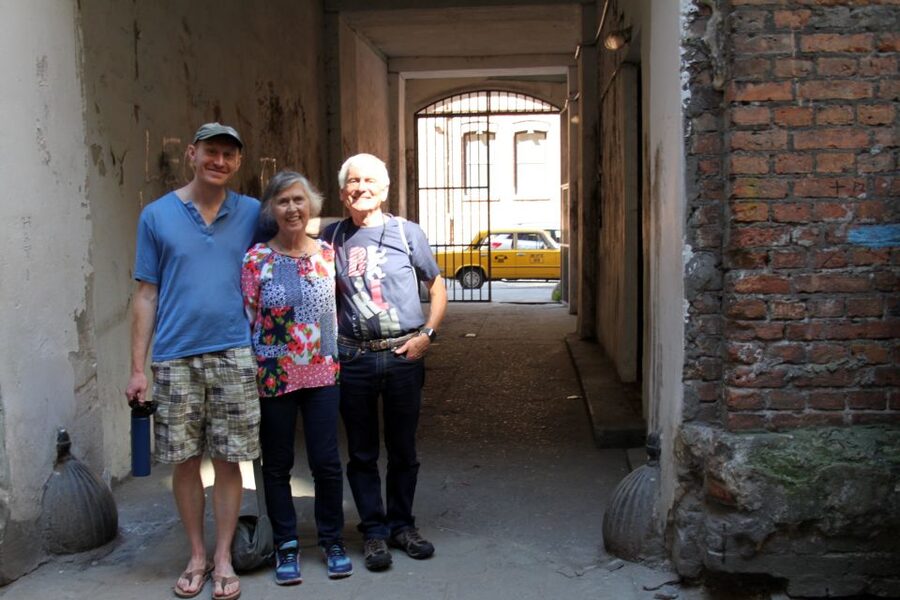
The half-driving, half-walking format is a practical choice for Warsaw. The car lets you cover more ground than a walking tour, while the stops give you enough time to leave the vehicle and see key places on foot.
The route may shift slightly because of traffic. That is normal in a city tour, but it means you should not plan a tightly timed appointment immediately afterward. The hotel drop-off is included at the place where you were collected, or at another agreed central location.
The walking is described as moderate, not strenuous. Still, wear comfortable shoes. The cemetery, monument area, and wall locations involve time on foot, and the experience is better when you are not focused on sore feet.
The private group format also helps with pace. You can request more driving, more walking, or a route adjusted to your needs. That flexibility is useful for older visitors, people with limited stamina, and anyone who wants to spend longer at one site.
The tour is conducted in English. Pickup is from a centrally located Warsaw hotel or another central point, with the guide meeting you in the lobby. Pets are not allowed.
Is $105 per person good value?
At $105 per person, this is not the cheapest way to see Warsaw. You are paying for a private guide, a private vehicle, hotel pickup and drop-off, a four-hour route, snacks, a drink, and emailed photos.
The value improves if you are traveling with two to four people who want a focused introduction to Jewish Warsaw. A private tour saves you from arranging taxis between separate sites and gives you someone who can explain why the smaller remains matter. It also lets you ask for the ghetto, cemetery, synagogue, monument, museum, or The Pianist locations in a way a standard group outing may not allow.
The price is harder to justify if you mainly want to enter POLIN Museum and spend several hours inside. The museum fee is extra, and the four-hour tour is built around outdoor sites and short stops rather than a full museum program.
The included snacks and vodka are pleasant extras, but they are not the reason to book. The real value lies in the guide’s explanations, the private route, and the chance to see several separated places without handling the transport yourself.
A 4.9 out of 5 rating from 22 bookings supports the tour’s strong reputation. The praise centers most often on guides such as Martin, Maks, and Konrad, with particular attention to clear explanations, friendly service, and capable driving. One winter outing was also described as worthwhile despite cold weather, though warmer months will make the walking sections easier.
Who should choose this Warsaw tour?
I would recommend it to you if you want a serious historical outing with an unusual vehicle and a human guide. It suits first-time visitors who need a clear introduction to the former ghetto, as well as returning visitors who want a private route focused on Jewish heritage.
It is also a good choice for families or small groups with different interests. One person can ask about the war, another can focus on architecture, and a film fan can request The Pianist locations.
You may want a different plan if you prefer a long museum visit, a fully walking tour, or a low-cost group excursion. The Fiat is fun, but the subject is not light entertainment. You should be ready for difficult stories and moments of quiet reflection.
Book on a day other than Saturday if the synagogue and cemetery are important. Wear comfortable shoes, leave some time around the four-hour schedule, and tell the guide at the start what you most want to see.
Should you book the Fiat tour?
Book it if you want Warsaw’s Jewish heritage explained across the actual city, with private transportation and room to shape the route. The surviving wall fragments, Nożyk Synagogue, Muranów, cemetery, and Ghetto Heroes Monument work best as connected stops, not as isolated addresses.
Skip it if your main goal is a long visit inside POLIN Museum or if you want the lowest possible price. For most visitors seeking a compact, personal introduction, the Fiat, flexible route, and strong guides make $105 per person a reasonable buy.
FAQ
How long is the Warsaw Jewish Heritage Private Tour in Retro Fiat?
The tour lasts four hours, including driving and walking sections.
What vehicle is used for the tour?
The standard vehicle is a historical Fiat 125p from the 1980s. Groups of more than four people are transported in a blue vintage minivan.
Is hotel pickup included?
Yes. Pickup and drop-off are included from centrally located Warsaw hotels or another centrally located pickup point. The guide meets you in the hotel lobby.
Is the tour private?
Yes. It is offered as a private group tour with a private local guide.
Is the Nożyk Synagogue open every day?
No. The synagogue is closed on Saturdays. Entry may also require assistance from the guide and is not guaranteed.
Is the Jewish Cemetery open on Saturdays?
No. The Jewish Cemetery is closed on Saturdays.
Is admission to POLIN Museum included?
No. Entry to the Museum of the History of Polish Jews is not included in the tour price.
What should I bring?
Bring comfortable shoes because the tour requires a moderate amount of walking. Pets are not allowed.
Just added around Warsaw
- Jewish heritage in Warsaw★ 4.5 · 3 reviews
- Warsaw Outdoor Paintball with Transfers (all year round)★ 5.0 · 3 reviews
- World War II Warsaw Old Town, Military Cemetery Walking Tour★ 4.7 · 3 reviews
- Warsaw: Wolf’s Lair & Swieta Lipka Small-Group Tour + Lunch★ 5.0 · 3 reviews
- Sunset Boat Tour with Unlimited Drinks in Warsaw★ 3.5 · 3 reviews
- Majdanek – German camp from II World War – Private Tour – 1 DAY TRIP FROM WARSAW★ 5.0 · 3 reviews
- From Warsaw: Guided Tour to Wieliczka Salt Mine and Krakow★ 4.5 · 3 reviews
- Warsaw Sightseeing with NEW Mercedes Sclass !!!★ 5.0 · 3 reviews
Historical Tours, compared.


POLIN Museum of the History of Polish Jews Ticket
Read our review →

Gdańsk City Sights & History Guided Walking Tour in English
Read our review →


Small-Group Historical Guided Tour of Warsaw with pick up/drop off. Public Tour.
Read our review →Browse the lists this tour appears in