
REVIEW · JEWISH QUARTER & GHETTO TOURS
Wroclaw Jewish Quarter Private Guided Tour
A synagogue tells Wroclaw’s story. This private walking tour links the District of Four Denominations with the city’s Jewish past, from prewar Breslau to the community rebuilding itself today. I like the included entry to the White Stork Synagogue and the chance to visit the Old Jewish Cemetery on the longer option. The main drawback is that the meeting point can be difficult to spot, so keep your guide’s phone number handy.
I also like the choice between a focused two-hour walk and a fuller four-hour visit that includes cemetery art and public transport. The White Stork Synagogue closes on Saturdays, Jewish holidays, during prayer, and during performances, so your chosen time matters.
In This Review
- Key points at a glance
- Why Wroclaw’s Jewish Quarter matters
- Starting at the White Stork Synagogue
- The Small Synagogue and the quarter’s courtyards
- Remembering the New Synagogue
- The four-hour visit to the Old Jewish Cemetery
- Two hours or four hours?
- Guide quality and the private format
- Best ways to plan your visit
- Who should book this Wroclaw tour?
- Should you book it?
- FAQ
- How long is the Wroclaw Jewish Quarter tour?
- What is included in the two-hour tour?
- Is the Old Jewish Cemetery included?
- Where does the tour start and end?
- Can I visit the White Stork Synagogue on any day?
- Is hotel pickup available?
Key points at a glance
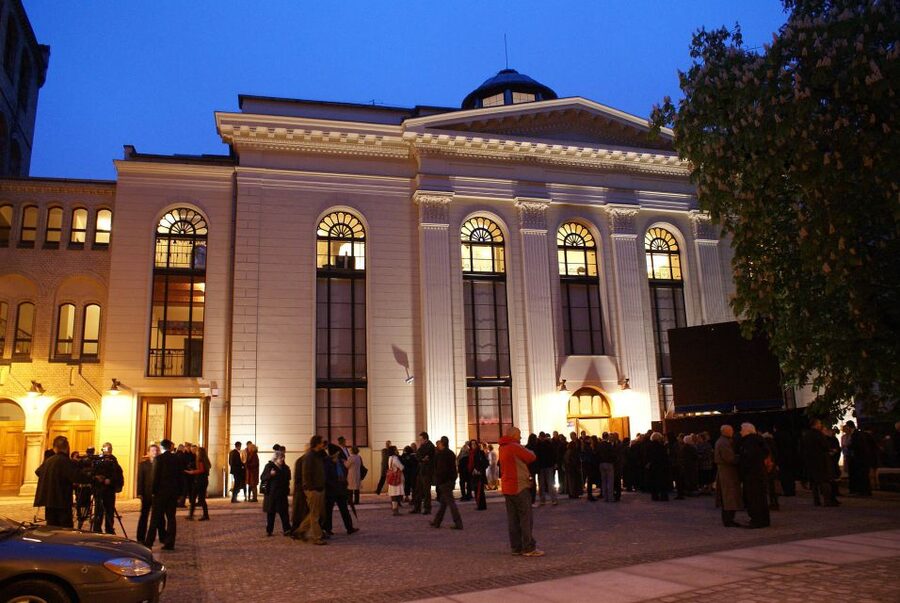
- White Stork Synagogue: Go inside this important center of Jewish life in Wroclaw, with admission included.
- District of Four Denominations: See how Catholic, Protestant, Orthodox, and Jewish places of worship sit within one compact quarter.
- Breslau before 1933: Learn how Jewish doctors, scientists, artists, and businesspeople shaped the city’s public life.
- New Synagogue memorial: Hear about the former second-largest synagogue in Germany and its destruction on Kristallnacht.
- Old Jewish Cemetery: Choose the four-hour tour to visit the Museum of Cemetery Art, with transport tickets included.
- Private guiding: Ask questions freely, choose your pace, and book in English, German, Spanish, Italian, Russian, French, or Polish.
Why Wroclaw’s Jewish Quarter matters
Wroclaw was known as Breslau before 1945, when the city belonged to Germany. Its Jewish community was one of the oldest in what is now Poland, and before 1933 it played a major part in economic, social, and cultural life.
That context gives this walk more weight than a simple tour of old buildings. You are not just looking at a synagogue facade. You are tracing a community that helped shape city life, then suffered destruction and displacement during the war, followed by a long period when Jewish life was far less visible.
Your guide helps connect the names, buildings, and memorials. The tour is especially useful if you want to understand how Wroclaw changed after the war, rather than treating its German, Jewish, and Polish past as separate chapters.
The setting is the District of Four Denominations, also called the Quarter of Mutual Respect. Its name points to the Catholic, Protestant, Orthodox, and Jewish communities represented in the area. The compact layout makes it a practical place to begin learning about Wroclaw’s religious and cultural life.
Because the tour is private, you can ask for more explanation about a subject that catches your attention. You might want to know how the former Breslau community lived, what happened to its institutions, or how Jewish culture is celebrated in Wroclaw today. A private guide is a good format for those questions.
More Jewish heritage tours:
- Krakow: Schindler’s Factory & Ghetto Guided Tour
★ 4.7 · 1,694 reviews - Krakow: Jewish Quarter and Former Ghetto Tour
★ 4.9 · 1,441 reviews - Krakow: Bike Tour of Old Town, Jewish Quarter and the Ghetto
★ 4.9 · 1,155 reviews
Starting at the White Stork Synagogue
The official meeting point is in front of the White Stork Synagogue at Pawła Włodkowica 7. The tour ends at the same place, which makes the walk easy to fit into a day of sightseeing.
One practical warning deserves attention: the meeting spot may not be immediately obvious. A previous booking note says the guide was reached by phone and then found the group. I would save the guide’s number before setting out, allow a few extra minutes, and check your email the day before for the final instructions.
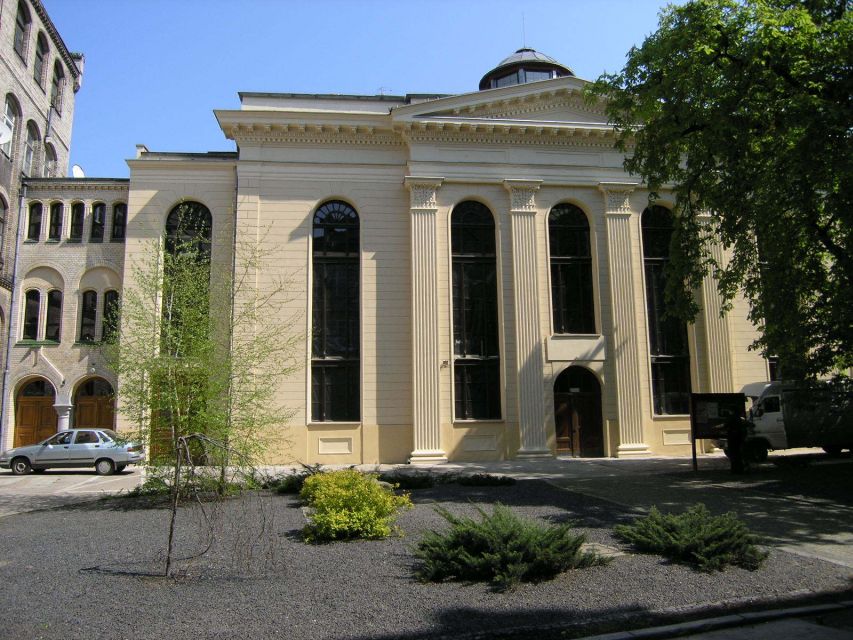
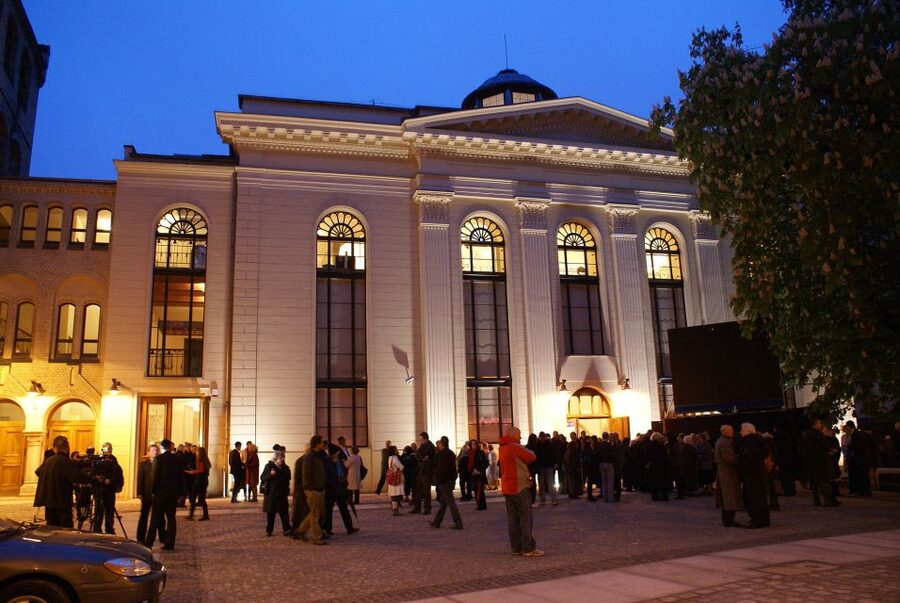
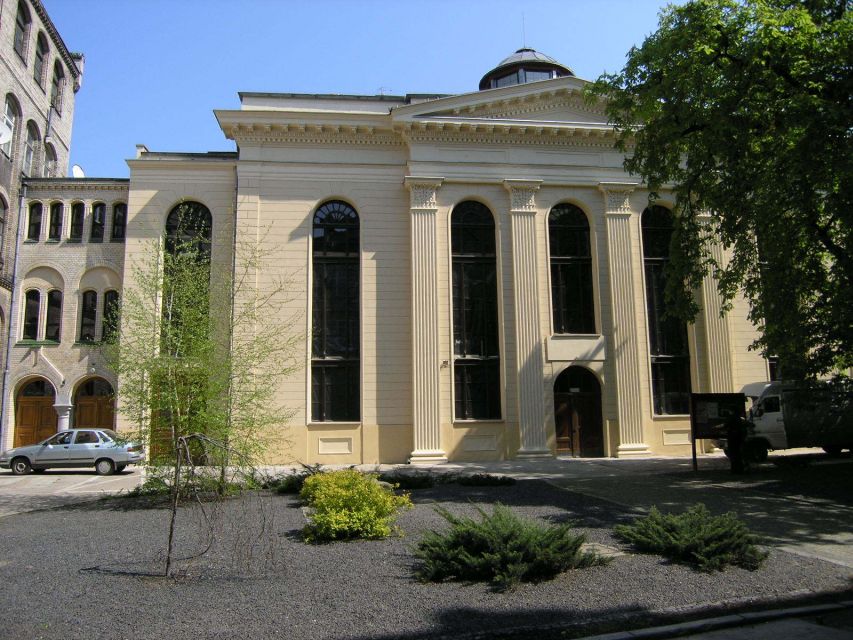
The synagogue is the central stop on both tour options. Admission is included, but this ticket covers the synagogue itself, not temporary exhibitions. The building is still used by the local Jewish community for prayer and celebrations, which gives the visit a living purpose.
Inside, the focus is not only on architecture. Your guide explains why the White Stork Synagogue became the center of Jewish life in modern Wroclaw and how the community’s role changed after the war. The interior gives you a physical place to connect with those stories.
The synagogue’s schedule requires planning. It is closed on Saturdays, Jewish holidays, during performances, and during prayer times. Check the available start times carefully, especially if your visit falls on a weekend or religious holiday. If the synagogue cannot be entered at your preferred time, the surrounding quarter can still be viewed, but the main included interior visit would be missed.
The Small Synagogue and the quarter’s courtyards
The walk includes a look at a hidden courtyard with the old Small Synagogue and the White Stork Synagogue. These close-together sites help show how Jewish worship and community life were organized in the quarter.
The Small Synagogue is not included as an admission visit. That distinction matters. You can learn about it and see the setting, but the tour price does not cover entry inside. If you are hoping to enter every synagogue mentioned, ask your guide what can be visited on your date.
The courtyard setting also changes the pace of the tour. Instead of moving from one large monument to another, you get a sense of the smaller spaces where religious and social life took place. The guide’s explanation is important here because the buildings alone may not make the full story clear.
The District of Four Denominations also gives you a wider view of Wroclaw. The Jewish sites do not exist in isolation. They sit within an area marked by several religious traditions, making the quarter a useful place to discuss coexistence, separation, and the way the city’s communities changed over time.
Remembering the New Synagogue
A memorial marks the site of the New Synagogue, once the second-largest synagogue in Germany. It was destroyed on Kristallnacht, the anti-Jewish pogrom of November 1938.
This is one of the tour’s most important stops because it brings the story of destruction into the city itself. You are not only hearing about events in a textbook setting. You are standing at a place where a major Jewish building once served the Breslau community.
The memorial also helps explain that the community’s losses began before the war ended. The destruction of the New Synagogue was part of the violent persecution that dismantled Jewish life across Germany and German-controlled areas.
Your guide places this event alongside the history of the White Stork Synagogue and the later story of Wroclaw. That comparison gives the walk a clear thread: one synagogue was destroyed, another survived, and the city that followed the war had a different population and identity.
The tour also points out the Jewish Theater, which operated for a few years in the building of the Polish Theater. This detail adds a cultural angle to the visit. Jewish life in Breslau was not limited to worship. It included theater, science, medicine, social activism, business, and the arts.
A few more Wrocław trips worth weighing up
- Wroclaw: E-Car Tour and Audio Guide
★ 4.6 · 1,738 reviews - Wroclaw: 2-Hour Private Guided Tour by Electric Car
★ 4.8 · 805 reviews - Wrocław: Old Town and Ostrów Tumski Walking Tour in English
★ 4.8 · 311 reviews - Wroclaw: Private Old Town Guided Walking Tour (2 hours)
★ 4.8 · 275 reviews
The four-hour visit to the Old Jewish Cemetery
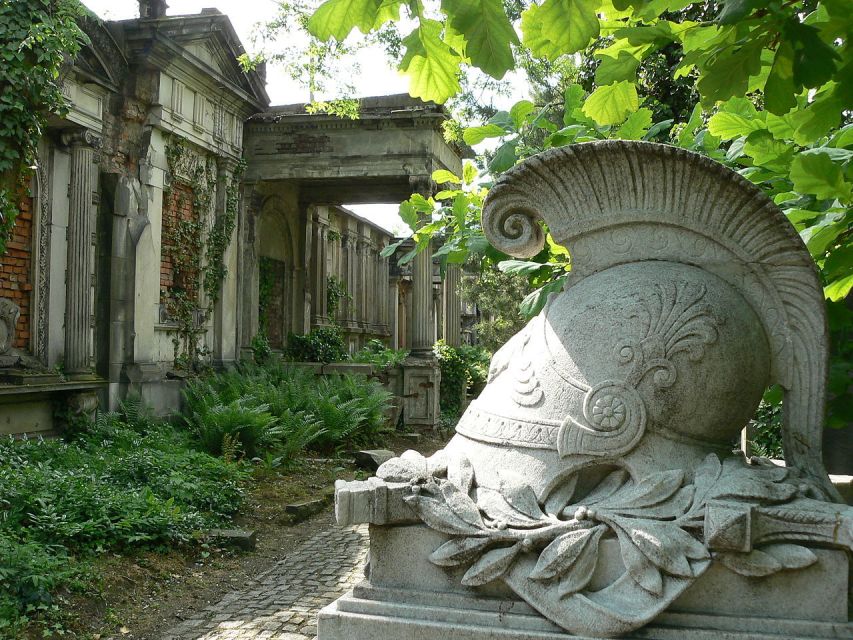
If you have the time, the four-hour version adds the Old Jewish Cemetery, now known as the Museum of Cemetery Art. This is the main difference between the two options, and it is a meaningful one rather than a simple extension of the walking route.
The cemetery can be reached on foot or by public transport. Public transport tickets are included with the four-hour tour, so you do not need to arrange those separately. The transport portion means the longer option is not one continuous walk, and you should be comfortable with that change of pace.
The cemetery offers a different kind of history. The synagogue shows communal worship and public identity. The cemetery reveals funeral customs, symbols, family connections, and the lives of people who helped shape Breslau.
Your guide can tell you about Jewish doctors, scientists, social activists, and artists buried there. Those stories give faces and professions to a community that might otherwise be described only through dates and political events.
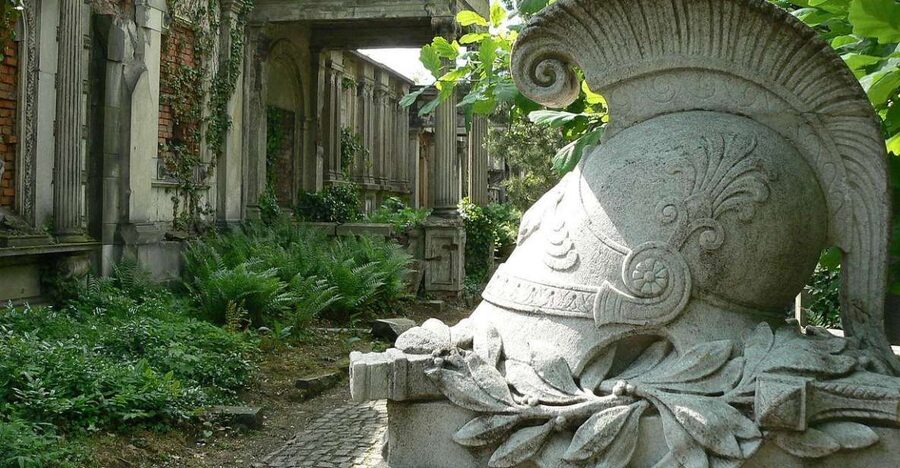
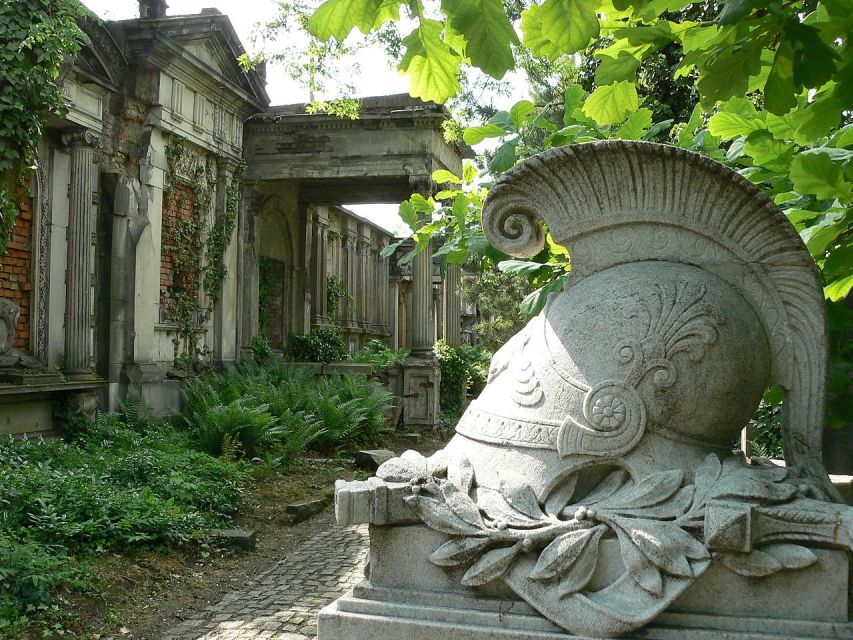
The Museum of Cemetery Art is also a useful stop if you want to learn how Jewish burial traditions are expressed through tombstones and symbols. You may find the visit quieter and more reflective than the synagogue portion. It is not a quick photo stop, so the four-hour tour suits you best if you prefer time for explanation and historical detail.
The cemetery has one practical limitation: it is not part of the two-hour tour. Tickets and public transport are also excluded from the two-hour option. If the cemetery is a priority, select the longer tour from the start rather than hoping to add it later.
Two hours or four hours?
The two-hour tour is the efficient choice. It includes the District of Four Denominations, the White Stork Synagogue, the Small Synagogue area, the New Synagogue memorial, and the Jewish Theater connection. Choose it if you want a clear introduction to Jewish Wroclaw without giving up half a day.
This shorter option works well for a first visit to the city, a busy sightseeing schedule, or anyone mainly interested in the quarter’s buildings and central story. You still receive a private guide and synagogue admission, so it is not merely an outside walking tour.
The four-hour tour gives the subject more room. You visit the synagogue and central quarter, then continue to the Old Jewish Cemetery with public transport included. Choose it if you want Jewish customs, personal stories, and burial art alongside the architectural stops.
At $124 per person, the price is easier to justify for a private group than for a solo budget visit. You are paying for a licensed guide, a private format, synagogue entry, and, on the longer option, cemetery admission and transport. The value depends on how much you want guided interpretation. If you only want to locate the buildings and read plaques, the cost may feel high. If you want a structured explanation of Breslau’s Jewish community and the changes after the war, private guiding adds real value.
A private tour also lets you set the rhythm. You can ask questions without holding up strangers, and the guide can spend more time on the parts that matter most to you. For families or small groups with different levels of historical interest, that flexibility can make the price more reasonable.
Guide quality and the private format
The guide is a five-star licensed history expert, with tours available in seven languages: English, German, Spanish, Italian, Russian, French, and Polish. The quality of this experience depends heavily on the guide’s ability to explain difficult history clearly and respectfully.
The available feedback is especially positive about the guide’s response when the meeting point caused trouble. After a phone call, the guide found the group, and the guide was described as great. That is a small detail, but useful in practice. Save the contact number and do not panic if the synagogue entrance is harder to identify than expected.
A private group is helpful for this subject. Jewish history in Wroclaw includes loss, persecution, survival, and cultural renewal. You may want to pause at a memorial or ask for clarification about the difference between Breslau and present-day Wroclaw. A private guide gives you space to do that.
The tour is wheelchair accessible, though the four-hour option includes public transport. If you need to plan around mobility, confirm the route details and vehicle arrangements before booking.
Pickup is available only from accommodation within 1.5 kilometers of the meeting point, around the Wroclaw Market Square area. Hotels farther away require you to reach the synagogue yourself. The activity begins and ends at the synagogue, so it is easy to continue exploring the quarter afterward.
Best ways to plan your visit
Check the synagogue schedule before selecting a time. Saturday closures, Jewish holidays, prayer periods, and performances can affect entry, and the included ticket does not cover temporary exhibitions.
Wear comfortable shoes, especially for the four-hour option. The route includes walking through the quarter and either a walk or public transport to the cemetery. The exact balance depends on the guide and the day, but the longer tour is not simply a seated museum visit.
Read the email sent the day before. It may contain meeting instructions that help avoid the only specific problem noted in the feedback. I would also arrive early at Pawła Włodkowica 7 and keep the guide’s phone number available.
If you have only two hours, focus your attention on the guide’s explanations rather than trying to photograph every building. The value comes from understanding how the White Stork Synagogue, the New Synagogue memorial, and the surviving Jewish community fit together.
If you have four hours, give the cemetery proper time. The Museum of Cemetery Art is not an add-on for a quick checklist. Its value lies in the symbols, funeral customs, and personal stories that broaden the tour beyond synagogue architecture.
Who should book this Wroclaw tour?
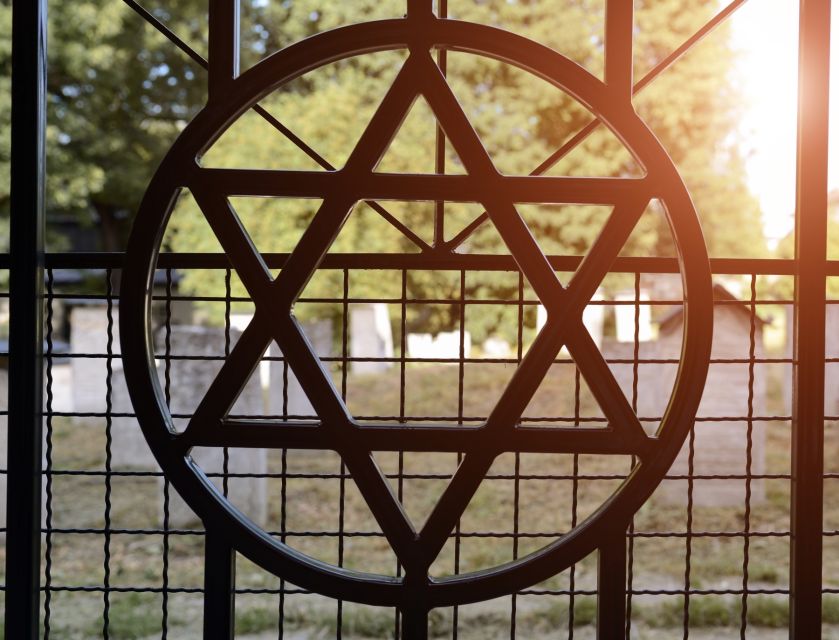
I would recommend the two-hour tour if you want a compact introduction to Wroclaw’s Jewish quarter, especially if you are already visiting the Old Town and want a focused historical walk.
I would choose the four-hour version for anyone with a serious interest in Jewish heritage, cemetery symbolism, genealogy, religious customs, or the social history of Breslau. It also suits you if you prefer people and institutions to grand sightseeing highlights.
Families can benefit from the private format because the guide can adjust the explanation and answer questions as they arise. History-minded couples and small groups will likely appreciate the chance to connect the sites instead of visiting them as unrelated monuments.
The tour is less suited to you if your schedule is very tight, if the synagogue is closed during your available time, or if you prefer exploring independently. The $124 price reflects private attention and included admissions, not a cheap orientation walk.
Should you book it?
Book this tour if you want Wroclaw’s Jewish past explained through real places: a surviving synagogue, a destroyed synagogue’s memorial, a former theater, and a cemetery filled with the names of doctors, scientists, artists, and activists.
Choose two hours for the essential quarter and White Stork Synagogue. Choose four hours if the Old Jewish Cemetery matters to you. Check the synagogue schedule, plan for the meeting point, and save the guide’s number. With those details handled, this is a thoughtful and well-focused way to understand Jewish life in Breslau and how Wroclaw carries that heritage forward.
FAQ
How long is the Wroclaw Jewish Quarter tour?
You can choose a two-hour or four-hour private tour. Starting times depend on availability.
What is included in the two-hour tour?
The two-hour option includes a private walking tour of the District of Four Denominations, a licensed guide, admission to the White Stork Synagogue, and the main Jewish heritage sites described in the route.
Is the Old Jewish Cemetery included?
The Old Jewish Cemetery is included only in the four-hour tour. Admission and public transport tickets are included with that longer option, but not with the two-hour tour.
Where does the tour start and end?
The tour starts in front of the White Stork Synagogue at Pawła Włodkowica 7 in Wroclaw and ends back at the same meeting point.
Can I visit the White Stork Synagogue on any day?
No. The synagogue is closed on Saturdays, Jewish holidays, during performances, and during prayer times. Admission covers the synagogue only, not temporary exhibitions.
Is hotel pickup available?
Pickup is available only from accommodation within 1.5 kilometers of the meeting point, near Wroclaw Market Square. Accommodation outside that area is not included for pickup.
Just added around Wrocław
- Wrocław: Following the dwarfs’. See the city differently! 2h★ 4.4 · 3 reviews
- Wroclaw to Rock City in Adsprach and Church of Peace in Świdnica Private Tour★ 5.0 · 3 reviews
- Wroclaw: Skip the Line Panorama Raclawicka and Ostrow Tumski Guided Tour★ 4.5 · 3 reviews
- From Wroclaw: Full-Day Stolowe Mountains Trekking Tour★ 3.9 · 3 reviews
- Wrocław: Polish Craft Beer Walking Tour with Tastings★ 4.1 · 3 reviews
- Segway Tour Wroclaw: Ostrów Tumski Tour – 1,5-Hours of Magic!★ 5.0 · 3 reviews
- Private Transfer from Wroclaw (WRO) Airport to Wroclaw city centre★ 5.0 · 3 reviews
- Wrocław: Ostrów Tumski and Old Town Highlights Private Tour★ 5.0 · 3 reviews
Jewish Quarter & Ghetto Tours, compared.

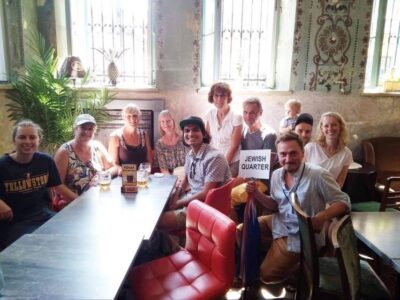

Bike Tour of Old Town, Jewish Quarter and the Ghetto
Read our review →
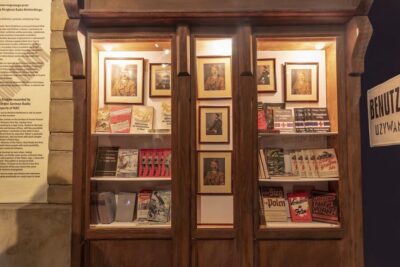
Kazimierz, Schindler’s Factory & Ghetto Guided Tour
Read our review →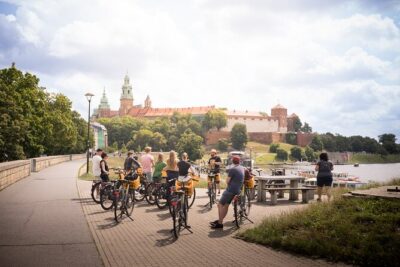
Full Bike Tour – the Old Town, Jewish Qtr & the Ghetto NEW BIKES
Read our review →
Warsaw Ghetto Private Walking Tour with Hotel Pickup
Read our review →
Bike Tour of the Old Town, Kazimierz, and the Ghetto
Read our review →Browse the lists this tour appears in