
REVIEW · JEWISH QUARTER & GHETTO TOURS
Krakow: 2h World War II, visiting the Ghetto walking tour
The Ghetto still speaks. This two-hour walking tour takes you through Krakow’s Podgórze district, where wartime streets, surviving walls, and memorials explain what happened to the city’s Jewish population during World War II. I like that the tour focuses on real places rather than treating history as something locked in a museum.
I also like the human scale of the route. Ghetto Heroes Square, the Under the Eagle Pharmacy, and the story of Oskar Schindler give you several ways into a difficult subject. Guides Irene and Vlad earned especially warm praise for their clear explanations and patient answers. The main drawback is the short running time: two hours can introduce Podgórze well, but it cannot cover every wartime site in Krakow.
- Ghetto Heroes Square: See the famous memorial space and learn how its empty chairs recall the people forced from their homes.
- The Under the Eagle Pharmacy: Hear about the only pharmacy in the former ghetto and its role during the occupation.
- Schindler’s Factory story: Connect the nearby factory with the workers Oskar Schindler helped save.
- Former ghetto walls: View remaining sections and consider how confinement shaped daily life.
- Podgórze beyond the war: Learn how the district developed as a city, then pass Krakow’s Bridge of Love and its moving athlete sculptures.
- Three guide languages: Tours are offered in English, Polish, or Russian, with a live guide included.
In This Review
- Why Podgórze Tells Krakow’s War Story So Well
- Ghetto Heroes Square and the Empty-Chair Memorial
- The Under the Eagle Pharmacy and Its Wartime Role
- Schindler’s Factory and the People Behind the Name
- Ghetto Wall Remains and Buildings Marked by War
- Podgórze as a City, Not Only a Wartime Site
- How the Two-Hour Format Works for You
- The Guides Make a Major Difference
- Is $36 a Fair Price?
- Who Should Book This Krakow Walking Tour?
- FAQ
- How long is the Krakow World War II and Ghetto tour?
- How much does the tour cost?
- Which places are included?
- Is Schindler’s Factory Museum admission included?
- What languages are available?
- Are food and drinks included?
- Can I cancel the booking?
- Can I reserve now and pay later?
- Should You Book It?
Why Podgórze Tells Krakow’s War Story So Well
Krakow’s Old Town gets most of the attention, but Podgórze gives you a more direct encounter with the city’s 20th-century past. This district contains the site of the former Jewish Ghetto, wartime buildings, fragments of the ghetto wall, and places connected with Oskar Schindler.
I find a walking tour useful here because the meaning is spread across ordinary streets. You are not simply looking at one famous building. You are moving from a square to a pharmacy, from a wall to a street where buildings survived gunfire. The guide provides the links between those places.
That context matters. Without explanation, a remaining wall can look like old brickwork. A square filled with empty chairs can look like public art. With a guide, these details become part of a larger account of forced relocation, survival, and loss.
The subject is painful, and the best way to approach this outing is with patience and respect. This is not a light sightseeing stroll, even though it includes some general Podgórze history and a few less somber sights along the way.
Ghetto Heroes Square and the Empty-Chair Memorial
Ghetto Heroes Square is one of the route’s key stops. It is also one of the strongest visual reminders of what happened to Jewish residents during the German occupation.
The square’s chair memorial refers to the furniture and belongings left behind when people were removed from their homes. The chairs give the open space a quiet, unsettling character. They suggest absence without needing a long display or dramatic reconstruction.
I appreciate stops like this because they allow you to pause. A guide can explain the square’s place in the history of the ghetto, while you take in the physical setting. The memorial is not a substitute for fuller museum exhibits, but it gives the history a clear location.
Your guide’s explanation will shape this part of the visit. Irene was praised for handling the subject with warmth and encouraging questions, while Vlad received similar praise for answering detailed questions patiently. That matters here. You may want to ask about the ghetto’s organization, the people who lived there, or what happened to the square after the war.
The stop is also a reminder that this tour is not built around quick photo opportunities. You will see the memorial, but its main value comes from understanding what the space represents.
More Walking Tours in Kraków
- Old Town Krakow & Wawel Castle Walking Tour
★ 5.0 · 1,508 reviews - Creepy Krakow: 2-Hour City Walking Tour
★ 4.7 · 1,131 reviews - Krakow: The Old Town Walking Tour
★ 4.8 · 794 reviews
The Under the Eagle Pharmacy and Its Wartime Role
The Under the Eagle Pharmacy is one of the most distinctive places on the route. It was the only pharmacy in the former ghetto, making it more than an old shopfront or a point on a map.
The tour explains the pharmacy’s story and its connection with people living under occupation. This gives you a look at wartime life through a working place that served the ghetto’s residents. Medicine, information, and human contact could all carry unusual weight in a confined and dangerous setting.
I like this stop because it moves the story away from broad military events. World War II is often taught through dates, armies, and major battles. Here, you get a smaller view: how one location functioned in the daily life of people facing persecution.
The tour does not include food or drinks, and this is not a café stop disguised as history. Plan to eat before or after if you need refreshments. The pharmacy is best approached as a historical site, with attention to its role rather than as a casual stop along a shopping street.
The details available about the interior, admission arrangements, or time spent inside are limited, so you should not assume this walking tour includes a full museum visit. Its clear purpose is to explain the pharmacy and its place in the ghetto story.
Schindler’s Factory and the People Behind the Name
Oskar Schindler is familiar to many people because of the film Schindler’s List. This tour places his factory story within the actual Krakow setting.
You will learn about Schindler’s Factory and see photographs of workers who survived the war with Schindler’s help. That human focus is important. The story is not only about one famous industrialist. It is also about the people whose lives were affected by his decisions and actions.
I find this part most useful for visitors who know the film but want a stronger sense of place. The factory is not treated as a stand-alone movie reference. Instead, the guide connects it with the former ghetto and the wider history of Podgórze.
Be aware of the wording here: the experience describes the story of Schindler’s Factory and photographs of saved workers, but it does not clearly promise entry into the Schindler Factory Museum. If museum admission is your main goal, check the current arrangements with the provider before booking.
This distinction can prevent disappointment. The walking tour gives you a guided introduction to the site and its historical connections. It is not necessarily a replacement for spending several hours inside a major museum.
Ghetto Wall Remains and Buildings Marked by War
The remaining sections of the ghetto wall are another important stop. They show how the former ghetto was physically separated from the rest of the city.
A surviving wall can feel less dramatic than a large memorial, but I often find these fragments more difficult to ignore. They occupy the same urban setting where people once lived, worked, and were confined. The brickwork shows the practical side of persecution: borders, control, and restricted movement.
The guide also points out buildings that survived shootings. These structures help you read Podgórze as a place with visible wartime scars. You may find that the most powerful details are not always the largest ones. A damaged facade or an old wall can prompt questions that a general overview would miss.
The information provided does not identify every building or promise a specific number of wall remnants. You should think of this as a guided look at surviving traces, not a complete inventory of all wartime damage in Krakow.
That is also why staying close to the guide matters. The district contains many layers of history, and the wartime meaning of one building may not be obvious without an explanation.
More Jewish heritage tours in Kraków:
- Krakow: Schindler’s Factory & Ghetto Guided Tour
★ 4.7 · 1,694 reviews - Krakow: Jewish Quarter and Former Ghetto Tour
★ 4.9 · 1,441 reviews - Krakow: Bike Tour of Old Town, Jewish Quarter and the Ghetto
★ 4.9 · 1,155 reviews - Krakow: Kazimierz Jewish Quarter Walking Tour
★ 4.8 · 571 reviews
Podgórze as a City, Not Only a Wartime Site
The tour also covers Podgórze’s main square and explains the district’s history as a city. This broader context makes the outing more satisfying.
If every stop focused only on death and destruction, the route could become emotionally narrow. Learning about Podgórze as an urban community gives you a better sense of the place before and beyond the ghetto period. You see that the district has its own civic identity, not just a connection to one tragic chapter.
I like this balance, though the tour remains firmly centered on World War II. You should not expect a full architectural tour or a detailed survey of every period in Podgórze’s development. The general history serves as framing for the main subject.
The route also includes a look at Krakow’s Bridge of Love and sculptures of athletes swinging in the wind. These sights are not directly tied to the ghetto story. They offer a change of mood and show a more modern, public side of the city.
Some people will welcome that pause. Others may feel it interrupts a serious historical route. I would see it as a small contrast rather than a central attraction. The wartime sites are the reason to book.
How the Two-Hour Format Works for You
Two hours is a practical length for a first visit to the former ghetto area. You can learn the main story without giving up an entire day, which leaves room for the Old Town, Kazimierz, Schindler’s Factory Museum, or other Krakow sights.
The tradeoff is depth. A guide can explain the major locations, but two hours does not allow unlimited time at each stop. If you ask many questions, the guide may need to keep the group moving. That is not a flaw, but it is worth knowing before you arrive.
The activity is described as a walking tour, with a live guide in English, Polish, or Russian. It also refers to passing through Krakow’s Bridge of Love, so the precise movement between stops may include more than simple walking. The available details do not specify the group size, meeting point, route length, or walking pace. Check those details before booking, particularly if you need a precise schedule.
There is no food or drink included. For a two-hour outing, that is easy to manage. Bring water if you prefer, and plan a meal separately rather than expecting refreshments during the tour.
The tour includes a guide, and tips are accepted and appreciated. You can decide what feels appropriate after seeing how much explanation and discussion your guide provides.
The Guides Make a Major Difference
The strongest praise centers on the guides’ personal approach. Irene was described as welcoming, well prepared, and willing to encourage conversation around a difficult subject. Vlad was praised for his strong command of the material and his patience with many questions.
That is exactly what you want on this route. The sites themselves cannot answer basic questions about sequence, motive, or human experience. A guide must explain without turning suffering into a performance.
I would especially value the opportunity to ask questions. You might want to clarify how the ghetto was organized, how the pharmacy served its community, or how Schindler’s factory fits into the wider events in Krakow. The comments about Irene and Vlad suggest that discussion is part of the experience rather than an inconvenience.
The guide language options are English, Polish, and Russian. Be sure to choose the language you need when checking availability. The published rating is 4.2 from seven reviews, with four detailed five-star comments supplied. That is a positive signal, but the sample is small, so I would treat it as useful guidance rather than a guarantee of every tour.
Is $36 a Fair Price?
At $36 per person, this is not the cheapest way to walk through Podgórze. You are paying for a live guide, historical interpretation, and a focused route through several significant places.
I think the price can make sense if you want context and prefer not to assemble the route yourself. The value is strongest for a first visit, for anyone unfamiliar with Krakow’s wartime history, or for people who want to ask questions as they go.
The value is weaker if you already know Podgórze well or plan to visit the Schindler Factory Museum with a detailed audio guide. In that case, some information may overlap, although the street-level route and guide conversation can still add something different.
There is no admission fee listed for a museum visit, and the tour does not include food or drinks. I would book it for the interpretation, not for included extras. The tour’s worth depends heavily on the quality of the guide, and the strong comments about Irene and Vlad are encouraging.
Flexible booking also helps. You can reserve now and pay later, and cancellation is free up to 24 hours before the start for a full refund. Check availability for the actual starting time because the duration is fixed at two hours.
Who Should Book This Krakow Walking Tour?
I would recommend this experience to you if you want a focused introduction to Podgórze and the former Jewish Ghetto. It suits adults and older teenagers who can give the subject the attention it deserves.
It is particularly useful if you have seen Schindler’s List, plan to visit Schindler’s Factory, or want to understand why Ghetto Heroes Square and the Under the Eagle Pharmacy matter. The guide helps connect individual places into one clear account.
You may want a longer or more specialized experience if your main interest is museum interiors, Jewish life across many centuries, or a complete study of Krakow during the occupation. This tour gives you a strong two-hour framework, not the final word on the subject.
I would also avoid booking it as a casual filler activity. The route deals with persecution, confinement, and death. Come ready to listen. The lighter views of Podgórze and the modern sculptures provide contrast, but they do not change the tour’s serious purpose.
FAQ
How long is the Krakow World War II and Ghetto tour?
The tour lasts two hours.
How much does the tour cost?
The listed price is $36 per person.
Which places are included?
The route includes Ghetto Heroes Square, the Under the Eagle Pharmacy, remnants of the ghetto walls, buildings that survived shootings, Podgórze’s main square, and the story of Schindler’s Factory.
Is Schindler’s Factory Museum admission included?
The information provided includes the story of Schindler’s Factory and photographs of workers saved by Schindler. It does not state that admission to the museum is included.
What languages are available?
The live tour guide is available in English, Polish, and Russian.
Are food and drinks included?
No. Food and drinks are not included in the tour price.
Can I cancel the booking?
Yes. You can cancel up to 24 hours in advance for a full refund.
Can I reserve now and pay later?
Yes. The booking option allows you to reserve your spot and pay later.
Should You Book It?
Book this tour if you want a moving, clearly explained introduction to Krakow’s former Jewish Ghetto in just two hours. Ghetto Heroes Square, the Under the Eagle Pharmacy, and the surviving wall sections give the route real substance, while guides such as Irene and Vlad add the patient explanation this subject needs.
Skip it if you want a full museum visit, a longer study of Krakow’s Jewish heritage, or a relaxed sightseeing walk with little serious history. For everyone else, $36 is a reasonable price for a guided first look at Podgórze, provided you understand that the tour offers historical orientation rather than an all-day examination of Krakow’s wartime past.
More 2-Hour Experiences
- Krakow: Old Town Segway Tour 2 hours
★ 4.8 · 83 reviews - Krakow: 2h Kazimierz (Jewish Quarter) Walking Tour
★ 4.5 · 75 reviews - Krakow: 2h Kazimierz (Jewish Quarter) Segway Tour
★ 4.8 · 35 reviews - Great fun in GOjump MEGAPARK Kraków-Sikorki – 2 hours ticket
★ 5.0 · 32 reviews
Just added around Kraków
- Rynek Underground Museum & Wawel Castle, Cathedral – Cracow★ 5.0 · 3 reviews
- Schindler’s Factory, Ghetto and Plaszow Camp Guided Tour★ 4.7 · 3 reviews
- Nowa Huta – a guided tour of a utopian socialist city★ 5.0 · 3 reviews
- Krakow: Kazimierz by Golf Cart and Schindler’s Factory Tour★ 4.8 · 3 reviews
- Private Krakow City Tour by Car and Walk with private tour guide★ 5.0 · 3 reviews
- Krakow: Jewish Traces Private Electric Car Tour★ 4.1 · 3 reviews
- Discover the Jewish Quarter with a Bike Tour★ 5.0 · 3 reviews
- Krakow: Indoor Go-Karting (24-Minute Races)★ 4.8 · 3 reviews
Jewish Quarter & Ghetto Tours, compared.

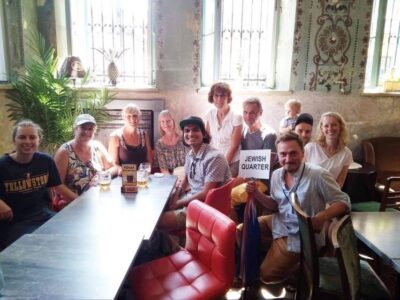

Bike Tour of Old Town, Jewish Quarter and the Ghetto
Read our review →
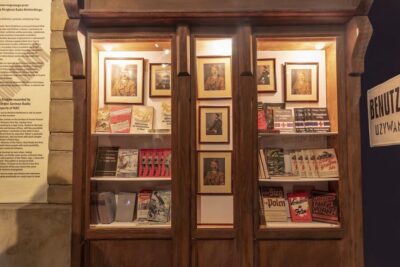
Kazimierz, Schindler’s Factory & Ghetto Guided Tour
Read our review →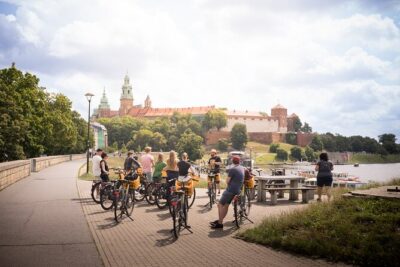
Full Bike Tour – the Old Town, Jewish Qtr & the Ghetto NEW BIKES
Read our review →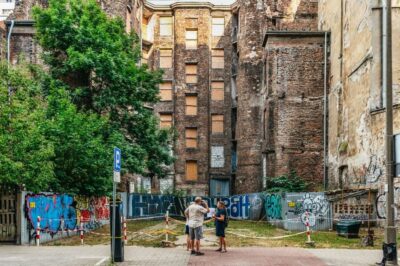
Warsaw Ghetto Private Walking Tour with Hotel Pickup
Read our review →
Bike Tour of the Old Town, Kazimierz, and the Ghetto
Read our review →Browse the lists this tour appears in