
REVIEW · JEWISH QUARTER & GHETTO TOURS
Krakow: Jewish Ghetto Walking Tour
Some streets carry more than bricks and stone. This one-hour walk through Krakow’s former Jewish Ghetto in Podgórze brings the wartime district into focus through the remaining ghetto wall, Ghetto Heroes Square, and the moving Chair Memorial. I like the way the tour uses real streets and surviving buildings rather than relying only on museum displays, and I like the guides’ personal, careful storytelling, especially from guides such as Olga, Joanna, Ewa, Helen, and Phil. The main drawback is time: one hour feels short for a subject this large, and you will only see a small part of what once existed.
This is a serious tour, not a cheerful city stroll. You will hear about forced relocation, daily hunger and fear, deportations, resistance, and the people who offered help under Nazi occupation. The route is mostly flat and not especially strenuous, but you should arrive ready for an emotional experience and dress for the weather, since the walk goes ahead in rain, cold, and sunshine.
In This Review
- Key points at a glance
- Why Podgórze matters to your Krakow visit
- Starting near Schindler’s Factory
- Reading the remaining ghetto wall
- Ghetto Heroes Square and the empty chairs
- Under the Eagle Pharmacy and stories of courage
- Original streets, wartime buildings, and what has changed
- The guides make the difference
- Is one hour enough?
- The $11 price and overall value
- Who should book this walk?
- Final verdict: a short walk with real weight
- FAQ
- Where does the Krakow Jewish Ghetto walking tour take place?
- How long does the walking tour last?
- How much does the tour cost?
- What are the main sites visited?
- Is Under the Eagle Pharmacy always open during the tour?
- What languages are available?
- Is a private group option available?
- What should I bring or wear?
- What happens if I arrive late?
Key points at a glance
- The surviving ghetto wall gives you a direct link to the enclosure that held more than 15,000 people in a few city blocks.
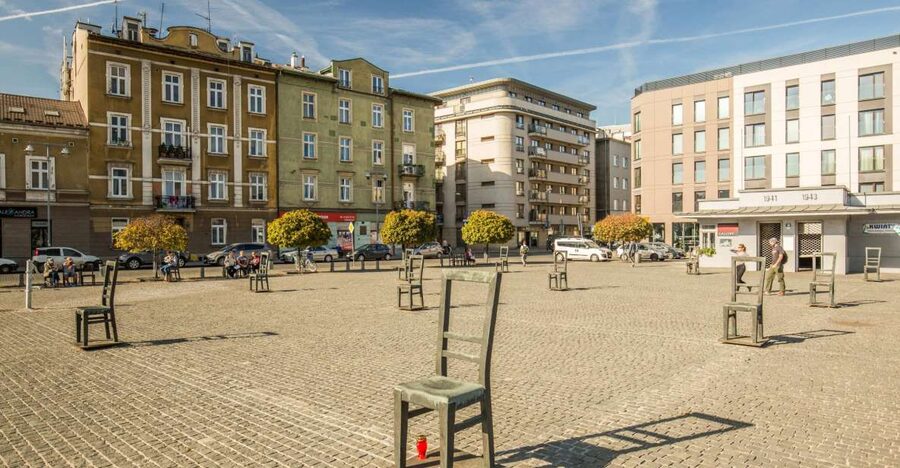
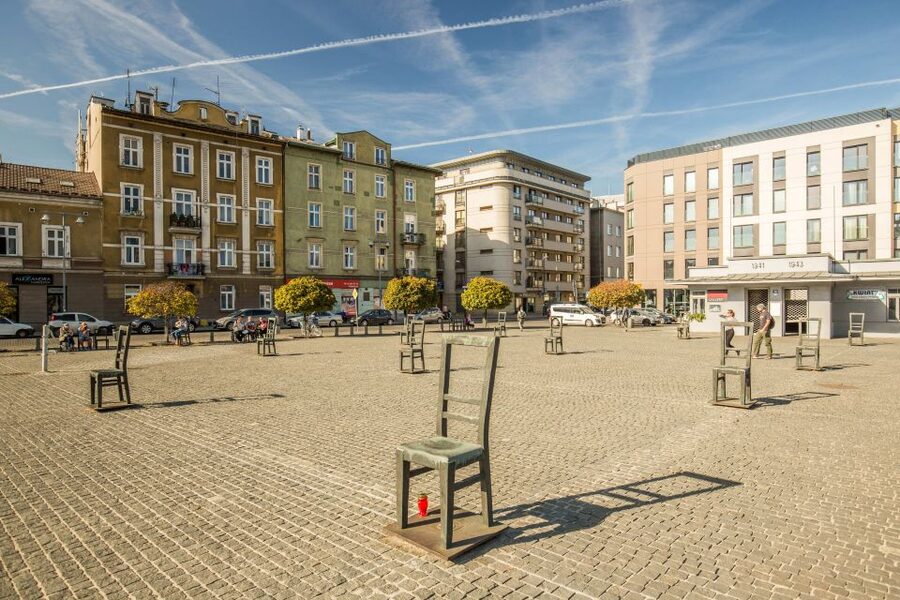
- Ghetto Heroes Square is marked by dozens of empty metal chairs, a powerful memorial to lives lost during the Holocaust.
- Under the Eagle Pharmacy recalls Tadeusz Pankiewicz and his staff, who supplied medicine and shelter to ghetto residents.
- The one-hour route is compact and flat, making it easy to fit before or after a visit to Schindler’s Factory.
- Guides are the main strength, with praise for clear storytelling, compassion, photographs, and answers to questions.
- The tour costs about $11 per person, a strong value if you want context that is easy to miss when walking alone.
Why Podgórze matters to your Krakow visit
Krakow’s former Jewish Ghetto sits in Podgórze, across the river from the city center. The area does not look like a preserved historical set. Modern life carries on around it. People walk to work, cars pass, and ordinary apartment buildings line streets that once were enclosed by Nazi ghetto walls.
That contrast is part of the lesson. You are not entering a sealed memorial site where the past is neatly separated from the present. You are walking through a living neighborhood and trying to understand how forced confinement was imposed on an existing urban area.
During World War II, more than 15,000 people were crowded into only a few city blocks. The guide explains how the ghetto operated, how Jewish residents were forced into it, and what daily life meant under Nazi rule. The value of the tour comes from this detail. A large Holocaust site can show the scale of murder, but this walk focuses on what happened before that final stage: restrictions, fear, shortages, separation, deportation, and the struggle to survive.
I would not choose this as your only Holocaust-related experience in Krakow if you have time for other sites. I would choose it because it adds a local, street-level view to the city’s wartime story.
More Walking Tours in Kraków
- Old Town Krakow & Wawel Castle Walking Tour
★ 5.0 · 1,508 reviews - Creepy Krakow: 2-Hour City Walking Tour
★ 4.7 · 1,131 reviews - Krakow: The Old Town Walking Tour
★ 4.8 · 794 reviews
Starting near Schindler’s Factory
Several departures meet near Schindler’s Factory, and this is a useful place to begin. The factory is closely linked with the wartime history of Krakow, so starting nearby helps place the ghetto walk within a wider visit to Podgórze.
The exact meeting point can vary with the option you book. Look for the tour signs and arrive at least 10 minutes early. This matters. Once the group has left, late arrivals cannot join, and the ticket is not refunded.
The meeting arrangements appear to be well organized. One group was directed to the correct sign showing the company, language, and booking time. On a very cold day, the group was invited to wait indoors, which is a small but welcome touch when temperatures drop well below freezing.
Some departures provide headphones or an ear microphone. That can make a real difference on busy streets, especially if your guide speaks while the group is spread along a pavement. Still, one person found it difficult to follow every word when the guide spoke quickly and had no amplification. If hearing every detail matters to you, stay close to the guide and ask for a slower pace when needed.
Reading the remaining ghetto wall
The surviving fragment of the original ghetto wall is the first major historical stop. It is not a vast ruin. That is precisely why you need a guide.
The wall helps you grasp the physical reality of confinement. More than 15,000 people were held within a cramped area bounded by barriers and controlled access. Your guide connects the fragment in front of you with the much larger system it once formed.
You will hear about everyday hardships and acts of solidarity within the ghetto. The discussion is not limited to dates and official orders. It explains how people found food, medicine, information, and human support under conditions designed to strip away dignity and choice.
This stop also shows why walking alone can leave you with only part of the story. The visible remains are limited, and much of the original built environment has disappeared or changed. Without explanation, you might pass the wall, take a photograph, and continue down the street. With a guide, the fragment becomes evidence of how the district was controlled.
Several guides have used old photographs to show how the area looked during the war. That is one of the most useful touches on the route. You can compare the present street with an earlier image instead of trying to picture the ghetto from words alone.
Ghetto Heroes Square and the empty chairs
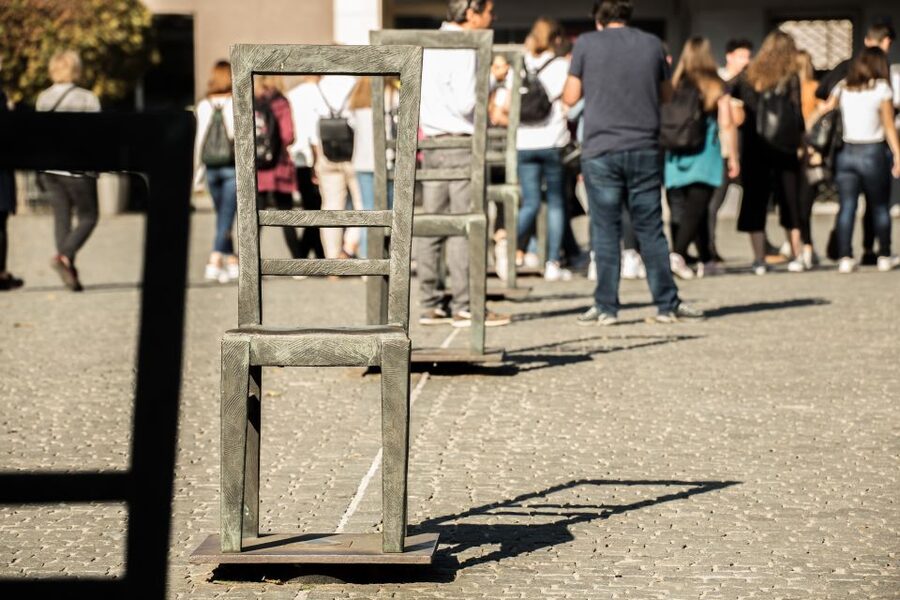
The tour continues to Ghetto Heroes Square, the emotional center of the walk. During the war, this was connected with gatherings and deportations to concentration camps. Today, the square is marked by rows of empty metal chairs.
The chairs are simple and difficult to ignore. They suggest absence, waiting, removal, and the homes left behind. The memorial avoids a long explanation in stone. Its meaning grows as your guide explains what happened here and how people were forced to leave.
Give yourself a moment at this stop. The guide will continue the historical account, but you do not need to rush from one fact to the next. The square is one of the places where the physical setting and the story work together most effectively.
This is also where the tour’s emotional tone becomes especially clear. Guides described as compassionate and sensitive have been praised for telling individual stories without turning suffering into spectacle. Ewa, for example, was valued for giving a human voice to people who lived in the ghetto, while Helen was praised for handling painful events with care.
You should expect difficult material. The tour discusses deportations and the destruction of the community. It is not designed to soften the facts, but good guides keep the presentation respectful and focused on people rather than horror for its own sake.
More Jewish heritage tours in Kraków:
- Krakow: Schindler’s Factory & Ghetto Guided Tour
★ 4.7 · 1,694 reviews - Krakow: Jewish Quarter and Former Ghetto Tour
★ 4.9 · 1,441 reviews - Krakow: Bike Tour of Old Town, Jewish Quarter and the Ghetto
★ 4.9 · 1,155 reviews - Krakow: Kazimierz Jewish Quarter Walking Tour
★ 4.8 · 571 reviews
Under the Eagle Pharmacy and stories of courage
Across from the square is the historic Under the Eagle Pharmacy. The pharmacy is associated with Tadeusz Pankiewicz and his staff, who risked their own safety to help Jewish residents. They provided medicine and shelter, and the guide explains why those actions mattered under occupation.
This stop adds an important layer to the walk. The story is not only about Nazi persecution and the suffering of the ghetto. It also includes choices made by individuals who offered practical help when doing so could bring serious danger.
The pharmacy is also useful because it gives the tour a human scale. A wall tells you about confinement. The square shows the loss of a community. The pharmacy lets you consider what courage looked like in daily practice: sharing medicine, offering refuge, and maintaining contact with people whom the authorities sought to isolate.
There is one practical point to keep in mind. The pharmacy may be closed on the day of your tour, so you cannot assume that the interior museum visit is included or available every time. The exterior and its history remain part of the route, but if seeing the inside is important to you, check the current opening arrangements separately.
Original streets, wartime buildings, and what has changed
The walk takes you through authentic streets and past buildings and street layouts connected with the former ghetto. Do not expect a large collection of untouched wartime structures. One of the fair criticisms of the area is that not much of the old built fabric remains.
That limitation does not make the walk pointless. It changes what you are looking at. The experience depends on the guide linking present-day streets with the wartime map and showing you where boundaries, entrances, and important sites once were.
You may notice how ordinary the neighborhood feels. That can be unsettling. The ghetto is not isolated from modern Krakow, and the tour does not pretend that the past is always visibly marked. Instead, the guide helps you notice the surviving clues and understand what has vanished.
The route is described as a leisurely walk, with a steady pace that suits most people. It is mostly flat, and one participant found the walking distance manageable. Even so, the tour involves continuous walking and several stops on outdoor streets. Comfortable footwear is sensible, and winter visitors should prepare properly for cold weather.
The guides make the difference
The strongest part of this experience is the guiding. The best guides do more than repeat a prepared timeline. They explain the setting, answer questions, show photographs, and help you picture the district as it was.
Olga was praised for her friendly manner and ability to answer questions. Joanna was noted for setting a steady pace and helping slower walkers keep up. Phil used photographs and added local suggestions after the tour, including an old paint factory bar that some people would have missed without his recommendation.
Other guides received praise for different strengths. Ewa was described as sensitive and powerful in her storytelling. Helen was valued for clear explanations and compassion. Aga connected the history of the ghetto with the broader consequences of Nazi occupation and the need to learn from the past. These examples show that the guide can shape the experience as much as the route itself.
Language choice matters. Group departures operate in one language only, and English, French, German, Italian, Spanish, Russian, Portuguese, Swedish, and Slovak are available. Select carefully when booking rather than assuming a multilingual group will be split during the walk.
A guide may also presume that everyone has just visited Schindler’s Factory. That can create a small gap in context if you have not been inside. It is easy to solve: tell the guide what you have already seen, and ask for any missing background.
Is one hour enough?
One hour works well if you want a focused introduction. The route covers several major points without taking half a day from your Krakow schedule. It is especially easy to pair with Schindler’s Factory, either before or after your museum visit.
But one hour cannot cover the full history of Krakow’s Jewish population, the occupation, the ghetto, and the later deportations in detail. One guide was so enthusiastic that the subject could have filled several more hours. That is a compliment to the guide, but it also identifies the tour’s main limit.
You should treat this as a concise orientation, not a complete study of the Krakow Ghetto. Take notes on the sites that interest you, and use the walk to decide where you want to spend more time afterward.
The short format is also helpful after an Auschwitz visit. If you feel that you have already had as much heavy history as you can manage, the one-hour length may be more approachable than another long museum tour. It still carries emotional weight, but the pace keeps the experience contained.
The $11 price and overall value
At about $11 per person, this is good value if the guide is your main reason for booking. You can walk through Podgórze for free, but you would likely miss the context behind the wall fragment, the square, and the pharmacy.
The price pays for a licensed guide who turns scattered locations into a connected story. It also gives you a chance to ask questions and see photographs that may not be obvious from the street.
Private groups are available if you want a more personal format, although the supplied information does not specify the private-group price. For most visitors, the standard group option offers the better bargain, especially when the public rating is 4.6 from 349 ratings.
Do not judge value by the number of monuments alone. There are not many grand ruins here, and some original buildings are gone. Judge it by whether you want to understand what happened on these streets. For that purpose, $11 is modest.
Free cancellation up to 24 hours before the start and a reserve-now, pay-later option also make planning easier. These terms are useful if your Krakow schedule includes weather-sensitive activities, but remember that arriving late is treated differently: after departure, you cannot join and cannot claim a refund.
Who should book this walk?
I would recommend it to you if:
- You want to understand daily life in the Krakow Ghetto, not only the events at Auschwitz.
- You prefer a short guided walk to a long indoor museum visit.
- You are visiting Schindler’s Factory and want a second perspective on Podgórze.
- You value personal stories, old photographs, and local context.
- You are comfortable with a serious and sometimes upsetting subject.
- You want a low-cost introduction before choosing further historical sites.
I would think twice if you want a large number of preserved buildings or a detailed, several-hour academic tour. The physical remains are limited, and the one-hour schedule leaves little space for long questions or extended visits inside the pharmacy.
This is also not a casual sightseeing stop to squeeze between lunch and shopping without preparation. The topic deserves attention. Wear comfortable shoes, check the forecast, arrive early, and allow yourself a little quiet time afterward.
Final verdict: a short walk with real weight
I like this Krakow Jewish Ghetto walking tour because it makes history local. The wall, the square, the chairs, and the pharmacy are not presented as disconnected attractions. Together, they show how a neighborhood was controlled, how people tried to survive, and how individuals offered help in a time of organized cruelty.
The tour succeeds most when the guide slows down, uses photographs, and tells individual stories with care. It is less satisfying if you expect a fully preserved historic district or more than an hour of explanation.
Book it if you want clear context at a very fair price, especially alongside Schindler’s Factory. Skip it only if you already have extensive knowledge of the ghetto and need a longer, more detailed historical program. For most first-time visitors to Krakow, this compact walk is a meaningful way to pay attention to a part of the city that is easy to overlook.
FAQ
Where does the Krakow Jewish Ghetto walking tour take place?
The tour takes place in Podgórze, the district that became the site of the Krakow Ghetto during World War II.
How long does the walking tour last?
The tour lasts one hour.
How much does the tour cost?
The listed price is about $11 per person.
What are the main sites visited?
The route includes the remains of the original ghetto wall, Ghetto Heroes Square, the Chair Memorial, Under the Eagle Pharmacy, and authentic wartime buildings and street layouts.
Is Under the Eagle Pharmacy always open during the tour?
No. The pharmacy may be closed on the day of your visit, so access to the interior is not guaranteed.
What languages are available?
Guided tours are available in French, German, Italian, English, Spanish, Russian, Portuguese, Swedish, and Slovak. Group tours operate in one language only.
Is a private group option available?
Yes. A private group option is available when booking.
What should I bring or wear?
Wear suitable clothing and comfortable footwear. The tour operates in all weather, including rain and cold, so check the forecast and prepare accordingly.
What happens if I arrive late?
You should arrive 10 minutes before the scheduled start. Once the group has departed, latecomers cannot join and tickets cannot be refunded.
Just added around Kraków
- Rynek Underground Museum & Wawel Castle, Cathedral – Cracow★ 5.0 · 3 reviews
- Schindler’s Factory, Ghetto and Plaszow Camp Guided Tour★ 4.7 · 3 reviews
- Nowa Huta – a guided tour of a utopian socialist city★ 5.0 · 3 reviews
- Krakow: Kazimierz by Golf Cart and Schindler’s Factory Tour★ 4.8 · 3 reviews
- Private Krakow City Tour by Car and Walk with private tour guide★ 5.0 · 3 reviews
- Krakow: Jewish Traces Private Electric Car Tour★ 4.1 · 3 reviews
- Discover the Jewish Quarter with a Bike Tour★ 5.0 · 3 reviews
- Krakow: Indoor Go-Karting (24-Minute Races)★ 4.8 · 3 reviews
Jewish Quarter & Ghetto Tours, compared.

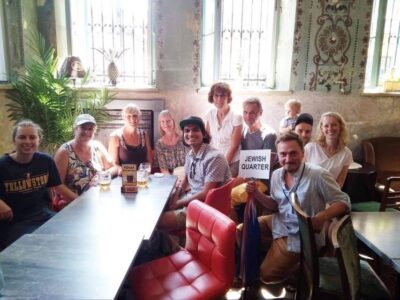

Bike Tour of Old Town, Jewish Quarter and the Ghetto
Read our review →
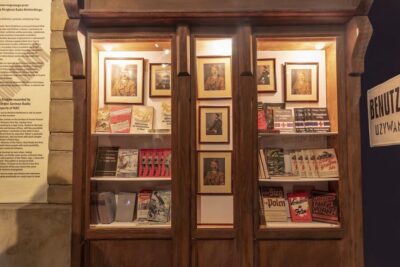
Kazimierz, Schindler’s Factory & Ghetto Guided Tour
Read our review →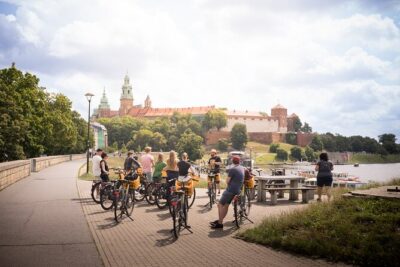
Full Bike Tour – the Old Town, Jewish Qtr & the Ghetto NEW BIKES
Read our review →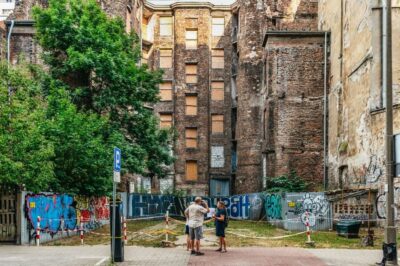
Warsaw Ghetto Private Walking Tour with Hotel Pickup
Read our review →
Bike Tour of the Old Town, Kazimierz, and the Ghetto
Read our review →Browse the lists this tour appears in