
REVIEW · JEWISH QUARTER & GHETTO TOURS
Krakow Jewish Quarter and Ghetto Tour by Electric Golf Cart
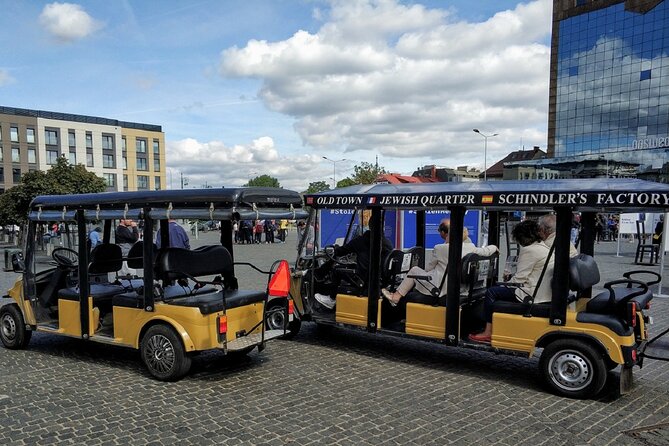
History comes alive on Krakow’s streets. This 90-minute electric golf cart tour links Kazimierz, the city’s former Jewish district, with the Podgórze area and the remains of the wartime ghetto. I like the comfortable ride, which covers more ground than a short walk, and the mix of live commentary with an audio guide. I also like the way the route connects ordinary streets, synagogues, churches, ghetto walls, and places tied to deportation.
The main point to consider is pace. You see more than 20 important sites, but you cannot study each one at leisure. Some stops allow a few minutes to enter buildings, yet the tour is mainly an overview from the cart. If your priority is time inside Jewish buildings, a walking tour may suit you better.
In This Review
- Key points to know before booking
- Why an electric cart works well in Krakow
- Starting at Mikołaja Zyblikiewicza 2
- Kazimierz, Krakow’s former Jewish town
- Szeroka Street and its four synagogues
- St Joseph’s Church and Podgórze Market Square
- The surviving ghetto wall
- Plac Zgody and the deportation point
- The Polish pharmacy and its wartime role
- The tour’s balance of history and daily life
- Is $34.75 a fair price?
- Who will get the most from this tour?
- Practical ways to make the most of the ride
- Should you book the Krakow Jewish Quarter and Ghetto cart tour?
- FAQ
- How long is the Krakow Jewish Quarter and Ghetto Tour?
- What is the price of the tour?
- Is the tour offered in English?
- What transport is used?
- Does the tour include hotel pickup and drop-off?
- Where does the tour start?
- Where does the tour end?
- How many people can join the tour?
- Can I cancel for a full refund?
Key points to know before booking
- Kazimierz and Podgórze in one outing: The route links the former Jewish quarter with the wartime ghetto across the river.
- Szeroka Street is the historic center: Four synagogues once stood along this important street, an unusual concentration in Europe.
- More than 20 landmarks in about 90 minutes: This is useful for first-time visitors or anyone working with a short schedule.
- Live guide plus audio guide: English commentary comes from the driver, with recorded information adding detail along the way.
- A serious, emotional subject: The ghetto wall, Plac Zgody, and the wartime pharmacy require a respectful frame of mind.
- Good value for a quick orientation: At $34.75 per person, the tour is not the cheapest way to see Kazimierz, but it saves walking time and covers two districts.
Why an electric cart works well in Krakow
Kazimierz is compact enough to walk, but this route is not limited to Kazimierz. It also reaches Podgórze, where the Krakow Ghetto was created in 1941. That wider route is the main reason to choose a cart rather than simply wander around Szeroka Street.
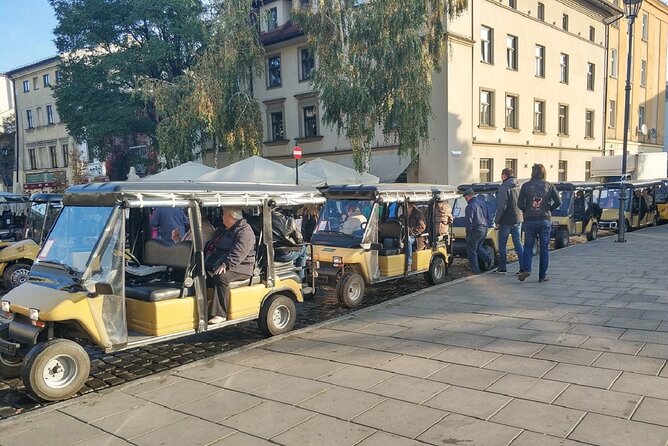
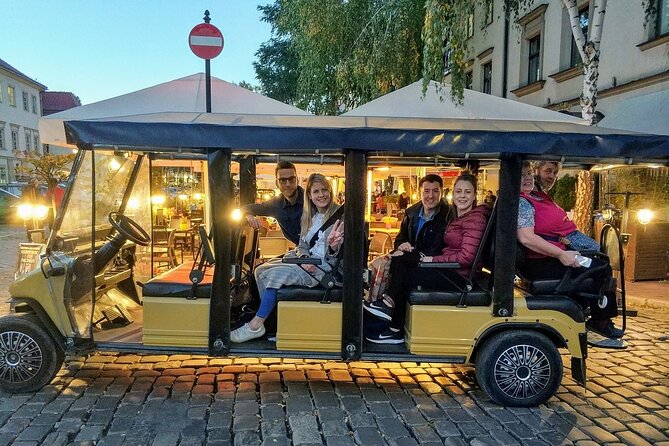
The cart also helps in hot or cold weather. One passenger appreciated being able to relax while someone else drove during a hot day. Another found the cart warm and welcome in winter. That practical comfort matters when you are trying to listen, look around, and absorb difficult material at the same time.
The ride is not a private sightseeing vehicle. The maximum group size is 50, although the actual cart arrangement may vary. One complaint concerned being assigned the rear seats, including backward-facing places. If you care about your view, arrive early and ask how seating works, but do not assume you can choose the front.
The tour uses headsets rather than a loudspeaker. This keeps the commentary clear, especially in traffic, but it can make conversation within your own group less natural. You will need to pay attention to the guide or audio track instead of chatting as you pass through the city.
More Golf Cart Tours in Kraków
- Krakow: City Sightseeing Tour by Electric Golf Cart
★ 4.5 · 3,264 reviews - Krakow: City Sightseeing Tour Eco Electric Buggy Golf Cart
★ 4.7 · 3,143 reviews - Krakow: Extended City Sightseeing Tour – Eco Buggy Golf Cart
★ 4.7 · 794 reviews
Starting at Mikołaja Zyblikiewicza 2
The listed meeting point is Mikołaja Zyblikiewicza 2, in central Krakow. The tour ends at Mikołaja Kopernika 3, so you should check the finish point before making dinner plans or arranging another activity.
There is no hotel pickup or drop-off. The meeting point is near public transportation, and confirmation is sent at booking. One useful detail from the experience is that a last-minute time mistake was corrected easily through customer service, but I would still arrive with the booking details ready.
The English-speaking driver is not simply a chauffeur. Guides such as Matt, Natalie, Olivia, Martina, Michael, and Phillips were praised for clear explanations, friendly manners, and a respectful approach to the subject. The strongest part of the tour depends on who leads it, so the quality may feel slightly different from one departure to another.
Kazimierz, Krakow’s former Jewish town
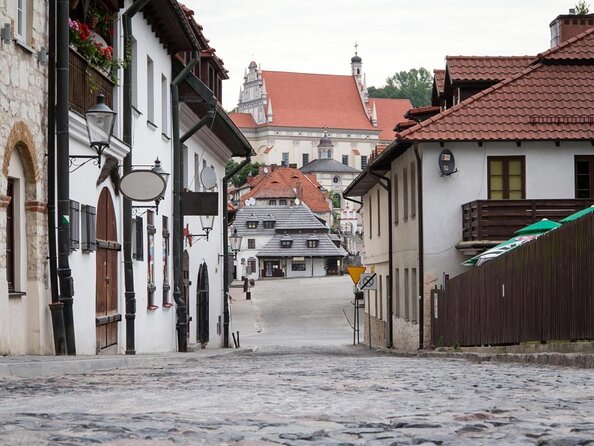
The tour begins with Kazimierz, once an independent town south of Wawel Castle. For centuries, it was the center of Jewish life in Krakow. Today, it is one of the city’s most visited areas, with restaurants, cafés, religious buildings, historic streets, and reminders of a community that was almost destroyed during the Second World War.
From the cart, you get a broad sense of how the district fits together. You see more than one isolated monument. You pass through an area where religious life, family life, trade, and daily routines once shared the same streets.
That context is important. A quick photograph of a synagogue tells you little by itself. The guide’s explanation helps connect the buildings to the people who used them, while the audio guide adds background without requiring the driver to speak constantly.
Still, you should set your expectations correctly. The cart cannot give every street or building the attention it deserves. I would treat this part as a map in your head, then return on foot to the places that catch your interest.
Szeroka Street and its four synagogues
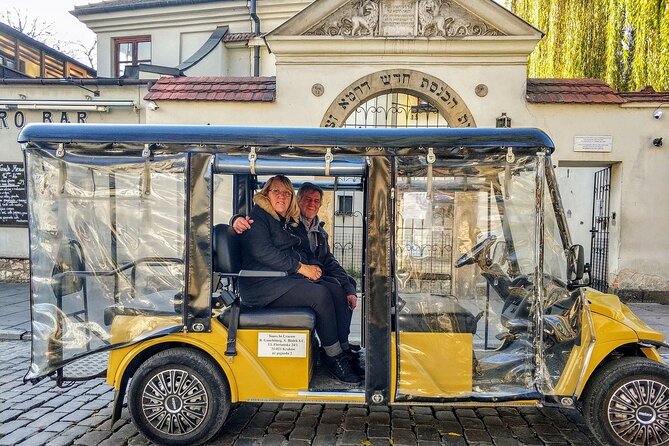
Szeroka Street is the heart of Jewish Kazimierz. The fact that four synagogues once stood here shows how central the street was to Jewish religious and community life. It is also associated with the Jewish Culture Festival, including its final concert.
The route includes an old synagogue preserved in notably good condition. You may have a short chance to enter a building during the tour, depending on the guide and the timing. Several experiences included brief stops of five to ten minutes, giving people time to step inside churches or take photographs.
This is also where the tour’s main limitation becomes clear. Some people expected more time in Jewish interiors but found that the available visits leaned toward Christian churches and basilicas. Those buildings are valuable parts of Krakow’s story, but they do not fully answer a visitor’s questions about Jewish worship and community life.
If synagogues are your main goal, plan a separate visit after the cart ride. The tour gives you the setting and the historical links. It is less reliable as a detailed synagogue interior tour.
More Jewish heritage tours in Kraków:
- Krakow: Schindler’s Factory & Ghetto Guided Tour
★ 4.7 · 1,694 reviews - Krakow: Jewish Quarter and Former Ghetto Tour
★ 4.9 · 1,441 reviews - Krakow: Bike Tour of Old Town, Jewish Quarter and the Ghetto
★ 4.9 · 1,155 reviews - Krakow: Kazimierz Jewish Quarter Walking Tour
★ 4.8 · 571 reviews
St Joseph’s Church and Podgórze Market Square
The route then reaches Podgórze, a district that was once a separate town and was incorporated into Krakow only in the 20th century. St Joseph’s Church dominates Podgórze Market Square and is one of the area’s most recognisable religious landmarks.
This stop adds an important layer to the route. The tour is not only about Jewish buildings. It shows the Christian churches, public spaces, and ordinary urban setting around the former ghetto. That contrast can help you understand how wartime events took place within a living city, not on a distant battlefield.
You may be able to enter the church for a short look. Do not count on a long visit or a full architectural explanation. The cart keeps moving, and the tour has several major locations still ahead.
The surviving ghetto wall
One of the more affecting stops is a small fragment of the original wall around the former Krakow Ghetto. A plaque records the fate of the people who were confined there.
The fragment is not large, and you should not expect a complete section of the boundary. Its power comes from its direct link to the ghetto and the people forced to live behind it. The guide’s explanation gives the physical remains a human meaning that a passing glance would miss.
This stop also shows why a cart tour can help. The route places the wall in relation to other parts of Podgórze, instead of treating it as a separate memorial with no wider setting. You begin to see how streets, squares, homes, and public buildings formed the area in which the ghetto operated.
The subject is painful, and the tone should be respectful. Several guides were praised for handling the material with care and for explaining the events in a way that felt informative rather than sensational.
Plac Zgody and the deportation point
Former Plac Zgody, now associated with the ghetto’s deportation point, is one of the most difficult places on the route. Under Nazi occupation, it was designated as an Umschlagplatz, where Jewish people were forced to gather before deportation.
The square brings the scale of the tragedy into an everyday urban setting. You are not only hearing dates and names. You are looking at a real public space where people were assembled, separated from their homes, and sent away.
This is a place where the audio guide can be useful. Recorded material allows the story to continue clearly even when the cart is stopped briefly or the street is noisy. The live guide can then add local detail or answer simple questions.
I would not schedule a lighthearted activity immediately afterward if you know difficult history affects you strongly. Several people found this section profoundly emotional. That is not a flaw in the tour, but it is an important part of deciding when to book it.
The Polish pharmacy and its wartime role
The former Polish pharmacy offers a small but meaningful change in the story. During the occupation, it provided shelter and acted as a link between people inside and outside the ghetto. Messages and packages passed through it, and it could offer some protection during deportations.
This stop matters because it focuses on individual action. The ghetto was a system of persecution, but people still made choices within it. The pharmacy represents one of the few points of help in a place defined by fear and forced separation.
You should check how much time your departure allows for entering sites. The supplied tour details confirm the pharmacy as a stop, but not that every group receives a full interior visit. The most dependable part is the explanation and the exterior setting.
The tour’s balance of history and daily life
The best guides do not present Kazimierz only as a memorial district. They explain past and present residents, then show how the area has changed. The route moves between synagogues, churches, market squares, walls, and streets where ordinary life continues.
That balance helps prevent the tour from becoming a string of tragic locations with no connection between them. You see a district shaped by religious practice, local identity, war, displacement, and later renewal.
At the same time, 90 minutes is a short window for such a large subject. You will receive an overview, not a full study of Jewish Krakow or the Holocaust. I would use the tour to decide where you want to spend more time later.
Is $34.75 a fair price?
At $34.75 per person, this experience sits above the cost of simply walking through Kazimierz, but it offers more than transportation. You receive an English-speaking driver, an audio guide, and a route covering two districts with more than 20 important sites.
The value is strongest when you have limited time, limited energy, or poor weather. One person used the cart after already exploring parts of Kazimierz on foot and still found that it revealed places missed during the earlier walk. Another described it as a practical way to get a quick sense of the city before returning to selected sites independently.
The value is weaker if you prefer to linger. You may feel the price is high for an hour and a half if you want long stops, detailed building visits, or freedom to follow your own interests. A walking tour can offer a slower rhythm, and you can choose exactly how long to stay at a synagogue, cemetery, church, or square.
The tour is often booked around 17 days ahead on average. That suggests you should reserve ahead during busy periods, though a short-notice booking may sometimes be possible. Free cancellation applies if you cancel at least 24 hours before the start time. Changes or cancellations inside that window are not accepted for a refund.
Who will get the most from this tour?
I would recommend it to first-time visitors who want a clear orientation before exploring alone. It also suits people who want to see Kazimierz and Podgórze in one compact outing, especially if walking long distances is tiring.
It is a good fit for families who need a seated ride, although the stroller and seating issue reported during one rainy departure shows that the loading process may not always feel smooth. Ask the operator about your specific needs before booking rather than assuming the cart will handle every arrangement easily.
History-focused visitors can also benefit, particularly if they want an introduction to the former ghetto before visiting museums or memorial sites. The emotional content is serious, and the strongest guides, including Olivia, Martina, Michael, and Natalia, were praised for combining clear facts with a respectful tone.
I would hesitate to recommend it as your only Kazimierz experience. You will see a lot, but you will not have much time to read plaques, examine interiors, or sit quietly at significant places.
Practical ways to make the most of the ride
Arrive early at Mikołaja Zyblikiewicza 2 and confirm your name and departure time. This may help avoid confusion at the loading area and gives you a better chance to ask about seating.
Bring your own earphones if the operator permits them, or be prepared to use the supplied audio equipment. Since the tour uses headsets, staying alert to both the recorded material and the driver’s comments will give you the fullest explanation.
Keep your camera ready, but do not let photography take over at the ghetto sites. The most valuable part of the route is the connection between the physical remains and the stories attached to them.
After the tour, consider returning on foot to Szeroka Street or another place that interested you. The tour works particularly well as a first pass. It shows you where to go next instead of asking you to make sense of the district without a map.
Should you book the Krakow Jewish Quarter and Ghetto cart tour?
Book it if you want a fast, comfortable introduction to Kazimierz and the former ghetto, especially in hot, cold, or wet weather. The English-speaking guides are often the strongest feature, and the route gives you much more range than a short walk around Szeroka Street.
Skip it if you want long, quiet visits inside synagogues and Jewish buildings. In that case, walk Kazimierz at your own pace and choose a more focused museum or synagogue visit.
For most first-time visitors with only a few days in Krakow, I think the tour earns its place. It is not the final word on the district. It is a useful, moving orientation that helps you understand what you are seeing and where to return.
FAQ
How long is the Krakow Jewish Quarter and Ghetto Tour?
The tour lasts approximately 1 hour and 30 minutes.
What is the price of the tour?
The listed price is $34.75 per person.
Is the tour offered in English?
Yes. The tour includes an English-speaking driver and an audio guide.
What transport is used?
You travel by electric golf cart for the duration of the tour.
Does the tour include hotel pickup and drop-off?
No. Hotel pickup and drop-off are not included.
Where does the tour start?
The meeting point is Mikołaja Zyblikiewicza 2, 31-029 Kraków, Poland.
Where does the tour end?
The tour ends at Mikołaja Kopernika 3, 31-034 Kraków, Poland.
How many people can join the tour?
The activity has a maximum capacity of 50 travelers.
Can I cancel for a full refund?
Yes, if you cancel at least 24 hours before the experience start time. Cancellations or changes made less than 24 hours before the start time are not refunded.
Just added around Kraków
- Rynek Underground Museum & Wawel Castle, Cathedral – Cracow★ 5.0 · 3 reviews
- Schindler’s Factory, Ghetto and Plaszow Camp Guided Tour★ 4.7 · 3 reviews
- Nowa Huta – a guided tour of a utopian socialist city★ 5.0 · 3 reviews
- Krakow: Kazimierz by Golf Cart and Schindler’s Factory Tour★ 4.8 · 3 reviews
- Private Krakow City Tour by Car and Walk with private tour guide★ 5.0 · 3 reviews
- Krakow: Jewish Traces Private Electric Car Tour★ 4.1 · 3 reviews
- Discover the Jewish Quarter with a Bike Tour★ 5.0 · 3 reviews
- Krakow: Indoor Go-Karting (24-Minute Races)★ 4.8 · 3 reviews
Jewish Quarter & Ghetto Tours, compared.

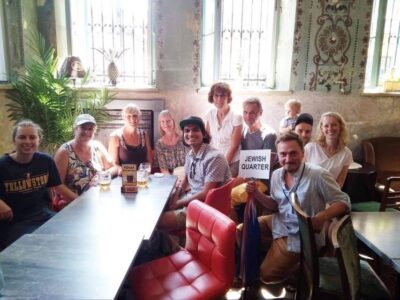

Bike Tour of Old Town, Jewish Quarter and the Ghetto
Read our review →
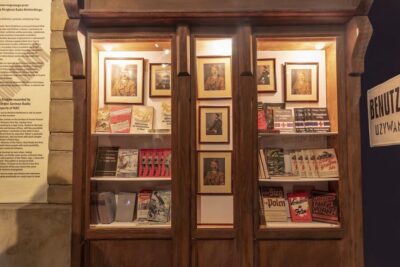
Kazimierz, Schindler’s Factory & Ghetto Guided Tour
Read our review →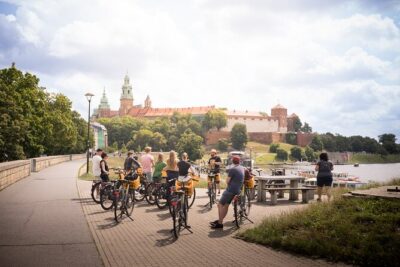
Full Bike Tour – the Old Town, Jewish Qtr & the Ghetto NEW BIKES
Read our review →
Warsaw Ghetto Private Walking Tour with Hotel Pickup
Read our review →
Bike Tour of the Old Town, Kazimierz, and the Ghetto
Read our review →Browse the lists this tour appears in