
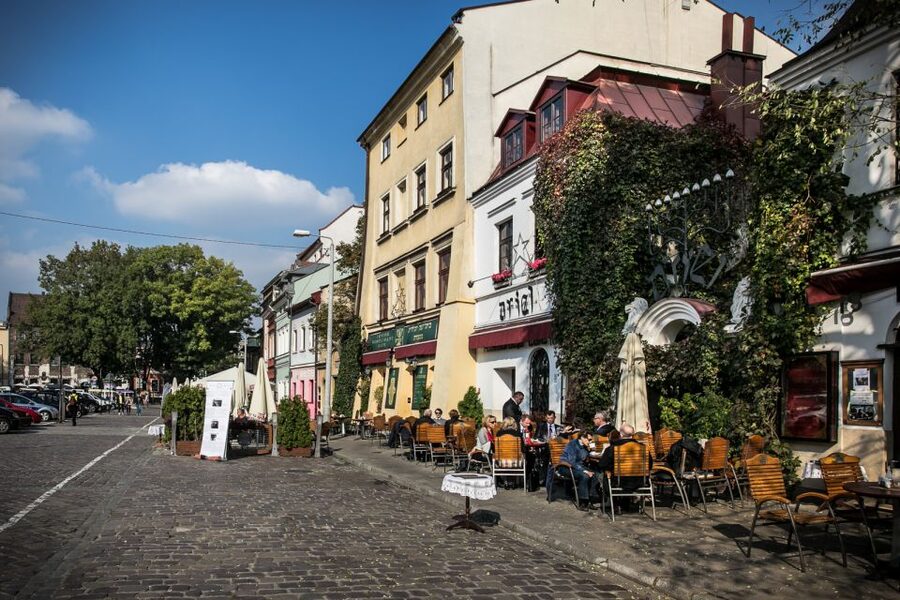
REVIEW · JEWISH QUARTER & GHETTO TOURS
Kraków old town and jewish quarter®
History comes alive on Kraków’s streets. This three-hour walking tour links the city’s medieval center with Kazimierz, using architecture, politics, religion, and personal stories to explain how Kraków and Poland developed. At $16 per person, it offers a lot of context for a modest price.
I like the focus on a graduate guide in Geography and History, and I like that the route does not stop at the postcard sights. It moves from the Old Town to Wawel and then into the former Jewish quarter, helping you connect Polish Catholic history with the story of Kraków’s Jewish community. The main drawback is the packed schedule: three hours is enough for an informed introduction, but not enough for long interior visits or a slow look at every monument.
The tour is conducted in Spanish and is wheelchair accessible. A guide carries a gray umbrella at the meeting point, a useful detail in a city full of tour groups. One named guide, Luis, has been praised for using photos and drawings to make difficult history easier to follow.
In This Review
- Key details before you book
- Why Kraków’s Old Town needs a guide
- From the theater to St. Florian’s Gate
- Main Market Square and Kraków’s grand center
- Collegium Maius and Kraków’s university tradition
- Archbishop’s Palace, the Franciscan Basilica, and Wawel Hill
- Entering Kazimierz, Kraków’s Jewish quarter
- Holocaust memorials and the hardest part of the story
- How the pace works over three hours
- What $16 buys you
- Who should book this walk?
- Practical details that make the day easier
- Final verdict: a strong first look at Kraków
- FAQ
- How long does the Kraków Old Town and Jewish Quarter tour last?
- What language is the tour conducted in?
- What landmarks are included?
- Is food or drink included?
- Is the tour wheelchair accessible?
- Can I cancel the booking?
Key details before you book
- Medieval Kraków in one route: See the city walls, Barbican, St. Florian’s Gate, Main Market Square, and the old university quarter.
- A full look at Wawel Hill: Visit the cathedral area, castle complex, hilltop buildings, and the famous dragon sculpture.
- Kazimierz with historical context: Learn why Jewish communities settled here and how Jewish and Catholic communities lived alongside one another.
- Spanish-speaking history guide: The tour is led by a graduate guide in Geography and History, with Luis named in feedback as a particularly engaging guide.
- Good value at $16: You receive three hours of guided explanation without paying for food, drinks, or museum admission.
- Flexible booking: You can cancel up to 24 hours before the tour for a full refund and reserve without paying immediately.
Why Kraków’s Old Town needs a guide
Kraków is easy to walk through and surprisingly hard to understand without context. You can admire the churches, towers, market stalls, and royal buildings on your own, but the city’s meaning changes when you know how medieval power, Polish religion, university life, and wartime suffering fit together.
I like that this route begins with the city’s physical defenses and then moves toward its civic and religious center. You start with the theater, medieval walls, Barbican, and St. Florian’s Gate before reaching the Main Market Square. That sequence gives you a clear sense of how people once entered, protected, and used the city.
The guide’s role matters here. This is not just a walk from one photo stop to the next. The stated aim is to connect events that affected Kraków and Poland, which should help you understand why the city received World Heritage status and why its buildings look so different from one another.
The tour is in Spanish, so it is best suited to Spanish-speaking visitors who want more than a basic sightseeing circuit. The guide’s use of photographs and drawings is especially useful when explaining buildings or historical events that are difficult to picture from a quick look at a stone facade.
More Old Town Walking Tours in Kraków
- Old Town Krakow & Wawel Castle Walking Tour
★ 5.0 · 1,508 reviews - Krakow: Bike Tour of Old Town, Jewish Quarter and the Ghetto
★ 4.9 · 1,155 reviews - Krakow: The Old Town Walking Tour
★ 4.8 · 794 reviews
From the theater to St. Florian’s Gate
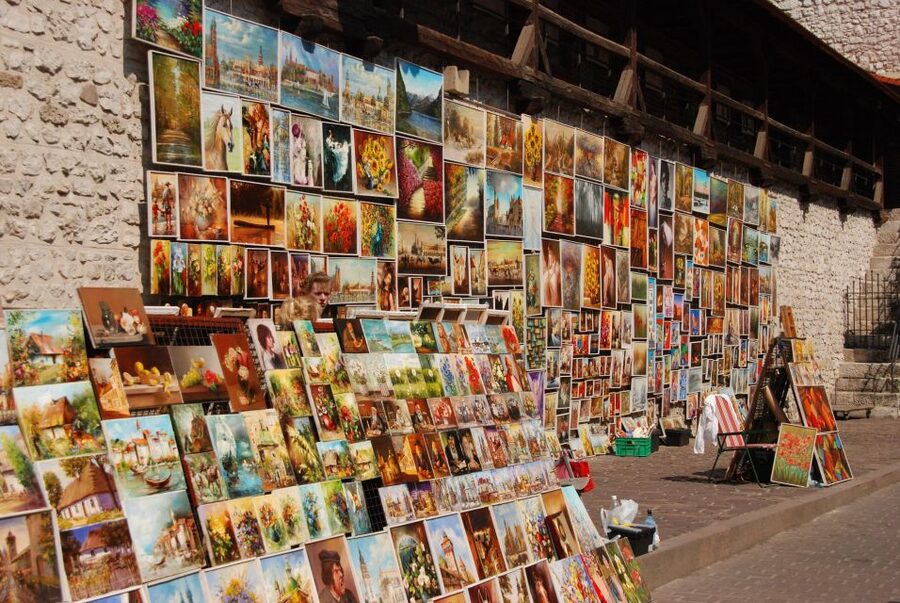
The first section introduces the city center through several visible reminders of Kraków’s medieval past. The Juliusz Słowacki Theater provides an early look at the city’s cultural life, while the surviving walls and Barbican point to its defensive role.
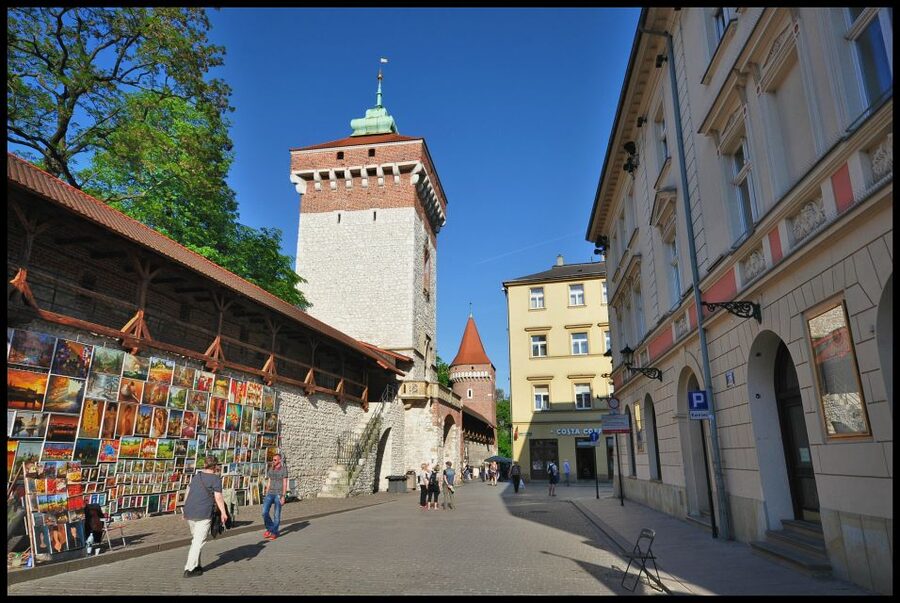
St. Florian’s Gate is one of the most recognizable entrances into the old city. Here, the route shifts from Kraków’s outer defenses toward the streets that lead into the center. I find this a sensible opening because it gives you a basic map in your head before the monuments become more numerous.
You will not be visiting every structure in depth. The value comes from seeing the pieces in sequence and hearing how they relate. If you want long stops inside museums or detailed architectural measurements, this will feel quick. If you want the city to make sense as you walk, the pace should work well.
The guide also provides advice intended to help you get more from the rest of your time in Kraków. That can be useful early in a visit, when you still need help deciding which parts of the city deserve a second look.
Main Market Square and Kraków’s grand center
The Main Market Square is the tour’s visual center. It gathers some of Kraków’s most important monuments in one broad public space, including the Basilica of Saint Mary, Sukiennice, the old town hall tower, the Church of Saint Adalbert, and the monument to poet Adam Mickiewicz.
Each stop offers a different piece of Kraków. The Basilica of Saint Mary brings religious and artistic importance. Sukiennice reflects the square’s long commercial role. The old town hall tower marks civic authority, while the monument to Adam Mickiewicz points to Poland’s literary and national identity.
The small Church of Saint Adalbert is easy to overlook because it sits beside larger buildings. A guide can help you notice why a modest structure matters in a square filled with imposing architecture. The tour also identifies Eros Bendato, a modern sculpture that gives the historic center a slightly playful counterpoint.
This part of the route has a lot to absorb. You will hear names, dates, and explanations while also managing crowds, street activity, and the temptation to stop for photos. The guide’s reported rhythm is a strength here: explanations move at a good pace, and the group changes locations often enough to keep the walk from becoming a stationary lecture.
Collegium Maius and Kraków’s university tradition
The route continues through the university neighborhood, including Collegium Maius. This is where the story moves from royal and religious power toward education and intellectual life.
Kraków’s university tradition is linked with figures such as Nicolaus Copernicus and John Paul II, both of whom received academic training in the city. The guide uses this setting to show that Kraków was not only a political and religious center. It was also a place where ideas, scholarship, and public life developed over centuries.
I particularly like this section because it gives the walk a change of tone. After the fortifications and market square, the university quarter adds a more personal question: who came here to learn, and how did that education shape Poland and Europe?
As with the rest of the tour, you should expect an exterior-focused visit rather than a full academic tour of every building. The point is to place Collegium Maius in the city’s wider story and to help you recognize the neighborhood later.
More Jewish heritage tours in Kraków:
- Krakow: Schindler’s Factory & Ghetto Guided Tour
★ 4.7 · 1,694 reviews - Krakow: Jewish Quarter and Former Ghetto Tour
★ 4.9 · 1,441 reviews - Krakow: Kazimierz Jewish Quarter Walking Tour
★ 4.8 · 571 reviews - Krakow: Kazimierz, Schindler’s Factory & Ghetto Guided Tour
★ 4.8 · 460 reviews
Archbishop’s Palace, the Franciscan Basilica, and Wawel Hill
The Archbishop’s Palace and the Basilica of the Franciscans continue the religious thread. The palace is connected with Kraków’s Catholic leadership, while the Franciscan church adds another important layer of church history and architecture.
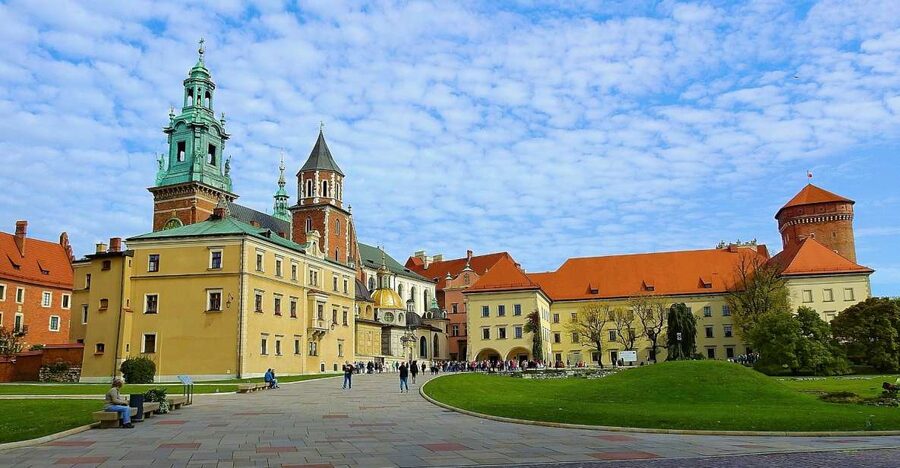
The route then reaches the Wawel complex, one of Kraków’s essential stops. You ascend the hill to examine the cathedral and the buildings gathered around it. Wawel is more than a scenic viewpoint or a royal photo background. It is a place where Poland’s monarchy, Catholic identity, national memory, and architecture meet.
You should pay attention to the way the complex is built up over time. Different structures reflect different needs and periods, which helps explain the architectural variety mentioned throughout the tour. A guide can point out connections that are easy to miss when you are simply walking toward the cathedral.
The famous dragon sculpture appears here as a lighter moment. It is a reminder that Kraków’s identity includes legend as well as politics and faith. That contrast keeps the route from becoming too solemn, especially before the tour moves into the far heavier history of Kazimierz.
The limitation is time. Wawel is large, and three hours must also include the Old Town and Jewish quarter. You will see and discuss the complex, but this is not a substitute for a separate visit to Wawel’s paid interiors or exhibitions.
Entering Kazimierz, Kraków’s Jewish quarter
Kazimierz changes the character of the walk. This neighborhood is associated with the first Jewish communities that settled in Kraków and with the long, complicated relationship between Jewish and Catholic communities in the city.
The route examines why Jewish residents established themselves here and how both communities lived alongside one another. That context matters because Kazimierz is not simply a collection of attractive old streets, cafes, and religious buildings. Its identity comes from centuries of community life, cultural exchange, separation, cooperation, and conflict.
You visit the medieval square of the Jewish quarter and the remaining walls, then continue to Tempel Synagogue and the Old Synagogue. These buildings make the community’s presence visible, but the guide’s explanation should help you look beyond appearance. The goal is to understand the institutions and traditions that shaped everyday life in Kazimierz.
The Old Jewish Cemetery adds another important stop. A cemetery is not just another monument to check off. It gives you a physical sense of continuity and loss, and it helps explain why Jewish heritage in Kraków cannot be reduced to a few restored buildings.
New Square brings a different kind of atmosphere. It is one of Kazimierz’s traditional gathering places and helps you see the neighborhood as a lived-in district, not only a memorial area. Still, the tour’s historical focus means you should expect discussion rather than a food crawl or a nightlife tour. Food and drinks are not included.
Holocaust memorials and the hardest part of the story
Kazimierz also contains places connected with the Holocaust and the German occupation of Poland. The route includes a monument to Holocaust victims, a monument to the Righteous Among the Nations, and a monument to Polish victims during the occupation.
These stops require care and attention. The history is painful, and a good guide has to explain it without flattening the experience into a few dramatic facts. The stated focus on both Jewish and Catholic communities allows the guide to address the wartime period within the larger history of the district.
I appreciate that the route includes the monument to the Righteous Among the Nations as well as memorials to victims. That combination recognizes courage without confusing it with the scale of the crime. It also gives you a more accurate way to think about individuals and communities under occupation.
This section may feel emotionally heavy, especially after the more familiar sights of the Main Market Square and Wawel. That is appropriate, but it also means the tour is not a light introduction to Kraków. You should choose it if you want the city’s difficult past treated as part of the visit, not pushed aside.
How the pace works over three hours
Three hours is a practical length for a first walk through Kraków. It is long enough to connect the Old Town, Wawel, and Kazimierz, but short enough to fit into a busy itinerary.
The route is ambitious. You cover many landmarks, and the Old Town alone could occupy an entire day if you entered every church, tower, museum, and palace. The Jewish quarter also deserves slow exploration. Think of this experience as a guided framework that helps you decide where to return.
The reported pace is one of the strongest features. Explanations change location regularly, which keeps the walk moving. One December participant found the tour so engaging that the three hours felt short and wished the route had continued. That is a good sign for people who enjoy history, though visitors wanting a relaxed photography walk may find the schedule brisk.
Cold weather is worth taking seriously. A December departure continued through cold and snow, with the explanations still holding attention. Wear proper shoes and warm layers, and bring weather protection even if the forecast looks uncertain. The gray umbrella identifies the guide, but it is not a substitute for your own coat.
What $16 buys you
At $16 per person, the value is strong if you use the guide for historical interpretation. You are paying for three hours with a graduate guide in Geography and History, not for entry to attractions, meals, or transport.
That distinction matters. The price does not cover food or drinks, and the information provided does not list admission to the cathedral, synagogues, or other paid interiors. You should budget separately if you want to enter sites after or during the walk.
Even so, the cost compares well with the amount of ground covered. You receive a structured introduction to the Old Town and Kazimierz, plus advice that may help you plan the rest of your stay. For a first day in Kraków, that can save time and prevent the city from feeling like a string of unrelated monuments.
I would not choose this tour mainly because it is cheap. I would choose it because the subject is broad and the guide’s historical training gives the price real purpose. If you already know Kraków well, the route may repeat familiar sights. If the city is new to you, the context is likely to be the main payoff.
Who should book this walk?
I would recommend it most strongly to Spanish-speaking visitors who want history explained in a clear, lively way. It suits first-time visitors, couples, families with older children, and anyone who prefers walking to a bus-based overview.
It is also a good match for people who want to understand the relationship between Polish Catholic history and Jewish history. Kazimierz receives substantial attention, so you are not left with only the royal and Christian side of Kraków.
You may want a different plan if you dislike fast walking, prefer long interior visits, or want a tour devoted only to Jewish heritage. The three-hour format covers a great deal, but it cannot provide a full study of every synagogue, museum, church, or memorial.
Wheelchair access is listed, which makes the experience more practical for many visitors. Still, the route includes an ascent toward Wawel Hill, so you may wish to confirm the exact route and conditions when booking if you need specific mobility support.
Practical details that make the day easier
The tour is offered in Spanish, and starting times depend on availability. The meeting point is identified by the guide carrying a gray umbrella, while a map is provided to help you reach the start.
You can reserve now and pay later, which is useful if your Kraków schedule is still changing. Free cancellation is available up to 24 hours before the start time for a full refund.
The guide does not provide food or drinks. Plan a water break or meal separately, especially because three hours of walking can feel demanding in winter weather. Kazimierz is a natural place to continue afterward, but no meal is included in the tour itself.
Final verdict: a strong first look at Kraków
You should book this tour if you want Kraków explained through connected stories rather than isolated sights. At $16, it offers good value, a wide route, and a Spanish-speaking historian who can give meaning to the walls, churches, university buildings, royal hill, synagogues, cemeteries, and memorials.
My main caution is simple: do not expect a slow museum tour. The itinerary is full, and three hours passes quickly. Treat it as an intelligent introduction, then return to the places that catch your attention.
For first-time visitors, especially Spanish speakers, I would make this one of the early activities in Kraków. It gives you a working map of the city and the historical background to appreciate what you see afterward.
FAQ
How long does the Kraków Old Town and Jewish Quarter tour last?
The tour lasts three hours.
What language is the tour conducted in?
The live tour guide speaks Spanish.
What landmarks are included?
The route includes the Juliusz Słowacki Theater, medieval walls, Barbican, St. Florian’s Gate, Main Market Square, Basilica of Saint Mary, Sukiennice, the old town hall tower, Eros Bendato, Church of Saint Adalbert, Collegium Maius, Archbishop’s Palace, Basilica of the Franciscans, Wawel complex, cathedral, dragon sculpture, Tempel Synagogue, Old Synagogue, Jewish cemetery, New Square, Jewish quarter walls, and several occupation and Holocaust memorials.
Is food or drink included?
No. Food and drinks are not included.
Is the tour wheelchair accessible?
Yes. The activity is listed as wheelchair accessible.
Can I cancel the booking?
Yes. You can cancel up to 24 hours in advance for a full refund. You can also reserve now and pay later.
Just added around Kraków
- Rynek Underground Museum & Wawel Castle, Cathedral – Cracow★ 5.0 · 3 reviews
- Schindler’s Factory, Ghetto and Plaszow Camp Guided Tour★ 4.7 · 3 reviews
- Nowa Huta – a guided tour of a utopian socialist city★ 5.0 · 3 reviews
- Krakow: Kazimierz by Golf Cart and Schindler’s Factory Tour★ 4.8 · 3 reviews
- Private Krakow City Tour by Car and Walk with private tour guide★ 5.0 · 3 reviews
- Krakow: Jewish Traces Private Electric Car Tour★ 4.1 · 3 reviews
- Discover the Jewish Quarter with a Bike Tour★ 5.0 · 3 reviews
- Krakow: Indoor Go-Karting (24-Minute Races)★ 4.8 · 3 reviews
Jewish Quarter & Ghetto Tours, compared.

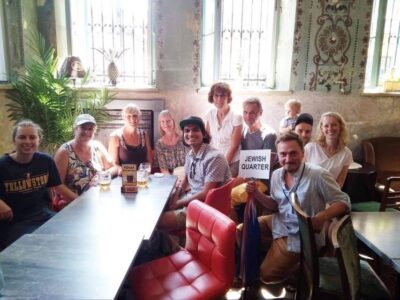

Bike Tour of Old Town, Jewish Quarter and the Ghetto
Read our review →
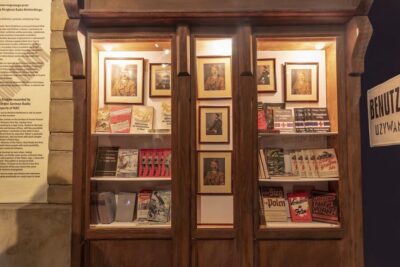
Kazimierz, Schindler’s Factory & Ghetto Guided Tour
Read our review →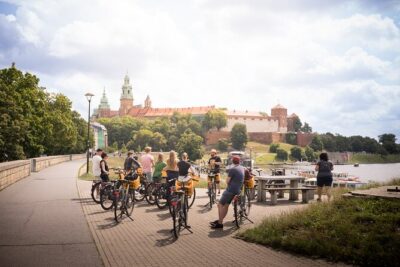
Full Bike Tour – the Old Town, Jewish Qtr & the Ghetto NEW BIKES
Read our review →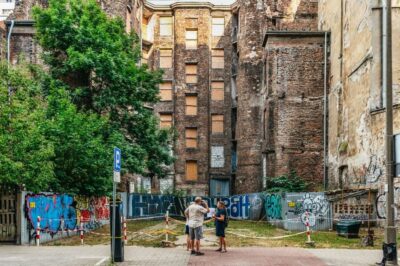
Warsaw Ghetto Private Walking Tour with Hotel Pickup
Read our review →
Bike Tour of the Old Town, Kazimierz, and the Ghetto
Read our review →Browse the lists this tour appears in