
REVIEW · HISTORICAL TOURS
Lodz: Jewish Heritage Private Tour
Łódź tells its story in layers. This four-hour private tour connects the city’s Jewish past with its factories, streets, memorials, and surviving traces of everyday life. I especially like the chance to visit the Jewish cemetery, Poland’s largest Jewish necropolis, and the stop at Radegast Station, where the Holocaust story becomes painfully concrete. I also like that a private guide can adapt the route, as guides such as Marek, Krys, and Krzysztof have done for visitors with particular interests.
The main caution is that the tour may not be as narrowly focused on Jewish life as its title suggests. Guides can offer strong background on Łódź as a whole, but you should ask in advance about the guide’s expertise, viewpoint, transportation arrangements, and whether you will enter the cemetery rather than only see it from outside.
In This Review
- Key points to know before booking
- Why Łódź is such an important place for Jewish history
- Radegast Station and the Litzmannstadt ghetto
- The Jewish cemetery, Poland’s largest necropolis
- The Children’s Martyrdom Monument and Survivors’ Park
- Reicher Synagogue, a rare surviving building
- Israel Poznański’s factory and today’s Manufaktura
- Piotrkowska Street and the city beyond the tour
- What the private format adds
- Is $46 a fair price for four hours?
- Who will get the most from this tour?
- Should you book the Łódź Jewish Heritage Private Tour?
- FAQ
- How long is the Łódź Jewish Heritage Private Tour?
- What is included in the tour price?
- Are entrance fees included?
- Where does the tour begin?
- Is the tour private?
- Which languages are available?
- Does the tour visit the Jewish cemetery?
- Does the tour include Radegast Station?
- Can I cancel for a full refund?
Key points to know before booking
- Radegast Station brings the Holocaust story into focus: This former rail point was the final destination for trains carrying Jews from western Europe and nearby ghettos into the Litzmannstadt ghetto.
- The cemetery is a major part of the visit: It is the largest Jewish necropolis in Poland, but you should specifically ask whether the tour includes going inside.
- Łódź’s industrial past is part of the Jewish story: Manufaktura occupies the former factory complex of Jewish businessman Israel Poznański.
- The tour moves beyond wartime history: You also visit the Reicher Synagogue, Survivors’ Park, Piotrkowska Street, and the Children’s Martyrdom Monument.
- Private touring gives you room to ask questions: Several guides have tailored the route to interests in film, books, architecture, and wider Łódź history.
- The $46 price is strong for a private four-hour outing: Hotel pickup, drop-off, transportation, and a live guide are included, but entrance fees are not.
Why Łódź is such an important place for Jewish history
Before World War II, more than 200,000 Jews lived in Łódź. They made up about one third of the city’s population, making the Jewish community one of the largest in Poland.
That number matters because it changes how you read the city. Jewish Łódź was not a small side chapter. It was a central part of the city’s work, commerce, culture, neighborhoods, and daily life. The tour helps you connect the surviving places with the enormous community that once lived here.
I like this approach because it avoids presenting the city only as a collection of wartime memorials. You see both the world that existed before the Holocaust and the places connected with its destruction.
The private format is useful here. You can ask how Jewish residents fit into Łódź’s industrial growth, how the city’s multinational population functioned, or how modern memorials present the past. Guides praised for their explanations, including Krzysztof and Krys, have also brought in architecture, books, film, and wider Polish history.
That broader context can be a strength, though it also creates the tour’s main limitation. If you want every minute devoted to Jewish religious life, Yiddish culture, or Jewish perspectives on Polish history, clarify your expectations before the tour begins.
More history tours in Poland:
- Gdansk: City Cruise on Historical Polish Boat
★ 4.8 · 2,913 reviews - Warsaw: POLIN Museum of the History of Polish Jews Ticket
★ 4.7 · 1,142 reviews - Gdańsk: Sunset Cruise on a Historic Polish Boat
★ 4.9 · 977 reviews
Radegast Station and the Litzmannstadt ghetto
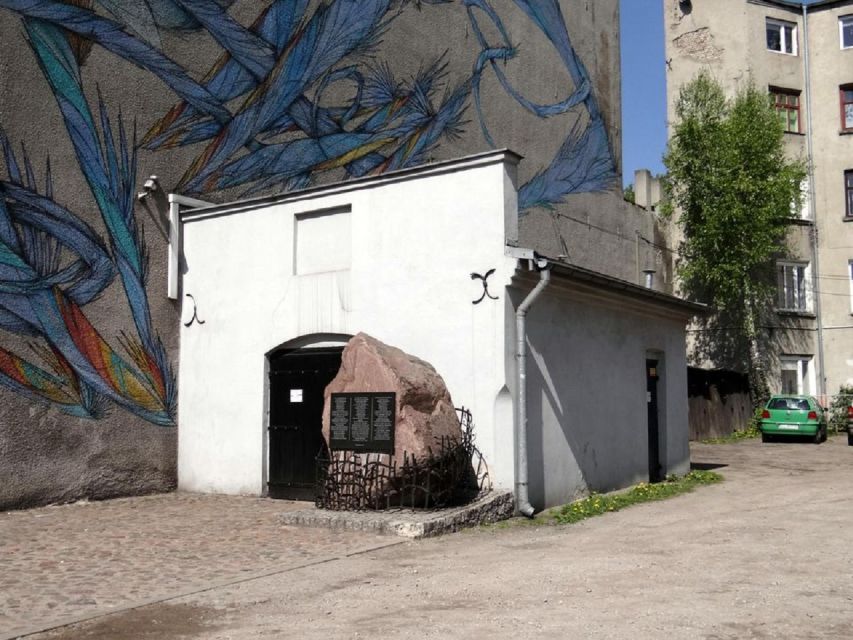
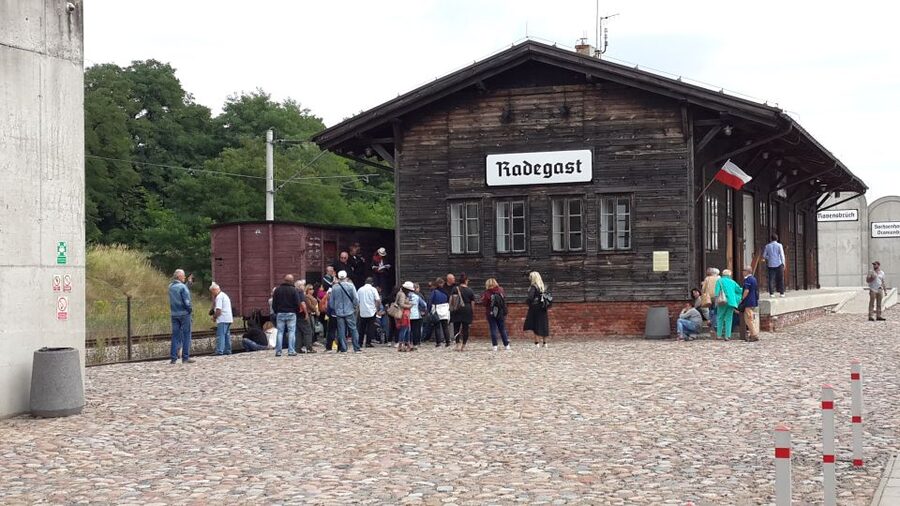
Radegast Station is one of the tour’s most serious stops. It was the final point for trains carrying Jews from western European countries and provincial ghettos in the Wartheland area. From here, people were sent into the Litzmannstadt ghetto, also called the Łódź ghetto.
The location is valuable because it links a familiar object, a railway station, with the machinery of deportation. You are not only hearing dates and names. You are looking at a place where people arrived under forced conditions, often after being removed from their homes far away.
The tour also addresses the ghetto itself. The former Litzmannstadt ghetto is not simply a location on a map. It was a place where Jewish residents were imprisoned, controlled, and deprived during the Nazi occupation. Your guide can explain how the city’s Jewish population was affected and how the ghetto fitted into the wider Holocaust.
This is a stop where the guide’s tone and approach matter greatly. One visitor felt that critical comments about the memorial culture at Radegast were inappropriate, particularly at a site connected with Holocaust memory. I would treat that as useful booking advice: ask who will guide you and how the tour handles Jewish voices, Polish responsibility, Nazi persecution, and present-day memory.
A guide can offer historical context without turning a memorial into a political argument. You should expect a serious site, and you deserve a clear, respectful explanation.
The Jewish cemetery, Poland’s largest necropolis
The Jewish cemetery is one of the most important stops on the route. It is described as the largest Jewish necropolis in Poland, so it offers a much bigger sense of scale than a quick memorial plaque or a single restored building.
A cemetery can show what ordinary life looked like before the Holocaust. Names, family groupings, inscriptions, and the size of the burial ground help you understand that Łódź had generations of Jewish residents, not only the population trapped during the war.
I recommend making the cemetery visit a priority and asking directly if you will enter. One person who took the tour felt it was worth going inside rather than viewing it only from the outside. That is practical advice, especially if the cemetery is one of your main reasons for booking.
The supplied information does not specify entrance arrangements or fees, and entrances are not included in the tour price. Ask your guide or the tour provider what applies on your date. Wear sensible shoes, since a cemetery visit is best taken at a slow pace rather than rushed between vehicle stops.
The Children’s Martyrdom Monument and Survivors’ Park

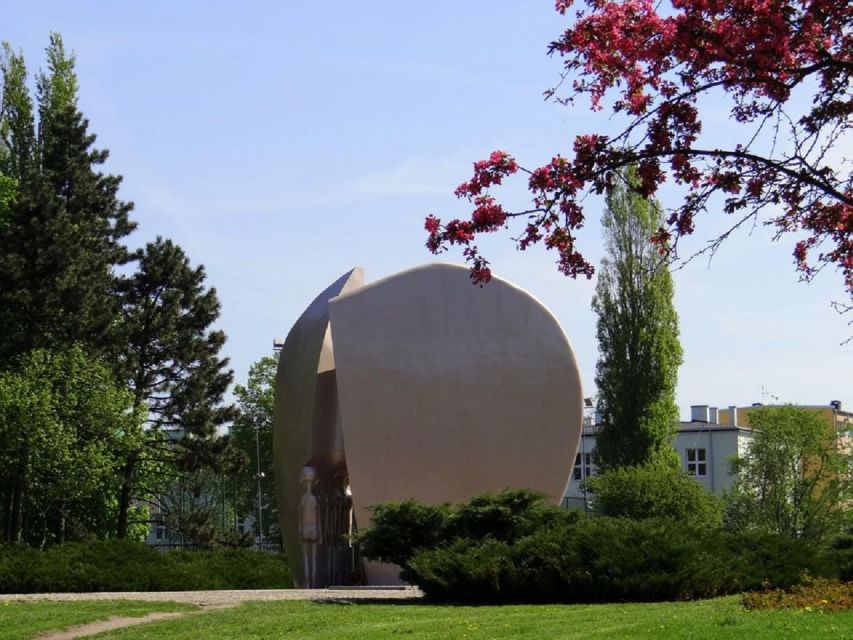
The Children’s Martyrdom Monument is also called the Monument of the Broken Heart. It is dedicated to Polish children who died or were murdered while imprisoned in the camp on Przemysłowa Street.
This stop broadens the story beyond the Jewish population. It addresses the suffering of Polish children under occupation and reminds you that wartime persecution affected different groups in different ways. A careful guide can explain those distinctions without flattening them into one general story of suffering.
Survivors’ Park provides a quieter pause. It commemorates the liquidation of the ghetto and contains more than 600 memory trees planted by people who survived the Litzmannstadt ghetto.
The trees give the site a personal scale. A number such as 600 can feel abstract, but individual trees planted by survivors connect the memorial to people who lived through imprisonment and later returned to mark what happened.
You may find this section of the tour more reflective than sightseeing-oriented. That is a good thing, but it means the quality of the explanation matters. Give yourself room to listen rather than treating the park as a quick photo stop.
A few more Poland trips worth weighing up
- Krakow Airport Private Transfer
★ 5.0 · 2,227 reviews - Wroclaw: 2-Hour Private Guided Tour by Electric Car
★ 4.8 · 805 reviews - Private Tour: Warsaw City Sightseeing by Retro Fiat
★ 5.0 · 562 reviews - Warsaw: Warsaw Ghetto Private Walking Tour with Hotel Pickup
★ 4.9 · 369 reviews
Reicher Synagogue, a rare surviving building
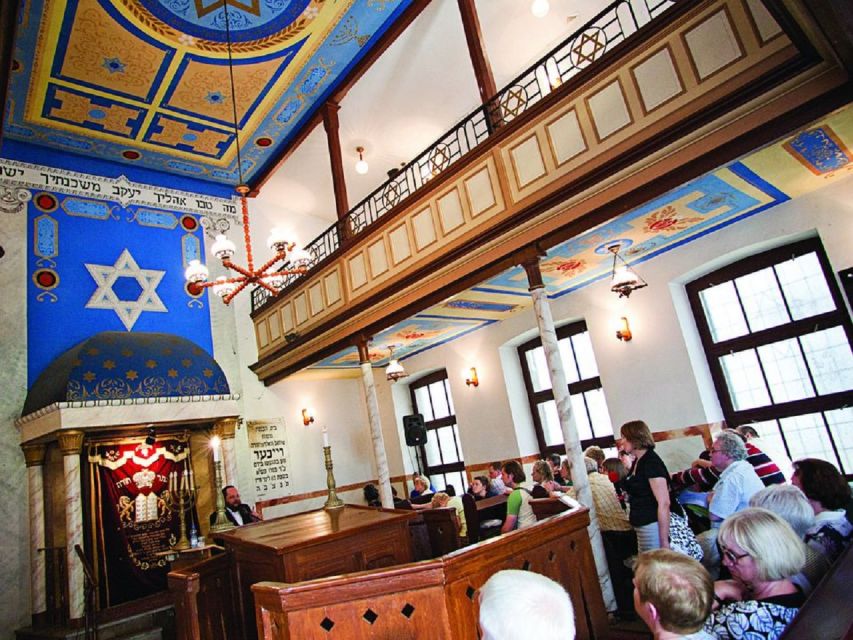
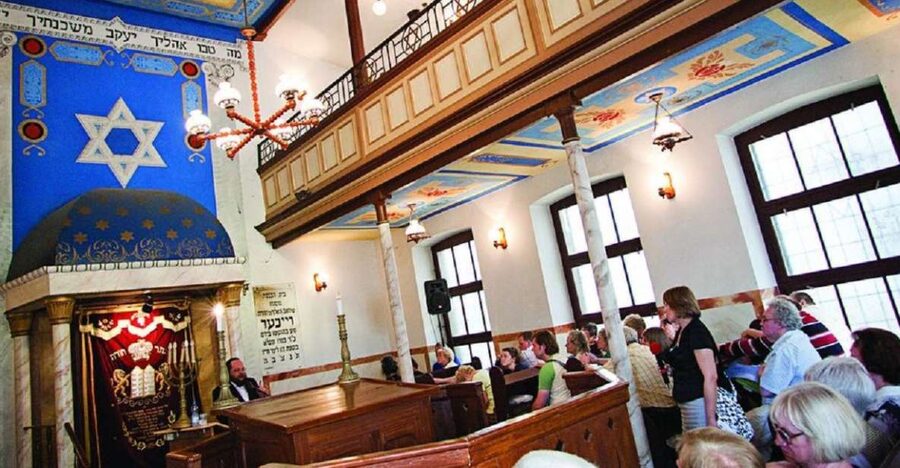
The Reicher Synagogue is described as the only remaining pre-war synagogue in Łódź. It survived the occupation by being used as a salt warehouse.
That detail is striking because the building’s survival was not the result of uninterrupted religious use or careful preservation. Its wartime use as storage helped protect it from destruction, even as Jewish religious life in the city was being destroyed.
The synagogue gives you a chance to think about what has disappeared. A surviving building can suggest the scale of the lost community, but it cannot replace the people, institutions, schools, businesses, and traditions that once filled the city.
Ask your guide what access is possible on the day of your tour. The supplied details identify the synagogue as a stop but do not promise a particular interior visit. This is another place where the difference between seeing a site and entering it can affect your experience.
Israel Poznański’s factory and today’s Manufaktura
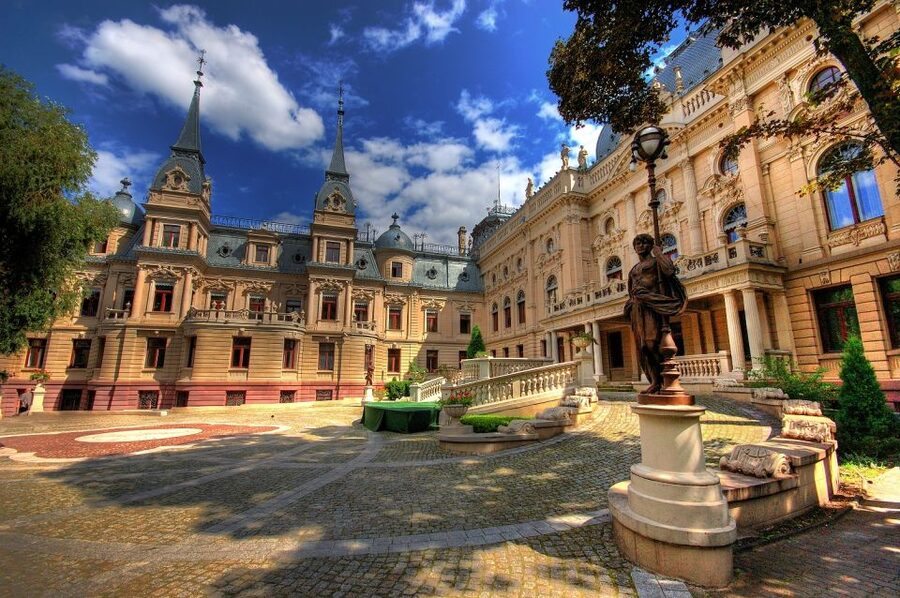
Łódź grew through textile manufacturing, and the former factory complex associated with Jewish businessman Israel Poznański shows how closely Jewish history and industrial history are linked.
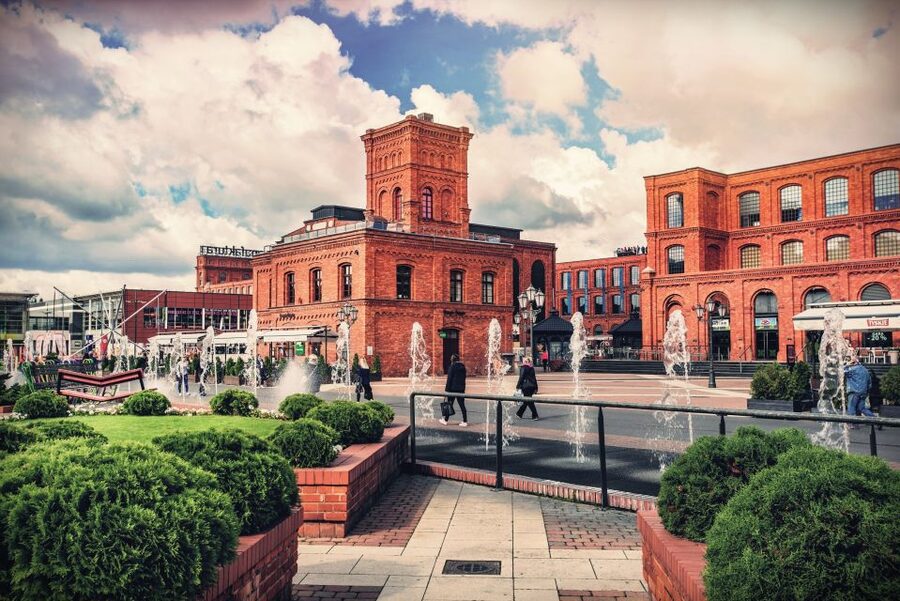
Today, the renovated Manufaktura complex includes an open-air plaza surrounded by large brick buildings. It also has a long stretch of fountains described as the longest in Europe. The setting is now a modern leisure and shopping area, but the brick architecture keeps its factory character visible.
I like this stop because it prevents the tour from becoming a sequence of sorrowful locations. You see how money, labor, industry, and ethnic communities shaped Łódź before the war. The factory also helps explain why the city became such an important industrial center.
At the same time, Manufaktura can feel very different from the cemetery or Radegast Station. You move from genocide memorials to a renovated public complex with shops and restaurants. That contrast may feel abrupt, but it is also honest. Łódź is a living city, not an open-air museum frozen in 1939.
Your guide can help you read the brick buildings as part of Poznański’s industrial world rather than treating the complex only as a place to take a break. The open plaza may be useful for a short rest during a packed four-hour route.
Piotrkowska Street and the city beyond the tour
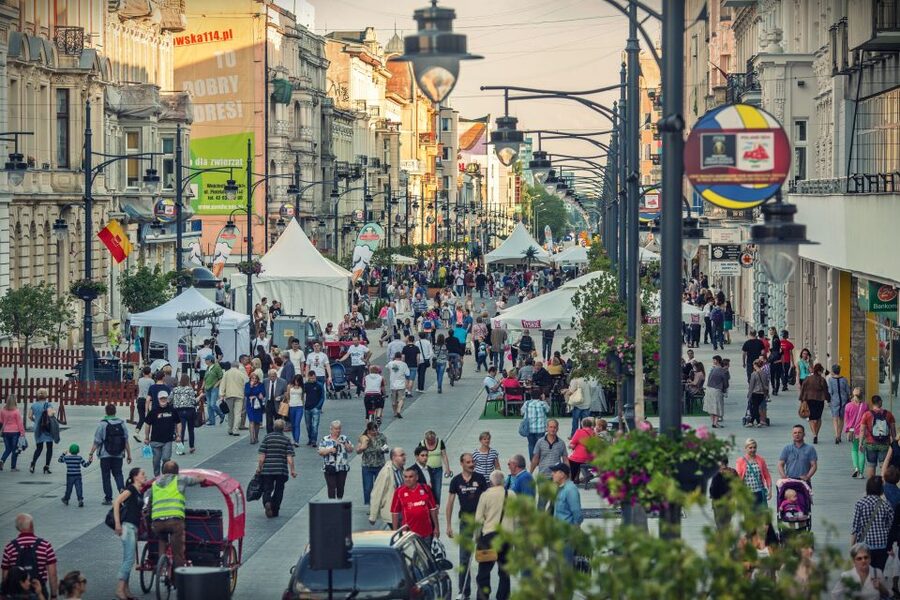
The final walk takes you along Piotrkowska Street, Poland’s longest promenade. It is lined with shops, pubs, restaurants, and sculptures honoring famous residents of Łódź.
This is a sensible way to finish. After the memorials and industrial sites, you return to a social city street where people eat, shop, walk, and meet friends. The sculptures add a playful layer to the city’s public life, while the long avenue gives you a practical base for exploring after the tour.
Your guide can point out what to see on your own later. That advice may be one of the most useful parts of a private tour because four hours cannot cover every corner of Łódź.
Piotrkowska Street is also a good place to continue the day. The tour does not include a meal, but the street has pubs and restaurants. Since the itinerary ends here, you can ask your guide for suggestions that fit your interests.
What the private format adds
This is a private group tour with hotel pickup, drop-off, transportation, and a live guide. That setup is convenient if you want to avoid working out the route between sites or if your group has a specific family or research interest.
The format also makes questions easier. Guides have adapted visits for interests in architecture, film, books, and broader city history. If your focus is family history, wartime memory, industrial Łódź, or the Jewish cemetery, say so at the start.
Do not assume that private means the guide will drive you personally in a private car or van. One person expected the guide to provide a car or bus and found that this was not the case. Transportation is included in the tour details, but the exact arrangement is worth confirming before you book.
The meeting point is your hotel lobby. Your guide will wait with your name, so be ready on time. A late start would take minutes away from sites that already need thoughtful attention.
Guides are available in English, German, Russian, and Polish. Names connected with especially positive experiences include Marek, Krys, and Krzysztof, who were described as flexible, engaging, and strong on both Jewish subjects and the wider city. Since guide assignment may vary, you can request a language and ask about the guide’s background.
Is $46 a fair price for four hours?
At $46 per person, this is a good price if you value a private route and hotel transportation. You receive four hours with a live guide rather than joining a large scheduled group, and the route covers several places that are spread across different parts of Łódź.
The value is strongest for first-time visitors. You do not need to plan the order of Radegast Station, the cemetery, the ghetto-related memorials, Manufaktura, and Piotrkowska Street. The guide also helps connect places that could otherwise feel unrelated.
The price does not include entrances. That matters most if you want to enter the cemetery or Reicher Synagogue. Ask about those costs and access before booking so the final amount does not surprise you.
The tour has free cancellation up to 24 hours before the start, and you can reserve now and pay later. Those policies help if your Łódź schedule is still changing, but the real question is whether four private hours match your interests.
Who will get the most from this tour?
I would recommend it to you if you want a compact introduction to Łódź’s Jewish past and the city that grew around it. It suits first-time visitors, families exploring Polish history, and people interested in Holocaust memorial sites who also want to see the city’s industrial and cultural side.
It is particularly useful if you want to ask questions as you go. The private format gives you more freedom than a fixed group tour, and the guides can bring in subjects such as architecture, books, film, and the general history of Łódź.
You may want another option if you need a specialist solely focused on Jewish religious life or Jewish perspectives. The tour can include broad Polish and Łódź history, and the approach may depend heavily on the individual guide.
I would also be careful if the cemetery, synagogue, or Radegast memorial is your central purpose. Confirm exactly what you will enter, how long you will spend there, and how the guide presents sensitive subjects.
Should you book the Łódź Jewish Heritage Private Tour?
Book it if you want a reasonably priced, private introduction that links Jewish Łódź with the ghetto, Holocaust memorials, industry, and modern city life. The strongest parts are the cemetery, Radegast Station, Survivors’ Park, and the chance to ask a guide to shape the visit around your interests.
Before paying, send three simple questions: Who is the guide, what transportation will be used, and will the cemetery be visited from inside? Also ask how much of the tour is devoted to Jewish history rather than general Łódź history.
With those points settled, this four-hour route offers a useful first look at a city whose Jewish past was once central to its identity and whose present still carries visible reminders of what was lost.
FAQ
How long is the Łódź Jewish Heritage Private Tour?
The tour lasts four hours.
What is included in the tour price?
Hotel pickup and drop-off, transportation, and a live guide are included.
Are entrance fees included?
No. Entrances are not included in the price.
Where does the tour begin?
Your guide will meet you in your hotel lobby and wait with your name.
Is the tour private?
Yes. It is arranged for a private group.
Which languages are available?
The live guide can provide the tour in English, German, Russian, or Polish.
Does the tour visit the Jewish cemetery?
Yes, the Jewish cemetery is included as a stop. You should ask in advance whether you will enter it or view it from outside.
Does the tour include Radegast Station?
Yes. The route includes Radegast Station, connected with trains transporting Jews from western Europe and provincial ghettos in the Wartheland area.
Can I cancel for a full refund?
Yes. You can cancel up to 24 hours in advance for a full refund.
Just added around Poland
- Rynek Underground Museum & Wawel Castle, Cathedral – Cracow★ 5.0 · 3 reviews
- Schindler’s Factory, Ghetto and Plaszow Camp Guided Tour★ 4.7 · 3 reviews
- Jewish heritage in Warsaw★ 4.5 · 3 reviews
- Poznan Old Town and Croissant Museum Private Walking Tour★ 5.0 · 3 reviews
- Warsaw Outdoor Paintball with Transfers (all year round)★ 5.0 · 3 reviews
- Nowa Huta – a guided tour of a utopian socialist city★ 5.0 · 3 reviews
- Half-Day Chelmno Kulmhof Concentration Camp Private Tour★ 4.5 · 3 reviews
- 4 hours skitour trip in Tatra Mountains for beginners with renting equipment★ 5.0 · 3 reviews
Historical Tours, compared.


POLIN Museum of the History of Polish Jews Ticket
Read our review →

Gdańsk City Sights & History Guided Walking Tour in English
Read our review →

Small-Group Historical Guided Tour of Warsaw with pick up/drop off. Public Tour.
Read our review →Browse the lists this tour appears in