
REVIEW · JEWISH QUARTER & GHETTO TOURS
Private Tour: Warsaw Ghetto with a local Historian
Warsaw’s scars are easy to miss. This private tour makes them visible through personal local context, taking you from the Umschlagplatz deportation site to Mila 18 and the surviving wall fragment. I especially like the small-group format and the option to have a driver, which can save your legs and fit more into three hours.
The strongest part is the guide’s human explanation of places that can otherwise feel abstract. A possible drawback is that the tour views the POLIN Museum from outside rather than including the indoor exhibition, and the exact group limit needs checking because the price is listed for up to four people while the description also mentions up to six.
In This Review
- Key points at a glance
- Why this Warsaw Ghetto tour matters
- Starting at Umschlagplatz
- Remembering Mila 18 and Mordechai Anielewicz
- Walking around POLIN and its monuments
- Finding the surviving ghetto wall fragment
- Adding Praga North and The Pianist
- Why adding a driver may be worth it
- The private format and group size
- What the guide can add
- Timing, comfort, and practical details
- Who should book this experience?
- Should you book it?
- FAQ
- Where does the Warsaw Ghetto tour take place?
- How long does the tour last?
- Is pickup available?
- Is this a private tour?
- Is the POLIN Museum included?
- Is the tour offered in English?
- Is bottled water provided?
- What is the cancellation policy?
Key points at a glance

- A historian with local roots: The guide is described as being born and raised in the Warsaw Ghetto area, giving the tour a personal connection to the streets and memorials.
- Five meaningful stops: You visit Umschlagplatz, Mila 18, the area around POLIN, a surviving ghetto wall fragment, and Praga North.
- Private and flexible: Only your own group takes part, with pickup and drop-off available anywhere in Warsaw.
- Driving can improve the tour: A driver upgrade helped one group reach original buildings, the Warsaw Zoo, and additional monuments with less walking.
- POLIN is an exterior visit: You see the museum and nearby monuments, but the indoor exhibition is not part of this three-hour experience.
- Good value for a small group: At $321.68 for up to four people, the cost works out to about $80 per person when four people share it.
Why this Warsaw Ghetto tour matters
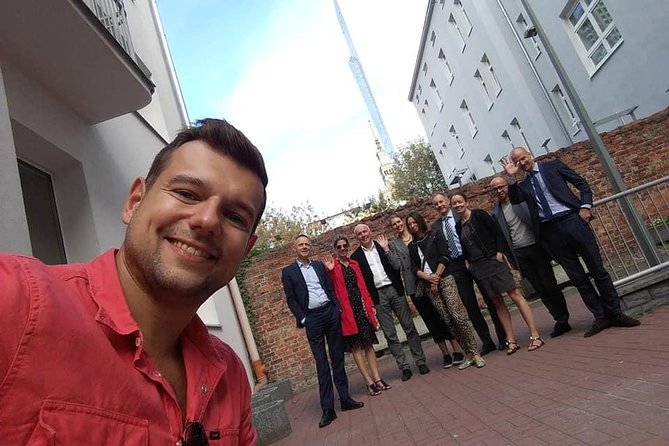
The former Warsaw Ghetto is not a single preserved district waiting behind a gate. Much of the wartime area was destroyed, rebuilt, or absorbed into modern Warsaw. That makes a guide especially useful. Without one, you can walk past an ordinary street and never realize what happened there.
This tour gives you a map for understanding the city’s fragments. A railway loading area becomes a place of forced deportation. A quiet mound marks the last stand of Jewish resistance. A short section of brick wall shows how sharply the ghetto was separated from the rest of Warsaw.
I like that the experience is private rather than part of a large group. You can ask questions without waiting for a crowd to catch up, and the guide can adjust the pace to your interests. The published duration is about three hours, enough for a serious introduction without turning the day into an all-day history class.
The guide is offered in English, and bottled water is provided. Pickup and drop-off anywhere in Warsaw also make the arrangement simple, especially if you are staying away from the central sights.
More Jewish Heritage Tours in Warsaw
- Warsaw: Warsaw Ghetto Private Walking Tour with Hotel Pickup
★ 4.9 · 369 reviews - Warsaw: Ghetto, Jewish Cemetery & POLIN Museum Private Tour
★ 4.8 · 132 reviews - Tour of the Warsaw Ghetto
★ 5.0 · 119 reviews
Starting at Umschlagplatz
The first stop is Umschlagplatz, the railway station from which Jewish residents were transported to Treblinka. The stop is listed at about five minutes, but the meaning of the place is much larger than the clock suggests.
This is a site where logistics became a weapon. People were gathered, loaded onto trains, and sent away under brutal conditions. A short stop here can be emotionally heavy, so do not expect a cheerful opening to the day. The value comes from having someone explain what happened at the exact location rather than receiving only a date and a name.
The free admission also matters. You are not paying for entry to a museum here. You are paying for the guide’s explanation, orientation, and ability to connect this location with the other sites.
Because the stop is brief, I would listen closely and ask questions while you are there. If you want a long period of quiet reflection at each memorial, three hours may feel brisk. If you want a clear route through the main sites, the compact timing works well.
Remembering Mila 18 and Mordechai Anielewicz
The tour then continues to the memorial at Mila 18, the site of the bunker connected with Mordechai Anielewicz and the Jewish resistance during the Warsaw Ghetto Uprising.
The place is powerful partly because it does not look like a conventional museum attraction. You are not entering a grand preserved building with rooms full of objects. Instead, the guide helps you understand the ground beneath and around the memorial, and why this location matters in the story of resistance.
The planned stop is about ten minutes. That is enough for an explanation and time to look around, though you may wish the schedule allowed longer. The private format helps here because your group does not need to follow a fixed public-tour rhythm.
I value the contrast between Umschlagplatz and Mila 18. The first site recalls deportation and mass murder. The second focuses on people who chose to resist despite overwhelming odds. Seeing both in sequence gives the tour a broader frame than a simple list of wartime tragedies.
Walking around POLIN and its monuments
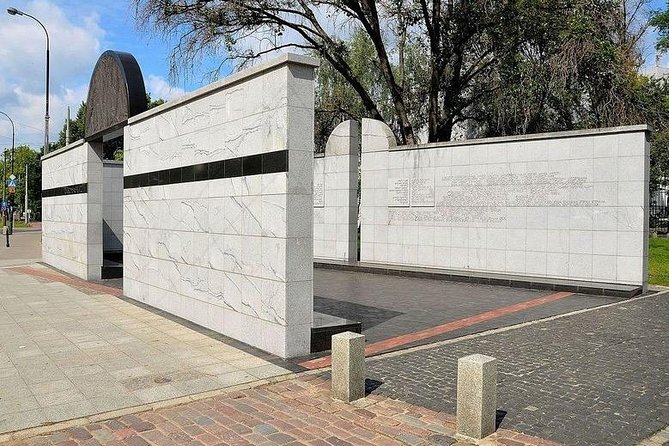
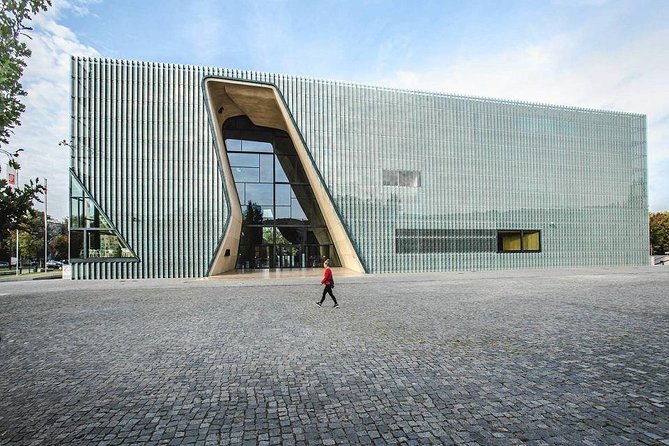
The next part focuses on the POLIN Museum of the History of Polish Jews and the important memorials in the surrounding area. The scheduled visit lasts about 30 minutes.
This is an important distinction: the tour takes you around the museum and its nearby monuments, but it does not include the indoor POLIN exhibition. The permanent exhibition can take several hours with an audio guide, so fitting it into this private tour would not be realistic.
That limitation is not a problem if you want an outdoor introduction and a guide’s explanation of the area. It is a problem if you booked expecting a full museum visit. I would decide before booking which experience you want. Choose this tour for the outdoor memorial route and local interpretation. Set aside a separate half-day if POLIN’s galleries are a priority.
The museum area also helps you connect the wartime story with the longer history of Polish Jewish life. The nearby monuments are not random stops. Together, they show how the district remembers both the people who were murdered and those who resisted.
One earlier booking created confusion about what was included and how much time was assigned to the museum. To avoid that problem, confirm in writing that your booking includes the exterior POLIN stop only. That small check can prevent a major mismatch in expectations.
A completely different kind of day out in Warsaw:
- Warsaw: Chopin Concert in the Old Town
★ 4.8 · 2,287 reviews - Warsaw: Traditional Galar Cruise on The Vistula River
★ 4.6 · 1,640 reviews - Warsaw: Old Town Highlights Walking Tour in English
★ 4.7 · 1,516 reviews - Warsaw Concert: Chopin – Painted by Candlelights with Wine
★ 4.8 · 1,442 reviews
Finding the surviving ghetto wall fragment
A fragment of the ghetto wall is scheduled for about 20 minutes. Of all the stops, this may be the easiest to overlook without a guide.
Modern Warsaw has changed dramatically, and the remaining section is not presented as a complete district. A surviving wall fragment can look small. Its importance lies in what it represents: the physical boundary that confined Jewish residents and separated the ghetto from surrounding streets.
I like this stop because it turns a large political system into something you can see at close range. A map can show borders, but a wall makes the act of confinement more direct. Your guide can explain why this fragment survived and how it relates to the wider wartime area, using the city around you as part of the lesson.
The 20-minute timing gives you more breathing room than the stops at Umschlagplatz and Mila 18. Still, this is not a formal museum visit. Expect an outdoor explanation and time to look, not displays or indoor facilities.
Adding Praga North and The Pianist
The final listed stop is Praga North, reached by driving through the district. The tour connects this area with scenes from Roman Polanski’s film The Pianist, and the drive takes about 30 minutes.
This part broadens the experience beyond memorials. You are not only moving from one Holocaust site to another. You are also seeing a part of Warsaw used to represent the city’s wartime appearance on film.
It is worth keeping your expectations realistic. The description promises a drive through the district and places connected with filming. It does not promise a full film-location tour, a screening, or a visit inside specific buildings. The appeal is the visual connection between the modern city, surviving older structures, and the story presented in the film.
For many people, this will be a welcome change of pace after several solemn memorial stops. For others, it may feel less essential than spending more time at the ghetto sites. In a private tour, you can ask the guide to explain how much time will be spent here and how the drive fits your interests.
Why adding a driver may be worth it
The basic format can involve walking between sites, while a driver option is available. One group specifically found the driver useful because it reduced walking and allowed them to see more, including the Warsaw Zoo, original buildings connected with the former ghetto area, and additional monuments.
That is a meaningful advantage in Warsaw, where the sites are spread across different parts of the city. A driver can also make pickup and drop-off easier and reduce the effort of navigating between emotionally demanding stops.
I would consider the upgrade if anyone in your group has limited stamina, if you are visiting in poor weather, or if you want to add nearby locations. It may also suit families who would rather not spend the entire outing walking from one memorial to another.
The trade-off is simple: a car changes the rhythm of the experience. You spend less time walking the streets and more time moving between points. Some people prefer the physical sense of distance; others value comfort and coverage. Ask what is included in the driver option before booking, since the available information confirms the option but does not give a separate price.
The private format and group size
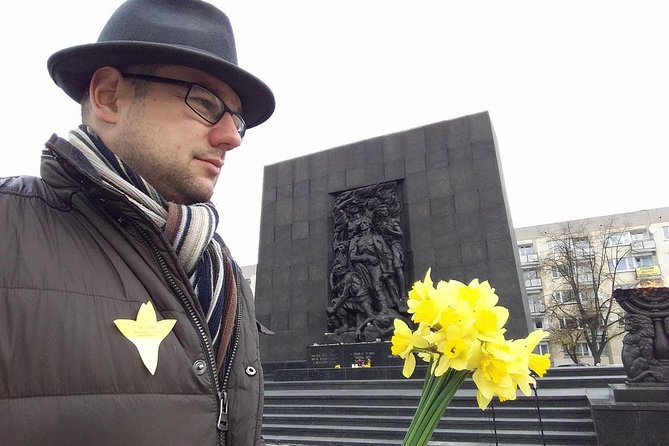
Privacy is one of the main reasons to choose this experience. Only your own party participates, so you can ask about family history, wartime events, architecture, or the film connection without trying to speak over a large group.
The price is $321.68 per group. For four people, that works out to roughly $80.42 each, which is fair for a private, three-hour guided experience with hotel pickup and drop-off. For two people, the per-person cost is much higher, but you are paying for a dedicated guide rather than two seats on a standard group walk.
There is a small inconsistency in the stated capacity. The price is described as covering up to four people, while another description refers to a private group of up to six. I would confirm the maximum number and the correct rate before finalizing your booking. That matters if you are traveling with a larger family or two couples.
A private guide is most useful when you want interpretation rather than simply a route. If you are satisfied with reading plaques and following a map, a self-guided visit will cost less. If you want the sites explained in sequence, with transport between them, the private price has a stronger case.
What the guide can add
The guide is the heart of this experience. The tour is described as led by a local historian born and raised in the area, and the strongest praise focuses on clear explanations, flexibility, punctuality, and an engaging manner.
Paulina received particular praise for bringing depth to the monuments and for helping a group see the Warsaw Zoo, original buildings, and additional memorials after adding a driver. Artur was praised for communicating well, shaping a good plan, and remaining flexible while keeping the group happy.
Those details suggest an informal, personal style rather than a stiff lecture. A guide who can adapt the route is valuable here because the subject is serious and the sites vary in emotional weight.
At the same time, you should confirm the exact plan. One booking had confusion about the number of hours and the POLIN visit. The experience is advertised at about three hours, but another booking lasted four hours after an extra stop and pickup arrangements. That may be welcome, but it is better to know what you are buying.
Timing, comfort, and practical details
The listed stops add up to about 95 minutes, leaving the rest of the three-hour tour for driving, pickup, orientation, and transitions. That timing makes sense for a route spread across Warsaw, but it also means you should not expect a long pause at every location.
Pickup and drop-off are available anywhere in Warsaw. The tour is offered in English, uses a mobile ticket, and bottled water is supplied. It is near public transportation, although the pickup service may make transit unnecessary for your group.
Most people can participate, and service animals are allowed. The tour is not described as a fully step-free or specially adapted experience, so if you have specific mobility needs, ask about the walking and vehicle arrangements before booking.
You receive confirmation when booking, except for reservations made within one hour of departure, when confirmation is sent as soon as possible subject to availability. Free cancellation is available up to 24 hours before the start time. Cancellations or changes inside that window are not refunded or accepted.
Who should book this experience?
I would choose this tour if you want a serious introduction to Warsaw’s Holocaust sites but do not want to spend the day planning a route across the city. It also suits families, couples, and small groups who value questions and a flexible pace.
The tour is a good fit for you if:
- You want a local guide rather than a large scheduled group.
- You prefer a three-hour introduction to a longer museum visit.
- You need pickup and drop-off in Warsaw.
- You want the option of driving between scattered locations.
- You are interested in the connection between wartime Warsaw and The Pianist.
I would look elsewhere if your main goal is the full POLIN Museum exhibition. This experience only covers the museum exterior and nearby monuments. I would also consider a self-guided route if you want to spend long, quiet periods at each memorial or keep costs as low as possible.
Should you book it?
Book this private tour if you want the Warsaw Ghetto explained by a guide who can connect separate sites into one clear story. The strongest reasons are the private format, local perspective, flexible transport, and the chance to see memorials that can be hard to interpret on your own.
Before paying, confirm three points: the maximum group size, the driver upgrade and its cost, and that POLIN means an exterior visit rather than admission to the exhibition. If those details match your plans, $321.68 is a reasonable group price for a focused and personal introduction to one of Warsaw’s most important areas.
FAQ
Where does the Warsaw Ghetto tour take place?
The tour takes place in Warsaw, Poland, with stops at Umschlagplatz, Mila 18, the area around POLIN Museum, a surviving ghetto wall fragment, and Praga North.
How long does the tour last?
The experience lasts approximately three hours. A past booking extended to four hours after additional arrangements and a photo stop, so you should confirm the exact schedule when booking.
Is pickup available?
Yes. Pickup and drop-off are offered anywhere in Warsaw.
Is this a private tour?
Yes. Only your own group participates. The price is listed as $321.68 for a group of up to four, although another description refers to groups of up to six, so confirm the correct capacity before booking.
Is the POLIN Museum included?
The tour includes walking around the POLIN Museum and seeing the important monuments in the surrounding area. Admission to the indoor museum exhibition is not included.
Is the tour offered in English?
Yes. The experience is offered in English.
Is bottled water provided?
Yes. Bottled water is provided during the tour.
What is the cancellation policy?
You can cancel for a full refund up to 24 hours before the experience starts. Cancellations or changes made less than 24 hours before the start time are not accepted and are not refunded.
Just added around Warsaw
- Jewish heritage in Warsaw★ 4.5 · 3 reviews
- Warsaw Outdoor Paintball with Transfers (all year round)★ 5.0 · 3 reviews
- World War II Warsaw Old Town, Military Cemetery Walking Tour★ 4.7 · 3 reviews
- Warsaw: Wolf’s Lair & Swieta Lipka Small-Group Tour + Lunch★ 5.0 · 3 reviews
- Sunset Boat Tour with Unlimited Drinks in Warsaw★ 3.5 · 3 reviews
- Majdanek – German camp from II World War – Private Tour – 1 DAY TRIP FROM WARSAW★ 5.0 · 3 reviews
- From Warsaw: Guided Tour to Wieliczka Salt Mine and Krakow★ 4.5 · 3 reviews
- Warsaw Sightseeing with NEW Mercedes Sclass !!!★ 5.0 · 3 reviews
Jewish Quarter & Ghetto Tours, compared.

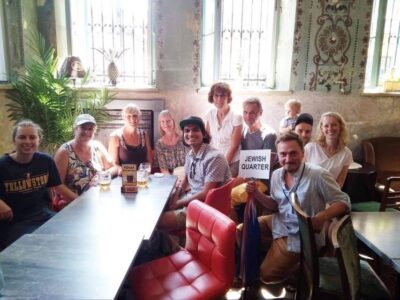

Bike Tour of Old Town, Jewish Quarter and the Ghetto
Read our review →
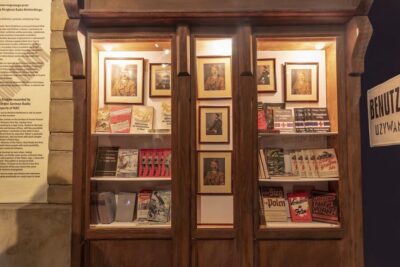
Kazimierz, Schindler’s Factory & Ghetto Guided Tour
Read our review →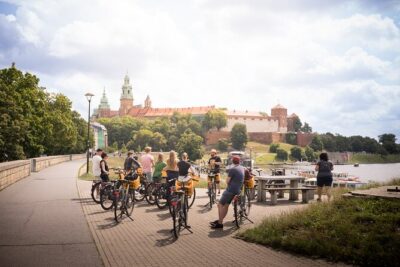
Full Bike Tour – the Old Town, Jewish Qtr & the Ghetto NEW BIKES
Read our review →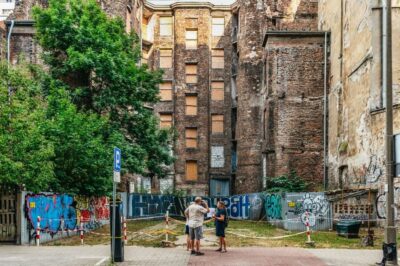
Warsaw Ghetto Private Walking Tour with Hotel Pickup
Read our review →
Bike Tour of the Old Town, Kazimierz, and the Ghetto
Read our review →Browse the lists this tour appears in