
REVIEW · JEWISH QUARTER & GHETTO TOURS
Warsaw Daily Jewish Ghetto Guided Tour with Jewish Cemetery
Warsaw’s hardest stories are written into its streets. This three-hour tour brings you through the former Jewish Ghetto with a licensed history guide, and I like its small group limit of 15 and its visit to the Jewish Cemetery, where the past feels personal rather than abstract. The main consideration is that the Jewish Cemetery is closed on Saturdays, so the replacement visit is All Saints Church.
I also like the focus on the Muranów district, where fragments of ghetto walls and old buildings help connect the facts to real places. The tour costs $131 per person, which is a serious price for three hours, but it can make sense if you want a focused guide, cemetery admission, and a clear account of the Warsaw Ghetto Uprising and the Holocaust without trying to piece the story together alone.
In This Review
- Key points before you book
- Starting at the InterContinental Hotel
- Muranów and the former Warsaw Ghetto
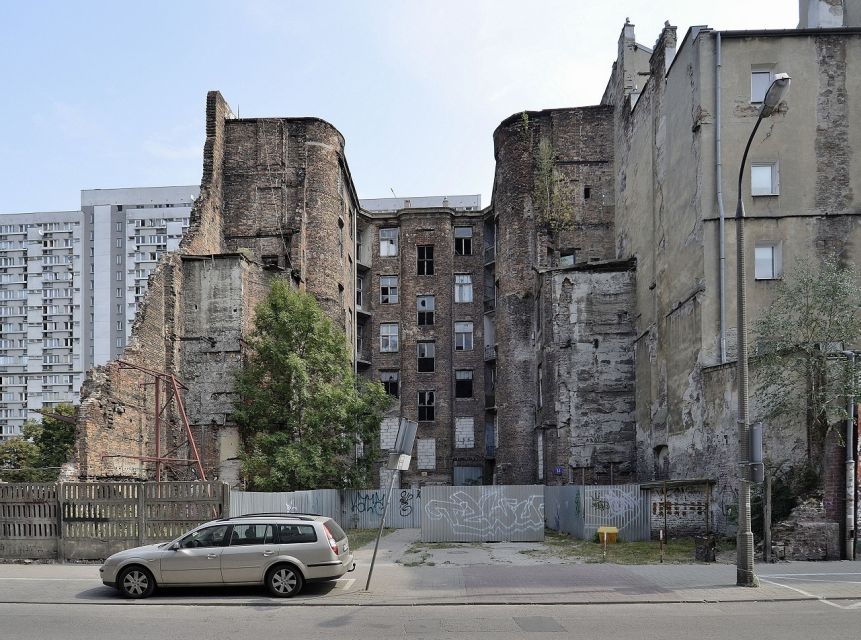
- The ghetto walls and what remains
- Nożyk Synagogue and prewar Jewish Warsaw
- The Warsaw Ghetto Uprising
- Entering the Jewish Cemetery
- Why the small group matters
- Is $131 good value for three hours?
- Who should book this tour?
- Practical details that affect the day
- Should you book the Warsaw Ghetto tour?
- FAQ
- How long does the Warsaw Jewish Ghetto tour last?
- What language is the tour offered in?
- Where is the meeting point?
- What is the maximum group size?
- Is entrance to the Jewish Cemetery included?
- Can I visit the Jewish Cemetery on a Saturday?
- Is the tour wheelchair accessible?
- Can I cancel for a full refund?
Key points before you book
- A focused three-hour route: The tour concentrates on Muranów, the former Warsaw Ghetto, rather than trying to cover all of Warsaw.
- A small group of up to 15: A smaller party gives you a better chance to hear the guide and ask questions.
- Nożyk Synagogue: You see the only surviving prewar synagogue in Warsaw, an important link to the city’s Jewish life before World War II.
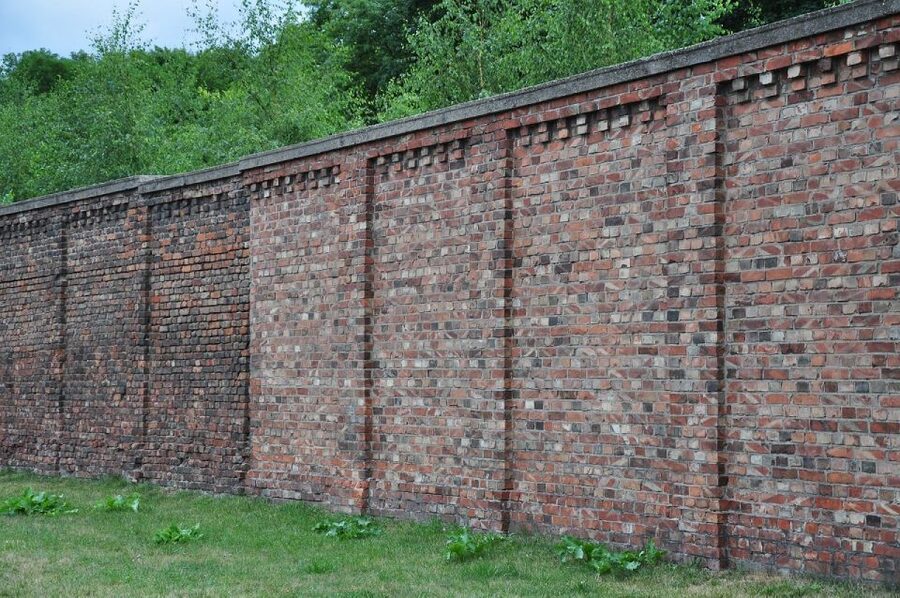
- Fragments of the ghetto remain: Authentic wall sections and old houses help you picture the closed district where more than 400,000 Jews were forced to live.
- The Jewish Cemetery adds a human scale: Graves and memorials connect large historical events with religious leaders, political activists, cultural figures, and unnamed victims.
- Saturday plans change: Since the cemetery is closed that day, the tour visits All Saints Church instead.
Starting at the InterContinental Hotel
Your meeting point is in front of the InterContinental Hotel at Emilii Plater 49, not inside the hotel. That distinction matters, since entering the lobby to search for the guide could cost you time.
Arrive early. The tour lasts only three hours, and the operator warns that arriving late may mean you cannot join. Check your email the day before for final instructions, especially if your plans in central Warsaw are tight.
The location is practical for a city tour because it begins in central Warsaw. From there, the route moves toward Muranów, the district that became the site of the largest Jewish Ghetto in Europe during World War II.
This is a walking history tour, so comfortable shoes are sensible. The supplied information confirms wheelchair accessibility, though the experience includes streets, historic sites, and a cemetery, so you may still want to confirm any specific mobility needs before booking.
More Jewish Heritage Tours in Warsaw
- Warsaw: Warsaw Ghetto Private Walking Tour with Hotel Pickup
★ 4.9 · 369 reviews - Warsaw: Ghetto, Jewish Cemetery & POLIN Museum Private Tour
★ 4.8 · 132 reviews - Tour of the Warsaw Ghetto
★ 5.0 · 119 reviews
Muranów and the former Warsaw Ghetto
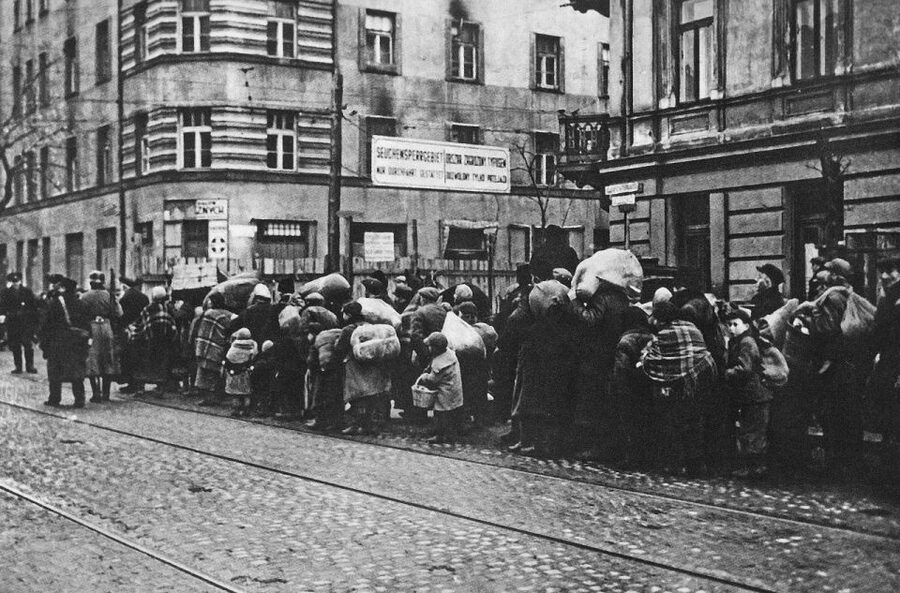
Muranów is not simply a backdrop for this tour. It was the area where German authorities forced Warsaw’s Jewish population into a sealed district during the occupation of Poland.
The ghetto covered roughly four square kilometers. More than 400,000 Jews were crowded inside that confined area, living under conditions of hunger, disease, exhaustion, and terror. About 100,000 people died inside the ghetto, while more than 300,000 were later killed at the nearby Treblinka extermination camp.
Those numbers are difficult to grasp from a book or museum label. Walking through the district gives the guide a chance to explain how the ghetto was created, how daily life was controlled, and how the Nazi plan moved from persecution to mass murder.
I value this part of the tour because it places the history in a real neighborhood. You are not only hearing dates and political decisions. You are looking at the remaining walls and old houses connected to the forced community that once lived there.
Do not expect a preserved medieval quarter. Much of wartime Warsaw was destroyed, and modern buildings now share the district with fragments of the past. That contrast can be unsettling, but it is also central to understanding Warsaw. The city’s Jewish district is not an untouched exhibit. It is a living part of the capital, with memory built into an altered urban setting.
The ghetto walls and what remains
The surviving sections of the ghetto walls are among the most important physical reminders on the route. They are not grand monuments. Their value comes from their size, location, and connection to the people confined behind them.
Your guide explains how the walls divided the ghetto from the rest of Warsaw. You can then picture the scale of the enclosure and the lack of freedom faced by its residents. A short remaining wall may look modest, but the story attached to it is immense.
This is also where a strong guide matters. A fixed plaque can tell you when the wall was built. A good guide can explain what the boundary meant for families, for movement through the city, and for the Nazi policy of isolation and destruction.
The tour is presented in English with a live guide. The guide is described as licensed and rated five stars by the operator. Names provided from past bookings include Anna and Ewa. Anna was praised for combining solid historical detail with personal stories and an easy manner, while Ewa was praised for being informative and personable.
That kind of approach is especially useful at a site this painful. You need accurate history, but you also need someone who can explain it clearly without turning tragedy into a hurried list of dates.
Nożyk Synagogue and prewar Jewish Warsaw
Nożyk Synagogue is a key stop because it is the only surviving prewar synagogue in Warsaw. The tour information also presents it as the oldest synagogue in the city.
Its importance goes beyond the building itself. The synagogue gives you a way to think about Polish-Jewish life before the war, when Warsaw had a large and active Jewish community with its own religious, political, and cultural institutions.
The tour’s wider aim is to explain Polish-Jewish heritage, not only the destruction of the ghetto. That balance matters. If you focus only on 1942 or 1943, you can miss the long community life that existed before Nazi occupation.
The supplied information does not promise a full interior visit or a religious service, so you should think of Nożyk Synagogue primarily as a historic stop explained by the guide. The value comes from its survival and its place in the story of Warsaw’s Jewish population.
A completely different kind of day out in Warsaw:
- Warsaw: Chopin Concert in the Old Town
★ 4.8 · 2,287 reviews - Warsaw: Traditional Galar Cruise on The Vistula River
★ 4.6 · 1,640 reviews - Warsaw: Old Town Highlights Walking Tour in English
★ 4.7 · 1,516 reviews - Warsaw Concert: Chopin – Painted by Candlelights with Wine
★ 4.8 · 1,442 reviews
The Warsaw Ghetto Uprising
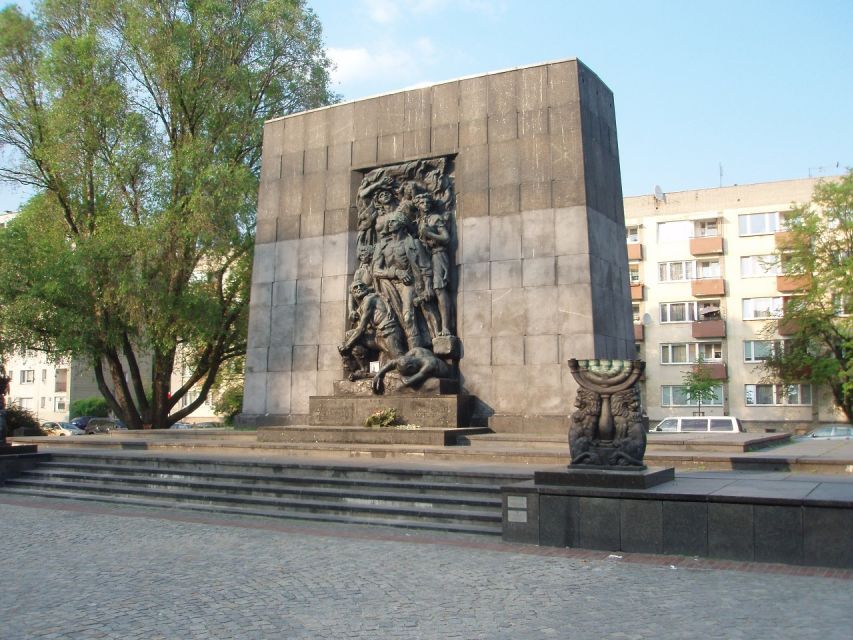
A major part of the tour covers the Warsaw Ghetto Uprising of 1943. Your guide explains the people who resisted German forces and the conditions that led to the revolt.
The uprising was not a conventional military campaign. The people inside the ghetto faced overwhelming force, limited supplies, and the knowledge that deportations were leading to death at Treblinka. The tour puts the resistance into that setting, helping you understand both its courage and its desperate odds.
This section should appeal to you if you want more than a general Holocaust overview. The focus is specifically on Warsaw, the ghetto, and the people who fought back. The physical streets of Muranów give the discussion a strong sense of place.
The tour also covers the Nazi Final Solution and the persecution of Jews in German-occupied Poland. That broader context is necessary, but the route remains tied to Warsaw rather than becoming a general European history lecture.
Expect a serious experience. This is not a light sightseeing walk with a few dramatic stories added for effect. The subject includes mass death, starvation, disease, forced confinement, and the destruction of a community. I would plan it for a day when you have enough time afterward to reflect rather than rushing straight into another busy activity.
Entering the Jewish Cemetery
The Jewish Cemetery is scheduled as the final stop, and it gives the tour a quieter ending. Entrance is included in the price, so you do not need to arrange a separate ticket.
Inside, the guide tells stories about Polish-Jewish spiritual leaders, political activists, and creators of Jewish culture. You also hear about thousands of unnamed victims of the ghetto.
That mix is important. A cemetery can turn a huge historical event into a collection of individual lives. You see that the people affected were not only numbers in wartime records. They were rabbis, writers, organizers, artists, families, and people whose names were never recorded in a way that survived.
The cemetery also helps balance the focus on death with a sense of community and memory. The stories of cultural and religious leaders show what was lost, while the unnamed graves remind you how much can never be fully recovered.
The cemetery visit is the part most affected by the day of your booking. It is closed on Saturdays. On that day, the tour visits All Saints Church instead, a site described as closely connected to Jewish history in Warsaw. The church provides architecture and historical context, but it is not an equivalent cemetery visit. If the cemetery is a priority, avoid Saturday.
A previous booking in July did not include the cemetery. The available information does not explain why, so I would treat the cemetery as planned rather than absolutely guaranteed and check the details sent before your tour. At minimum, confirm the day and any last-minute route changes.
Why the small group matters
The group size is capped at 15 people, smaller than the 30-person groups offered by some other operators. That difference may sound minor, but it affects how the tour feels on a narrow street or at a small memorial.
With fewer people, you have a better chance of hearing the guide without standing close to the front. Questions are also easier to ask, and the guide can respond to the interests of the group instead of delivering one fixed speech.
The benefit can be even greater if the group is very small. One booking had only two participants, creating a relaxed setting and giving the guide room to add personal stories. You cannot count on having a private tour, but the limit of 15 keeps the experience more manageable.
The trade-off is price. At $131 per person, this is not a budget walk. You are paying for a licensed guide, three hours of focused instruction, cemetery entry, and a smaller group. If you are comfortable reading museum panels and following a map, you may find the cost high. If you want a structured explanation of a complicated and emotionally difficult subject, the fee is easier to justify.
Is $131 good value for three hours?
I would judge the price by the guide and the subject, not by the number of stops. The tour covers the former ghetto, the wall remains, Nożyk Synagogue, and the cemetery, but its real product is interpretation.
The history of the Warsaw Ghetto involves the prewar Jewish community, German occupation, ghetto policy, starvation and disease, deportations, Treblinka, the Final Solution, and the 1943 uprising. A guide who connects those parts can save you hours of preparation and prevent the route from becoming a series of disconnected memorials.
The price also includes entrance to the Jewish Cemetery and a small group of up to 15. There is no mention of transport, meals, or extra museum admission, so you should not compare it with a full-day sightseeing package. It is a concentrated walking experience.
I would consider it good value for a first visit to Warsaw if the Holocaust and Polish-Jewish history are high on your list. I would hesitate if you want a broad tour of the city, a casual walk, or the lowest possible cost.
Who should book this tour?
This tour suits you if you want a serious introduction to Warsaw’s Jewish heritage and the wartime ghetto. It is also a good choice if you prefer a guide who can answer questions rather than relying on a written guidebook.
History-minded visitors will get the most from it, especially those interested in the Holocaust, World War II, resistance movements, or the culture of prewar Warsaw. The small group should also appeal to you if large crowds make difficult sites harder to absorb.
I would not choose it as a family activity without considering the age and comfort of everyone in your group. The subject is severe, and the tour deals directly with mass death and genocide. Older children and teenagers may find it meaningful, but the tone is not entertainment.
You might also pair it with a separate visit to a museum or memorial, but that is not required to understand the route. Three hours gives you a focused foundation. It does not cover every part of Warsaw’s Jewish history, and the tour should not be mistaken for a complete citywide account.
Practical details that affect the day
The advertised language is English. The tour includes a live guide, and the guide is expected to be fluent in the chosen language, with English listed for this experience.
The duration is three hours. Starting times vary, so you need to check availability when booking. Do not leave your arrival until the last minute, since late arrival may prevent you from joining.
The tour is wheelchair accessible according to the supplied information. Since the route includes outdoor city areas and a historic cemetery, I would still contact the provider if you need details about surfaces, entrances, or rest points.
Free cancellation is available up to 24 hours before the tour for a full refund. You can also reserve now and pay later, which helps if your Warsaw schedule is still shifting.
Rosotravel Poland operates the experience. The overall rating is 4.9 from eight reviews, with the strongest praise focused on the guides. Anna was described as personable and able to add stories beyond the basic facts, while Ewa received praise for clear information and a friendly manner. Those comments point to the guide as the main reason to book.
Should you book the Warsaw Ghetto tour?
Book it if you want a careful, place-based account of Warsaw’s Jewish community, the ghetto, and the 1943 uprising. The combination of Muranów, surviving wall fragments, Nożyk Synagogue, and the Jewish Cemetery gives the three hours a strong shape, while the small group and guides such as Anna and Ewa add personal depth.
Think twice if $131 feels too high for a walking tour or if you want a lighter introduction to Warsaw. Also avoid Saturday if the Jewish Cemetery is essential to your plans, since the route changes to All Saints Church.
For the right visitor, this is money well spent. You leave with more than dates and tragic statistics. You gain a clearer sense of the people, places, and choices behind one of Europe’s most painful wartime stories.
FAQ
How long does the Warsaw Jewish Ghetto tour last?
The tour lasts three hours.
What language is the tour offered in?
The tour is offered in English with a live guide.
Where is the meeting point?
Meet the guide in front of the InterContinental Hotel at Emilii Plater 49, 00-125 Warsaw. Do not enter the hotel, since it is only the meeting point.
What is the maximum group size?
The tour accepts up to 15 participants.
Is entrance to the Jewish Cemetery included?
Yes. Entrance to the Jewish Cemetery is included in the tour price.
Can I visit the Jewish Cemetery on a Saturday?
No. The cemetery is closed on Saturdays. The tour visits All Saints Church instead, a site connected to Jewish history in Warsaw.
Is the tour wheelchair accessible?
Yes, the activity is listed as wheelchair accessible.
Can I cancel for a full refund?
Yes. You can cancel up to 24 hours in advance for a full refund. You can also reserve now and pay later.
Just added around Warsaw
- Jewish heritage in Warsaw★ 4.5 · 3 reviews
- Warsaw Outdoor Paintball with Transfers (all year round)★ 5.0 · 3 reviews
- World War II Warsaw Old Town, Military Cemetery Walking Tour★ 4.7 · 3 reviews
- Warsaw: Wolf’s Lair & Swieta Lipka Small-Group Tour + Lunch★ 5.0 · 3 reviews
- Sunset Boat Tour with Unlimited Drinks in Warsaw★ 3.5 · 3 reviews
- Majdanek – German camp from II World War – Private Tour – 1 DAY TRIP FROM WARSAW★ 5.0 · 3 reviews
- From Warsaw: Guided Tour to Wieliczka Salt Mine and Krakow★ 4.5 · 3 reviews
- Warsaw Sightseeing with NEW Mercedes Sclass !!!★ 5.0 · 3 reviews
Jewish Quarter & Ghetto Tours, compared.


Bike Tour of Old Town, Jewish Quarter and the Ghetto
Read our review →
Kazimierz, Schindler’s Factory & Ghetto Guided Tour
Read our review →
Full Bike Tour – the Old Town, Jewish Qtr & the Ghetto NEW BIKES
Read our review →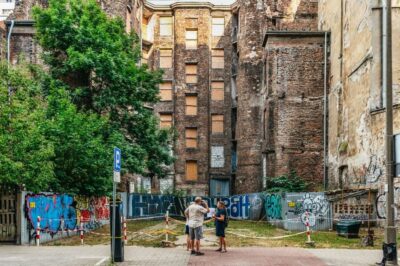
Warsaw Ghetto Private Walking Tour with Hotel Pickup
Read our review →
Bike Tour of the Old Town, Kazimierz, and the Ghetto
Read our review →Browse the lists this tour appears in