
REVIEW · OLD TOWN WALKING TOURS
Warsaw Old Town UNESCO HERITAGE walking tour in English
Warsaw’s past is written in rebuilt stone. I like this tour because it links the Royal Castle, cathedral, market square, city walls, and New Town into one clear story. I also like the mix of facts, legends, and everyday details, all led by guides who were born and raised in Warsaw. The main drawback is that two hours can feel short, especially if you want to linger inside the cathedral or explore beyond the main sights.
The $5 price looks excellent for a small-group tour with an English-speaking local guide and a free map. Still, check the payment terms carefully before booking, because the experience is also described as a free walking tour. That may mean the advertised price and the guide’s expected payment arrangement are not the same thing.
In This Review
- Key points at a glance
- Why this short walk works well in Warsaw
- Meeting Sigismund at the castle square
- The Royal Castle and Warsaw’s royal story
- St. John’s Cathedral and a chance to step inside
- The Old Town Market and medieval daily life
- From the medieval walls to the Barbican
- Maria Skłodowska-Curie and the New Town transition
- Ending in New Town after two hours
- What the two-hour pace feels like
- Price, payment, and booking flexibility
- Who should choose this Warsaw walk?
- Should you book this tour?
- FAQ
- How long does the Warsaw Old Town walking tour last?
- What language is the tour offered in?
- Where does the tour start?
- Where does the tour finish?
- Is entry to St. John’s Cathedral included?
- Can I cancel the booking?
Key points at a glance

- Warsaw’s medieval core: Walk through the Old Town, the city’s first settlement, then continue into New Town, its second-oldest district.
- A clear 20th-century story: The route explains wartime destruction and the difficult rebuilding carried out under communism.
- Seven major sights: See Sigismund’s Column, the Royal Castle, St. John’s Cathedral, the Old Town Market, the Barbican, the Maria Skłodowska-Curie Museum, and New Town.
- Cathedral access included: The interior is included when no religious service is taking place.
- Local perspective: Guides are Varsovians, born and raised in the city, rather than outside operators with only a passing connection to Warsaw.
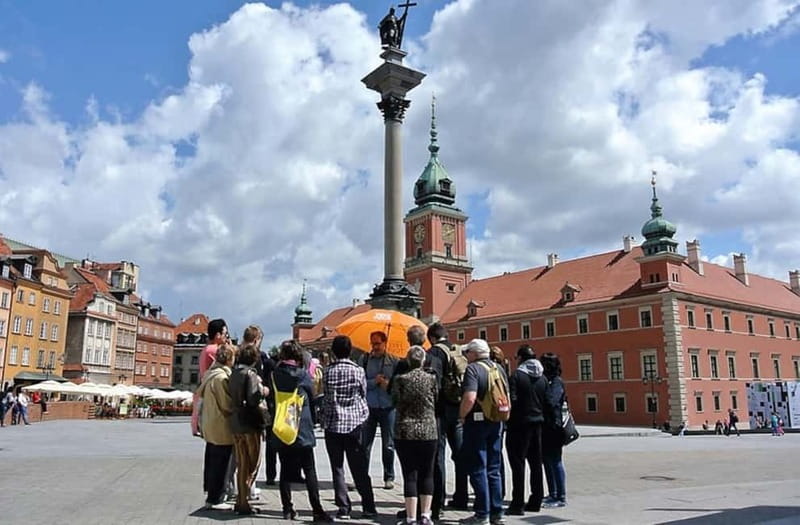
- Easy meeting point: Look for the orange umbrella topped with a British flag by Sigismund’s Column.
Why this short walk works well in Warsaw
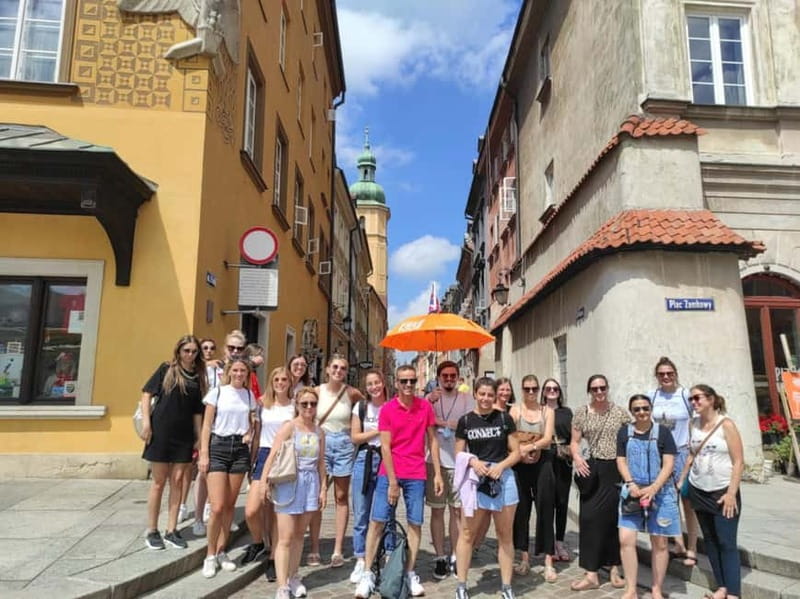
Warsaw can be a difficult city to read at first. Its Old Town looks medieval, yet much of what you see was rebuilt after the Second World War. The key to enjoying it is understanding the difference between old fabric, careful reconstruction, and modern city life.
This walk gives you that framework early in your visit. Instead of seeing isolated monuments, you follow a route through the former medieval settlement, beyond the old walls, and into New Town. That makes the city easier to navigate for the rest of your stay.
The tour also covers a useful span of time. You hear about life in a medieval city, the growth of Warsaw, the importance of the royal court, wartime destruction, and the post-war rebuilding process under a communist government. For a two-hour walk, that is a lot of ground.
I particularly like the promised balance between hard facts and lighter material. Legends and anecdotes help break up dates and political history. They also give you the kind of local details that are easy to miss if you walk through the Old Town alone with only a map.
The small-group format should help keep the guide audible and make questions easier. The tour is offered in English, and free maps are included. The experience is also listed as wheelchair accessible, though you may still want to ask about the exact route and surfaces before arriving.
More History Tours in Warsaw
- Warsaw: POLIN Museum of the History of Polish Jews Ticket
★ 4.7 · 1,142 reviews - Warsaw: Chopin Concert at Historical Venue in Old Town
★ 4.7 · 445 reviews - Small-Group Historical Guided Tour of Warsaw with pick up/drop off. Public Tour.
★ 4.5 · 343 reviews
Meeting Sigismund at the castle square
The meeting point is by Sigismund’s Column, one of Warsaw’s best-known landmarks. Look for the guide holding an orange umbrella with a British flag on top. This is a practical detail worth taking seriously, since the square can be busy and several walking groups may gather nearby.
Sigismund’s Column receives about 20 minutes of guided attention. The monument gives the guide a natural way to explain the move of the Polish capital to Warsaw and the role of King Sigismund III Vasa in the city’s development. The column is not just a meeting marker. It introduces the royal and political side of Warsaw before the walk turns toward religious, civic, and domestic life.
The open square also helps you get oriented. From here, the Old Town unfolds around the Royal Castle and its surrounding streets. You can see why this location works as a starting point: it places you at the edge of the royal center, with most of the historic route close by.
If you arrive early, use the time to identify the column and orange umbrella rather than wandering into a side street. The instructions are specific, so there is no need to make the first few minutes of the tour stressful.
The Royal Castle and Warsaw’s royal story
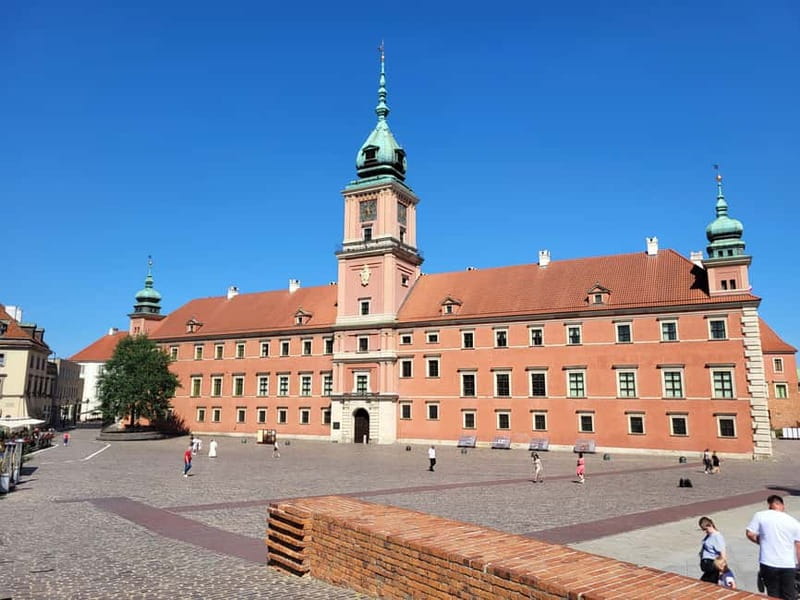
The Royal Castle is given about 15 minutes. The tour focuses on the outside and the castle’s place in Warsaw’s story, rather than offering a long museum visit. That is important to understand before you book. If you want a detailed look at the castle’s rooms and collections, you will need separate time.
The castle helps explain why Warsaw became more than a regional settlement. It was tied to royal power, government, and the changing role of the city within Poland. The guide can also connect the building to the war and reconstruction themes that return later on the route.
A short stop is useful for a first look, but it will not satisfy everyone. I would treat this part as an introduction, not a full castle tour. The advantage is that you keep moving and have time for several other landmarks in the UNESCO area.
St. John’s Cathedral and a chance to step inside
The walk continues to St. John’s Archcathedral, with about 15 minutes devoted to the site. This is one of the most meaningful stops because it shifts the story from royal authority to religious and civic life.
The interior is included whenever no service is taking place. That condition matters. You should not assume that every departure will include an indoor visit, since worship takes priority. If entering the cathedral is important to you, check the timing and be prepared for the possibility that the guide will discuss the building from outside.
The cathedral stop also fits the tour’s larger theme of destruction and reconstruction. Warsaw’s historic center was badly damaged during the war, and the buildings you see today belong to a city that had to rebuild much of its central identity. A guide who grew up in Warsaw can place that process in the context of modern city life rather than presenting it as a remote chapter in a textbook.
Fifteen minutes is enough for an introduction and perhaps a brief interior visit. It is not enough for quiet reflection, extensive architectural study, or a full religious history. If you prefer a slow pace inside churches, plan to return independently.
More Old Town Walking Tours in Warsaw
- Warsaw: Chopin Concert in the Old Town
★ 4.8 · 2,287 reviews - Warsaw: Old Town Highlights Walking Tour in English
★ 4.7 · 1,516 reviews - Warsaw: Old Town Guided Walking Tour
★ 4.9 · 599 reviews - Old Town Warsaw Walking Tour
★ 4.5 · 333 reviews
The Old Town Market and medieval daily life
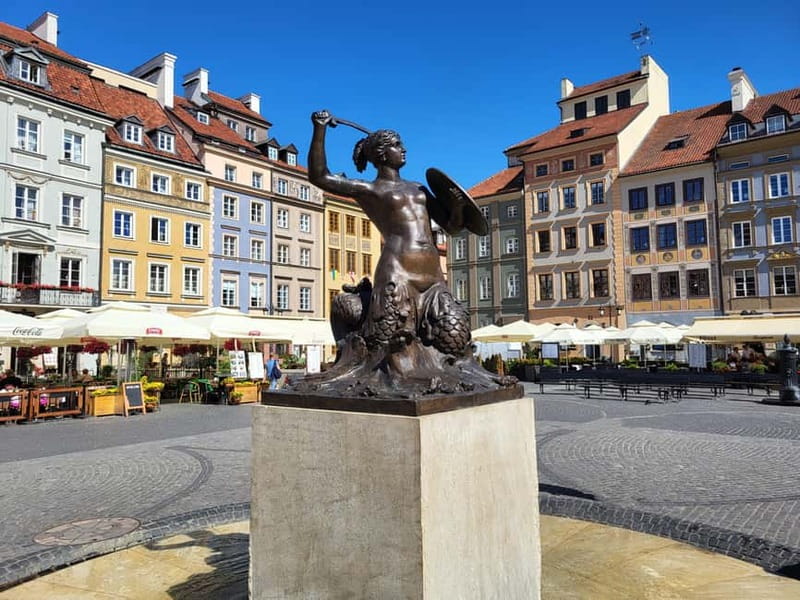
The Old Town Market Place receives another 15 minutes. This is the point where the tour’s focus on ordinary medieval life should become especially useful. Market squares were working centers, not just pretty spaces for photographs. They connected trade, local government, social life, and public events.
The guide uses the square to explain how a medieval city functioned. Expect facts about the settlement itself, along with legends and anecdotes that make the setting more memorable. The route does not simply point out façades. It tries to show how the Old Town worked as a community.
The market is also a good place to judge the tour’s pace. You will have time to look around and take photographs, but not unlimited time to browse every corner. If your priority is photography, you may feel hurried. If your priority is getting a useful overview, the short stop keeps the story moving.
The UNESCO designation gives this part of the route added weight. Warsaw’s Old Town was listed in 1980, and its importance is tied not only to attractive architecture but also to the scale and care of its reconstruction. The guide’s explanation should help you see the square as part of a larger act of rebuilding.
From the medieval walls to the Barbican
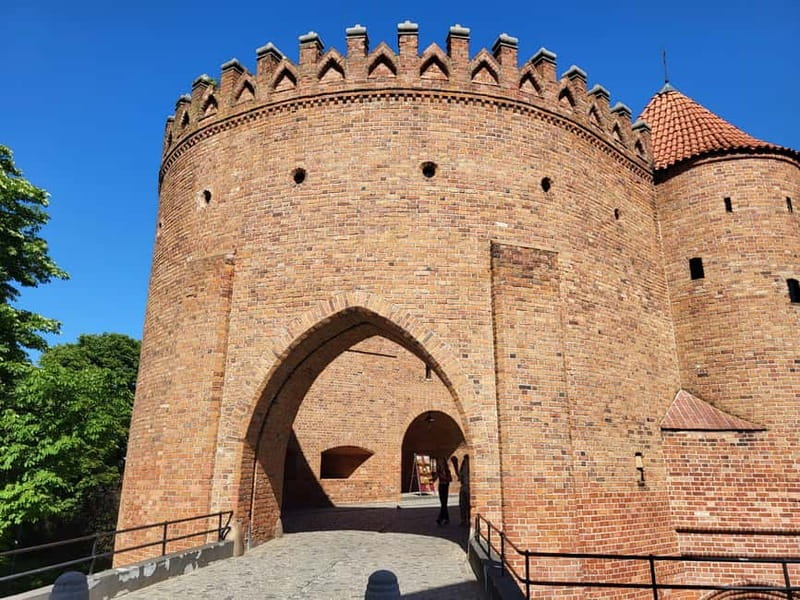
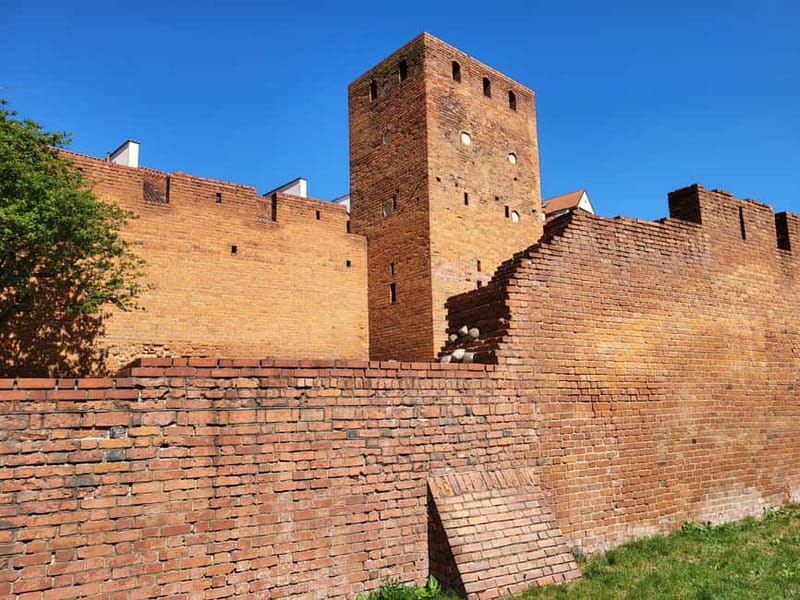
The route then follows the medieval city walls toward the Warsaw Barbican. This is one of the clearest physical sections of the walk. Walls show how the original settlement was protected, where its boundaries lay, and how compact a medieval town could be.
The Barbican gives you a strong sense of the defensive side of the city. It also provides a bridge between the Old Town and the district beyond the original walls. The tour uses this transition to introduce New Town, which is older than its name suggests and is described as Warsaw’s second-oldest district.
This is a good example of why a guided route can be more useful than simply walking from square to square. Without explanation, a wall may look like a photogenic fragment. With context, it becomes evidence of the city’s earlier shape and later growth.
Again, the 15-minute stop is an overview. You will learn what the fortification meant, but you should not expect an extended examination of every section. The benefit is that the route keeps a steady rhythm and avoids spending the entire tour in one small area.
Maria Skłodowska-Curie and the New Town transition
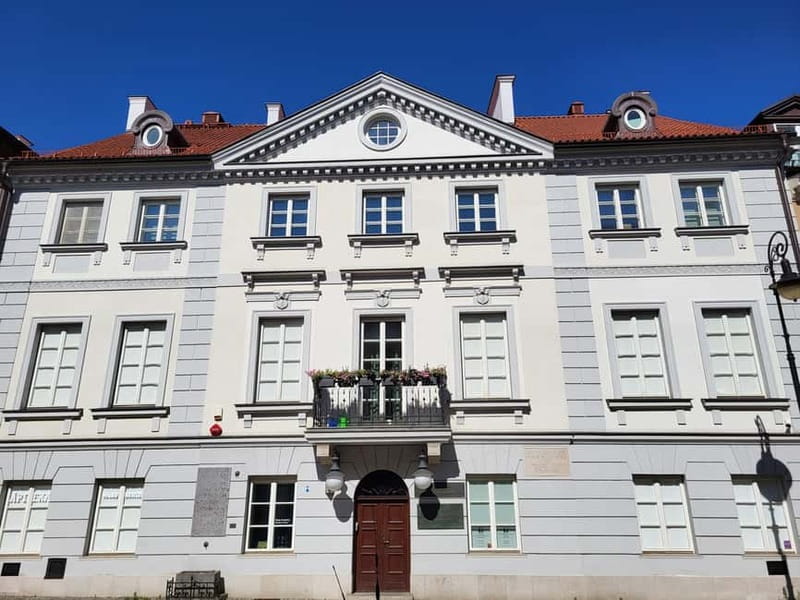
The Maria Skłodowska-Curie Museum is the next named stop, also with about 15 minutes of guided attention. The museum adds a modern intellectual figure to a tour otherwise centered on medieval streets, royal buildings, and wartime reconstruction.
Maria Skłodowska-Curie was born in Warsaw, and her connection to the city gives the guide a chance to broaden the story. Warsaw is not only a place of kings, churches, walls, and battles. It is also a city associated with education, scientific work, and people whose careers reached far beyond Poland.
The stop is best understood as an exterior orientation or short introduction unless your booking specifically includes museum entry. The provided details do not promise an indoor museum visit. If you want to see the museum’s exhibits, set aside separate time and confirm opening arrangements.
From here, the route leads toward Rynek Nowego Miasta. This change of district is subtle but useful. You move beyond the best-known Old Town sights and see how Warsaw continued to develop outside its original fortified center.
Ending in New Town after two hours
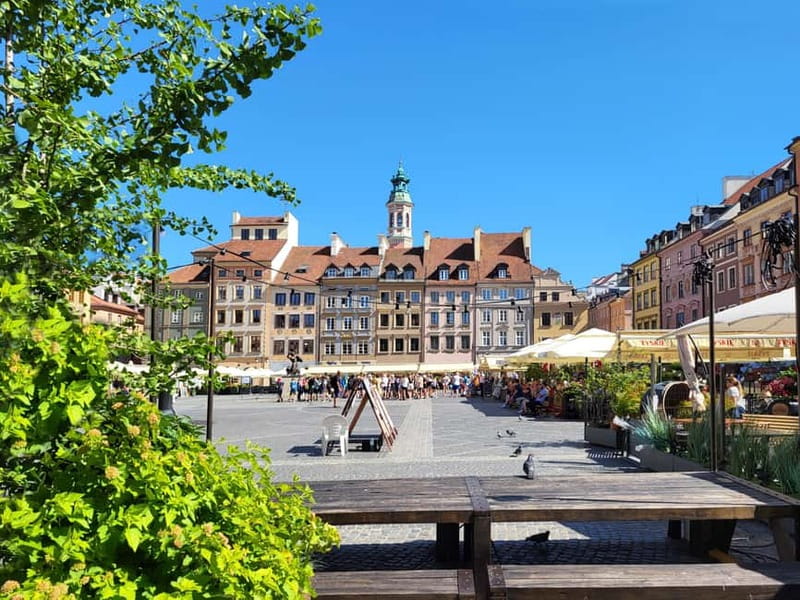
The stated finish is Rynek Nowego Miasta, or New Town Market. Ending here gives the walk a logical shape. You begin at royal Warsaw, pass through the medieval core and its defenses, and finish in the next historic district.
That final location can be useful if you want to continue exploring on foot. You are not simply returned to the starting monument with no sense of direction. Instead, you finish with another part of the historic center in front of you.
There is one practical point to clarify. The activity details also say the walk ends back at the meeting point, while the route information names Rynek Nowego Miasta as the finish. Those locations are not described the same way, so confirm the final stopping point when you book or ask the guide at the start. It is a small issue, but it matters if you have a restaurant reservation, museum entry, or transport connection afterward.
What the two-hour pace feels like
Two hours is a sensible length for an introduction to Warsaw. You get a broad story without giving up half a day. The route includes many major places, and the stops are generally around 15 minutes, with a longer opening segment at Sigismund’s Column.
The tradeoff is depth. You will hear a lot, but you will not study every building. You may not have time to enter every site, browse museums, or pause for long photographs. One weakness of this kind of compact route is that you can finish feeling you have seen the main points but not explored very far beyond them.
I would book it early in your stay. The walk gives you names, landmarks, and historical connections that make later independent visits easier. Afterward, you can return to the cathedral, castle, market, or museum that caught your attention.
The mix of local guides, small groups, and free maps adds practical value. Guides born and raised in Warsaw can explain the city as a lived place, not only as a sequence of dates. That local link is one of the strongest reasons to choose this tour over a bare audio guide.
Price, payment, and booking flexibility
At $5 per person, the stated price is hard to criticize if it accurately covers the guided walk. You receive two hours with a professional local guide, an English-language presentation, a small-group format, and a free map. Even a short orientation can save you time and help you choose where to spend your own admission fees later.
But do not skip the payment question. The experience is also presented as a free walking tour, and one piece of direct feedback makes clear that this point surprised a participant. Check whether $5 is the full booking price, a reservation charge, or part of a tip-based arrangement.
The booking terms are traveler-friendly. You can cancel up to 24 hours before the start for a full refund, and reserve now while paying later. That helps if your Warsaw schedule depends on weather, train arrivals, or a changing city itinerary.
Who should choose this Warsaw walk?
I would recommend it most strongly to first-time visitors who want a quick historical orientation. Families, couples, and solo visitors can all use the route to get a basic map of the Old Town and New Town. The English-only format suits anyone comfortable following a live guide in English.
It also fits visitors who enjoy history but do not want a lecture. The mix of facts, legends, anecdotes, and major sights should keep the walk approachable. The local guide angle is especially useful if you want more than a list of dates.
You may want a different plan if you prefer slow museum visits, long photo stops, or detailed architectural analysis. The tour covers a lot in two hours, so its strength is range rather than extended time at one site.
Should you book this tour?
Book it if you want an inexpensive, compact introduction to Warsaw’s historic center and value the perspective of guides raised in the city. The route connects the royal quarter, cathedral, market, fortifications, scientific heritage, and New Town in a way that helps the city make sense.
Before paying, confirm the free-tour wording and the exact end point. If you accept the brisk pace and treat the walk as a foundation for further exploring, this is a strong-value choice. If you want full interior visits and unhurried sightseeing, use it as a first orientation, then return to the places that deserve more time.
FAQ
How long does the Warsaw Old Town walking tour last?
The tour lasts two hours. Starting times vary, so check availability when choosing a departure.
What language is the tour offered in?
The tour is offered in English and includes a live English-speaking guide.
Where does the tour start?
It starts by Sigismund’s Column. Look for a guide holding an orange umbrella with a British flag on top.
Where does the tour finish?
The route information names Rynek Nowego Miasta as the finish. Other activity details say it ends back at the meeting point, so confirm the final location before or at the start of the tour.
Is entry to St. John’s Cathedral included?
The cathedral interior is included when no service is taking place. Indoor access is therefore not guaranteed at every departure.
Can I cancel the booking?
You can cancel up to 24 hours in advance for a full refund. The tour also offers reserve now and pay later booking.
More Walking Tours in Warsaw
- Half-Day Polish Food Walking Tour with Guide and Dinner
★ 4.5 · 381 reviews - Warsaw: Warsaw Ghetto Private Walking Tour with Hotel Pickup
★ 4.9 · 369 reviews - Warsaw: Jewish History Guided Walking Tour in English
★ 4.7 · 324 reviews - World War 2 in Warsaw walking tour in English
★ 4.7 · 237 reviews
Just added around Warsaw
- Jewish heritage in Warsaw★ 4.5 · 3 reviews
- Warsaw Outdoor Paintball with Transfers (all year round)★ 5.0 · 3 reviews
- World War II Warsaw Old Town, Military Cemetery Walking Tour★ 4.7 · 3 reviews
- Warsaw: Wolf’s Lair & Swieta Lipka Small-Group Tour + Lunch★ 5.0 · 3 reviews
- Sunset Boat Tour with Unlimited Drinks in Warsaw★ 3.5 · 3 reviews
- Majdanek – German camp from II World War – Private Tour – 1 DAY TRIP FROM WARSAW★ 5.0 · 3 reviews
- From Warsaw: Guided Tour to Wieliczka Salt Mine and Krakow★ 4.5 · 3 reviews
- Warsaw Sightseeing with NEW Mercedes Sclass !!!★ 5.0 · 3 reviews
Old Town Walking Tours, compared.




Bike Tour of Old Town, Jewish Quarter and the Ghetto
Read our review →

Sightseeing EcoCruise around the Old Town of Gdansk
Read our review →
Browse the lists this tour appears in