

REVIEW · JEWISH QUARTER & GHETTO TOURS
Warsaw : Jewish Quarter Private Walking Tour
Warsaw remembers in plain sight. This two-hour private walk links the Jewish Ghetto’s most important memorials with the Nożyk Synagogue, Jewish Cemetery, Umschlagplatz, and surviving wall fragments. I like the private format, which lets you ask questions and adjust the pace, and I like the strong focus on places rather than a lecture from one fixed viewpoint. Guides including Paulina, Karol, and Maria have earned especially warm praise for clear, personal explanations.
The main drawback is time. Six stops in two hours means a brisk route, and the walk may finish about 30 minutes from Warsaw’s Old Town. The subject is also painful, as it should be, so this is not a light sightseeing stroll. Still, if you want a focused introduction to Jewish Warsaw with a guide who can point out details you might miss alone, the $58 price can make good sense.
In This Review
- Key points at a glance
- Why this private Warsaw walk works
- Starting at Miodowa 21B
- Nożyk Synagogue and the first historical clues
- The Footbridge of Memory and a divided city
- The Jewish Cemetery on Okopowa Street
- Mausoleum of Struggle and Martyrdom
- Umschlagplatz and the cost of deportation
- The Ghetto Heroes Monument and the Ghetto Uprising
- What the $58 price gives you
- Pace, transport, and practical planning
- Who should book this Jewish Quarter tour?
- Should you book the Warsaw Jewish Quarter walk?
- FAQ
- How long is the Warsaw Jewish Quarter private walking tour?
- What is the price?
- Where does the tour begin?
- Which languages are available?
- Is the tour private?
- What places are included?
- Is public transport included?
- Is the tour wheelchair accessible?
- Can the tour be customized?
- Are food and drinks included?
- What is the cancellation policy?
Key points at a glance
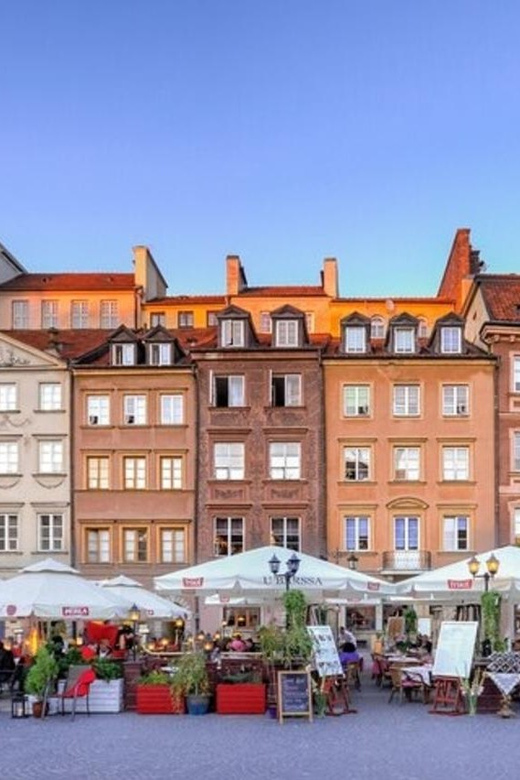
- A private route through Jewish Warsaw: You get the guide to yourself, with no larger group competing for attention.
- Six major stops in two hours: The route covers the Nożyk Synagogue, Footbridge of Memory, Jewish Cemetery, Mausoleum of Struggle and Martyrdom, Umschlagplatz, and Ghetto Heroes Monument.
- Strong personal guiding: Paulina, Karol, and Maria are named guides praised for clear English, useful historical detail, and an engaging manner.
- More than a memorial walk: Your guide can also advise you about other things to do in Warsaw and help arrange desired tickets.
- Walking plus public transport: Public transport is included unless you choose an option that changes the arrangement.
- A serious, moving experience: Expect Holocaust memorials, ghetto boundary markers, cemetery monuments, and difficult stories rather than casual sightseeing.
Why this private Warsaw walk works

Warsaw’s Jewish history is spread across modern streets, rebuilt neighborhoods, cemeteries, monuments, and small surviving fragments. Without help, you can easily walk past an iron slab marking the former ghetto wall or miss the meaning of a memorial tucked beside an ordinary road.
A private guide gives these places a human scale. You can stop when you need to, ask about a name or symbol, and request more detail about a subject that catches your attention. That matters here because the route moves between physical remains and memorial spaces. The city around them has changed, but the guide helps connect the locations.
The experience is offered in English or Spanish. It is also wheelchair accessible, an important practical point for anyone planning a private route through central Warsaw. Since public transport is included, the guide can combine walking with transit when that makes the route easier.
I would not treat this as a full survey of Warsaw’s Jewish history. Two hours is enough for a meaningful introduction, not an exhaustive study. If you want every museum room, archive, or exhibition, you will need more time. If you want the key outdoor sites explained in context, this is a compact and useful choice.
More Jewish Heritage Tours in Warsaw
- Warsaw: Warsaw Ghetto Private Walking Tour with Hotel Pickup
★ 4.9 · 369 reviews - Warsaw: Ghetto, Jewish Cemetery & POLIN Museum Private Tour
★ 4.8 · 132 reviews - Tour of the Warsaw Ghetto
★ 5.0 · 119 reviews
Starting at Miodowa 21B
The meeting point is Miodowa 21B, in central Warsaw near the Old Town. That location is practical if you are already visiting the Royal Castle, Warsaw Barbican, or Old Town Market Square.
The start also gives you a useful contrast. Warsaw’s Old Town presents a carefully rebuilt historic center, while this tour leads toward places connected with destruction, displacement, resistance, and remembrance. Your guide can help you shift from postcard Warsaw to the city’s more difficult layers.
Before setting out, use the private format to explain what you want from the walk. You might prefer more detail about the Ghetto Uprising, the cemetery, individual figures, or the layout of the former ghetto. The tour is customizable, so stating your interests early can help the guide shape the two hours.
Keep your timing realistic. The route includes six major stops, each allocated about 20 minutes, along with the movement between them. That makes this a focused walk with little spare time for long breaks.
Nożyk Synagogue and the first historical clues
The Nożyk Synagogue is one of the early stops. The planned visit includes time for photographs, sightseeing, walking, and guided explanation.
Its value is not only architectural. The synagogue gives the route a place of Jewish religious and cultural life before the destruction of the Second World War. That context matters. The later monuments are easier to understand when you first consider the community that lived, worshipped, worked, and built institutions in Warsaw.
A guide can also explain how the synagogue fits into the city today. This is one reason I prefer a private walk to simply following a map. You can ask what survived, what was rebuilt, and how Jewish life is represented in present-day Warsaw without turning the stop into a rushed photo break.
The stop is listed as a 20-minute visit, so expect an introduction rather than a long study of the building. If access inside is important to you, ask the tour team about the exact visit arrangements when booking, since the activity information focuses on the stop but does not specify admission details.
The Footbridge of Memory and a divided city
The Footbridge of Memory is one of the route’s most unusual sights. It recalls the footbridge that once crossed above a Warsaw street and connected separated parts of the Jewish Ghetto.
The original bridge became a powerful image of the ghetto’s forced division. Today, the site has a multimedia installation that points to that earlier reality. It is an example of how Warsaw uses modern public art to mark something that no longer survives in its original form.
This stop rewards explanation. On your own, you may see a contemporary installation and not understand why it matters. With a guide, you can connect the structure to the ghetto’s boundaries, the movement of people under Nazi rule, and the physical separation imposed on the Jewish population.
The installation can also make this section more accessible for people who learn best through images and visual references. One guide has used photographs during explanations, which can help you picture a city that has been radically altered.
More Walking Tours in Warsaw
- Warsaw: Old Town Highlights Walking Tour in English
★ 4.7 · 1,516 reviews - Warsaw: Old Town Guided Walking Tour
★ 4.9 · 599 reviews - Half-Day Polish Food Walking Tour with Guide and Dinner
★ 4.5 · 381 reviews - Old Town Warsaw Walking Tour
★ 4.5 · 333 reviews
The Jewish Cemetery on Okopowa Street
The Jewish Cemetery on Okopowa Street brings a different mood to the tour. Instead of a single monument, you walk through a burial ground filled with names, memorials, and traces of Jewish life in Warsaw.
The stop includes figures such as Ludwik Zamenhof and Ischok Leib Perec. Zamenhof is associated with Esperanto, while Perec was an important Yiddish writer. Janusz Korczak is also remembered here at a symbolic grave.
These names give the cemetery a wider purpose. This is not only a place linked to wartime death. It also recalls writers, educators, thinkers, and public figures who shaped Jewish culture. That broader view keeps the tour from reducing Warsaw’s Jewish story to persecution alone.
Allow yourself emotional space here. A cemetery visit can be slower and more reflective than a city street stop, yet the schedule gives it about 20 minutes. If you want extensive time to read inscriptions or walk farther through the grounds, ask about the larger version of the tour or request an adjustment.
The cemetery is also one of the places where comfortable shoes matter most. The experience is primarily on foot, and the route covers a fair amount of ground. The activity is wheelchair accessible, but you should still discuss your preferred pace and route needs with the provider in advance.
Mausoleum of Struggle and Martyrdom
The Mausoleum of Struggle and Martyrdom adds another layer to the story. The stop is connected with the suffering of people under Nazi oppression and the machinery of persecution in occupied Warsaw.
This part of the tour is less about a scenic view and more about understanding what happened to individuals caught in the system. The guide’s role is particularly important here. A clear explanation can help you place the memorial within the broader route, rather than treating it as one more name on a list of stops.
The subject matter is severe. I would choose this walk when I have the attention and energy for serious history, not when I am trying to fill a spare hour between lunch and shopping. The private setting helps because you can ask questions quietly and take a moment without worrying about a large group.
Umschlagplatz and the cost of deportation
The Umschlagplatz Monument marks the site where Warsaw Jews were assembled before deportation to extermination camps. It is one of the most direct reminders on the route of the scale and process of mass murder.
The memorial’s location is important. This is not an abstract tribute placed far from the events. It marks a point connected with the forced removal of people from the ghetto. Your guide can explain how the place functioned and why it remains central to understanding the destruction of Warsaw’s Jewish community.
I find this kind of stop more powerful when the guide gives enough factual detail without rushing toward a dramatic speech. The information supplied for this experience emphasizes the guide’s role in explaining the sites, and that is where the private format earns its keep.
The visit is planned for around 20 minutes. That is enough for a guided introduction, but not enough for every historical question. Note down subjects you want to pursue later, then ask your guide for museum suggestions or further reading in Warsaw.
The Ghetto Heroes Monument and the Ghetto Uprising
The Ghetto Heroes Monument is the emotional center of the route. It honors those who resisted Nazi oppression during the Warsaw Ghetto Uprising and remembers the people killed in the Holocaust.
The monument is especially important because it presents resistance alongside suffering. The Jewish population was not simply waiting for events to happen. People resisted, organized, fought, and made impossible choices under conditions designed to strip them of freedom and hope.
This is also a place where photographs from the past can help. One guide has used images to support the explanations, giving you a visual link between the present monument and the wartime city.
Expect this stop to bring together many of the themes introduced earlier: the ghetto boundaries, forced deportations, the destruction of Jewish Warsaw, and the courage of those who fought back. If you have only limited time in Warsaw, this monument gives you an important starting point for understanding the city’s Holocaust memorials.
The route may finish roughly a 30-minute walk from the Old Town. That is worth planning around. You are not simply returned to the Miodowa meeting point, so leave room afterward if you have a train, meal reservation, or another timed activity.
What the $58 price gives you
At $58 per person, this tour is not the cheapest way to see Warsaw’s memorials. The value comes from privacy, route planning, and interpretation rather than entrance tickets or food.
You are paying for a private guide, customization, walking, and public transport. The guide can also help your group book tickets for visits you want to make. Drinks and food are not included, and the activity should not be treated as a meal outing.
For one person, the price may feel high compared with walking alone. For a couple, family, or small group, the calculation improves because the private format gives everyone access to the same guide and allows questions without a crowded group.
I consider the price fair if you care about context and want to cover several separated sites efficiently. It is less attractive if you only want quick photographs or already know the history well. The tour’s strongest value comes from the people guiding it. Paulina has been praised for excellent English and for fitting a great deal into two hours. Karol has been praised for explaining both Warsaw and its Jewish population clearly. Maria has also received a direct commendation for her guiding.
Pace, transport, and practical planning
The tour lasts two hours, with six stops planned at roughly 20 minutes each. That is a brisk structure. You will cover a lot, but you should not expect long museum visits, extended cemetery wandering, or a relaxed café break.
Walking and public transport are included, except when a selected option changes that arrangement. The private group format makes it easier to adjust the pace, though customization cannot create extra time. If one stop matters most to you, say so before the walk begins.
Wear comfortable shoes and plan for changing weather. One particularly enthusiastic assessment noted that poor weather was the only reason the group did not want to continue for another two hours. That tells you two things: the route can be absorbing, and weather has a real effect on comfort.
The tour is wheelchair accessible. Even so, tell the provider what you need before arrival so the route and transport choices can be handled properly. Since the tour crosses several sites, practical planning matters more than on a single-location visit.
You can cancel up to 24 hours before the start for a full refund, and you can reserve now while paying later. Those terms are useful if your Warsaw schedule is still shifting.
Who should book this Jewish Quarter tour?
I would recommend it to first-time visitors who want a serious introduction to Jewish Warsaw and prefer conversation over a large group lecture. It also suits families with older children, history-focused couples, and anyone who wants help deciding what to see next in the city.
The tour works well if you have only a short stay. In two hours, you get a clear route through major memorials and can ask your guide for advice about museums and other Warsaw sights afterward.
I would be more cautious about booking it for very young children unless you already know they can handle Holocaust history. The route is solemn and information-heavy. It is also not ideal if you want a slow architectural walk or a food-focused outing.
For returning visitors, the private format is useful if you choose the customizable option and want to focus on a particular subject. You can ask for more attention to the cemetery, the uprising, religious life, or the ghetto’s physical boundaries.
Should you book the Warsaw Jewish Quarter walk?
Book this tour if you want the key sites explained by a guide who can respond to your questions. Its best features are the private group, the serious historical focus, the ability to customize, and guides such as Paulina, Karol, and Maria who have been praised for clear and engaging instruction.
Skip it if you prefer to explore quietly at your own speed, need long periods at each memorial, or want a tour built around food and casual sightseeing. Two hours moves quickly, and the ending point may require another 30-minute walk to the Old Town.
For most history-minded visitors, I see this as a strong introduction rather than a complete account of Jewish Warsaw. At $58 per person, it earns its price when the guide helps you understand what you are seeing, not merely find it on a map.
FAQ
How long is the Warsaw Jewish Quarter private walking tour?
The tour lasts two hours.
What is the price?
The listed price is $58 per person.
Where does the tour begin?
The meeting point is Miodowa 21B, 00-246 Warsaw, Poland.
Which languages are available?
The live tour guide is available in English and Spanish.
Is the tour private?
Yes. It is a private group experience, so no one outside your group joins the walk.
What places are included?
The route includes the Nożyk Synagogue, Footbridge of Memory, Jewish Cemetery Warsaw, Mausoleum of Struggle and Martyrdom, Umschlagplatz Monument, and Monument to the Ghetto Heroes.
Is public transport included?
Walking and public transport are included, except if you select an option that specifies otherwise.
Is the tour wheelchair accessible?
Yes, the activity is listed as wheelchair accessible.
Can the tour be customized?
Yes. The tour includes customization, and the guide can also offer advice about other things to do in Warsaw.
Are food and drinks included?
No. Food and drinks are not included.
What is the cancellation policy?
You can cancel up to 24 hours in advance for a full refund. You can also reserve now and pay later.
Just added around Warsaw
- Jewish heritage in Warsaw★ 4.5 · 3 reviews
- Warsaw Outdoor Paintball with Transfers (all year round)★ 5.0 · 3 reviews
- World War II Warsaw Old Town, Military Cemetery Walking Tour★ 4.7 · 3 reviews
- Warsaw: Wolf’s Lair & Swieta Lipka Small-Group Tour + Lunch★ 5.0 · 3 reviews
- Sunset Boat Tour with Unlimited Drinks in Warsaw★ 3.5 · 3 reviews
- Majdanek – German camp from II World War – Private Tour – 1 DAY TRIP FROM WARSAW★ 5.0 · 3 reviews
- From Warsaw: Guided Tour to Wieliczka Salt Mine and Krakow★ 4.5 · 3 reviews
- Warsaw Sightseeing with NEW Mercedes Sclass !!!★ 5.0 · 3 reviews
Jewish Quarter & Ghetto Tours, compared.


Bike Tour of Old Town, Jewish Quarter and the Ghetto
Read our review →
Kazimierz, Schindler’s Factory & Ghetto Guided Tour
Read our review →
Full Bike Tour – the Old Town, Jewish Qtr & the Ghetto NEW BIKES
Read our review →
Warsaw Ghetto Private Walking Tour with Hotel Pickup
Read our review →
Bike Tour of the Old Town, Kazimierz, and the Ghetto
Read our review →Browse the lists this tour appears in